NVBA NEWS BLOG

Welcome to the blog for Northern Virginia Bird Alliance, a wealth of resources about northern Virginia birds, wildlife, habitat conservation and restoration, native plants, wildlife-friendly gardening, advocacy and more.

President's Corner Jess Michetti President's Corner Jess Michetti

Board Notes

Meet Ron Grimes, NVBA board member and treasurer.

Photo: Bald Eagles, Ron Grimes

Ron Grimes

As a kid I always enjoyed spending time in nature, which led me to major in Biology at the College of William and Mary in the early 1980s. As part of my studies, I took an Ornithology course with Dr. Byrd, a well-respected professor who spearheaded recovery efforts for Bald Eagles and Peregrine Falcons. Science classes generally had labs, and the Ornithology lab consisted primarily of bird watching trips in the Tidewater region of Virginia.

Bald Eagles, Ron Grimes

During one trip, I found myself hiking in the woods around some worn dirt fortifications from the civil war. We were looking for a Bald Eagle’s nest. At the time, the population was low and just beginning to improve after DDT was banned. A pair of adult Bald Eagles finally appeared, and I remember being awed by their size and majesty. I loved how bird watching got me to such a cool place and provided such a great experience.

After graduation I started a family and a career in federal law enforcement. In 2014, as I was nearing retirement, I looked for things I could do to contribute to my community. I became a Virginia certified master naturalist in Fairfax and volunteered for various citizen science and stewardship projects. I found myself drawn to “bird projects” like the Christmas bird count and winter waterfowl count.

During one of those counts, Karl Kikuchi, who at the time was the president of the Audubon Society of Northern Virginia, now the Northern Virginia Bird Alliance (NVBA), asked me if I could help conduct a year-long series of bird counts at a new park being developed by Prince William County. I thought it would be fun and said, “Sure.” That park was the Cockpit Point Civil War Park, part of the Lower Potomac Important Bird Area.

For the next year Phil Silas and I conducted numerous counts at the park. Phil is an excellent birder, and he patiently helped me improve my birding skills. I looked forward to every visit. One day I realized I had come full circle from college as I was hiking in the woods in the park around some worn dirt fortifications from the civil war while taking in some breathtaking views of Bald Eagles.

I decided to devote more time to conservation efforts and joined the Board. I also took up photography a couple of years ago to augment my bird identification skills. I “accidentally” took a couple of photos that turned out surprisingly well. That has led me to spend more effort (and money) trying to get better photos of the birds.

It has been fulfilling to support NVBA as a Board member and treasurer. I fully support our mission to engage all Northern Virginia communities in enjoying, conserving, and restoring nature for the benefit of birds, other wildlife, and people.

Read More
President's Corner Jess Michetti President's Corner Jess Michetti

President's Corner

We are proud to announce our new name – the Northern Virginia Bird Alliance. Members at our June 9 meeting voted overwhelmingly to adopt the name. We have some work to do to complete the transition, but have already adopted a new logo. We hope you like it as much as we do.

Photo: Pileated Woodpecker, John Troth/Audubon Photography Awards

Northern Virginia Bird Alliance logo

We are proud to announce our new name – the Northern Virginia Bird Alliance. Members at our June 9 meeting voted overwhelmingly to adopt the name. We have some work to do to complete the transition, but have already adopted a new logo. We hope you like it as much as we do.

I commend my fellow Board members, our legions of dedicated volunteers, our many thousands of members, and the community groups that worked with us and provided input – for their valuable perspectives and insights, their steadfast encouragement, and their patience as we undertook this long and deliberative process.

Why Northern Virginia Bird Alliance?

We now have a name that we feel better communicates our mission and our focus on birds! The name feels welcoming and inviting and is free of the negative associations the Audubon name raises for some people. The new name identifies people and partnerships as essential to our work. It delineates our geographic reach. And it aligns us with a nationwide network of organizations which also are adopting the Bird Alliance name. 

We remain an active chapter of the National Audubon Society. And we will continue to collaborate with other chapters and with local, regional, and state organizations to advance our conservation objectives. Our Wildlife Sanctuary (formerly Audubon at Home) and Stretch Our Parks programs remain collaborative programs with the aim of creating and conserving wildlife habitat.

It was not an easy decision to remove “Audubon” from our name, but we learned first-hand that John James Audubon’s legacy of racism and scientific fraud was a barrier to many individuals, especially in younger and more diverse groups, who might otherwise join our efforts. Because conservation requires the cooperation and effort of many people to protect the environment for future generations, and because northern Virginia is increasingly diverse and under rapid development pressure, our Board of Directors felt the best way to achieve our mission was to adopt a more welcoming and inclusive name. We are grateful our membership agreed.

By changing our name, we are not erasing history. Audubon’s positive contributions remain regardless of our name. We also celebrate all the wonderful work done under the Audubon name over many decades by our organization and its people. In fact, we feel that our new name will enable us to build on all of that passion and hard work to deliver a brighter future for nature.

What does this mean for us going forward?

In addition to changing our name, we also have chosen a tagline that will often accompany our name, “Conserving and Enjoying Nature.” The tagline recognizes that we work to preserve more than birds; it identifies conservation as our first priority so that we can help provide access to and enjoyment of birds and nature now and into the future.

We are at an exciting turning point. We are making plans to move forward vigorously with our mission, with renewed focus on finding ways to engage all of northern Virginia’s communities in our efforts to protect birds and nature in our region. We hope our new name enables more people to enjoy, participate in, and improve our shared work. 

We recognize this is a significant change for our organization. We have a strong, decades-long history of conservation, education, and advocacy, but we believe the change will enable even greater success. We recognize that there are those who felt that we should not change our name, but we hope that our commitment to our mission and our shared love of birds and nature will unite us all in moving forward toward a more joyous, bird-filled future. Thank you for being an ally. If you want to volunteer to work with us, visit our website here.

Read More
President's Corner Jess Michetti President's Corner Jess Michetti

Please Vote to Change Our Organization’s Name to “Northern Virginia Bird Alliance”

On Sunday, June 9, 2024 at 1:00 pm at the National Wildlife Federation Building in Reston, ASNV will hold a meeting for members only, to vote on whether to adopt “Northern Virginia Bird Alliance” as its new name.

Photo: Pileated Woodpecker, John Troth/Audubon Photography Awards

On Sunday, June 9, 2024 at 1:00 pm at the National Wildlife Federation Building in Reston, ASNV will hold a meeting for members only, to vote on whether to adopt “Northern Virginia Bird Alliance” as its new name.

ASNV’s Board of Directors voted to recommend this new name and urges you to vote to adopt it. This is an important step in our 12-month long process in which we have partnered with our communities to find a name that clearly communicates what we do, what we value, and how we welcome all who want to conserve and enjoy birds and nature in northern Virginia.

We chose “Northern Virginia Bird Alliance” because it makes clear that our focus is on birds, and that working with people is important. We voted in January to drop the Audubon name because our survey results indicated that it was a barrier to participation for some groups in our increasingly diverse northern Virginia area; younger people felt especially strongly that a name change was necessary. We strive to welcome all in our region to help protect and enjoy birds and wildlife. In fact, given the dire threats that development and climate change pose to birds and wildlife, we feel that we can only achieve our mission now and into the future if we increase participation from across all northern Virginia communities.

Another factor in the Board’s decision was that the “Bird Alliance” label has been adopted by a number of large chapters of the National Audubon Society with tens of thousands of members, including San Francisco, Chicago, Detroit, New York City, and Washington, DC. Therefore our new name will ally us with those organizations in a common objective of conserving birds, their habitats, and the environment.

We acknowledge the sizable impact that John James Audubon had on American ornithology, and in the coming months we will be recognizing the positive contributions that he and others have made to U.S. ornithology, bird art, and bird conservation.

To make the new name official, we need to have a vote of the current members of ASNV. There are two ways to vote: you can attend our special members-only meeting at 1:00 PM on Sunday, June 9, at 11100 Wildlife Center Drive, Reston VA; or you can fill out a proxy form and give it to a member who will attend the meeting (with a paper copy of the proxy vote.) The proxy form is here. You can give the proxy form to any member you choose, but please make sure the member plans to attend before assigning your proxy.

Of course, you can vote either “yes” or “no” on adopting this new name. But we hope you will vote to change our name to “Northern Virginia Bird Alliance.” We are eager to move forward with this new name and re-energize the organization’s conservation efforts here in northern Virginia. A no vote will not overturn the Board’s decision to drop the Audubon name but will require further deliberation on a new name.

Read More
President's Corner Jess Michetti President's Corner Jess Michetti

President's Corner

I am pleased to announce that our Board of Directors has recommended a new name for our organization – Northern Virginia Bird Alliance! We are excited about moving forward with this new name because it better matches our mission, our communities, and our values.

Photo: Pileated Woodpecker, John Troth/Audubon Photography Awards

Libby Lyons

I am pleased to announce that our Board of Directors has recommended a new name for our organization – Northern Virginia Bird Alliance! We are excited about moving forward with this new name because it better matches our mission, our communities, and our values. At the end of this letter, I describe the next steps in adopting this new name, to be taken at a June 9 meeting when ASNV members can vote on the Board’s recommendation.

Why are we changing our name?

As many of you know, the ASNV board decided in January 2024 to change our organization's name so that it better reflects our values of being inclusive and welcoming. The board sees a new name as an opportunity to re-energize and grow new support for our conservation mission at a time when our region’s population is rapidly diversifying and when we need “all hands on deck” for conservation in the face of climate change and rapid local development.

How did we choose this name?

We asked for suggestions from those who took our survey about changing our name and from our membership more broadly. We received more than one hundred great ideas – thank you for your many creative suggestions! We met several times and considered all of the suggestions as well as the names being adopted by other Audubon chapters around the country.

Why did we choose Northern Virginia Bird Alliance?

Our choice of name supports our mission. Including “bird” in our name makes it crystal clear to everyone that birds are our main focus, which sets us apart from many other conservation organizations. “Northern Virginia” reaffirms our commitment to serving the entire region. And “alliance” signals that people are integral to our mission and that we work cooperatively with members, partners, and other Audubon groups to achieve our shared conservation goals.

Another compelling reason for our choice is the growing trend among Audubon chapters to rename with a common moniker to fortify brand recognition. Many responses to our survey about the name change identified the loss of Audubon’s brand recognition as a major concern. Our choice answers that concern. More than three quarters of the 22 chapters that are changing or that have changed their names include “Bird Alliance” in their adopted or proposed names. They stretch across 10 states, have tens of thousands of members, and include some of the largest chapters in the country, including Golden Gate (San Francisco area), Portland-Oregon, Chicago, and Detroit. Just across the Potomac, DC Audubon has announced it is changing its name to DC Bird Alliance. And the board of New York City Audubon announced it is seeking member approval to become the New York City Bird Alliance. Choosing this name means we will add momentum to its wider adoption and we will benefit from the increasing recognition as this new brand spreads. 

Can a tagline help?

One challenge that we faced in choosing a short, recognizable name was how to convey the breadth of what we do. This range of our activities was clear from the names many of you suggested– your passion for nature comes in many flavors! Our solution was to agree on a primary tagline. A tagline is a short, memorable phrase that succinctly describes who we are and what we value. The Board felt that “Conserving and Enjoying Nature” best captures this. At our core we are a conservation organization. We also are dedicated to providing our northern Virginia communities access to and enjoyment of nature. And by broadening from “bird” in our name to “nature” in our tagline we recognize and celebrate that in our ranks are lovers of birds, insects, other wildlife, plants, and our local natural ecosystems. We also discussed the order of the words “conserving” and “enjoying” in the tagline. One board member made the compelling argument that with climate change bearing down on us, many members, particularly our younger members, feel the urgency of emphasizing conservation now so that we can continue to enjoy nature in the future.

What are the next steps?

Because changing our name means altering the organization’s Articles of Incorporation, the State of Virginia requires member approval of the new name. On Sunday, June 9 at 1:00 PM at the National Wildlife Federation building, we will convene a meeting to vote on the adoption of this new name. 

Only current members can vote on the name. They can vote in person or by giving their proxy vote to another member who can deliver a paper copy of the proxy vote at the meeting.

What happens after June 9?

The board hopes that our members will adopt the recommended name; if they do, we will dive into implementing the change. With your support, we look forward to forging ahead with renewed commitment to bird conservation and to addressing issues raised by our communities during the consideration of a name change. In future newsletters we will describe our ongoing efforts to engage with new communities, to build intergenerational and intercultural links among our many participant groups, and to provide material about the wide range of individuals, including John James Audubon, who have made major contributions to U.S. ornithology.

Read More
President's Corner Jess Michetti President's Corner Jess Michetti

Board Notes

The next week signals the start of a massive surge of migration into Northern Virginia. Each spring, 3.5 billion birds and 350 species cross the southern border of the United States on their way to nesting grounds in the northern states and Canada.

Photo: Prothonotary Warbler, Kyle Dunbar/Audubon Photography Awards

Migrants Are Coming

Tom Blackburn

The next week signals the start of a massive surge of migration into Northern Virginia. Each spring, 3.5 billion birds and 350 species cross the southern border of the United States on their way to nesting grounds in the northern states and Canada. Each fall, 4.7 billion birds, their numbers swelled from successful breeding, move south to their wintering grounds in Central and South America. Many of the birds have already crossed the border and are making their way northward in stages. The first Purple Martins, flying from Brazil, are already here according to reports from eBird. And our winter migrants – Dark-eyed Juncos, White-throated Sparrows and others – are heading north, to return in October and November.

The distances birds travel during migration are little short of unbelievable. Ruby-throated Hummingbirds, weighing 1/8 of an ounce, fly 500 miles nonstop across the Gulf of Mexico. Bar-headed Geese have been observed flying at an altitude of 23,500 feet in the Himalayas, where humans have difficulty walking without oxygen. A Bar-tailed Godwit was recorded flying 8,400 miles without stopping on its 11-day journey from Alaska to Tasmania, Australia. And Arctic Terns, the champion long-distance migrants, fly 18,000 miles round-trip every year.

Long-distance migrants’ physical adaptations to accomplish their journeys are also little short of amazing. The Bar-tailed Godwits are perhaps the champions at modifying their bodies for migration. They double their body weight from 1 pound to 2 pounds, largely in fat to be used in their flight, while shrinking their gizzard, kidneys, liver and gut to make room for the extra fat supplies. Many birds also shrink their reproductive organs to 1% of their breeding season size when they are not needed. 

How the birds accomplish their migration is astonishing and still being figured out by scientists. A bird can use landmarks to guide its way, but many first-year birds migrate alone, without any memory of the correct route to take. Birds can use the sun as a guide, but many birds migrate at night. Using the stars also helps, but to do that a bird has to take into consideration the changing position of the stars relative to the earth as the earth rotates on its axis. Some birds can sense the earth’s magnetic field and can use minute changes in the field to help keep them on the right course. That sense can be critical when winds sweep the birds far off their intended path. 

The hazards of migration are substantial. Many of them such as predators and severe weather are unavoidable, but we humans can reduce bird deaths in one critical area: collisions with buildings and disorientation from lights. Birds flying at night can be confused and disoriented by bright lights on tall buildings. Last fall, more than 1,000 birds were killed in a single night when they flew into the side of the McCormick Place Convention Center in Chicago. More than 1 billion birds are killed each year in the United States as a result of flying into buildings. Many of these deaths can be avoided by reducing building lighting during the spring and fall migration seasons. Even more deaths can be avoided by following the Five Principles for Outdoor Lighting promoted by DarkSky International. April 2-8 is International Dark Sky Week, timed to coincide with the spring bird migration season. 

How can you experience the wonders of bird migration? Birdcast uses weather radar, meteorological changes, and years of data compilation to predict periods of high migration and show the numbers of migrating birds in real time. On the night of October 6, 2023, Birdcast recorded a record-high 1.2 billion birds in flight in the United States. If you would like to experience bird migration first-hand, instead of via computer, a prime spot to look for warblers is Monticello Park in Alexandria. You can learn about the park, as well as read predictions of what species of birds are most likely to be at the park each day during migration season, at MPNature, a website created by local birders Bill Young and Ashley Bradford. If you are willing to travel, Magee Marsh in northwest Ohio is renowned for the numbers of warblers who stop there to rest and refuel before crossing Lake Erie. You can learn about it and a 10-day birding festival on Cornell’s All About birds website. Of course, you can also go to any local park, bring your binoculars and keep your eyes peeled. The next seven weeks are the best time of year to go birding since birds are dressed in their best, brightest breeding plumage. 

Read More
President's Corner Jess Michetti President's Corner Jess Michetti

President's Corner

I have several times written how fortunate ASNV is to benefit from the dedication, knowledge, and generosity of our volunteers. The important and lasting impact of volunteer service was driven home when I learned of the recent death of Dr. William R. Stott, known to his friends as Bill.  

Photo: Glossy Ibis, Peter Brannon/Audubon Photography Awards

Libby Lyons

I have several times written how fortunate ASNV is to benefit from the dedication, knowledge, and generosity of our volunteers. The importance and lasting impact of volunteer service was driven home when I learned of the recent death of Dr. William R. Stott, known to his friends as Bill.  

For those who may not have known Bill, he was an expert birdwatcher and student of nature. He was one of the founders of Fairfax Audubon Society, ASNV’s predecessor organization, as well as Fairfax Audubon’s adult education program. The LEAPP program, which stands for Learn, Enjoy, Appreciate, Preserve and Protect, began with Bill’s 12-week, college-level ornithology class. LEAPP expanded from there to classes in botany, biology, geology, and other subjects. A long-time friend, Carol Hadlock, who along with her husband Walter received her LEAPP Master Naturalist Certificate in 2003, writes that his course taught what “makes a bird a bird and what a bird needs to survive,” including “how all aspects of nature are interconnected.”

Bill Stott had the vision to understand that the LEAPP program addressed an important need, to have trained naturalists among the citizenry. Jim Waggener, former President of Fairfax Audubon and ASNV, recalled that the impact of LEAPP was fantastic because its many graduates provided expertise dedicated to local conservation. The same need was recognized by others across the state, resulting in 2005 in the Virginia Master Naturalist program, a program that eventually replaced LEAPP.

Bombay Hook field trip in 2001, Laura McDonald

Laura McDonald remembers Bill as a “passionate educator” and philanthropist who taught two ornithology classes for the LEAPP program and, with his late wife Peggy, founded the Deo Gratias Foundation, supporting medical and education programs in the Philippines, Honduras, and Nicaragua. Laura writes that his courses were “poetry,” and that in two hours a week “he was able to transport students through space and time.” He led field trips to Huntley Meadows, Blackwater National Wildlife Refuge, and Horsehead Wetland Center. On a memorable, sunup-to-sundown field trip to Bombay Hook National Wildlife Refuge, he put the group on a breathtaking flock of Glossy Ibis in full breeding plumage, and rounded out the day with a tally of 101 species. Everyone looks very satisfied in the group photo. Laura also writes that of all the lessons she learned from Bill, “the most important was to be an ethical birder and the importance of volunteerism.” He accepted no payment for the courses he taught, so all fees benefited Fairfax Audubon.

Greg Fleming recalls Bill as “an advisor, mentor and a great friend,” who will be missed by many. He worked with Bill on several projects for ASNV, including revising his original Checklist of Birds of the Mid-Atlantic Area, the ornithology class, “A Way of Knowing,” and a class on how to become a field trip leader. Bill excelled as a field trip leader but also made sure ASNV had a new crop of trip leaders. Greg recalls that Bill was “passionate about not missing anything and getting it right,” and “making sure people had opportunities to get involved and learn about birds and other wildlife and their habitat.” Greg also writes, “Bill was always interested in what I was doing and encouraged me to keep working with birds and educating people about them, and I have.” And, if all those contributions were not enough, Greg recalls that Bill also was an artist who designed our first Pileated Woodpecker logo.

Bill Stott was just one of the many generous volunteers that ASNV has relied on for its continuing work to educate and engage northern Virginians in the love of and respect for birds and the world they inhabit. His vision and dedication set a high bar, and the impact of his teaching and mentoring are evident as his students, and his students’ students, continue to help ASNV in its mission.

Read More
President's Corner Jess Michetti President's Corner Jess Michetti

Board Notes

I ended up on the board of the ASNV because I was seduced by a creek.

Photo: Tiger Swallowtail, Betsy Martin

Betsy Martin

I ended up on the board of the ASNV because I was seduced by a creek.

In 1994 my husband Paul and I moved to Fairfax County from the District. We moved to a house that sits directly across the street from Little Hunting Creek, a freshwater tidal creek that flows into the Potomac River and was once part of George Washington’s Mount Vernon estate. In fact, he called his estate his “Plantation on Little Hunting Creek.”

I began noticing all the beautiful, blooming wetland plants and the birds that lived and nested in the marshland, and trying to figure out what they all were. When I came home from work, I’d sit on a bench overlooking the creek. If I watched long enough, I’d see something that I’d never seen before—an aerial battle between an eagle and an osprey, or a mother wood duck and 16 ducklings darting out from the shoreline and making a beeline for the cover of the spadderdock. I began my own little restoration project along our shoreline, replacing the scraggly lawn with the native plants and trees and grasses I was learning about. We put a conservation easement on the parcel across the street so that it would remain habitat for wildlife instead of someday becoming a house for humans. 

When I retired from the Census Bureau in 2007, I enrolled in the inaugural Fairfax Virginia Master Naturalist training class. This wonderful program further opened my eyes to nature and how its interdependent parts fit together. It also introduced me to people, knowledge, and activities far from my experience. Before long I got involved with Audubon at Home (AAH), which aims to help property owners create habitat for birds and other wildlife in their own yards. I certified our yard as a Wildlife Sanctuary in 2011. Certification requires adopting healthy yard practices and observing 10 Sanctuary Species using a yard to forage, breed, and nest. 

But I didn’t stop with my own yard. I signed up to be an AAH Ambassador. Ambassadors visit properties at the request of homeowners to advise them on native plantings and other habitat improvements, and to certify properties as Wildlife Sanctuaries. Later I volunteered to serve as coordinator for Fairfax County, and eventually became AAH co-director (with Barbara Tuset). In 2020 I joined the ASNV board, which offers opportunities for broader involvement in environmental advocacy, habitat stewardship, and advancing conservation goals in northern Virginia. 

Tiger Swallowtail, Betsy Martin

For me, AAH has been a personal journey of discovery, from learning about native plants, wildlife, and their habitat needs, to creating natural habitat and then watching birds, butterflies, and frogs show up in my own yard, to helping homeowners engage with the nature in their yards and experience the delight of gardening for wildlife. During the pandemic, when people couldn’t travel and tried to restrict their in-person contact with others, our yards and the outdoors became a source of respite and relief. And requests for AAH assistance grew. Many people in our rapidly urbanizing area became newly aware of how much they needed nature.

I love to visit people, walk their yards, and help them figure out how to turn their yards into better habitat. I can see when the light goes on and people get it and are inspired by what they can do. In these dark times, it is comforting and empowering to be able to act on a small scale to achieve something good, even if it doesn’t solve the world’s problems. 

AAH is going strong, almost entirely driven by the commitment and determination of volunteers. Since 2010, we have certified 8,631 acres as Wildlife Sanctuaries in all kinds of places including residences, schools, churches, retirement communities, stormwater ponds, and Homeowner Association common areas. Last year, we certified our 1,000th property. ASNV’s AAH has expanded to six counties: Arlington/Alexandria, Fairfax, Prince William, Rappahannock, Fauquier, and Loudoun (run by partner Loudoun Wildlife Conservancy). 

I hope that if you haven’t done so already you will let AAH open the door to stewardship and engagement with nature in your own backyard by requesting a home visit from one of our Ambassadors.

Read More
President's Corner Jess Michetti President's Corner Jess Michetti

President's Corner

As 2024 begins, I look ahead and I am thankful for birds. I appreciate their role in actions such as pollination, dispersal of seeds, production of guano fertilizer, and provision of food. But it is their intangible services that truly earn my gratitude.
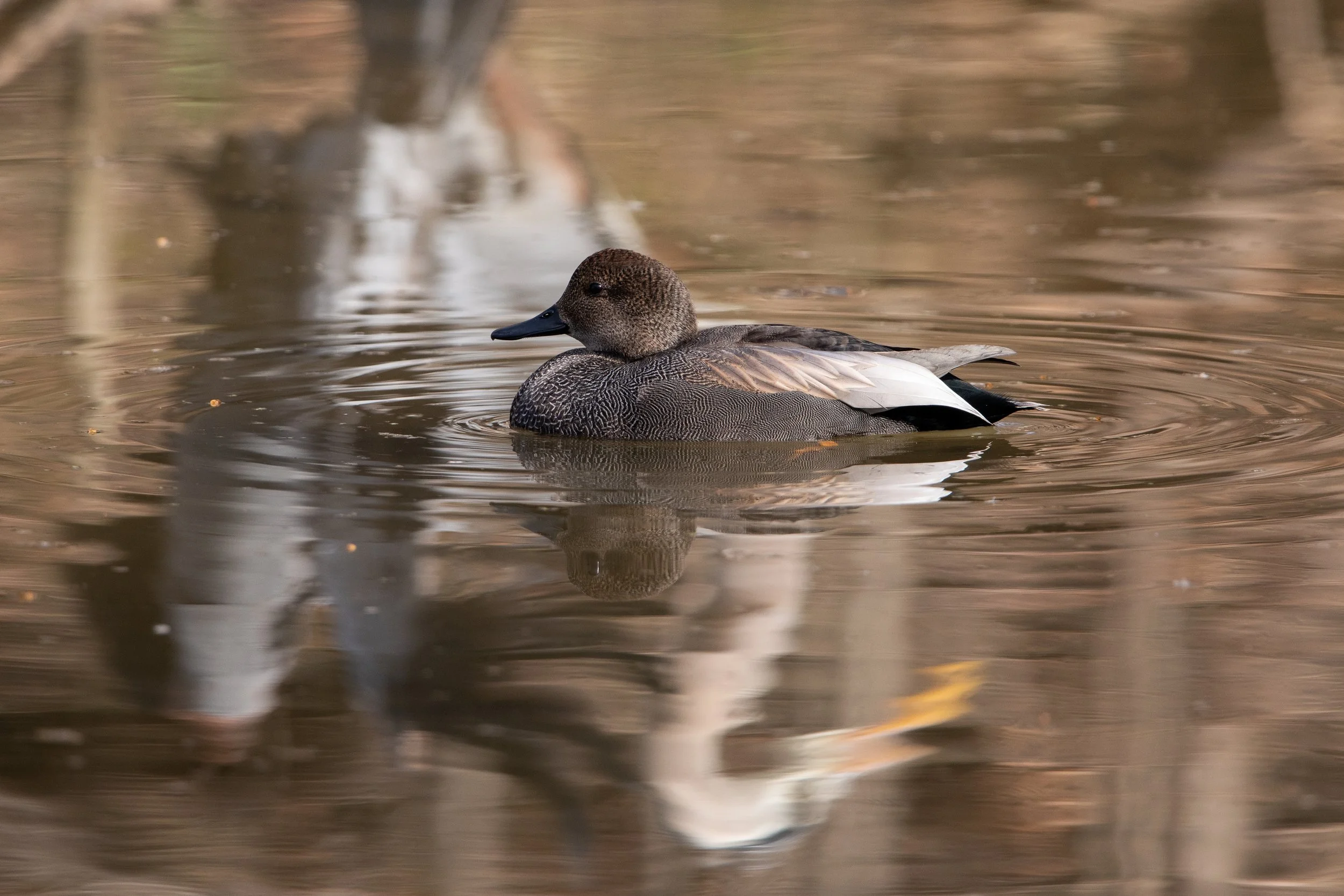
Photo: Common Loons, Howard Arndt/Audubon Photography Awards

Libby Lyons

As 2024 begins, I look ahead and I am thankful for birds. I appreciate their role in actions such as pollination, dispersal of seeds, production of guano fertilizer, and provision of food. But it is their intangible services that truly earn my gratitude. More and more evidence and personal experience show me that birdsong lifts our spirits and improves our mental health. And sometimes the beauty of their flights and behaviors takes my breath away, leaving joy in its place.

That birds inspire our creativity is evident from literature and visual art. Here I want to focus on one visual genre, that of cartoons. Over the past few decades, I have collected cartoons about birds and to date have more than 1,400 of them!

I hope a quick flyover of my collection provides you with a New Year’s lift and an upbeat perspective that helps rally you to join us in the more serious battles we are waging to protect birds and nature in northern Virginia.

What have I learned from my bird cartoons? First, laughter is a great salve – it releases endorphins and increases feelings of well-being, and, when combined with a love of birds, that salve is supercharged! Second, humor (be it whimsical, boffo, macabre, slapstick, existential, absurdist, melancholy, or sublime) is as complex and as idiosyncratic as beauty – it lies in the belly laugh of the beholder. Third – because birds are so ubiquitous, we share much common knowledge that serves as a great starting point for shared humor. Finally, most of my collected bird cartoons are really about human foibles, often made funnier by being transposed onto birds.

Some of the cartoons are about birds’ unique characteristics--the ability to fly or, for kiwis, fly only in their dreams, seasonal migration shown as mittens flying north or air conditioners flying south, flamingos always standing on one leg, bluebirds of happiness being supplanted by pigeons of quiet desperation, and penguins only able to see things in black and white or struggling with casual Friday garb.

In far more cartoons, though, birds reflect the human condition. The topics are varied and include:

  • Relationships – a mate finding stray feathers from a “nestwrecker,” parents becoming empty nesters or labelling the younger generation as rebels for flying in a J formation

  • Technology –an exquisitely drawn loon carrying chicks on its back (in car seats!); a pair of birds constructing a complex nest using a large instruction sheet and ending with one leftover twig; elders lamenting that young birds learn birdsong from downloads to their devices

  • Social Status – birds trying to outdo one another with birdhouses that feature tennis courts, hot tubs, and worm cellars

  • Current Events – climate change forcing all bald eagles to relocate to Canada, the challenges of teleworking from a nest full of chicks, discovering that covid masks make nice nest material, and forbidding newspaper on the bottom of a birdcage lest the news stress the birds

Two other types of cartoons are worth noting. A handful of cartoons make fun of birdwatchers, having birds use binoculars to watch humans and giving them names like the paunch-bellied, shiny-headed twitcher, or crowds of birds with long-lens cameras jostling to get the best picture of a rare human.

And finally, some cartoons are just an excuse for clever wordplay: think poultrygeist, budgie deficits, gaggle maps for geese, irritable owl syndrome, fowl play, carrion luggage, and opening a can of worms.

Alas, this is just a quick pass through my collection. Someday I plan to dive deeper and share more from this rich lode of avian humor. And I already have ideas for my own bird cartoons – if only I could draw! 

Happy Birding – and I look forward to seeing you on the birding trails in 2024!

Read More
President's Corner Jess Michetti President's Corner Jess Michetti

Board Notes

I’ve asked myself on occasion what makes us birders?

Photo: Gadwall, Gary Robinette/Audubon Photography AWards

Andreas Seiter

I’ve asked myself on occasion what makes us birders? Are we introverts, struggling with occasional bouts of misanthropy? Seekers after a connection with our spiritual ancestors through the voices of birds? Outdoor enthusiasts giving our hours in the field a purpose by documenting what we hear and see during our explorations? Conservationists with a mission to leverage the appeal of birds for an urgent and noble cause? Or just stressed modern urbanites, who found a simple and only moderately addictive way to boost our mental health? In my case, I’d say it’s a little bit of each.

Young Andreas going birding

I started out birding early. Our parents took me and my sister on Sunday morning bird walks, organized by the community college in my German hometown. They wanted us to get fresh air and some exercise, and we quickly learned to make the walks a treasure hunt, seeking to impress by being the first who saw the rare bird. So, I got a good grounding in bird identification and appreciation, but as an adult that early interest was sidelined by other demands of work and family. Nevertheless, I kept birding in a "mental drawer" to be taken out again once there was more time, the kids were grown up, the job less demanding. 

That “drawer” opened a bit after I moved to the United States in 2004. I couldn't stop wondering what birds were singing in the trees and bushes around me. It took a few more years until I discovered the local birder community and joined their walks at least occasionally. I was still busy with two young children and a job that required me to travel a lot. An advantage of my job was that I saw many countries that are not tourist destinations. I was able to squeeze in a day of birding here and there, helping me grow my life list, sometimes by just exploring the hotel grounds or a local botanical garden.

I loved my work, but most of the time it kept me indoors in the office, conference rooms, airports, and hotels. But my parents’ early training held, making me an outdoors person, so I told everyone who wanted to hear that, once I retired, I wanted to be something like a volunteer park ranger. Upon retirement in 2022, I started volunteering at the new Occoquan Bay National Wildlife Center Visitors’ Center and used my free time to attend as many bird walks in the region as possible. 

Some birding friends suggested I sign up for the Fairfax Virginia Master Naturalist training as a way to broaden my appreciation of the outdoors. I attended the class in spring 2023 and can recommend the program wholeheartedly. It has been an eye-opener for me, making me realize how interconnected all the different aspects of life on our planet are. It also helped me grow a network of like-minded people working in different fields and institutions, so that I now have more than enough options to get outdoors and do something purposeful. Of course, I always carry my binoculars with me. You don't have to go birding to go birding!

So, how did I join the ASNV board? I was talking with Libby Lyons, ASNV’s current president, one day during a bird walk, and she asked me whether I would like to join the ASNV board. I accepted because I appreciated ASNV’s integrated approach to conservation, which focuses not just on birds but also on other wildlife and the habitat they all need to thrive. I also saw that it was a group that had good ideas and the resources to implement them. Even in urbanizing northern Virginia we have opportunities for growth by expanding our group of active volunteers and collaborating with partners. By spreading our love for birds, we can win more advocates for intelligent approaches to protecting our natural environment. 

Read More
President's Corner Jess Michetti President's Corner Jess Michetti

President's Corner

Hope is winning out, even as I hear chainsaws and backhoes signal the demolition of yet another neighborhood house and all of its majestic oaks. I block out those sounds of destruction by recalling four hopeful ASNV sessions from the past few weeks.

Photo: Ruby-crowned Kinglet, Hannah Meddaugh/Audubon Photography Awards

Libby Lyons

Hope is winning out, even as I hear chainsaws and backhoes signal the demolition of yet another neighborhood house and all of its majestic oaks. I block out those sounds of destruction by recalling four hopeful ASNV sessions from the past few weeks.

First came a Stretch Our Parks event at Monticello Park in Alexandria. More than 35 folks showed up for a damp, Sunday morning work session, including a dozen Boy Scouts from Alexandria’s Troop 129 and their parents, scores of local residents alerted by their neighborhood’s citizens’ association, and a handful of birdwatchers who love the park for its springtime warblers. Working under the guidance of Rod Simmons from the City of Alexandria’s Department of Recreation, Parks, and Cultural Activities, we spread mulch, planted native trees and shrubs, and erected natural barriers to guide people away from sensitive areas of the park. And, in keeping with Stretch Our Park’s aim to expand bird-friendly habitat beyond the park, we removed invasive plants from a neighboring property that is under a Northern Virginia Conservation Trust easement. What most struck me about that day was the volunteers’ enthusiasm and their strong connection to that tiny LOCAL park as a special place for neighbors, runners, dog walkers, and birdwatchers alike. 

The following week I attended the Advocacy Workshop that ASNV cosponsored with Loudoun Wildlife Conservancy and the Faith Alliance for Climate Solutions. Close to 50 people devoted their Saturday afternoon to learning from experts how, as constituents, to be a powerful voice for protecting wildlife and nature when their elected representatives consider policy issues affecting their cities and counties. As was the case for the event in Monticello Park, the age of the participants spanned many generations, from Ken Plum, who was first elected to the Virginia House of Delegates in 1981, to the young audience and staff members. This intergenerational transfer of wisdom bodes well for our future because mounting environmental challenges will require political action at many levels, from neighborhood to city, county, and beyond. 

The next day featured our first Volunteer Appreciation Event. As the 20 or so volunteers introduced themselves, I marveled at the different ways they had contributed to so many of our activities, from advocacy, citizen science, outreach, and bird walks, to Audubon at Home and Stretch Our Parks. A singular pleasure was presenting our first Volunteer of the Year award to Bill Young, who has generously provided us with many hours of educational and entertaining bird-related programs over the years. Bill’s optimistic and proactive philosophy embodies much of ASNV’s approach: first educate people about birds and nature so that they understand them. Fondness and passion will follow and will motivate action to protect that which they love.

I next joined our training session for new bird walk leaders where we welcomed more than a dozen folks, again with ages spanning five or six decades, who want to share their passion and knowledge about birds. This session covered how to manage bird walk logistics, and, equally important, it imparted ASNV’s values. Some discussions centered on ethical birdwatching , but many more focused on how to make participants from all parts of our diverse area and across the full spectrum of birding expertise feel welcome. It was heartening to meet these new leaders and know they will multiply our impact by their thoughtful teaching.

There are many battles to fight to protect birds and their habitats in northern Virginia. The last few weeks have given me tremendous optimism that ASNV is more and more tapping into local passion for northern Virginia and its birds, catalyzing action at many levels, and welcoming new allies young and old. Please come join us in these efforts– there is much to do and we need your help!

Read More
President's Corner Jess Michetti President's Corner Jess Michetti

Board Notes

It’s not all about the birds for me. My connection is with nature in general, an all-encompassing love and passion for Pachamama, Mother Earth in the Aymara language of my ancestors. 

Photo: Yellow-rumped Cacique, Ad Konings via iNaturalist

Rita Peralta

It’s not all about the birds for me. My connection is with nature in general, an all-encompassing love and passion for Pachamama, Mother Earth in the Aymara language of my ancestors. 

I spent my early childhood sheltered from the dry, harsh climate in the high plateau of El Alto, Bolivia, escaping on weekend family trips to the lush lowlands of Los Yungas and valleys of Cochabamba. My brother and I would release our energy running around making the large hibiscus shrubs, vines, and irrigation fields filled with toads our playground. My mother pointed out the leaf-cutter ants marching on the forest floor, which she told us she followed as a child, in awe of their soldierly efficiency.

Yellow-rumped Cacique, Ad Konings via iNaturalist

The beautiful bird songs in the early morning were our wake-up call, a new day to explore! My mom would point to the ‘wichi’ bird that would visit the fruit trees in the backyard, telling us about its beautiful songs and intricate nests. Recently, I found out the ‘wichi’ is the yellow-rumped cacique, an excellent weaver, building hanging, pouch-shaped nests. 

My time before leaving Bolivia was brief but rich with connection to nature. I recall the sweet and complex tastes of ripe fruit in season: cherimoya, prickly pear, banana passionfruit, pacay, and many others. For a time, we depended on rain for water and learned about stormwater management through necessity. When we set roots in Virginia my family continued to seek ways to find nature. We enjoyed picnics in parks, camping trips, and hikes. 

Nature is not apart, but a part of who I am and how I was raised. It is that understanding that has steered me to a career in nature and preserving it, because that’s how we preserve our own life history. ASNV champions these ideals with programs like Audubon at Home and advocating for the recognition of nature, through birds, in the laws that are passed. So, when I was asked to join the board, I knew that I had to say yes. It’s not easy: I have a full-time job and many other responsibilities within my family and community, but it is important to share my voice and perspective with an established community of conservationists. 

I’ve now been part of the board for more than a year and am involved with the Community Engagement committee, serving as interim chair since June 2023. This is an exciting time to be part of ASNV. As we work to ‘Stretch our Parks’ I can’t help but think of a time when we all might see ourselves as a part of nature. 

Read More
President's Corner Jess Michetti President's Corner Jess Michetti

President's Corner

ASNV is adopting a proactive approach to our mission of engaging all northern Virginia communities in enjoying, conserving, and restoring nature for the benefit of birds, other wildlife, and people.

Photo: Tundra Swan illustration, John James Audubon

Libby Lyons

Looking back across the last year, I saw ASNV came out of the pandemic energized and ready to take on some big challenges. To counter the threat of continued massive losses of birds from North America (estimated at 3 billion, or one in four, since 1970), of rapid urban development in northern Virginia, and of climate change, we have developed our Stretch Our Parks initiative.

We also are adopting a proactive approach to our mission of engaging all northern Virginia communities in enjoying, conserving, and restoring nature for the benefit of birds, other wildlife, and people. Our recently hired Volunteer Coordinator is increasing our volunteer engagement, we are reaching younger audiences with our NextGen Birders for Conservation events, and we continue to reach out to all communities in our chapter territory through our diversity and inclusion initiatives, which are now featured on our website

It is in this context of how we fulfill our mission, today and for years to come, that we now consider whether to change our organization’s name. John James Audubon’s vast contributions to American ornithology are well known. In recent years, however, it has come to light that, like some others of his era, he was a slave owner and collected skulls for another’s eugenics research, practices that are now universally condemned. He also copied another artist’s drawing of a bird that did not exist, using it to promote his own publication -- scientific fraud by any era’s standards.

ASNV, like many other Audubon chapters, has embarked on a process to decide whether to keep the Audubon name. The National Audubon Society in March of this year decided not to change its name, but is allowing its many chapters to decide for themselves. 

Our Board of Directors will make this decision – and it is a complex one. More background information is available in this essay on the Audubon Name, and in this series of Frequently Asked Questions. On the one hand, some feel that changing the name will help remove the taint of racism associated with Audubon. And as Christian Cooper wrote in the Washington Post, we can’t adequately protect birds and other wildlife from the immense challenges ahead without the participation of non-Whites, a large and growing part of the population. Having a name that honors Audubon could deter such participation; this is especially relevant for northern Virginia, a part of the country that has recently become a majority-minority region. 

On the other hand, Audubon did make significant contributions to ornithology, art, and natural history. Changing our name could weaken the Audubon “brand recognition.” A name change could alienate some members and also would be expensive, draining funds away from important conservation work.

Because we are a membership organization and have long benefited from your generous involvement and support, we are now in a listening and learning phase. We ask for your inputplease use this link to take our brief survey. We also will consult other groups in northern Virginia communities that are not well-represented in our membership and other Audubon chapters around the country.

We look forward to hearing from you – about the name change issue – and about other suggestions that you have to help us protect the birds and nature that we all treasure.

Read More
President's Corner Jess Michetti President's Corner Jess Michetti

Board Notes

The bird that sent me to the store for my first pair of binoculars and a field guide is the Yellow-crowned Night Heron.

Photo: Yellow-crowned Night Heron, Barbara Saffir/Audubon Photography Awards

Connie Ericson

The bird that sent me to the store for my first pair of binoculars and a field guide is the Yellow-crowned Night Heron. I lived in Houston and would take my cool-down walk after a run along the oak- and pine-shaded entry to the Rice University campus. One day I spotted large, brown-speckled birds with huge beaks and big yellow-orange eyes hunkered down under the azalea bushes that also lined the entry. Then I spotted some big, gray, punk-looking birds in the trees. New binoculars and field guide in hand, I figured out what the birds were. They had a rookery on the campus, which is across the street from Houston’s Hermann Park, a good source of food. This was over 30 years ago, and I was hooked.

Yellow-crowned Night Heron, Jerry amEnde/Audubon Photography Awards

I wish I could say that time has made me an expert birdwatcher, but that is not the case. Although I have loved watching birds since those herons first caught my attention, I’m pretty lazy. I don’t study and I don’t keep a list, although I have vivid memories of some first-time sightings: a Rose-breasted Grosbeak in a city park on Galveston Island, a Vermillion Flycatcher at Brazos Bend State Park, a Green Jay at a highway rest stop on the way to Brownsville, an American Bittern crossing the road at Anahuac National Wildlife Refuge (and stopping to make itself look like a reed in the middle of the road), and a pair of American Redstarts in Smith Woods on High Island. I also remember a frustrating 45 minutes at Anahuac struggling with my field guide to identify a female Red-winged Blackbird. I called it the “bad attitude brown bird.” 

I do some foreign travel and marvel at the diversity of species, but most of my bird-watching is here in northern Virginia, my home now for over 20 years, where I can observe the changing population throughout the year. And much of the fun of birdwatching for me is seeing familiar birds in action. I have enjoyed seeing Pileated Woodpeckers from my back yard excavating a nest hole and confronting other birds investigating the inviting cavity; day-old Wood Ducks piling out of a nest box at Huntley Meadows Park; a Red-shouldered Hawk apparently stealing a branch from another bird’s nest; a Hermit Thrush foot-trembling at Burke Lake; and a Great-crested Flycatcher taking down a House Sparrow in my backyard, probably following a nest hole incursion by the sparrow. In recent years I have been able to watch Barred Owls and Common Ravens raising young in nests along the W&OD Trail in Arlington, and in the past week I spotted my “bad attitude brown bird” on a nest at Huntley Meadows.

Yellow-crowned Night Heron, Georgia Wilson/Audubon Photography Awards

I appreciate the opportunities ASNV provides me to learn more about birds through its classes and to lobby for birds and the environment through its advocacy committee. Just this past year I started editing ASNV’s Potomac Flier, and I have learned a lot from the talented writers who have contributed articles. All of this is by way of saying that you don’t have to be a scientist or expert to help ASNV help the birds. Everyone, even a lazy birdwatcher, can make a contribution. I hope you join us. 

Read More
President's Corner Jess Michetti President's Corner Jess Michetti

Board Notes

I have been on the ASNV board for exactly one year, chairing the Citizen Science committee and participating in conservation initiatives. A year in I am impressed by the dedication and hard work of my fellow board members and our incredible partners, volunteers, and supporters.

Photo: Black Skimmers, Irina Pigman/Audubon Photography Awards

A new feature, alternating with the President’s Corner, to introduce some of our board members, coordinators, and friends

Jerry Touval

I have been on the ASNV board for exactly one year, chairing the Citizen Science committee and participating in conservation initiatives. A year in I am impressed by the dedication and hard work of my fellow board members and our incredible partners, volunteers, and supporters. The work of ASNV is making an impact on bettering the habitat available for our northern Virginia birds. And I am especially enthused about our new initiative, Stretch Our Parks. It is the kind of project that attracted me to ASNV in the first place.

Black Skimmer, Matt Felperin

My interest in nature and my commitment to conservation started when I was a teenager. One day, as a 15-year-old kid in suburban New Jersey, I looked out into my backyard and really noticed for the first time that there were a lot of different-looking birds. Intrigued, I bought a copy of a Roger Tory Peterson field guide, which I still have. Two years later, as a high school junior, I helped organize the very first Earth Day at my school. We planned a full day of presentations, discussions, and entertainment.

But it wasn’t until I was a college freshman at George Washington University that I learned that my interests could lead to a career. One sunny spring day, I walked through the E Street entrance of the Department of Interior building and picked up a brochure called “Careers in Wildlife Management” that showed a ranger in a hat sitting on a hilltop, looking though binoculars at the field below. I knew right then I wanted a career in wildlife management.

To pursue that goal, I left George Washington and enrolled at Rutgers University’s College of Agriculture and Environmental Science which offered a degree in Forestry and Wildlife. Unfortunately, when I graduated a few years later, it seemed as if everyone was looking for jobs in natural resource management. We were among the first graduates after Earth Day inspired many to get degrees in environmental sciences. Competition for employment was fierce.

So, I joined the Peace Corps and spent two years in Honduras doing land use and land cover surveys for 10 watersheds. The Peace Corps is everything they say it is – the toughest job you’ll ever love. Plus, the Peace Corps experience led to my goal of a career in wildlife management, netting me a job as a wildlife biologist for the Eastern Regional Office of the US Bureau of Land Management. I can’t describe the exhilaration I felt walking back through Interior’s E Street entrance, now as the wildlife biologist I had dreamed of becoming. And, after several years with BLM, I was able to return to conservation work in Latin America with the U.S. Fish and Wildlife Service. My work focused on issues related to migratory bird treaties.

After a number of years with USFWS, I enrolled in the Conservation Biology and Sustainable Development master’s degree program at the University of Maryland. With my new degree in hand, I moved to The Nature Conservancy’s Latin America Regional Program, where I spent the next 27 years. I was incredibly fortunate to have worked in the cloud forests of southern Mexico and Central America, the high Andes of Colombia, the Brazilian Amazon, the Atacama Desert in Chile, and the Patagonian Steppe in Argentina. They were experiences I never could have imagined while growing up in New Jersey and watching the birds in my suburban backyard.

A note on the photos with this article. The Black Skimmer is my favorite bird. In the US they are coastal residents, but they have a wider range in Latin America. I’ve enjoyed seeing them in North America, Central America and South America.

I retired in early 2022. After forty-plus years working on international conservation, my goal in retirement was to contribute to conservation in my own backyard, northern Virginia. So, joining the ASNV board was a perfect fit. In the coming year I’m looking forward to working with all of you ASNV members as we collectively pitch in to make northern Virginia a great place for birds, and a great place for people to be able to enjoy the benefits that nature provides.

Read More
President's Corner Jess Michetti President's Corner Jess Michetti

President's Corner

I am excited to announce a new ASNV program called Stretch Our Parks. It is a community-based conservation initiative, centered around northern Virginia parks, to be implemented via partnerships among ASNV, parks, conservation groups, and neighborhood and community groups.

Photo: Bird Walk at Four Mile Run Park, Libby Lyons

Libby Lyons

I am excited to announce a new ASNV program called Stretch Our Parks. It is a community-based conservation initiative, centered around northern Virginia parks, to be implemented via partnerships among ASNV, parks, conservation groups, and neighborhood and community groups.

Northern Virginia is a highly developed region that continues to grow in human population. As a result, the region’s natural area continues to shrink. Luckily, we have many parks in our region, so our best bet to support birds and wildlife is to focus our work in those parks and the neighborhoods that surround them.

Why do we call it Stretch Our Parks? Because our goal is to:

Stretch wildlife-friendly habitat from parks into nearby backyards and neighborhoods;

Stretch community engagement in parks and with wildlife and nature; and

Stretch the positive impacts of parks on people and wildlife.

ASNV sees in Stretch Our Parks great potential for win-win-win results – for birds and other wildlife, for communities around parks, and for the parks themselves.

Wildlife can win when we work with communities and partners to help extend suitable habitat around parks, for example, by replacing invasive plants with native plants, encouraging bird-friendly habitat features (such as, snags, brush piles, and water sources) and reducing threats to birds and other wildlife (such as, from window strikes, outdoor cats, night-time lights during migration, and pesticide use).

Communities can win as we involve neighborhoods around parks, including in underserved communities, by reaching out to and serving libraries, community centers, homeowners' associations, faith communities, girls and boys clubs, nature centers, and more. These groups will benefit as we offer more nature walks and talks for them to enjoy. Homeowners can take pride in becoming agents of conservation as they adopt the Audubon at Home approach to support wildlife. Community members can contribute their energies in citizen science efforts in and near parks (including backyard bird counts).

Parks can win as we help increase community use of parks through programs with our partners that provide more chances to learn about, see, and build a love for wildlife. Stretch Our Parks projects can help build community support for parks. And by expanding wildlife-suitable habitat around parks, its projects can protect parks as critical sites for conserving wildlife in our rapidly developing region.

ASNV is counting on its many strengths to create positive results. We have a long history of partnership with local groups. We can leverage our Audubon at Home program with its many years of helping to transform almost 1,000 privately owned properties into wildlife-friendly habitats. ASNV can help enlist volunteers for park projects such as clean-ups and trail maintenance. Our scientists can provide insight into resident and migratory bird species most in need of protection and the conservation actions needed to protect them. Our cadre of citizen scientists can monitor the impact of our projects. And this initiative complements our educational mission, for we can bring in expert speakers to address topics related to Stretch Our Parks, and we can develop activities that help engage families and children to enjoy the nature around them.

Bird Walk at Four Mile Run Park, Libby Lyons

We look forward to working with our partners to design and implement projects, fine-tuning activities to meet local needs. ASNV is starting with two pilot projects in Spring 2023. Each of our two pilot projects involves a pair of parks close to one another. We are excited to start Stretch Our Parks at NOVA Parks’ Upton Hill Regional Park and Arlington County’s Powhatan Springs Skate Park, and at Alexandria’s Four Mile Run Park and Monticello Park. Check our May calendar for Tuesday and Saturday bird walks at our Stretch Our Parks locations, and join us.

Looking ahead, ASNV hopes its future Stretch Our Parks projects will include parks from across northern Virginia, will serve groups from diverse communities, and will protect the range of bird habitats in our area. But for now, we’re starting small. ASNV’s board members, coordinators, active committee members, and volunteers comprise a relatively small group of individuals that doesn’t yet have the capacity to work in all northern Virginia parks. So, we are hopeful that Stretch Our Parks can serve as a model for others to adapt for their own community-based conservation efforts.

We welcome your ideas and involvement in Stretch Our Parks. We are also looking for volunteers to help us engage the communities around these parks! If you would like to help us, please sign up to volunteer here and mention which park you are interested in working in. Stay up-to-date on the project by checking out our new Stretch Our Parks webpage, which we will update as more develops on this project. We hope you can join us in this important, proactive, and rewarding initiative!

Read More
President's Corner Jess Michetti President's Corner Jess Michetti

Board Notes

Birding is like finding buried treasure – except that the treasure keeps moving, and you have to focus on everything you see and hear.

Photo: Blackburnian Warbler, Kat Bradley-Bennett/Audubon Photography Awards

A new feature, alternating with the President’s Corner, to introduce some of our board members, coordinators, and friends

Tom Blackburn

I am not a great birder. I will always have trouble with sparrows and with warblers out of season, and learning their calls is difficult for me. But I am enthusiastic about birding because looking for birds causes me to be much more alert to everything around me in nature. Birding is like finding buried treasure – except that the treasure keeps moving, and you have to focus on everything you see and hear.

I joined the Board of ASNV only in part because of my interest in birds. Like its parent, National Audubon Society, ASNV focuses on conservation. Birds are like the canary in the coal mine. If birds are disappearing, it’s because nature is out of balance. We need to restore and preserve our natural environment, and the birds will tell us whether we’re succeeding.

I am currently the Chair of ASNV’s Advocacy Committee. Our committee works primarily on the local and state level to advocate for environmentally-sound policies. Recently we mobilized volunteers to ask state legislators to support two bills encouraging the use of native plants. The bills passed, were approved by the Governor, and take effect July 1.

We successfully opposed proposed intensive development adjacent to Fairfax County’s Huntley Meadows Park that would have increased flooding and runoff, harming the park. We’re also working to stop a proposed bike path through environmentally-significant wetlands near the Franconia-Springfield Metro station. We submitted comments opposing Governor Youngkin’s proposal to withdraw Virginia from the Regional Greenhouse Gas initiative, a 12-state “cap and invest” program to reduce greenhouse gas emissions. We’ve submitted comments to Arlington County urging them to take steps to manage the growing deer population in the county which is devastating the understory plants in the county’s parks, and we’ll submit comments when the county’s detailed report on deer is published in a couple of months. We’ve also worked on other issues that are too numerous to mention here.

As a representative of ASNV, I spent 18 months on a state-mandated workgroup that was directed to develop legislation to reduce the number of free-roaming cats in Virginia and mitigate their impact on wildlife, natural resources, and public health. The workgroup included representatives of animal shelters, animal control organizations, animal welfare organizations, environmental and wildlife organizations, and state and university employees. Fourteen of the 18 members of the workgroup participated in writing a report on the problem that they released to the General Assembly in January. We plan to work with legislators and their staff to develop legislation to be introduced in the next session of the legislature.

There’s lots of work to be done to fulfill ASNV’s mission of conserving and restoring nature for the benefit of birds, other wildlife, and people in Northern Virginia. If you’d like to help us work on environmental issues from time to time, send me a message through our website at https://www.audubonva.org/tom-blackburn.

Read More
President's Corner Jess Michetti President's Corner Jess Michetti

President's Corner

Volunteers have always been the lifeblood of ASNV, and we recently welcomed some new volunteers at a February 18 training session.

Photo: Northern Shovelers, Renda Glick/Audubon Photography Awards

Libby Lyons

Volunteers have always been the lifeblood of ASNV, and we recently welcomed some new volunteers at a February 18 training session. These generous folks will join the volunteer ranks of our board and committee members, our legions of citizen scientists who have collected data for decades, our Audubon at Home (AAH) Ambassadors, those who advocate on ASNV’s behalf for protection of natural environments, our bird walk leaders, those who write for our newsletter and website, and many more.

ASNV wanted to address the growing demand for local nature walks, for presentations related to birds and environmental topics, and for wildlife information at environment-themed festivals, events, and fairs. We also wanted to develop a cadre of volunteers for on-the-ground conservation projects we hope to launch soon. In the past we relied heavily on our board members and AAH volunteers for many of these events but realized we needed a larger cadre of volunteers. We felt sure that northern Virginia was full of talented folks with a passion for nature.

So, our first step was to form a new committee on community engagement to organize and implement this effort. The committee is headed up by board member Stacey Remick-Simkins, an active volunteer for several decades at the intersection of nature and faith communities. She has found that volunteers are passionate helpers when the project connects from the heart. She also is a firm believer in building a large community around volunteer projects to share experiences and lessons learned.

Our next step was to hire a part-time Volunteer Coordinator. With the support of a locally-active family foundation, we were fortunate to hire Meg Oakley, who started in February. Meg grew up in Vermont and is a lifelong nature lover. She recently retired from a long career at Georgetown University, where she rose in the ranks of leadership in the Law Library and the University Library. We are delighted to have her skills in managing people and information now focused on coordinating our growing flock of volunteers.

To learn more about our new volunteers, please read the article in this issue about our recent outreach volunteer training. A big thank you to these newcomers and to all of our other volunteers. And, we are always interested in recruiting more helpers. If you are interested, please make sure you let us know by filling in a volunteer form here.

Read More
President's Corner Jess Michetti President's Corner Jess Michetti

Board Notes: February

Board Notes is a new feature, alternating with the President’s Corner, to introduce some of our board members, coordinators, and friends. This month, meet board member Judy Gallagher.

Photo: Cobra Clubtail, Gary Myers

A new feature, alternating with the President’s Corner, to introduce some of our board members, coordinators, and friends

Judy Gallagher

You may have seen my name as the author of the monthly “Notes from Meadowood” feature in the Potomac Flier, which also features my photographs of insects, some of our most important natural resources. I have participated in the wildlife surveys at Occoquan Bay National Wildlife Refuge, Meadowood Special Recreation Management Area, Metz Wetlands in Neabsco Regional Park, and Occoquan Regional Park for eight years. The surveys have broadened and deepened my appreciation for and knowledge of natural resources. But more about that later.

I’ve been an ASNV Board Member for almost three years. I'm on the Adult Education, Citizen Science and Conservation Committees, and I moderate some of our adult education programs. Like many of you, I became an ASNV member because I joined National Audubon Society, which gave me the additional benefit of membership in the local chapter. I was unaware of ASNV’s long-term projects and many program offerings until I started receiving the Potomac Flier, our monthly newsletter.

I’ve been interested in nature since I was young. My father was a keen observer of nature with a particular interest in native plants and their uses, and he made sure that he exposed his children to plants, birds and so on. I fell in love with insects in 10th grade when students had to make an insect collection. I was awed by the sheer volume of different insects and their differing forms and colors.

My career was in IT, but I spent a lot of my free time out in nature. I was a charter member of the Prince William Wildflower Society, and I enjoyed bird watching and bird and flower photography. As I neared retirement, I wanted to focus more on nature, so I took a Virginia Master Naturalist course in 2010. That reawakened my childhood interest in insects. Seeking further education, I took a series of ten-week classes at Nature Forward and eventually earned a Certificate in Natural History Field Studies.

Judy Gallagher with Cobra Clubtail, Gary Myers

On one of my nature walks, I met someone who participated in ASNV’s wildlife surveys. The surveys had been going on for more than 20 years, and I was intrigued by the dedicated volunteers who documented birds, butterflies, dragonflies and blooming plants. Although I was concerned that I wasn’t an expert in any of those areas, I contacted the survey’s leader, Jim Waggener, and asked if I could attend a survey. Jim welcomed me, and before long I was a regular participant.

Survey volunteers have various areas of interest – many are long-time birders, and there are several who are very good at plants. Others are more interested in dragonflies, damselflies, and butterflies, and everyone shares their observations and knowledge. Some are talented photographers, and we've had many a spirited discussion trying to identify the species that we have photographed. We learn from each other and educate and encourage new participants. Park managers use our data, and my colleagues have become my friends. The surveys are now in their 34th year.

I’m still most interested in insects and spiders. I use my camera to document insect diversity on our surveys. So far, I have documented 353 insect and arachnid species at Occoquan Bay National Wildlife Refuge, 577 species at Meadowood Special Recreation Management Area, 311 species at Julie Metz Wetlands, and 387 species at Occoquan Regional Park. Another insect and spider season will begin soon, and I expect to add more species to the lists.

I hope to see you at an ASNV activity soon. Please introduce yourself - I'd love to hear your nature tales.

Read More
President's Corner Jess Michetti President's Corner Jess Michetti

President's Corner: January 2023

The Tundra Swans have returned to the Great Marsh at Elizabeth Hartwell Mason Neck National Wildlife Refuge after a daunting migration of as much as 3,750 miles.

Photo: Tundra Swans, Randy Streufert

Tom L. Blackburn, Immediate Past President

The Tundra Swans have returned to the Great Marsh at Elizabeth Hartwell Mason Neck National Wildlife Refuge after a daunting migration of as much as 3,750 miles. Tundra Swans that winter in northern Virginia spend most of the year near the northern coasts of Canada and Alaska where they breed and raise their young. The young birds accompany their parents for their first fall migration, learning the route from older birds. 

Tundra Swans, Randy Streufert

The ”why” of migration, particularly for far-north breeders like Tundra Swans, isn’t difficult to answer. Birds that don’t migrate in the fall are doomed to starvation as the shallow water, which they depend on for their main food supply of underwater vegetation, freezes over. 

The “how” of migration has been much more difficult to figure out. More than half of Tundra Swans winter within 6 miles of the place they wintered the previous year, and some migrating birds use the same perch and nest boxes year after year. Scientists are still learning about the various methods birds use to get from “there” to “here” with such precision. 

Birds have an internal clock that tells them when to migrate, and they inherit from their parents a general sense of which direction to fly. However, that cannot explain their ability to return to the same spot year after year. Visual cues are, of course, one way the birds can find their way. But cloudy weather can obscure the ground, and strong winds can blow them far off course. Some birds also navigate using the stars, but high clouds can block their view of the heavens, too. Many birds also use an internal magnetic compass that is linked to their eyes that allows the birds to “see” the correct route. A bird’s sense of the earth’s magnetic field is far more sophisticated than the compass we used before the invention of the GPS. A recent article in Scientific American explains the molecular-level changes in birds’ retinas that allow them to “see” the Earth’s magnetic field and use it as a means of navigation. 

The evolution of navigation abilities is only one of the astonishing ways birds have evolved to migrate successfully. Some birds shrink and grow their internal organs twice a year to prepare for migration. Bar-tailed Godwits, the champions of nonstop migration, absorb as much as 25 percent of their liver, kidneys, and digestive tract in order to be able to make room for the fat that fuels their 6,800-mile migration from Alaska to New Zealand. Swainson’s Thrushes “sleep” for 9 seconds at a time during their 3,000-mile migration. Ruby-throated Hummingbirds, which weigh less than a nickel, double their weight before flying 500 miles nonstop across the Gulf of Mexico. 

A National Geographic article shows that Arctic Terms also are made for migration. They fly 28,000 miles from Greenland to the Weddell Sea in Antarctica and back again each year for their entire lives, equivalent to three round trips to the moon over a 30-year lifespan. That distance doesn’t include the side trips they make along the way following the best weather and food sources. They are very lightweight, so they let ocean breezes carry them great distances without having to use a lot of energy flapping their wings. They also can sleep and eat while gliding.

If you’d like to see the Tundra Swans while they are wintering in Virginia, the best nearby place to visit them is from the Woodmarsh Trail in the Elizabeth Hartwell Mason Neck NWR. Try to go when the tide is high, so the birds are closer to shore. You can check the tide table here. Visibility is best in the morning when the sun is behind you. 

Read More
President's Corner Jess Michetti President's Corner Jess Michetti

President's Corner: December 2022

I was thrilled last month when our eighth-of-an-acre property was certified by ASNV’s Audubon at Home program as a “Wildlife Sanctuary.”

Photo: Fiery Skipper on Blue Mistflower, Libby Lyons

Elizabeth “Libby” Lyons

I was thrilled last month when our eighth-of-an-acre property was certified by ASNV’s Audubon at Home program as a “Wildlife Sanctuary.” This means that I had seen at least 10 “sanctuary species” on our property and signed the “Healthy Yard Pledge” to do things such as increase native plants, reduce our lawn size, remove invasive species, reduce pesticides and fertilizers, make our windows bird-safe, and keep our cats indoors.

Cooper’s Hawk, Libby Lyons

I like AAH’s “Let the animals decide” approach because the wildlife, by its presence, signals that the property is good habitat! Not surprisingly, many of my “sanctuary species” were birds. With good tree cover in the neighborhood and several birdfeeders, we see a wealth of birdlife – wrens, warblers, woodpeckers, waxwings, and more. This year we saw even more hummingbirds and goldfinches, which were attracted to our native plants. And our feeders, because they attract plump mourning doves, also brought in a Cooper’s Hawk! More than once we found a ghoulish splash of dove feathers under the feeders. But the Cooper’s Hawk counts as a “sanctuary species,” and no habitat is complete without predators (such as hawks) as well as prey (such as mourning doves).

Eligible “sanctuary species” are not just birds. Many are insects on which birds rely for food and which are wildlife worthy of protection in their own right.  Among the insect “sanctuary species” that I counted were loads of monarch and American Lady butterflies, small iridescent native bees, several types of bumblebees, lady beetles, and lightning bugs.

Swamp Milkweed Leaf Beetle on Butterfly Weed, Libby Lyons

Fiery Skipper on Blue Mistflower, Libby Lyons

Why did the diversity of insects shoot up this summer? Insects thrive where native plants abound and I had just increased the number and variety of native plants in my yard. I’m fortunate to have friends far ahead of me on this native yard journey who graciously dug up dozens of plants (e.g., asters, mountain mint, violet, jewelweed, and wild ginger) that I transplanted into my gardens. With my Plant NOVA Natives’ guide to Native Plants for Northern Virginia in hand, I also purchased beebalm, butterfly weed, Joe-pyeweed, cardinal flower, and red chokeberry. I removed invasive species that offer little wildlife benefit and can do serious harm: a non-native Wisteria was replaced with a native coral honeysuckle and out came the English Ivy (which climbs and kills trees, creating a safety hazard) and the Nandina (whose berries are poisonous to waxwings), although not without a fight, as my son can attest!

This experience rekindled my love of gardening, but now I garden for nature, as well as for aesthetic pleasure. I found the whole AAH process simple and I saw wildlife impact within months. This gives me hope that small private landowners can make a difference. And my years of teaching ecology tell me that larger patches of such wildlife habitat should have a bigger impact and be more resilient. So I am spreading the word – and the plants! I collected seeds from two dozen of my native species and will overwinter the seeds outside so they germinate in the spring, when I will share the plants with my neighbors. I alerted a new neighbor to the county’s native tree give-away and we both planted saplings. I started working with the church next door. They are keen to try the AAH approach as a neighborly act that aligns with their faith’s environmental stewardship. They recently had a workday at the church, and we removed invasive plants and identified native species that they can save and transplant. I foresee that these efforts, focused in a cluster, will transform more of the neighborhood into a healthy sanctuary for humans and wildlife for years to come. And I hope we can encourage more clusters of AAH Wildlife Sanctuaries across Northern Virginia!

Read More