
How to Use the NOVA Bird Checklist
First, download NVBA’s NOVA Bird Checklist here.
The Checklist of Birds of Northern Virginia was created to assist birders in the area covered by our chapter. The checklist prints full-size on 11"x17" paper but can be printed on legal size paper. (You will need to resize it to fit. Different printers work differently, but look for either a "scale to fit" option, or a scaling option using 75%. Print two-sided if possible!.) Printed copies are also available from the NVBA office.
The checklist is based on the most readily available information about birds that occur in Northern Virginia, in what numbers and on what dates from eBird. Keep reading for details on the checklist.
What is eBird?
eBird is an online real-time checklist program supported by the Cornell Laboratory of Ornithology at Cornell University. As a “citizen science” tool, eBird’s data are comprised of reports entered by thousands of individual birders about the birds they have seen or heard, the number of individual birds, and the location, time and date of the observation. For Northern Virginia, we used eBird data for 2005-2015, which included almost 90,000 reports from birders in our region.
This information allowed us to see what species have been found in Northern Virginia, and list them along with annotations about which seasons they are here and how abundant they are – very rare through abundant. Details on how we developed the checklist are available here.
Using eBird
ANSV encourages you to enter your observations in eBird. Your sightings will become part of the eBird database that is used in scientific analysis of trends in bird population levels, distributions and migration patterns, as well as for projects like our checklist. The analysis of bird populations is critical to understanding how birds are being impacted by habitat change, climate change, and other conditions, and in developing conservation practices and habitat protection and restoration efforts. You can set up a free eBird account at www.ebird.org. eBird will also help you track your own bird list.
What area is covered by the checklist?
The eBird data covers Arlington, Fairfax, Fauquier, Loudoun, Prince William, Rappahannock, and Stafford counties and the cities of Alexandria, Fairfax, Falls Church, Fredericksburg, Manassas, and Manassas Park.
Seasonal Annotations
The seasonal information on the checklist should be regarded as a guide, not as a definitive indication. Thus, birders should not necessarily expect to find the species during every month of the season. Migratory species in particular may be here only part of a season.
Chimney Swifts, for example, are shown on the checklist as present in the Fall (September through November). Chimney Swifts are indeed here in September but are usually gone by mid-October and are not here at all in November.
Similarly, Magnolia Warblers are shown on the checklist as present in Spring (March through May), but appear in our area in mid-April. A birder using the checklist in the spring month of March is not likely to see the Magnolia Warbler.
Abundance Annotations
As with seasonal information, the abundance information on the checklist is a guide, not definitive. Also, birders should expect to find the species in appropriate habitats. They are not likely to find ducks in dry grassland habitats, for example, except for birds flying over.
Introduced Species
Any species denoted with (I) is a species introduced in Virginia. It is not native to the state and was brought to the area and is sustaining a wild population. This group includes a number of European species introduced to the United States that have become familiar and well established, such as the House Sparrow and European Starling.
Accidental or Vagrant Species
The main checklist is followed by a shorter list of species that are accidental or vagrants in Northern Virginia. Accidental species are those that have been observed only a very few times – less than 6 times in the last 50 years on the Virginia Society of Ornithology’s official list for the state. A vagrant is a bird that has strayed far out of its expected range, for example, blown in by a storm.
Limitations of eBird data
While eBird data are an invaluable resource, they do have some limitations.
eBird is based on what individual birders have reported. That is, it tells us what birds were observed during the times and at the places where birders go. This is a different type of data than would be found during a survey using a formal protocol where coverage and timing can be planned.
Some locations are heavily birded, others are not. Some locations, such as parks and refuges, may have nocturnal or other species that are not observed because the locations are not open when these birds may be active. The result is that the abundance indicators for such species such as Owls may be lower than what would be found with more formal data sources.
Also, when a rare bird shows up in our area, many birders go to see it and enter reports in eBird. The result is a lot of reports for 1 or 2 individual birds. In preparing our checklist, we looked at the individual reports where we thought this might be the situation, and adjusted the list by moving such species to the short list at the bottom of the checklist.
Who put this checklist together?
The checklist was developed by a team led by Dixie Sommers with input from Tom Blackburn, Greg Butcher, Greg Fleming and Laura McDonald.
Developing the NOVA Bird Checklist
The Checklist of Birds of Northern Virginia was developed using data from eBird, an online real-time checklist program, www.ebird.org, supported by the Cornell Laboratory of Ornithology at Cornell University. The steps in creating the checklist are documented below.
The checklist was developed by a team led by Dixie Sommers, with input from Tom Blackburn, Greg Butcher, Greg Fleming and Laura McDonald.
Step1: Download eBird Data
The first step was to download eBird species bar chart data into an Excel spreadsheet. The data are for the following dates and areas:
Period of 2005-2015 (11 Years)
For the combination of the following counties/cities which constitute the ASNV territory:
Alexandria City
Arlington County
Fairfax City
Fairfax County
Falls Church City
Fauquier County
Fredericksburg City
Loudoun County
Manassas City
Manassas Park City
Prince William County
Rappahannock County
Stafford County
The eBIrd data are frequencies for each species for 1 week periods each month. The file included 401 taxa (species, hybrids and “sp.”). Data on sample size (number of checklists) is also included. Notes on the calculations are available here.
Step 2: Assign Seasons
On the data spreadsheet, each week was labeled: Jan 1, Jan 2, Jan 3, Jan 4, Feb 1, Feb 2, etc.
Each week was also labeled as to season: WI, SP, SU, FA. The assignment of weeks to seasons follows the pattern used by USFWS on National Wildlife Refuge checklists:
Spring – March through May
Summer – June through August
Fall – September through November
Winter – December through February
Step 3: Calculate Frequencies by Season
The frequency for each week was calculated by eBird by dividing the number of checklists for the week on which the species was reported divided by the total number of checklists for the week. To calculate the frequency by season, the following calculations were made using Excel:
For each species and week, compute the number of checklists on which the species was reported: multiply the total number of checklists for the week by the ebird frequency for the week.
Sum the number of checklists on which the species was reported for all weeks in the season.
Sum the total number of checklists for all weeks in the season.
Divide the total number of checklists on which the species was reported for the season by the total number of checklists for the season.
In addition, the total number of checklists on which each species was reported during the 11 years was computed.
Step 4: Assign AOU Checklist Order
The data resulting from Step 3 were loaded into an Access database, and matched to the American Ornithology Union (AOU) checklist, 7th edition through the 57th supplement. (Click here for changes in the 57th supplement issued in July 2016.) This step assigned the AOU checklist order to the ASNV area eBird data.
The matching process eliminated the hybrid and “sp.” taxa on included on the original eBird data. Also, Orange-cheeked Waxbill was manually deleted from the list. This species was reported on 1 checklist, and its range does not include North America.
The results from this step were copied to a new Excel spreadsheet, which shows the species in AOU order and the frequency for each season.
Step 5: Assign Abundance Categories
Species with 11 or fewer eBird observations (rounded data) during the 2005-2015 period were placed in a short list following the main checklist, without seasonal occurrence codes. The short list represents accidental and vagrant species for Northern Virginia.
In some instances, species with more than 11 observations were added to the short list based on the checklist team’s review. The team looked at specific eBird observations to determine whether there were multiple observations of the same few individual birds. Black-capped Chickadee was also added to the short list. Finally, species identified as “Accidental” for Virginia on the most recent Virginia Society of Ornithology checklist were also placed in this short list. There are 56 species on the short list.
The 266 remaining species constitute the main checklist. Each species was assigned an abundance designation for each season using the following criteria determined by the checklist team:
Abundant (A): Reported on 20% or more of checklists
Common (C): Reported on 5% or more and less than 20% of checklists
Uncommon (U): Reported on 1% or more and less than 5% of checklists
Rare (R): Reported on 0.1% or more and less than 1% of checklists
Very Rare (VR): Reported on 0.01% or more and less than 0.1% of checklists
No frequency data (-): Reported on less than 0.01% checklists
The following explanation of the occurrence assignment is shown on the published checklist:
A Abundant – nearly always found, sometimes in large numbers
C Common – likely to be seen or heard in the appropriate habitat
U Uncommon – possibly present but not always seen or heard
R Rare – infrequently observed and not every year
VR Very Rare – not expected to be present
Step 6: Assign Other Indicators
An “Introduced” notation (I) was assigned to species identified as Introduced on the Virginia Society of Ornithology 2016 checklist.
Species on the Virginia Avian Review Committee (VARCOM) list for review by the committee are annotated with an asterisk ( *). The species annotated are those reviewable either statewide or in the Coastal Plain. Checklist users are encouraged to report these species to VARCOM.
Step 7: Final Review
The resulting checklist and seasonal assignments of occurrence codes was manually reviewed by the checklist team.
How to Use the Mid-Atlantic Area Bird Checklist
First, download ASNV’s Mid-Atlantic Area Birds Checklist here.
The Checklist of Birds of the Mid-Atlantic Area was created to assist birders in the broader Mid-Atlantic area, including but reaching well beyond Northern Virginia.
The checklist will print on 8.5 x 11 size paper. Printed copies are available from the ASNV office.
The checklist is based on the official state lists for the jurisdictions covered, as well as eBird data. These sources provide the most comprehensive information about birds that occur in the Mid-Atlantic area, and which species are introduced, rare, or accidental. Read further for details on the checklist.
What area is covered by the checklist?
The Mid-Atlantic checklist covers the District of Columbia and the states of Delaware, Maryland and Virginia.
Rare Species
The checklist shows an asterisk * for some species, indicating that the species is rare in the Mid-Atlantic area. This information is based on eBird data about the frequency with which the species has been reported and should be taken as a guide, not as definitive. Also, birders should expect to find the species in appropriate habitats. They are not likely to find ducks in dry grassland habitats, for example, except for birds flying over.
Introduced Species
Any species denoted with (I) is an introduced species. It is not native to the region, but was brought to the area and is sustaining a wild population. This group includes a number of European species introduced to the United States that have become familiar and well established, such as the House Sparrow and European Starling.
Accidental Species
The main checklist is followed by a shorter list of species that are accidental or vagrants in the Mid-Atlantic area. Accidental species are those that have been observed only a very few times. A vagrant is a bird that has strayed far out of its expected range, for example, blown in by a storm.
What are official state lists?
The ornithological societies in each state provide the official list of birds found in the state, as determined by the state records committee.
These societies include the Virginia Ornithological Society, the Delmarva Ornithological Society, and the Maryland Ornithological Society. The Maryland society provides lists for both Maryland and the District of Columbia.
What is eBird?
eBird is an online real-time checklist program supported by the Cornell Laboratory of Ornithology at Cornell University. As a “citizen science” tool, eBird’s data are comprised of reports entered by thousands of individual birders about the birds they have seen or heard, the number of individual birds, and the location, time and date of the observation. For the Mid-Atlantic list, we used eBird data for 2005-2015, which included nearly 700,000 reports from birders in our region.
This information allowed us to see what species have been found in the region and how abundant they are. Details on how we developed the checklist are available here.
Using eBird
ANSV encourages you to enter your observations in eBird. Your sightings will become part of the eBird database that is used in scientific analyses of trends in bird population levels, distributions and migration patterns, as well as for projects like our checklist. The analysis of bird populations is critical to understanding how birds are being impacted by habitat change, climate change, and other conditions, and in developing conservation practices and habitat protection and restoration efforts. You can set up a free eBird account at www.ebird.org. You also can download the eBird app to your smart phone and enter your lists while in the field. eBird will help you track your personal bird list, such as your life list.
Limitations of eBird data
While eBird data are an invaluable resource, they do have some limitations.
eBird is based on what individual birders have reported. That is, it tells us what birds were observed during the times and at the places where birders go. This is a different type of data than would be found during a survey using a formal protocol where coverage and timing can be planned.
Some locations are heavily birded, others are not. Some locations, such as parks and refuges, may have nocturnal or other species that are not observed because the locations are not open when these birds may be active. The result is that the frequency data for such species, for example owls, may be lower than what would be found with more formal data sources.
Also, when a rare bird shows up in our region, many birders go to see it and enter reports in eBird. The result is a lot of reports for 1 or 2 individual birds. In preparing our checklist, we looked at the individual reports where we thought this might be the situation, and adjusted as needed.
Who compiled this checklist
The checklist was developed by a team led by Dixie Sommers with input from Tom Blackburn, Greg Butcher, Greg Fleming and Laura McDonald.
Updating the Mid-Atlantic Checklist
The Audubon Society of Northern Virginia (ASNV) Checklist produced in 2006 covers the Mid-Atlantic area, including Delaware, the District of Columbia, Maryland and Virginia. Given numerous changes in classification and species names since that date, this checklist needed updating.
The goal of this project was to create an updated ASNV checklist based on species (but not subspecies) based on the current North American taxonomy and information for the area covered. The following list is presented in the taxonomic sequence used on the American Ornithological Society (AOS) Checklist of North and Middle American Birds, 7th edition, through the 58th supplement published in 2017.
Project approach
This project began by merging the official state lists for the four jurisdictions in the region and using the information provided on the state lists to determine which species to designate as rare or accidental for the area. Because of the differences across the state lists in the information they provide, shown in Table 1 below, this approach proved unwieldy.
The checklist team therefore decided to use eBird frequency data along with the state lists to make the final determination of species to place on the list, species to be identified as rare or accidental, and species to exclude altogether.
eBird’s “Explore Data” feature provides species bar charts that depict frequency levels. The user can select the geographic area and date range, and download frequency data by week by species.
Frequency is defined in eBird as “percentage of checklists that report a species within a specified date range and region.” For example, if during a week, 20 checklists are submitted by eBird users and 10 of these checklists include Canada Geese, the frequency of Canada Geese that week is 0.50 (the number of checklists including Canada Geese divided by the total number of checklists).
The following steps were taken to create the new Mid-Atlantic checklist:
Identify and obtain the relevant AOS and official state lists.
Download and summarize the eBird frequency data.
Create and apply criteria for applying the frequency measures to determine which species to include, exclude, and designate as rare or accidental.
Review the results from Step 3 and modify as judged appropriate.
Update the checklist to the most recent AOS taxonomy.
Step 1: Identify and obtain the relevant AOS and official state lists
The following lists were obtained:
AOS Checklist of North and Middle American Birds, 7th edition. This checklist incorporated changes through the 57th supplement (July 2016), and did not include subspecies. The list includes the AOS taxonomic sequence number, and the AOS species ID number, as well as the common and scientific names. http://checklist.aou.org/taxa/ Downloaded 7/13/2016.
AOS Checklist of North and Middle American Birds, 7th edition, through the 58th supplement (July 2017) Downloaded 7/26/2017.
Delmarva Ornithological Society, Delaware State List of Bird Species, September 1, 2015. http://www.dosbirds.org/committees/records/state-list-review-species/ Downloaded 1/22/2016. Names and taxonomic sequence follow the AOS Check-list as of September 2015.
Maryland Ornithological Society, Official List of the Birds of the District of Columbia, as of May 4, 2016. This list is based on the AOS checklist, 7th edition, through the 56th supplement. http://www.mdbirds.org/mddcrc/pdf/dclist.pdf Downloaded 7/25/2016.
Maryland Ornithological Society, Official List of the Birds of Maryland, as of May 4, 2016. This list is based on the AOS checklist, 7th edition, through the 56th supplement. http://www.mdbirds.org/mddcrc/pdf/mdlist.pdf Downloaded 7/25/2016.
Virginia Society of Ornithology (VSO) The Birds of Virginia and its Offshore Waters: The Official List. This list is in order given in the AOS checklist, 7th edition, through the 57th supplement, issued July 2016. http://www.virginiabirds.org/varcom/official-state-list/
Step 2: Download and summarize the eBird frequency data
eBird frequency data were downloaded in October 2016 from the Cornell Laboratory of Ornithology eBird website for 2005-2015 for the four jurisdictions. These data show for each week the total number of checklists and the frequency for each species.
The eBird data were edited to remove “domestic types”, hybrids, “sp.” cases (e.g., swan sp.) and combined species (e.g., Snow/Ross's Goose). The remaining data include 457 species.
The weekly data were summarized to show the frequency with which each species appeared for each year from 2005 through 2015, and for the entire period. The number of years in which the species was reported was also calculated. This was done using the following steps:
Multiply the weekly frequency measure by the total number of checklists for the week, resulting in the number of checklists on which the species was reported for the week.
Sum the number of checklists for all weeks in the year, and all weeks across the entire period.
Calculate the frequency measure for each year and the entire period by dividing the number of checklists on which the species was reported by the total number of checklists.
Count the number of years over the multi-year period in which each species was reported in eBird.
The resulting data were combined with information from the official state lists, resulting in a worksheet for review by the checklist team. The worksheet included 503 species, reflecting all species that appear on the official state lists. The worksheet included the following information:
More Ways to Get Involved with NVBA
Volunteer with Us
Volunteers are the lifeblood of our organization. Your time and enthusiasm power our conservation and educational outreach efforts, both in the field and behind the scenes, helping us do more for birds, wildlife and habitat in northern Virginia.
Want to join us?
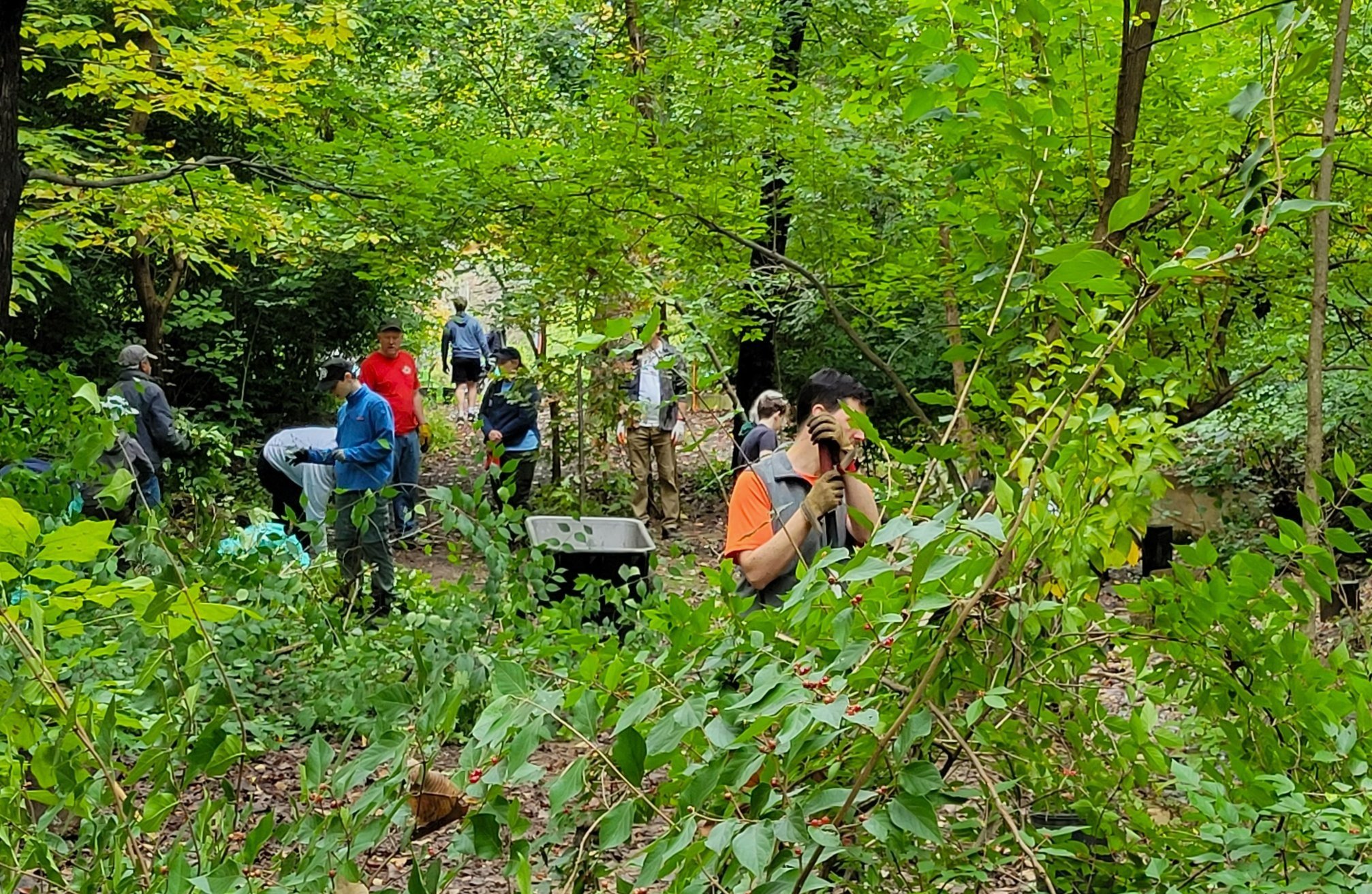
Check out our volunteer page for all the different ways you can lend a hand! From pulling invasive plants at habitat restoration sites to citizen science efforts like counting birds and insects, there’s something for everyone.
Become a Member
Join our roost! NVBA members are eligible for perks like discounted ticket prices on classes, members-only events and bird outings. Plus access to our wonderfully supportive community of birders, conservation advocates and nature lovers.
We have two local membership options: one for individuals and one for families. Check out our membership page for more information. We hope you’ll join us!