

Reducing Bird Collisions: Practical Solutions for Building Glass and Light
Find out how important it is to reduce outdoor lighting, particularly during bird migration, and make buildings safer for birds.
Photo: Purple Martins, Keith Kingdon/Audubon Photography Awards
Original program date: April 15, 2026
ZOOM PASSCODE: nKyn03#q
Find out how important it is to reduce outdoor lighting, particularly during bird migration, and make buildings safer for birds.
Over 100 million birds will migrate through northern Virginia in this spring, and eighty percent of our migrating birds travel at night. They use a variety of cues to keep themselves on track, including the stars. For that reason, excessive lights at night can be deadly for them. Some birds crash into buildings at night, injuring or killing themselves, and others can be distracted from their migration routes, flying around lights and wasting the energy they need to reach their destinations. During daylight, birds mistake reflective glass surfaces for open space, fly into them and die. Over 1 billion birds die from building collisions in the United States each year.
Hear from our speakers Joelle Gehring, the Acting Assistant Regional Director for the U.S. Fish and Wildlife Service Migratory Bird Program, and Jo Anna Lutmerding, a Biologist, also with the U.S. Fish and Wildlife Service. Join them to learn how outdoor lights affect bird migration and birds’ health and reproduction throughout the year and how you can make buildings and houses safer for birds.
Note that this is a recorded Zoom meeting and you will need the passcode to view: nKyn03#q
Learn How to Protect Northern Virginia's Birds
Watch this recorded program to learn more about the dangers our birds face from window collisions and other man-made hazards and what you can do to make their lives less risky.
Photo: Purple Martins, Keith Kingdon/Audubon Photography Awards
Original program date: October 9, 2024
Over 100 million birds migrate through northern Virginia each spring, and 160 million migrate through each fall. Their journeys are perilous because they can be attracted to and disoriented by brightly lit buildings and crash into them or waste precious energy flying around the lights.
Birds that live here risk colliding with glass and other reflective surfaces, and light pollution disrupts their feeding, sleeping and reproduction, as well as that of the plants and insects on which they depend.
NVBA has established a partnership with Loudoun Wildlife Conservancy, DarkSky Virginia, DarkSky NOVA, Nature Forward, the Friends of Dyke Marsh and the Friends of Little Hunting Creek to initiate a Bird Safe NOVA campaign. Watch this recorded program to learn more about the dangers our birds face and what you can do to make their lives less risky. Our speakers include Greg Butcher, the recently retired Migratory Species Coordinator for U.S. Forest Service’s International Programs; Christine Sheppard, the American Bird Conservancy’s Bird Collisions Campaign Director; and Laura Greenleaf, the volunteer leader of DarkSky Virginia.
World Migratory Bird Day Workshop: Lights Out for Birds
In the workshop, Greg Butcher shares simple steps that everyone can take to reduce light pollution and help birds.
Photo: Miguel Eduardo Matta Pereira / World Migratory Bird Day
Original program date: May 5, 2022
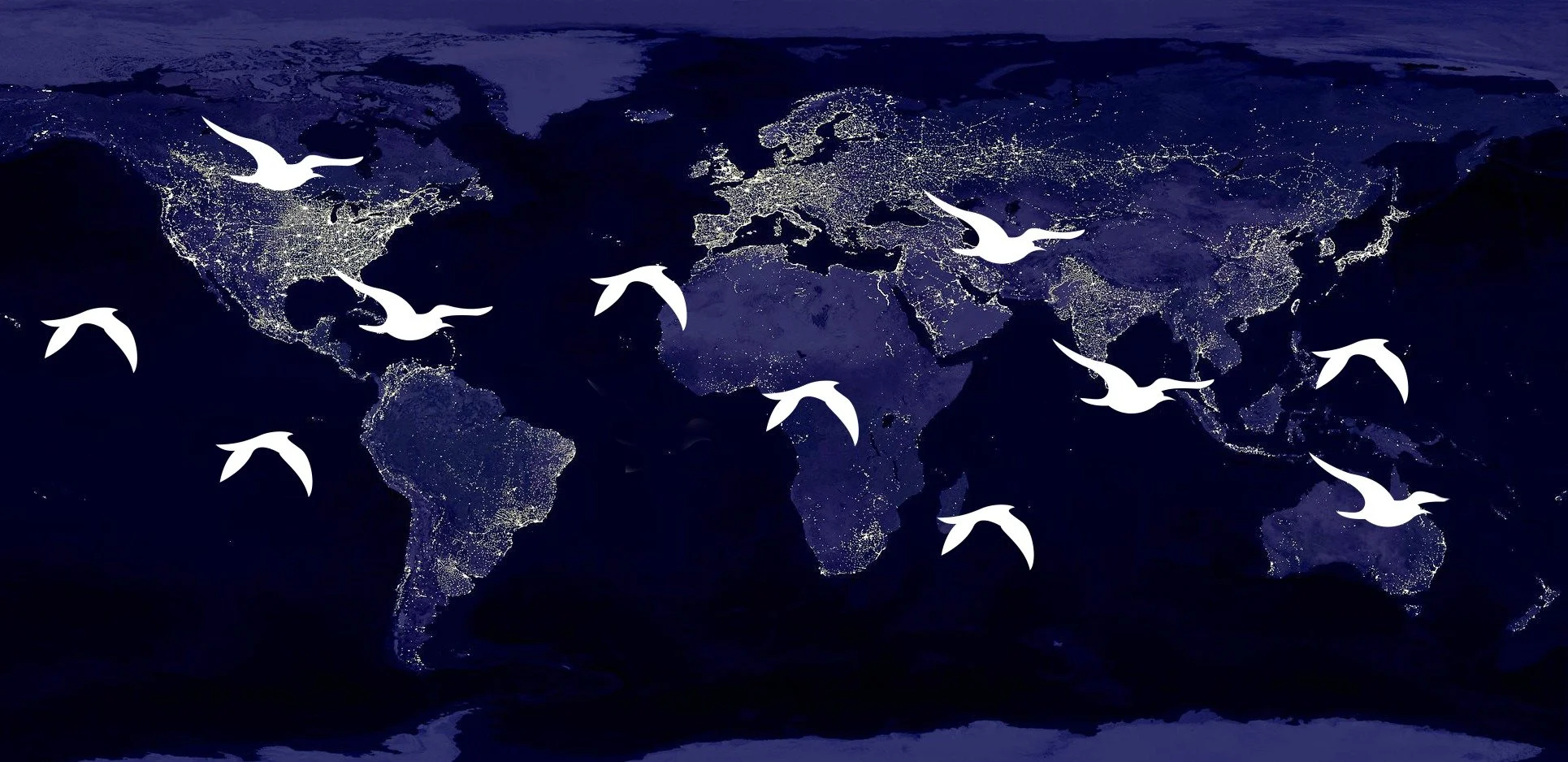
World Migratory Bird Day (WMBD) is May 14, 2022. This year’s campaign highlights the impact of light pollution on migratory birds with the theme “Dim the Lights for Birds at Night.” Join us on May 5 for a WMBD virtual workshop led by Greg Butcher, ASNV Vice-President and Migratory Species Coordinator for U.S. Forest Service International Programs.
In the workshop, Greg shares simple steps that everyone can take to reduce light pollution and help birds. Most bird migration in the Americas occurs at night, with birds using stars and the moon to guide them. Urban and suburban lights increasingly outshine or lessen natural light sources, confusing the migrating birds. That confusion can slow or misdirect birds in the middle of an already strenuous journey. People are the source of this light pollution and people can take action to reduce it.