FRITILLARY BUTTERFLIES
photo by
Judy Gallagher
Fritillaries (Genera Argynnis, Speyeria, Boloria and Euptoita)
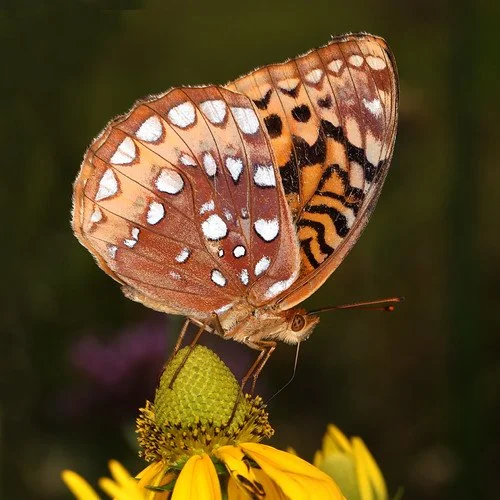
Great Spangled Fritillary - Photo by Judy Gallagher
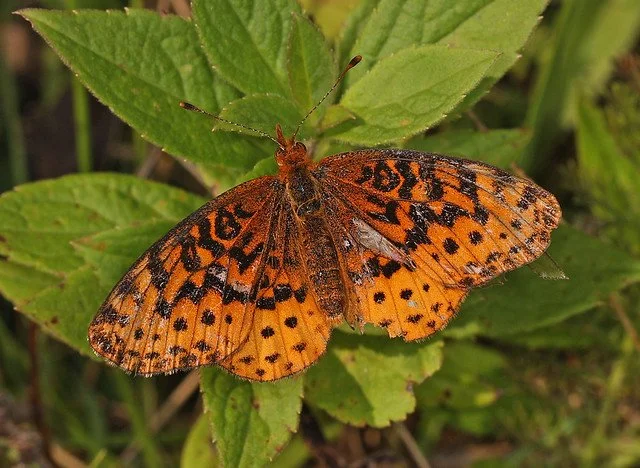
Meadow Fritillary - Photo by Judy Gallagher
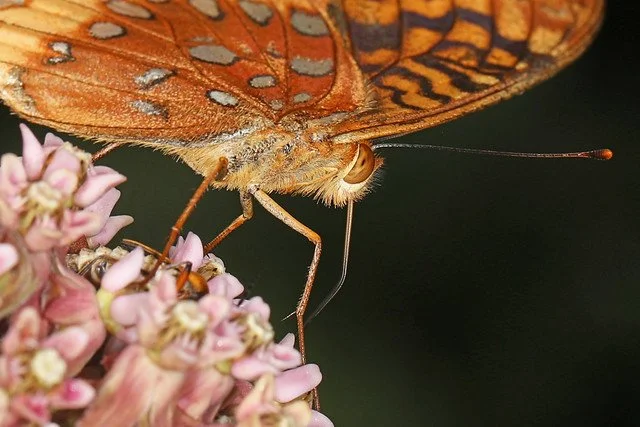
This group of rusty-orange and spotted butterflies depends on violets as food for their larvae. All species found in our area have black spots on the upper side of their wings and most have silver spots on the bottom side of their hind wings. They fly low to the ground and may stay for hours at a single nectar source. They are found in damp meadows, open woodlands and along streams. The most common, and second largest, is the Great Spangled Fritillary (Argynnis cybele) - it's quite a sight as it floats along a moist meadow-edge with those glowing orange wings. The adult's favorite nectar plants are milkweed species.
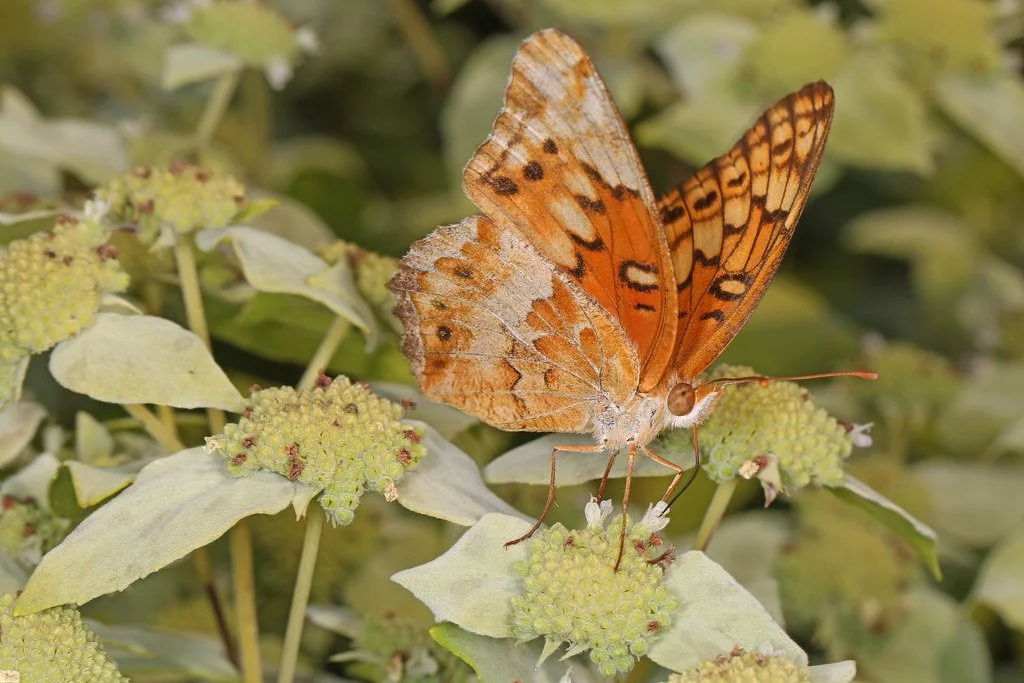
Meadow Fritillaries (Boloria bellona) and Variegated Fritillaries (Euptoieta claudia), smaller but equally beautiful, are also both seen in our area. Two species, the Regal Fritillary (Speyeria idalia) and the Silver-bordered Fritillary (Boloria selene), have mysteriously vanished from Northern Virginia since the 1970s, possibly due to habitat loss, pesticides and/or invasive exotics.
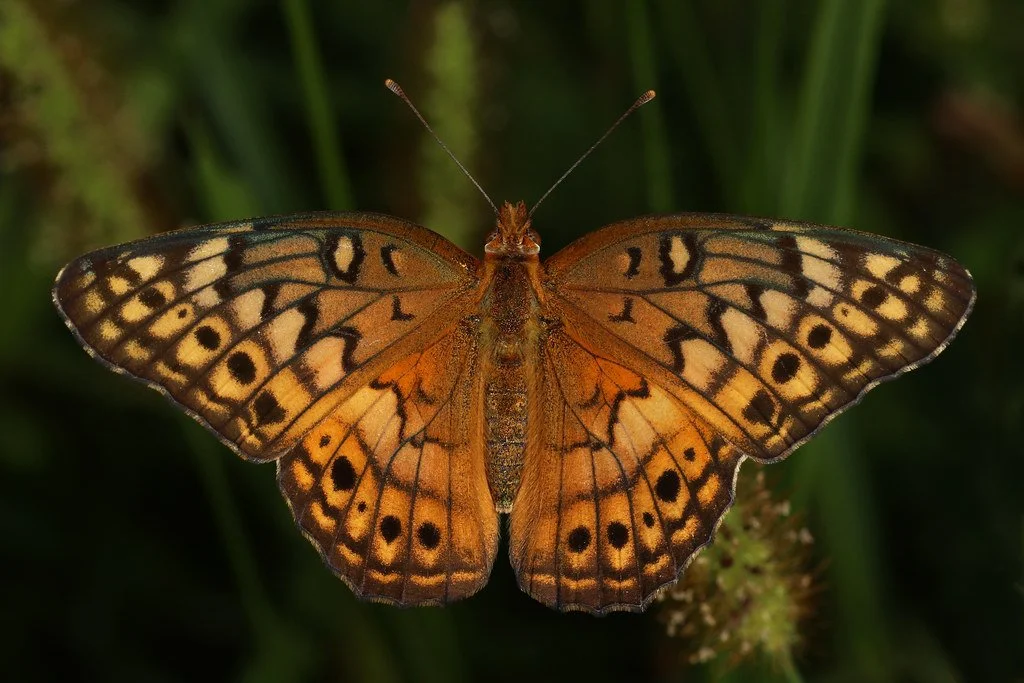
Variegated Fritillary - Photo by Judy Gallagher
| What Fritillaries Need | How Can We Help |
|---|---|
| Food: All local fritillary larvae eat the new shoots of violets as their host plant. Fortunately for us, violets are common, as long as we leave space for them in our yards. Adult fritillaries nectar on many plants. They will also obtain nourishment from rotting fruit and dung. |
|
| Shelter: We do not know exactly where Fritillaries shelter. Your observations as a citizen scientist could help us learn more about their shelter preferences |
|
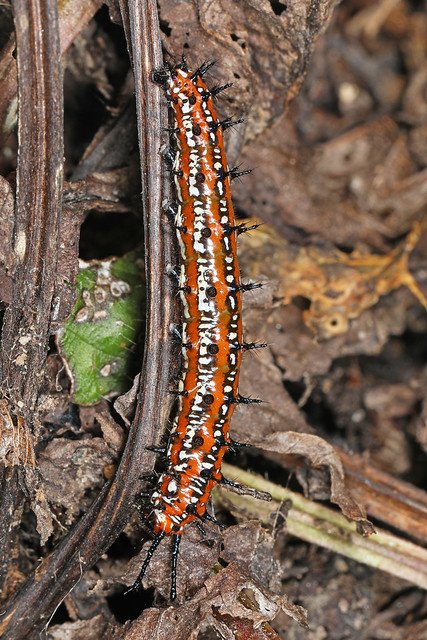
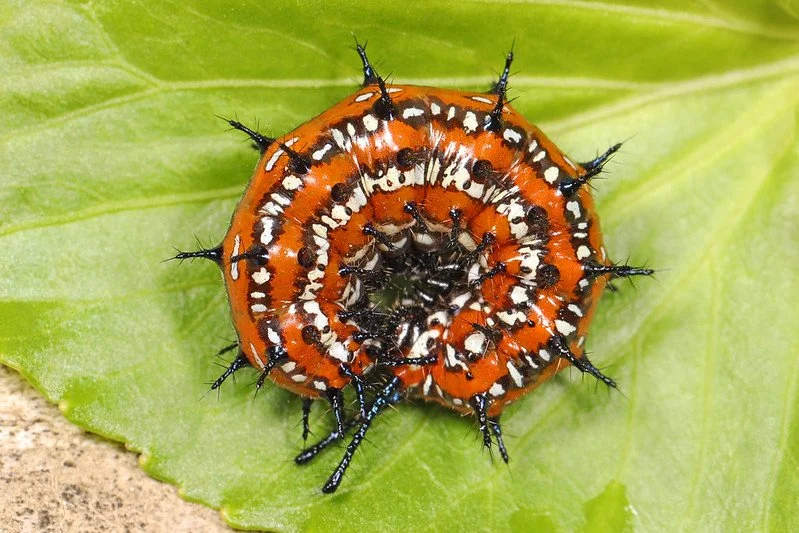
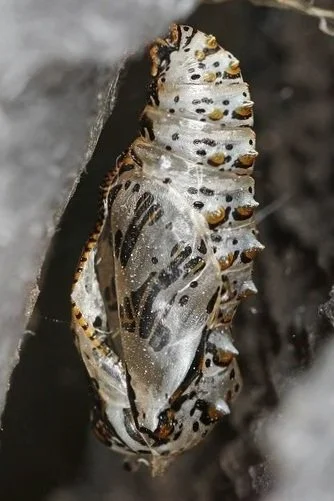
| Breeding: The Great Spangled Fritillary has one brood per year. Females lay single eggs on plants near the host plant in the late summer. The young hatch, crawl to the violet plant and over-winter in the leaf litter without eating. The following spring they eat the fresh violet shoots. Caterpillars are black, with orange and black branched spines. Their chrysalis is dappled brown. Adults fly from late May to early Sept. |
|
| Other: No one knows for sure what caused the collapse of the local populations of Silver-spotted Fritillary and Regal Fritillary. One theory is that changing land-use patterns have destroyed the damp fields that held their larval and adult host plants. Newer pesticides that were introduced in the late 1960s and 1970s may also have played a part in their demise. |
|
Where to see Fritillaries and their habitat:
Huntley Meadows Park, Occoquan Bay National Wildlife Refuge, Manassas Battlefield Park, and Meadowlark Gardens Regional Park.