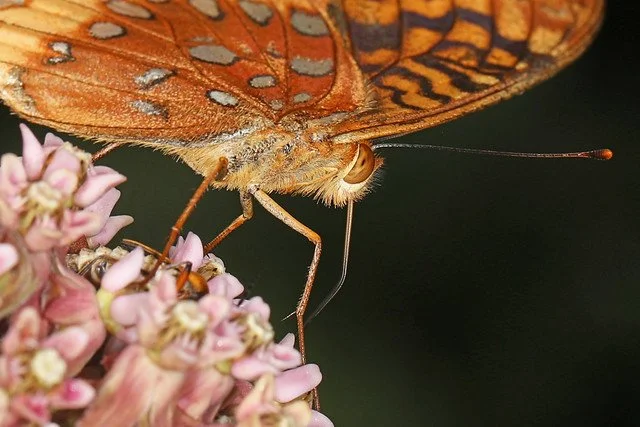
SWALLOWTAIL BUTTERFLIES
photo by
Judy Gallagher
Swallowtails (Family: Papilionidae, Genera: Papilio, Eurytides, Battus)
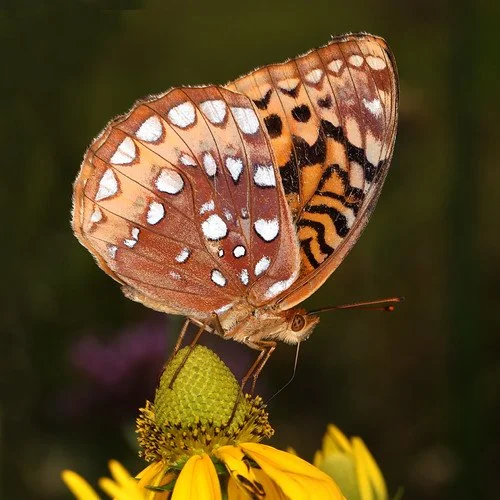
Great Spangled Fritillary - Photo by Judy Gallagher
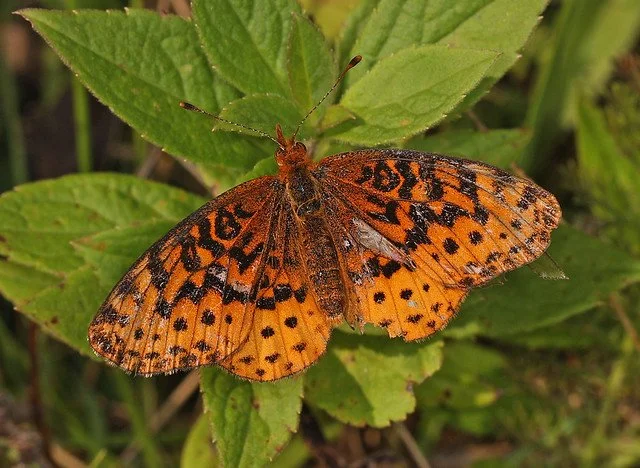
Meadow Fritillary - Photo by Judy Gallagher
Common swallowtail species in their natural range in Northern VA include the Tiger Swallowtail (Papilio glaucus), which is the state butterfly of Virginia, the Spicebush Swallowtail (Papilio Troilus), the Black Swallowtail (Papilio polyxenes), the Zebra Swallowtail (Eurytides marcellus), and the Pipevine Swallowtail (Battus philenor). These are representatives of a family that includes the largest butterflies in North America.
Their wingspan is some 2 ½ to 5 inches, and they normally have prominent “tails” on the hindwings. The caterpillars (larvae) are distinctive, typically with forklike horns (osmateria) and many with bright warning coloration or a large eyespot.
Young caterpillars may be mottled, resembling bird droppings. Sexual dimorphism is common (two recognizable forms in a single species). In suburban settings, it is more common to see the Tiger and Black as their host plants are somewhat more widespread. Identification is easy for the Zebra and yellow form Tiger, each with distinctive color and markings. The Pipevine Swallowtail is a species, like the Monarch, that serves as a model that other species mimic. Predators avoid the distasteful
Pipevine and its look-alikes, including dark form female Tiger Swallowtails, Black Swallowtails and Spicebush Swallowtails.
Similar flight behaviors, as well as closely matched physical features have evolved in the mimics to confuse potential predators.
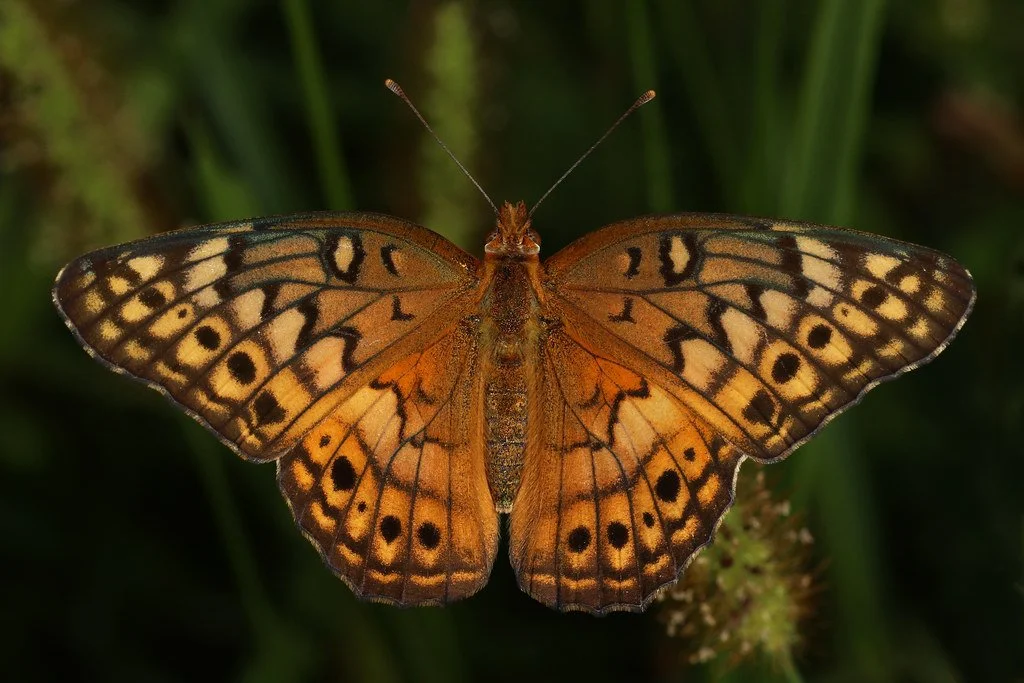
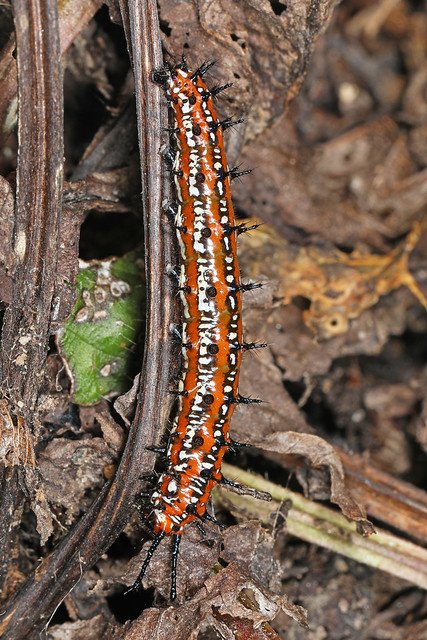
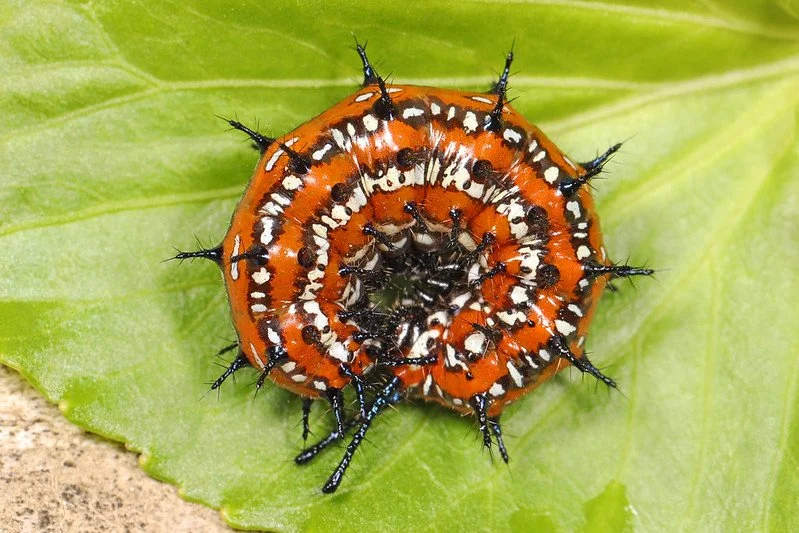
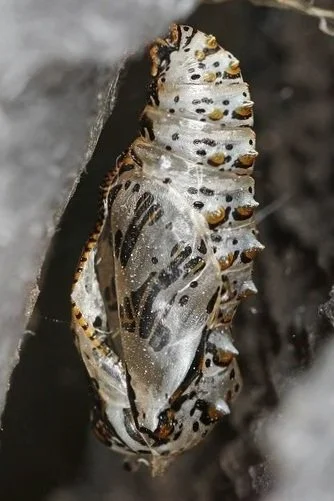
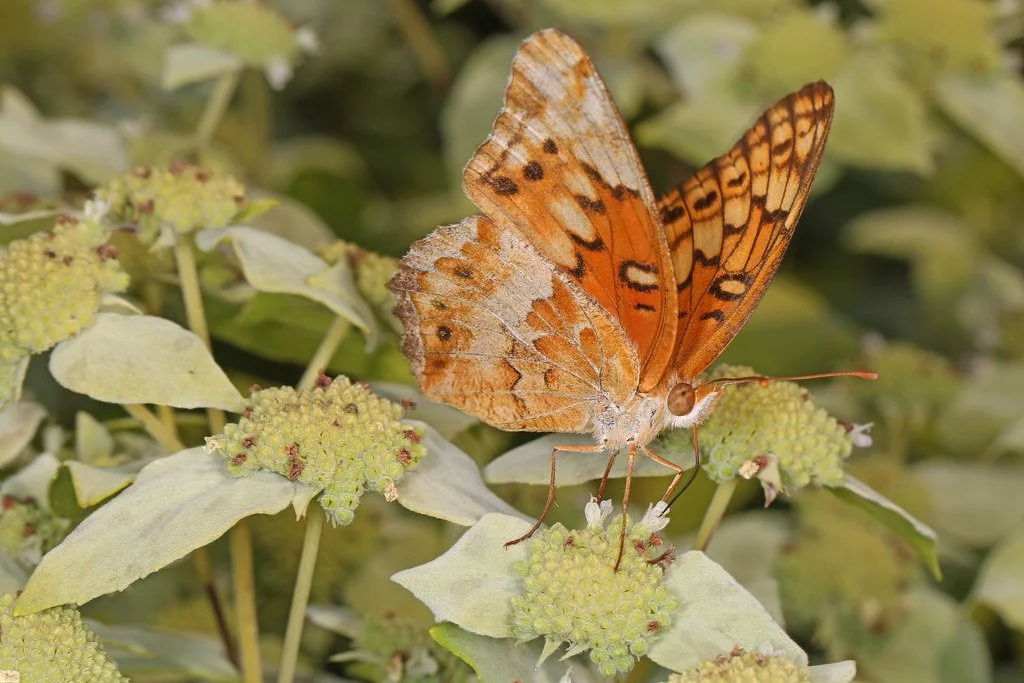
Variegated Fritillary - Photo by Judy Gallagher
| What Swallowtail Butterflies Need | How Can We Help |
|---|---|
| Food and Water: All adult stage Swallowtails seek nectar plants for energy during their short reproductive lives, but they depend on particular plant species to lay eggs and host the hungry caterpillars. Different swallowtail species require different host plants. The Zebra needs pawpaw (Asimina spp.). The Pipevine swallowtail needs pipevine (Aristolochia spp.) The Spicebush swallowtail needs (no surprise) the native spicebush (Lindera benzoin) or sassafras (Sassafras albidum). Black swallowtail caterpillars feed on plants in the carrot family (Apiaciae), including Golden alexander (Zizia aurea), Rattlesnake master (Eryngium yuccifolium), as well as non-native members of the carrot family, such as dill, parsley, fennel and Queen Annes Lace. Tiger Swallowtail caterpillars feed on native deciduous tree species, including willows (Salix spp.), wild cherries (Prunus spp.) and tulip poplar (Liriodendron tulipfera). |
|
| Breeding: All butterflies undergo complete metamorphosis. This family of butterflies commonly produces anywhere from 1 to 3 flights (broods) per year. Eggs are laid singly on host plants, hatching in 4-10 days. Caterpillars mature in 3-4 weeks and the upright pupa stage lasts 10-20 days. The adult butterfly phase of mating and egg laying commonly lasts around 2 weeks. |
|
| Shelter: Adult Swallowtails are on the move almost constantly during their short lives. They may perch for the night, or during storms, under leaves or branches of shrubs or trees. Eggs and caterpillars (larvae) are vulnerable, not so much to predators, as from simple loss of habitat. They need the plants mentioned above in order to survive. On these plants, the caterpillar spends its life feeding and molting several times as it grows. The final molt produces the pupa, or chrysalis, during which stage it does not feed. Swallowtails over-winter in the pupa stage. |
|
| Resources: Want to know about which host plants will attract Swallowtails or other butterfly species? Several organizations publish lists of native Virginia host plants. Other organizations that promote pollinator conservation and provide information about increasing their habitat include Xerces Society and Pollinator Partnership. |
|
Where to see Fritillaries and their habitat:
Huntley Meadows Park, Occoquan Bay National Wildlife Refuge, Manassas Battlefield Park, and Meadowlark Gardens Regional Park.