NVBA NEWS BLOG
Welcome to the blog for Northern Virginia Bird Alliance, a wealth of resources about northern Virginia birds, wildlife, habitat conservation and restoration, native plants, wildlife-friendly gardening, advocacy and more.
It’s Official: The Bald Eagle Is Our National Bird
On December 24 President Joe Biden signed S. 4610, making it official that the Bald Eagle is the national bird of the United States.
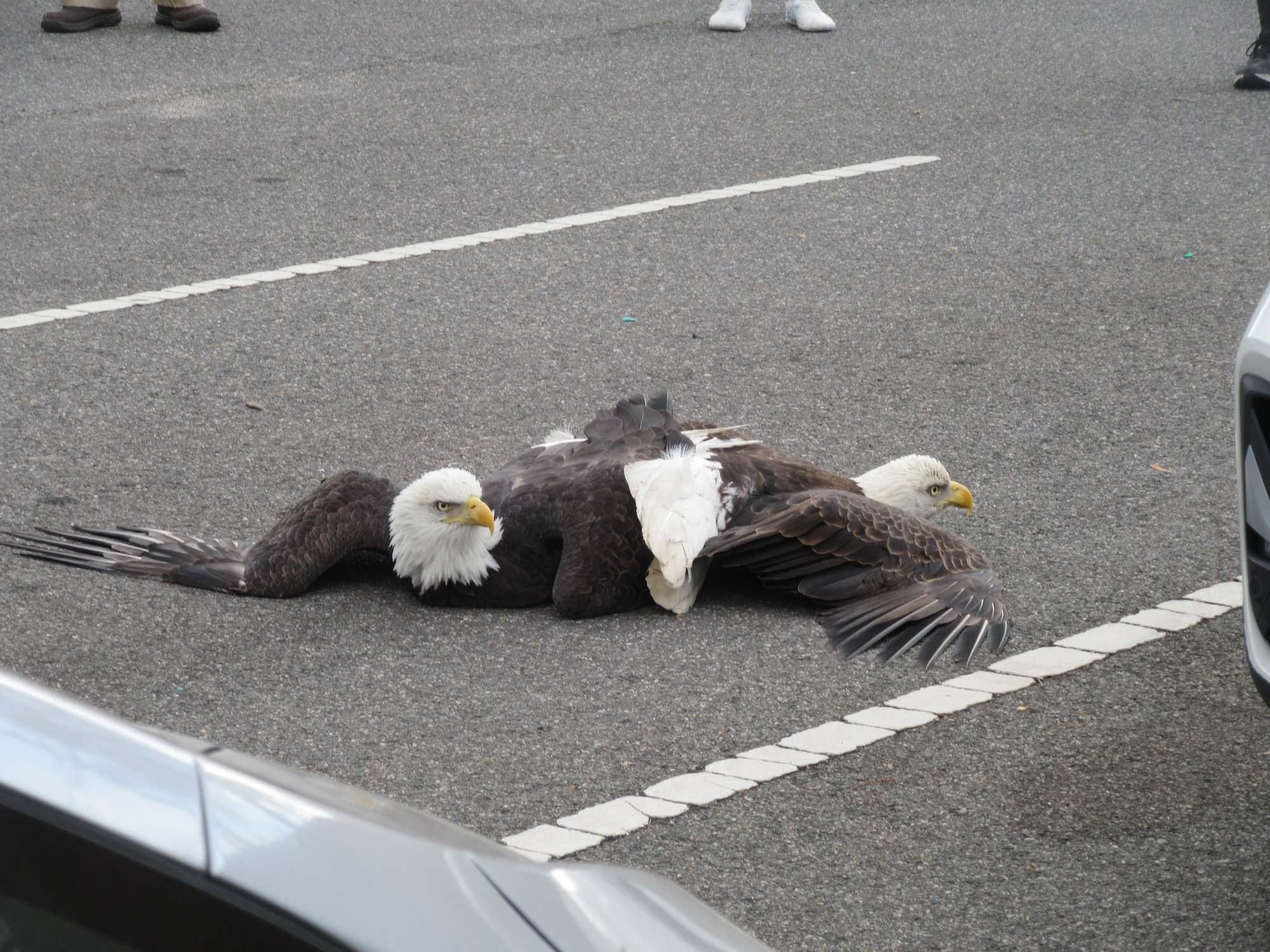
Photo: Bald Eagle, Cynthia Hansen/Audubon Photography Awards
On December 24 President Joe Biden signed S. 4610, making it official that the Bald Eagle is the national bird of the United States. Many did not know that it was not already our national bird, because it is a pervasive symbol throughout our government, as the bill’s findings make clear.
Since 1782 it has been the Coat of Arms for the United States Great Seal; it’s the leading insignia for all branches of the military; its image is on thousands of government branches, department and agencies; it’s integral to the spiritual lives and sacred belief systems of most Indigenous peoples and Tribal communities; and it’s on hundreds of stamps and many coins and currencies.
For those of us working actively to conserve threatened bird species, it’s also a symbol of how focused efforts can return an endangered bird from near extinction.
Two Entangled Bald Eagles Fell from the Sky
When Janet Challender was walking from the Hollin Hall Senior Center to her car around 2 p.m. on October 15, as she rounded the corner, suddenly, out of the sky, two bald eagles intertwined with each other “crashed into the parking lot like a meteor,” she said.
Photo: Entangled Bald Eagles, Glenda C. Booth
By Glenda C. Booth
First published in the Connection Newspapers
When Janet Challender was walking from the Hollin Hall Senior Center to her car around 2 p.m. on October 15, as she rounded the corner, suddenly, out of the sky, two bald eagles intertwined with each other “crashed into the parking lot like a meteor,” she said.
Entangled Bald Eagles, Glenda C. Booth
The birds, wide-eyed and alert, then seemed to quietly rest on the pavement. As the 15 or so bewildered onlookers watched, amazed to see two eagles up close, to their great relief, they observed that the eagles were breathing. The birds’ “audience” was eager to find a solution.
The center’s director, Alexa Fuerth, asked everyone to keep their distance to help protect the birds. About 10 seniors and center staffers made a loose circle of vehicles and bodies around the birds to keep the curious at a distance, especially since they expected parents to be arriving soon to pick up their children from A Child’s Place, the child care center there.
The eagles watched their fans intently, but they barely moved.
Fuerth made several calls to government officials and wildlife rescue organizations. Around 4 p.m., Mitchell Mansfield from the Fairfax County Police Department’s Animal Protection Unit arrived in a white van. He said he came immediately from a training in the Dulles Airport area when they got the call.
Mansfield said he would try to capture the eagles and take them to a wildlife rehabilitator. After discussing the challenge with Fuerth and others, Mansfield threw a red towel toward the birds to cover them and instantly, they separated and flew up and away in a startling “whoosh.” They did not appear to be injured.
Disentangled Bald Eagle, Glenda C. Booth
“Fighting is common among bald eagles and occasionally they will trap each other when their feet lock together during combat,” said Jeff Cooper, Wildlife Biologist with the Nongame Bird Program, Virginia Department of Wildlife Resources. “Eagles fight over territory and food resources.”
Fuerth said, “I am very grateful to all our members and staff who were so compassionate. It was heartfelt to see how many people stepped up and helped. It was really emotional to see the birds fly away.
“We send a special thanks to the Fairfax County police for coming and to the Owl Moon Raptor Center that was working to find a rehabilitation center for them in case they were injured,” she said.
Excitement at the senior center usually centers around bus trips to Wegmans, Railroad Club talks or bingo. Bald eagles suddenly plummeting from the sky no doubt topped the usual thrills at this popular senior hangout.
On Bald Eagles
Mature bald eagles have a white head and tail, a yellow hooked bill, yellow talons and a chocolate-brown body. Adults can weigh from 10 to 14 pounds and have an eight-foot wingspan.
They are raptors, powerful flyers that grasp their prey with their sharp talons. They eat mostly fish, but also other birds, small mammals and snakes. Bald eagles build nests five to six feet in diameter and two to four feet tall, usually near water, in Northern Virginia typically on the Potomac and Occoquan Rivers.
In the lower 48 states, by 1963, bald eagle numbers had plunged to 417 known nesting pairs from around 100,000 nesting bald eagles in the 1700s. Scientists determined that DDT and other pesticides’ compounds moved up the food chain and thinned eggshells so severely that the shells broke and chicks did not hatch. In 1967, the U.S. Fish and Wildlife Service (FWS) listed the bald eagle as endangered. After Congress banned DDT in 1972, the numbers began to rise and by 2007, FWS officials announced the bald eagle’s recovery and removed it from the endangered species list. Bald eagles are protected under other laws. The bald eagle is the United States’ national bird.
Bald Eagles are Thriving but Face Challenges
In an article published in the March 10, 2022 Mount Vernon Gazette Newspapers, Glenda Booth reported on a presentation about the state of Bald Eagles in our region.
Photo: Bald Eagle, Deborah Smith/Audubon Photography Awards
In an article published in the March 10, 2022 Mount Vernon Gazette Newspapers, Glenda Booth reported on a presentation about the state of Bald Eagles in our region.
Bald Eagle, Deborah Smith/Audubon Photography Awards
“Virginia’s tidal rivers are just loaded with bald eagles,” Jeff Cooper told 210 people attending the March 2 meeting of the Friends of Dyke Marsh. These large raptors with an 80-inch wingspan regularly breed, nest, forage and migrate on and near rivers like the Potomac. People see bald eagles frequently at Dyke Marsh, Mason Neck and Fort Belvoir. Cooper is wildlife biologist with the Virginia Department of Wildlife Resources and has worked with birds for over 30 years and co-authored 17 papers. (Read the entire article here.)
Bald Eagles Down in the Dumps?
Even if you have not visited the Prince William County landfill, you may have heard that it is a magnet for Bald Eagles, among other birds, including clouds of gulls. You can stand at a random spot and count more than 20 adult eagles at a time.
Photo: Bald Eagle, Antonio Busiello/Audubon Photography Awards
By Roger DiSilvestro
Our Waste Sites May Be a Threat to Birds
Even if you have not visited the Prince William County landfill, you may have heard that it is a magnet for Bald Eagles, among other birds, including clouds of gulls. You can stand at a random spot and count more than 20 adult eagles at a time. Bit of a shame, really, that we have pulled Bald Eagles back from the brink of extinction, thanks largely to federal protective laws, only to have then turn into connoisseurs of rubbish. But nature finds sustenance where it can.
Birds in Jeopardy
Unfortunately, the eagle’s adaptability to available food sources may bring harmful effects. Researchers at Argentina’s National University of Comahue, after examining blood samples from 48 adult Black Vultures that foraged in a Patagonian garbage dump, found that the birds were not only heavier than conspecifics that fed only in the wild but also had:
higher levels of uric acid from eating too much protein,
excessive levels of blood sugar from eating sweets and cereals,
an increased likelihood of developing kidney and other diseases because of the diet heavy on protein and carbos, and
higher levels of immune proteins thanks to the high density of pathogens encountered in the dumps.
The findings are a warning that other birds scavenging on rubbish, including California Condors and our own Bald Eagles, also could be at risk.