NVBA NEWS BLOG
Welcome to the blog for Northern Virginia Bird Alliance, a wealth of resources about northern Virginia birds, wildlife, habitat conservation and restoration, native plants, wildlife-friendly gardening, advocacy and more.
Birding with Purpose: Six Principles for Ethical Birding
It’s the time of year when more of us are spending time outdoors, watching and photographing birds. It’s also a good time to review the principles of ethical birding.
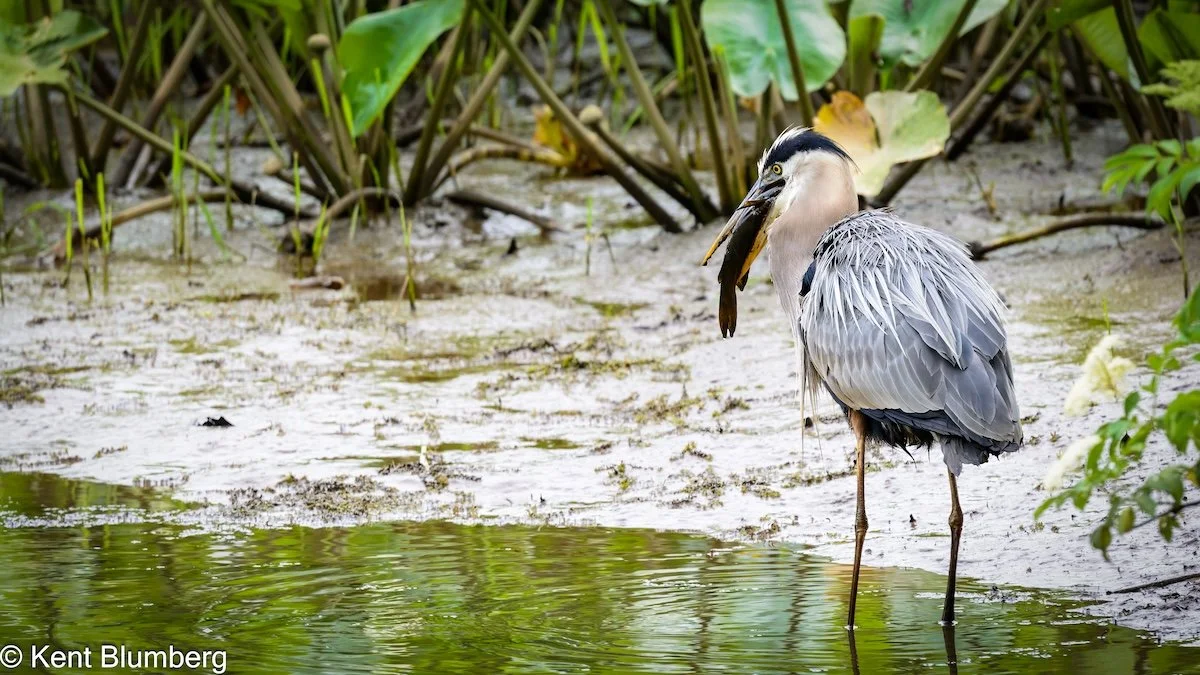
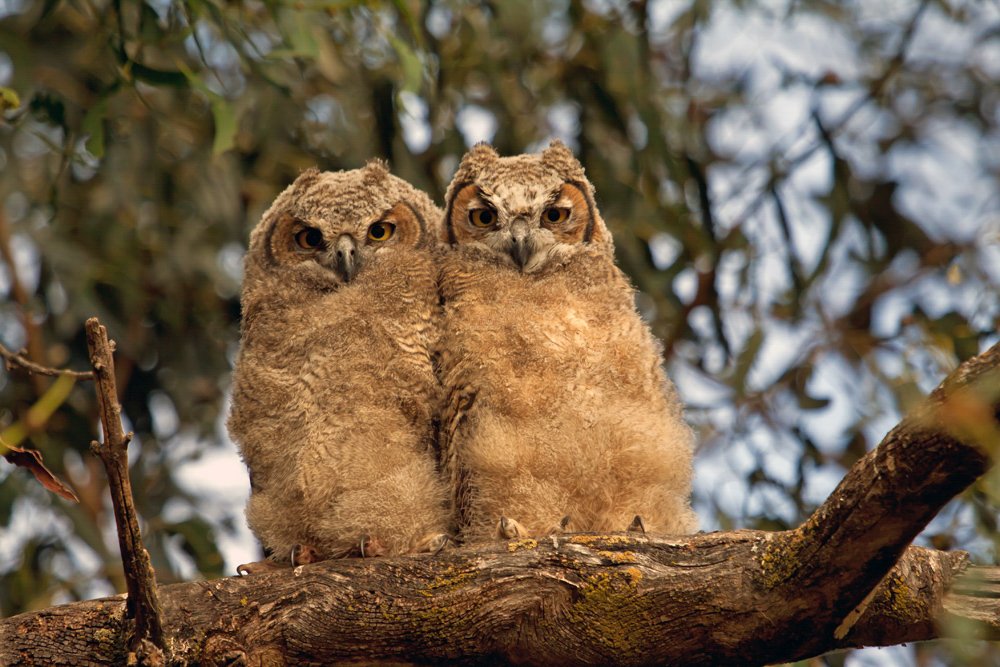
Photo: Great Horned Owlets, Tom Muehleisen/Audubon Photography Awards
Kent Blumberg
It’s the time of year when more of us are spending time outdoors, watching and photographing birds. It’s also a good time to review the principles of ethical birding.
First, we want to protect the birds. They live on tight energy budgets, especially when migrating and nesting. Any energy spent responding to us is energy they can’t use for survival. Second, birds and the environment are shared resources that we want to protect for the future. And third, birding itself is a shared experience, and birding ethics serve as a social contract to keep it enjoyable for all.
In short, birding ethics protect the birds, preserve the experience, and sustain the community.
Here are six principles to keep in mind as you enjoy the birds in northern Virginia.
First, do no harm to birds, other wildlife or the environment. Prioritize their needs over yours. If their behavior indicates stress, back away. Avoid flash, especially with nocturnal birds, as it may harm their night vision.
Stay in your lane. Keep your distance from birds, using binoculars, scopes, or telephoto lenses to get closer, rather than your feet. Stay on marked trails, or on boardwalks. Keep away from nests. Don’t use drones to capture photos or videos of birds, especially near nesting sites.
Be polite and considerate of others. Nurture the shared experience. At Huntley Meadows, don’t take up the entire boardwalk with your gear but leave a clear path for others to pass. If you spot a rare bird or a particularly good view of a bird, take your photos and then step aside so others can enjoy it as well. Balance your needs with the needs of others and help create space for everyone.
Don’t manipulate birds to get the photos you want. Avoid flushing them repeatedly, baiting them or playing recorded bird calls to attract them. Don’t approach birds to force them to fly.
Respect private property and follow all restrictions on public lands.
Lead by example. When you share photos and videos of birds, include how you captured the images ethically. Modeling ethical behavior can help others learn.
Most of the time, we’ll never see the results of the choices we make in the field. The bird that stays instead of flushing, the nest that remains undisturbed, the moment that unfolds naturally because we chose patience over proximity.
That quiet impact is at the heart of birding ethics and it’s also what makes birding meaningful. We head out because we’re drawn to something: beauty, curiosity, a sense of connection to the natural world. When we give birds space and put their needs first, we protect that connection.
In doing so, we often gain something better than a closer look or a sharper photo: an encounter that feels authentic. One that wasn’t taken but offered.
To learn more, check out Audubon’s Guide to Ethical Bird Photography and Videography.
Kent Blumberg is an MBA professor, passionate bird photographer and voracious reader.
Why I Keep Coming Back: Birding and Photography Along Marumsco Creek
My favorite birding spot is Veterans Memorial Park in Woodbridge. I keep coming back for the surprises that appear around every bend in the trail.
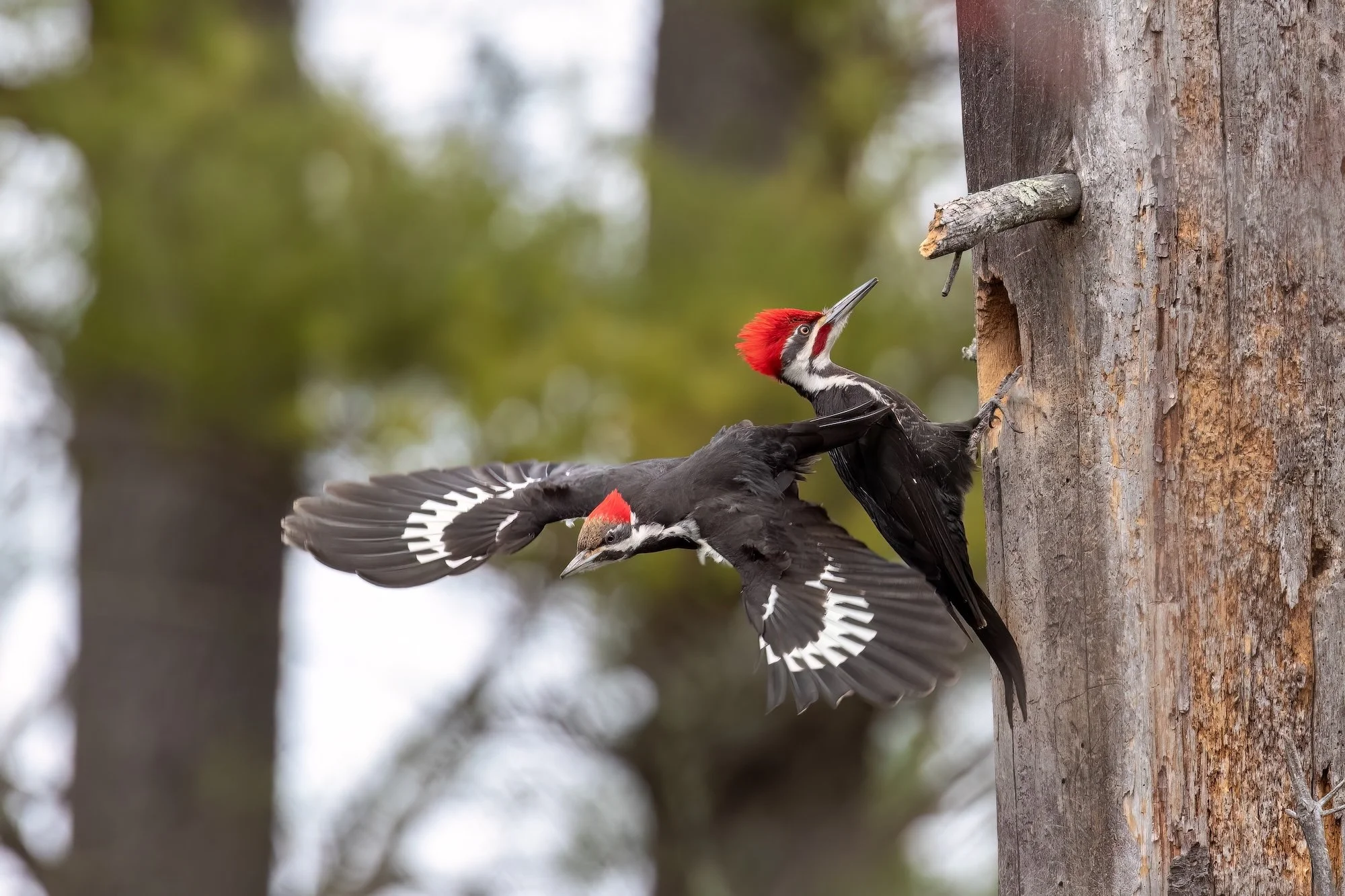
Photo: Great Blue Heron, Kent Blumberg
Kent Blumberg
My favorite birding spot is Veterans Memorial Park in Woodbridge. It’s close to my home and offers a variety of habitats: Marumsco Creek along the western edge of Occoquan Bay National Wildlife Refuge, cattail marsh, Osprey nests on light poles, and a small strip of forest that often hosts migrant songbirds.
I keep coming back for the surprises that appear around every bend in the trail.
There are several easy places to park, depending on how far you want to walk. A gravel lot sits at the corner of Featherstone Road and Bay Street, perfect if you want a longer walk along the soccer fields before heading to the creek. For a shorter visit, park near the skateboard park or at the baseball fields at the end of the road.
The trail along the creek is flat and well-maintained, making it accessible for most visitors. There’s one short section with steps near the recreation center, but otherwise it’s an easy walk.
The trail follows the creek for about a half mile. I usually walk out and back the same way. It’s always surprising how much the scenery and birds change when I turn around.
The edges of the soccer fields can be surprisingly productive. I’ve spotted migrating warblers, Ospreys feeding, and Red-bellied Woodpeckers in mid-molt, along with other surprises.
Over the years, eBird reports include more than 200 species here. Highlights of my visits include Great Blue Herons, Brown Creepers, Eastern Bluebirds, Ospreys, Wood Ducks, and many others. If you’re looking for specific species, pay attention to the tides. Low tide exposes mudflats that attract shorebirds, while high tide brings in more waterfowl.
Osprey with breakfast. Photo: Kent Blumberg.
As a photographer, I’m always looking for interesting bird behavior. One morning I spent 30 minutes watching a Great Blue Heron wrestle with a huge catfish, repositioning it again and again before finally swallowing it headfirst. On another visit, I came across an Osprey enjoying breakfast in a tree next to the soccer fields. Moments like these are why I keep coming back.
The trail runs along the west side of the creek, so morning light can be tricky. I’ve had the best luck standing in the shade of a tree and shooting north or south for better side lighting.
During warmer months, the pickleball courts near the recreation center can get noisy. If you prefer a quieter experience, visit early in the morning or on a weekday.
Restrooms are available at the recreation center and baseball fields during warmer months, along with several portable toilets. Both are typically closed in winter.
If you’re looking for a peaceful place with a surprising variety of birds, consider a visit to Veterans Memorial Park. You never know what might be waiting just around the next bend.
Kent Blumberg is an MBA professor, passionate bird photographer and voracious reader.
The 2026 Audubon Photography Awards are now open!
Attention photographers! National Audubon Society kicked off its 17th annual photography awards on January 15.
Photo: Pileated Woodpeckers, Wayne Wetherbee/Audubon Photography Awards
Attention photographers! National Audubon Society kicked off its 17th annual photography awards on January 15. The contest is open for submissions of photographs and videos until Wednesday, March 4, at 12 p.m. (noon) U.S. Eastern Time.
The Grand Prize winners will receive $5,000 and a voyage to Antarctica. Youth entrants can win a trip to Hog Island Audubon Camp in Maine. There also will be prizes for the best visuals featuring migratory birds, landscapes and native plants that birds rely on, female birds, and conservation challenges. Winning photos and videos will be published in the Fall 2026 issue of Audubon magazine and on the Audubon website.
Complete rules and tips for capturing the perfect moment are available on the 2026 Audubon Photography Awards page.
Calling All Photographers: 2025 Audubon Photography Awards
The National Audubon Society’s annual photography competition is now open for submissions.
Photo: Green-winged Teals, James Fatemi/Audubon Photography Awards
The National Audubon Society’s annual photography competition is now open for submissions. You can submit photos or videos until Wednesday, March 5 at 12 p.m. (noon) ET. Let’s see if northern Virginians can bring home more prizes. Remember that local teens Amiel Hopkins and James Fatemi won the Youth Honorable Mention Award in the 2022 and 2023 competitions, respectively.
Greater Prairie Chicken, Amiel Hopkins/Audubon Photography Awards
Recognizing that many species migrate between the northern and southern hemispheres, Audubon is opening the competition this year to submissions from Chile and Colombia in addition to the submissions from the United States and Canada. So, there will be cash prizes for entrants from the United States and Canada, and for entrants from Chile and Colombia. Winning photos also are featured in Audubon’s magazine.
Keep reading here for the contest rules, prizes and some tips on how to capture that picture-perfect moment.
Local Teen Wins National Audubon Society Photo Award
James Fatemi, a junior at Mclean High School, won the Youth Honorable Mention Award in the National Audubon Society’s 2023 Photography Contest.
Photo: Green-winged Teals, James Fatemi/Audubon Photography Awards
Tom Blackburn
Green-winged Teals, James Fatemi/Audubon Photography Awards
James Fatemi
James Fatemi, a junior at McLean High School, won the Youth Honorable Mention Award in the National Audubon Society’s 2023 Photography Contest. James’s photograph of Green-winged Teals mating during a snowfall at Huntley Meadows Park impressed the judges, one of whom praised his decision to take the photo in adverse weather and stated, “The colors on the male pop beautifully against the overall muted color palette.”
James is no stranger to photo contests. His photo of an American Toad titled “King of His Domain” won first prize in both the Youth and Overall divisions in the 2021 Friends of Huntley Meadows Park photo contest when James was just 14. He also won first prize in the Youth category for the Friends’ 2020 contest.
“King of His Domain,” James Fatemi
James learned the basics of photography about four years ago from his father, Fredrik, who said, “It wasn’t long before James began teaching me things.” His first important photo was of a Scarlet Tanager that he took for his grandmother, who had only ever seen one. James recently has developed an interest in macro photography and enjoys taking pictures of insects as well as birds and other wildlife. You can see more of James’s photos here and here. You can see all of the National Audubon Society’s 2023 award winners here.
Northern Virginia’s Winning Photographer, Amiel Hopkins
Dawn had not yet broken, but in his freezing cold bird blind Amiel Hopkins was awoken by the “booming” of Greater Prairie Chickens all around him.
Photo: Greater Prairie Chickens, Amiel Hopkins
Tom Blackburn
Dawn had not yet broken, but in his freezing cold bird blind Amiel Hopkins was awoken by the “booming” of Greater Prairie Chickens all around him.
Amiel, a northern Virginia resident and member of the NoVA Teen Birding Club, had journeyed to Fort Pierre National Grassland in South Dakota to watch and photograph Greater Prairie Chickens as the males put on elaborate displays in the hope of attracting a mate. He had spent the night in a 4 x 8 plywood box with a small viewing window, and his sleeping bag wasn’t adequate to protect him from the 18-degree overnight temperature. Nonetheless, he quietly began photographing the birds as they raised the long feathers on their necks, inflated their bright-orange throat sacs and released them with booming sounds that can be heard a mile away and performed a stylized dance.
Greater Prairie Chickens, Amiel Hopkins
Amiel submitted five of the photos he took that day to the National Audubon Society’s 2022 Photo Awards Contest. One of those photos, a closeup of a bird with its neck feathers raised and its orange throat sac glowing in the morning sunlight, won the Youth Honorable Mention Award. You can see Amiel’s winning photograph and all the other winning entries here. Accompanying this article is a photograph taken the same day he shot the winning photo of the Greater Prairie Chicken.
Amiel says he has been interested in nature his whole life. He got his first camera seven years ago, and since then has become increasingly interested in bird photography. He particularly likes photographing shorebirds, because he can get down low to capture images at the birds’ level. Chincoteague National Wildlife Refuge and the Pea Island National Wildlife Refuges on the Outer Banks are two of his favorite places to bird.
Amiel credits Fred Atwood, a local teacher and the sponsor of the NoVA Teen Birding Club, for not only encouraging his passion for birding but also influencing how he views nature and life. He calls Fred a “great mentor.” In turn, Fred advises that Amiel’s winning picture is only a small representative of his amazing photo portfolio. Few people get to see Amiel’s photos. He says he doesn’t show them off very often, and the National Audubon Society’s contest is the only one he has ever entered.
Amiel is a senior in high school, and will be leaving to attend Virginia Tech this fall, where he plans to specialize in wildlife biology.
It’s Not Too Late to Enter National Audubon Society’s 2023 Photography Awards Contest
You still have until Wednesday, March 1 at noon (Eastern Time) to enter your photographs or videos to Audubon’s 2023 Photography Awards Contest.
Photo: Western Grebes, Peter Shen/Audubon Photography Awards
You still have until Wednesday, March 1, at noon (Eastern Time) to enter your photographs or videos to Audubon’s 2023 Photography Awards Contest. You have to be at least 13 years old and have a parent or legal guardian’s permission to enter if you are younger than 18 years old. You can submit multiple photos or videos depicting birdlife in any form in one of the five following divisions: Professional, Amateur, Youth, Plants for Birds, and Videos. Complete rules for submission, as well as essential guidelines for ethical bird photography and videography, are available on the Audubon website.
If you need inspiration, you can view the 2022 winners.
If you don’t feel ready yet to enter but want an introduction to bird photography, join Matt Felperin on February 21 for a webinar on bird photography, with an optional February 25 field trip. You can find both on our website under Classes and Events.
Western Grebes, Peter Shen/Audubon Photography Awards
Audubon’s 2022 Photography Awards
Prepare to spend some time in front of your computer or on your phone looking over Aubudon’s 2022 Photography Awards, both still photos and videos.
Photo: White-tailed Kite, Jack Zhi/Audubon Photography Awards
Prepare to spend some time in front of your computer or on your phone looking over Aubudon’s 2022 Photography Awards, both still photos and videos. Audubon announced the top eight winners earlier this summer. But there’s more. Audubon released an additional file of 100 photos and videos from the nearly 10,000 entries from almost 2,500 photographers and videographers. You can view the collection here. Be sure to read the “behind the shot” stories that accompany the winners and other entries. They demonstrate the wide variety of techniques the photographers use and the lengths they go to for the perfect shot.
White-tailed Kite, Jack Zhi/Audubon Photography Awards
Capturing the Natural Beauty of Birds
Bird and native plant photographers should consider entering the 2021 Audubon Photography Awards. Next year will be the contest’s 12th year.
Photo grid: Natalie Robertson
Lisa Mackem
Bird and native plant photographers should consider entering the 2021 Audubon Photography Awards. Next year will be the contest’s 12th year. Winning photos are featured in Audubon and Nature’s Best Photography magazines and showcased in Audubon Photography Awards exhibitions hosted by Audubon chapters and centers nationwide. Walker Nature Center in Reston has presented three exhibitions of winning photos and last year Huntley Meadows Park also presented the show. Even though the 2020 award winners will not be exhibited this coming winter, you can take a virtual gallery tour here.
The 2020 contest entry period ran from January 13 through April 6, 2020, and the 2021 contest entry period will probably be similar. Judges awarded six prizes to photographers including: Grand Prize ($5,000), Professional Prize ($2,500), Amateur Prize ($2,500), Youth Prize (six days at Audubon’s Hog Island Audubon Camp), Plants for Birds Prize ($2,500) and the Fisher Prize ($1,000). Introduced in 2019, the Fisher Prize recognizes an image that is as artistic as it is revealing, and the Plants for Birds Prize honors the top photo that illustrates the crucial relationships between native plants and birds. All photos were judged for technical quality, originality, and artistic merit.
In 2019, amateur photographer Kathrin Swoboda won the grand prize for her photo of a Red-winged Blackbird seemingly blowing smoke rings (actually vapor rings) in Huntley Meadows Park in Alexandria, VA. The contest attracted 2,253 entrants from throughout the U.S. and Canada that year. Swoboda had not intended to enter the contest, but had posted her picture on the Facebook site “Birds of Eastern US”, and someone suggested that she enter. In an interview for The Potomac Flier, Swoboda recommended that to take better bird pictures, “Focus on one bird or species and get to know their nature story.”
In 2020, nearly 1,800 photographers entered the contest, representing all 50 states, Washington D.C. and 7 Canadian provinces. The grand prize photographer, professional photographer Joanna Lentini, captured a Double-crested Cormorant diving toward a sardine swarm in Los Islotes, Mexico. Audubon featured the other category winners and honorable mentions along with Ms. Lentini’s article, “How to Snap Amazing Photos of Birds Underwater.”
The Audubon Photography Awards are open to all U.S. and Canadian residents (excluding residents of Quebec) who are at least 13 years old as of the date of their submission. Audubon encourages and enforces ethical bird photography, and photos that do not adhere to Audubon’s Guide to Ethical Bird Photography will be disqualified. Official rules for the 2020 Audubon Photography Awards are likely to continue for the 2021 contest.
Take a Virtual Tour of the 2019 National Audubon Photography Awards
In celebration of the natural connection between birding and photography, Audubon Society of Northern Virginia co-hosted the 2019 Audubon Photography Awards Traveling Exhibition with Walker Nature Center in February and again with Huntley Meadows Park in March.
Photo: Audubon Photography Award Winners
In celebration of the natural connection between birding and photography, Audubon Society of Northern Virginia co-hosted the 2019 Audubon Photography Awards Traveling Exhibition with Walker Nature Center in February and again with Huntley Meadows Park in March. Sadly the exhibition is now closed to the public but you can take a virtual tour and learn about the stories behind the photographs here.
Local Photographers Win National Wildlife Federation Photo Contest
ASNV member Randy Streufert has won the Grand Prize in the National Wildlife Federation’s “Garden for Wildlife” photo contest. Randy’s photo of a Prothonotary Warbler cooling off in water was the top photo out of nearly 5000 submissions from all over the world.
Photo: Prothonotary Warbler, Randy Streufert
ASNV member Randy Streufert has won the Grand Prize in the National Wildlife Federation’s “Garden for Wildlife” photo contest. Randy’s photo of a Prothonotary Warbler cooling off in water was the top photo out of nearly 5000 submissions from all over the world. Randy and his wife Barbara’s property, where the photo was taken, is a Certified Wildlife Sanctuary in ASNV’s Audubon at Home program.
Randy also won an Honorable Mention for his photo of a Cope’s Gray Treefrog tadpole and froglet.
Copes Gray Treefrog Tadpoles, Randy Streufert
Local wildlife enthusiast Arthur Hass’s photo of an Eastern Tailed-Blue won the top prize in the category Close-up Native Plants and their Wildlife Visitors, and Fairfax resident Sherry Schellenger Parker’s photo of her son in his grandmother’s garden won in the category People in the Wildlife Garden. The Category Winners and Honorable Mentions showcase a wonderful array of photos of plants, wildlife and people enjoying them.
National Audubon Photography Award Winners Show comes to Northern Virginia
In celebration of the natural connection between birding and photography, Audubon Society of Northern Virginia will co-host the 2019 Audubon Photography Awards Traveling Exhibition with Walker Nature Center in Reston between February 5 and February 26, 2020 and again with Huntley Meadows Park in Alexandria between March 4 and March 25, 2020.
Photo: Red-winged Blackbird, Kathrin Swoboda/Audubon Photography Awards 2019 Grand Prize Winner
Join ASNV at Walker Nature Center in February and Huntley Meadows Park in March for the best avian photography of 2019.
In celebration of the natural connection between birding and photography, Audubon Society of Northern Virginia will co-host the 2019 Audubon Photography Awards Traveling Exhibition with Walker Nature Center in Reston between February 5 and February 26, 2020 and again with Huntley Meadows Park in Alexandria between March 4 and March 25, 2020. Visitors of all ages will enjoy a display of the winning photos and learn more about our local birdlife in Northern Virginia.
In the 10th year of the contest, winning photos and honorable mentions were selected from 2,253 entrants from all 50 states, Washington D.C. and 10 Canadian provinces and territories. The 2019 Grand Prize Winner is a photograph of a Red-winged Blackbird taken by Kathrin Swoboda in Huntley Meadows Park.
New this year, the judges introduced the Plants for Birds Prize and the Fisher Prize. The Plants for Birds Prize was awarded to the highest scoring photograph submitted in the Plants for Birds Division, featuring birds and plants native to the area the photo was taken. The Fisher Prize was awarded to the photograph depicting the most creative approach to bird photography across all divisions: Professional, Amateur, Youth and Plants for Birds.
Walker Nature Center will host an Open House on Sunday, February 9, 2020 from 1:00 – 3:00 PM. Visitors can view the exhibition, watch birds from inside the nature house or outside on guided bird walks and take part in bird-related activities for all ages. The center will also host an environmental film on Friday, February 21, 2020 from 7:00 – 9:00 PM.
Huntley Meadows Park will host an Open House on Sunday March 8, 2020 from 1:00 – 3:00 PM with activities in the Visitor’s Center and guided bird walks in the park.
Blowing Smoke for a Prize-winning Shot
This year’s annual Audubon Photography Awards contest attracted 2,253 entrants from throughout the U.S. and Canada. Kathrin (“Kathy”) Swoboda, of Vienna, VA, won the grand prize for her photo of a Red-winged Blackbird seeming to blow smoke rings.
Photo: Red-winged Blackbird, Katharin Swoboda/Audubon Photography Awards
Local Photographer takes Grand Prize Photo in Huntley Meadows Park
By Lisa Mackem
This year’s annual Audubon Photography Awards contest attracted 2,253 entrants from throughout the U.S. and Canada. Kathrin (“Kathy”) Swoboda, of Vienna, VA, won the grand prize for her photo of a Red-winged Blackbird seeming to blow smoke rings. Kathy is an amateur photographer who started photographing birds about seven years ago in her backyard, which is beside a park. Her son created a professional-looking photography website for her, but she has never sold her photographs. Kathy originally did not plan to enter her prize-winning photo in the 2019 Audubon Photography Awards contest. Instead, she posted the picture on the Facebook site “Birds of Eastern US”, where someone suggested that she enter.
Kathy took her picture in Huntley Meadows Park, which she visits every year. She wanted to capture a bird’s backlit breath on a cold, sunny, early spring morning. The park is a 40-minute drive from her home, but “Huntley Meadows is fantastic,” says Kathy. “In the spring and summer, they have lots of birds, birdwatchers, and people taking pictures. The birds are probably tamer there than in other places because they’re used to seeing more people up and down the boardwalks.” Kathy arrived at the park at 7 am on the March morning when she took her winning photo. She slowly walked along the boardwalk, taking pictures of Red-winged Blackbirds. “A particular bird was very vocal – singing hard and long,” said Kathy. She focused on that bird, and for the first time, she saw the smoke rings. She took 26 shots of that bird, continually trying to get a better one. When the sun rose over the trees, Kathy could backlight the blackbird’s breath. The shadow of the woods behind the bird was an effective backdrop.
Initially, Kathy took photos with consumer-grade cameras. As she learned more about photography, she bought her current camera – a Nikon D500 with Nikon 200-500mm f/5.6E ED VR lens. She explained that its features, including fast focus and large buffer, are ideal for bird photography, and let her shoot many images without pausing. “You can just keep going and going,” she says. She finds her subject and just lets the camera shoot. The camera took 30 shots for her winning photo. Kathy joined a camera club and entered a club competition to hone her photography skills. She is active on social media and at National Audubon’s request, is doing an Audubon takeover on Instagram. “Watch birds, learn all you can about them,” she says. “Focus on one bird or species and know their nature story. That makes for a better picture.”
A retired physician, married with three grown children, Kathy loves all birds.