NVBA NEWS BLOG

Welcome to the blog for Northern Virginia Bird Alliance, a wealth of resources about northern Virginia birds, wildlife, habitat conservation and restoration, native plants, wildlife-friendly gardening, advocacy and more.

News Jess Michetti News Jess Michetti

Sound ID on the Merlin Bird ID App Update

Did you know that there is now a Sound ID feature on the Merlin app that analyzes bird songs in real time and matches the species that produces that sound while they’re singing?

Photo:

Deidra Bryant

My significant other and I recently explored this large recreational area in Ashburn named “Beaverdam Reservoir” last month. The area of the park near us used to be closed off due to renovations and wasn’t open to the public for a long time so we never had the opportunity to go in the past. However, in late April this year, it opened for hiking, biking, kayaking, fishing, and canoeing. It was very warm out when we went, and fortunately there were no mosquitoes (yet), so I felt comfortable wearing short sleeves in a relatively wooded area near water. 

Merlin App screenshot

Like any hardcore naturalist, I got to the start of the trail and spent at least 10 minutes just taking notice of everything before proceeding. This included the blooming flowers, the budding leaves, the crawling insects, the smell of honeysuckle in the air, and the numerous bird songs. There was a symphony of different sounds that day and it got a bit overwhelming trying to guess who was singing. In the past I had the opportunity to take a Birding by Ear course right about the same time last year, so I was able to match some sounds to a bird, but most birds have more than one call or song which made identifying trickier. Luckily the Cornell Lab Merlin Bird ID application had just the tool to help me out.

Now, I’ve used the Merlin Bird ID app plenty of times, but I mostly used it for ID-ing birds that I can see. If you haven’t used the app in a while, there was an update not too long ago that made birding much more fun. Did you know that there is now a Sound ID feature on the app that analyzes bird songs in real time and matches the species that produces that sound while they’re singing? For example, when an unknown bird sings, open the app, select “Sound ID”, and it will listen and give a best match for all the species it hears using Merlin’s incredibly robust dataset and the powerful AI tools in the app’s programing. A spectrogram will also appear showing pitch and frequency, and the app will save your recordings with a date and time along with its best matches regarding species at that time. Also, if there are multiple birds singing simultaneously, the app will highlight the one currently singing, while continuing to list the other species in the area. The more people who use this feature, the better the AI becomes at matching the bird with the song. It’s currently free on both iOS and Android devices, but it only works for birds in the United States and Canada right now. 

Birding by ear takes a lot of practice. The best way for me to learn is to just get out there and test myself every day. Not only does it help keep my skills sharp, but it allows me to hear calls under different circumstances like near a busy street or trying to isolate one bird call among many others singing. It’s even better when you get to actually see the bird you identified by ear, confirming your guess. This update helps tremendously for when you hear an unfamiliar song or call. It shows whether your guess was wrong or right (although it’s not perfect yet), maps the sound for those interested in bird acoustics, and keeps records of it so you can refer to it later or share it on social media or with your friends and family. The feature definitely opens doors for research and conservation efforts. Download it if you haven’t already. I’ll be using it all summer!

Read More
News Jess Michetti News Jess Michetti

Understanding the Complexities of the Female Bird Song

In the US, February is a month we associate with love and attraction. So, I thought it would be appropriate to discuss courting mechanisms in birds. In this case, bird songs.
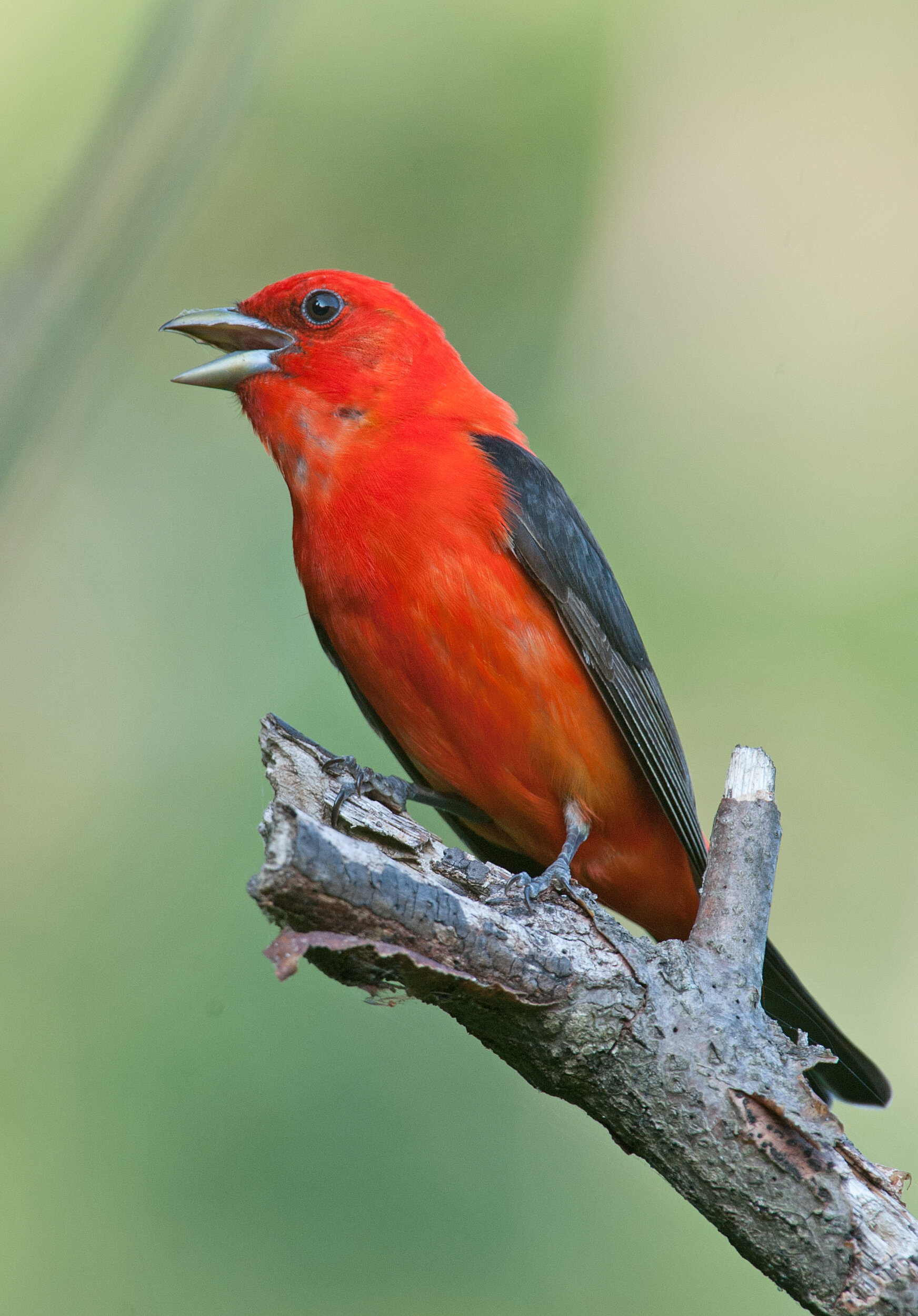
Photo: Northern Mockingbird, Deidra Bryant

Deidra Bryant

In the US, February is a month we associate with love and attraction. So, I thought it would be appropriate to discuss courting mechanisms in birds. In this case, bird songs. When we think of songs used in courtship, most may think that the males are usually the ones with the more elaborate repertoire, while females may have none or very little to say. Recent studies suggest that this behavior may be related to keeping a low-profile and to not alert predators while nesting, while others suggest that females have simply evolved to primarily listen. However, this is not entirely accurate. Elaborate signal traits in females are often phenotypically homogenous to traits of males, causing dispute over whether they emerge similarly through sexual selection, or through broader processes such as natural selection.

Examples of female songs have generally been dismissed as rare, or the result abnormalities in avian hormones. However, studies have found that this view demonstrates a geographical bias towards Europe and temperate zones in North America, where species with male-only song are more common. In fact, female bird song is much more abundant in other regions such as South America and Australia. The Superb Fairywren (Malurus cyaneus) is a good example of this. However, even if female song is more widespread than we realize, it seems likely that production rates or acoustic structure are the key differences between most males and females. Additionally, their behavior may also indicate selection pressures and systems of evolutionary changes that are sex-specific.

One study using ancestral state reconstruction methods revealed that long ago bird song was very common in both sexes all over the globe, which suggests that the current sexual dimorphism in embellished traits resulted in selection against these female traits. This idea complements new findings on the evolution of feather dichromatism in several species (like in the Icteridae family – orioles and blackbirds). Yet many scientists are still working to figure out why females have lost song in certain species and lineages.

In order to answer that question, ornithologists are asking another question: “Does the presence of dimorphism in bird song demonstrate evolutionary losses or gains?” Researchers believe that males and females initially developed similar neural song control systems that ultimately diminish in females of species that lack female song. Consequently, from a developmental standpoint, the disappearance of female song and the neuro-anatomical adaptations related to this change could be seen as an evolutionary gain.

On the other hand, an increase in song similarities between both sexes can be viewed as a developmental loss. For example, the progression of male-like singing in females may be the result of a loss of female-specific neurodevelopmental pathways and behaviors. One can expect an evolution in song similarities to occur quickly since females already have a lot of the genetic and hormonal components for singing like their male counterparts, while increases in song dimorphism should occur more slowly since it involves obtaining new characteristics through natural or sexual selection. These are interesting things to think about when understanding why females of certain species do not sing, as well as why females in other parts of the world frequently do. 

In conclusion, female singing is widespread among songbirds and was probably present during the early evolution of bird song. As a result, the ongoing research in bird communication prompts reconsideration of the inaccurate assumption that bird song is an epigamic trait (serving to attract a mate) in males driven by sexual selection. Females and males both experience competition over ecological resources and use a variety of chirps and shrills as a means of territorial defense. This behavior may select for traits that signal their competitive prowess or ownership of resources. However, since bird song originally evolved in both males and females, sexual selection may also be useful for studying the evolution and maintenance of avian song. So, the next time you and your sweetie practice identifying birds by their song, try triangulating the sound, and see which areas in your neighborhood are a hotspot for melodious females!

Read More
News Jess Michetti News Jess Michetti

Improve your Birding Skills at Home

It’s been difficult to get out birding as much as we’d like during the shut-down. That gives us a great opportunity to brush up on our birding skills and knowledge from the comfort of our homes.

Photo: Scarlet Tanager, Randy Streufert/Audubon Photography Awards

by Tom Blackburn

It’s been difficult to get out birding as much as we’d like during the shut-down. That gives us a great opportunity to brush up on our birding skills and knowledge from the comfort of our homes.  

Thayer Birding has a great software program that is free to download during the Pandemic. The download takes some time, but it’s well worth it. The program includes over 1000 North American species, more than 6500 photos and 1500 songs. Quizzes to help you learn your birds are its best feature. You can use the pre-made quizzes or easily create custom bird lists and turn them into personal quizzes. You can also choose from multiple quiz formats, including flash cards, multiple choice or fill-in-the-blanks and specify photos, songs, or both. Last night my wife and I created a custom list of birds and turned it into a quiz on bird songs. We can’t take an ASNV Birding-by-Ear workshop this spring, but maybe online programs will improve our skills.

eBird is well-known for its user-friendly capability to upload bird lists. You can also prepare for birding trips by finding out what’s been seen at Birding hotspots recently or in any month during the current year or up to the past ten years. eBird’s free Photo & Sound Quiz option is less well-known but very good. You can create quizzes for a country, a state or a specific location. You can even specify a date, and eBird will create a quiz based on bird lists uploaded for that date and location in the past ten years.

Cornell Lab of Ornithology’s Birds of the World program is normally $49 per year, but there’s a 10% discount through June 30.  I normally shy away from rentals of software, but Birds of the World’s information about more than 10,000 birds, plus photos, video and audio, convinced me to sign up. And your money is going to support a world-class nonprofit operation 

There are other free bird quiz sites that are fun to explore. You could try Birdingquiz.com, Birdquiz.net, Birdphotos.com or any number of other programs. However, my favorite is the Thayer Birding software I mentioned above because its quizzes can be customized so easily. Of course, you may find your own favorite. The next time you are starved for a little birding experience, try an on-line program!  

Read More
President's Corner Jess Michetti President's Corner Jess Michetti

May 2020

While working in my garden the other day, I simply had to stop and listen to the chorus of birdsong coming from a nearby tree. In rapid succession, I heard the “peter, peter, peter” of a Tufted Titmouse, a Northern Cardinal’s “cheerily, cheer-up,” the “teakettle, teakettle” song of a Carolina Wren, and assorted chip notes that I couldn’t place – followed by what was unmistakably the ring of a cell phone.

Photo: Northern Mockingbird, Laura Sprinkle/Great Backyard Bird Count

While working in my garden the other day, I simply had to stop and listen to the chorus of birdsong coming from a nearby tree. In rapid succession, I heard the “peter, peter, peter” of a Tufted Titmouse, a Northern Cardinal’s “cheerily, cheer-up,” the “teakettle, teakettle” song of a Carolina Wren, and assorted chip notes that I couldn’t place – followed by what was unmistakably the ring of a cell phone. A Northern Mockingbird that has taken up residence in one of our trees was treating me to its repertoire of borrowed songs. It was as if an entire symphony was being played by a single instrument.  

As the pace of life slows down, I’m not only paying more attention to the mockingbirds’ songs. I was pleased to see a pair of them contest with a swarm of Common Grackles to visit our suet feeder. I don’t think I had noticed mockingbirds coming to the suet feeder before. And has that Red Fox I saw patrolling our yard the last two mornings been here all spring? Recently, I heard a Barred Owl’s “who cooks for you, who cooks for you all?” in a nearby yard. Did it just arrive in the neighborhood, or have I simply not been at home to listen to it?  

Certainly, the Stay-At-Home order in effect for Virginia has caused disruptions to most of us, ranging from inconvenience to serious economic hardship. But there can be benefits from the restrictions, ranging from finally finding the time to upgrade the garden to simply relaxing and paying more attention to the nature that surrounds us. In the last two weeks the dominant color of the trees has turned from brown to green, bees have begun visiting the spring flowers and birds everywhere are carrying nesting material. So, if you’re bored, going stir-crazy in the house or simply need some “alone time,” go outside, take a slow walk around the block and really pay attention to what you see and hear. There’s lots going on right now; all you have to do is take the time to appreciate it.   

Read More