NVBA NEWS BLOG

Welcome to the blog for Northern Virginia Bird Alliance, a wealth of resources about northern Virginia birds, wildlife, habitat conservation and restoration, native plants, wildlife-friendly gardening, advocacy and more.

News Jess Michetti News Jess Michetti

It's Time for Birdathon!

As spring arrives in northern Virginia, we’re looking forward to Birdathon 2026, our biggest and most FUN fundraiser of the year!

As spring arrives in northern Virginia, we’re looking forward to Birdathon 2026, our annual event where teams collect pledges from friends and family and then record how many species they can identify during any 24-hour period between April 18 and May 19. In addition to being just plain fun, Birdathon helps NVBA to support outdoor education, citizen science, habitat conservation, and programs to encourage people to plant native plants and protect native wildlife. Birdathon also helps ornithologists better understand spring migration by reporting sightings through eBird, an online database of bird observations run by the Cornell Lab of Ornithology.

More information is available on our Birdathon 2026 webpage. You can plan a big day route around northern Virginia, or you can even participate from your own backyard. So, gather your birding buddies and register your team today.

Team captains, and anyone curious about joining a birdathon team, are welcome to join us on April 13th for our captain kick off event, and we we will have NVBA sponsored birdathon days as well - information coming soon. 

Read More
News Jess Michetti News Jess Michetti

Birdathon Stories: The Board Birders

The Board Birders started their Birdathon at 6:00 AM at Dyke Marsh Wildlife Preserve. Read about their Birdathon adventure and find out how many species they saw!

The Board Birders -- Dixie Sommers, Libby Lyons and Tom Blackburn --  began our Birdathon at 6:00 AM at Dyke Marsh Wildlife Preserve. 

The Board Birders pose for a selfie at the start of their Birdathon.

It’s always great to start a Birdathon --- spotting the birds is exciting, and every species you see adds  to your total. We got off to a good start – 45 species in 90 minutes. The highlight was a Lesser Scaup that evidently hadn’t gotten the Migration Memo, which we spotted thanks to Ed Eder, who apparently knows every bird at Dyke Marsh personally. We also found 7 warbler species, Orchard Orioles, Baltimore Orioles and 8 Bald Eagles.  

Our next stop was Jones Point Park, under the Woodrow Wilson Bridge. We went there to find a bird that eluded us last year, the Rock Dove (pigeon). We bird in natural areas, where pigeons are in short supply, and last year we realized as it got dark that we hadn’t seen even one. We made sure that didn’t happen this year. 

The highlights at Four Mile Run were 4 Wood Ducks and the hard-to-find Willow Flycatcher. At the parking lot for Theodore Roosevelt Island, we found Cliff Swallows under the bridge, and by using a scope we spotted Purple Martins at a martin house across the river in Georgetown. Our Birdathon rules  require us to stay in Northern Virginia, but we can count any bird we see, regardless of where it is. We were also pleased to see a Black-crowned Night Heron. Monticello Park lived up to its reputation as a warbler haven: we got 10 warblers there as well as other birds. We made a brief stop at Jackson Abbott Wetlands Refuge, and were rewarded by finding Pine Warblers, which are reliably found in the pines along the water, and Yellow-throated Warblers, which we’ve logged there in other years. 

As the day wore on, it became increasingly difficult to find new species. We arrived at Meadowood Special Recreation Area at 7:00 PM, hoping to find one or two new birds as it got dark. We were delighted to find Chipping Sparrows,  Savannah Sparrows, a Yellow-throated Vireo, a Summer Tanager and Blue Grosbeaks, all new birds for the day. At our final stop at the Elizabeth Hartwell Mason Neck National Wildlife Refuge, we logged our last bird of the day, the beautiful song of a Wood Thrush, but we couldn’t see it -- at 7:45 PM it was too dark to see anything.

In our 14 hours of birding (including a 20 minute lunch stop) and nearly 10 miles of walking, we birded 14 locations and found 93 species of birds, including 16 warbler species. We beat last year’s total of 84 birds and went home tired but satisfied.

Thank you very much to everyone who donated to NVBA to support our Birdathon Team!

Read More
News Jess Michetti News Jess Michetti

The People Birding to Make a Difference: Stories of Birdathon

It’s that time of year again: the days are longer, you have dirt under your fingernails from planting natives, and all across the region teams of people are birding for a good cause. 

Tina Dudley

It’s that time of year again: the days are longer, you have dirt under your fingernails from planting natives, and all across the region teams of people are birding for a good cause. 

The Birdathon is a fundraiser that has been taking place for over 10 years. When it started out, it was quite small. Joanne Bauer, team captain for The Bowerbirds, recalls that when she first started participating there were fewer teams, but the spirit was just as enthusiastic. 

Over the years, more and more people have been inspired to get involved. Birdathon is a great opportunity to spend time with friends and family, to be out in the nature, and to raise funds for a good cause. The event has shifted a bit - becoming more inclusive and welcoming to newer birders. You don’t need to be a lister or even leave your house to participate - you can compete in the Backyard Birdathon category and report the species that visit your yard. 

This year, our goal for Birdathon is to raise $20,000. This is a big goal in a hard year, but there are dozens of birders all across our region working together to make it happen. 

Modeled after a traditional walk-a-thon, Birdathon relies on team members to seek out pledges and donations from friends and family. But you don’t need to know anyone on a team to make a gift to that team if you feel inspired by their story. Let’s all pitch in to make Birdathon a success! 

You can still sign up to have a Birdathon team if you feel inspired. The last day you can do a Birdathon this year is Sunday, May 18. Also new this year, you can do Birdathon solo! It’s more fun with friends, but if birding by yourself is your jam, you can still participate. Register your team and join the magic, the movement, the moment because the birds need us now. Let’s show up for them!

Continue reading to learn about some of this year’s teams. 

Some of our 2025 Birdathon teams

Three Little Towhees

This team is close to our hearts because its captain, Louise Edsall, has been our trusty Program Assistant since October 1, 2017. She is the person who processes all of the checks that come in at the end of the year. Louise is the secret glue that keeps NVBA running. 

In 2023, she wrote about her team’s experience as part of a Birdathon Story. Her team birded only at the Neabsco Creek Boardwalk and Trails because Louise’s husband Bart, a paraplegic, could only go to wheelchair-accessible places. Bart’s wheelchair put him at the height of the handrails, which limited his view a bit, but he was the first to spot the Osprey which had caught a fish just in front of the “No Fishing” sign. He also was an avid birder by ear. Sadly, Bart passed away September 16, 2024. He is deeply missed, and the Louise’s Birdathon team this year is participating in his memory. You can read Bart’s obituary here.

The name of Louise’s team this year comes from her childhood memory of being asked by her mother, “What is that pretty bird scratching in the leaves," to which 10-year-old Louise promptly responded, "Oh, that's a Rufous-sided Towhee." After that the towhee became “their bird” and showed up on birthday cards and in gifts. Louise and her mother both loved the Eastern Towhee’s "Drink Drink Your Tea" song. It remains one of Louise's favorite birds and a fond reminder of her mother's enthusiastic support of her hobby.

Nesting Since ‘98

Jade Abuzaid has been birding since she was 10, when being sick and stuck inside for a month made her curious about the birds singing outside her window. Now she’s studying environmental science and doing bird surveys in college, discovering new species every time she goes outside. Her goals for participating in Birdathon are to teach her parents about all the cool birds that come out in the spring and maybe get some awesome photos. She knows about 60 species so far but would like to double that through Birdathon. 

The Avian Avengers

The Avian Avengers team was organized by Ajani Simmons, an Arlington Regional Master Naturalist (ARMN), and includes three fellow ARMN graduates of the spring 2025 class. Although new to birding, Ajani brings a photographer’s eye to the field, using the camera to observe and connect more deeply with nature. She told NVBA, “Birding has become a grounding and joyful experience—and we’re excited to share that journey together during Birdathon 2025.” One of this team’s goals is to raise awareness for Black Birders Week, May 25-May 31 this year. Ajani is working to plan an NVBA event for this year’s Black Birders Week. More information is coming soon on this event. 

The Bowerbirds

Led by former board member, Joanne Bauer, this team is celebrating its 10th anniversary doing Birdathon. Wow! They plan to celebrate this milestone by finding more birds than they ever have. Their record, which they hope to exceed, is 88 species in one 24-hour birding marathon.

Plus 12 more teams!

We hope you will be moved to make a gift in honor of one or more of our participating teams and can share this article on your social media to spread the word. 

And there are many other ways you can help our feathered friends this spring. Why not become an NVBA volunteer and pitch in to pull invasive plants, educate the community about conservation, or serve on one of our committees. We thank you and the birds thank you! 

Read More
News Jess Michetti News Jess Michetti

Wildlife Sanctuary Almanac: Backyard Birdathon!

Have you taken steps to create bird habitat in your yard? Now is your chance to see the fruits (or rather, birds) of your labor by observing how many species visit your yard in a single day.

Photo: Brown Thrasher, Randy Lewis/Audubon Photography Awards

Betsy Martin

Have you taken steps to create bird habitat in your yard? Perhaps you planted a native fruiting shrub to feed migrating birds, or a native oak to support the caterpillars that birds need to feed their young, or removed invasive vines that threaten trees and outcompete the native plants that wildlife depend on. 

Now is your chance to see the fruits (or rather, birds) of your labor by observing how many species visit your yard in a single day.  

Every year NVBA sponsors a Birdathon. Participants form teams of up to five to identify as many different species as they can on a single day between April 19 and May 18, the peak period of spring migration. The Backyard Birdathon is a special prize category for teams competing from a single private residential property. 

Gather up to four family members or friends to spend time throughout the day in your yard observing birds. If you’ve got a birder friend you can invite to join your team, that can help improve your bird ID skills and your chances of observing more species. 

It’s fun! Last year, my husband and I participated, along with our neighbor Claire, who’s an experienced birder. We watched for birds in our yard (very) early in the morning, then gathered again for periods throughout the day. We used the free app Merlin to help identify the birds by their songs, and reported our observations on eBird. We saw 51 species in our yard on May 3rd, including some I’d never seen before. We won the competition, but it wasn’t much of an achievement—we were the only team competing in the backyard category. I hope more people in more yards will participate this year.

Backyard Birdathon is a great opportunity to get outside and forget, for a little while, the disturbing news that confronts us daily. Just focus on the birds and the beauty of spring. It’s a chance to record enough sanctuary species to get your yard certified as a Wildlife Sanctuary, and obtain an attractive yard sign. You can read more about how to create habitat in your yard and get it certified as a Wildlife Sanctuary here.

Birdathon is a fund-raiser for NVBA, and team leaders and members are asked to seek pledges, as in a walk-a-thon. Birdathon helps NVBA to support the Wildlife Sanctuary Program, outdoor education, citizen science, and habitat conservation.

Learn more about Birdathon and register your team here.  


Catch up on past Wildlife Sanctuary Almanac articles here.

Read More
News Jess Michetti News Jess Michetti

Get Ready for Birdathon 2025

As spring arrives in northern Virginia, we’re looking forward to Birdathon 2025, our annual event where teams collect pledges from friends and family and then record how many species they can identify during any 24-hour period between April 19 and May 18.

Photo: Birders, Camila Cerea

As spring arrives in northern Virginia, we’re looking forward to Birdathon 2025, our annual event where teams collect pledges from friends and family and then record how many species they can identify during any 24-hour period between April 19 and May 18. In addition to being just plain fun, Birdathon helps NVBA to support outdoor education, citizen science, habitat conservation, and programs to encourage people to plant native plants and protect native wildlife. Birdathon also helps ornithologists better understand spring migration by reporting sightings through eBird, an online database of bird observations run by the Cornell Lab of Ornithology.

More information is available on our Birdathon 2025 webpage. You can plan a big day route around northern Virginia, or you can even participate from your own backyard. So, gather your birding buddies and register your team today. If you have already registered a team, or just want more information on Birdathon, make sure you join us on Sunday, March 23 from 2:30 - 4:30 PM for our Alliance Afternoon. Matt Felperin will be giving us a warbler bootcamp to get us all ready for Birdathon. You also can watch a free webinar about competitive birding and Birdathon with ornithologist Greg Butcher. If you’re planning to gather your team in your backyard, join us March 20 for a free webinar on backyard bird identification.

Read More
News Jess Michetti News Jess Michetti

Birdathon 2024

We’ll have a full report on the results of this year’s Birdathon at our June 2 Audubon Afternoon and Annual Meeting.

Photo: Birders, Laura McDonald

We’ll have a full report on the results of this year’s Birdathon at our June 2 Audubon Afternoon and Annual Meeting. The prize for the most contributions is based on the funds received at our office by May 31, but you can still submit donations now. Your donations recognize the hard work of our 40 Birdathon participants, who identified at least 126 species in our northern Virginia service area. Here’s a link to their team pages. No matter when your donation reaches our office, it goes to good causes: supporting a teacher at Hog Island, citizen science and habitat conservation projects, and our efforts to promote native plants to help the birds.

Read More
News Jess Michetti News Jess Michetti

It’s time to get ready for Birdathon 2024!

Birdathon, ASNV’s annual birding competition and fundraiser, is coming soon.

Photo: Camila Cerea, Audubon

Birdathon, ASNV’s annual birding competition and fundraiser, is coming soon. Birdathon teams record how many species they can identify during any 24-hour period between April 20 and May 19. They line up sponsors who make pledges to support their effort, just as in a walk-a-thon. 

All birding levels are welcome. Participants can bird alone or form teams of up to five. All team members donate and/or secure pledges. Read more about how this fun and friendly event works here.

We’ll tell you more if you join us on Saturday, April 6 from 2:00 - 3:30 PM for our ASNV Spring Social. See an Eastern Screech Owl up close and personal, enjoy light refreshments and mingle with your competition. You might even find another person to add to your team! 

Read More
News Jess Michetti News Jess Michetti

A Birdathon Story of Endurance: The Board Birders

Read this account of a 2023 Birdathon team’s long but rewarding day of birding through some of northern Virginia’s best birding locations.

Tom Blackburn

Our 2023 Birdathon was a big success. Our team included Libby Lyons, ASNV President; Gerry Abbott and me, both ASNV Board members; and Dixie Sommers, a former Board member of ASNV and current Board member of the Virginia Society for Ornithology. Dixie meticulously planned our itinerary, and Gerry drove. 

In 14 hours of birding we found 94 species – a record for our team, which has participated in ASNV’s Birdathon for four years. We began our day at Dyke Marsh Wildlife Preserve at 6 AM, where we started off strong with 40 species. We were pleased to see Tree, Barn, and Northern Rough-winged Swallows, and we found both the Barred Owl and the Wild Turkey that have been seen there recently. We also found the first of many Great crested Flycatchers, whose distinctive “breep-breep” calls greeted us at nearly every birding site.

Baltimore Oriole, Deborah Bifulco/Audubon Photography Awards

We next headed to Monticello Park, a renowned spot for warblers. This site was a little disappointing; we found only 7 warbler species, and couldn’t find the Louisiana Waterthrush, Northern Waterthrush, or Ovenbird, which are sighted there fairly frequently. The lack of warblers made me doubtful that we would be able to reach my ambitious target of finding 100 species. A quick 30-minute stop at Four Mile Run was productive, as we found a beautiful male Wood Duck, Least and Spotted Sandpipers, a Killdeer; and a gorgeous Baltimore Oriole perched for us in the bright sun. 

We next birded Huntley Meadows Park, whose wide variety of species makes it a mandatory stop. The highlight was seeing the resident Hooded Merganser with its 6 young. We stopped there for lunch, with 65 species under our belts in the first 6 hours. However, because we’d already knocked off most of the common species, we knew it would get harder as we went along.

Our next stop was the Fairfax County Landfill. To people who don’t birdwatch, landfills seem an odd place to find birds. But this landfill has one of the largest areas of undisturbed grassland in the area, and we included it in the hope of finding grassland birds. Our efforts were rewarded, as almost immediately we heard the buzzing call of a Grasshopper Sparrow, got a brief glimpse of an American Kestrel, and heard an Eastern Meadowlark. A few minutes later we were astonished to find a huge flock of at least 100 Bobolinks. All four species are in decline in our area due to the loss of extensive grassland habitat. We also found both the Turkey Vulture and the Black Vulture. Although both birds are common, it was a relief to see them. The Black Vulture was our nemesis in bird last year’s Birdathon – it was the last species we saw that day.

Bobolink, Caroline Samson/Audubon Photography Awards

We were all getting a little tired at this point, but we headed to Occoquan Bay National Wildlife Refuge, where we found our two target birds, the Yellow-breasted Chat and the Prairie Warbler, as well as a few others. Dixie suggested that we next try the road into Mason Neck State Park where she had heard Wood Thrushes. Sure enough, we hadn’t even stopped the car when we heard their beautiful flute-like songs. As an extra bonus, we also heard an Ovenbird’s “Tea-cher, tea-cher, tea-cher” and a Scarlet Tanager – two birds we hadn’t found yet. A stop at Meadowood Recreation Area resulted in several birds, but only one new one – a Chipping Sparrow. 

Scarlet Tanager, Charles Vickers/Audubon Photography Awards

It was getting late, but we were still trying to increase our total for the day. We headed to Burke Lake Park, where we knew would find Purple Martins at the collection of Martin houses. At that point, it was 7:30 and we debated calling it a day. Instead, we drove another 20 minutes to get a “sure thing” bird – Cliff Swallows nesting under a bridge at Bull Run Marina. There was not much light left, and the birds’ colors were fading to black, but we found 8 of them flying in and out of their nests. 

We headed back to Dyke Marsh to get our cars. Earlier in the day we had talked about walking a trail in the dark in hopes of hearing a Great Horned Owl there. But after 14 hours of birding, no one seemed all that interested in the possibility of adding another species to the 94 we had found that day. We headed home, tired but happy with our day. Perhaps we’ll find 100 species next year.

Learn more about this year’s Birdathon here

Read More
News Jess Michetti News Jess Michetti

Calling All Birders: It's Time to Get Ready for Birdathon 2023!

Birdathon helps ASNV continue to support outdoor education, citizen science and habitat conservation, and encourages people to plant native plants and foster native wildlife.

Photo: Birders, Laura McDonald

How does it work? Like a walk-a-thon, Birdathon participants collect pledges from friends and family via our website. Then participants record how many species they can identify during any 24-hour period between April 15 and May 21. The more species they identify, the more funds they raise! 

Last year’s winning team saw 123 species in 24 hours! Wow! Can you beat it? 

Birdathon helps ASNV continue to support outdoor education, citizen science and habitat conservation, and encourages people to plant native plants and foster native wildlife. Birdathon also helps ornithologists better understand spring migration by reporting sightings through eBird, an online database of bird observations run by the Cornell Lab of Ornithology.

All birding levels are welcome. Participants can bird alone or form teams of up to five. All team members donate and/or secure pledges. Participants solicit general donations or ask for pledges based on the number of species or the number of individual birds sighted. Sightings and donations are due no later than June 2, 2022. Report your Birdathon sightings on eBird and email your list to info@audubonva.org.

Ready to get started? Register your team here and check out our Birdathon rules . Now go out and have a great day birding! 

All participants and their supporters are invited to join us at our Audubon Afternoon in June for our Annual Meeting, where we’ll announce the winners of the “Most Species Counted,” “Most Money Raised” and “Youth Birder” competitions. Plus our new award categories for this year - "Most Species Counted by a New Team," "Widest Age Range," and "Backyard Bounty."

Read More
News Jess Michetti News Jess Michetti

ASNV’s Birdathon Fundraiser Results in Record Donations and Number of Bird Species

Our chapter’s annual Birdathon competition raised a record amount of money and found a record number of birds this year.

Photo: Yellow Warbler, Sheen Watkins/Audubon Photography Awards

Tom Blackburn

Our chapter’s annual Birdathon competition raised a record amount of money and found a record number of birds this year. Birdathon is a friendly competition among teams of birders. It has two goals: to raise money for ASNV and to find the most birds within our chapter’s boundaries in a 24-hour period. 

Eleven teams raised $12,059, beating last year’s total by more than $1,000. The Board Birders, a team of ASNV board members Gerry Abbott, Tom Blackburn, Libby Lyons, and Dixie Sommers, won the fundraising competition. The Chipper Birders, teenaged brothers Dante and Maxwell Julius, came in second. The Three Beaks team of Louise and Bart Edsall and Salay Kamara came in third. 

The Drake and Two Chicks team of Greg Fleming, Elizabeth Krone and Laura McDonald was the runaway winner in the bird species competition. They logged 123 species, an ASNV record. The Board Birders came in second with 92 species, followed by the Chipper Birders with 85. See more about the Chipper Birders in our December 2020 article and a recent news article on WUSA Channel 9. 

The Scarlet Teenagers, a bird club sponsored by Flint Hill High School biology teacher Fred Atwood, deserves an honorable mention this year. The club raised money for ASNV in connection with a birding field trip to the Eastern Shore. Because they counted birds outside ASNV’s chapter boundaries, their total doesn’t count in the species competition, but the 120 species they saw is a testament to their birding skills. 

The seven Birdathon teams that reported their bird species for the competition saw a total of 143 species, a reminder of how rich the bird life is in Northern Virginia. They saw 25 warbler species, or nearly all the warblers that are normally found here during spring migration. Other birds of interest included a Common Loon, a tree full of Bobolinks, and a Horned Grebe. 

Thank you to all the teams that participated in the Birdathon. And thank you especially to the more than 100 people who supported our fundraiser. Your donations make it possible for ASNV to fulfill our mission of engaging all Northern Virginia communities in enjoying, conserving, and restoring nature for the benefit of birds, other wildlife, and people.

Read More
News Jess Michetti News Jess Michetti

Last Call for Birdathon Donations

To celebrate migration and the nesting season, please donate to an ASNV Birdathon team if you haven’t already.

Photo: Camilla Cerea

A Drake and Two Chicks

The Chipperbirders

To celebrate migration and the nesting season, please donate to an ASNV Birdathon team if you haven’t already. This year, we had 12 fantastic teams birding their hearts out and raising funds. Let’s celebrate their efforts! We even had a last-minute team sign up, A Drake and Two Chicks, which includes our former Program Manager, Laura McDonald, who worked at ASNV for 12 years and continues her involvement as a volunteer. We will be accepting Birdathon donations until Friday, June 3rd, and the winners of Birdathon’s “most species identified” and “most funds raised” will be announced at our Audubon Afternoon (featuring live owls!) on June 5, 2022 at 3:00 PM. 

The Three Beaks

See exciting reports from The Three Beaks and The Chipperbirders.

Read More
News Jess Michetti News Jess Michetti

A Birdathon Story: The Chipperbirders

This story is about one of our youngest teams, The Chipperbirders.

Photo: Spotted Sandpiper, Maxwell Julius

Scarlet Tanager, Maxwell Julius

Yellow-throated Warbler, Maxwell Julius

This story is about one of our youngest teams, The Chipperbirders. Two brothers in high school, Maxwell and Danté Julius completed an excellent Birdathon on Mother’s Day, but these considerate young men reassured us that they celebrated the holiday the day prior with their family.

Maxwell is in 11th grade and his brother Danté is in 9th grade. They have both been birding for four years. Maxwell enjoys photographing birds and Danté often draws field sketches of the birds.

The brothers started out their big day at about 7 AM and birded until after 8 PM, seeing an incredible 85 species at four locations!

Maxwell took photos of a number of their species, such as the Spotted Sandpiper, Scarlet Tanager, and a life-bird for Maxwell – the Yellow-throated Warbler, which they saw right at the end of their day.

When they sent in their impressive list of birds, Maxwell reported that they had a great time bird watching, stating that “the variety of species we witnessed was truly amazing, and all of the birds were spectacular.” The boys went to Huntley Meadows, Gravelly Point, Monticello Park, Four-mile-run Park, and Occoquan Bay National Wildlife Refuge. We are all grateful and very proud of these talented young birders. 

Please consider donating here to support their team and to celebrate their accomplishments. They are so close to reaching their fundraising goal! This team inspires us to think about the future, about what birds we will still have in Northern Virginia when these two young people are enjoying their retirement. Your support helps us protect birds and their habitats not just now but in the years to come, for the next generation of birders. Thank you. 

Spotted Sandpiper, Maxwell Julius

Read More
News Jess Michetti News Jess Michetti

A Birdathon Story: The Three Beaks

Our Program Administrator Louise Edsall led her team (composed of herself, her husband Bart Edsall and his caregiver, Salay Kamara) on a successful big-day outing. Louise shares her story of the team’s experience below.

Photo: Yellow Warbler, Sheen Watkins/Audubon Photography Awards

Our Program Administrator Louise Edsall led her team (composed of herself, her husband Bart Edsall and his caregiver, Salay Kamara) on a successful big-day outing. Louise shares her story of the team’s experience below.

The Three Beaks Birdathon Team!

“The three of us had a great time on this adventure. We were amazed at how many species we got just in our backyard at the feeders and nearby brush and woods where our home is located in Manassas. Our newest visitors are the Indigo Buntings, Rose-breasted Grosbeaks, Ruby-throated Hummingbirds, and Gray Catbirds. Starting this week, we’ve been seeing six male and six female catbirds at the same time. Those Indigo Buntings are just gorgeous and their songs are beautiful, too. The Red-shouldered Hawk seemed to pass just as I commented, “Now where is that hawk?” Boom, there he was! Same with the Scarlet Tanager which I found while walking down our long driveway to the mailbox. It just pays to be alert!

Our count was limited to wheelchair-accessible places because of Bart’s disability, so the Neabsco Creek Boardwalk and Trails provided a very user-friendly access to the boardwalk and paved trails. We were joined by a young mom and her three-year old son as we were leaving and the young boy tried to race Bart’s wheelchair. Bart’s energy along the walk flushed the Field Sparrow and the Baltimore Oriole. We got the female Orchard Oriole as we entered the boardwalk and the Yellow Warblers put on a show there as well. Bart was at boardwalk wall height which limited his view a bit but he was the first to spot the Osprey which had caught a fish just in front of the “No Fishing” sign. Bart also saw our first Great Blue Heron.The Red-winged Blackbirds were unusually ‘friendly’.

We had a great time outdoors despite the limitations of our access to woodland trails. The three of us had a load of fun. Migration is on full-steam!”

The Three Beaks team identified 62 species across four locations. You can donate here to help this wonderful team reach their fundraising goal of $1,500. 


Read More
News Jess Michetti News Jess Michetti

Support our Birdathon Teams!

Eleven teams of birders have committed to support Audubon Society of Northern Virginia’s 2022 Birdathon. Can you help by supporting one or more of our teams?

Photo: Luke Franke

A Birdathon is a competition in which teams compete to find the greatest number of species in a day to raise money for conservation. Eleven teams of birders have committed to support Audubon Society of Northern Virginia’s 2022 Birdathon. Can you help by supporting one or more of our teams? You can pledge an amount for each species found or donate a specific amount of money. Here is a link to the teams with information on how to support the teams of your choice. Thanks for helping ASNV fulfill its mission of enjoying, conserving, and restoring nature for the benefit of birds, other wildlife, and people!

Read More
News Jess Michetti News Jess Michetti

Calling all Birders: It’s time to get ready for Birdathon 2022!

Last year’s winning team saw 89 species in 24 hours! Wow! Can you beat it? Find out how to register your team here.

Photo: Camilla Cerea

How does it work? Like a walk-a-thon, Birdathon participants collect pledges from friends and family via our website. Then participants record how many species they can identify during any 24-hour period between April 16 and May 22. The more species they identify, the more funds they raise! 

Last year’s winning team saw 89 species in 24 hours! Wow! Can you beat it? 

Birdathon helps ASNV continue to support outdoor education, citizen science and habitat conservation, and encourages people to plant native plants and foster native wildlife. Birdathon also helps ornithologists better understand spring migration by reporting sightings through eBird, an online database of bird observations run by the Cornell Lab of Ornithology.

All birding levels are welcome. Participants can bird alone or form teams of up to five. All team members donate and/or secure pledges. Participants solicit general donations or ask for pledges based on the number of species or the number of individual birds sighted. Sightings and donations are due no later than June 3, 2022. Report your Birdathon sightings on eBird and email your list to info@audubonva.org.

Ready to get started? Register your team here and check out our Birdathon rules . Now go out and have a great day birding! 

All participants and their supporters are invited to join us at our Audubon Afternoon in June for our Annual Meeting, where we’ll announce the winners of the “Most Species Counted,” “Most Money Raised” and “Youth Birder” competitions.

Read More
News Jess Michetti News Jess Michetti

Greg Butcher’s Tricks for a Successful Birdathon

Get ready for Birdathon: Here are the 4 main tricks to seeing the maximum number of species in a 24-hour period!
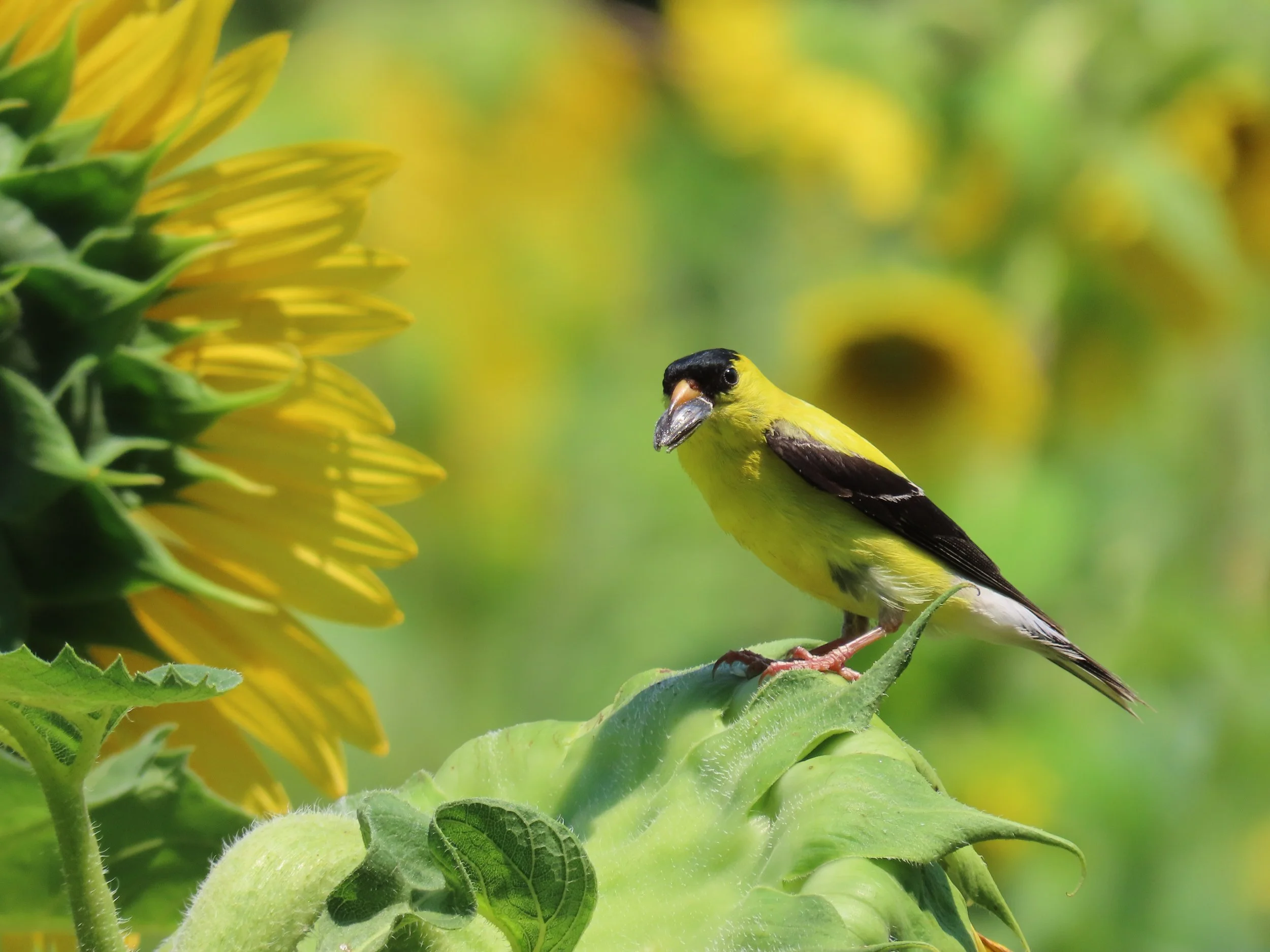
Photo: Yellow-throated Warbler, Lorraine Minns/Audubon Photography Awards

Greg Butcher

Here are the 4 main tricks to seeing the maximum number of species in a 24-hour period:

Trick #1 is to get up before dawn and bird all day long (and into the night for owls). 

Trick #2 is to visit a wide variety of habitat types. 

Trick #3 is to find the best birders with good eyes, good ears and good knowledge of the local birds (especially their songs). 

Trick #4, especially in the Washington DC region, is to go at the peak of migration.

More and more information exists to help determine the peak of migration in any given place. There is a ton of information on eBird, the website maintained by Cornell Lab of Ornithology that records all birds encountered by eBirders every day at every birding spot in the world. The data are summarized in a variety of easy-to-understand formats, but I haven’t yet figured out the easiest way to study peak migration for species diversity using eBird.

However, in Northern Virginia, we have a golden gem of a resource that highlights anything you might want to know about spring migration of landbirds – it’s a website called MPNature. MPNature has a limitation that you might think minimizes its usefulness – it is focused on the birds (and plants) of one of the smallest and most suburban parks in Northern Virginia – Monticello Park. 

Monticello Park has three advantages that make it a wonderful barometer of the state of landbird migration in Northern Virginia and Washington DC: 

  • It is an amazing magnet for birds, with 124 species.

  • Its spring birds have been meticulously documented since 2005 by Tom Albright and a host of other birders.

  • And, of course, it has an amazing website, beautifully and purposefully created by Bill Young, Ashley Bradford, and their friends.

Under the “Daily Checklist” tab is a list for each day of April and May of all the birds that have been seen on that date between 2005 and 2018 divided into 4 groups: resident birds, migrants that averaged more than 2 individuals on that date, migrants that averaged between 1 and 2 individuals, and migrants that have been seen in the park on that date, but not every year.

If you are interested in a particular migratory species, there is another section of the website with photos and the earliest, latest and best dates to find that species in the park. The park is a woodland with a stream running through it, so you can’t learn much about waterbirds or grassland birds, but it does have information about 35 species of warblers!

But I had a single goal in mind – I wanted to know THE best date for spring migration in our area, so I reduced all of Tom Albright’s species-specific information to numbers, and here’s what I found out:

The website’s report of expected species begins on April 1, and for the first 24 days in April, you can expect 4 common migrant species that average more than 2 individuals per day. In addition, you have the chance to see about 11 other less predictable migrants on any of those 24 days.

Everything starts to pick up on April 25. All of a sudden, there are 7 common migrants and 14 additional possible species.

The good news is that peak migration lasts for 15 days: May 1 through 15. On any one of those days, you can expect 17-21 common migrants with a possible total of 33-37 migratory species, plus up to 23 of the park’s resident species.

The next week – May 16-22 – isn’t too bad, with 16 common migrants expected on the 16th, dropping to 11 on the 22nd and a possible total of 26-32 migratory species each day.

After May 23, migration drops off sharply, with only 7 or 8 migratory species expected on May 30 or 31.

A few caveats:  every day is different! The above numbers are averaged over 14 years, creating great uniformity, but migration depends on the weather. On a beautiful clear night with strong southerly winds, all the migrants might pass us by. Better conditions (for seeing a lot of migrants) are rainy nights with northerly winds that keep migrants from flying too far too fast. But the only way to find out if tomorrow is a great day to see migrants is to get outside and look for yourself.

If you want to see the most landbird migrants in Northern Virginia on a single outing, I suggest you plan to bird between May 1 and May 15, so if you participate in ASNV’s Birdathon, this would be the best time to choose your 24-hour count day. If you just want to see as many spring migrants as possible, you should go out on as many of these days as you can, because some species are early migrants and others are later – and I still have never seen all the expected species on a single day. (Maybe this year!)

Good luck and happy birding!

Read More
News Jess Michetti News Jess Michetti

A Year of Birding “Centuries”

As 2021 began, I was feeling listless – in a general sense and in the bird-list sense. So, I challenged myself to see 100 bird species each month, a “century” challenge, because I wanted to get out of the house and be more active, see more birding friends, and become more purposeful in my birding.

Photo: American Goldfinch on sunflowers, Sycamore Landing, MD, Libby Lyons

Libby Lyons

As 2021 began, I was feeling listless – in a general sense and in the bird-list sense. So, I challenged myself to see 100 bird species each month, a “century” challenge, because I wanted to get out of the house and be more active, see more birding friends, and become more purposeful in my birding. 

I can now report success!! From my first bird, the Painted Bunting on the C&O Canal (MD), to my last, an Audubon’s Oriole (TX), I saw 400 species in 2021– and at least 100 per month!! But I was rewarded with so much more than just a count of birds – here’s what I learned:

For me it’s as much about the people as the birds! I loved meeting and befriending so many folks with the same love of birds and nature. I went with them on trips far and near including the ASNV Birdathon and many Northern Virginia Bird Club trips. And I found I still get immense joy in sharing my passion – even with total strangers, e.g., showing my Painted Bunting photo to passersby wondering what all the fuss was about, and pointing out a perfectly camouflaged Wilson’s Snipe at Huntley Meadows and being called a “snipe whisperer.”

Piping Plover chick, Moonstone Beach, Trustom Pond NWR, Rhode Island, Libby Lyons

Birdwatch wherever you go! The pandemic kept me stateside, so I redoubled my efforts to bird more while visiting family. In a Rhode Island wildlife area on a balmy, buggy evening in May I was transfixed by the plaintive call of an Eastern Whip-poor-will, and then just down the road, by the dueling calls of two Chuck-will’s-widows. On my next trip, I delighted in a handful of little brown and white fluffballs, juvenile Piping Plovers, at Moonstone Beach (RI). When we retreated with our grown children to the cool of the West Virginia mountains in early August, I twice trekked off to Cranberry Glades bog, where I was rewarded with 9 species of warblers and 4 species of vireos so easily seen on their breeding grounds! In Olympic National Park in late August, it was a treat to join my brother as he led a boat tour of Lake Quinault and to revel in our shared love of natural history. From Washington I drove through smoky Oregon to stay with family friends and compiled a bird list for their yard among the Northern California redwoods, then headed to Point Reyes Bird Observatory, a birdwatcher’s mecca, which I had not visited in four decades. It is easy to forget how large and variable our country’s habitat is – there was almost no overlap between the West Coast birds I saw and those I had seen back East!

Mourning Warbler, Cranberry Glades Botanical Area, WV, Libby Lyons

Birdwatch all year! Another pleasant surprise was summer birding. I do not handle Virginia’s heat and humidity well, so had birded infrequently from mid-June to late August. I had rarely seen or heard fledglings, with their stubby tails, often murky plumage, and muddled songs! The summer foliage was also a pleasure – swaths of sunflowers in full bloom, replete with American Goldfinches and Indigo Buntings at Sycamore Landing (MD). And the wetlands at Huntley Meadows was transformed by the huge white flowers of the native hibiscus called Swamp Rose-mallow.

Photo: American Goldfinch on sunflowers, Sycamore Landing, MD, Libby Lyons

Even new birders can surprise you! Near November‘s end, I was still far short of my target.  I was in a migration void – the passerines had flown south and the waterfowl had yet to arrive. I headed to the coast with my adult son, who is not a birder. He is a serious fisherman – observant, patient, and nature-loving – perfect skills for birdwatching. He not only spied a Black Skimmer (“That bird can’t keep its head up!”) at India River Inlet (DE), but he also spotted a sandbar harboring American Oystercatchers and Brants. As we chatted about why we loved our respective hobbies – he framed birdwatching in a way novel to me, perhaps due to his years studying economics. One reason birders are so friendly, he noted, is that sharing information about a target species doesn’t deplete the resource the way it might for fishing. Not only that, sharing makes you feel good, it helps the other person, and it increases the chances that they might share information back.   

LeConte’s Sparrow, Sully Woodlands Park, VA, Libby Lyons

Be opportunistic and persistent! I took advantage of “lost” birds last year. There seemed so many – was it because so many of us were out birding, or just because the birds were roving farther afield? Certainly, the Green-tailed Towhee in Sky Meadows State Park (VA) and the Kirtland’s Warbler in Baltimore (MD) were far from their usual stomping grounds (West Coast and Michigan, respectively). And I was persistent – it took two attempts each to see that Green-tailed Towhee and the skulking, well-camouflaged LeConte’s Sparrow at Sully Woodlands, and three trips to see my nemesis bird, another skulker, the Connecticut Warbler, in Rock Creek Park (DC). Alas, it is valuable to temper persistence with common sense; it was a lot easier to spot a Ross’s Goose (white, slightly smaller than a Snow Goose) among a few Canada Geese at Mount Trashmore Park (VA) than among 4,000 white Snow Geese on a Delmarva field!

What next? I am not sure whether I will continue with the challenge in 2022. I hope to travel farther afield when COVID allows. But as the climate crisis looms, I am also trying to birdwatch with a smaller environmental footprint. I think this will mean more carpooling, not making long trips just to get the last few birds for the month, and exploring new places to birdwatch close to home. I don’t think I will ever tire of the Sandhill Cranes at Algonkian, the warblers at Monticello Park, the woodcock at Huntley Meadows, nor the rafts of winter waterfowl off Mason’s Neck. Join me!

Read More
News Jess Michetti News Jess Michetti

ASNV’s Birdathon Fundraiser Teams Set Records

A record seven teams of birders participated in ASNV’s 2021 Birdathon, a friendly competition to see which team can raise the most funds for ASNV and see the most bird species in Northern Virginia in 24 hours.

Photo: Yellow Warbler, Sheen Watkins/Audubon Photography Awards

A record seven teams of birders participated in ASNV’s 2021 Birdathon, a friendly competition to see which team can raise the most funds for ASNV and see the most bird species in Northern Virginia in 24 hours. Competition for bird sightings was close. Three of the teams spotted more than 80 birds each, with the Board Birders, composed of members of the ASNV Board, coming out on top with 89 species. Together, the teams logged an impressive 111 bird species.  

Four members of the local birding community established a Virginia Big Day record, a competition sponsored by the U.S. Fish and Wildlife Service to spot the largest number of bird species in Virginia in 24 hours. They birded for 24 straight hours and drove 620 miles, tallying 208 bird species.  You can read more about their exploits here.

The seven Birdathon teams and the Big Day team raised more than $11,000 for ASNV, nearly double the previous Birdathon fundraising record.  Special thanks to The Chipper Birders, composed of two teenage brothers from South Arlington; The Scarlet Teenagers; and Eagles Geaux Birding from Baton Rouge Louisiana.   

Read More
Jess Michetti Jess Michetti

There’s still time to Donate to BIRDATHON!

ASNV’s Annual Fun-d Raiser is back and there’s still time to support your favorite team or maybe two!

Photo: Yellow Warbler, Sheen Watkins/Audubon Photography Awards

ASNV’s Annual Fun-d Raiser is back and there’s still time to support your favorite team or maybe two! 

This year we have 8 teams ranging in age from teen birders to seasoned seniors with 31 participant birders. Maybe you’ll be inspired to join a team next year? In the meantime, consider supporting any one (or more) of these teams

Read More
News Jess Michetti News Jess Michetti

Calling all Birders: It’s time to get ready for Birdathon 2021!

Birdathon helps ASNV continue to support outdoor education, citizen science and habitat conservation, and encourage people to plant native plants and foster native wildlife.

How does it work? Like a walk-a-thon, Birdathon participants collect pledges from friends and family via our website. Then participants record how many species they can identify during any 24-hour period between April 16 and May 16. The more species they identify, the more funds they raise! 

Birdathon helps ASNV continue to support outdoor education, citizen science and habitat conservation, and encourage people to plant native plants and foster native wildlife. Birdathon also helps ornithologists better understand spring migration by reporting sightings through eBird, an online database of bird observations run by the Cornell Lab of Ornithology.

All birding levels are welcome. Participants can bird alone or form teams of up to five. All team members donate and/or secure pledges. Participants solicit general donations or ask for pledges based on the number of species or the number of individual birds sighted. Sightings and donations are due no later than June 3, 2021. Report your Birdathon sightings on eBird and email your list to info@audubonva.org.

Ready to get started? Register your team here LINK and check out our Birdathon rules here LINK. Now go out and have a great day birding! 

All participants and their supporters are invited to join us via Zoom on Sunday, June 6 at 2:30 PM for our Annual Meeting, where we’ll announce the winners of the “Most Species Counted,” “Most Money Raised” and “Youth Birder” competitions. Our speaker that day will be Dr. David Luther of George Mason University, who will speak about the impact of noise on bird song.  

Read More