NVBA NEWS BLOG

Welcome to the blog for Northern Virginia Bird Alliance, a wealth of resources about northern Virginia birds, wildlife, habitat conservation and restoration, native plants, wildlife-friendly gardening, advocacy and more.
News Jess Michetti News Jess Michetti

Flyways and Freedom: A Black Birder's Reflection

Black Birders Week changed my life. It changed the way I see myself in environmental spaces. It was the reason I joined the Northern Virginia Bird Alliance board and gave me the opportunity to meet Black birders, photographers, artists, conservation leaders, and other Black nature enthusiasts. 
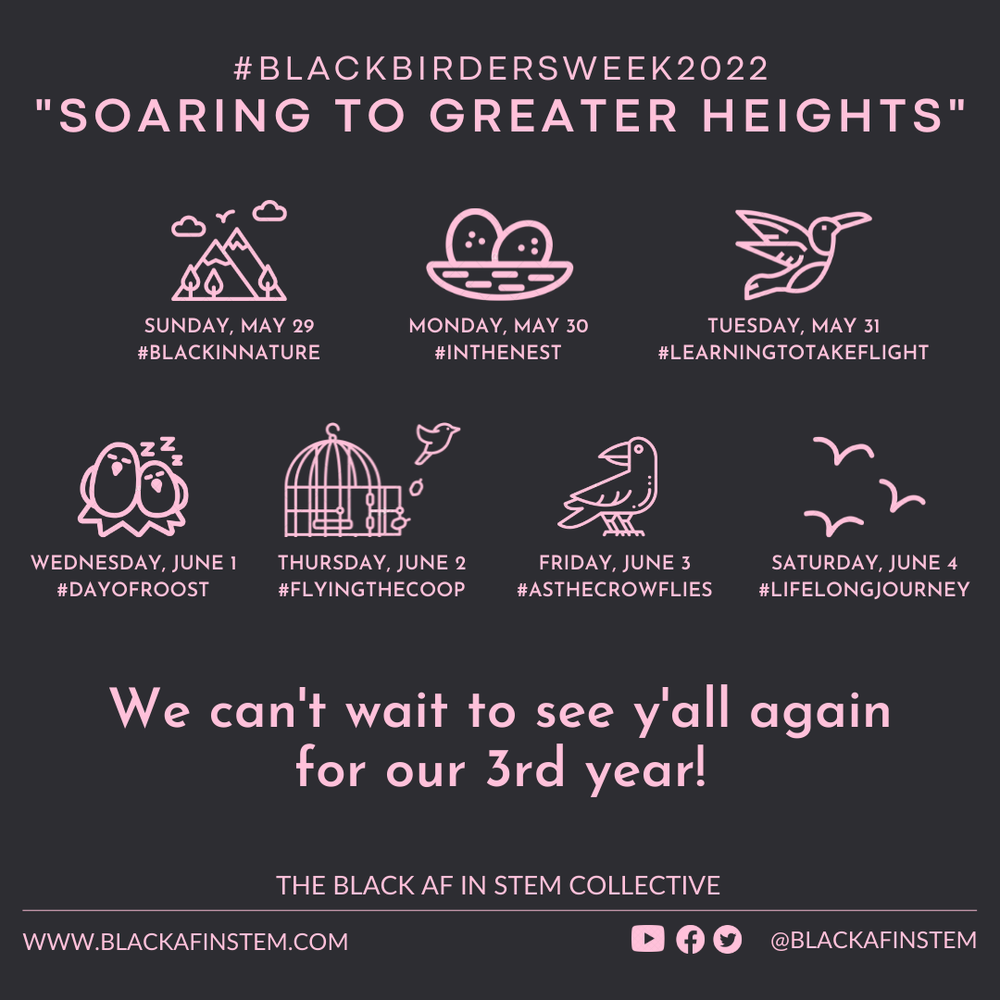
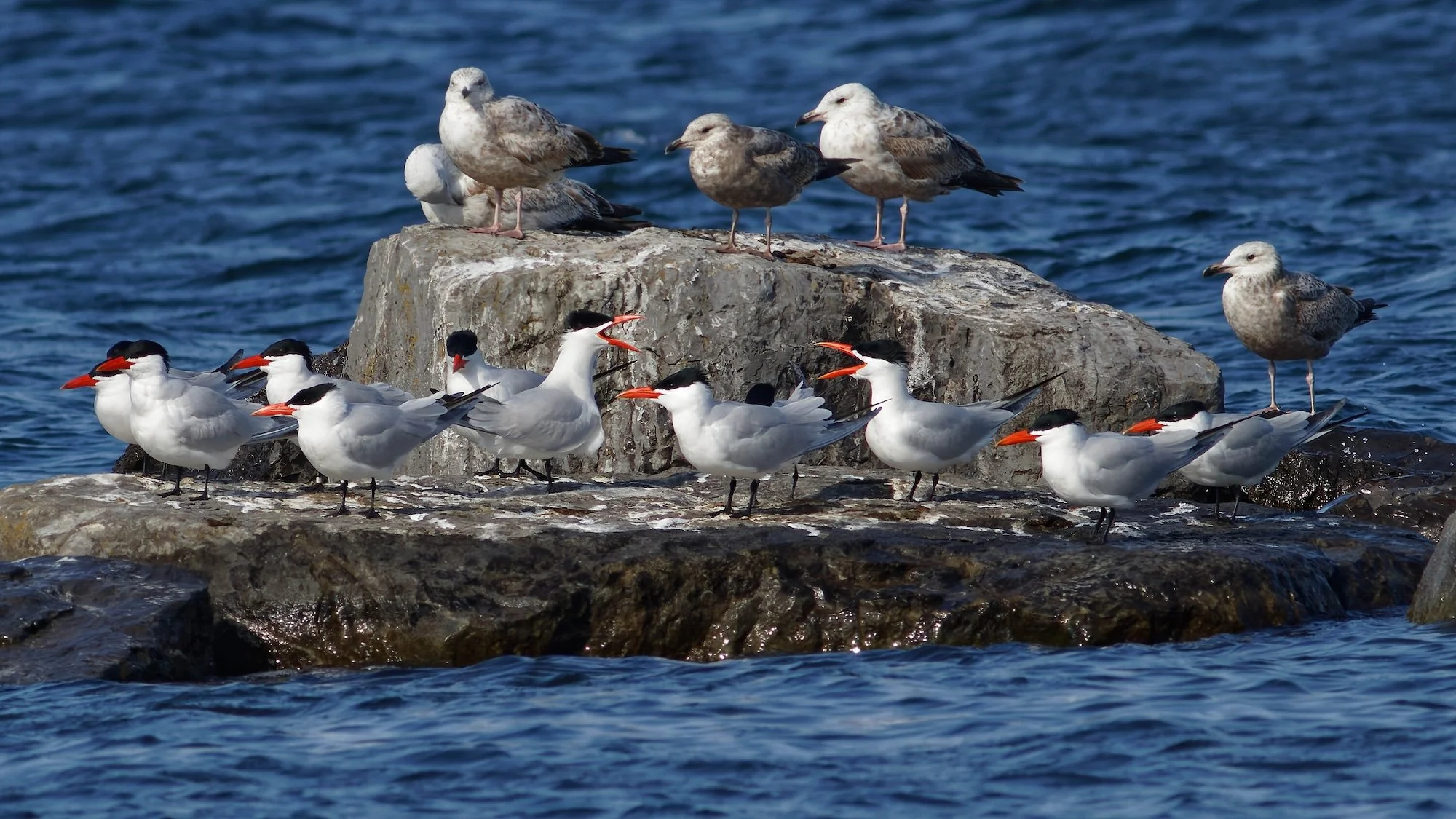
Photo: Caspian Terns and Herring Gulls, Kenneth Haas/Audubon Photography Awards

Ajani Simmons

“Black Birders Week is more than birding...it’s a movement for liberation, healing, and the transformative power of nature as a force for resistance and reclamation.”

— Black AF in STEM

Black Birders Week changed my life. It changed the way I see myself in environmental spaces. It was the reason I joined the Northern Virginia Bird Alliance board and gave me the opportunity to meet Black birders, photographers, artists, conservation leaders, and other Black nature enthusiasts. 

Ajani Simmons, self-portrait.

Even as a black Master Naturalist, I hadn’t spent much time thinking about how Black people fit into birding spaces until I attended Black Birders Week events.

It was a reminder that Black people have always belonged in environmental spaces.

Gull. Photo: Ajani Simmons

This year’s Black Birders Week theme is “Flyways and Freedom: Advocacy, Action, and the Future,” and the spotlight is on the Laridae family: gulls, terns, skimmers, and noddies, birds shaped by wind, water, and migration.

The theme feels especially meaningful right now.

Birds have long been symbols of freedom because they belong to the sky. But they have to land. And what happens on the ground determines whether they survive.

That truth has stayed with me while thinking about both conservation and community here in northern Virginia.

Queen City was a thriving Black neighborhood in Arlington for decades before residents were displaced to build road infrastructure connected to the Pentagon. Communities were uprooted, and landscapes changed with them.

The same kinds of development pressures that fragment habitats and disrupt migration corridors can also erase the places where people once felt rooted and connected. 

In many ways, flyways are about more than birds. 

They’re also about connection, safety, and the ability to move through the world and still find places where you belong.

I remember standing near the water one evening in Occoquan Bay watching gulls ride the wind with almost no effort. There was a sense of peace in its stillness. It struck me how much migration depends on trust that there will be safety and space to return to.

That’s part of why Black Birders Week matters to me.

Yes, it’s a celebration of Black birders and Black joy outdoors. It’s also a reminder that environmental spaces become stronger when more people feel welcomed into them.

Building that kind of community doesn’t happen automatically. It takes intention. It takes listening. It takes creating spaces where people feel safe showing up as themselves, whether they’re lifelong birders or simply curious about the natural world.

For myself and many others, Black Birders Week opened a door into community, conservation, and a deeper sense of belonging.

I hope you also find meaning and impact in the upcoming events.

Black Birders Week is May 24 through May 30. The following events are brought to you by the Northern Virginia Birding Alliance:

On Tuesday, May 26, join us for a free virtual presentation with Jason Hall, founder of the In Color Birding Club and co-host of the Bird Joy Podcast, as he explores how birding can be a joyful and inclusive space right now.

Then on Sunday, May 31, we will head outside together for a free bird and nature walk at Upton Hill Regional Park in Arlington. 

Both events are free and open to everyone.

The flyway is something we build together. Come be part of it.

Read More
News Jess Michetti News Jess Michetti

“Soaring to Greater Heights” Black Birders Week May 29 – June 4

June 1, 2022 is the fourth day of Black Birders Week, “Soaring to Greater Heights.” It continues an annual event intended to “…celebrate and highlight birding as a lifelong learning journey that is enjoyed by Black cultures across the diaspora.”

June 1, 2022 is the fourth day of Black Birders Week, “Soaring to Greater Heights.” It continues an annual event intended to “…celebrate and highlight birding as a lifelong learning journey that is enjoyed by Black cultures across the diaspora.” 

This year’s online events are coordinated by Black AF in STEM. “The BlackAFinSTEM Collective seeks to support, uplift, and amplify Black STEM professionals in natural resources and the environment through professional development, career connection, and community engagement. We aim to inspire new audiences to engage in nature and share the stories of Black conservationists from across the country.”

“Soaring to Greater Heights” has seven daily themes. 

Wednesday June 1, the theme is “A Day of Roost.”

“Did you know that birds choose where, when and how to roost carefully? Today’s theme is about mental health, prioritizing and choosing when to rest. Today, take at least 10 minutes to sit outside to rest and reflect. What do you notice?” 

Read More
News Jess Michetti News Jess Michetti

A Breath of Fresh Air During Black Birders Week

Earlier this year Upton Hill Regional Park, Arlington NAACP’s Environmental Climate Justice Committee, Northern Virginia Audubon Society, and Arlington Master Naturalists came together and hosted their first series of Black and Latinx guided bird walks.

Photo: Red-winged Blackbirds, Rachel Hogancamp/Audubon Photography Awards

Deidra Bryant

Earlier this year Upton Hill Regional Park, Arlington NAACP’s Environmental Climate Justice Committee, Northern Virginia Audubon Society, and Arlington Master Naturalists came together and hosted their first series of Black and Latinx guided bird walks. Many people believe that there isn’t much wildlife to see in their local cities. The incentive for this series was to promote diversity and get participants’ feet wet in the exciting hobby of bird-watching. As quarantine restrictions in Virginia were lifted and people got vaccinated, the public was still interested in how to enjoy themselves outside in new ways since summer was approaching and school was let out. The Black and Latinx bird walks at Upton Hill Regional Park were a wonderful way to have folks participate in bird and plant identification. There were three walks occurring on April 24, May 8, and June 5 led by Musa Murawih and Melody Mobley. 

Musa Murawih. Photo: Deidra Bryant

Musa Murawih. Photo: Deidra Bryant

Born into a nomadic Bedouin family in central Sudan, Musa acquainted himself with all life found in the vast land he grew up on. His passion to conserve and protect natural resources globally took him to multiple continents throughout the world where he would eagerly look for birds. In 2010 he moved to the Northern Virginia area. He was elected to the ASNV Board of Directors this year. 

Melody Mobley. Photo: Deidra Bryant

Melody Mobley. Photo: Deidra Bryant

Melody is a 29-year veteran of the USDA Forest Service and was the first African-American woman forester. She recently joined the Audubon Society of Northern Virginia and is currently working on a video documentary. The documentary is aptly called “The Starya Project,” after her Cherokee name, “Starya,” which means “Stay strong.” The film discusses how her work protecting America’s public lands and navigating in a predominately white male field motivated her to help the next generation of BIPOC (Black, Indigenous, People of Color) biologists pursue a career in STEM (science, technology, engineering, mathematics.) You can also read more about her experiences in the Forest Service in this article here

Overall, it was really nice to see people bring their families and friends to the walk. I had the opportunity to attend the walk in June during Black Birders Week (from May 30th -June 5th) when the 17- year cicada emergence was still going strong. The walk started with a few introductions and then a presentation from Melody on her work in the Forest Service. Having members from ARMN join in was especially cool because not only did participants see neighborhood birds including Eastern Towhees, Red-winged Blackbirds, Northern Mockingbirds, Common Grackles, American Robins and Fish Crows, but we also looked at invasive and native plant species, learned about land management projects occurring on site, and learned about the natural history of the Brood X cicadas. It was quite refreshing to talk about our observations, our personal goals to be better birders/naturalists, and share fun stories about our experiences in previous outdoor excursions, even after the bird walk was over. 

To be honest, I can count on one hand the number of Black individuals who enjoy birding and identifying flowers and trees like I do, and this includes the people who participated in the bird/nature walk that day. Representation definitely matters and this walk was the first step of many in reaching out to people of color in the NOVA region who are searching for an activity with people who share similar goals in becoming better naturalists, where they can exchange knowledge with other people of color in the field, and can establish a network of individuals that uplifts each other. These kinds of opportunities and role models are needed these days, and not just in ornithology, but in: herpetology, geology, entomology, ichthyology, botany, forestry, mammalogy or basically any study in the natural sciences. 

I would like to extend a special thanks to NOVA Regional Parks, Arlington NAACP and Jill Barker- the Upton Hill Regional Park Steward for helping make this a success. We need more visibility of BIPOC in these fields and this series was a breath of fresh air.

Read More
News Jess Michetti News Jess Michetti

NOVA Regional Parks and Arlington NAACP sponsor Black and Latinx Bird and Nature Walks at Upton Hill Park

The walks are also supported by ASNV in collaboration with Arlington Master Naturalists. Walks take place on three Saturday mornings: April 24, May 8 and June 5.

The walks are also supported by ASNV in collaboration with Arlington Master Naturalists. Walks take place on three Saturday mornings: April 24, May 8 and June 5.

Registration is limited to 15, so sign up early here.

Read More
News Jess Michetti News Jess Michetti

Recognizing and Celebrating Black Birders

After the video of a white woman making racist threats against Christian Cooper, a black birder in Central Park, a group of black professionals working across science, technology, engineering and math known as BlackAFinSTEM, organized #BlackBirdersWeek from May 31 – June 5.
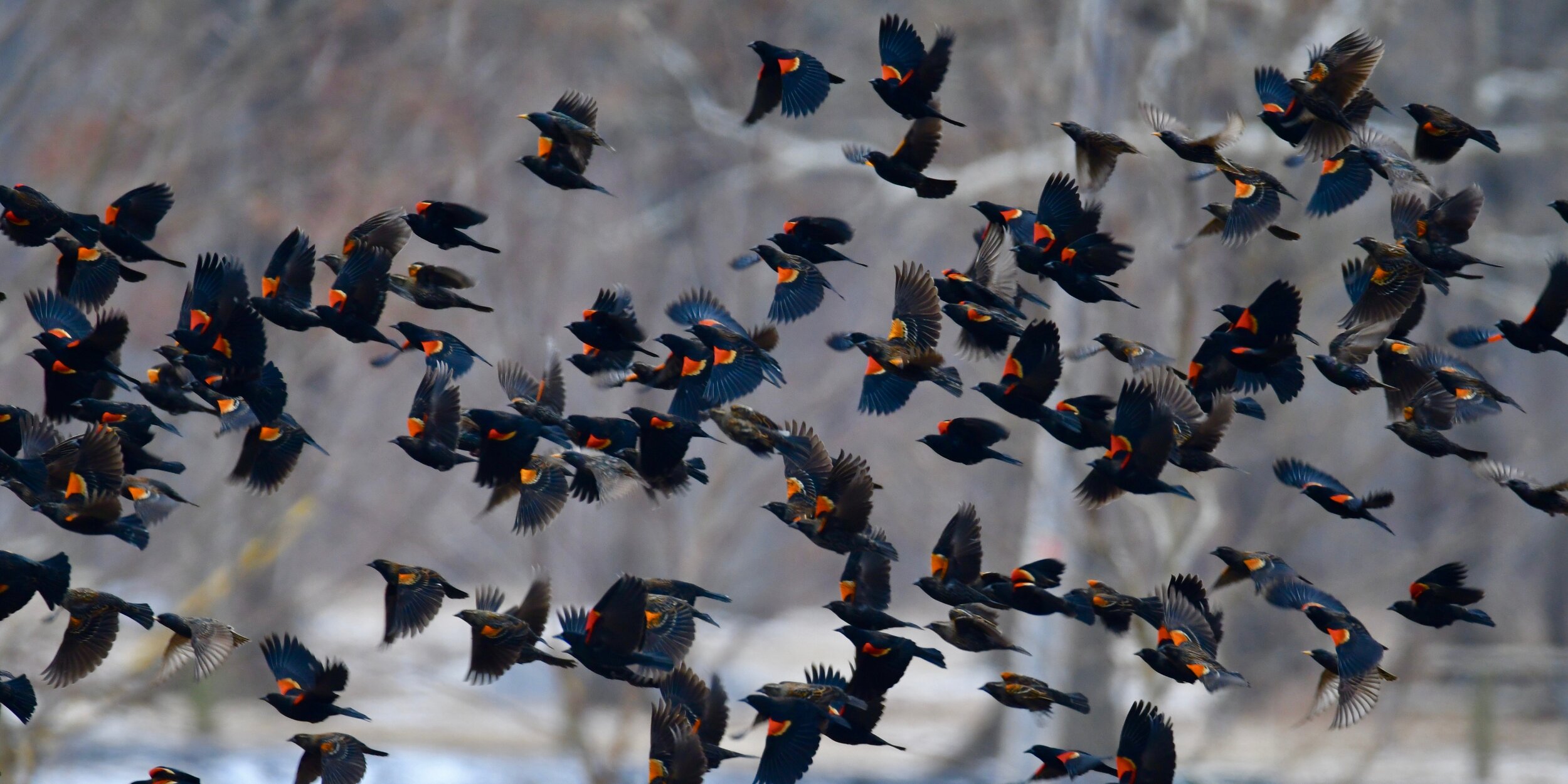
Photo: Red-winged Blackbirds and European Starlings, Amy Watts/Audubon Photography Awards

By Lisa Mackem

After the video of a white woman making racist threats against Christian Cooper, a black birder in Central Park, a group of black professionals working across science, technology, engineering and math known as BlackAFinSTEM, organized #BlackBirdersWeek from May 31 – June 5. The effort resulted in nearly nine hours of Instagram and Facebook Live events and received international attention with over 50,000 viewers and thousands of questions. 

Corina Newsome, a field biologist and one of the 30 or more Black Birders Week organizers, wrote an article for Audubon about embracing difficult conversations and building a truly inclusive outdoors. “We have seen the discomfort of white hikers and birders when they encounter us, sometimes suspicious and fearful, other times shocked we’re even there,” said Newsome. 

Online events in addition to Black Birders Week and conversations at hashtags like #BlackInNature#BirdingWhileBlack and #BlackWomenWhoBird received an enormous and positive response, and Newsome was encouraged. “We are at the cusp of a turning point that embraces human diversity as joyfully as the diversity of feathered creatures. To get there, white people must value black lives and hear our voices and lean into uncomfortable conversations about racism and privilege that follow. The birding community must show that it is not neutral.”  

Throughout the week, black birders shared their own disturbing encounters with hostile white people and with police officers while they were birding. These experiences included being followed, watched or threatened. Some black birders are hesitant to bird in certain areas, or go birding alone. Black birding panelists also took turns describing their personal happy places to bird – where they saw their favorite birds, or an impressive, colorful diversity of birds. 

A frequent objection to #BlackBirdersWeek was the suggestion that birding should not be politicized and white birders don’t “see color.” Sheridan Alford, a graduate student in natural resources responded that putting the “political” label on the objection was dismissive, used because the objector simply didn’t want to see the issue. “I think putting that [political] label on it is dismissive and putting a blanket over it, because you don’t want to see it anymore. ‘Political’ is just a cop-out.” Newsome said this objector rejected her humanity, which she wanted to bring into the conversation. Drew Lanham, author, ornithologist and professor of ecology and conservation, said, “The point is not to create Black birders; it’s to realize the diversity of thoughts in nature.”

The American Bird Conservancy is acting on its following statement: “ABC not only celebrates the diversity of birds, but also the diversity of all who celebrate and conserve birds. We unequivocally condemn racism in all of its forms, including threats toward people of color who seek to enjoy nature.” 

Sheridan Alford asked white people who consider themselves allies to people of color to try and make those people comfortable. “Go talk to them...start with something like ‘What’s the last cool bird you’ve seen?’ Just an icebreaker.” Christian Cooper said that birders should just help each other. “The birds don’t care. Why should we?”

Additional resources for combating racism and building inclusivity:

Why celebrating Juneteenth is more important now than ever

“For Our White Friends Desiring to Be Allies”

Jason Ward’s essay

Journalist Brentin Mock’s interview

How To Be an Antiracist

Read More
Jess Michetti Jess Michetti

Celebrate Black Birders Week

Celebrate Black Birders Week starting May 31st by following along on social media. Read on to see the special hashtags and events for each day.

Photo: Red-winged Blackbirds, Amy Watts/Audubon Photography Awards

Celebrate #blackbirdersweek from May 31st-June 5th by following along with the events and social media hashtags below!

Black Birders Week.jpg
Read More