NVBA NEWS BLOG

Welcome to the blog for Northern Virginia Bird Alliance, a wealth of resources about northern Virginia birds, wildlife, habitat conservation and restoration, native plants, wildlife-friendly gardening, advocacy and more.

News Jess Michetti News Jess Michetti

Citizen Scientists Are Down to Earth

National Geographic defines citizen science as “the practice of public participation and collaboration in scientific research to increase scientific knowledge.” Projects usually do not require specialized knowledge, and volunteers often train new ones.
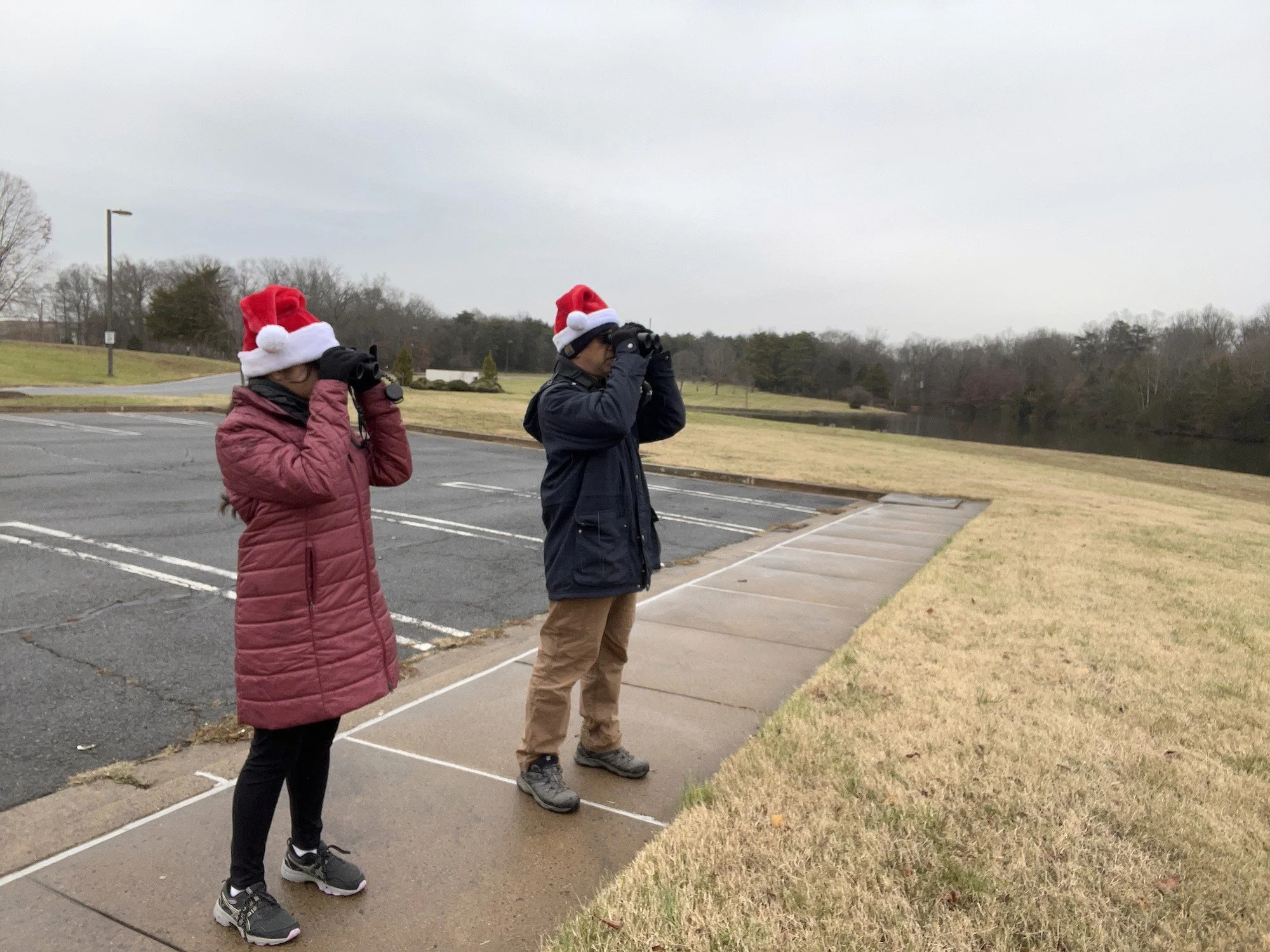
Photo: CBC participants in the morning fog, Deapesh Misra

Glenda C. Booth

This article originally appeared in the Beacon newspaper, www.thebeaconnewspapers.com. Reprinted with permission.

During her childhood in Atlantic City, New Jersey, Jill MacNeice was always in the water, dreaming of scuba diving with octopuses and legendary undersea explorer Jacques Cousteau.

Now living in Washington, D.C., she is still in the water, taking water samples from the Potomac River with a volunteer team of the Potomac Riverkeeper Network, a watchdog advocacy group that combats pollution and advocates for clean water. She’s one of thousands of Americans who spend their free time as “citizen scientists,” gathering data for research and other projects.

National Geographic defines citizen science as “the practice of public participation and collaboration in scientific research to increase scientific knowledge.” Projects usually do not require specialized knowledge, and volunteers often train new ones.

One of the oldest citizen-science projects is the National Audubon Society’s annual Christmas Bird Count, started in 1900. Thousands of Americans join volunteers in 20 other countries to compile the annual census.

CBC participants in the morning fog. Photo: Deapesh Misra

“We truly value the work of citizen scientists,” Libby Lyons, president of a local Audubon chapter called the Northern Virginia Bird Alliance, said in an email. “For decades, they have organized local volunteers to collect data, which give … valuable insights into changes in bird populations and the environment and help mitigate threats to birds and other wildlife.”

Local impact

The importance of MacNeice’s work was accentuated last winter, when a Maryland sewer line collapse sent more than 200 million gallons of raw sewage into the Potomac River, the drinking water source for five million people in the Washington region.

From April to October, MacNeice takes weekly water samples at sites along the Potomac River from Maryland’s Seneca Creek to Belle View Marina in Fairfax County, Virginia, part of a network that extends to Colonial Beach, Virginia.

She samples for e. coli bacteria and turbidity, records air and water temperatures, and notes weather conditions. Within five hours, her samples arrive at the organization’s floating laboratory at National Harbor, where analysts determine if the water is safe.

MacNeice kayaks on the Potomac yearround, but her volunteer work has introduced her to “many interesting spots I never knew about,” she said.

“This [project] is a great opportunity to participate in citizen science and work on something dear to my heart that makes a difference. When you spread it out over many people, it becomes important — and that’s kind of special.”

As a former digital information designer for Marriott and the Library of Congress, MacNeice is also calling on her professional skills and digitizing the riverkeepers’ information collection processes.

“In this work, I can combine my professional skills with childhood fantasies,” she said.

Birdman of Annandale

Identifying birds and analyzing their behavior is not hush-hush top secret like Larry Cartwright’s former career in military intelligence for the Defense Intelligence Agency, but it is just as intriguing for the Annandale resident, a longtime birdwatcher, teacher and student.

Cartwright, who studied the clandestine military machinations of the Soviet Union, Iraq and Afghanistan, retired in 2014. Now he often leaves home before sunrise, binoculars and spotting scope in hand, to scour the skies, waterways, ground and trees for birds.

Since 1993, he has led an annual breeding bird survey for the Friends of Dyke Marsh, a survey that does not just identify the birds in the Fairfax County marsh but confirms they are, in fact, breeding. Volunteers observe and record those telltale behaviors, like taking nesting materials to a nest or feeding nestlings.

Cartwright is so enthralled by birds that he organizes three additional annual surveys: the Northern Virginia Bird Alliance’s winter waterfowl survey, since 2008; the bluebird nestbox survey at Huntley Meadows Park, since 2000; and the Audubon Christmas Bird Count in Northern Virginia and Maryland, since 2004. For each of them, he recruits volunteers and prepares detailed reports.

“I’m fascinated by birds,” he explained. “In today’s world, everything online seems contrived. When I go into the woods and see nature, that is the one thing you can bet on. It’s a true aspect of life. They breed, are born, live and die. It’s a reality that we share.”

Not surprisingly, Cartwright teaches bird-related classes at Northern Virginia Community College. Birds have long intrigued people, from early sculptors to the writers of the Bible to 18th-century Japanese artists, he pointed out.

Cartwright’s curiosity about birds started in childhood when he accompanied his uncle in Pennsylvania on hunting trips.

“Sitting in a deer stand freezing my butt off, I became fascinated when a Pileated Woodpecker would fly by,” he said. He was mesmerized by the grouses’ drumming and elaborate courtship displays.

“The depressing part is that some birds are disappearing,” he lamented. “If it all disappears, the world will be a very sad place to live in. What affects them affects us.”

Cartwright cites the adverse impacts of climate change as “one of our biggest challenges,” but adds, “There’s something we can do about it. The more you do, the more you learn.”

Gung-ho for native plants

When Clifton resident Margaret Fisher read entomologist Doug Tallamy’s first book, Bringing Nature Home, “It completely changed my life,” she said. “The book was revolutionary.”

The book maintains that everyone can address the biodiversity crisis by planting native plants, which, Fisher pointed out, are “the basis of the ecosystem that feed the insects that birds eat. Without native plants, we won’t have insects, birds or anything else.”

Fisher, a rheumatologist and internal medicine physician for Kaiser Permanente, got hooked on native plants after she retired from her medical career in 2017.

While helping a local high school with their fundraiser, she decided that instead of compiling their traditional recipe book, she would write a booklet of gardening tips and explore how to garden in an environmentally beneficial way. Then she went door-to-door in her town of Clifton and signed up 110 property owners who promised not to use insecticides.

These first steps inspired her to bolster a fledgling organization, Plant NOVA Natives, a coalition designed to influence the landscaping culture of Northern Virginia. For the last 12 years, she has expanded the group to more than 100 partners, agencies, nonprofits and garden centers.

She helped write Native Plants for Northern Virginia and organized 65 volunteers to label native plants in garden centers so customers don’t have to research whether a plant is native or not.

“The centers really like it, and we’ve seen a noticeable increased inventory of native plants,” she said.

Fisher conducts conferences for landscape professionals in English in summer and Spanish in winter, encouraging them to use native plants.

She also manages Fairfax Trees Rescuers, volunteers who help the million trees at risk in Fairfax County from infestations like English ivy.

“If we don’t do this as a community-wide effort, by the end of century, we will have lost most of native trees and natural areas,” Fisher said. “We must act now when we can prevent that. The longer we wait, the more expensive it gets.”

Another priority is the pollinator pathways project, which encourages neighbors to band together and create connected corridors, avoid insecticide use, and plant native plants.

With five neighborhoods on board so far, Fisher is pleased to see momentum growing.

“We make it easy for someone to do something, and they will think of themselves as environmentalists. If we can get them to do it, they will be more committed and do more,” she said.

“If you hope people will act and assume only one percent will, one percent of 1.2 million people in Fairfax County is still a lot of people. I don’t think it’s impossible, but we need a lot of dedicated people to make it happen,” she said.

Whether it’s saving injured bats, monitoring frogs, analyzing spring buds, counting salamander eggs in vernal pools or digging for artifacts, citizen scientists are giving back — and providing some human capital and data to improve our world.

“I have a motivation to do good things in the world, to help others,” Fisher said.

“It’s fun to actually become the steward of your property and save the little insects and birds right here. Every time you do that, you are taking a step to saving our environment.”


Glenda C. Booth, a freelance writer, grew up in southwest Virginia and has lived in northern Virginia more than 30 years, where she is active in conservation efforts.

Read More
News Jess Michetti News Jess Michetti

Results of the 2024 Manassas-Bull Run Christmas Bird Count 

The results of the 43rd annual Manassas-Bull Run Christmas Bird Count are in! Over seventy birders counted 17,591 birds of 79 species in this 15-mile diameter circle on December 15, 2024.

Photo: CBC participants Mehika and Deapesh Misra at Upper Occoquan polishing pond

Phil Silas, Compiler

The results of the 43rd annual Manassas-Bull Run Christmas Bird Count are in! Over seventy birders counted 17,591 birds of 79 species in this 15-mile diameter circle on December 15, 2024. There were 35 parties of field observers. They were led by experts but included birders of all skill levels. The day was cool and overcast with some drizzle toward mid-day. 

Swamp Sparrow, Chuck Wood/Audubon Photography Awards

Ring-necked Duck, Mike Wood/Audubon Photography Awards

Ruby-crowned Kinglets numbered 36, and Winter Wrens numbered 26, which passed the respective high counts of 32 and 22 from all our previous counts.

The waterfowl had a few notable records as 83 Ring-necked Ducks were observed, which is 40 more than our previous high count. A single American Wigeon showed on a previous year’s count; this year’s count recorded two. Gadwall approached the record high of 50 with a count of 47.

Sparrows were a delight with Swamp Sparrows surpassing last year’s record of 40 by 1. White-throated Sparrows and Dark-eyed Juncos had strong numbers of 1,624 and 1,359, respectively. We don’t see the American Tree Sparrow and Fox Sparrow every year, so it was nice to record six and seven sightings, respectively. Northern Cardinals were just 11 off the record 877 observed just last year. Notably absent was the Common Grackle that had been super abundant on this count just two years ago.

Each of the six sectors observed at least one species unique to the count. Sector 1 had Eastern Phoebe; Sector 2 had Sharp-shinned Hawk; Sector 3 had Common Merganser, American Herring Gull, and Red-breasted Nuthatch; Sector 4 had Bufflehead; Sector 5 had Wild Turkey and Brown-headed Cowbird; and Sector 6 had Northern Shoveler, American Wigeon, Lesser Scaup, and American Tree Sparrow.

Thanks to all who participated, especially my fellow sector leaders -- Robin Duska Huff, Greg Butcher, Toby Hardwick, and Robert Mocko. Mark your calendars for the 44th count December 14, 2025. The spreadsheet with all the data by sector is linked here

Read More
News Jess Michetti News Jess Michetti

Results of the 2023 Manassas-Bull Run Christmas Bird Count 

The conditions were not auspicious for the 42nd annual Manassas-Bull Run Christmas Bird Count, but the results still broke some records!

Photo: CBC participants in the morning fog, Deapesh Misra

Phil Silas, Compiler

The conditions were not auspicious for the 42nd annual Manassas-Bull Run Christmas Bird Count, but the results still broke some records! Ninety-eight birders counted 21,767 birds of 78 species in this 15-mile diameter circle on December 17, 2023. There were 34 parties of field observers led by experts. The teams included birders of all skill levels, and one feeder-watcher. A thick fog slowed bird sightings early in the day, and skies remained overcast all day with rain becoming steady in early afternoon. 

White-throated Sparrow, Phillip Kenny

Red-headed Woodpecker, Seth Honig

The biggest surprise was that we observed 12 species in numbers that broke the record for the highest numbers set on any of the 41 previous counts. Species with new high totals, in taxonomic order, were Great Blue Heron (38), Yellow-bellied Sapsucker (91), Pileated Woodpecker (83), Northern Flicker (219), Carolina Wren (534), Gray Catbird (4), Brown Thrasher (4), Hermit Thrush (66), White-throated Sparrow (1,649), Swamp Sparrow (40), and Eastern Towhee (91). We observed no rare species, and we counted several species in just one sector. These included White-crowned Sparrow and Pine Warbler in Sector 1; American Black Duck and Common Merganser in Sector 3; Ring-necked Duck, Bufflehead, Ruddy Duck, and Eastern Phoebe in Sector 4; Double-crested Cormorant in Sector 5; and Wood Duck, Northern Harrier, American Tree Sparrow, and Eastern Meadowlark in Sector 6. Two of the record-breaking Brown Thrashers were sighted in Sector 2.

Some other notable numbers included, the 1,706 Cedar Waxwings that were just 30 short of the record set in 2007; 4,010 American Robins, which seemed to be everywhere; and 4 Barred Owls. 

Of course, a big thank you goes to all who participated, especially my fellow sector leaders Robin Duska Huff, Greg Butcher, Dixie Sommers, Toby Hardwick, and Robert Mocko. Robert led Sector 6 for the first time and did very well thanks in part to Steve Johnson’s giving us plenty of notice and smoothing the transition. A special thanks goes to Dixie Sommers for leading Sector 4 for the past seven years. She’s handing Sector 4 off to a new leader for 2024. It’s not too early to mark your calendars for the 43rd count on Sunday, December 15, 2024. 

The spreadsheet with all the data by sector is linked here.

Read More
News Jess Michetti News Jess Michetti

Christmas Bird Count 2023

The 124th Audubon Christmas Bird Count (CBC) will take place between this December 14 and January 5, 2024.

Photo: Carolina Chickadee, Jeff Drake/Great Backyard Bird Count

The 124th Audubon Christmas Bird Count (CBC) will take place between this December 14 and January 5, 2024. General information about the CBC is available on the Audubon website.

ASNV sponsors the Manassas-Bull Run CBC, which will be held for the 42nd year on Sunday, December 17. Those who participated in our count last December will to be contacted no later than Thanksgiving. Anyone who would like to participate in this count but did not participate last year should contact the compiler, Phil Silas, at epsdcva@aol.com, or 703-987-0817, as soon as possible but not later than December 8. 

Information on other local CBCs that you may be interested in is available in the November 2023 issue of The Siskin, the newsletter of the Northern Virginia Bird Club. Look for the list on page 3.

If you have any questions or concerns about participating in this fun and very useful annual event, you can email or call Phil Silas.

Read More
News Jess Michetti News Jess Michetti

Christmas Bird Count

The 124th Audubon Christmas Bird Count (CBC) will take place between this December 14 and January 5, 2024.

Photo: Winter Wren, Therese Scheller/Audubon Photography Awards

The 124th Audubon Christmas Bird Count (CBC) will take place between this December 14 and January 5, 2024. General information about the CBC is available on the Audubon website.

ASNV sponsors the Manassas-Bull Run CBC, which will be held for the 42nd year on Sunday, December 17. Those who participated in our count last December will to be contacted no later than Thanksgiving. Anyone who would like to participate in this count but did not participate last year should email the compiler, Phil Silas, or call him at 703-987-0817, as soon as possible but not later than December 8. 

Information on other local CBCs that you may be interested in is available in the November 2023 issue of The Siskin, the newsletter of the Northern Virginia Bird Club. Look for the list on page 3.

If you have any questions or concerns about participating in this fun and very useful annual event, you can email or call Phil Silas.

Read More
News Jess Michetti News Jess Michetti

Results of the 2022 Manassas-Bull Run Christmas Bird Count

The results are in! On December 18, 2022, nearly 100 birders counted almost 20,000 birds of 82 species in this 15-mile diameter circle.

Photo: Wilson’s Snipe, John Troth/Audubon Photography Awards

The results are in! On December 18, 2022, nearly 100 birders counted almost 20,000 birds of 82 species in this 15-mile diameter circle. There were 36 parties of field observers led by experts and including birders of all skill levels. Read more about this year’s count here.

Read More
News Jess Michetti News Jess Michetti

Christmas Bird Count

Would you like to help count birds and connect with other birders during the 123rd Audubon Christmas Bird Count (CBC)?

Photo: Camila Cerea/Audubon

Would you like to help count birds and connect with other birders during the 123rd Audubon Christmas Bird Count (CBC)? Teams all over the country will be counting birds between December 14 and January 5. You can learn all about the CBC on the Audubon website.

ASNV sponsors the Manassas-Bull Run CBC, which will be held for the 41st year on Sunday, December 18. You don’t need to be an expert birder to participate. We pair experienced birders with people who are still learning, and everyone has a good time.  If you would like to participate in this count please contact Phil Silas (or 703-987-0817), as soon as possible but not later than December 8. 

Information on other local CBCs that you may be interested in is available in the November 2022 issue of The Siskin, the newsletter of the Northern Virginia Bird Club. Look for the list on page 3.

Read More
News Jess Michetti News Jess Michetti

Christmas Bird Count

The 123rd Audubon Christmas Bird Count (CBC) will take place between this December 14 and January 5, 2023.

Photo: Winter Wren, Therese Scheller/Audubon Photography Awards

The 123rd Audubon Christmas Bird Count (CBC) will take place between this December 14 and January 5, 2023. General information about the CBC is available on the Audubon website.

ASNV sponsors the Manassas-Bull Run CBC, which will be held for the 41st year on Sunday, December 18. Those who participated in our count last December will to be contacted no later than Thanksgiving. Anyone who would like to participate in this count but did not participate last year should contact the compiler, Phil Silas, at epsdcva@aol.com, or 703-987-0817, as soon as possible but not later than December 8. 

Information on other local CBCs that you may be interested in is available in the November 2022 issue of The Siskin, the newsletter of the Northern Virginia Bird Club. Look for the list on page 3.

If you have any questions or concerns about participating in this fun and very useful annual event, you can email or call Phil Silas.

Read More
News Jess Michetti News Jess Michetti

2021 Manassas-Bull Run Christmas Bird Count

The 40th Annual Manassas-Bull Run Christmas Bird Count on December 21, 2021 was conducted for the 2nd year following special Covid-19 protocols.

Photo: Tufted Titmouse, Stephanie Dean

Phil Silas, Manassas-Bull Run Compiler  

The 40th Annual Manassas-Bull Run Christmas Bird Count on December 21, 2021 was conducted for the 2nd year following special Covid-19 protocols. The participant count was 101 field observers plus 3 feeder watchers as a limited number of new volunteers joined the count. We managed to safely count nearly 34,000 birds which is 11,500 more than last year, thanks in great part to over 10,000 Common Grackles. These grackles were observed on just a few routes, but those who saw them won’t soon forget the spectacle of birds massing together in loud, tight flocks at ground level and up to the treetops swirling like tornadoes. The overall species count was 78 which is the average for the life of this count. We again had to forego our traditional lunch in Ellanor C. Lawrence Park due to the pandemic. The birding conditions were favorable in that it stopped drizzling by about 7:40 AM and remained in the low 40s with light winds under an overcast sky.

Common Grackles, Sujata Roy

Merlin, Tim Boyer/Audubon Photography Awards

Species that were observed in only one of our six sectors included the American Pipit, Merlin, Gadwall, American Woodcock, Brown Thrasher, Brown-headed Cowbird, Savannah Sparrow, White-crowned Sparrow, and Eastern Meadowlark. Several species were observed in only two sectors, including Red-breasted Nuthatch, Great Horned Owl, American Kestrel, Double-crested Cormorant, Herring Gull, Killdeer, American Black Duck, Bufflehead, Chipping Sparrow, and Gray Catbird.

Other highlights included all-time highs of White-throated Sparrow at 1,477, and Hermit Thrush where 45 were observed; easily surpassing the 30 recorded in 1998. The Brown Creeper count of 34 passes the previous record of 31 observed in 1996. Yellow-bellied Sapsuckers at 55 tied the count of 2017. Eastern Bluebirds had their highest count of 508 since our all-time high of 510 in 2014. American Kestrels reached double-digits of 10 for the first time this century.

Eastern Bluebird, Stephanie Dean

There were three count week observations which don’t register in the official species number  but are notable. These were Tundra Swan, Pine Warbler, and Green-winged Teal. The teal was the rare Eurasian sub-species and seen on the Middlesex Drive Pond southwest of Dulles Airport in Loudoun County.

Full results for the count can be found here.  

Thanks to all for safely participating in this event, and we look forward to a more traditional event with a few more birders on Sunday, December 18, 2022!

Here are some photos taken by participants in this year’s count. Click any image for a larger version.

Read More
News Jess Michetti News Jess Michetti

Annual Manassas-Bull Run Christmas Bird Count (CBC)

Audubon Society of Northern Virginia’s Manassas-Bull Run Christmas Bird Count will be held on Sunday, December 19, 2021 with a preliminary online workshop on December 16. This count will be ASNV’s 40th year participating in a 122-year-old annual tradition of citizen science.
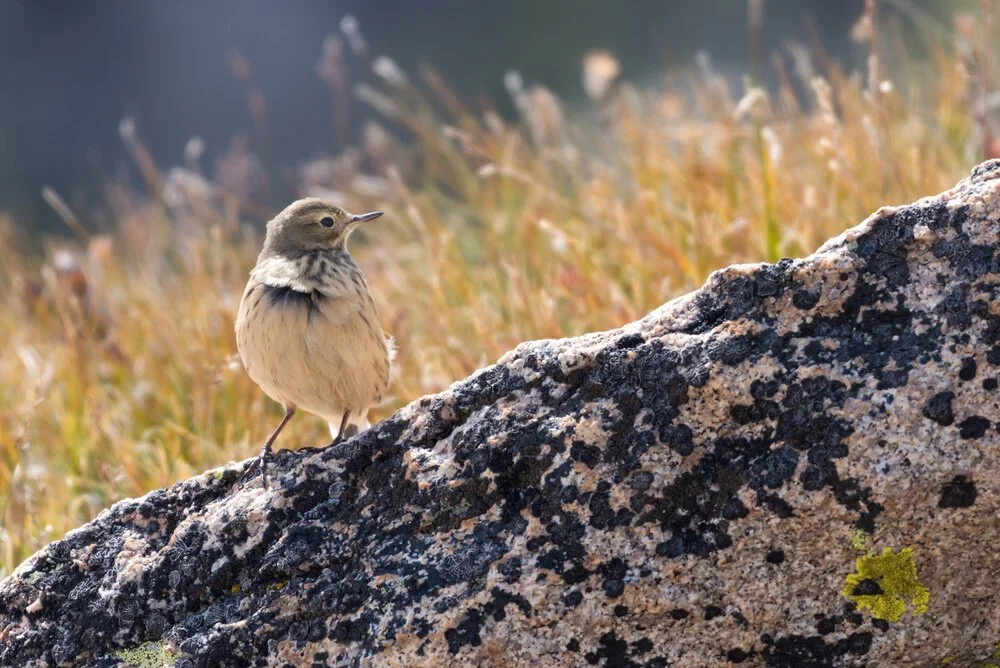
Photo: Carolina Chickadee, Jeff Drake/Great Backyard Bird Count

Lisa Mackem

Audubon Society of Northern Virginia’s Manassas-Bull Run Christmas Bird Count will be held on Sunday, December 19, 2021 with a preliminary online workshop on December 16. Both the workshop and count are free but because of Covid the number of new participants in the count will be restricted (see following note). This count will be ASNV’s 40th year participating in a 122-year-old annual tradition of citizen science.

In 1900, American ornithologist and pioneering field guide writer Frank Chapman, along with 26 other conservationists, started the Christmas Bird Count (CBC) on Christmas Day, 1900. They wanted to promote conservation by counting birds instead of hunting them. Some counts have run annually since then, and over 20 countries in the Western Hemisphere now have CBCs.

Because of Covid restrictions last year, ASNV limited participants to family groups, and did not solicit additional volunteers. Those 93 participants tallied over 22,500 birds from 87 species – just two short of the 2014 record of 89 species. Notable highlights included sightings of American Pipit flocks for a new high count of 620. Matt Bender found and photographed a late Blue-headed Vireo, which was only the second one seen on the count since the first in 2002. Tim Resch photographed a Cackling Goose with Canada Geese. This also was only the second sighting, after the first one in 2013. Carolina Wrens and White-throated Sparrows were counted at all-time highs. Merlins tied their all-time high, Common Ravens were close to their high count, and Eastern Bluebirds had their highest count since 2015. Canada Geese, Yellow-bellied Sapsuckers, Northern Cardinals, and Song Sparrows were all close to all-time high counts but for several species, observers spotted just one bird. 

CBC participant data have become one of only two large pools of information (the other is the Breeding Bird Survey in June) informing ornithologists and conservation biologists on how American birds are faring. Hundreds of analyses, peer-reviewed publications, and government reports use this data, which reveals information about changed migration habits attributed to climate warming. Management plans can be tailored to local conditions using CBC data as a guideline. 

Continue this important tradition! Sign up for the workshop here and contact our compiler if you want to come out for the count.

Due to Covid, only a limited number of new volunteers will be added to the 40th annual Manassas-Bull Run CBC. If you are interested, contact the compiler, Phil Silas, no later than December 8. The count will cover the area around Centreville, including Manassas National Battlefield Park, Bull Run Regional Park, undeveloped areas along Bull Run Post Office Road, and many other locations. For more information, especially if there are accessibility concerns please contact Phil or call 703-987-0817.

Read More
News Jess Michetti News Jess Michetti

2020 Christmas Bird Count Summary

The 39th Annual Manassas-Bull Run Christmas Bird Count on December 20, 2020 was conducted following special Covid-19 protocols.

Photo: American Pipit, Ellen Nelson/Audubon Photography Awards

Written by Phil Silas

The 39th Annual Manassas-Bull Run Christmas Bird Count on December 20, 2020 was conducted following special Covid-19 protocols. The participant count was 93 as carpools were limited to family groups and no new volunteers were solicited. We managed to have a safe count that tallied over 22,500 birds of 87 species. We had to forego our traditional lunch in Ellanor C. Lawrence Park due to the pandemic. The birding conditions were favorable and the overall species count was only 2 short of our all-time high of 89 set in 2014.

American Pipit, Ellen Nelson/Audubon Photography Awards

Cackling Goose and Canada Goose, Tim Resch

The American Pipit has only been seen on 20% of our counts, and never more than 16 birds, that is until this count. We observed pipet flocks on multiple routes for a new high count of 620 birds! A late Blue-headed Vireo was found and photographed by Matt Bender. It is only the 2nd one seen on the count and the 1st was back in 2002. A Cackling Goose was seen and photographed with Canada Geese by Tim Resch. It is also only the 2nd observation, and the other one was in 2013.

Blue-headed Vireo, Matt Bender

Other highlights included all-time highs of Carolina Wrens at 466, and White-throated Sparrows at 1,472. Merlins tied the all-time high of 3 previous years with 3. Common Ravens at 11 is just 3 off last year’s all-time high and the trend since 2015 is that they are indeed getting more common. Eastern Bluebirds had their highest count (387) since 2015. Canada Geese (4,563), Yellow-bellied Sapsuckers (50), Northern Cardinals (499) and Song Sparrows (491) all were very close to all-time highs.

There were several species where just 1 bird was observed including: American Woodcock, Great Horned Owl, Eastern Phoebe, Brown Thrasher, American Tree Sparrow, Rusty Blackbird and Pine Warbler. Due to food scarcity further north, there is an irruption of several species moving further south this winter. These include the following that are only observed on about half of our counts, and this year we observed: Red-breasted Nuthatches (21); Pine Siskins (12); and Purple Finches (9).

Another interesting observation was a leucistic American Robin by Dixie Sommers. Her photo shows how variable this loss of pigment can be; sometimes birds will have white splotchy feathering but this bird showed an overall lighter tone. Other notable points about the count were the absence of the Common Grackle, and the observation of a Horned Lark during Count Week.  

American Robin and Leucistic Robin, Dixie Sommers

The full results for the 2020 CBC are available here. Thanks to all who supported this event in these unusual circumstances. We look forward to a safe and more traditional event December 19, 2021!

Read More
News Jess Michetti News Jess Michetti

2020 Christmas Bird Count Report now available

Read about the highlights of this year’s CBC from complier Phil Silas. The full report and tally are available here.

Photo: American Pipit, Ellen Nelson/Audubon Photography Awards

Read about the highlights of this year’s CBC from complier Phil Silas. The full report and tally are available here.

Read More
Jess Michetti Jess Michetti

2020 Christmas Bird Count – December 20, 2020

ASNV plans to hold the 39th Manassas-Bull Run Christmas Bird Count on Sunday, December 20. This year’s count will be different, in light of the pandemic.

Photo: Camilla Cerea

ASNV plans to hold the 39th Manassas-Bull Run Christmas Bird Count on Sunday, December 20. This year’s count will be different, in light of the pandemic. 

Instead of recruiting new participants, we will be limiting the count to last year’s participants who want to do the count under conditions that conform with pandemic restrictions, including wearing masks, maintaining social distance and carpooling with household members only. Instead of our count day lunch gathering, we will have an online “tally rally” in the evening of count day. If you participated in last year’s count, you should have received a message about participating this year. 

If you were looking forward to volunteering for the first time for this CBC, we hope you'll understand and volunteer next year. BUT there are still ways you can join the spirit of the count!  Consider these possibilities or invent your own:

Join the Free Zoom CBC Celebration and Summary:

Learn about highlights of this year’s CBC and celebrate with the CBC community. Register here.

Do Your Own Count:

Walk through your neighborhood or visit a park or refuge to gather observations and report your personal findings via eBird. (see below) Be sure to practice social distancing and wear a mask if within six feet of others!

Learn More About Useful Identification and Database Applications:

The Cornell Lab of Ornithology has a suite of useful tools and sites related to birding. 

Project FeederWatch:

Count birds that visit your feeders from the safety of your home or yard. Submit data from your sightings to contribute to winter and early bird counts. The 2020–21 FeederWatch season began on November 14 and ends on April 9. You can still sign up, and the last day to start a two-day count is April 8. Details are at https://feederwatch.org.

CBC Feeder Watchers:

If you reside in the Manassas-Bull Run CBC circle, you can count your feeder birds on December 20 and send a report that can be included in the official count. Contact the CBC compiler Phil Silas, epsdcva@aol.com for details.

Read More
News Jess Michetti News Jess Michetti

The 1918 Christmas Bird Count

In 2020, we are holding the Christmas Bird Count in the midst of a pandemic. What did birders do in 1918, in the midst of the Spanish flu pandemic?

Photo: Bird Lore 1918 Cover

By Dixie Sommers

In 2020, we are holding the Christmas Bird Count in the midst of a pandemic. What did birders do in 1918, in the midst of the Spanish flu pandemic? 

bird_lore_v20-1918_cover.jpg

The answer can be found in the 1918 edition of Bird-Lore, the “Official Organ of the Audubon Societies” edited by Frank Chapman. In the article “Bird-Lore’s Eighteenth Christmas Census” we find reports of two counts in Northern Virginia on December 26, each led by interesting people. 

The “Mount Vernon to Dyke, VA” route was counted by Waldo McAtee and Edward A. Preble, two scientists from the Bureau of Biological Survey, a predecessor to the U.S. Fish and Wildlife Service. McAtee studied bird feeding habits, authored many scientific papers, became editor of USFWS publications and along with Aldo Leopold helped found The Wildlife Society. He was a fellow of the American Association for the Advancement of Science. Preble worked on bird and mammal studies in the Pacific northwest, where he led two expeditions to the Athabasca- Mackenzie region of Canada. After retirement from the government, he became an associate editor of Nature magazine. 

The Washington, D.C. route, described as “Wellington to New Alexandria, VA; Arlington, VA to Washington D.C.” was covered by Leo and Edith Miner and Raymond W. Moore. Edith Miner was a leader in the Audubon Society of the District of Columbia, and apparently was something of a nature activist. She and Leo participated in the first meeting of the American Society of Mammologists, and she gave remarks at the 1934 annual meeting of the Virginia Society of Ornithology held in Alexandria. 

In 1956, Mrs. Miner advocated to the Senate Appropriations Committee against use of $1.8 million for the parkway extension on the D.C./Maryland shore between Chain Bridge and Cabin John. Referring to herself as “a naturalist and above all a conservationist,” she argued for preserving the trees and natural areas which provided habitat for birds. “The nesting of some of our more rare birds in that area, many making it their winter residence, is striking and proof of its value as a bird sanctuary,” she argued. 

So, what was the 1918 count like? First, it was cold and long. The Mt. Vernon team started at 8:30 AM in 23-degree weather with clear skies, light northwest wind and 2 inches of snow on the ground. They walked the 12-mile route, ending at 5:30 PM and reporting the day’s high temperature as 26 degrees. The New Alexandria team also had temperatures from 25 to 30 degrees, a “light but penetrating wind” and light snow on the ground. They did their 12-mile route from 10:00 AM to 4:00 PM, a shorter time for 12 miles that suggests they did not walk the entire route. 

New Alexandria is a neighborhood in Fairfax County including Belle Haven and Dyke Marsh. It was served by an electric streetcar line to Washington, running along the route of today’s George Washington Memorial Parkway. 

The Mt. Vernon team reported 39 species, while the New Alexandria team had 45, for a combined total of 52. Because they were near the Potomac, both teams saw lots of waterfowl, reporting 11 species and more than 7,600 individuals. The New Alexandria team must have birded right on the river, as they reported 500 Greater Scaup and 6,000 Lesser Scaup, noting “two sizes, as well as color reflections of heads.” The teams also reported a total of 800 Canvasbacks, but no Canada Geese. As to the overall numbers, the New Alexandria team said, “Ducks in three flocks, and actual number probably exceeded ten or twelve thousand.” Huge rafts of ducks remain a counting challenge!

The New Alexandria team noted “all ducks through telescope, 25 diameters.” Assuming this refers to a 25mm lens diameter, their scope was much smaller than today’s spotting scopes, which typically have 50mm to 80mm lenses. There is no mention of what types of binoculars or “field glasses” they used. 

Sparrows were the second largest bird group reported, but the numbers and mix of species were different from what we would find today. Only four species were reported: White-throated (38), Tree (179), Song (14) and Junco (456). Today, a Tree Sparrow would be rare, and we would likely see many more Song and White-throated Sparrows and fewer Juncos.

Other species with large numbers reported were Common Crow (838), Golden-crowned Kinglet (163), Redhead (100), Ruddy Duck (75), Bluebird (66) and Rusty Blackbirds (60). Both teams reported Bobwhite, a total of 47 birds. 

Many bird names have changed since 1918. Examples (with today’s name) include American Goldeneye (Common Goldeneye), Marsh Hawk (Northern Harrier), Sparrow Hawk (American Kestrel), Common Crow (American crow), Migrant Shrike (Loggerhead Shrike), and Myrtle Warbler (Yellow-rumped Warbler). 

One important difference between 1918 and what we may find in the 2020 Christmas bird count is irruptive species. In his overview of the 1918 count, Frank Chapman noted that “…of the northern Finches so prevalent last year, the only occurrences are a few widely scattered of Redpoll and Pine Siskin” and Red Crossbill, Evening Grosbeak, Pine Grosbeak, and White-winged Crossbill in places like Maine, Vermont and Nebraska, but not Virginia. In 2020, we are already seeing Red-breasted Nuthatches, Evening Grosbeaks, and Pine Siskins in significant numbers across Northern Virginia, reflecting a food crop failure in their usual wintering grounds. We hope they will be on our Christmas Bird Count list this year! 

Another big difference in the response to the pandemic is that the 1918 report does not mention the Spanish flu or if any precautions were advised. In 2020, ASNV is taking numerous precautions, following Virginia and local requirements and our own Covid-19 policy. 

Read More
News Jess Michetti News Jess Michetti

Manassas Bull Run Christmas Bird Count Results

The 38th Annual Manassas-Bull Run Christmas Bird Count on December 15, 2019 had the highest total of participants yet at 137 and counted over 20,000 birds of 86 avian species. The conditions were favorable, so there were many more walking miles than during the saturated conditions on last year’s count.

Photo: Red-headed Woodpecker, Tom Thaller

The 38th Annual Manassas-Bull Run Christmas Bird Count on December 15, 2019 had the highest total of participants yet at 137 and counted over 20,000 birds of 86 avian species. The conditions were favorable, so there were many more walking miles than during the saturated conditions on last year’s count. There were also several birders twelve years old and under getting a chance to participate in the oldest and biggest citizen-science project in the world. About half of the counters stopped for a great lunch at Cabell’s Mill in Ellanor C. Lawrence Park. The overall species count is only 3 short of our all-time high of 89 set in 2014.

CBC Moon, Rusty Moran

CBC Moon, Rusty Moran

A 1st observation for the circle was a Wilson’s Warbler seen by the party led by Joanne & David Bauer. This bird was too quick to be photographed, but well described and documented, and approved by the regional reviewer.

Highlights also included all-time highs of Tundra Swans (28), Bufflehead (37), and a Great Egret was seen and photographed by the party led by Kristi Liercke. It was only the 2nd Great Egret observed on this count with the 1st being back in 2009. American Robin was the most abundant species with 3,673 counted.  Also, all 7 of our potential wintering woodpecker species were tallied with 26 of the 42 Red-headed Woodpeckers being recorded by a team led by Phil Kenny at Bull Run Regional Park.

There were other all-time highs for this count recorded for: Barred Owl (10); Common Raven (14); Merlin (3); Ruby-crowned Kinglet (32); and Pine Warbler (5). It was nice to see the Yellow-rumped Warbler count rebound from last year’s all-time low of just 3 to a more expected 153. Bald Eagle sightings were also back up to a little above average at 22.

Another interesting observation was of a hybrid goose photographed by Gary Myers. It was determined to be a wild bird that is a cross of Canada Goose and domestic Graylag Goose. Also tallied were 10 sparrow species which included Chipping, Savannah, Swamp, Fox, and White-crowned.  

Copies of the full results for the count are available here, or from the compiler, Phil Silas.  

We gratefully thank all the enthusiastic birders both new and returning, and especially Carolyn Williams who is stepping down as Sector 6 leader after many, many years service. We hope you all had a good time and will be back for next year’s count, which will be on Sunday, December 20, 2020.


Read More