NVBA NEWS BLOG
Welcome to the blog for Northern Virginia Bird Alliance, a wealth of resources about northern Virginia birds, wildlife, habitat conservation and restoration, native plants, wildlife-friendly gardening, advocacy and more.
Monday Mystery - February 24, 2025
Monday Nature Mystery continues! Read on to learn who correctly identified our last mystery.
Photo: Spotted Salamander (Ambystoma maculatum). Photo: USFWSmidwest, Public domain, via Wikimedia Commons
We are pleased to announce the winner of our most recent Monday Nature Mystery, Blair Lear!
Congratulations to Blair for identifying this Spotted Salamander (Ambystoma maculatum).
Spotted Salamander (Ambystoma maculatum). Photo: USFWSmidwest, Public domain, via Wikimedia Commons
According to the Virginia Department of Wildlife Resources, the spotted salamander, also known as the yellow-spotted salamander, is a member of the mole salamander family which are endemic to North America. These salamanders get their family name from their burrowing behaviors, as they spend the majority of their life underground. You will only see them in the water are during their juvenile stage and when they return to breed.
Monday, March 3 will be our last Monday Nature Mystery, so if you’ve never played, now is your chance! We started Monday Nature Mystery back in 2020 during the pandemic, and we hope you enjoyed playing along and learning about our local wildlife and plants as much as we did. Thanks to all who participated!
Here is this week’s mystery:
Who is this?
Be sure to post your guess on our Facebook page under the latest Monday Nature Mystery post, and make sure you receive our emails to find out the winner and mystery answer each week. Good Luck!
Please check our guidelines here.
Monday Nature Mystery: Who is this? Photo: Judy Gallagher
Monday Mystery - January 27, 2025
Monday Nature Mystery continues! Read on to learn who correctly identified our last mystery.
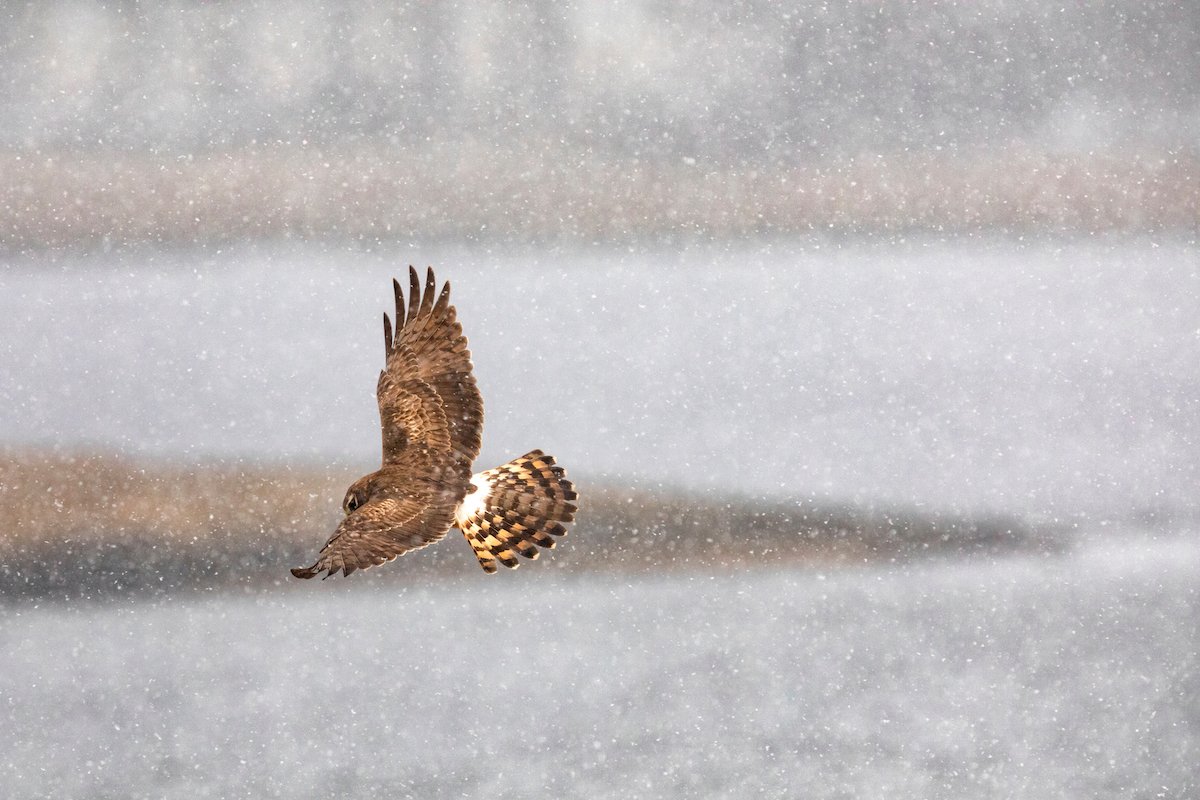
Photo: Green-winged Teal, Ashrith Kandula/Audubon Photography Awards
We are pleased to announce the winner of our most recent Monday Nature Mystery, Cathy Jett!
Congratulations to Cathy for identifying the female Green-winged Teal (Anas carolinensis).
Green-winged Teal (Anas carolinensis). Photo: Ashrith Kandula/Audubon Photography Awards
According to All About Birds, this species sometimes switches wintering sites from year to year. One banding study found that individuals wintering in Texas one year went as far away as California in subsequent years. This lack of philopatry, or “faithfulness” to a particular site, may reflect the tendency of males that did not breed the year before to try to find mates among a different set of wintering females.
Each Monday we’ll post a new mystery and identify the previous week’s winner. They’ll receive an ASNV hat or tote bag.
Here is this week’s mystery:
Who is this?
Be sure to post your guess on our Facebook page under the latest Monday Nature Mystery post, and make sure you receive our emails to find out the winner and mystery answer each week. Good Luck!
Please check our guidelines here.
Monday Nature Mystery: Who is this? Photo: Claudio Contreras Koob/Audubon Photography Awards
Monday Mystery - December 30, 2024
Monday Nature Mystery continues! Read on to learn who correctly identified our last mystery.
Photo: Northern Harrier, Aleksandar Baba-Vulic/Audubon Photography Awards
We are pleased to announce the winner of our most recent Monday Nature Mystery, John Moyle!
Congratulations to John for identifying the Northern Harrier (Circus hudsonius).
Northern Harrier, Aleksandar Baba-Vulic/Audubon Photography Awards
All About Birds suggests you look for harriers in wide-open grasslands, marshes, or fields. You’re most likely to notice Northern Harriers when they are flying. Note the low, slow, coursing flight style, the bird’s V-shaped wing posture, and its white rump. During migration in the fall and spring, you also can see harriers high in the sky over mountain ridges and coastlines. Northern Harriers are the most owl-like of hawks (though they’re not related to owls). They rely on hearing as well as vision to capture prey.
Each Monday we’ll post a new mystery and identify the previous week’s winner. They’ll receive an ASNV hat or tote bag.
Here is this week’s mystery:
Who is this?
Be sure to post your guess on our Facebook page under the latest Monday Nature Mystery post, and make sure you receive our emails to find out the winner and mystery answer each week. Good Luck!
Please check our guidelines here.
Monday Nature Mystery: Who is this? Photo: Judy Gallagher
Monday Mystery - November 25, 2024
Monday Nature Mystery continues! Read on to learn who correctly identified our last mystery.
Photo: Shagbark Hickory, Plant Image Library, CC BY-SA 2.0
We are pleased to announce the winner of our most recent Monday Nature Mystery, Judith Fulton!
Congratulations to Judith for identifying the Shagbark Hickory (Carya ovata).
Shagbark Hickory (Carya ovata). Photo: Flickr user Plant Image Library, CC BY-SA 2.0
According to Plant Nova Natives, the Shagbark Hickory is a shade tree with bright yellow fall foliage. It has wonderful shaggy brown bark. This species is only native in our area to Prince William County but is a very nice choice for a yard. It grows very slowly and can live up to 300 years. The seedlings (but not the adult trees) have very deep tap roots, which makes it hard to find them for sale, but also makes them unlikely to be blown over in a storm. Visit Plant Nova Natives to learn about the many types of native trees you can add to your yard to attract birds.
Each Monday we’ll post a new mystery and identify the previous week’s winner. They’ll receive an ASNV hat or tote bag.
Here is this week’s mystery:
Who is this?
Be sure to post your guess on our Facebook page under the latest Monday Nature Mystery post, and make sure you receive our emails to find out the winner and mystery answer each week. Good Luck!
Please check our guidelines here.
Monday Nature Mystery: Who is this? Photo: Darlene Friedman/Audubon Photography Awards
Monday Mystery - October 28, 2024
Monday Nature Mystery continues! Read on to learn who correctly identified our last mystery.
Photo: Hemlock Woolly Adelgig (Adelges tsugae), Open Source
We are pleased to announce the winner of our most recent Monday Nature Mystery, Seth Sweigard!
Congratulations to Seth for identifying the Hemlock Woolly Adelgig (Adelges tsugae).
Hemlock Wooly Adelgig (Adelges tsugae). Photo: Open Source
According to the Virginia Department of Forestry, the hemlock woolly adelgid (HWA), Adelges tsugae, is a non-native insect that feeds on sap and stored nutrients of eastern hemlock trees. This species, originally from Asia, has infested hemlocks in the eastern United States since its accidental introduction in the 1950s. The insects are small and settle at the base of hemlock needles where they insert piercing, sucking mouthparts to feed. They cover themselves with a white, waxy secretion giving them the characteristic “cotton ball” appearance on the underside of the needles. Since its introduction, HWA has spread throughout the native range of eastern hemlocks and has altered hemlock ecosystems in the eastern United States. VDF has a cost-share program available to treat affected trees.
Each Monday we’ll post a new mystery and identify the previous week’s winner. They’ll receive an ASNV hat or tote bag.
Here is this week’s mystery:
Who is this?
Be sure to post your guess on our Facebook page under the latest Monday Nature Mystery post, and make sure you receive our emails to find out the winner and mystery answer each week. Good Luck!
Please check our guidelines here.
Monday Nature Mystery: Who is this? Photo: Flickr user Matthew
Monday Mystery - September, 2024
Monday Nature Mystery continues! Read on to learn who correctly identified our last mystery.
Photo: American Lady Butterfly, Judy Gallagher
We are pleased to announce the winner of our most recent Monday Nature Mystery, Ben Jessup!
Congratulations to Ben for identifying the American Lady butterfly (Vanessa cardui).
American Lady Butterfly, Judy Gallagher
According to Bug Guide, the American Lady is the brightest/darkest orange of the three North American "Ladies". Fresh individuals of Painted Lady often show a pinkish suffusion above that is absent or less developed in American Lady and absent in West Coast Lady (it tends to vanish as the insect ages). The black markings on the upper surface of American Lady average narrower than Painted Lady. The large pale bar near the middle of the upper front wing is white in Painted Lady, orange in West Coast Lady, but can be either color in American Lady. Two of the submarginal dark "eyespots" on the upper hind wings are filled with blue in the American Lady (usually little or no blue on same spots in Painted Lady; usually four with blue on West Coast Lady). The under hind wing has two prominent large submarginal eyespots, unlike the much smaller four or five in the other two lady species.
Each Monday we’ll post a new mystery and identify the previous week’s winner. They’ll receive an ASNV hat or tote bag.
Here is this week’s mystery:
Who is this?
Be sure to post your guess on our Facebook page under the latest Monday Nature Mystery post, and make sure you receive our emails to find out the winner and mystery answer each week. Good Luck!
Please check our guidelines here.
Monday Nature Mystery: Who is this? Photo: Judy Gallagher
Monday Mystery - July 26, 2024
Monday Nature Mystery continues! Read on to learn who correctly identified our last mystery.
Photo: Least Bittern, ©Todd Kiraly
Our most recent Monday Nature Mystery was a tough one…we had no winner but a few close guesses!
This week’s mystery was the Least Bittern (Ixobrychus exilis).
Least Bittern, ©Todd Kiraly
According to All About Birds, the Least Bittern is about half the size of the American Bittern. (So Seth was closest, nice job Seth!) It’s a lighter brown overall and less streaky than the American Bittern. Least Bittern tend to cling to stalks while American Bittern tend to stand in the water. The furtive Least Bittern is often little more than a voice in the reeds that is frustratingly difficult to locate. But these diminutive herons reward patience and will charm birders persistent enough to discover them in their wetland haunts. They’re smartly clad in chestnut, buff, and black, with the male more richly colored than the female. Although drainage and development of wetlands has reduced their populations, Least Bitterns persist over much of their historical range, and are most readily seen during the breeding season.
Each Monday we’ll post a new mystery and identify the previous week’s winner. They’ll receive an ASNV hat or tote bag.
Here is this week’s mystery:
Who is this?
Be sure to post your guess on our Facebook page under the latest Monday Nature Mystery post, and make sure you receive our emails to find out the winner and mystery answer each week. Good Luck!
Please check our guidelines here.
Monday Nature Mystery: Who is this? Photo: Seth Honig
Monday Mystery - July 29, 2024
Monday Nature Mystery continues! Read on to learn who correctly identified our last mystery.
Photo: Red-backed Salamander, Judy Gallagher
We are pleased to announce the winner of our most recent Monday Nature Mystery, Noah Ramsey.
Congratulations to Noah for identifying the Red-backed Salamander (Plethodon cinereus).
Red-backed Salamander, Judy Gallagher
According to the National Zoo, due to their lack of lungs, eastern red-backed salamanders need to live in damp or moist habitats in order to breathe. They are often found in or under logs, leaf-litter and burrows of deciduous forests. In colder months, these salamanders go under the frozen ground. With a low tolerance for acidic soil, they cannot live in areas with high acidity. In the wild, eastern red-backed salamanders eat a wide variety of small invertebrates, including arachnids, worms, snails, larvae and insects. Since they only inhabit damp habitats, their foraging range is dependent on the seasons, expanding in the wet seasons and retracting in the dry seasons.
Each Monday we’ll post a new mystery and identify the previous week’s winner. They’ll receive an ASNV hat or tote bag.
Here is this week’s mystery:
Who is this?
Be sure to post your guess on our Facebook page under the latest Monday Nature Mystery post, and make sure you receive our emails to find out the winner and mystery answer each week. Good Luck!
Please check our guidelines here.
Monday Nature Mystery: Who is this? Photo: Judy Gallagher
Monday Mystery - May 27, 2024
Monday Nature Mystery continues! Read on to learn who correctly identified our last mystery.
Photo: Eastern Fence Lizard, Judy Gallagher
We are pleased to announce the winner of our most recent Monday Nature Mystery, Mike Molnar.
Congratulations to Mike for identifying the Eastern Fence Lizard (Sceloporus undulatus).
Eastern Fence Lizard, Judy Gallagher
According to the National Wildlife Federation, this species of lizard is native to Virginia and can be found across the Eastern US. To claim territory, male fence lizards will flash the blue scales on their underbelly. They have also been observed doing push-ups and head-bobs to deter other males from infiltrating their territories. This behavior is correlated with the availability of food in the area.
Each Monday we’ll post a new mystery and identify the previous week’s winner. They’ll receive an ASNV hat or tote bag.
Here is this week’s mystery:
Who is this?
Be sure to post your guess on our Facebook page under the latest Monday Nature Mystery post, and make sure you receive our emails to find out the winner and mystery answer each week. Good Luck!
Please check our guidelines here.
Monday Nature Mystery: Who is this? Photo: Jim Gilmore/Audubon Photography Awards
Monday Mystery - April 29 2024
Monday Nature Mystery continues! Read on to learn who correctly identified our last mystery.
Photo: Louisiana Waterthrush, Darla J. Outhaut/Audubon Photography Awards
We are pleased to announce the winner of our most recent Monday Nature Mystery, Natalie Brenan.
Congratulations to Natalie for identifying the Louisiana Waterthrush (Parkesia motacilla).
Louisiana Waterthrush, Darla J. Outhaut/Audubon Photography Awards
According to All About Birds, this species stays close to moving water—especially forested streams and creeks—and bobs its rear end almost constantly. In both spring and fall, Louisiana Waterthrush is among the earliest migrant warblers. Because Louisiana Waterthrush feeds on streambed (“benthic”) invertebrates, the species is an excellent indicator of the quality and health of a stream—or “stream ecosystem integrity” as a scientist might say.
Each Monday we’ll post a new mystery and identify the previous week’s winner. They’ll receive an ASNV hat or tote bag.
Here is this week’s mystery:
Who is this?
Be sure to post your guess on our Facebook page under the latest Monday Nature Mystery post. Good Luck!
Please check our guidelines here.
Monday Nature Mystery: Who is this? Photo: Mathew Markowitz/Audubon Photography Awards
Monday Mystery - March 25, 2024
Monday Nature Mystery continues! Read on to learn who correctly identified our last mystery.
Photo: Osprey nest, Dan Brekke via Flickr
We are pleased to announce the winner of our most recent Monday Nature Mystery, Bruce Slater.
Congratulations to Bruce for identifying the Osprey nest (Pandion haliaetus).
Osprey nest, Dan Brekke via Flickr
According to All About Birds, an Osprey may log more than 160,000 migration miles during its 15-to-20-year lifetime. Scientists track Ospreys by strapping lightweight satellite transmitters to the birds’ backs. The devices pinpoint an Osprey's location to within a few hundred yards and last for 2-3 years. During 13 days in 2008, one Osprey flew 2,700 miles—from Martha's Vineyard, Massachusetts, to French Guiana, South America. (Pandion haliaetus)
Each Monday we’ll post a new mystery and identify the previous week’s winner. They’ll receive an ASNV hat or tote bag.
Here is this week’s mystery:
What is this?
Be sure to post your guess on our Facebook page under the latest Monday Nature Mystery post. Good Luck!
Please check our guidelines here.
Monday Nature Mystery: Who is this? Photo: Judy Gallagher
Monday Mystery - February 26, 2024
Monday Nature Mystery continues! Read on to learn who correctly identified our last mystery.
Photo: Canada Goose Egg, Bryant Olsen via Flickr
No winner for this week’s mystery because while Maurice was correct, he has already won twice. Please submit your answer even if the correct answer is already listed, you may win a prize!
This is the egg of the Canada Goose (Branta canadensis)!
Canada Goose Egg, Bryant Olsen via Flickr
This species used to be migratory (nesting in Canada) but has increasingly become residential, resulting in overconsumption and depletion of aquatic vegetation that many other species depend on. You can help with this problem by preventing Canada Geese from nesting on your property. If you register with this federal program, you can legally addle (shake) eggs or destroy nests on your property. Wildlife management programs like this are a necessary part of preserving biodiversity.
Each Monday we’ll post a new mystery and identify the previous week’s winner. They’ll receive an ASNV hat or tote bag.
Here is this week’s mystery:
What is this?
Be sure to post your guess on our Facebook page under the latest Monday Nature Mystery post. Good Luck!
Please check our guidelines here.
Monday Nature Mystery: Who is this? Photo: Judy Gallagher
Monday Mystery - January 29, 2024
Monday Nature Mystery continues! Read on to learn who correctly identified our last mystery.
Photo: Wood Frog, Judy Gallagher
We are pleased to announce the winner of our last Monday Nature Mystery, Roland Thro!
Congratulations to Roland for identifying this Wood Frog (Lithobates sylvaticus).
Wood Frog, Judy Gallagher
According to The Chesapeake Bay Program, Wood Frogs are known for a characteristic black marking on their face that resembles a robber’s mask. During winter hibernation, the wood frog is able to freeze nearly half of its body. Ice crystals form within its skin, stopping its heartbeat, breathing and blood flow. This is the only frog species found north of the Arctic Circle!
Each Monday we’ll post a new mystery and identify the previous week’s winner. They’ll receive an ASNV hat or tote bag.
Here is this week’s mystery:
Who is this?
Be sure to post your guess on our Facebook page under the latest Monday Nature Mystery post. Good Luck!
Please check our guidelines here.
Monday Nature Mystery: Who is this? Photo: Rick Cameron via Flickr, CC BY-NC-ND 4.0 DEED
Monday Mystery - January 1, 2024
Monday Nature Mystery continues! Read on to learn who correctly identified our last mystery.
Photo: American Wigeon, Judy Gallagher
We are pleased to announce the winner of last week’s Monday Nature Mystery, Judy Dority!
Congratulations to Judy for identifying this American Wigeon (Mareca americana).
American Wigeon, Judy Gallagher
According to All About Birds, breeding males have a green eye patch and a conspicuous white crown, earning them the nickname "baldpate." Females are brushed in warm browns with a gray-brown head and a smudge around the eye. Noisy groups congregate during fall and winter, plucking plants with their short gooselike bill from wetlands and fields or nibbling plants from the water's surface. Despite being common their populations are declining. Learn more about how to identify ducks in our free webinar this month.
Each Monday we’ll post a new mystery and identify the previous week’s winner. They’ll receive an ASNV hat or tote bag.
Here is this week’s mystery:
Who is this?
Be sure to post your guess on our Facebook page under the latest Monday Nature Mystery post. Good Luck!
Please check our guidelines here.
Monday Nature Mystery: Who is this? Photo: Judy Gallagher
Monday Mystery - November 27, 2023
Monday Nature Mystery continues! Read on to learn who correctly identified our last mystery.
Photo: Southern Red Oak tree (Quercus falcata). Photo: Wikimedia user Katja Schulz via CC BY 2.0
We are pleased to announce the winner of last week’s Monday Nature Mystery, Anne Brosnan!
Congratulations to Anne for identifying this Southern Red Oak tree (Quercus falcata).
Southern Red Oak tree (Quercus falcata). Photo: Wikimedia user Katja Schulz via CC BY 2.0
This is one of 27 species of oak trees native to Virginia. According to Wildflower.org, this tree is a larval host to the Banded Hairstreak and the White M Hairstreak butterflies. The Southern Red Oak is a medium-sized, straight-trunked oak which, in time, develops long, spreading branches, giving the top an even, well-formed appearance. Its smooth gray bark becomes dark and furrowed, eventually becoming black. Thin, papery, lobed, bristle-tipped deciduous leaves turn reddish-brown in fall. Click here to watch a video from the Mississippi Museum of Natural Science on how to identify a Southern Red Oak tree.
Each Monday we’ll post a new mystery and identify the previous week’s winner. They’ll receive an ASNV hat or tote bag.
Here is this week’s mystery:
Who is this?
Be sure to post your guess on our Facebook page under the latest Monday Nature Mystery post. Good Luck!
Please check our guidelines here.
Monday Nature Mystery: Who is this? Photo: Judy Gallagher
Monday Mystery - October 30, 2023
Monday Nature Mystery continues! Read on to learn who correctly identified our last mystery.
Photo: American Robin, Seth Honig
We are pleased to announce the winner of last week’s Monday Nature Mystery, Timothy Calkins!
Congratulations to Timothy for identifying this leucistic American Robin (Turdus migratorius).
Leucistic American Robin (Turdus migratorius). Photo: Seth Honig
According to All About Birds, leucism is not a genetic mutation, but rather describes defects in pigment cells that are caused during development. This may result in full leucism, where there is a reduction in all types of pigment. An animal with full leucism will appear paler than normal. Leucistic animals also may show irregular patches of white—this is referred to as partial leucism, and these animals are often referred to as “pied” or “piebald.” Because the development of the eyes occurs separately from other areas of the body, eye color in leucistic animals is not affected and will be normal in color.
Each Monday we’ll post a new mystery and identify the previous week’s winner. They’ll receive an ASNV hat or tote bag.
Here is this week’s mystery:
Who is this? Happy Halloween!
Be sure to post your guess on our Facebook page under the latest Monday Nature Mystery post. Good Luck!
Please check our guidelines here.
Monday Nature Mystery: Who is this? Photo: Judy Gallagher
Monday Mystery - October 2, 2023
Monday Nature Mystery continues! Read on to learn who correctly identified our last mystery.
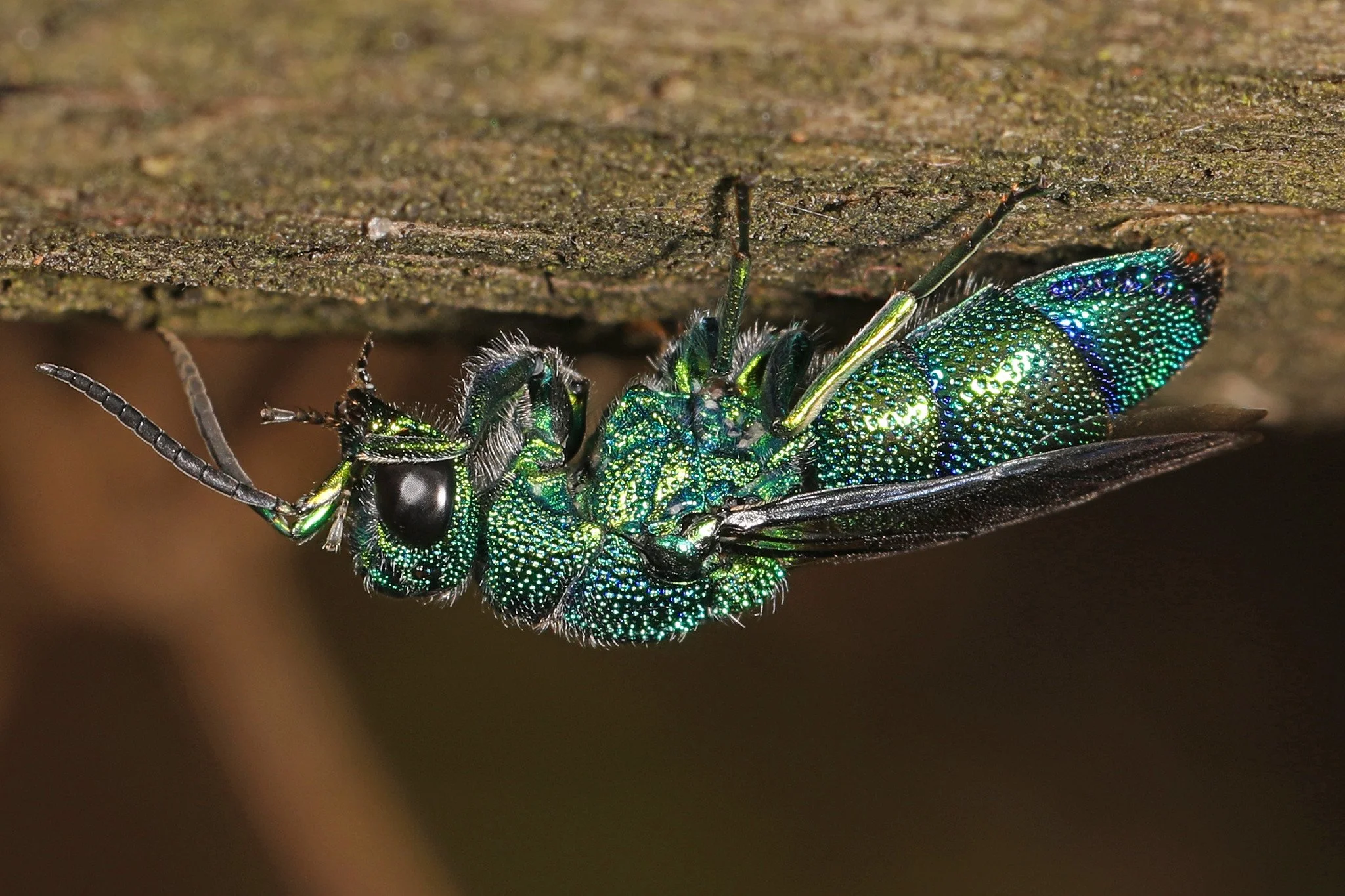
Photo: American Golden Plover, Mary D’Agostino/Audubon Photography Awards
We are pleased to announce the winner of last week’s Monday Nature Mystery, Lyne Marie.
Congratulations to Lyne for identifying the American Golden Plover (Pluvialis dominica).
American Golden Plover (Pluvialis dominica). Photo: Mary D’Agostino/Audubon Photography Awards
Breeding birds are gold-spangled above, blackish below, with a white “scarf” extending from brow to breast sides. Juveniles and non-breeding birds still show some gold tones above but are dingy grayish below. According to All About Birds, adult American Golden-Plovers leave the Arctic in early summer, leaving their young behind. The juveniles (only a few months old) set off on migration in late summer or fall—finding their way to South America on their own.
Each Monday we’ll post a new mystery and identify the previous week’s winner. They’ll receive an ASNV hat or tote bag.
Here is this week’s mystery:
Who is this?
Be sure to post your guess on our Facebook page under the latest Monday Nature Mystery post. Good Luck!
Please check our guidelines here.
Monday Nature Mystery: Who is this? Photo: Judy Gallagher
Monday Mystery - August 28, 2023
Monday Nature Mystery continues! Read on to learn who correctly identified our last mystery.
Photo: Cuckoo Wasp, Judy Gallagher
We are pleased to announce the winner of last week’s Monday Nature Mystery, Kaycee Durst Lichliter.
Congratulations to Kaycee for identifying the Cuckoo Wasp (Chrysis smaragdula).
Cuckoo Wasp (Chrysis smaragdula). Photo: Judy Gallagher
According to Insect Identification, Cuckoo Wasps get their name thanks to their parenting strategy. Similar to the Cuckoo bird, Cuckoo Wasps lay their eggs in the nests of other bees. When a Cuckoo Wasp larva hatches, it eats the other bee larvae and then consumes the stores of food left in the nest. Because of this behavior, the Cuckoo Wasp is a parasite to a variety of other bee and wasp species.
Each Monday we’ll post a new mystery and identify the previous week’s winner. They’ll receive an ASNV hat or tote bag.
Here is this week’s mystery:
Who is this?
Be sure to post your guess on our Facebook page under the latest Monday Nature Mystery post. Good Luck!
Please check our guidelines here.
Monday Nature Mystery: Who is this? Photo: Christopher Adler/Audubon Photography Awards
Monday Mystery - July 17, 2023
Monday Nature Mystery continues! Read on to learn who correctly identified our last mystery.
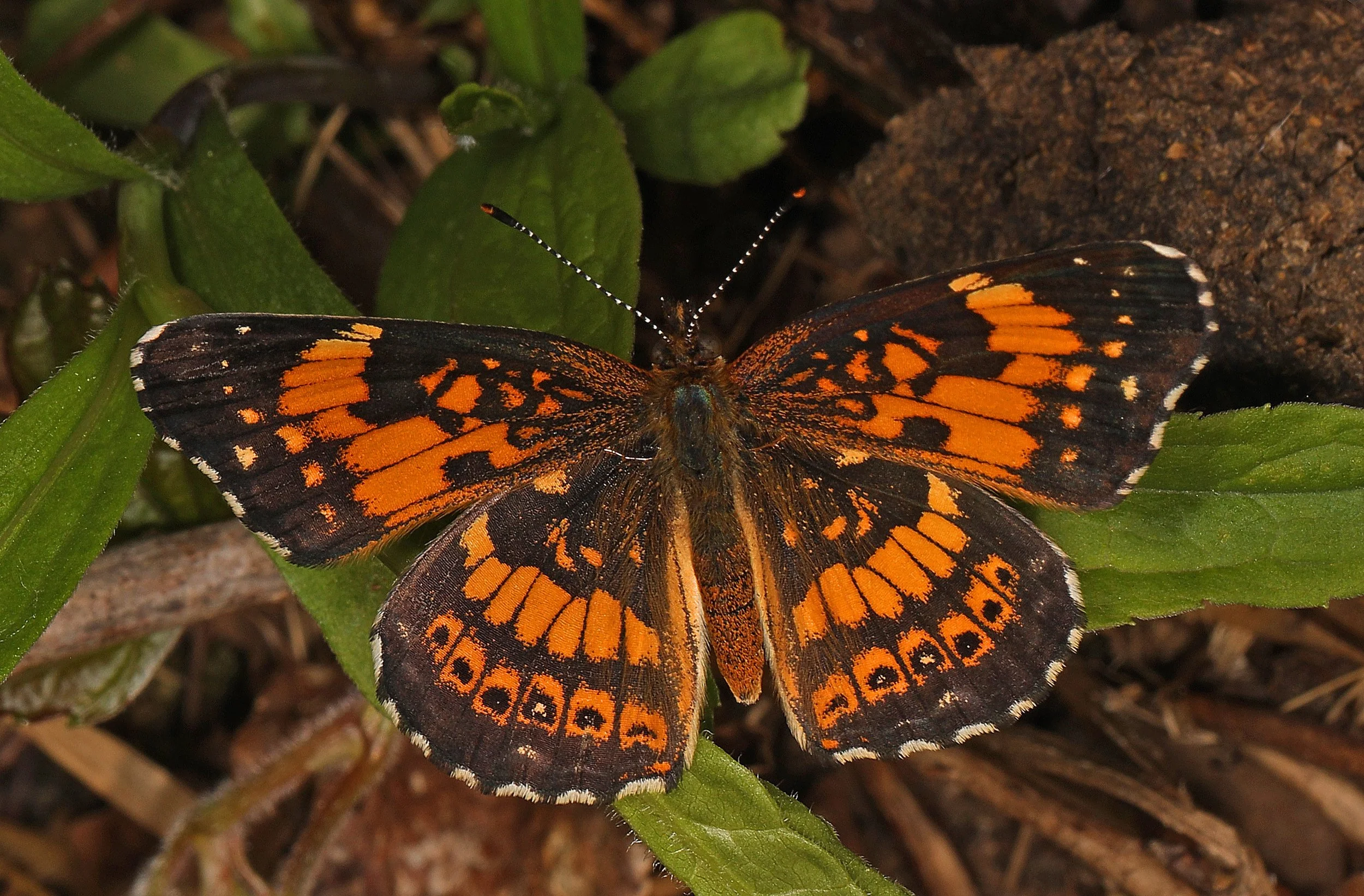
Photo: Pipevine Swallowtail Caterpillar, Judy Gallagher
We are pleased to announce the winner of last week’s Monday Nature Mystery, Seth Finkel.
Congratulations to Seth for identifying the Pipevine Swallowtail Caterpillar (Battus philenor).
Pipevine Swallowtail Caterpillar (Battus philenor). Photo: Judy Gallagher
According to Birds&Blooms, Pipevine swallowtail eggs are red-orange with small bumps, laid in clutches on their host plant pipevines. The caterpillars are gregarious in their early days, which means they hang out in groups feeding together. When they get a bit bigger, they tend to go their own way. As the pipevine caterpillar grows, its appearance starts to change as well. It slowly becomes darker and has more pronounced dots of color and longer black tubercles on the front of their heads, which look like antennae.
These caterpillars use their tubercles actively to feel out the world around them. These are some of the fastest caterpillars I know; they take off quickly when startled and move with surprising speed.
Each Monday we’ll post a new mystery and identify the previous week’s winner. They’ll receive an ASNV hat or tote bag.
Here is this week’s mystery:
Who is this?
Be sure to post your guess on our Facebook page under the latest Monday Nature Mystery post. Good Luck!
Please check our guidelines here.
Monday Nature Mystery: Who is this? Photo: Judy Gallagher
Monday Mystery - May 29, 2023
Monday Nature Mystery continues! Read on to learn who correctly identified our last mystery.
Photo: Silvery Checkerspot Butterfly (Chlosyne nycteis). Photo: Judy Gallagher
We are pleased to announce the winner of last week’s Monday Nature Mystery, Linda Nordstrom.
Congratulations to Linda for identifying the Silvery Checkerspot Butterfly (Chlosyne nycteis).
Silvery Checkerspot Butterfly (Chlosyne nycteis). Photo: Judy Gallagher
According to ButterfliesandMoths.org, this butterfly prefers moist, somewhat open places including streamsides, meadows, forest openings. Sometimes confused with a Pearl Crescent, this species can be distinguished by taking a closer look at the row of black spots on their lower wings. In Pearl Crescents, these dots are solid black; in Silvery Checkerspots they have pale centers. To bring this butterfly to your yard, grow their host plants such as black-eyed susan (Rudbeckia), sunflowers (Helianthus), and wingstems (Actinomeris alternifolia).
Each Monday we’ll post a new mystery and identify the previous week’s winner. They’ll receive an ASNV hat or tote bag.
Here is this week’s mystery:
Who is this?
Be sure to post your guess on our Facebook page under the latest Monday Nature Mystery post. Good Luck!
Please check our guidelines here.
Monday Nature Mystery: Who is this? Photo: Bill Young