NVBA NEWS BLOG
Welcome to the blog for Northern Virginia Bird Alliance, a wealth of resources about northern Virginia birds, wildlife, habitat conservation and restoration, native plants, wildlife-friendly gardening, advocacy and more.
ASNV Will Follow CDC’s COVID-19 Guidance
ASNV has eliminated its COVID-19 – related restrictions on in-person gatherings, bird walks and surveys and will follow the CDC’s guidelines as they change from time to time.
ASNV has eliminated its COVID-19 – related restrictions on in-person gatherings, bird walks and surveys and will follow the CDC’s guidelines as they change from time to time. Currently, fully vaccinated people are not required to wear masks or socially distance, indoors or out. People who are not fully vaccinated should wear masks and maintain socially distant when they are indoors or outdoors in crowded settings. Our website has more information on our bird walks, citizen science surveys and Audubon at Home visits. We hope to see you soon!
The 1918 Christmas Bird Count
In 2020, we are holding the Christmas Bird Count in the midst of a pandemic. What did birders do in 1918, in the midst of the Spanish flu pandemic?
Photo: Bird Lore 1918 Cover
By Dixie Sommers
In 2020, we are holding the Christmas Bird Count in the midst of a pandemic. What did birders do in 1918, in the midst of the Spanish flu pandemic?
The answer can be found in the 1918 edition of Bird-Lore, the “Official Organ of the Audubon Societies” edited by Frank Chapman. In the article “Bird-Lore’s Eighteenth Christmas Census” we find reports of two counts in Northern Virginia on December 26, each led by interesting people.
The “Mount Vernon to Dyke, VA” route was counted by Waldo McAtee and Edward A. Preble, two scientists from the Bureau of Biological Survey, a predecessor to the U.S. Fish and Wildlife Service. McAtee studied bird feeding habits, authored many scientific papers, became editor of USFWS publications and along with Aldo Leopold helped found The Wildlife Society. He was a fellow of the American Association for the Advancement of Science. Preble worked on bird and mammal studies in the Pacific northwest, where he led two expeditions to the Athabasca- Mackenzie region of Canada. After retirement from the government, he became an associate editor of Nature magazine.
The Washington, D.C. route, described as “Wellington to New Alexandria, VA; Arlington, VA to Washington D.C.” was covered by Leo and Edith Miner and Raymond W. Moore. Edith Miner was a leader in the Audubon Society of the District of Columbia, and apparently was something of a nature activist. She and Leo participated in the first meeting of the American Society of Mammologists, and she gave remarks at the 1934 annual meeting of the Virginia Society of Ornithology held in Alexandria.
In 1956, Mrs. Miner advocated to the Senate Appropriations Committee against use of $1.8 million for the parkway extension on the D.C./Maryland shore between Chain Bridge and Cabin John. Referring to herself as “a naturalist and above all a conservationist,” she argued for preserving the trees and natural areas which provided habitat for birds. “The nesting of some of our more rare birds in that area, many making it their winter residence, is striking and proof of its value as a bird sanctuary,” she argued.
So, what was the 1918 count like? First, it was cold and long. The Mt. Vernon team started at 8:30 AM in 23-degree weather with clear skies, light northwest wind and 2 inches of snow on the ground. They walked the 12-mile route, ending at 5:30 PM and reporting the day’s high temperature as 26 degrees. The New Alexandria team also had temperatures from 25 to 30 degrees, a “light but penetrating wind” and light snow on the ground. They did their 12-mile route from 10:00 AM to 4:00 PM, a shorter time for 12 miles that suggests they did not walk the entire route.
New Alexandria is a neighborhood in Fairfax County including Belle Haven and Dyke Marsh. It was served by an electric streetcar line to Washington, running along the route of today’s George Washington Memorial Parkway.
The Mt. Vernon team reported 39 species, while the New Alexandria team had 45, for a combined total of 52. Because they were near the Potomac, both teams saw lots of waterfowl, reporting 11 species and more than 7,600 individuals. The New Alexandria team must have birded right on the river, as they reported 500 Greater Scaup and 6,000 Lesser Scaup, noting “two sizes, as well as color reflections of heads.” The teams also reported a total of 800 Canvasbacks, but no Canada Geese. As to the overall numbers, the New Alexandria team said, “Ducks in three flocks, and actual number probably exceeded ten or twelve thousand.” Huge rafts of ducks remain a counting challenge!
The New Alexandria team noted “all ducks through telescope, 25 diameters.” Assuming this refers to a 25mm lens diameter, their scope was much smaller than today’s spotting scopes, which typically have 50mm to 80mm lenses. There is no mention of what types of binoculars or “field glasses” they used.
Sparrows were the second largest bird group reported, but the numbers and mix of species were different from what we would find today. Only four species were reported: White-throated (38), Tree (179), Song (14) and Junco (456). Today, a Tree Sparrow would be rare, and we would likely see many more Song and White-throated Sparrows and fewer Juncos.
Other species with large numbers reported were Common Crow (838), Golden-crowned Kinglet (163), Redhead (100), Ruddy Duck (75), Bluebird (66) and Rusty Blackbirds (60). Both teams reported Bobwhite, a total of 47 birds.
Many bird names have changed since 1918. Examples (with today’s name) include American Goldeneye (Common Goldeneye), Marsh Hawk (Northern Harrier), Sparrow Hawk (American Kestrel), Common Crow (American crow), Migrant Shrike (Loggerhead Shrike), and Myrtle Warbler (Yellow-rumped Warbler).
One important difference between 1918 and what we may find in the 2020 Christmas bird count is irruptive species. In his overview of the 1918 count, Frank Chapman noted that “…of the northern Finches so prevalent last year, the only occurrences are a few widely scattered of Redpoll and Pine Siskin” and Red Crossbill, Evening Grosbeak, Pine Grosbeak, and White-winged Crossbill in places like Maine, Vermont and Nebraska, but not Virginia. In 2020, we are already seeing Red-breasted Nuthatches, Evening Grosbeaks, and Pine Siskins in significant numbers across Northern Virginia, reflecting a food crop failure in their usual wintering grounds. We hope they will be on our Christmas Bird Count list this year!
Another big difference in the response to the pandemic is that the 1918 report does not mention the Spanish flu or if any precautions were advised. In 2020, ASNV is taking numerous precautions, following Virginia and local requirements and our own Covid-19 policy.
Pandemic Pollution: More Trash
Anyone who has been outside recently on trails and in developed areas has noticed the increasing amount of trash on the ground. Glenda Booth, a member of our Advocacy Committee, wrote an article about this “Pandemic Pollution” for The Connection Newspapers.
Photo: Glenda Booth
Anyone who has been outside recently on trails and in developed areas has noticed the increasing amount of trash on the ground. Glenda Booth, a member of our Advocacy Committee, wrote an article about this “Pandemic Pollution” for The Connection Newspapers.
“Plastic bottles, bags, stirrers, straws, six-pack rings, yoghurt cups, lighters and dental flossers; aluminum cans; cigarette butts; Styrofoam pieces; bottle caps; carryout food packaging; balloons; fishing line; bait cans. People find these along the Potomac River shoreline regularly.
And now, added to that is a torrent of pandemic trash: masks, rubber gloves, wipes and more takeout food debris.” Read more here.
Virtual Bird Walk at Oak Spring Garden
If you missed the virtual birding Facebook Premier with our friends at the Oak Spring Garden Foundation, you can view the recorded session.
If you missed the virtual birding Facebook Premier with our friends at the Oak Spring Garden Foundation, it’s available to view here. Join Laura McDonald, ASNV Program Manager and Tom Wood, ASNV Board member and GMU professor, on a virtual morning stroll through the property’s fields and forests.
September 2020
“It is not only a sin to kill a mockingbird, it is also a crime.” With those words, referencing Harper Lee’s To Kill a Mockingbird, a federal court judge has invalidated a U.S. Department of the Interior memorandum that eliminated more than 100 years of protection for migratory birds
Photo: Bald Eagles, Randy Streufert
Tom Blackburn
“It is not only a sin to kill a mockingbird, it is also a crime.” With those words, referencing Harper Lee’s To Kill a Mockingbird, a federal court judge has invalidated a U.S. Department of the Interior memorandum that eliminated more than 100 years of protection for migratory birds. Prior to the DOI memorandum, the Migratory Bird Treaty Act of 1918 had been interpreted as making it illegal to take actions that resulted in the killing of birds. The memorandum would have applied the law only to actions that intentionally killed birds. The court’s decision ensures that environmental disasters such as the 2010 Deepwater Horizon oil spill, which killed more than 1 million birds, will continue to be subject to penalties.
The lawsuit that led to the court’s decision was brought by the National Audubon Society, among other plaintiffs. It is a reminder that Audubon chapters, including ASNV, are not simply organizations of bird watchers. Women established the first Audubon Society at the end of the 19th century to stop the killing of egrets for their plumes and to protect birds from market hunting for food. We have come a long way from the days when hundreds of millions of Passenger Pigeons were killed, leading to their extinction; and the days when millions of songbirds, and particularly robins, were killed for food. Advocating to protect birds and the environment is still a core mission of all Audubon Society chapters.
Most of ASNV’s advocacy efforts focus on environmental issues that affect Northern Virginia and matters of statewide importance, but we also urge Virginia legislators to take action on Federal environmental issues. Most recently, we helped draft a joint letter from the National Audubon Society and other Virginia Audubon chapters urging the Governor and the General Assembly to preserve budgetary language providing for compensatory mitigation in connection with actions that cause harm to birds or other wildlife. We also urged the Fairfax County Board of Supervisors to support provisions for natural landscaping at county facilities and we are working on letters urging Virginia senators and representatives to support Federal legislation to reduce the amount of pollution from plastics.
Protecting the environment requires constant vigilance. The loss of 3 billion North American birds in the last 50 years, nearly 30% of our bird population, is stark evidence of the importance of environmental advocacy. ASNV is committed to its mission – to conserve and restore natural ecosystems, focusing on birds, other wildlife and their habitats for the benefit of humanity and the earth's biological diversity.
ASNV Bird Walks are Resuming in September—within Limits
Soon we will begin—cautiously – to resume bird walks this fall. While the activity is outdoors, we still want to avoid the need for participants to be in close proximity. Even though the business economy is restarting, we realize that the virus is still a significant risk, especially to older people.
Photo: Occoquan, Dixie Sommers
By Jean Tatalias and Dixie Sommers
Soon we will begin—cautiously—to resume bird walks this fall. While the activity is outdoors, we still want to avoid the need for participants to be in close proximity. Even though the business economy is restarting, we realize that the virus is still a significant risk, especially to older people.
Our walks will be limited to 4 or 5 participants plus the leader. Participants must observe social distancing whenever possible and masks will be required when that is not possible—for example, when passing other walkers. Scopes will not be used. Locations will be chosen where trails are wide enough for the needed separation.
The bird walk list will announce the general area for a walk (e.g., western Prince William County or south of Alexandria), the date and the leader. We will require that people enroll with the leader by email. The leader will limit the attendees to space available and will give enrollees the exact location to meet. Two September walks are being offered.
These walks are intended for participants who would like the guidance of a leader. In parallel, we encourage our more experienced birders to continue with their own solo birding and photography outings.
When you register for a walk you are expected to be symptom-free if you attend. If you have registered but find you cannot attend, please notify the leader. We will keep a waiting list
This is a cautious beginning for all of us who miss birding together. Some may not be comfortable with even this limited format yet—and we respect their choice. If you do register, please follow the requirements out of respect for the leader and other participants.
August 2020
Seriously in need of a get-away without compromising our health, my wife and I packed a lunch and drinks and headed out for a socially-distanced day trip to the West Virginia border to search for birds we’d not seen before – Red Crossbills.
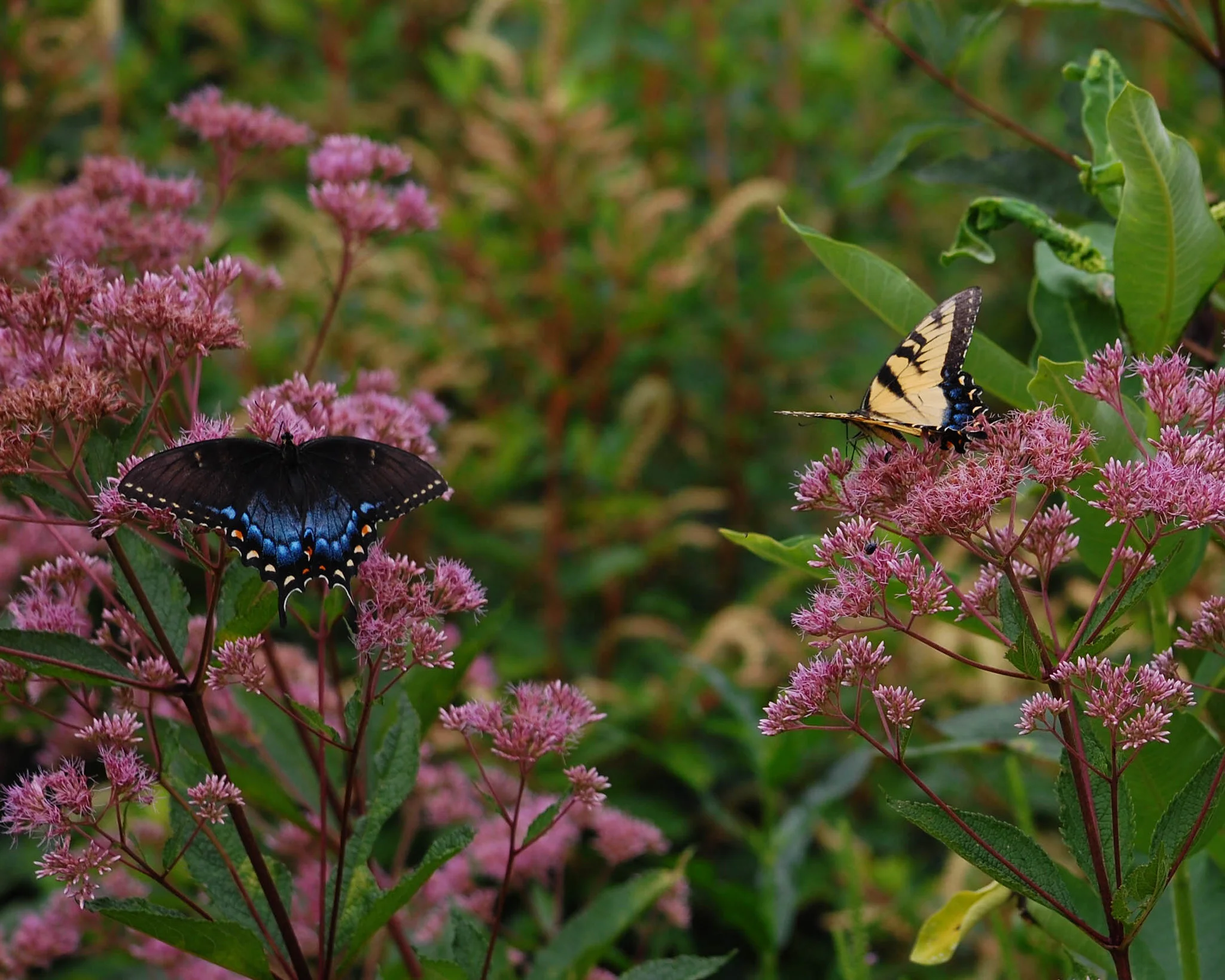
Photo: Red Crossbills, Brenda Frank
Tom Blackburn
In July and August, there’s not as much new or interesting in the birding world as there is during the rest of the year. Most birds have nested, their young have fledged, there’s less bird song in the morning and fall migration is several weeks away. Normally, this is when my wife and I head out for a vacation, but two trips never got beyond the planning stage due to the pandemic. Seriously in need of a get-away without compromising our health, we packed a lunch and drinks and headed out for a socially-distanced day trip to the West Virginia border to search for birds we’d not seen before – Red Crossbills.
Red Crossbills are my new favorite bird – at least for this month. Aptly named, their mandibles cross at the tips. They feed primarily on the seeds in pinecones, and their bills have evolved to maximize the efficiency of their foraging. They insert their partially opened bill between the scales of the cone, then close it, forcing the scales apart, and use their tongue and bill to pull out the seeds. Much like the Galapagos Finches, Red Crossbills have evolved into several “types” with different bill sizes based on which species of conifer is prevalent in the area where they live.
Red Crossbill, Brenda Frank
Red Crossbills breed primarily in Canada, the Rockies and the Northwest, but range maps show three small regions along the Appalachians where they are found year-round. We headed for the closest spot where they are seen regularly, Briery Branch Gap, wondering whether a 5 ½ hour round trip would be productive. We didn’t have to wonder long. As we pulled off the road, we saw our first crossbill singing in a tree. In the next hour, we watched as many as 28 birds at a time – reddish males, yellowish females and sparrow-striped juveniles – flying from tree to tree, then gathering in a dense mass on the ground to eat grit from the road to aid their digestion. Their chatter and songs were almost continuous. Once we’d had our fill of crossbills, we walked forest roads searching for other birds, then had a relaxed lunch in the forest.
The pandemic will be with us for a good while, but you can still manage to change your routine without having to worry about infection. You can explore significant portions of 6 states within 120 miles of Northern Virginia and still get home in time for dinner. So, get out and enjoy nature – and stay safe!
Getting into Nature – Often the Best Therapy
Getting back into nature is often the best therapy for challenging times. Read on for a link to Glenda Booth’s article, originally published in Zebra, on the importance of getting outside.
Photo: Swallowtails, Sheryl Pollock
Zebra- Good News from Alexandria
For our readers who need to be outdoors, and that’s most of us, here is a thoughtful article written by Glenda Booth and originally published in Zebra. It offers ideas for easy, socially-distanced nature experiences in our region.
https://thezebra.org/2020/07/10/getting-into-nature-often-the-best-therapy/
ASNV Online Programs
We’re now offering most of our classes and workshops online due to the ongoing Covid-19 pandemic.
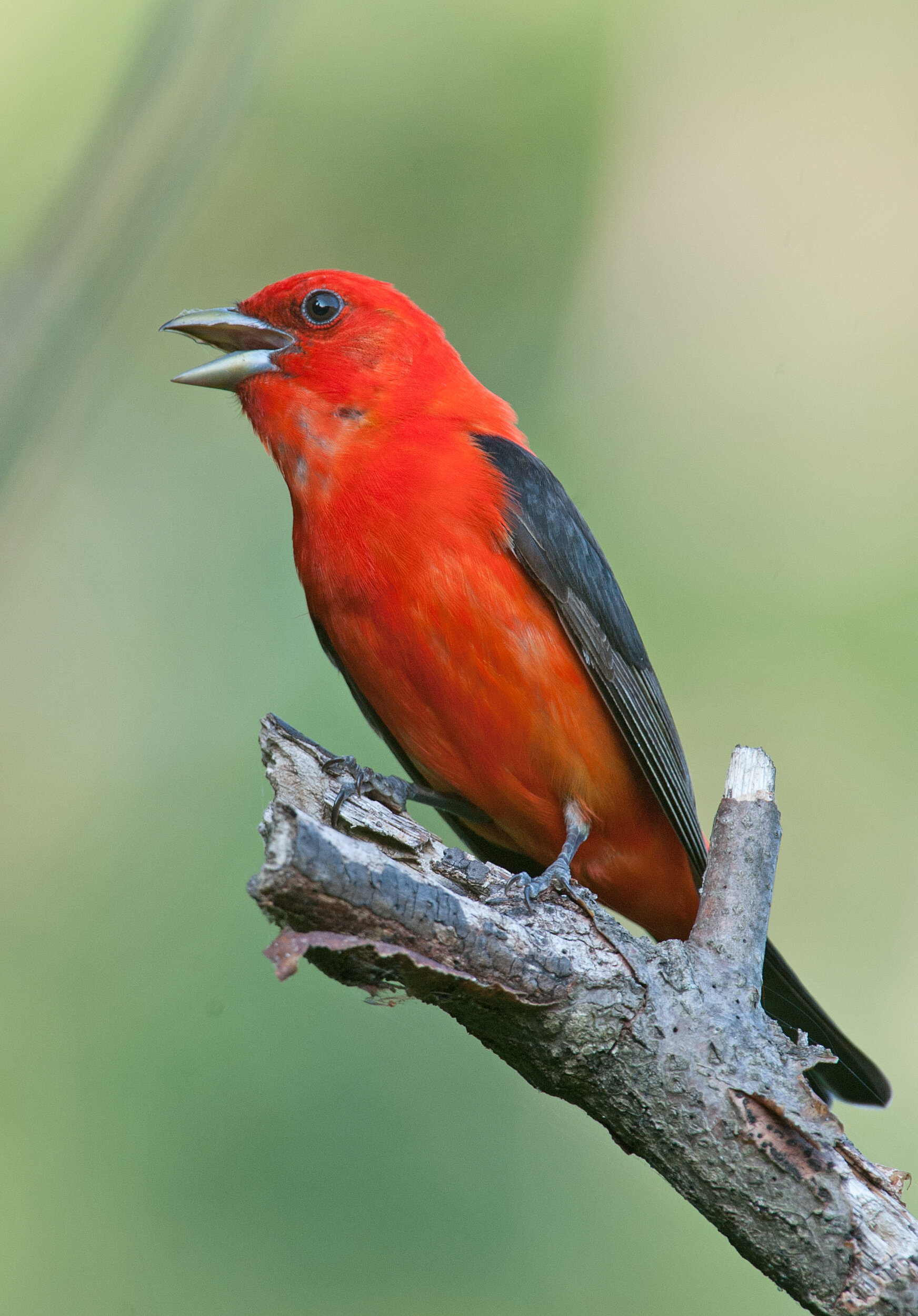
Photo: Blackburnian Warbler, Shirley Donald/Audubon Photography Awards
We’re now offering most of our classes and workshops online due to the ongoing Covid-19 pandemic. We will provide recordings of as many of these events as possible and make them available here, both to keep our members and community engaged while staying at home and to develop an ongoing collection of educational resources. Check back often, as we will add videos and resources as we receive them.
Improve your Birding Skills at Home
It’s been difficult to get out birding as much as we’d like during the shut-down. That gives us a great opportunity to brush up on our birding skills and knowledge from the comfort of our homes.
Photo: Scarlet Tanager, Randy Streufert/Audubon Photography Awards
by Tom Blackburn
It’s been difficult to get out birding as much as we’d like during the shut-down. That gives us a great opportunity to brush up on our birding skills and knowledge from the comfort of our homes.
Thayer Birding has a great software program that is free to download during the Pandemic. The download takes some time, but it’s well worth it. The program includes over 1000 North American species, more than 6500 photos and 1500 songs. Quizzes to help you learn your birds are its best feature. You can use the pre-made quizzes or easily create custom bird lists and turn them into personal quizzes. You can also choose from multiple quiz formats, including flash cards, multiple choice or fill-in-the-blanks and specify photos, songs, or both. Last night my wife and I created a custom list of birds and turned it into a quiz on bird songs. We can’t take an ASNV Birding-by-Ear workshop this spring, but maybe online programs will improve our skills.
eBird is well-known for its user-friendly capability to upload bird lists. You can also prepare for birding trips by finding out what’s been seen at Birding hotspots recently or in any month during the current year or up to the past ten years. eBird’s free Photo & Sound Quiz option is less well-known but very good. You can create quizzes for a country, a state or a specific location. You can even specify a date, and eBird will create a quiz based on bird lists uploaded for that date and location in the past ten years.
Cornell Lab of Ornithology’s Birds of the World program is normally $49 per year, but there’s a 10% discount through June 30. I normally shy away from rentals of software, but Birds of the World’s information about more than 10,000 birds, plus photos, video and audio, convinced me to sign up. And your money is going to support a world-class nonprofit operation
There are other free bird quiz sites that are fun to explore. You could try Birdingquiz.com, Birdquiz.net, Birdphotos.com or any number of other programs. However, my favorite is the Thayer Birding software I mentioned above because its quizzes can be customized so easily. Of course, you may find your own favorite. The next time you are starved for a little birding experience, try an on-line program!
How Birds Practice Social Distancing
Bryan Watts, Director of The Center for Conservation Biology, has written a timely article about the importance of social distancing or spacing among various bird species.
Photo: Wood Storks, Mark Cook/Audubon Photography Awards
Bryan Watts, Director of The Center for Conservation Biology, has written a timely article about the importance of social distancing or spacing among various bird species.
“For bird behaviorists, the term social distance and its variants (territoriality, individual space, social spacing) are familiar and have been in use for over a century. Social distancing was initially used to describe the common observation that birds often exhibit a uniform distribution with incredibly even distances between individuals.” Read the full article here.
Social Distancing Advice for Birders
Our birding friends tell us how glad they are to have birding during this time of social distancing. Even though they might not be visiting their favorite parks and hot spots, they can walk outside and experience the songs and displays of our region’s spectacular spring migration. When ASNV decided in March to cancel all of our in-person activities because of Covid-19, we received many questions about what was safe to do.
Photo: Birding, Christine Lin/Audubon California
American Birding Association advice during the Covid-19 crisis
Our birding friends tell us how glad they are to have birding during this time of social distancing. Even though they might not be visiting their favorite parks and hot spots, they can walk outside and experience the songs and displays of our region’s spectacular spring migration. When ASNV decided in March to cancel all of our in-person activities because of Covid-19, we received many questions about what was safe to do. Here is some good advice from the American Birding Association:
Teach Your Children to Become Avid Birders During Coronavirus Lockdown
When schools closed due to the Coronavirus, my husband and I decided to homeschool our 10-year-old daughter. We wanted to come up with some interesting science projects to keep her engaged during these challenging times. We started off raising tadpoles, where our daughter would gather data to calculate their survival and growth rates. We thought about designing a vegetation habitat survey or an invertebrate creek survey. Can you tell we’re biologists?
Photo: Camilla Cerea
By Jessica Bigger
When schools closed due to the Coronavirus, my husband and I decided to homeschool our 10-year-old daughter. We wanted to come up with some interesting science projects to keep her engaged during these challenging times. We started off raising tadpoles, where our daughter would gather data to calculate their survival and growth rates. We thought about designing a vegetation habitat survey or an invertebrate creek survey. Can you tell we’re biologists?
Since bird migration is in full swing, we decided on developing a bird identification program where our daughter could learn how to identify local and migrating bird species by sight and by their song and call.
We then added a math and science component, where our daughter would record the number of birds she saw or heard that morning. She would then add up the total number of birds, and the total number of different species she recorded earlier. After a week she would graph this information, figure out the average number of species seen and which species were more prevalent in the area.
We started off with a handful of birds and then added a few more to her list every couple of days. To keep things interesting, we started visiting different habitats to introduce her to birds she had not seen or heard before.
The Cornell Lab of Ornithology is a great resource and we referred to it often. They have lots of games to help test your child’s bird ID skills, and several educational ideas and projects that you can glean from. It’s also my go-to when I want more detail on a particular species. The photos are wonderful to look at and the song and call recordings have been extremely helpful.
Birding is a great activity, and getting your child involved can keep them busy and engaged. Kelly Preheim, a kindergarten teacher from South Dakota, started teaching her students how to identify birds. She was amazed that over time, her 5 and 6-year-old students could visually identify 100 birds, and be able to recognize the songs and calls of 25 bird species. She introduced photos of new birds to her students every day and created different games like “Name That Bird,” using bird ID flashcards. These activities improved each student’s ability to recognize those bird species out in the field.
So, if you are looking for a unique educational experience to do with your kids that combines science, math and nurtures their love of birds, here are a few tips to get started:
Bird Identification by Sight It might be good to begin with birds your child is familiar with and only pick a handful to start. Before heading out with your binoculars to look for those birds in the morning, review photos of each bird you and your child will be looking for and make sure to bring a bird book with you to refer to if needed.
Bird Identification by Sound Since many of us tend to identify birds by sound, because most of the birds we hear we can’t see, it’s not too far-fetched to teach your kids to learn a bird’s song and call. So, when your child hears “Peter, Peter, Peter, Peter,” she’ll know that a Tufted Titmouse is singing nearby. Starting with a few birds at a time will give your child time to absorb the information, and in time, be able to recognize those birds on the fly. You might want to download the free Audubon Bird Guide app. It’s easy to use with great photos, information and excellent sound recordings for 800 species of North American birds.
Mix it Up and Keep it Interesting It’s time to test those birding skills at different birding habitats. Before heading out the door with your kids, make sure to review some of the birds you are likely to see, grab your bird ID book and binoculars, and launch into your adventure.
Hog Island Audubon Camp News
Last month we announced the winner of our Hog Island Scholarship for teachers, Phoebe Riegle, a fifth-grade teacher at William Ramsey Elementary School in Alexandria, VA. Unfortunately, she will not have the opportunity to attend “Sharing Nature: An Educator’s Week” this year. Hog Island Audubon Camp cancelled their summer programs out of concern for the health and safety of campers, volunteers and staff during the Covid-19 pandemic.
Photo: Puffin desserts at Hog Island, Kirk Treakle
Last month we announced the winner of our Hog Island Scholarship for teachers, Phoebe Riegle, a fifth-grade teacher at William Ramsey Elementary School in Alexandria, VA. Unfortunately, she will not have the opportunity to attend “Sharing Nature: An Educator’s Week” this year. Hog Island Audubon Camp cancelled their summer programs out of concern for the health and safety of campers, volunteers and staff during the Covid-19 pandemic. ASNV is postponing Phoebe’s scholarship until the summer of 2021 when we hope she’ll have an opportunity to visit this unique island.
Even though camp is closed, the popular Hog Island wildlife cams are still operating. While you are watching the Ospreys, Atlantic Puffins and Black Guillemots you might want to try making the Hog Island kitchen’s famous Cream Puffin Pastries, traditionally served on the last night of each camp session.
Native-only Plant Vendors Offer Curbside Pick-up
While in-person Audubon at Home Ambassador visits are paused you can still plan for spring planting with information on our website. Native-only plant vendors in our area will be taking orders in advance and arranging for curbside pick-up.
Photo: Virginia Bluebells, Sheryl Pollock
While in-person Audubon at Home Ambassador visits are paused you can still plan for spring planting with information on our website. Native-only plant vendors in our area will be taking orders in advance and arranging for curbside pick-up. See a list here Plant NoVA Natives
May 2020
While working in my garden the other day, I simply had to stop and listen to the chorus of birdsong coming from a nearby tree. In rapid succession, I heard the “peter, peter, peter” of a Tufted Titmouse, a Northern Cardinal’s “cheerily, cheer-up,” the “teakettle, teakettle” song of a Carolina Wren, and assorted chip notes that I couldn’t place – followed by what was unmistakably the ring of a cell phone.
Photo: Northern Mockingbird, Laura Sprinkle/Great Backyard Bird Count
While working in my garden the other day, I simply had to stop and listen to the chorus of birdsong coming from a nearby tree. In rapid succession, I heard the “peter, peter, peter” of a Tufted Titmouse, a Northern Cardinal’s “cheerily, cheer-up,” the “teakettle, teakettle” song of a Carolina Wren, and assorted chip notes that I couldn’t place – followed by what was unmistakably the ring of a cell phone. A Northern Mockingbird that has taken up residence in one of our trees was treating me to its repertoire of borrowed songs. It was as if an entire symphony was being played by a single instrument.
As the pace of life slows down, I’m not only paying more attention to the mockingbirds’ songs. I was pleased to see a pair of them contest with a swarm of Common Grackles to visit our suet feeder. I don’t think I had noticed mockingbirds coming to the suet feeder before. And has that Red Fox I saw patrolling our yard the last two mornings been here all spring? Recently, I heard a Barred Owl’s “who cooks for you, who cooks for you all?” in a nearby yard. Did it just arrive in the neighborhood, or have I simply not been at home to listen to it?
Certainly, the Stay-At-Home order in effect for Virginia has caused disruptions to most of us, ranging from inconvenience to serious economic hardship. But there can be benefits from the restrictions, ranging from finally finding the time to upgrade the garden to simply relaxing and paying more attention to the nature that surrounds us. In the last two weeks the dominant color of the trees has turned from brown to green, bees have begun visiting the spring flowers and birds everywhere are carrying nesting material. So, if you’re bored, going stir-crazy in the house or simply need some “alone time,” go outside, take a slow walk around the block and really pay attention to what you see and hear. There’s lots going on right now; all you have to do is take the time to appreciate it.