NVBA NEWS BLOG

Welcome to the blog for Northern Virginia Bird Alliance, a wealth of resources about northern Virginia birds, wildlife, habitat conservation and restoration, native plants, wildlife-friendly gardening, advocacy and more.

News Jess Michetti News Jess Michetti

Be Very Brave: Plant a New Native Shrub This Fall

So, it's the right time of year to plant, and native plants are easier to find than ever before. But . . . something is still stopping you. Hmm. What could that be?

Photo: Native shrubs, Margaret Fisher

Eileen Ellsworth

Fall is the perfect time of year to add new plants to your landscapes and gardens, especially shrubs. They anchor a garden or a landscape for many years and are an ideal choice for fall planting. It may seem counterintuitive to invest in any new plants with cooler weather on the way. But the winter to come is what provides the advantage, allowing the roots to get established well before being hit by the next summer’s heat. If you install the plants properly and faithfully water for the first few weeks, they will grow and thrive beyond expectations for years to come. 

Purchasing new native plants, shrubs, and trees has never been easier. Several local nurseries specialize in native plant offerings. Thanks to the grass-roots efforts of Plant NOVA Natives and its many partners, traditional sellers and garden centers now offer a far wider array of native plants than ever before. As consumer demand has risen, plant sellers also willingly participate in native plant labeling programs to help their customers more easily identify them.

So, it's the right time of year to plant, and native plants are easier to find than ever before. But . . . something is still stopping you. Hmm. What could that be?

FEAR! You’re convinced you don’t know enough about native shrubs to pick the right one. You believe there is too much to learn and to decide between now and mid-month, so best to just let it be. You’ve imagined that the life of this shrub, upon which the biodiversity of your entire yard will no doubt depend, is doomed in your neglectful hands. On all counts, you are wrong. 

Remember, we’re talking about native plants here. (It’s all we ever talk about here.) And native plants have lived in northern Virginia about 100 million years longer than humans have been alive on the planet. They know exactly what they’re doing, even if we don’t. We can trust that just about any native shrub we plant will grow, so long as its light and water requirements are more or less met. These plants are very old and quite resilient. They can adjust and adapt in surprising ways non-natives can’t. They evolved in local soil under local climate conditions. Water them a bit more during very hot or dry spells, and all will be well. They’ve got this. You are three simple decisions away from success.

First decision – Where to plant the shrub. Look for an empty spot, or one that currently contains a non-native species you’ve been meaning to remove. About how many hours of direct sun does the spot get? Does it collect water, or does it drain well? Consider whether there is room for some growth, because native shrubs can grow with considerable vigor. You can always prune them back – a lot, if necessary. Pick the spot, then say to yourself, “New shrub will live here.” Done. Time for the second decision.

Second decision – What kind of native shrub to buy. Winterberry, Red Chokeberry, Highbush Blueberry, Spicebush, Buttonbush, Arrow-wood Viburnum, Virginia Sweetspire, Wild Hydrangea. These, and many others, are listed and discussed on the Plant NOVA Natives “Native Shrubs” webpage. They are all wildlife powerhouses, and yes, there are many.

But here’s the most important thing to remember when making this decision: It doesn’t matter what species you choose, and you can’t make a wrong choice. Any new native shrub will contribute to biodiversity, strengthen the food web, act as a host for some native insect species, and stabilize the soil. Many species will only set fruit if you plant two of them, in which event you’re also helping to attract and feed the birds. (It’s always best to purchase the second shrub from a different grower or seller so they are genetically divergent and not clones of each other.) Some other resources you can use to choose a shrub include 

  1. the Plant NOVA Natives newly improved Plant Finder App, and

  2. the Plant NOVA Natives Native Plant Plants for Northern Virginia guide, available in print or as a free download. 

Spend no more than an hour browsing the lists, choose the one you like, then say to yourself, “I will plant this shrub, and I’m not changing my mind.” Done. Time for the third decision.

Third decision: Where will I buy the shrub. This is the easiest one of all. Plant NOVA Natives lists fall native plant sales, native plant garden centers, and participating conventional garden centers. In the case of the one-day native plant sales, you may want to call the grower or seller a couple of days in advance and ask them to make sure they will be bringing the shrub you are seeking. If not, many folks will work with you directly to make sure you get what you want, even if that means picking it up directly from their native plant nursery. Done. All done.

So, let’s be brave. Let’s make these three decisions, buy and plant the shrub, and water it appropriately. Despite our worries, chances are excellent that next spring we will find ourselves chatting up and getting to know a new, glorious, happy, fruitful, flowerful native shrub that is anchored in our soil and smiling at the sun.

We may know nothing about native shrubs, and yet we have everything we need: joy, meaning, commitment, resolve, centeredness, and the support of a like-minded community of earth-loving native plant gardeners.

And, of course, we have the native plants themselves, who figure it all out anyway, with or without us.

Read More
News Jess Michetti News Jess Michetti

Clean Water and Native Plants

If your property contains a stream, pond, or any sort of wetland, whether its flow is permanent or intermittent in nature, this article is especially for you!

Image: James River Consortium

Plant NOVA Natives

If your property contains a stream, pond, or any sort of wetland, whether its flow is permanent or intermittent in nature, this article is especially for you! Anyone can directly enhance water quality, and in turn benefit the health of the animal, plant, and human communities that depend upon it, by using native plants to fill the “riparian buffer” adjacent to a water feature. The word “riparian” comes from a Latin word meaning “bank.” A riparian buffer protects the wetland from runoff from developed areas, including turfgrass lawns.

If the riparian buffer already contains natural vegetation, you should first control any invasive plants found there. You also should avoid adding any new species, native or otherwise, that will disturb the existing plant community. You may need a waiver from your local governmental authority to remove existing vegetation and to plant new plants within 100 feet of a stream, shore, or wetland. Maps of these “Resource Protection Areas” can be found here. If the area is currently landscaped or mowed, you may be able to add native plants without a waiver, but you should still check with your county or municipal government.

To figure out if the plants that are present are native or invasive, you can use a free app such as iNaturalist or a subscription-based app such as PictureThis to help you with the identification. You also can invite a volunteer from NVBA's Wildlife Sanctuary Program to walk the site with you.

Healthy riparian buffers with native plants are beautiful to see and fun to explore. They support a wide diversity of life and create peaceful and inviting landscapes that draw us in to enjoy and connect with the nature they support.

Riparian buffer graphic from James River Consortium

Riparian buffers are also the natural defenders of stream banks. They help stabilize the soil and control soil erosion. This is due to their capacity to slow down and absorb stormwater runoff that would otherwise erode the banks of streams and rivers and fill the Chesapeake Bay with excessive silt. Due to riparian buffer degradation and excessive runoff across northern Virginia, a massive quantity of silt from our streams and rivers now reaches the Chesapeake where it clogs the gills of wildlife, smothers eggs, buries aquatic insect habitats, and interferes with the production of oxygen by aquatic plants. Anything we do that successfully holds soil will benefit the Bay. Riparian buffers also act as filters that trap pollutants. This protects aquatic life from harmful contaminants and keeps them out of our water supply. Native trees provide the leaves that feed aquatic insects, and their shade lowers the water temperatures, making the environment more hospitable for life. As the earth warms, planting and protecting native plants on riparian borders will become increasingly urgent.

Ideally a riparian buffer should be at least 100 feet wide, but don’t let that discourage you, as a buffer of any size is helpful. Try to pick combinations of native plants that would naturally occur along waterways in your region. This will increase the odds of creating a balanced, healthy habitat that continues to grow and thrive. Please refer to the resources on the  Plant NOVA Natives website to help you select your plants.

Riparian buffers formed naturally on undisturbed land, holding soil, cooling water, filtering pollutants, and supporting life. It is humans who have disturbed them. Our work now is to take a moment to pause and wonder at the interdependence of land, water, native plants, and animals. Regardless of the other forces at work to degrade our environment, we still have the power to rebuild essential habitats on the lands we control.

Read More
News Jess Michetti News Jess Michetti

Community Associations and Environmental Leadership

Community associations are positioned to play a transformative role in ecosystem rejuvenation and health, acting on their common land and inspiring residents to do the same on theirs.

Photo: Community entrance sign with native planting, Gretchen Spencer

Plant NOVA Natives

Community associations are familiar local institutions. They serve residents by enacting and enforcing community rules, managing any common areas, and enhancing the neighborhood’s quality of life. In addition, in recent years, a number of community associations in northern Virginia have chosen to expand stewardship of their lands to the native flora and fauna inhabiting them. Those organizations who have reached this pivot point came to realize that the two seemingly unrelated goals of supporting ecosystem health and maintaining property values are in fact mutually reinforcing.

Community entrance sign with native plantings, Gretchen Spencer

This is good news, as community associations are positioned to play a transformative role in ecosystem rejuvenation and health, acting on their common land and inspiring residents to do the same on theirs. Some local homeowner associations (HOAs) own very large swaths of natural spaces, including environmentally sensitive riparian borders along streams and rivers across our region. They therefore have the necessary control to make both small and big decisions that can determine the future of the birds and butterflies of northern Virginia. As an example of a project that can make a big difference, seven HOAs participated last year in a mini-grant program for invasive plant removal, supplementing professional services with volunteer help to rescue their trees. 

Whether your community association manages acres of common land or none at all, there are a number of ways to lead in the environmental stewardship space. The following ideas reflect what is actually being done in various community associations across northern Virginia. Many of these projects require little or no budget.

  • Develop a natural landscaping policy for your common land.

  • Set voluntary standards for landscaping on residential properties and provide residents with resources to choose native plants -- Approximately 300 species of Virginia native plants are available for sale, which provide plenty of choices, whether you are looking for a natural look or a conventional landscaping plan.

  • Use your newsletter or NextDoor.com to raise awareness.

  • Host presentations at community meetings on the benefits of invasive plant removals and native plant landscaping.

  • Develop a plan to control invasive plants on your own property.

  • To keep invasive plants from spreading back from adjacent land, encourage residents to remove invasives on their own properties and to volunteer to control invasives in their local park. Adopt the roadside right of way to combat invasives there. VDOT has a relatively straightforward permitting process for this.

  • Organize native tree plantings – See organizing tips and program examples here

  • Join an alliance for political action. Loudoun communities can engage with the  Loudoun Invasive Removal Alliance that currently represents 50 community associations and 210,000 residents in that county. Fairfax communities can engage with the Fairfax Invasive Removal Alliance that currently represents 40 community associations and 150,000 residents there.

For details about these ideas as well as many others, see the community association page on the Plant NOVA Natives website.

Community associations are reinventing themselves as we write this. As stand-alone organizations, their members can help draft and implement stewardship plans and monitor results. As alliance members, they can use their significant political clout to advocate for sustainable development and ecosystem protection. As trusted partners in the greater community, they can help reinstate the biodiversity of our region. As always, we thrive together.

Read More
News Jess Michetti News Jess Michetti

Protect The Wildlife You Attract

Elements of the landscape may pose serious hazards to the very wildlife that we’ve attracted. Are we drawing them closer, only to have them harmed by an avoidable threat to their health and wellbeing?

Photo: Northern Cardinals, Donald Wuori/Audubon Photography Awards

By Plant NOVA Natives

Market demand for native plants in our region has clearly risen in the past ten years. This is a very positive trend, fueled by an increased awareness of the benefits that native plants offer. It is also a sheer delight to see wildlife respond to our efforts, enjoying the food and shelter that a healthier environment offers.

However, a word of caution is in order. Elements of the landscape may pose serious hazards to the very wildlife that we’ve attracted. Are we drawing them closer, only to have them harmed by an avoidable threat to their health and wellbeing? In some cases, the answer is clearly yes. Here are some suggestions for identifying and addressing some of the more common threats.

Cats: The biggest threat to birds is habitat loss, but the second biggest is domestic cats. When allowed outdoors, they devastate populations of birds - an estimated 2.4 billion are killed by cats every year in the United States alone. But they also kill other small critters such as frogs, voles, and lizards. Domestic cats are an introduced species that have no place in our landscape.

Window strikes: The American Bird Conservancy estimates that window collisions kill up to 1 billion birds each year. The victims are not limited to migratory species striking large glass buildings in cities. They include our local backyard birds as they fly back and forth. The American Bird Conservancy has tested some inexpensive deterrents and discusses them on their website. One featured example is “Feather Friendly”® decals, adhesive dots that make the glass more visible to birds. Note that whatever product you choose, it is better to apply it to the exterior of the window. Internally-installed products are less effective when reflections on the glass are strong.

Outdoor lighting: Bright outdoor lighting is a life-threatening hazard to birds that migrate at night, disorienting them and disrupting their sense of direction to the point of exhaustion and death. Outdoor lighting also devastates fireflies, moths, and other nocturnal animals. As much as possible, turn off outdoor lighting, especially during peak migration periods (March 1 to June 15 and August 15 to November 30). Before 11 pm, turn off any lighting that may be directed upward, or at least consider adding a down-shield. Swap out light bulbs for warm spectrum LED (3000 K or less) to make them less attractive to insects.

Mosquito spraying: It is impossible to spray for mosquitoes without killing other insects as well, including bees, butterflies, caterpillars, ladybugs, and dragonflies. The residual effects of the pesticide will last for weeks, yet the intended effect is rather short lived, as mosquitoes can fly up to 2 miles and quickly repopulate the treated areas. Several less harmful tactics can keep them at bay. Mosquitoes are weak fliers, so turn on an electric fan on your deck to blow them away. Use mosquito repellents such as DEET. Most importantly, search your property for places that accumulate water where mosquitoes can breed, such as buckets, toys, downspouts, or the saucers under plant pots.

Rat poison: Rat poison is designed to smell and taste good to mice and rats, but it can be just as appealing to other mammals as well. Even if placed inside, the poison can be carried outside by the mice and rats to where other wild animals can find it. But most cases of wildlife poisoning do not occur from direct consumption. Rather, poisoning occurs secondarily when a raptor eats a poisoned animal. The poison then accumulates in the raptor’s body, leading to the same kind of slow and agonizing death for the bird as it does for the mammal. More environmentally-friendly ways to keep rats and mice out of your home include sealing all entry points, securing food resources such as birdseed, pet food, and trash, making sure rodent nesting materials such as shredded paper or fabric are not available, or adding nest boxes for raptors to attract them to your yard. One barn owl can consume a thousand mice in a year, and that is a conservative estimate.

Nandina berries: Nandina is native to eastern Asia but has been a landscaping favorite across our region for a long time, mostly due to the profuse red berries it produces in late fall that persist through winter. Nandina berries, however, contain cyanide and other alkaloids that are deadly to birds when consumed in large volumes. There are many beautiful native substitutes for the invasive nandina, such as Winterberry and Red Chokeberry.

The NVBA website has more details on avoiding these and other human-made hazards.

As always, awareness is everything. When viewed more holistically, native plants are one piece in the larger puzzle of ecosystem restoration. Other factors complete the picture, including soil health, animals, favorable climate conditions, and fewer environmental risks, with each piece interdependent upon the other.

Read More
News Jess Michetti News Jess Michetti

“Keystone” Plants for Fall Gardens

It’s fall, and most healthy plants are looking rather spent as they go dormant for the winter. But some natives are happily blooming away for the first time this growing season, catching your eye with their intense colors and soothing away year-end gardening blues

Photo: Aromatic Aster and Wrinkle-leaf Goldenrod ‘Fireworks’ at Longwood Gardens, courtesy of Plant NoVA Natives

Plant NoVA Natives

It’s fall, and most healthy plants are looking rather spent as they go dormant for the winter. But some natives are happily blooming away for the first time this growing season, catching your eye with their intense colors and soothing away year-end gardening blues.

Asters and goldenrods are the stars of this show, providing a beautiful color contrast with each other when planted together. Aside from their lovely, long-lasting blooms, they are “keystone” native plants, so named because they feed the most species of insects, butterflies, birds, and other animals in our area. Along with several other keystone plants and trees, asters and goldenrods are wildlife engines that support many local ecosystems. They are obvious choices for fall gardens.

It is encouraging if not inspiring to know that if you have access to an empty outdoor potting container or a bit of open ground, you can plant a keystone species and help reinstitute the biodiversity of the continent!  Spend ten minutes on a sunny afternoon watching what visits the blooms on your aster or goldenrod, and you will absolutely believe your efforts have made a difference.

Here are some suggestions for asters and goldenrods to add to your garden.

Asters

Aromatic Aster (Symphyotrichum oblongifolium)

Aromatic Aster has emerged in recent years as a fall gardening favorite and a great substitute for non-native mums. In the wild, aromatic aster likes dry rocky outcroppings and is considered uncommon if not rare in the Piedmont. But it has become very popular among growers these days and is rather easy to find.  It is a vigorous, drought-tolerant plant that does as well in a pot as it does in the ground. Aromatic Aster gets its name from its leaves, which release a balsam-like smell when crushed. The smell is pleasant to us and repulsive to deer. As such, the plant is very deer resistant. The plant is naturally mounded in shape and rather well behaved, especially if pruned. It is recommended not to prune an aster during its first year, but older plants respond well to a trim of approximately 1/3 of the stem length in June or July to help maximize flower production in the fall and reduce floppiness.

New England Aster (Symphyotrichum novae-angliae)

New England aster has a sturdy appearance and can grow up to six feet or more. After the first year, it can be pruned down to ½ of its stem length in June. You can also pinch back stem tips every few weeks during the winter and prune its outer stems a bit more than its inner stems to create more of a mounded shape. Monarch butterflies are particularly attracted to it as they stock up for their migration to Mexico for the winter. New England Aster is a host plant for the Pearl Crescent butterfly, one of the most common butterflies across America.  

Calico Aster (Symphyotrichum laterifolium)

There are several species of asters that are covered in the fall with small, daisy-like flowers that range from white to light purple and tend to self-seed enthusiastically. They are delicate and airy in appearance when blooming but can be mistaken for weeds in mid-summer.  Calico Aster is an example. The center of the flowers starts out yellow and gradually turns to purplish red. Flowers on one plant include both colors at the same time, which is how the plant gets its name. The blooms attract many bees, while the leaves host the larvae of the Silvery Checkerspot and Pearl Crescent butterflies. Plant Calico Aster near New England Aster or Aromatic Aster for a nice structural contrast.

Goldenrods 

There are over 40 species of goldenrod native to Virginia, most of them producing very long-lasting blooms from late summer to fall which are of special value to native bees and many other little pollinators.

Wrinkle-leaf Goldenrod (Solidago rugosa

Wrinkle-leaf Goldenrod, also known as Rough-leaved Goldenrod or Rough-stemmed Goldenrod, is a garden favorite and rather easy to find in native plant and commercial garden centers. It features 2-5 feet long graceful arching stems that are densely loaded with small yellow flowers. In nature you will see the plant growing in large masses in open fields, but it also thrives in gardens that get plenty of sunlight. Plant it near some blue asters for color contrast, and enjoy the result.

 Zigzag Goldenrod (Solidago flexicaulis)

Zigzag Goldenrod, also known as Broadleaf Goldenrod, does not require as much sun as Wrinkle-leaf Goldenrod. It is common in local woodland settings and easy to spot with its characteristic erect, somewhat zig-zag stems that can grow from 1-3 feet tall. In addition, many backyard birds such as sparrows, goldfinches, chickadees, and wrens love to eat its seeds. Zigzag Goldenrod is an easy-care, beautiful, and beneficial choice for your fall garden, requiring little attention once it is established. 

Goldenrods have been saddled with a bad reputation by people who mistakenly blame them for their allergy symptoms. It is actually ragweed species that cause the fall sneezing. As garden plants, some species of Goldenrod such as Tall Goldenrod (Solidago altissima) can be overexuberant in the garden or look weedy. Others, though, are the perfect plant to wrap up the season, both for their color and for their contribution to our struggling local ecosystem. For more information about these and other native plants, see the  Plant NOVA Natives website.

Read More
News Jess Michetti News Jess Michetti

Plant Native Vines for Hummingbirds and Beauty

Native vines can be terrific additions to your landscape. The most popular one, Coral Honeysuckle, is a hummingbird magnet! Unlike the non-native invasive vines that we see everywhere killing trees, our native vines seldom hurt them.

Photo: Ruby-throated Hummingbird, David Shipper/Audubon Photography Awards

Plant NoVA Natives

Native vines can be terrific additions to your landscape. The most popular one, Coral Honeysuckle, is a hummingbird magnet!

Unlike the non-native invasive vines that we see everywhere killing trees, our native vines seldom hurt them. They co-evolved with our trees and are important members of the ecosystem, attracting numerous and diverse populations of pollinators with their plentiful nectar, feeding many birds from late summer into the winter with their fruit, and hosting the caterpillar larvae of several butterflies and moths.

Their flowers are long-blooming, showy, profuse, and often fragrant and remarkably complex. It is their nature to reach for a climbing surface and grow upon it rapidly, which puts their flowering and foliage beauty on full and glorious display.

Native vines grow well in average soil and in dry or moist conditions and are generally easy to cultivate. Some can be a nuisance due to their exuberant growth, but they all can be trained to climb walls, arches, fences, arbors, or trellises, or pruned or sheared for containment. Once trained, they add coverage, privacy, and striking beauty to any space.

Here are five native vines you can plant and enjoy for years to come.

Coral Honeysuckle (Lonicera sempervirens)
Coral Honeysuckle, whose botanical name refers to its evergreen habit, is the hands-down favorite of the native vines for garden spaces and is the official wildflower of Fairfax County. It blooms profusely in the spring, and then continues to bloom all the way up to November. The hummingbirds in your neighborhood will visit it repeatedly throughout the day.

Crossvine (Bignonia capreolata)
Crossvine is semi-evergreen with stunning abundant blooms and claws at the end of its tendrils allowing it to cling to stone, brick, pergolas, and fences without support. Its green leaves turn purple in the fall. Hummingbirds also visit this plant during its May bloom time.

Virgin’s Bower (Clematis virginiana) 
Virgin’s Bower is a fast grower and late bloomer with flowers turning to showy sprays of silky seeds in late summer. It climbs via twisted stems so needs something to wrap itself around to grow, such as shrubs, trees, a fence or a trellis. Be careful to distinguish this from Sweet Autumn Clematis (Clematis ternifolia), a highly invasive plant that is sold in conventional garden centers.

Yellow Passionflower (Passiflora lutea)
Yellow Passionflower has interesting leaves and delicate, fragrant flowers that bloom in mid-summer. It is considered easy to control, train, and contain.

Virginia Creeper (Parthenocissus quinquefolia)
While it is primarily prized in the landscape for its brilliant red-burgundy fall foliage, Virgina Creeper is a generous provider of abundant food for hundreds of insects, birds, and other animals and a meaningful addition to the landscape.

Some native vines are a little too exuberant for most people’s gardens but are great additions to more naturalized areas. Purple Passionflower, Maypop (Passiflora incarnata), for example, is a beautiful nuisance when it pops up everywhere. The name Maypop comes from the loud “pop” the fruit makes when crushed. Trumpet Creeper (Campsis radicans) is another example. Its flowers are flamboyant and a magnet for hummingbirds, but it is a famously vigorous grower that scrambles over anything it can reach, with aerial rootlets that will damage any wood, brick or stone it touches. It is also considered a nuisance.

Finally, there is one notable vine that is native in Virginia but not Northern Virginia -- American Wisteria (Wisteria frutescens). Widely sold in conventional garden centers, it has become the substitute for the highly invasive Asian wisterias which are wreaking havoc on our ecosystem, smothering trees and tearing them limb from limb.

For more information on all of these native vines, you can visit the Plant NoVA Natives vine page or visit our native plant guide.

Read More
News Jess Michetti News Jess Michetti

Shrink the lawn

If you grew up in suburbia, a pristine lawn was a welcome herald of spring. Everyone enjoys the smell of freshly mowed grass and the look of a well-kept, manicured lawn. So what, you might wonder, is the problem with turfgrass?

Photo: Reduced lawn, Jim Creevy

Margaret Fisher and Eileen Ellsworth

If you grew up in suburbia, a pristine lawn was a welcome herald of spring. Everyone enjoys the smell of freshly mowed grass and the look of a well-kept, manicured lawn. So what, you might wonder, is the problem with turfgrass? After all, it is a green, living plant, busily photosynthesizing carbon dioxide and water into oxygen and glucose, while providing an even surface to walk and play on. But not all is as it seems.

No one has taught us more in recent years about the negative impact on biodiversity of sterile suburban and urban landscapes than Dr. Douglas Tallamy, an ecologist, conservationist, and Professor of Entomology at the University of Delaware. Experimenting for decades on his own ten-acre home in Oxford, Pennsylvania, he eliminated turfgrass and planted native flowers, shrubs, and trees, which vastly increased the kinds and number of caterpillars, birds, frogs, and other critters living there. From this experience, he formed and shared a new understanding of how turfgrass, a staple feature of American suburbia, diminishes biodiversity.

The grasses we use for turf, even varieties with names like “Kentucky Bluegrass,” are not native to America. Lawn grass has a long history in Europe that extends back to the Middle Ages. To this day, the species of turfgrass planted in the U.S. are native to Europe, and like all non-native plant species, they do next to nothing to support our local wildlife.

Turfgrass now covers an estimated 40 million acres in America, acting like corn or other farmed monocultures that have replaced the more diverse habitats that supported far more local wildlife. To add insult to injury, we keep it alive using fossil fuels for mowers and leaf blowers and by adding toxic chemicals that harm plants and animals. Attractive as it may be, turfgrass impoverishes the environment. In addition, turfgrass absorbs far less run-off than one would think. Rain washes over it but doesn’t penetrate to any significant depth. It therefore contributes to an abnormal volume of stormwater runoff that pollutes and erodes our streams and rivers and ultimately damages the Chesapeake Bay.

Converting even some of the 40 million acres of turfgrass to more natural habitats would benefit the environment while also supporting a host of pollinators and other wildlife. Dr. Tallamy is optimistic that if we reduce the acreage by half we will essentially reestablish our country’s biodiversity.

Reduced lawn, Jim Creevy

One strategy to reduce turfgrass, or at least to make it more habitable for local insects, has recently attracted a lot of interest: No Mow May. The movement began in 2019 as the brainchild of Plantlife, a United Kingdom conservation charity. The idea was to refrain from mowing the lawn for the entire month of May to promote the growth of more flowering weeds and thereby induce more pollinators and other wildlife to stop and stay a while. As the idea spread to America and gained popularity, researchers at Lawrence University conducted a study that supported Plantlife’s theory that more bee species were visiting the un-mowed lawns when compared to nearby public lands that were being mowed throughout the month. The study gained national attention and resulted in the adoption of No Mow May across America in several jurisdictions. 

However, the majority of our common weed species are non-native and therefore provide minimal benefit beyond nectar. The Lawrence University study was later retracted due to “several potential inconsistencies in data handling and reporting.” In addition, some critics of No Mow May, including Dr. Tallamy, raised concerns that providing a safe haven that is so temporary might actually be harmful. For the moment, it is unclear if there is any boost to biodiversity from a No Mow May strategy alone.

What is clear is that planting a permanent pollinator sanctuary with native species, especially in place of existing turfgrass, is effective. Such an endeavor will benefit many pollinators and caterpillars over the entire growing season while also chipping away at the amount of turfgrass in our suburban and urban settings. It’s a win-win for all. 

The task of creating a healthier environment seems big, but small efforts by many people can add up. If we shrink the lawn by converting even a modest patch of existing turfgrass to native plantings, we will have improved the food web and biodiversity of our yard -- and that is no small matter! For ideas on how to go about it, see the Plant NOVA Natives website.

Read More
News Jess Michetti News Jess Michetti

Moon gardens: A quiet oasis for pollinators working the night shift

When planting, most people take into consideration how plants will look in the daytime, but have you ever heard of moon gardens?

Photo: Woodland Phlox, David J. Stang, CC BY-SA 4.0, via Wikimedia Commons

Deidra Bryant

Spring is on its way, and like many of us you’re probably getting ready to prep your garden for flowers and veggies. When planting, most people take into consideration how plants will look in the daytime, but have you ever heard of moon gardens? They’re gardens best enjoyed from dusk to dark and are best appreciated at the end of a hot day, when the nicest time to sit outside is during the evening. If you spend your time at work in the daytime, these enchanting gardens can be quite lovely and relaxing to walk around in when you come home in the evening. 

Moon gardens generally include white flowers and silvery foliage that glow in the moonlight, fragrant plants that add to the sensory experience, and grasses that bring pleasant sounds when rustling in the evening breeze. A trickling fountain is also a good idea if you want to provide a wonderful auditory and visual experience with the moonlight reflecting on the water’s surface. The best part is that these gardens not only help you relax when the moon is out, but also attract night pollinators like bats and moths, both highly successful pollinators. Here’s how to get started, along with a list of a few plant species that benefit both daytime and nighttime pollinators. 

A moon garden does not have to be very large. It just needs to be in an area where people congregate and can enjoy the ghostly white and shimmery silver-colored blossoms and plants. You’ll also need to research the amount of sunlight and soil types for the area selected for the moon garden. Though the moon garden’s true beauty will be on display in the evening, night blooming plants still need some amount of sunlight and proper soil conditions. 

May Breeze Woodland Phlox, David J. Stang, CC BY-SA 4.0, via Wikimedia Commons

Sweetbay Magnolia, (c)2008 Derek Ramsey (Ram-Man). Co-attribution must be given to the Chanticleer Garden., CC BY-SA 3.0 , via Wikimedia Commons

Choosing native plants for your moon garden is an invitation to see a different side of a flower’s beauty, as flowers that display in vibrant pale shades take on a new personality when viewed under moonlight. Your moon garden should have native plants with flowers that are shades of white, cream, silver, pale pink, and pale lavender. Examples include Flowering dogwood (Cornus florida), Obedient plant (Physostegia virginiana), May breeze woodland phlox (Phlox divaricata), Fleabane (Erigeron annuus), Evening primrose, Pinxterbloom azalea (Rhododendron periclymenoides), Common elderberry (Sambuca canadensis), White sagebrush (Artemisia ludoviciana), and Sweetbay magnolia (Magnolia virginiana). When planting, place flowers with the same shade of white in the same area. If you put two different shades together, one will appear dull compared to the other, making the garden less visually striking. Pale, decorative native grasses also can be lovely. Ideally, these grasses will be silver in color all year long, rather than evergreen. Sugarcane plumegrass (Saccharum giganteum) and Bushy bluestem (Andropogon glomeratus) are good examples, because their silvery color will gently shimmer in the pale moonlight. 

Bats and moths are just as effective pollinators as birds and bees. Bats help control mosquitoes, as well as harmful beetles and other pests, and can carry a significant amount of pollen on their face and fur. Moths also work the night shift by collecting pollen on their legs. Mothing (viewing moths attracted with a draped white sheet and a light source) also can be a fun outdoor activity in the spring and summer, especially in your newly designed moon garden! So, help all your local pollinators out this year and create your own peaceful garden to enjoy at night.

Read More
News Jess Michetti News Jess Michetti

Help Trees Thrive: Tear Up Some Turf

It’s fairly common in residential neighborhoods to see trees surrounded by grass or by small mulch beds, often heaped high like a volcano. But did you know that your trees would be healthier and grow faster if you replaced that turf and those mulch volcanos with a 2-4” deep ring of mulch that extends out to the tree’s drip line or even beyond?

Photo: Tree surrounded by native shade plants, courtesy of Plant NOVA Natives

Elaine Kolish

It’s fairly common in residential neighborhoods to see trees surrounded by grass or by small mulch beds, often heaped high like a volcano. But did you know that your trees would be healthier and grow faster if you replaced that turf and those mulch volcanos with a 2-4” deep ring of mulch that extends out to the tree’s drip line or even beyond? Let’s look at why this is.

Tree roots are not as deep underground as you might think. Instead, they generally are fairly shallow, in the upper six inches of the soil, which is where turf grass roots grow. This means trees and turf are competing for the same water and nutrients in the soil. The grass generally wins. And of course, as trees become more established, the shade they cast doesn’t do the turf any favors. Turf grass does best with lots of sunlight, and dense shade significantly affects grass growth and quality. Another factor to consider is that exposed tree roots in your lawn can be a tripping hazard that you can avoid if the root area is part of a mulched bed. In addition, when you mow over the grass that is around tree roots, you could be damaging the tree roots, both with the mower blades and by compacting the soil.

If you wonder how much difference turf under trees can make, one study reported that trees in turf grow at half the rate of trees that are not dealing with that competition. So, if you want vigorous tree growth, no turf or less turf under them is best.

Tree surrounded by native shade plants, courtesy of Plant NOVA Natives

Another wonderful benefit from eliminating or reducing turf is the improvement in the survival rate of the caterpillars that turn into butterflies and moths that in turn bring beauty into our lives and environmental benefits. According to Doug Tallamy, a famous professor of entomology and wildlife ecology, a hard-packed lawn underneath a tree does not provide adequate pupation sites for caterpillars that may have been feeding on your native tree, such as an oak. The caterpillar may find no leaf litter (because the lawn has been cleaned up) in which to spin a cocoon, or if it is a species that burrows into the soil, it won’t find any loose soil if there is only turf under the tree. And we need these insects, not just for their beauty, but for their roles as pollinators and as food for other wildlife. As E.O. Wilson, the eminent ecologist, famously said, insects are “the little things that run the world.”

So, consider eliminating the turf under your trees or combining various smaller mulched areas into a bigger area. Your trees will be happier (and you will have less lawn to mow and maintain)! But, remember, don’t let the mulch touch the trees—stay one to two inches away from the trunk to avoid bark rot. Too deep a mulch layer will keep water from reaching the soil – two to four inches is ideal. Best of all is to use arborist wood chips (which you can get for free from Chip Drop or from any tree company that needs to dispose of the chips after felling a tree), as they don’t mat down the way standard bagged mulch may. 

Once you have wider rings around the trees, you will have the opportunity to create more biodiversity and habitat by under-planting with native plants including shrubs, flowers and ground covers that thrive in shade or part shade. Think ferns and wild ginger. Native plants have different root depths compared to turf grass, so you won’t have the same unhealthy competition for water and nutrients that you did with turf. You can find details about these plants on the Plant NOVA Natives website.

Pushing back the turf is a project you can do before the ground freezes, or you can start planning your beds now, while other garden tasks are on hold, for spring.

Read More
News Jess Michetti News Jess Michetti

Fall cleanup in two easy steps

Here is an executive summary of eco-friendly yard maintenance recommendations for fall: 1: Watch the pretty leaves flutter down from above. 2: Do as little as possible to disturb those leaves or the flower stalks.

Photo: Fall color, Margaret Fisher

Margaret Fisher

Here is an executive summary of eco-friendly yard maintenance recommendations for fall:

  1. Watch the pretty leaves flutter down from above.

  2. Do as little as possible to disturb those leaves or the flower stalks.

Fall color, Margaret Fisher

In the days when gardening meant growing food for the table, cleaning out plant debris before winter was a routine practice to reduce the spread of diseases that affect vegetables. That routine carried over when suburbanites switched their yards to ornamental plants and turf grass, with the unfortunate consequence that we deprived our non-human neighbors of the shelter and food they need to survive. The tide is turning, though, as people are realizing that attractive gardens that support the ecosystem do better when their caretakers go easy on the autumn chores.

Some birds and nocturnal mammals are able to dig for grubs in a lawn, but you may have noticed that most friendly critters such as box turtles, frogs, and katydids do not spend a lot of time frolicking on your turf grass. It would leave them much too exposed, not to mention starving. Layers of leaves from native trees and shrubs, by contrast, provide a smorgasbord for them. Some of their meals consist of the caterpillars and other insects that feed on the leaves of native trees in spring and summer until they float down to the ground in the fall. Those that escape predation turn into adults the next spring and start the cycle over. Other insects such as fireflies spend their entire lives in the leaf litter, coming out briefly to find mates. All this assumes that their homes are not chopped up or raked up to be sent off to mulch factories.

Similarly, dead stalks provide shelter for many little critters, including certain species of native bees that burrow into the ends of broken stalks to lay their eggs. Plants left intact enliven our yards all winter with their interesting seed heads and waving stems, made even more lively as the songbirds perch on the stalks and scrabble in the leaves for the seeds of flowers and grasses.

As the plants emerge again in the spring, they have no trouble pushing past the dead leaves, which act as a natural mulch until they gradually decompose and feed the soil. Many of the dead flower stalks will have fallen down by spring, and those remaining are quickly hidden from sight by the growing plants. If those plants are native to our ecosystem, they continue to provide benefits the rest of the year by nourishing the caterpillars and providing nectar and pollen for the pollinators. Some of the thicker leaves such as oaks may smother turf grass under the trees, but that is just as well, since mowing around trees risks injuries to their bark, and walking under them compacts the soil and stresses the roots. Trees do best when their leaves are left in place out to the drip line. Mulching fallen leaves with the mower blade is better than sending them off in a truck or dumping smothering piles in the woods, but it may chop up the insect larvae and eggs.

Simple adjustments such as these to our landscaping practices will greatly improve the prospects of our local ecosystem. Other important steps to take include adding native plants, removing invasive non-native plants, minimizing the use of outdoor lighting, and eliminating mosquito spraying with its lethal consequences to the living world. Learn more on the Plant NOVA Natives website.

Read More
News Jess Michetti News Jess Michetti

Thoreau Middle School Garden Produces Monarchs!

In 2021, Henry David Thoreau Middle School, in Vienna, applied for funds from ASNV to purchase native plants for its courtyard. We recently received an exciting update on its garden. 

Photo: Native plants at Thoreau Middle School, Missy Galus

Tina Dudley

In 2021, Henry David Thoreau Middle School, in Vienna, applied for funds from ASNV to purchase native plants for its courtyard. We recently received an exciting update on its garden. 

Thoreau Middle School opened on September 6, 1960, and was one of the very first intermediate schools opened by Fairfax County Public Schools. Thoreau Middle School now serves 1,230 students in grades 7 and 8. The school is named after Henry David Thoreau, the American naturalist, essayist, poet, and philosopher. So, it is fitting that the school has an active environmental club called the Green Eagles, co-directed by Missy Galus.

Green Eagles is an after-school club that meets a minimum of twice weekly for two hours (sometimes more often). Its members work to increase environmental awareness of the school’s staff and student body, as well as the larger community. They have charge of the school's two courtyards and are working directly with the Fairfax County Park Service Get2Green Department and with two Master Gardeners.

Some acquired native plants, Missy Galus

The school requested funds from ASNV to purchase native plants including Butterfly Weed (Asclepias tuberosa), New England Asters (Aster novae-angliae), New Jersey Tea (Ceanothus americanus), Eastern Redbud (Cercis canadensis), Field Thistle (Cirsium discolor), Lanceleaf Tickseed (Coreopsis lanceolata), Cockspur Hawthorn (Crataegus crus-galli), and Purple Coneflower (Echinacea purpurea). 

Students and parents volunteered to put in the new native plants. Missy Gallus and the Green Eagles club maintain the project, watering and weeding the new plantings.

Maintaining the new plants, Missy Galus

Maintaining the new plants, Missy Galus

Science teachers at the school now incorporate the courtyard garden into their curriculum, teaching students how to identify native and non-native plants and animals. Those lessons expand into discussions of the Chesapeake Bay watershed, environmental sustainability, and how what we do today in our environment directly affects generations to come.

Monarch caterpillar on Milkweed, Missy Galus

The courtyards now include a pollinator garden, a milkweed garden, a vegetable garden, a pond, a composting box, rain barrels, and habitat for 5-6 Eastern Box Turtles that call the courtyard home. This Spring, the milkweed in the garden attracted Monarch Butterflies to lay eggs. Teachers were able to bring the resulting caterpillars into the classroom to raise into adult Monarchs. They then released the adults into the garden. It was a great teaching and conservation opportunity!

The project continues to grow. The next additions will be more birdhouses, more pollinator plants around the waterfall/pond feature and an insect house the students will be building themselves.

We’re proud to have contributed to this terrific effort.

Read More
News Jess Michetti News Jess Michetti

Biodiversity Starts at Home: Plant Native Plants!

Fall is for planting. When choosing what to plant, why not factor in the ecosystem while you are at it?
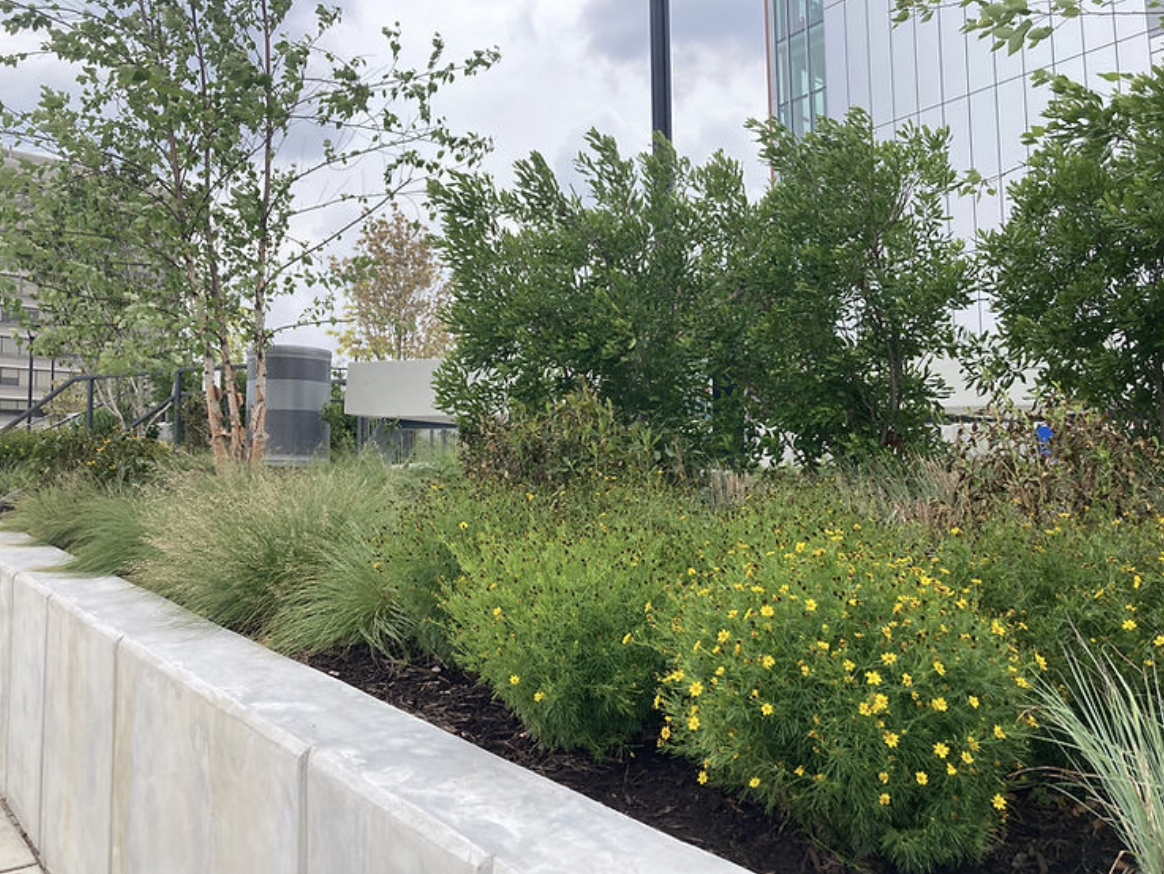
Photo: Landscape with native plants, Margaret Fisher

Margaret Fisher

Landscape with native plants, Margaret Fisher

Fall is for planting. When choosing what to plant, why not factor in the ecosystem while you are at it? Preserving biodiversity may sound like a job for scientists, but in fact the implementation is up to all of us. It is the decisions we make on a daily basis that determine how well our local ecosystem will weather the numerous stressors that come with climate change. We get to see this in action as we choose which plants to install on our properties.

Why should we care about biodiversity, a term that seems so remote to our own lives? Perhaps a better word would be “bio-resilience” or even “bio-survival,” to highlight the importance of genetic diversity in a changing world. In our yards, for example, planting a whole range of species means that whether they are hit by drought, deluge, or the next plague, at least some of them will make it. Better still is to use plants that themselves have genetic diversity, as opposed to ones that are produced by cloning, which is the case for most cultivars. 

None of this has much meaning to the planet unless those plants are also native to the area and thus support the myriad critters that depend on them for food. Losing an entire hedge to boxwood blight or a row of crape myrtles to crape myrtle bark scale may be sad for us but makes no difference to the ecosystem. Replacing them with a mixed hedge of native trees and shrubs would provide insurance against stressors while supporting our birds and butterflies. Those critters very much need our support, because they are under threat from the non-native plants that have escaped from our gardens into the natural areas and are turning our parks into monocultures of tree-killing invasives. Finding appropriate substitutes for invasive plants is not a problem - the Native Plants for Northern Virginia guide lists 263 garden-worthy species

Professional landscapers all know that autumn is a great time to plant, even if home gardeners make the mistake of waiting until April to flock to the garden centers. Planting can even continue until the ground is frozen. Many plants, including trees and shrubs, continue to grow their roots after their leaves fall off, and even those that go dormant have a major head start in the spring before they have to face summer heat and drought. The wise gardeners who take advantage of the fall discounts are rewarded by lighter watering chores and healthier plants. In Northern Virginia, you can find native plants either by looking for the red stickers in participating conventional garden centers or by shopping at the native plant nurseries or at the local fall native plant sales.

Read More
News Jess Michetti News Jess Michetti

The corporate world embraces native plants

Most corporate properties have pretty “standard” landscaping, meaning the plants do very little if anything to support the local ecosystem. More and more, though, we are seeing innovative landscape designs on commercial properties that demonstrate the potential for corporations to be leaders in the effort to save the natural world, starting on their own land.

Photo: Corporate landscaping with native plants, Margaret Fisher

Margaret Fisher

Most corporate properties have pretty “standard” landscaping, meaning the plants do very little if anything to support the local ecosystem. More and more, though, we are seeing innovative landscape designs on commercial properties that demonstrate the potential for corporations to be leaders in the effort to save the natural world, starting on their own land. While they are at it, they are creating beautiful and welcoming spaces for their clients and employees. 

One example of this approach is the work done at the recently-opened Kaiser Permanente medical centers in Springfield and Woodbridge (Caton Hill). Both properties are richly landscaped with trees, shrubs, grasses and perennials that are almost entirely native to Northern Virginia. The few exceptions are non-invasive. 

Native plants at Kaiser Permanente. Photo: Margaret Fisher

Alton Millwood, Director of Planning, Design and Construction at Kaiser Permanente Mid-Atlantic, described the thinking behind the design:

The landscape design at Caton Hill Medical Center focused on allowing the natural environment to be a part of the community’s wellness plan. There is an abundance of research showing that exposure to nature can lower . . . [the] heart rate, alleviate mental distress, speed recovery rates, and even alleviate symptoms of mental disorders. This is why Kaiser Permanente felt it was important to keep natural woodland areas on the project site and invite people into those . . . [spaces] with trails and areas to sit and relax. Additionally, the native plants used on the site help to create a healthier environment by providing food and habitat for birds and other wildlife, conserving water, and reducing noise and pollution associated with mowing. It only made sense that if we were going to involve the natural environment for our own health that we would do what we could to improve the health of the environment.

Another goal of the project was to help the region meet its stormwater goals in order to protect the local streams and the Chesapeake Bay. The planting beds and the meadow roof decrease the amount of runoff from impervious surfaces. Design considerations included using a variety of native plant species to provide four-season interest, using low-maintenance plants that will not require long-term watering, and choosing species that will grow to the appropriate size for their locations so that important sight lines remain open and safe.

The reaction of employees and patients alike has been extremely positive. Millwood reports, “Many members and staff have taken advantage of the outside seating, walked through the Gardens and Health Park to immerse themselves in nature and its healing benefits, and observed the rooftop meadow flowers in full bloom, with birds and pollinators busy in their tasks.”

Asked what would be his advice to other corporations, Millwood replied, “Using sustainable design practices such as planting native plants is good for people and the environment – it is a win-win. For corporations, sustainable design can impact their bottom line, too. Native plants are more likely to live long and thrive in our environment. They require less maintenance, less fertilizer and pesticides, and less water. All this adds up to savings for the owner. Hiring . . . like-minded design professionals can help you create places like Caton Hill Medical Center that help benefit our community and the local ecosystem.”

More photos of this and other corporate or small business landscaping projects can be found on the Commercial Landscaping page on the Plant NOVA Natives website.

Read More
News Jess Michetti News Jess Michetti

Front Yard Landscaping, Reimagined

Originality has not been what springs to mind when looking at most front yards, but now people are starting to tweak the conventions by putting native plants front and center on their properties.

Photo: Reimagined front yard, Margaret Fisher

Margaret Fisher

Originality has not been what springs to mind when looking at most front yards, but now people are starting to tweak the conventions by putting native plants front and center on their properties. There are around two hundred species of native plants that are eminently suitable for the formal or semiformal areas of our homes or businesses. In those cases, there is no need to confine them to our back yards. They add curb appeal to any property while simultaneously supporting the songbirds, butterflies, and other critters that so desperately need our help to survive in a suburban or urban environment.

For anyone who prefers to keep their shrubs and flowers up against the house, there are plenty of neat-and-tidy native plants that do well in that setting. Recommendations can be found on the foundation plantings page on the Plant NOVA Natives website.

For those interested in rethinking the layout of their yard, there are many ways to do that.

Reimagined Front Yard, Margaret Fisher

  • Pictured here is a front yard in which half the space has been filled with native plants (as opposed to turf grass, which is non-native and therefore does not support our local fauna). The small number of species planted in large masses makes a strong impact while minimizing the expertise needed for maintenance. The tree has been protected from soil compaction and lawn mower damage, both of which are a risk to trees surrounded by turf grass.

  • A planting bed along the sidewalk would have the advantage of capturing stormwater runoff before it hits the street. Runoff from impervious surfaces and lawns causes degradation of our streams and the Chesapeake Bay. Taller plants along the sidewalk also can make the front yard another area where you can sit or play in privacy.

  • Mowing around a curved planting bed in the middle of the yard is easy. The bed could consist of flowers for those who like to garden or a small grove of native trees and shrubs for those who don’t.

  • The entire yard could be replaced by native plants along curved paths. The easiest design would consist of trees, shrubs, and groundcovers. Losing the lawn is seldom a problem, since most people don’t run around on their front lawn anyway.

  • At the other end of the effort spectrum, planting a single native shade tree in the lawn would confer the most benefit for the least amount of work.

Famous American ecologist E. O. Wilson urged us to set aside half of the Earth’s surface for nature, thus enabling us to preserve biodiversity and avert mass extinction (including our own extinction). That goal cannot be achieved by setting aside deserts and mountaintops and keeping the rich lands for ourselves. The set-aside land must include areas, such as our East Coast, that support the most biodiversity. Most of that land is privately owned, so it is up to each of us to contribute anything we can. Considering how much of our suburban/urban land is covered with built structures, any piece of land that isn’t occupied by a building or road would best be devoted to native trees and other native plants. Instead of adding to habitat loss, our front yards can be part of the solution while beautifying our properties and increasing home values. For details on designing a landscape using native plants, see the Plant NOVA Natives website.

Read More
News Jess Michetti News Jess Michetti

Plant This, Not That: Replacing Spanish Bluebells

I got some bad news recently. I picked up a new edition of “Plant Invaders of Mid-Atlantic Natural Areas” and found that one of my favorite bulbs, Hyacinthoides hispanica, or Spanish Bluebells, is a new entry, its invasive qualities manifesting in my area.
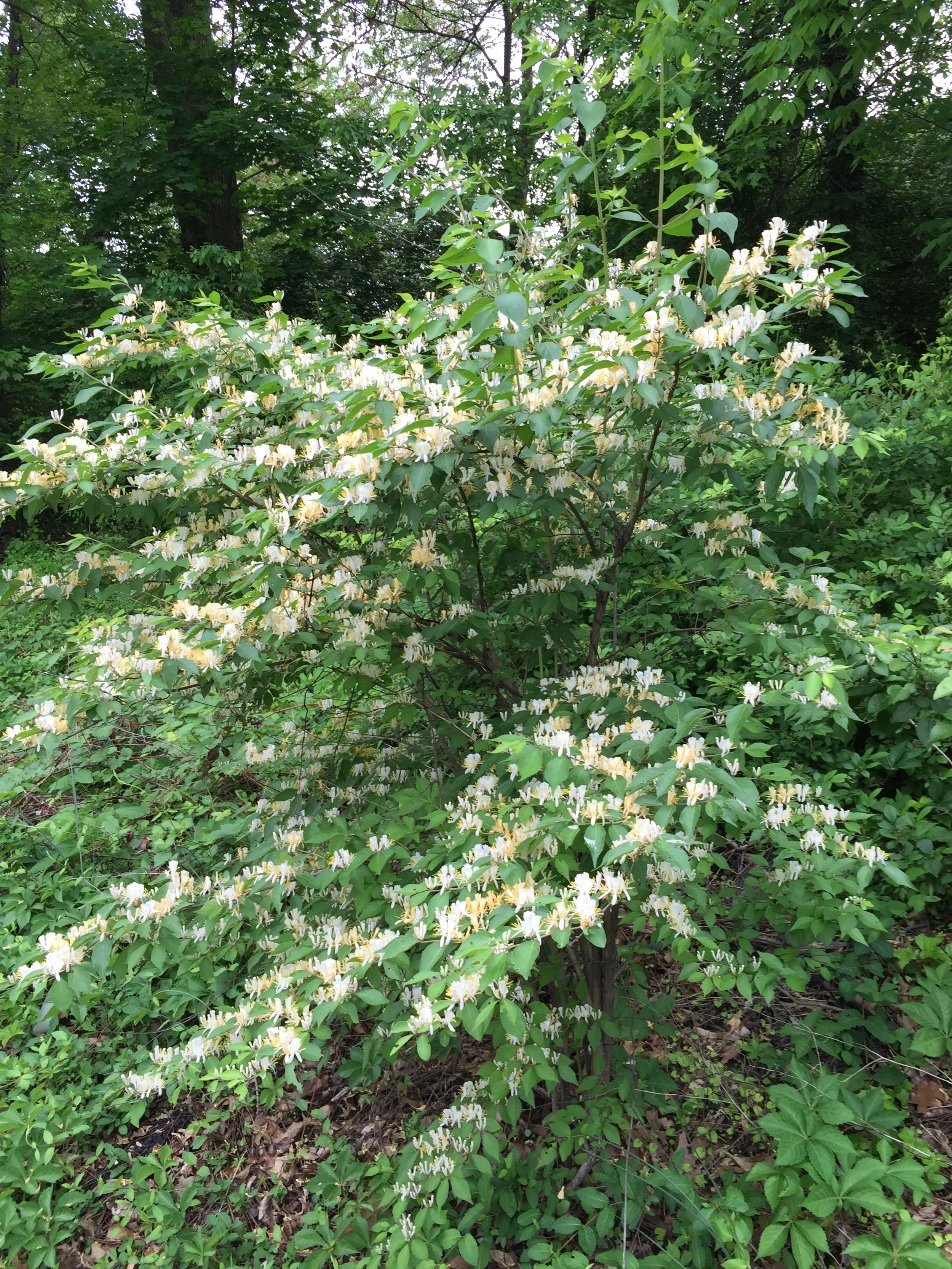
Photo: Spanish Bluebells, Alyssa Ford Morel

Alyssa Ford Morel

I got some bad news recently. I picked up a new edition of “Plant Invaders of Mid-Atlantic Natural Areas” and found that one of my favorite bulbs, Hyacinthoides hispanica, or Spanish Bluebells, is a new entry, its invasive qualities manifesting in my area.

Spanish Bluebells, Alyssa Ford Morel

This pretty flower has sentimental meaning for me because I was first given bulbs of it by my mother, now deceased, who dug them from her beautiful garden. I liked it so much that 15 years ago, after spending a year and a half removing invasive English Ivy from my shady back yard, I bought a bag of 50 of the bluest variety I could find and carefully planted them throughout. A friend who knew I liked them gave me another 25 or so white ones. Over the years, I’ve watched what started as 75 individual bulbs mature into large clumps, making a beautiful show every spring. I’ve even recommended them to other people, compounding my guilt.

It’s a hard way to personally learn a truth I’ve stated before but now am painfully living: the only way to guarantee you aren’t planting future invasives is to plant natives. By definition (specifically Executive Order 13112 signed in 1999 by President Clinton), invasives are organisms that (1) are not native to the area in which they are being found, (2) are capable of escaping cultivation, and (3) can out-compete native organisms causing harm to human health, the economy or the environment. Invasive plants too often become a problem because we humans fall for the attractive qualities of a non-native plant and use it extensively, providing an expanding pool from which it reproduces itself.

I am relearning the lesson that only natives cannot become invasive over time each time I push my hori hori knife into the ground, hoping to get deep enough to remove the round, white bulbs that have proliferated. While this is a giant task, it is made worse because I know that, try as I might, I will not find all the bulbs, and I will certainly have to come back and retry next spring, and maybe for many springs to come.

One comfort that I cling to is the fact that I will have a lot more room to plant some of the native plants that I have learned to love. Here are three that I’ll be planting more of:

Virginia Bluebells, Elaine Mills

Virginia Bluebells (Mertensia virginica) are the obvious replacement for Spanish Bluebells. I’ve long believed their blue is one of the most beautiful colors nature provides. They are a spring ephemeral, with foliage dying to the ground by summer. They look great with ferns which will quickly grow to cover the Bluebells’ dying foliage. Virginia Bluebells support a variety of bees, butterflies and hummingbirds. One tip is that if you are planting on a slope, plant them at the top of the slope and they will gradually drop their seeds downhill, forming a beautiful carpet.

Great White Trillium, Elaine Mills

Another one of northern Virginia’s most stunning ephemerals is the Great White Trillium (Trillium grandiflorum). These three-petaled flowers spread very slowly if undisturbed. They start their bloom bright white and fade to a lovely pink as they age. One of the most delightful nearby nature walks is the “Trillium Trail” section of the Appalachian Trail with miles of Trilliums and other native spring ephemerals, showing best at the end of April and beginning of May each year.

Foamflower, Elaine Mills

Another plant I’ll be adding more of is Foamflower (Tiarella cordifolia). The lacy spikes of white flowers that bloom from April to July are the source of their name, but their pretty leaves with deep red along the veins make them attractive throughout the growing season. The leaves may turn a red-bronze color in autumn and sometimes remain evergreen in mild winters.

While my feelings about having planted a sentimental favorite that is now identified as a problem are complex, my feelings about being able to plant more favorite natives is pure joy.

Read More
News Jess Michetti News Jess Michetti

Plant This, Not That: Replacing Bush Honeysuckle

Some invasive plants are sneaky. They pop up in one’s garden without explanation or obvious origin and force gardeners to take action on the spot, lest they be forgotten and allowed to grow and spread. Some of the sneakiest are the Bush Honeysuckles, several species of Lonicera with Eurasian origins.

Photo: Flowering Bush Honeysuckle, Elaine Mills

Alyssa Ford Morel

Some invasive plants are sneaky. They pop up in one’s garden without explanation or obvious origin and force gardeners to take action on the spot, lest they be forgotten and allowed to grow and spread. Some of the sneakiest are the Bush Honeysuckles, several species of Lonicera with Eurasian origins. I’ve encountered Bush Honeysuckle plants two feet high that clearly have been growing for a year or more in areas where I know I’ve recently spent time gardening, and yet somehow missed their presence. Sneaky.

Flowering Bush Honeysuckle, Elaine Mills

The name Bush Honeysuckle is also sneaky, implying a plant of a certain size. Several years ago I was explaining to a volunteer at an invasive pull how to recognize and remove Bush Honeysuckle, when he pointed at another plant further away and asked if it was also a Bush Honeysuckle.

“No,” I said, squinting without my glasses. “That’s a tree.”

My curiosity roused, I went over to see what the tree was, and was embarrassed to realize it was indeed a Bush Honeysuckle grown to 20 feet. I’ve since encountered many more such giant Honeysuckles, pruned at the bottom and considered trees by their caretakers.

Like so many invasive plants, Bush Honeysuckle has positive qualities that mislead Americans to plant it widely. Its flowers are attractive and fragrant, and its berries are tasty to many birds. Unfortunately, like other invasives (as defined in 1999 by Executive Order 13112 signed by President Clinton and amended by President Obama), it easily escapes cultivation, spreading rapidly in the wild and out-competing the native plants that support local food webs. Those berries that attract birds are high in carbohydrates instead of the healthy fats our birds need. It is also allelopathic, producing chemicals harmful to native plants and mycorrhizal fungi. Studies have shown it has chemicals that can hurt or kill native insects and young amphibians.

Fruiting Bush Honeysuckle, Elaine Mills

So, what to do about this sneaky plant? First, we must identify it correctly. It has a branching growth habit, with leaves held opposite each other. When a branch is cut, a clear hole can be found in the center. In spring, the pretty and fragrant tubular white to pink flowers that fade to yellow are helpful in identification as are the bright red late-summer berries that persist into winter.

Bush Honeysuckle can be pulled by hand when it is young, and dug up when larger. Plants too tricky to be dug up can be cut low and an herbicide carefully applied to the new growth.

Sweet-shrub, a.k.a. Carolina Allspice, Elaine Mills

There are many great replacement plants. If you want a native shrub with fragrant flowers, consider Sweet-shrub, a.k.a. Carolina Allspice (Calycanthus floridus), which is native in some southern parts of Virginia but does well in Northern Virginia. It has dramatically beautiful maroon flowers with a fruity scent from April to July. Sweet-shrub is seldom severely damaged by deer and likes sun to part shade.


Black Chokeberry, Elaine Mills

Black Chokeberry (Aronia melanocarpa) offers nectar and pollen to bees from white to pink-tinged flowers in April to May, and black fruit from September through November which appeal to many birds. Its size of three to six feet, both tall and wide, makes it a great fit for many suburban yards, and it offers attractive fall coloring that varies from yellow to orange to crimson. Despite the off-putting name, the berries can be used for jams, juices, and natural red coloring.

Arrowwood viburnum, Elaine Mills

Arrowwood Viburnum (Viburnum dentatum) earned its common name because the very straight branches were used by Native Americans to make the shafts of arrows. Normally six to ten feet tall and wide, this shrub likes sun or some shade. It has showy white blooms in May to June, followed by attractive fruit in the fall. There are many cultivars of Arrowwood Viburnum which are propagated vegetatively by cloning. For good cross pollination and fruit set, it is important to have at least two Arrowwood Viburnums that are genetically different from each other.

Read More
News Jess Michetti News Jess Michetti

Landscapers’ Conference in Spanish

One hundred and thirty-five landscape professionals attended a conference on sustainable landscaping on February 15 on the Annandale campus of Northern Virginia Community College.

Photo: February 2023 Landscapers’ Conference, Wendy Cohen

Wendy Cohen

One hundred and thirty-five landscape professionals attended a conference on sustainable landscaping on February 15 on the Annandale campus of Northern Virginia Community College. Although Plant NOVA Natives, in partnership with ASNV, has held other sustainable landscaping conferences for professionals, this one was special: it was held completely in Spanish and targeted Spanish-speaking landscapers. Funding came from individual donations and grants from Transurban and the Virginia Department of Forestry.

February 2023 Landscapers’ Conference, Wendy Cohen

Participants learned from experts in the field about the importance of native plants, identification of invasive plants and the Spotted Lanternfly, the vital work of invasives removal, and best practices in planting and pruning techniques. Speakers included the owner of a sustainable landscape design business, the director of the Fairfax County Parks Invasive Management program, the commercial horticulturist for Loudoun County’s Cooperative Extension program, and a sustainable landscaper.

The audience was completely engaged and participated actively in the question-and-answer sessions. Participants were given handouts in Spanish, including an invasive plant identification guide, the Fairfax County Tree Basics booklet, and lists of online resources. Hip City Veg provided a vegan lunch, and several event organizers provided home-baked vegan cookies. The conference was a “low-waste” event, using only non-disposable cups and plates and recycling and composting lunch and breakfast items.

The great turnout for the event made clear the huge need for Spanish-language training for landscape workers. For example, it is hard to find pesticide or fertilizer certification in Spanish, a big gap considering who is doing much of the landscaping work in northern Virginia. Plant NOVA Natives is planning to start a series of webinars for a general Spanish-speaking audience. Check out the Spanish language material currently on the website at https://www.plantnovanatives.org/espanol.

Plant NOVA Natives, ASNV, and other partners hope to make the conference an annual event, and look forward to the day when landscaping companies become proficient at recognizing and removing invasives, start advertising invasive removal services, and make money off it.

Read More
News Jess Michetti News Jess Michetti

Want birds and butterflies? Plant native shrubs!

When it comes to the curb appeal of our houses and other buildings, the difference between starkly naked and softly clothed is the shrubs. What is a shrub, anyway?
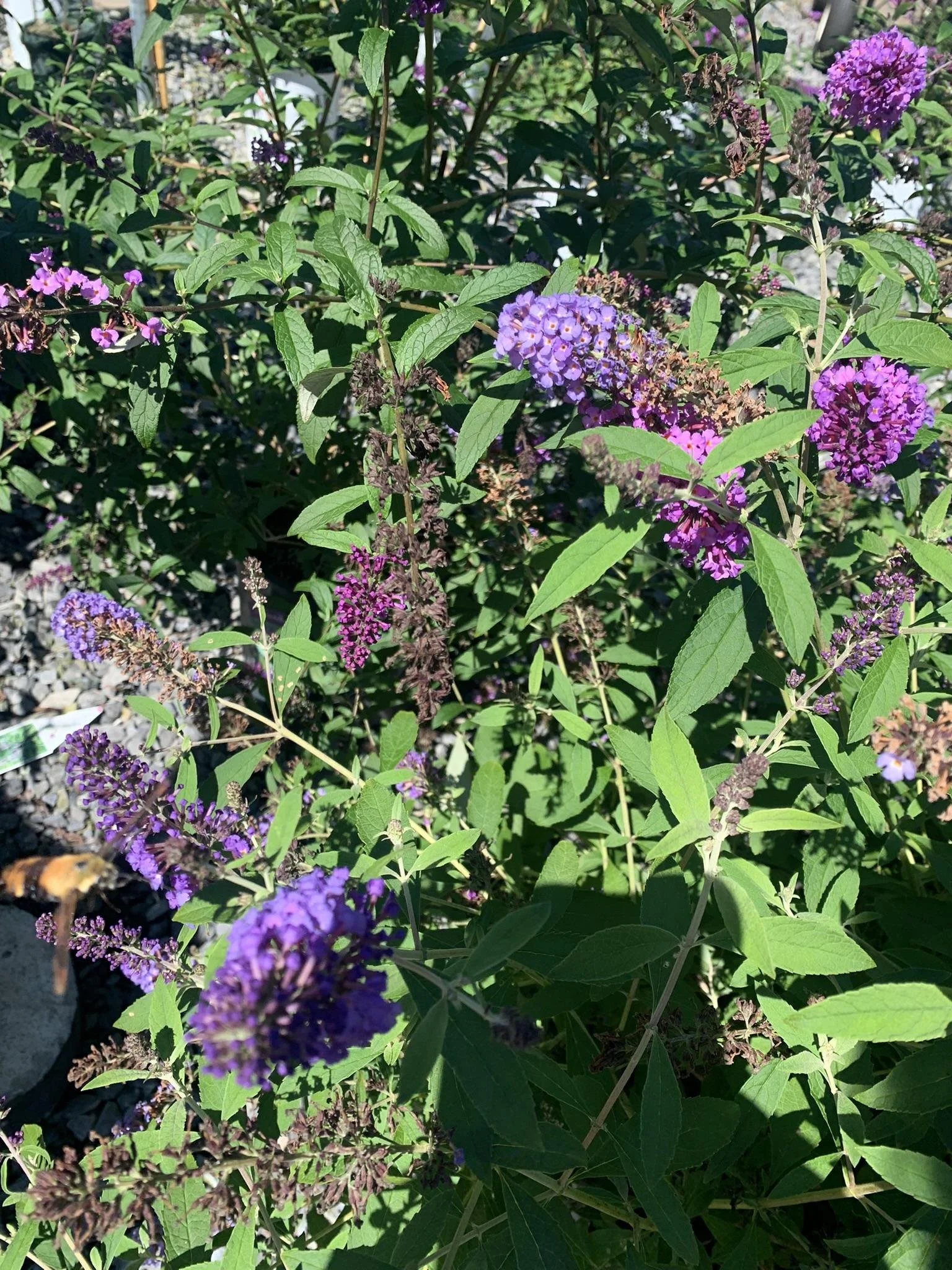
Photo: Shrubby Saint John’s Wort, Margaret Fisher

Margaret Fisher

When it comes to the curb appeal of our houses and other buildings, the difference between starkly naked and softly clothed is the shrubs. What is a shrub, anyway? According to famous bird expert David Allen Sibley, “If you can walk under it, it’s a tree; if you have to walk around it, it’s a shrub.” Other than being multi-stemmed and relatively short, a shrub is pretty much the same as a tree and therefore provides the same environmental benefits, albeit to a smaller degree. And the difference between a native shrub and a non-native one is that the former will not only beautify a property but will turn it into a living landscape that supports the butterflies and birds.

Many people are looking at their yards and at public land and realizing that a lot of the space is being wasted. Turf grass has its advantages for certain purposes, such as providing a place to walk or play sports, but as a non-native plant, it does nothing for the ecosystem and requires a lot of input to maintain. Chipping away at the lawn with native shrubs can quickly cover the ground at a very low cost. Beyond the initial watering to get them established, they will require little or no maintenance from then on.

Shrubby St. John’s Wort, Margaret Fisher

For small spaces, there are some native shrubs that naturally stay short, such as Shrubby Saint John’s Wort (Hypericum prolificum) with its bright yellow flowers. There are also smaller cultivars of larger shrubs, such as Winterberry Holly (Ilex verticillata) with its red berries that persist into January until they finally soften up and become a food source for hungry birds. If you use shrubs whose ultimate height fits the space you have in mind, the yearly shearing task will be eliminated. These and many other native shrubs are described on the Plant NOVA Natives website, which also points to places to buy them.

Some native shrubs grow tall enough to provide shade and can be an alternative to a small flowering tree. Common Witch-hazel is an example of that. So named because of the cute bumps it gets on its leaves in the shape of a witch’s hat, this native shrub is also magical for flowers that are revealed in November after the leaves fall off. Those bumps, by the way, are caused by the reaction of the plant to a chemical injected by a tiny insect, the Witch-hazel Cone Gall Aphid. The cone-shaped bumps provide food and shelter to the female aphids as they lay their eggs.

Native shrubs can fill in the spaces between trees. From an environmental perspective, this arrangement is ideal, providing shelter and food at multiple heights, something we have lost in many of our woods to excessive browsing by deer. (In fact, although “Nature’s first green is gold,” if you look into the woods of Northern Virginia right now, there is a suspicious amount of green, much of which is due to invasive species such as Multiflora Rose and Asian Bush Honeysuckle. The leaves of invasive plants often emerge earlier and persist later than those of our native shrubs.) In our own yards, we can take steps to protect plants from deer and to swap out invasive shrubs for native ones and thus help support our local ecosystem.

The Virginia Department of Forestry (VDOF) is collecting data on how many trees are planted in Northern Virginia as it works toward the goal of 600,000 by 2025. For this purpose, shrubs count as trees, so VDOF is encouraging everyone to report plantings of both. A reporting form can be found on the Plant NOVA Trees website.

Read More
News Jess Michetti News Jess Michetti

Plant This, Not That: Replacing Butterfly Bush

Confession is said to be good for the soul, so here it goes: I have, while standing in someone’s garden, wimped out on telling them their Butterfly Bush (Buddleia davidii) is invasive.

Photo: Butterfly Bush, Alyssa Ford Morel

Alyssa Ford Morel

Confession is said to be good for the soul, so here it goes: I have, while standing in someone’s garden, wimped out on telling them their Butterfly Bush (Buddleia davidii) is invasive. More than once. In more than one garden.

Butterfly Bush, Alyssa Ford Morel

I am not always so lily-livered. I’ve mustered up the courage to speak the truth a few times, and seen the light of horticultural zeal dim in a gardener’s eyes as they realize the beautiful plant they love and believed would help the environment is actually a problem. I’ve apologized to them for the harsh truth. Causing this pain also pains me, even though the message is important.

So now I am telling the truth in writing, where I do not have to watch my words disappoint: Butterfly Bush is a beautiful, butterfly-attracting problem. Do not plant it. If you have it, you should make plans to replace it.

You may not see the baby Butterfly Bushes that your plant has parented because they are growing out of sight in wild areas. The nature of invasiveness is not reflected by what a plant does in cultivation, it is about the plant escaping cultivation and out-competing natives in the wild, causing harm to the economy, human health or the environment (per Executive Order 13112, signed in 1999).

Butterfly Bush is a problem in the environment in several ways. First, it out-competes native plants, taking up the space they need. Second, because it produces abundant nectar, pollinators often ignore flowers on native plants, depriving them of the pollination they need to reproduce. Thirdly, although adult butterflies indeed flock to the shrub, it does not support a single American butterfly baby (that is, caterpillars).

There are some Butterfly Bush cultivars that are marketed as being sterile or low-fertility. Unfortunately, as Jurassic Park fans know, over time species sometimes revert to their original fecundity, so such offerings should not be seen as a safe alternative. The answer, instead, is to plant one of the many beautiful native plants that attract and support butterflies. Fortunately, there are great choices available.

Buttonbush with a Monarch, Judy Gallagher

My personal top choice is Buttonbush (Cephalanthus occidentalis). This 6-to-12-foot-high shrub sets fabulous cylindrical white flowers that attract not only butterflies, but bees, hummingbirds and songbirds, as well as serving as host plant for two kinds of Lepidoptera. A smaller cultivar, ‘Sugar Shack’ is an alternative for those with less space. Buttonbush particularly likes moist areas.

If it’s the purple flower color that you particularly like, Gayfeather (Liatris spicata) is a great choice. This clump-forming perennial is easy to grow and maintain, and also attracts bees, hummingbirds and butterflies. It plays nicely with other plants in a mixed border or meadow design, providing striking purple spikes in mid-summer.

Gayfeather, Elaine Mills

Butterfly weed with Monarch, Alyssa Ford Morel

An iconic native plant known for supporting butterflies to consider is Butterfly-weed (Asclepias tuberosa). Like all members of the Milkweed family, it is a host plant to Monarch butterflies, whose eastern population has declined 85 percent in the past two decades. One thing we can do to help them is plant more Milkweeds, including this happy, easy-to-grow plant. It not only supports Monarchs, but also attracts other butterflies and beneficial insects as well as hummingbirds.

Read More
News Jess Michetti News Jess Michetti

Plant This, Not That: Replacing Liriope

One extremely popular plant that has recently been showing its invasive qualities and is on invasive lists in various northern Virginia jurisdictions is Liriope, commonly called Monkey Grass or Lilyturf.

Photo: Liriope spicata, Alyssa Morel

Alyssa Ford Morel

Almost every gardener in the U.S. has planted or nurtured at least one invasive plant. They may have even loved it without realizing the problems it poses. Until fairly recently there wasn’t even a good definition of what an invasive plant or animal was. Executive Order 13112, signed in 1999, finally codified the fact that invasives are (1) not native where they are occurring, (2) able to escape cultivation, and (3) capable of causing harm in the wild to human health, the economy, or the environment.

Embracing that definition and opening our eyes to the problems of invasives can be a rude awakening and hard to accept. Worse, acting on it can be a lot of work. But taking action in our own yards can also be an empowering act of hope for the future of our environment.

One extremely popular plant that has recently been showing its invasive qualities and is on invasive lists in various northern Virginia jurisdictions is Liriope, commonly called Monkey Grass or Lilyturf. There are several varieties of Liriope, including clumping Liriope muscari and spreading Liriope spicata, and while Liriope spicata’s running habit is particularly difficult to control, both are increasingly showing up in wild spaces, crowding out native plants that wildlife depend on.

Liriope muscari, which clumps. Alyssa Morel

Liriope spicata, which spreads. Alyssa Morel

Liriope was introduced to the United States from Asia more than 200 years ago. It is a hardy, evergreen member of the asparagus family, often used for edging or as a ground cover. It has purple-blue spring flowers and sets blackish berries in fall. Liriope can be dug out, though it is rarely a one-and-done process. Roots, rhizomes and dropped seeds that hide can sprout and must be dug again. Take heart, repeated effort for two or three years will remove it all.

Fortunately, there are great native plants that support biodiversity and can fill the garden roles played by Liriope. Like Liriope, all three of these choices are evergreen.

Plantain-leaved Sedge or Seersucker Sedge (Carex plantaginea), Elaine Mills

Carex plantaginea (Plantain-leaved Sedge or Seersucker Sedge) has strappy, rippled leaves. Its bright lime-green color and the maroon and green stripes of its spring inflorescence stalks make it a standout in its preferred shady habitat. Other environmental pluses are that it serves as a larval host for butterflies, birds eat its seeds, and it helps control erosion on banks.


Moss Phlox (Phlox subulata), Elaine Mills


Phlox subulata (Moss Phlox) is a standout in sunny areas in spring with bright masses of flowers in shades of pink, purple and white. An American native that has long been available in the nursery trade, this hardy performer stands up to drought, erosion, air pollution and salt. It attracts bees, butterflies and hummingbirds.


Golden Alexander (Zizia area), Elaine Mills

Zizia aurea (Golden Alexander) shares the dark green color of Liriope, and can take either sun or shade. It’s a member of the parsley family and serves as a host of Black Swallowtail butterflies. It has lacy yellow flowers in spring, and is an important support to native bees. It happily spreads by seeds if you need to fill an area from which you have removed Liriope spicata.


NOTE: A version of this article also appears in the Glencarlyn Village View and on the mgnv.org website.

Read More