NVBA NEWS BLOG

Welcome to the blog for Northern Virginia Bird Alliance, a wealth of resources about northern Virginia birds, wildlife, habitat conservation and restoration, native plants, wildlife-friendly gardening, advocacy and more.

News Jess Michetti News Jess Michetti

Plant This, Not That: Replacing Spanish Bluebells

I got some bad news recently. I picked up a new edition of “Plant Invaders of Mid-Atlantic Natural Areas” and found that one of my favorite bulbs, Hyacinthoides hispanica, or Spanish Bluebells, is a new entry, its invasive qualities manifesting in my area.
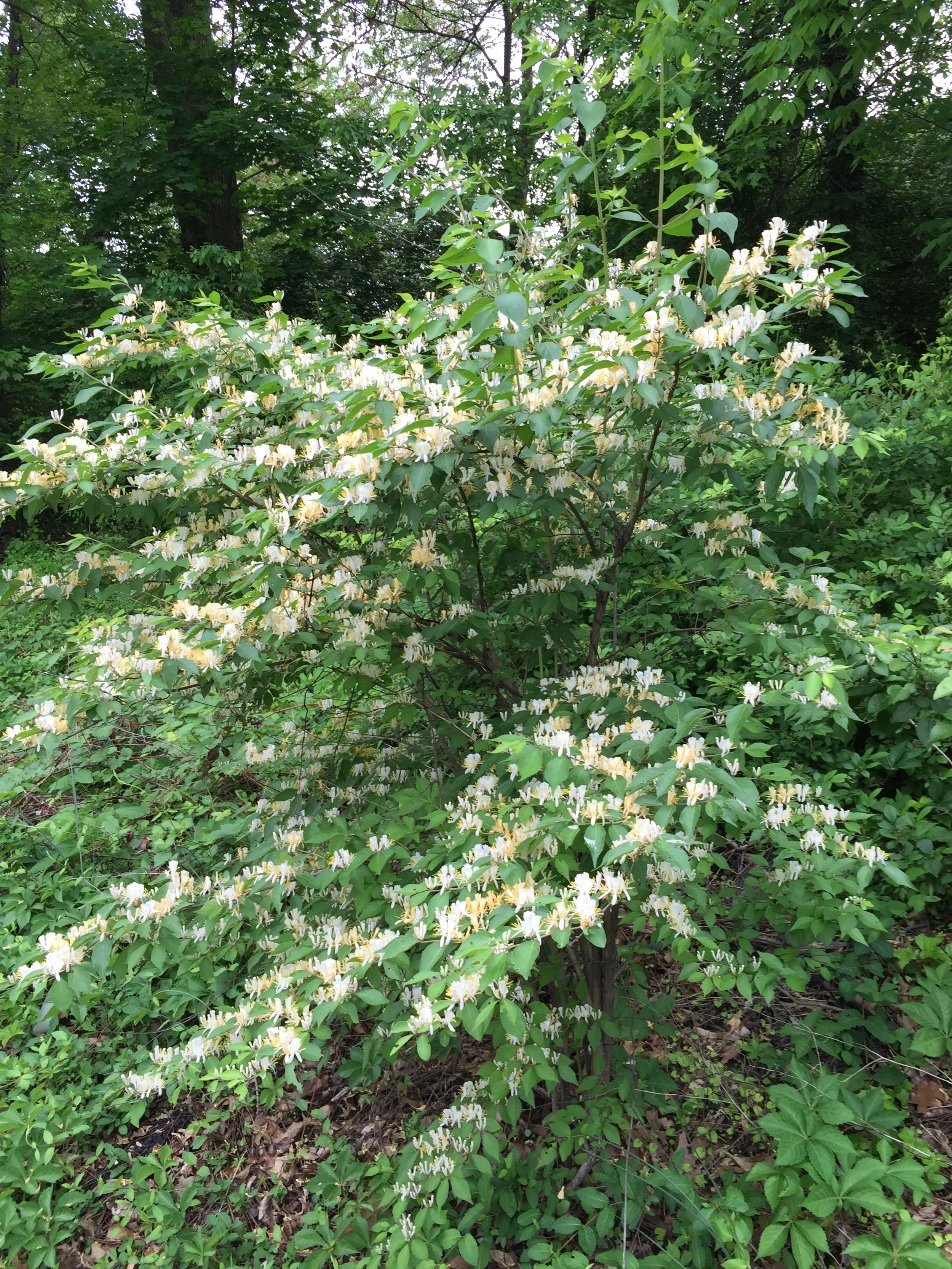
Photo: Spanish Bluebells, Alyssa Ford Morel

Alyssa Ford Morel

I got some bad news recently. I picked up a new edition of “Plant Invaders of Mid-Atlantic Natural Areas” and found that one of my favorite bulbs, Hyacinthoides hispanica, or Spanish Bluebells, is a new entry, its invasive qualities manifesting in my area.

Spanish Bluebells, Alyssa Ford Morel

This pretty flower has sentimental meaning for me because I was first given bulbs of it by my mother, now deceased, who dug them from her beautiful garden. I liked it so much that 15 years ago, after spending a year and a half removing invasive English Ivy from my shady back yard, I bought a bag of 50 of the bluest variety I could find and carefully planted them throughout. A friend who knew I liked them gave me another 25 or so white ones. Over the years, I’ve watched what started as 75 individual bulbs mature into large clumps, making a beautiful show every spring. I’ve even recommended them to other people, compounding my guilt.

It’s a hard way to personally learn a truth I’ve stated before but now am painfully living: the only way to guarantee you aren’t planting future invasives is to plant natives. By definition (specifically Executive Order 13112 signed in 1999 by President Clinton), invasives are organisms that (1) are not native to the area in which they are being found, (2) are capable of escaping cultivation, and (3) can out-compete native organisms causing harm to human health, the economy or the environment. Invasive plants too often become a problem because we humans fall for the attractive qualities of a non-native plant and use it extensively, providing an expanding pool from which it reproduces itself.

I am relearning the lesson that only natives cannot become invasive over time each time I push my hori hori knife into the ground, hoping to get deep enough to remove the round, white bulbs that have proliferated. While this is a giant task, it is made worse because I know that, try as I might, I will not find all the bulbs, and I will certainly have to come back and retry next spring, and maybe for many springs to come.

One comfort that I cling to is the fact that I will have a lot more room to plant some of the native plants that I have learned to love. Here are three that I’ll be planting more of:

Virginia Bluebells, Elaine Mills

Virginia Bluebells (Mertensia virginica) are the obvious replacement for Spanish Bluebells. I’ve long believed their blue is one of the most beautiful colors nature provides. They are a spring ephemeral, with foliage dying to the ground by summer. They look great with ferns which will quickly grow to cover the Bluebells’ dying foliage. Virginia Bluebells support a variety of bees, butterflies and hummingbirds. One tip is that if you are planting on a slope, plant them at the top of the slope and they will gradually drop their seeds downhill, forming a beautiful carpet.

Great White Trillium, Elaine Mills

Another one of northern Virginia’s most stunning ephemerals is the Great White Trillium (Trillium grandiflorum). These three-petaled flowers spread very slowly if undisturbed. They start their bloom bright white and fade to a lovely pink as they age. One of the most delightful nearby nature walks is the “Trillium Trail” section of the Appalachian Trail with miles of Trilliums and other native spring ephemerals, showing best at the end of April and beginning of May each year.

Foamflower, Elaine Mills

Another plant I’ll be adding more of is Foamflower (Tiarella cordifolia). The lacy spikes of white flowers that bloom from April to July are the source of their name, but their pretty leaves with deep red along the veins make them attractive throughout the growing season. The leaves may turn a red-bronze color in autumn and sometimes remain evergreen in mild winters.

While my feelings about having planted a sentimental favorite that is now identified as a problem are complex, my feelings about being able to plant more favorite natives is pure joy.

Read More
News Jess Michetti News Jess Michetti

Plant This, Not That: Replacing Bush Honeysuckle

Some invasive plants are sneaky. They pop up in one’s garden without explanation or obvious origin and force gardeners to take action on the spot, lest they be forgotten and allowed to grow and spread. Some of the sneakiest are the Bush Honeysuckles, several species of Lonicera with Eurasian origins.
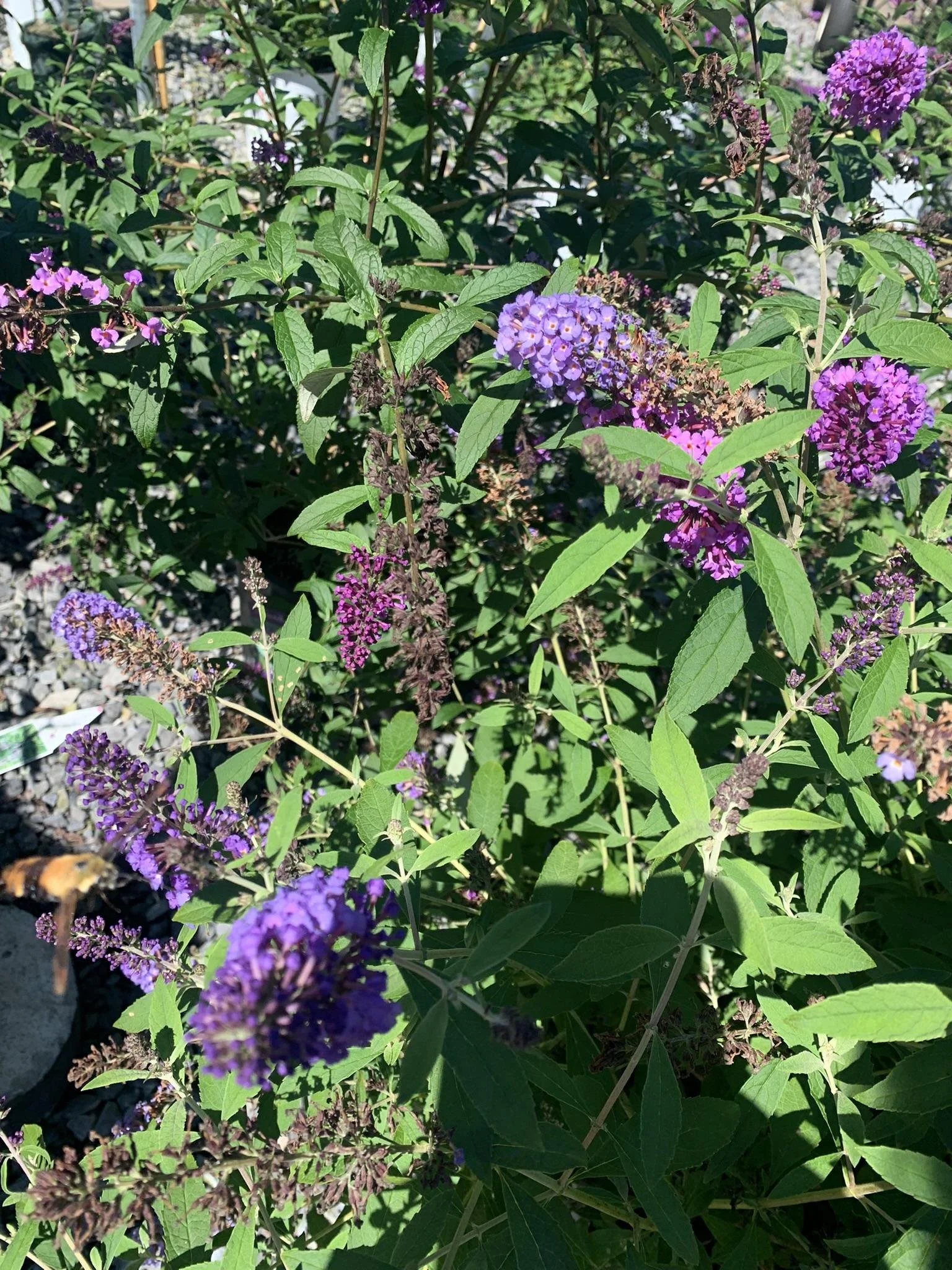
Photo: Flowering Bush Honeysuckle, Elaine Mills

Alyssa Ford Morel

Some invasive plants are sneaky. They pop up in one’s garden without explanation or obvious origin and force gardeners to take action on the spot, lest they be forgotten and allowed to grow and spread. Some of the sneakiest are the Bush Honeysuckles, several species of Lonicera with Eurasian origins. I’ve encountered Bush Honeysuckle plants two feet high that clearly have been growing for a year or more in areas where I know I’ve recently spent time gardening, and yet somehow missed their presence. Sneaky.

Flowering Bush Honeysuckle, Elaine Mills

The name Bush Honeysuckle is also sneaky, implying a plant of a certain size. Several years ago I was explaining to a volunteer at an invasive pull how to recognize and remove Bush Honeysuckle, when he pointed at another plant further away and asked if it was also a Bush Honeysuckle.

“No,” I said, squinting without my glasses. “That’s a tree.”

My curiosity roused, I went over to see what the tree was, and was embarrassed to realize it was indeed a Bush Honeysuckle grown to 20 feet. I’ve since encountered many more such giant Honeysuckles, pruned at the bottom and considered trees by their caretakers.

Like so many invasive plants, Bush Honeysuckle has positive qualities that mislead Americans to plant it widely. Its flowers are attractive and fragrant, and its berries are tasty to many birds. Unfortunately, like other invasives (as defined in 1999 by Executive Order 13112 signed by President Clinton and amended by President Obama), it easily escapes cultivation, spreading rapidly in the wild and out-competing the native plants that support local food webs. Those berries that attract birds are high in carbohydrates instead of the healthy fats our birds need. It is also allelopathic, producing chemicals harmful to native plants and mycorrhizal fungi. Studies have shown it has chemicals that can hurt or kill native insects and young amphibians.

Fruiting Bush Honeysuckle, Elaine Mills

So, what to do about this sneaky plant? First, we must identify it correctly. It has a branching growth habit, with leaves held opposite each other. When a branch is cut, a clear hole can be found in the center. In spring, the pretty and fragrant tubular white to pink flowers that fade to yellow are helpful in identification as are the bright red late-summer berries that persist into winter.

Bush Honeysuckle can be pulled by hand when it is young, and dug up when larger. Plants too tricky to be dug up can be cut low and an herbicide carefully applied to the new growth.

Sweet-shrub, a.k.a. Carolina Allspice, Elaine Mills

There are many great replacement plants. If you want a native shrub with fragrant flowers, consider Sweet-shrub, a.k.a. Carolina Allspice (Calycanthus floridus), which is native in some southern parts of Virginia but does well in Northern Virginia. It has dramatically beautiful maroon flowers with a fruity scent from April to July. Sweet-shrub is seldom severely damaged by deer and likes sun to part shade.


Black Chokeberry, Elaine Mills

Black Chokeberry (Aronia melanocarpa) offers nectar and pollen to bees from white to pink-tinged flowers in April to May, and black fruit from September through November which appeal to many birds. Its size of three to six feet, both tall and wide, makes it a great fit for many suburban yards, and it offers attractive fall coloring that varies from yellow to orange to crimson. Despite the off-putting name, the berries can be used for jams, juices, and natural red coloring.

Arrowwood viburnum, Elaine Mills

Arrowwood Viburnum (Viburnum dentatum) earned its common name because the very straight branches were used by Native Americans to make the shafts of arrows. Normally six to ten feet tall and wide, this shrub likes sun or some shade. It has showy white blooms in May to June, followed by attractive fruit in the fall. There are many cultivars of Arrowwood Viburnum which are propagated vegetatively by cloning. For good cross pollination and fruit set, it is important to have at least two Arrowwood Viburnums that are genetically different from each other.

Read More
News Jess Michetti News Jess Michetti

Plant This, Not That: Replacing Butterfly Bush

Confession is said to be good for the soul, so here it goes: I have, while standing in someone’s garden, wimped out on telling them their Butterfly Bush (Buddleia davidii) is invasive.

Photo: Butterfly Bush, Alyssa Ford Morel

Alyssa Ford Morel

Confession is said to be good for the soul, so here it goes: I have, while standing in someone’s garden, wimped out on telling them their Butterfly Bush (Buddleia davidii) is invasive. More than once. In more than one garden.

Butterfly Bush, Alyssa Ford Morel

I am not always so lily-livered. I’ve mustered up the courage to speak the truth a few times, and seen the light of horticultural zeal dim in a gardener’s eyes as they realize the beautiful plant they love and believed would help the environment is actually a problem. I’ve apologized to them for the harsh truth. Causing this pain also pains me, even though the message is important.

So now I am telling the truth in writing, where I do not have to watch my words disappoint: Butterfly Bush is a beautiful, butterfly-attracting problem. Do not plant it. If you have it, you should make plans to replace it.

You may not see the baby Butterfly Bushes that your plant has parented because they are growing out of sight in wild areas. The nature of invasiveness is not reflected by what a plant does in cultivation, it is about the plant escaping cultivation and out-competing natives in the wild, causing harm to the economy, human health or the environment (per Executive Order 13112, signed in 1999).

Butterfly Bush is a problem in the environment in several ways. First, it out-competes native plants, taking up the space they need. Second, because it produces abundant nectar, pollinators often ignore flowers on native plants, depriving them of the pollination they need to reproduce. Thirdly, although adult butterflies indeed flock to the shrub, it does not support a single American butterfly baby (that is, caterpillars).

There are some Butterfly Bush cultivars that are marketed as being sterile or low-fertility. Unfortunately, as Jurassic Park fans know, over time species sometimes revert to their original fecundity, so such offerings should not be seen as a safe alternative. The answer, instead, is to plant one of the many beautiful native plants that attract and support butterflies. Fortunately, there are great choices available.

Buttonbush with a Monarch, Judy Gallagher

My personal top choice is Buttonbush (Cephalanthus occidentalis). This 6-to-12-foot-high shrub sets fabulous cylindrical white flowers that attract not only butterflies, but bees, hummingbirds and songbirds, as well as serving as host plant for two kinds of Lepidoptera. A smaller cultivar, ‘Sugar Shack’ is an alternative for those with less space. Buttonbush particularly likes moist areas.

If it’s the purple flower color that you particularly like, Gayfeather (Liatris spicata) is a great choice. This clump-forming perennial is easy to grow and maintain, and also attracts bees, hummingbirds and butterflies. It plays nicely with other plants in a mixed border or meadow design, providing striking purple spikes in mid-summer.

Gayfeather, Elaine Mills

Butterfly weed with Monarch, Alyssa Ford Morel

An iconic native plant known for supporting butterflies to consider is Butterfly-weed (Asclepias tuberosa). Like all members of the Milkweed family, it is a host plant to Monarch butterflies, whose eastern population has declined 85 percent in the past two decades. One thing we can do to help them is plant more Milkweeds, including this happy, easy-to-grow plant. It not only supports Monarchs, but also attracts other butterflies and beneficial insects as well as hummingbirds.

Read More
News Jess Michetti News Jess Michetti

Plant This, Not That: Replacing Liriope

One extremely popular plant that has recently been showing its invasive qualities and is on invasive lists in various northern Virginia jurisdictions is Liriope, commonly called Monkey Grass or Lilyturf.

Photo: Liriope spicata, Alyssa Morel

Alyssa Ford Morel

Almost every gardener in the U.S. has planted or nurtured at least one invasive plant. They may have even loved it without realizing the problems it poses. Until fairly recently there wasn’t even a good definition of what an invasive plant or animal was. Executive Order 13112, signed in 1999, finally codified the fact that invasives are (1) not native where they are occurring, (2) able to escape cultivation, and (3) capable of causing harm in the wild to human health, the economy, or the environment.

Embracing that definition and opening our eyes to the problems of invasives can be a rude awakening and hard to accept. Worse, acting on it can be a lot of work. But taking action in our own yards can also be an empowering act of hope for the future of our environment.

One extremely popular plant that has recently been showing its invasive qualities and is on invasive lists in various northern Virginia jurisdictions is Liriope, commonly called Monkey Grass or Lilyturf. There are several varieties of Liriope, including clumping Liriope muscari and spreading Liriope spicata, and while Liriope spicata’s running habit is particularly difficult to control, both are increasingly showing up in wild spaces, crowding out native plants that wildlife depend on.

Liriope muscari, which clumps. Alyssa Morel

Liriope spicata, which spreads. Alyssa Morel

Liriope was introduced to the United States from Asia more than 200 years ago. It is a hardy, evergreen member of the asparagus family, often used for edging or as a ground cover. It has purple-blue spring flowers and sets blackish berries in fall. Liriope can be dug out, though it is rarely a one-and-done process. Roots, rhizomes and dropped seeds that hide can sprout and must be dug again. Take heart, repeated effort for two or three years will remove it all.

Fortunately, there are great native plants that support biodiversity and can fill the garden roles played by Liriope. Like Liriope, all three of these choices are evergreen.

Plantain-leaved Sedge or Seersucker Sedge (Carex plantaginea), Elaine Mills

Carex plantaginea (Plantain-leaved Sedge or Seersucker Sedge) has strappy, rippled leaves. Its bright lime-green color and the maroon and green stripes of its spring inflorescence stalks make it a standout in its preferred shady habitat. Other environmental pluses are that it serves as a larval host for butterflies, birds eat its seeds, and it helps control erosion on banks.


Moss Phlox (Phlox subulata), Elaine Mills


Phlox subulata (Moss Phlox) is a standout in sunny areas in spring with bright masses of flowers in shades of pink, purple and white. An American native that has long been available in the nursery trade, this hardy performer stands up to drought, erosion, air pollution and salt. It attracts bees, butterflies and hummingbirds.


Golden Alexander (Zizia area), Elaine Mills

Zizia aurea (Golden Alexander) shares the dark green color of Liriope, and can take either sun or shade. It’s a member of the parsley family and serves as a host of Black Swallowtail butterflies. It has lacy yellow flowers in spring, and is an important support to native bees. It happily spreads by seeds if you need to fill an area from which you have removed Liriope spicata.


NOTE: A version of this article also appears in the Glencarlyn Village View and on the mgnv.org website.

Read More
News Jess Michetti News Jess Michetti

Plant This, Not That: Replacing English Ivy

English ivy is one of America’s foremost invasives, taking over natural areas especially along both coasts.

Photo: Christmas Fern, Alyssa Ford Morel

Alyssa Ford Morel

Few plants are more recognizable even to non-gardeners than English Ivy (Hedera helix). Americans have had a long time to get acquainted with it since early colonists introduced this European and Asian native to North America in 1727. We kept planting it, and it started spreading, both by vining and by birds who eat the berries, then poop them out elsewhere. Records show that it was spreading without human effort by the 1870s.

Compared to how long ivy has spread in America, conservation biology and our understanding of the damage that non-native, invasive plants wreak on local biodiversity is recent. In 1999, President Clinton signed Executive Order 13112 (amended in 2016 by President Obama) defining invasive plants and animals as being non-native to the area in which they are occurring and causing “economic or environmental harm, or harm to human, animal or plant health.”

English Ivy, Alyssa Morel

English ivy is one of America’s foremost invasives, taking over natural areas especially along both coasts. It aggressively colonizes both the ground level and the tree canopy, where it reaches sexual maturity, setting berries. Ivy on a tree blocks sunlight, impeding photosynthesis, and adds weight that can topple a weakened tree.

Besides being invasive, ivy also hosts the Xylella fastidiosa pathogen, which is a threat to Oak, Elm, Maple and Sweetgum trees, among other plants. While ivy does not support many native creatures, it does support rats, mosquitos and ticks. People mistakenly think that ivy is good for erosion control, but, in fact, ivy’s shallow roots do little to stabilize banks.

Nonetheless, our eyes are used to ivy and many homeowners cite its hardy evergreen nature as essential. The good news is that there are excellent native choices to replace it.

Golden Ragwort, Alyssa Morel

Like ivy, Golden Ragwort (Packera aurea) is evergreen and takes either sun or shade. This aggressive spreader has yellow daisy-like flowers each spring. Homeowners on a budget can clear a small space in their ivy, and plant Golden Ragwort in it. The following year, the ragwort will have spread, and some can be dug up and transplanted to another space. Keep repeating until the ivy is gone!

Christmas Fern, Alyssa Morel

Christmas Fern (Polystichum acrostichoides) is an elegant choice for shade, with leathery fronds growing in arching clusters. Plants are between a half foot and two feet tall, and increase in size over time. Unlike ivy, Christmas Fern does prevent soil erosion, especially on slopes. Though the fronds look fairly ratty by late winter, pristine new fronds will emerge in spring, and the old ones will slowly decay, helping build the soil.

Hairy Alumroot, Alyssa Morel

Hairy Alumroot (Heuchera villosa) is a semi-evergreen plant native to southwestern Virginia that can take sun or some shade. It puts up beautiful feathery flower plumes in late summer that support pollinators. It spreads both by expanding clumps and by seed.

All three of these beautiful native plants will make themselves at home in your yard, and be an environmental asset instead of a creeping problem.

Note: A version of this article was originally printed in the Glencarlyn Village View and on the Master Gardeners of Northern Virginia website.

Read More
News Jess Michetti News Jess Michetti

Plant This, Not That: Replacing Burning Bush

For years I thought Burning Bush (Euonymus alatus) wasn’t a big problem, at least not around Northern Virginia. I wasn’t spotting it in wild areas like I was seeing other plants on Arlington’s invasive list. Then I learned.

Photo: Burning Bush, Elaine Mills

Alyssa Ford Morel

The more I learn about our environment, the more I see that invasive plants are a big problem. We’re not talking about the pesky plants that spread in the garden. Invasives have a strict definition laid out in Executive Order 13112, signed by President Bill Clinton. The definition says that an invasive must be non-native where it occurs and be capable of escaping cultivation into wild spaces and out-competing natives, causing harm to the economy, human health, or the environment. So, invasiveness isn’t about how aggressive a plant is in our gardens. It’s about how it behaves in the wild.

Almost all invasives have appealing qualities. More than 80 percent of the invasive woody plants in America were introduced in the nursery trade. After decades of use, we often know and like them better than native plants. Problematic behavior can be hard to see.

For years I thought Burning Bush (Euonymus alatus) wasn’t a big problem, at least not around Northern Virginia. I wasn’t spotting it in wild areas like I was seeing other plants on Arlington’s invasive list. Then I learned.

Burning Bush in a garden setting, Elaine Mills

Burning Bush in the wild, Alyssa Ford Morel

I was asked to help lead a class on invasives at Potomac Overlook Regional Park in Arlington. The other leaders and I met for a reconnaissance walk before the class. Someone pointed out Burning Bush, but it didn’t look like the Burning Bush I knew! Instead of the large, dense, deep green (or red in fall) shrub found in private yards, it was more airy and lighter colored. But when we looked closely at the branches, there were the tell-tale corky “wings” that give it the alternative name “Winged Euonymus.” In the wild, with more shade and less pruning, the shrub looks significantly different, and I moved it up my mental ranking to “real problem.”

Fortunately, there are many great native substitutes that support wildlife and still have beautiful autumn color.

One possibility is Black Chokeberry (Aronia melanocarpa). It grows 4- to 6-feet tall, has white flowers in mid-spring followed by bird-friendly, black fruit in mid-summer, and it turns crimson in fall.

Black Chokeberry Flowers, Elaine Mills

Black Chokeberry Fruit, Elaine Mills

Another choice is Highbush Blueberry (Vaccinium corymbosum), whose fruit is a human “superfood.” This species likes acid soil and sets the best berries with two varieties to cross-pollinate. It grows 4- to 10-feet tall and has white spring flowers and a fiery red fall show.

Highbush Blueberry, Elaine Mills

Highbush Blueberry Fall Foliage, Elaine Mills

If you’d like bright golden fall color, consider Spicebush (Lindera benzoin), which has lacy yellow spring flowers and red berries in late summer that are especially nutritious for birds. Deer don’t like Spicebush, so it’s a great choice if you have deer issues. Spicebush grows from 6- to 15-feet tall and is good in shade. It is dioecious, meaning plants are either male or female, so you’ll want a group for good pollination. Or, convince your neighbors to plant Spicebush, too.

Spicebush, Elaine Mills

Whether you choose one of these shrubs or another native to replace Burning Bush, you will feel good for having turned an environmental problem into an environmental plus.

Note: A version of this article was originally printed in the Glencarlyn Village View and on the Master Gardeners of Northern Virginia website.

Read More
News Jess Michetti News Jess Michetti

Plant This, Not That

This new series, “Plant This, Not That” by Alyssa Ford Morel offers suggestions on replacing invasive non-native plants with northern Virginia Natives.

Photo: Itea virginiana (Virginia Sweetspire), Elaine Mills

Introduction:
Invasive plants are one of the most significant risks to native habitat. Frequently, invasive plants get their start in gardens when they are planted deliberately. However, they can escape their original plantings and take over surrounding areas because native insects do not eat them. Bradford Pears are one obvious example of a non-native plant that has escaped cultivation and is growing wild in northern  Virginia.

This month we are initiating a new series, “Plant This, Not That” by Alyssa Ford Morel that offers suggestions on replacing invasive non-native plants with northern Virginia Natives. Alyssa is an Extension Master Gardener with the Master Gardeners of Northern Virginia and serves as one of the Coordinators of the Glencarlyn Community Library Garden. She is also a Master Naturalist with the Arlington Regional Master Naturalists and an Audubon at Home Ambassador.


Plant This Not That: Replacing Nandina

by Alyssa Ford Morel

In the mid-70s, my family moved from Southern California to Northern. My parents purchased a typical ranch home made distinctive by the builder’s love of all things Asian. The shingles on the corners of the roof were built up into peaks and the front door had a calligraphic pattern on it.

My parents were dedicated gardeners and immediately hired a landscape architect to turn the yard into something special. Taking cues from the house, he used Asian plants including Japanese maples, Barberries, and Heavenly bamboo, or Nandina domestica.

Imported plants like the ones in that garden often do extremely well in America, partly because they are removed from the native insects that eat them. Over the years, many non-native plants have been so widely used that they are now more familiar to the average gardener than native plants. Sadly, over time, some of these exotics have shown an invasive nature. 

Invasiveness is a commonly misunderstood term – it is not about what happens in cultivation. By definition, to be invasive, a plant must be non-native to the particular area and be capable of escaping cultivation and out-competing local wild plants, causing harm. A plant may be well-behaved in a garden, but a bully in the wild.

Nandina is one of those beautiful but invasive plants throughout much of the American Southeast, and is invasive in much of the East Coast. At the Glencarlyn Library Demonstration Garden which I help coordinate, we used to have Nandina, but we replaced them with other great plants. If you would like to do the same, here are some ideas.

Euonymus americanus (Strawberry Bush), Elaine Mills

If you like Nandina’s colors, consider replacing it with Euonymus americanus (Strawberry bush). Its mixed peach/rust/green leaves in the fall are similar to the colors of Nandina, plus it has vibrant strawberry and orange-colored berries in the fall, giving rise to its two common names, Strawberry Bush and Hearts-a-Bustin. One word of warning is that this shrub is deer candy, and if you have trouble with deer browse, it’s not the best choice for you. However, if you don’t have deer issues, please consider this plant, as it struggles to survive in the wild anywhere that the deer population is high. 

If you have small Nandina that you want to replace with another small shrub, consider Itea virginiana (Virginia sweetspire) ‘Little Henry,’ ‘Merlot,’ ‘Scentlandia,’ or any of the other small cultivars. These cultivars get to be 2 ½’ to 3' high and wide and have white flowers in spring and vibrant fall colors. Scentlandia has fragrant flowers. 

Itea virginiana (Virginia Sweetspire), Elaine Mills

Cornus sericea (Red Twig Dogwood), Elaine Mills

In the Library Garden, we replaced a Nandina with a Cornus sericea (Red twig dogwood) shrub. This graceful upright shrub has white flowers in spring and red stems that brighten the winter landscape after it drops its leaves. New growth yields the brightest stems, so strategic cutting back is helpful. Happily, if you put those cuttings in a pot or directly into the ground, they root very easily, and you will soon have a new shrub to enjoy or share with a friend.

Read More