NVBA NEWS BLOG
Welcome to the blog for Northern Virginia Bird Alliance, a wealth of resources about northern Virginia birds, wildlife, habitat conservation and restoration, native plants, wildlife-friendly gardening, advocacy and more.
Our 2026 Scholarship Winner
This summer NVBA is sending Carrie Lombardi, science coach at Arlington’s Barrett Elementary School, to “Sharing Nature: An Educator’s Week” at National Audubon Society’s Hog Island Camp in Maine.
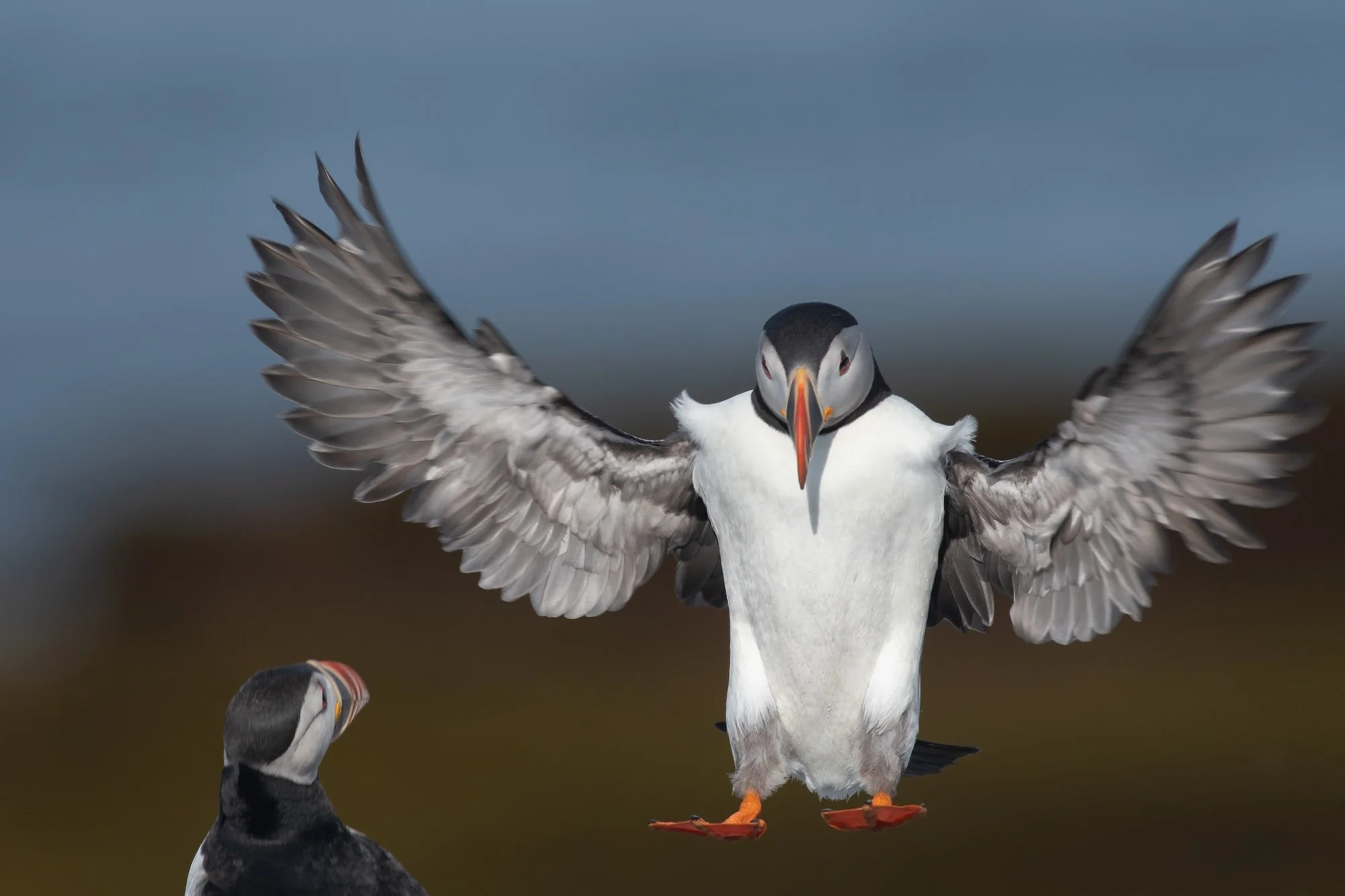
Photo: Atlantic Puffins, Walker Golder/Audubon Photography Awards
This summer NVBA is sending Carrie Lombardi, science coach at Arlington’s Barrett Elementary School, to “Sharing Nature: An Educator’s Week” at National Audubon Society’s Hog Island Camp in Maine. Carrie has been an educator for over 15 years, primarily in upper elementary grades. Her interest in science began early in her career at Burgundy Farm Country Day School, where she experienced the value of outdoor education and began incorporating nature-based learning into science lessons.
Carrie has been at Barrett Elementary for the past four years where, as science coach, she collaborates with teachers across grade levels to strengthen science instruction. She also teaches Project Discovery, a hands-on science lab, to fourth- and fifth-grade students, where students engage in inquiry, experimentation, and observation.
Outside of school, she is a mom to three girls, ages 13, 11 and 9. With her husband and girls, she enjoys traveling and exploring national and state parks, which she reports has reinforced her belief in the importance of learning through real-world and outdoor experiences.
She is looking forward to her time at Audubon’s Hog Island Camp and bringing back what she learns to her colleagues and students.
My Time at Hog Island Camp
I’m looking forward to sharing all that I’ve learned with the educators that I support in Arlington Public Schools and applying new strategies with my students.
Photo: Atlantic Puffins, Michael Schmitt/Audubon Photography Awards
Deborah Hammer, Autism and Low Incidence Specialist, Arlington County Schools, Winner of NVBA’s 2025 Scholarship
Have you ever felt nostalgic for the fun you had as a child at summer camp and wished to re-experience it -- the arts and crafts, music, hiking, meeting new friends, and the sense of wonder at having new adventures? I have, and thanks to the generosity of NVBA, I got to make that wish come true. I attended Sharing Nature: An Educator’s Week at Hog Island Audubon Camp in Breman, ME. The camp, which is run by the National Audubon Society under the Seabird Institute, has several special sessions open to anyone, including children and families, who are interested in birds and nature.
The camp experience began when I arrived in Bremen. I joined a group of enthusiastic campers, where we were met by some of our counselors and took a short boat ride to Hog Island. We were assigned our cabins, all of which are well over a century old, and began decorating our name tags. After some icebreaker activities, where I met my fellow campers from across the country, we sat down for the first of our many gourmet, locally sourced meals. While dining, we had a chance to get to know each other better. Although we came from diverse educational backgrounds - public schools, state parks, nature centers, preschool up to university – we all shared a life-long love of learning and playing in nature.
Morning activities started early, with most campers rising at dawn to birdwatch, meditate, or write in a nature journal, either alone or in groups with counselors. Most of the sessions were designed with an eye on strategies we could bring back to our students. For example, we learned a mindfulness strategy that utilized breathing like different animals and another that utilized different senses.
After breakfast, we often had a choice of classes we could take, such as cyanotype printing, nature photography, seaweed pressing, or poetry. We also received instruction on becoming better birders, the history and ecology of Hog Island, and tips for translating our instruction into practice.
A view of intertidal creatures through the microscope. Photo: Deborah Hammer
One of my favorite activities was examining the intertidal zone for the many creatures who hide and thrive there. Some, like sculpins, lobsters, sea squirts, sponges, and crabs, we could examine right on the beach. Others, we took back to the lab to view under a microscope, including fetal horseshoe crabs, tunicates, tardigrades, baby mussels and flatworms. The lab was an adventure in itself. It had a vast book and specimen collection, including a passenger pigeon.
A highlight for everyone was a visit from Dr. Steve Kress, founder of Project Puffin, who told us about the challenges he faced when bringing Atlantic Puffins back to their ancient home along coastal Maine. He has since replicated his techniques all around the world to help others preserve or reestablish vulnerable species of birds. The following day, we took a boat ride to Easter Egg Rock where we could see puffins, eiders, guillemots, and other birds.
Atlantic Puffin, Kevin VandeVusse/Audubon Photography Awards
Hikes throughout the week helped us learn about other aspects of coastal Maine, including the geology, flora, and mycology. We had a chance to lie on the soft moss and take in the scent of spruce and ocean, while terns, Laughing Gulls, and American Crows called all around us.
One memorable night involved music from a band comprised of staff members and volunteers who played for us while we learned contra dancing. On the last night, we were treated to a feast with a festive dessert of Cream Puffin, the only type of puffin that humans should eat! Like campers worldwide, we also spent the last night singing, exchanging contact information, and bemoaning that we had to return to the “real” world in the morning.
I’m looking forward to sharing all that I’ve learned with the educators that I support in Arlington Public Schools and applying new strategies with my students.
I would highly recommend that my fellow educators apply for the chance to experience Hog Island Audubon Camp next summer.
Our Hog Island Scholarship Winner
NVBA is pleased to announce that Deborah Hammer is the 2025 winner of our scholarship to attend "Sharing Nature: An Educator's Week" at Hog Island Audubon Camp in Maine this coming August.
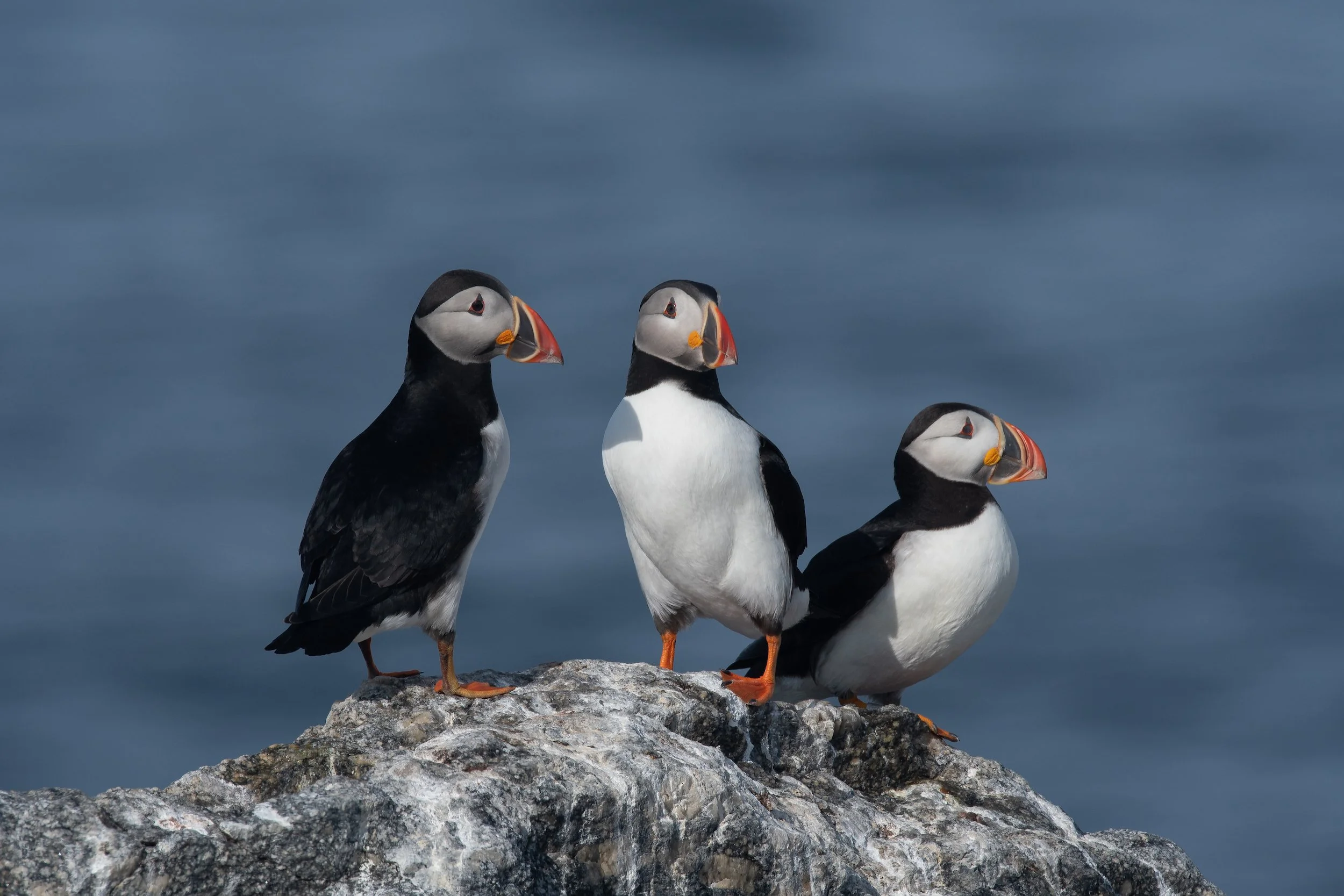
Photo: Hog Island coastline, Kirk Treakle
Bill Burton
NVBA is pleased to announce that Deborah Hammer is the 2025 winner of our scholarship to attend "Sharing Nature: An Educator's Week" at Hog Island Audubon Camp in Maine this coming August. NVBA awards this scholarship, covering tuition, room, board, and transportation, every year to a northern Virginia classroom teacher, specialist, or school administrator. Hog Island has offered environmental education programs for adults, teens, families, and conservation leaders since 1936. The camp takes a multidisciplinary approach to helping instructors develop effective techniques for teaching children and adults about nature.
Ms. Hammer is an Autism and Low Incidence Specialist with Arlington County Schools and coaches hundreds of teachers, paraprofessionals, and other staff across the district who work with over 1,200 students. She plans to use her experience to find nature-focused strategies that will help the teachers make academic content fun and engaging for their students who struggle to learn. We look forward to hearing about Ms. Hammer's experiences at Hog Island and how she plans to incorporate them into her teaching.
Apply Now for the 2025 Educator Scholarship
Each year NVBA offers a full scholarship and transportation to “Sharing Nature: An Educator’s Week” at National Audubon Society's Hog Island Camp in Maine.
Photo: Atlantic Puffins, Walker Golder/Audubon Photography Awards
Bill Burton
Each year NVBA offers a full scholarship and transportation to “Sharing Nature: An Educator’s Week” at National Audubon Society's Hog Island Camp in Maine. Hog Island Audubon Camp has offered environmental education programs for adults, teens, families and conservation leaders since 1936. While there, educators learn interdisciplinary hands-on methods and approaches to environmental education while immersed in the natural world. Of its program, National Audubon writes,
Learn practical approaches and add inspiration to your environmental education curriculum during this action-packed program. Our experienced and enthusiastic instructors share their favorite approaches, methods, and activities for engaging both children and adults with nature.
You can read about the experience of the 2024 recipient here.
The applicant must be a public classroom teacher, specialist or school administrator in the NVBA chapter territory, which encompasses all of Arlington, Fairfax, Prince William and Stafford Counties, and portions of Loudoun, Fauquier, Culpeper, Rappahannock and Spotsylvania Counties. Independent cities in that area include Alexandria, Fairfax, Falls Church, Fredericksburg, Leesburg, Manassas and Manassas Park. The maps on our website provide additional detail.
Educator’s Week in the coming year is August 10-15. To apply, please complete the online application and submit two letters of recommendation no later than February 21, 2025. Please see the application for additional details, including post-camp requirements.
The Report from Hog Island Educator’s Camp 2024
Each summer, NVBA offers a full scholarship and transportation to “Sharing Nature: An Educator’s Week” at National Audubon Society’s Hog Island Camp in Maine. Here is what our 2024 scholarship winner shared with us.
Photo: View of Muscongus Bay, Jeanne Lukas-Ross
Each summer, NVBA offers a full scholarship and transportation to “Sharing Nature: An Educator’s Week” at National Audubon Society’s Hog Island Camp in Maine. While there, educators learn interdisciplinary hands-on methods and approaches to environmental education while immersed in the natural world. This year, NVBA enabled Jeanne Lukas-Ross, Outdoor Learning Resource Teacher at Clearview Elementary in Herndon, to attend. She sent us the following report:
When I think of all the amazing experiences I have had during my life, my week at Audubon’s Hog Island camp is definitely one of the best! The camp was not only at a beautiful location, but the other campers and staff and the activities and learning we did together have added much inspiration to my life.
Campers from all over the US, who held varying roles in their organizations, brought a diversity of knowledge and experiences to share. Together we learned about the island and the plants and wildlife we observed as we hiked, boated, tide pooled and sat quietly. We discussed and collaborated on some larger global issues like climate change and bringing nature to diverse communities. There also was a focus on mindfulness and finding ways to bring peace to problems that seem insurmountable. I have come back with many things to incorporate into my teaching that I could not have obtained without this experience.
Osprey on nest, Jeanne Lukas-Ross
I like to photograph wildlife, though I am just learning, but I got some good practice taking pictures of osprey, ducks, eagles, seals, puffins, and other birds at Eastern Egg Rock. I also took photos of insects and the beautiful rocky geology.
My favorite activities were those led by a knowledgeable, veteran staffer who modeled ways to work with students that made nature accessible so that everyone felt successful and engaged. Though I am a Virginia Master Naturalist, the week at Hog Island made me realize how much more I have to learn and gave me great ideas to share with my students.
I really appreciate the opportunity that the Northern Virginia Bird Alliance made possible, and I will use everything I learned at Hog Island camp going forward. Thank you again for the amazing experience!
Hog Island Scholarship Winner
ASNV’s Youth Education Committee has selected Jeanne Lukas-Ross of Clearview Elementary School in Herndon as the 2024 recipient of the ASNV scholarship to “Sharing Nature: An Educator’s Week” at National Audubon’s Hog Island nature camp in Maine.
Photo: Hog Island coastline, Kirk Treakle
ASNV’s Youth Education Committee has selected Jeanne Lukas-Ross of Clearview Elementary School in Herndon as the 2024 recipient of the ASNV scholarship to “Sharing Nature: An Educator’s Week” at National Audubon’s Hog Island nature camp in Maine. While there she will learn methods and activities for engaging children and adults with nature, attend workshops, and go on field trips including a boat excursion around the restored Atlantic Puffin and Tern colony on Eastern Egg Rock.
Jeanne Lukas-Ross of Clearview Elementary School
Jeanne Lukas-Ross has been sharing nature with children for over 20 years. While her children were in elementary school, she volunteered as a habitat steward and led an after-school gardening program. Following that she spent 13 years as a teacher creating many outdoor learning opportunities for her kindergarten class and led the school green team and Eco Club. This year, Jeanne moved into her dream position as the Outdoor Learning Teacher and Fairfax County Public Schools Get2Green Coordinator for Clearview. She is also a Virginia Master Naturalist.
ASNV looks forward to hearing about Jeanne’s experiences at Hog Island!
2024 Educator Scholarship Application Now Open
Each year ASNV offers a full scholarship to Sharing Nature: An Educator's Week at Hog Island Audubon Camp in coastal Maine. Applications are open now!
Photo: Atlantic Puffins, Walker Golder
Bill Burton
Each year ASNV offers a full scholarship to Sharing Nature: An Educator's Week at Hog Island Audubon Camp in coastal Maine. Hog Island Audubon Camp has offered environmental education programs for adults, teens, families and conservation leaders since 1936. While there, educators learn interdisciplinary hands-on methods and approaches to environmental education while immersed in the natural world--read about the 2022 recipients' experience here.
The applicant must be a public classroom teacher, specialist or school administrator in the ASNV chapter territory, which encompasses all of Arlington, Fairfax, Prince William and Stafford Counties (excluding Dulles Airport in Fairfax County), and portions of Fauquier, Loudoun, Rappahannock and Spotsylvania Counties. Independent cities in that area include Alexandria, Fairfax, Falls Church, Fredericksburg, Leesburg, Manassas and Manassas Park. The maps on our website provide additional detail.
Educator’s Week in the coming year is July 14-19, 2024. To apply, please complete the online application and submit two letters of recommendation no later than February 28, 2024. Please see the application for additional details, including post-camp requirements.
ASNV and Plant NOVA Natives Award Ten Mini-Grants for Invasive Removal
This year, the Fairfax County Tree Preservation and Planting Fund (TPPF) gave Audubon at Home and Plant NOVA Natives a grant to fund mini-grants for invasive plant removal on community association or faith community common open space.
Photo: Porcelain-berry, Olivier Vanpé via Wikimedia commons
Margaret Fisher (Plant NOVA Natives), Betsy Martin and Barbara Tuset (Audubon at Home)
This year, the Fairfax County Tree Preservation and Planting Fund (TPPF) gave Audubon at Home and Plant NOVA Natives a grant to fund mini-grants for invasive plant removal on community association or faith community common open space. In October we awarded mini-grants to 10 home owner associations (HOAs) and faith communities.
Each community will receive $3,000 on a reimbursement basis which it can use to pay for removal of invasive plants that are a threat to trees in landscaped or natural areas. The TPPF mini-grant requires a match of $1,500, which can be fulfilled either with money or volunteer labor. We encourage the use of volunteers, so that residents can gain first-hand experience of the difficulties posed by invasive plants and a sense of the value of paying people to do the work in the future. We also encouraged communities to engage their current landscaping companies in the work so as to increase the number of companies in our region that can offer invasive control services, especially of the invasive vines that threaten native trees.
Porcelain-berry, Olivier Vanpé via Wikimedia commons
We restricted mini-grants to projects focused on removal of the invasive vines and trees that most threaten native trees in Northern Virginia, namely Japanese Honeysuckle, Asian Wisteria, Asiatic Bittersweet, Wintercreeper, English Ivy, Multiflora Rose, Porcelain-berry, Kudzu, Callery Pear, Tree of Heaven, and Autumn Olive. These eleven vine and tree species overrun natural areas and overtop trees, killing and displacing native trees and plants, creating food deserts for wildlife and destroying their habitat, and creating hazards for humans. You can learn more about the threat posed by these plants, and how to control them, from the excellent fact sheets published by Blue Ridge PRISM. Mini-grant recipients will be required to educate their members about the problems caused by invasive plants and about native alternatives that residents could install on their own properties. Communities will display a sign that we will provide: “Invasive plant control area. Please don’t plant the non-native species that damage our ecosystem.” The sign will include a QR code linking to an information page on invasive plant control.
This project dovetails with the Plant NOVA Trees campaign in which volunteers count trees at risk from invasive vines and drop off literature for homeowners to warn them of the problem. This Tree Rescuer program has already increased awareness and led community associations to start looking for ways to save their trees.
A $3,000 mini-grant, when matched by a community with $1,500 in funds or volunteer labor, is sufficient to make a noticeable improvement in both the habitat value and appearance of a common area that has been overrun by invasive plants. Several companies specialize in invasive plant removal in Northern Virginia, should the job call for that level of experience and expertise. In common areas where a lower level of expertise will suffice, such as those that simply need cut stump treatment of invasive vines on trees or uprooting of easily identified plants such as Multiflora Rose, communities can handle it with a combination of volunteer labor to do the cutting or pulling and a certified pesticide applicator to apply the herbicide. Those communities will need to train the workers, whether paid or unpaid, in control techniques as well as in identification of the plants and how to distinguish them from native look-alikes.
Applicants were required to request pre-visits from Audubon at Home Ambassadors and Plant NOVA Natives volunteers who walked the property with the applicant, identified which invasives were present, and advised on developing a plan and method of control. The board of the HOA or faith community also had to approve the application.
We received 22 applications, most of them deserving of funding. We could fund only 10 of them and made the selections by weighing several criteria, including the efficacy of the plan, the degree of infestation and the habitat value of the area in question, the visibility of the property and potential to serve as a model to members and passersby, and any proximity to a disadvantaged neighborhood.
We thank all of the applicants for the hard work they put into applying. We are very happy to learn that this grant opportunity has prompted even some of those who did not win mini-grants to start working on a long-term plan for invasive plant control in their common areas. We also encourage them (and you) to go through the process of certifying their properties as Audubon-at-Home Wildlife Sanctuaries, which requires, among other things, that the residents spot at least 10 out of a list of 41 species of wildlife using the property.
We congratulate the mini-grant winners:
Antioch Baptist Church (Fairfax Station), Chesterfield Mews Community Association (Fairfax), Crest of Alexandria Homeowners’ Association (Fairfax), Fox Lake Property Owners Association (Oakton), Lakeford Community Association (Falls Church), Little River United Church of Christ (Annandale), McLean Greens HOA (Falls Church), Poplar Heights Recreation Association (Falls Church), Ridge Road Estates HOA (Springfield), The Timbers HOA (Springfield).
Thoreau Middle School Garden Produces Monarchs!
In 2021, Henry David Thoreau Middle School, in Vienna, applied for funds from ASNV to purchase native plants for its courtyard. We recently received an exciting update on its garden.
Photo: Native plants at Thoreau Middle School, Missy Galus
Tina Dudley
In 2021, Henry David Thoreau Middle School, in Vienna, applied for funds from ASNV to purchase native plants for its courtyard. We recently received an exciting update on its garden.
Thoreau Middle School opened on September 6, 1960, and was one of the very first intermediate schools opened by Fairfax County Public Schools. Thoreau Middle School now serves 1,230 students in grades 7 and 8. The school is named after Henry David Thoreau, the American naturalist, essayist, poet, and philosopher. So, it is fitting that the school has an active environmental club called the Green Eagles, co-directed by Missy Galus.
Green Eagles is an after-school club that meets a minimum of twice weekly for two hours (sometimes more often). Its members work to increase environmental awareness of the school’s staff and student body, as well as the larger community. They have charge of the school's two courtyards and are working directly with the Fairfax County Park Service Get2Green Department and with two Master Gardeners.
Some acquired native plants, Missy Galus
The school requested funds from ASNV to purchase native plants including Butterfly Weed (Asclepias tuberosa), New England Asters (Aster novae-angliae), New Jersey Tea (Ceanothus americanus), Eastern Redbud (Cercis canadensis), Field Thistle (Cirsium discolor), Lanceleaf Tickseed (Coreopsis lanceolata), Cockspur Hawthorn (Crataegus crus-galli), and Purple Coneflower (Echinacea purpurea).
Students and parents volunteered to put in the new native plants. Missy Gallus and the Green Eagles club maintain the project, watering and weeding the new plantings.
Maintaining the new plants, Missy Galus
Science teachers at the school now incorporate the courtyard garden into their curriculum, teaching students how to identify native and non-native plants and animals. Those lessons expand into discussions of the Chesapeake Bay watershed, environmental sustainability, and how what we do today in our environment directly affects generations to come.
Monarch caterpillar on Milkweed, Missy Galus
The courtyards now include a pollinator garden, a milkweed garden, a vegetable garden, a pond, a composting box, rain barrels, and habitat for 5-6 Eastern Box Turtles that call the courtyard home. This Spring, the milkweed in the garden attracted Monarch Butterflies to lay eggs. Teachers were able to bring the resulting caterpillars into the classroom to raise into adult Monarchs. They then released the adults into the garden. It was a great teaching and conservation opportunity!
The project continues to grow. The next additions will be more birdhouses, more pollinator plants around the waterfall/pond feature and an insect house the students will be building themselves.
We’re proud to have contributed to this terrific effort.
ASNV Awards Hog Island Scholarship
ASNV’s Youth Education Committee has awarded Matthew Davidson of Lynbrook Elementary School in Springfield an all-expense scholarship to “Sharing Nature: An Educator’s Week” at Hog Island Audubon Camp in coastal Maine.
Photo: Hog Island, Kirk Treakle
“Mr. Matt” Davidson
ASNV’s Youth Education Committee has awarded Matthew Davidson of Lynbrook Elementary School in Springfield an all-expense scholarship to “Sharing Nature: An Educator’s Week” at Hog Island Audubon Camp in coastal Maine. ASNV awards this scholarship, covering tuition, room, board, and transportation, every year to a northern Virginia classroom teacher, specialist, or school administrator. Hog Island has offered environmental education programs for adults, teens, families, and conservation leaders since 1936. The camp takes a multidisciplinary approach to helping instructors develop effective techniques for teaching children and adults about nature.
“Mr. Matt,” as he is known to his students, is an Outdoor Education Coordinator who helps them learn about nature and the environment, and is passionate about birds. He is expected to use his Hog Island experience to develop a new conservation-themed educational program or enhance one that he is already using. Mr. Davidson will share his Hog Island experience in the September newsletter and submit a final report to ASNV next year. We look forward to hearing from Mr. Matt!
Applications Are Now Open for a Full Scholarship to Educator’s Week at National Audubon’s Hog Island Camp
Each summer, ASNV offers a full scholarship and transportation to “Sharing Nature: An Educator’s Week” at the National Audubon Society’s Hog Island Audubon Camp in coastal Maine.
Photo: 2022 ASNV Hog Island Scholarship Winners Chrissy Brownson and Candice Centinkaya
Each summer, ASNV offers a full scholarship and transportation to “Sharing Nature: An Educator’s Week” at the National Audubon Society’s Hog Island Audubon Camp in coastal Maine. Hog Island Audubon Camp has offered environmental education programs for adults, teens, families and conservation leaders since 1936. While there, educators learn interdisciplinary hands-on methods and approaches to environmental education while immersed in the natural world. From the Hog Island Audubon Camp website: “Learn practical approaches and add inspiration to your environmental education curriculum during this action-packed program. Our experienced and enthusiastic instructors share their favorite approaches, methods, and activities for engaging both children and adults with nature.”
The applicant must be a public classroom teacher, specialist or school administrator in the ASNV chapter territory (Counties: Arlington, Fairfax, Fauquier, Loudoun, Prince William, Rappahannock and Stafford; independent cities: Alexandria, Fairfax, Falls Church, Fredericksburg, Leesburg, Manassas and Manassas Park.) Dates for the coming year are July 16-21, 2023. To apply, please complete the online application and submit two letters of recommendation no later than February 28, 2023. One of these must be from your principal. Please see the application for additional details, including post-camp requirements.
2022 Hog Island Scholarship Winners
Would you like to learn more about what a week at the camp is like? You can read the reports of the two scholarship winners to last summer’s camp here.
Reports from Hog Island Educator’s Week
ASNV issued grants to send two teachers to Educator’s Week at Hog Island, Audubon’s Camp in Bremen, Maine. Here is what they had to say about their visit, the week of July 17.
Photo: Candice Cetinkaya and Chrissy Brownson arriving at Hog Island for Educators’ Week
ASNV issued grants to send two teachers to Educator’s Week at Hog Island, Audubon’s Camp in Bremen, Maine. Here is what they had to say about their visit, the week of July 17.
Candice Cetinkaya and Chrissy Brownson arriving at Hog Island for Educators’ Week
Chrissy Brownson, Science, Technology, Engineering, Arts, and Math (STEAM) and Science Resource Teacher, Providence Elementary, Fairfax County Public Schools
When we learned that some of the paragons of environmental science had spent time researching on Hog Island, it was no surprise that the week was packed with learning. To think that we were walking in the footsteps of Rachel Carson and Roger Tory Peterson enriched our learning and lent to the magic that Hog Island exudes. From examining a preserved passenger pigeon to seeing the thriving renewed puffin colony, the opportunities for learning and wonder were numerous.
Each day we spent time on the island or in the water deepening our science knowledge and learning how we could bring these lessons back to our schools. Teaching is a craft, and we had the opportunity to learn from several gifted educators and environmental scientists. I have done pond studies before, both as the teacher and as an adult learner, but doing it with the instructors from the Audubon camp was like taking a master class. I found myself jotting take-aways in between identifying macroinvertebrates and planning for how I could bring this same level of enabling discovery back to my students.
I am so appreciative of this opportunity, both to learn from the amazing team at the camp and to collaborate with passionate educators from across the country. I can’t wait to share this with our school and ignite a passion for the world around them.
Candice Cetinkaya, Science Resource Teacher for Region 5 Elementary Schools and Three Middle Schools in Alexandria
A big thank you from the bottom of my heart for enabling me to experience the Educator’s Week at Hog Island. The highlights of the week were countless, but some of my favorites included: exploring the tide pools; uncovering the geologic history of the islands while scrambling over granite boulders with basalt intrusions; learning about, and then witnessing, the return of puffins to Easter Egg Island; tramping through shoulder-high ferns, only to emerge into a field of milkweed with swarms of monarch butterflies; watching harbor seals, osprey, and (from the deck of the Queen cabin where I slept each night) the departure of the lobster boats.
Beyond the amazing opportunity to immerse myself in nature was the learning that occurred by connecting with naturalists and educators from across the country and from diverse backgrounds. The experiences, conversations with others, and periods of reflection nourished my mind, body, and soul and prepared me to share my love of nature with students. Again, thank you for providing this enriching, motivational, and soul nourishing experience. I can’t wait to share it with my students.
Welcoming Visitors with Native Plant Landscaping
The big signs that welcome visitors to neighborhoods are usually framed by conventional ornamental shrubs, grasses, and annual flowers. Last year, Northern Virginia communities were invited to apply for matching mini-grants to spruce up their entranceways using only Virginia native plants.
Photo: Native plants on display at a neighborhood entrance, Jane Kirchner
Margaret Fisher (Plant NOVA Natives), Barb Tuset and Betsy Martin (Audubon at Home)
The big signs that welcome visitors to neighborhoods are usually framed by conventional ornamental shrubs, grasses, and annual flowers. Last year, Northern Virginia communities were invited to apply for matching mini-grants to spruce up their entranceways using only Virginia native plants. A condition of the mini-grants was that the projects be designed by a professional landscape designer to require no more long-term maintenance than the typical landscaping crew is accustomed to providing. The original grant money was provided by Dominion Energy Charitable Foundation’s Environmental Education and Stewardship Grants Program to the Audubon at Home program in collaboration with Plant NOVA Natives. Audubon at Home volunteers help residents and organizations strategize about using their properties to create wildlife sanctuaries.
Interest in the grants was high. Thirty-five neighborhoods in Arlington, Fairfax, Prince William, and Loudoun counties applied for the six grants, which also required that the communities do outreach to educate their residents about the value of using native plants to beautify their yards and support birds and other wildlife. Conventional landscaping may appeal to the aesthetic tastes of many people, but keeping the look fresh is a challenge and can be expensive. Shrubs that are repeatedly trimmed start to decline, ornamental grasses get overgrown and floppy, and annual flowers have to be replaced three times a year. More importantly, the usual non-native choices for shrubs and grasses in this situation are often invasive, which contributes to adjacent yards and natural areas being overrun by escaped Chinese Privet, Japanese Barberry, Chinese Silvergrass, English Ivy, Periwinkle, Liriope, and other offenders. By contrast, carefully chosen native shrubs can be allowed to reach their natural height without trimming, and tidy-looking native perennials need only be planted once. The result can still satisfy residents’ desire for a formal look (and for flowers) while requiring different but no more burdensome maintenance tasks.
Native plants on display at a neighborhood entrance, Jane Kirchner
As seen on this web page, even soon after installation, the entranceways of the grant recipients were showing the potential of this new approach. As they fill in over the next two years, passersby will be able to appreciate what native plants can do when installed using solid design principles. Landscaping in an institutional setting has its challenges, whether it be a community association, faith community, or other organization where volunteers run the Board and committees. Tempting though it is to install colorful pollinator gardens with a dizzying array of native flowers to attract butterflies, most communities would be hard pressed to find experienced gardeners to dedicate the hour or so per month needed for an average size garden bed, year after year. This degree of expertise becomes unnecessary if only a few distinctive-looking plant species are installed, making weeding a simpler task for any worker. More tips can be found on the Plant NOVA Natives website. As the volunteers at Auburn Village Condominium wrote, “Communities should not be afraid to have native gardens. They can be designed in a way to look like conventional gardens and at the same time be beneficial to critters. We wanted our space to show the community that beautiful spaces can be created with native plants.”
ASNV Awards Two Audubon Hog Island Scholarships
Every year, ASNV awards a scholarship to “Sharing Nature: An Educator’s Week” at Hog Island Audubon coastal Maine.
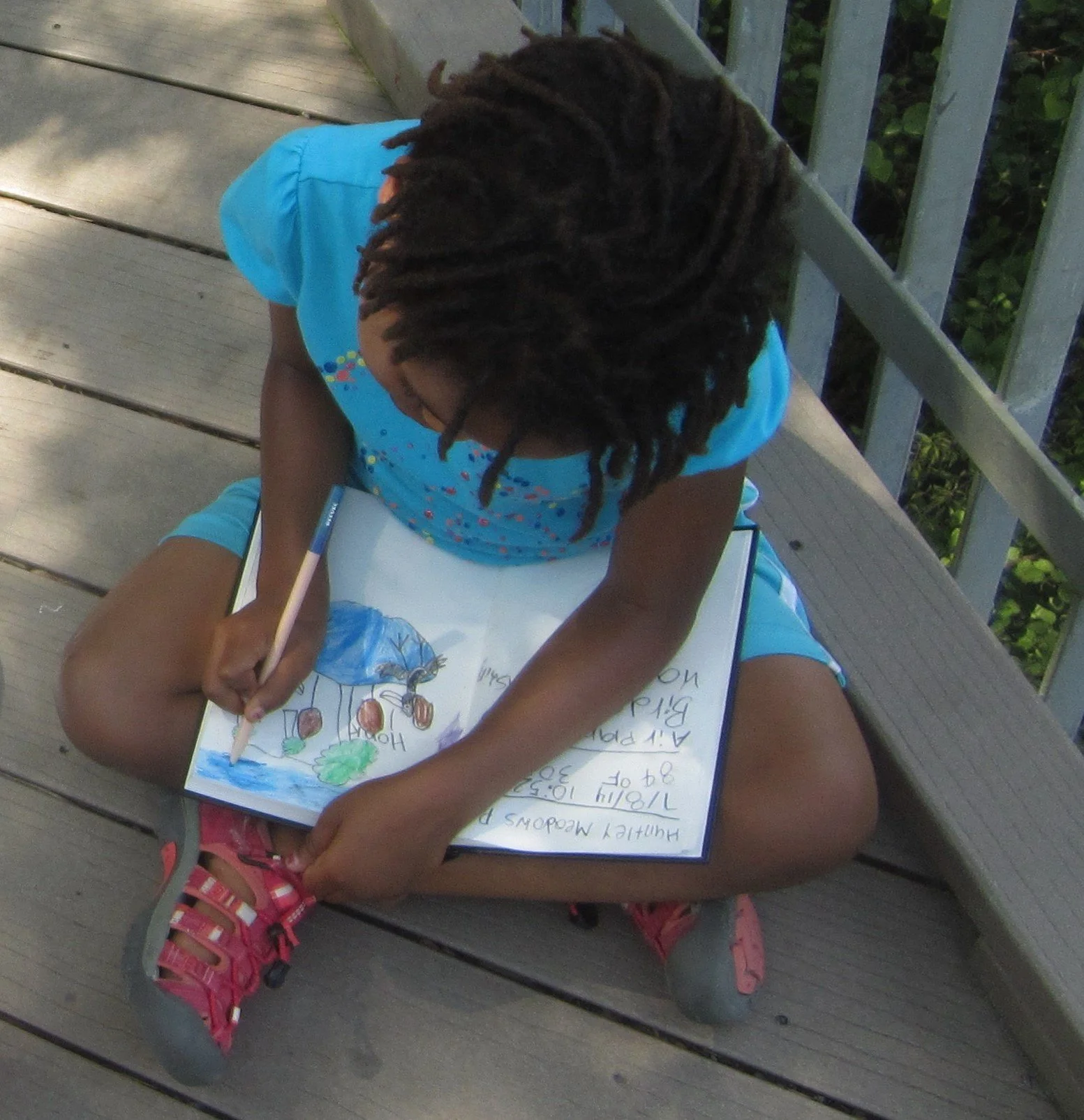
Photo: Hog Island sunrise, Gretchen Linton
Bill Burton, Lisa Mackem
Chrissy Brownson, science resource teacher at Providence Elementary
Every year, ASNV awards a scholarship to “Sharing Nature: An Educator’s Week” at Hog Island Audubon coastal Maine. The scholarship is awarded to a classroom teacher, specialist, or school administrator and covers tuition, room, board, and transportation. Hog Island has offered environmental education programs for adults, teens, families, and conservation leaders since 1936. The camp takes a multidisciplinary approach in helping instructors develop effective techniques for teaching children and adults about nature.
Candice Centinkaya, Fairfax County Public Schools at-large science resource teacher
This year, ASNV selected two scholarship winners: Chrissy Brownson, science resource teacher at Providence Elementary and Candice Centinkaya, a Fairfax County Public Schools at-large science resource teacher. Each winner is expected to use her Hog Island experience to develop a new conservation-themed educational program or enhance an existing one. The teachers will share their summer experiences in the September newsletter and submit final reports to ASNV next year. We look forward to hearing from them!
Youth Education Mini-grants - Last Chance to Apply is April 1!
The ASNV Youth Education Committee is pleased to offer three mini-grants of up to $500 each for 2022. Read on to find out how to apply.
Photo: Huntley Meadows youth nature drawing class, Margaret Wohler
Are you an educator with a great idea for a bird-related conservation project with your students? Every year, the Youth Education Committee of ASNV sponsors a mini-grant program to support teachers, schools, and non-profit organizations in youth-oriented education about birds and the environment. The committee is pleased to offer three mini-grants of up to $500 each for 2022.
Funding may be used to support Meaningful Watershed Educational Experiences (MWEEs), professional development, field trips, speakers and admission fees, equipment, transportation, trees, plants, etc. All projects must include an educational component and be completed by December 31, 2022 by submitting a one-paragraph summary and photos of the finished project to youtheducation@audubonva.org.
The application form for the mini-grants can be found here. Deadline for applications is April 1. Please contact Youth Education with questions about the Youth Education Mini-Grant program.
ASNV’s Conservation Grants Blossom
Last year, 11 applicants received ASNV Conservation Grant funds. They are already reaping benefits.
Photo: J. Jenkins Elementary Garden, Amanda Ross
Lisa Mackem
Last year, 11 applicants received ASNV Conservation Grant funds. They are already reaping benefits. In August, parent and student volunteers prepared the Ambleside School (located in McLean) pollinator garden site for planting. James Chen, grant applicant and Ambleside’s Board of Trustee member, said that in one weekend, parent and student volunteers filled ten yard-debris bags with dandelions, clover, and crabgrass. The following weekend, they removed sod and transplanted ornamental grasses. Janet Davis, owner of Hill House Farm and Nursery, selected native plants for their pollinator garden. During the week of September 11, Ambleside students, teachers, and parent volunteers began planting, and added stepping-stones to the center of the garden, providing the students improved access to the plants and pollinators.
At John Jenkins Elementary School in Woodbridge, grant applicant and PTO Board Member, Amanda Ross headed last year’s garden project, which resulted in a community garden. Principal Xanthe McFadden has begun planning for an outdoor classroom there.
J. Jenkins Elementary School Garden, Amanda Ross
Other grant-funded plans are underway. At Barcroft Elementary in Arlington, PTA president and grant applicant, Carrie Lombardi started the school’s Nature Club. Carrie is collaborating with an employee at the Alexandria plant nursery, Nature by Design, to create a sensory garden, minus taste. Wildflowers with seeds that rattle when they bloom will provide sound. Carrie will order her wildflower seeds in March and has already ordered a shed, magnifying glasses, and other supplies.
Peter Jones, ESL teacher and grant applicant at William Ramsay Elementary in Alexandria, was inspired by Doug Tallamy’s books, “Bringing Nature Home” and “Nature’s Best Hope.” He especially admired Tallamy’s pictures of caterpillars. “Caterpillars are so cute. I never realized caterpillars could be cute,” he said. “Insects are plant-specific, and birds eat caterpillars… [the grant] was an opportunity to build a pollinator garden to support insects which in turn support birds,” said Peter. Peter drew in so much wildlife from planting one packet of wildflower seeds at Ramsay that he wanted to expand his work. Ramsay’s principal allowed him to develop approximately 350 square feet of land, so Peter consulted botanist and native plant authority Matt Bright, owner of Springfield’s Earth Sangha Wild Plant Nursery. Bright provided specific plant recommendations. In November, local master gardeners and students volunteered with planting.
Students love the gardens! At Ambleside, students in 5th – 8th grade nature study classes spent 3 days in September planting 132 native plants. Pollinators immediately began visiting. At John Jenkins, students use the community garden for hands-on learning. Barcroft Elementary recently added a teacher who focuses on the outdoors, and that teacher started an environmental club. “The students are excited about cleaning out the beds and planting,” said Carrie. “We really wanted to get the kids outside more. [Barcroft] is a Title 1 school and a lot of kids live in apartment buildings. Some kids don’t even know what an acorn is. By revamping the garden space, maybe teachers will go out and read on nice days and do science projects there if they are studying plants.” Carrie planted an herb garden at Barcroft before applying for the ASNV grant, and sees students run over to smell and touch the herbs during recess. She hopes that the addition of flowers and pollinators will make the garden more inviting and increase the students’ awareness of and desire to learn from nature. Peter has similar goals for Ramsay. “We have a lot of little kids who haven’t really seen a lot of the creatures up close…it’s when they’ve seen things outside that they’re super excited. Kids get more of an appreciation for the importance of nature. It’s what nourishes us and keeps us alive.”
2022 Scholarship Application to Hog Island Educator’s Week Now Open
Each year Audubon Society of Northern Virginia offers a full scholarship to Sharing Nature: An Educator’s Week at Hog Island Audubon Camp in coastal Maine.
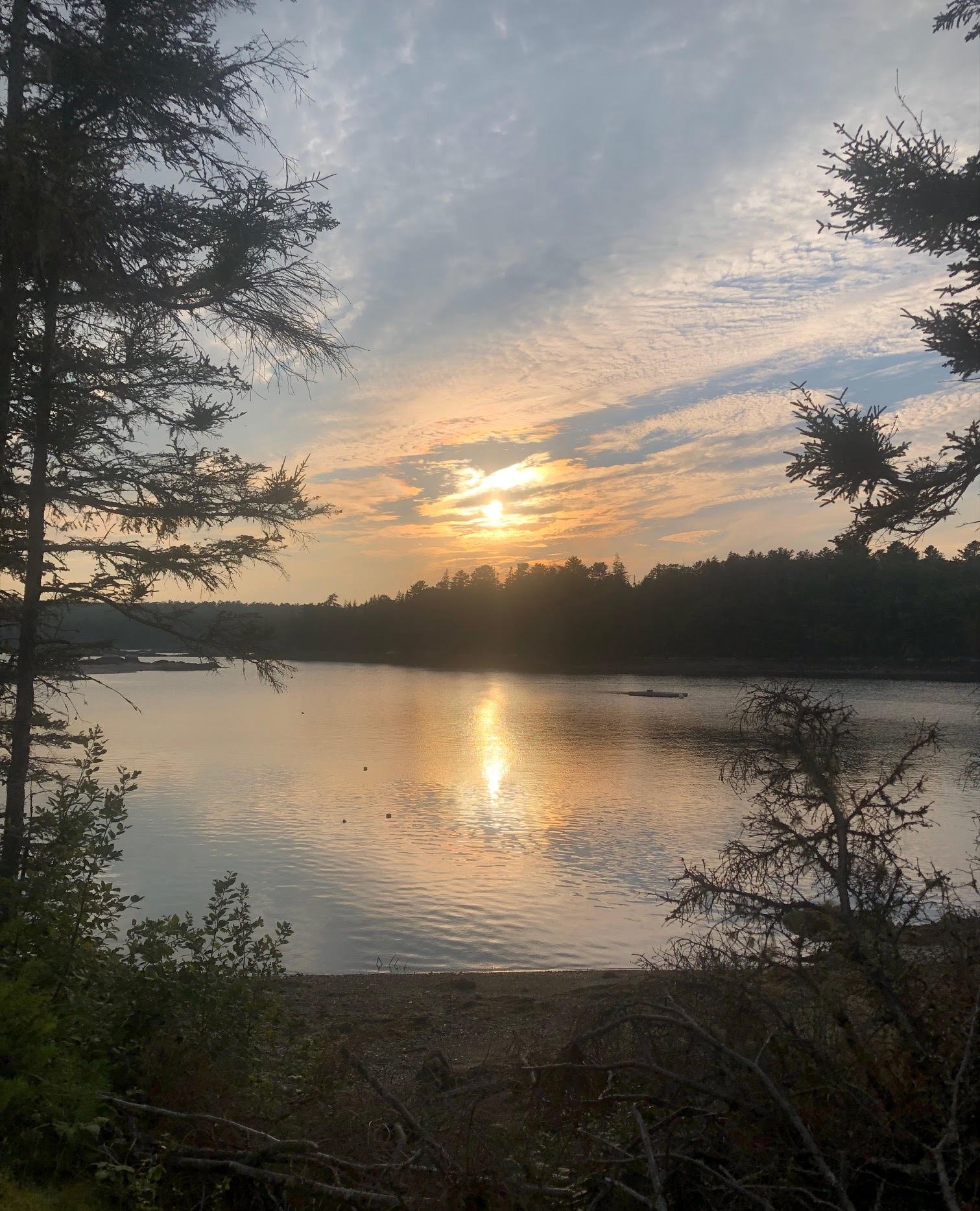
Photo: Hog Island, Phoebe Riegle
Each year Audubon Society of Northern Virginia offers a full scholarship to Sharing Nature: An Educator’s Week at Hog Island Audubon Camp in coastal Maine. Hog Island Audubon Camp has offered environmental education programs for adults, teens, families, and conservation leaders since 1936. While there, educators learn interdisciplinary hands-on methods and approaches to environmental education while immersed in the natural world.
Applicants must be public classroom teachers, specialists, or school administrators in the ASNV chapter territory (Counties: Arlington, Fairfax, Fauquier, Loudoun, Prince William, Rappahannock and Stafford. Independent cities: Alexandria, Fairfax, Falls Church, Fredericksburg, Leesburg, Manassas and Manassas Park.)
Sharing Nature: An Educator’s Week will be held July 17-22, 2022!
To apply, please complete the online application and submit two letters of recommendation no later than February 28, 2022. Please see the application for additional details, including post-camp requirements.
2021 Hog Island Scholarship Recipient
2021 Hog Island Scholarship recipient Gretchen Linton reflects on her time at Educator’s Week.
Photo: Hog Island, Gretchen Linton
Gretchen Linton
“It’s no exaggeration to say I think of Hog Island just about every day. It was such an invigorating, restorative, beautiful, and delicious place!”
I was thrilled to be awarded a scholarship for Educator’s Week 2021. I drove up from Alexandria, stopping along the way in Connecticut and the Portland area.
Hog Island sunrise, Gretchen Linton
The sun rose a little earlier than in the Mid-Atlantic region and I was up at about 5 am to make sure I met the ferry at Bremen!
About 30 other teachers, media specialists, and informal educators from all over the East Coast and Central states gathered, looking a bit stressed from various modes of travel during Covid.
We were immediately put at ease under the pines, swapping stories of our past year, and watching the sun set over the harbor, getting to know each other and our leaders who came from Washington State, Georgia, and New England.
Hog Island mushroom, Gretchen Linton
The accommodations were dorm-like, clean, and cozy. Meals were OUTSTANDING! I don’t think I’ve ever eaten so well in my life. Fresh, local, innovative, scrumptious, and every meal had gluten-free and vegan options.
We gathered for our daily meals and workshops outdoors and had evening sessions in the Fish House each night.
Highlight sessions included: tidepool exploring, bioluminescence, hikes to the pitcher plants, and the Bingham Cottage, as well as an excursion to Egg Rock, presentations about Project Puffin, JEDI (Justice, Equity, Diversion and Inclusion) as well as time to wander, make art, and share our experiences and hopes for the coming year.
Now that I’m back in the classroom, navigating this Covid world with my 7th graders, my time on Hog Island feels a lot like a beautiful dream but I hope to return as a Friends of Hog Island Volunteer next summer.
My Educator’s Week at Hog Island Audubon Camp
My whole life I have been hearing about this camp in Maine where the showers are always cold, the mornings are always early, and the birds are always calling. My mother attended Hog Island’s Educator’s week in the 80’s as a young educator, extremely invested in ways to share the natural world with children from various backgrounds.
Photo: Phoebe Riegle
Phoebe Riegle
ASNV 2020 Hog Island Scholarship Winner
My whole life I have been hearing about this camp in Maine where the showers are always cold, the mornings are always early, and the birds are always calling. My mother attended Hog Island’s Educator’s week in the 80’s as a young educator, extremely invested in ways to share the natural world with children from various backgrounds. As her child, I was also one of her students so, I got to experience the incredible camps and lessons that she learned from Hog Island. Little did I know that one day I would get to learn from the same man on the same island that taught her “almost” everything she knows, as well as from a few other incredible educators.
Phoebe Riegle
Phoebe Riegle
The year-postponement due to COVID was unfortunate but I was still thrilled to have the opportunity to attend in 2021. Walking up onto the island I was overwhelmed with excitement and comfort in knowing that the showers were now heated because of new solar panels and, more importantly, I was going to be spending a week with like-minded educators all looking to explore nature like we were kids again.
Adorned with my new “fancy” pair of binoculars, I awoke early the first morning to join the legend himself, Ted Gillman, and fellow bird-nerds for a birding session. I learned the flight pattern and calls for birds like woodpeckers and goldfinches as well as how to “point” out birds. The biggest take-away from each of Ted’s lessons was to find ways to build-in success for every student. Celebrate every observation and inference that students make when exploring nature even if it has nothing to do with your question or lesson. Also, remember that you don’t need fancy equipment to get kids into nature- paper towel rolls can be binoculars, an old white shower curtain can be an observation station under a tree, and old cottage cheese tubs can be miniature ponds.
Throughout the rest of the week, I learned from inspiring naturalists about pollinators, insects, birds, marine ecosystems, and citizen science all with a tone of remembrance for the Native Americans who once inhabited the area. James, Kaylani, Margaret, Ted, Colleen, Khav, and Ms. Evonne taught me more than I could’ve imagined. By the end of the week one fellow camper said it best – the thing that made this camp amazing was the fact that it was a group of nature-loving educators who all bought into the magical energy of the island each and every day. With everything happening in the world, it is easy to get bogged down by negativity. Nature is one thing that has stayed consistently and relatively safe throughout these past few years. Take every opportunity you can to feel like a kid again and explore, ask questions, draw conclusions, and research – because you still can.
Conservation Grants 2021
There can never be enough habitat for birds, wildlife, and pollinators in Northern Virginia! Thus, the Conservation Committee of ASNV administers grants to support native plant gardens throughout the region
Photo: Maggie Starbard
There can never be enough habitat for birds, wildlife, and pollinators in Northern Virginia! Thus, the Conservation Committee of ASNV administers grants to support native plant gardens throughout the region.
This year we have awarded 14 conservation grants, including one at Jamestown Park and one at Upton Hill Regional Park, both in Arlington, one at Haymarket Gainesville Library in Prince William County, and one at Lake Accotink Park in Fairfax County. The other 10 are for schools throughout Northern Virginia, including Alexandria, Arlington, Fairfax, and Prince William.
Removing invasive plants and installing natives in their place will improve foraging and cover for birds, insects, and other wildlife at Upton Hill Regional Park. Upton Hill consists of 26 contiguous acres spanning Arlington County and Fairfax County. It is a natural oasis in a very urban corridor located in the midst of single-family housing, multi-family housing, an assisted living facility, and the Seven Corners shopping area.
Upton Hill’s steep geological formation results in numerous seeps, springs, and rivulets that feed Reeve’s Creek, a tributary of Four Mile Run and the Potomac River. According to a 2007 report, the naturally occurring waters at Upton Hill are among the cleanest in all of Arlington. This native habitat supports the only Fan Clubmoss (Lycopodium digitatum) that grows in Arlington. However, this and other rare or significant plants have been impacted by the spread of English Ivy, Five-leaved Akebia, Bush Honeysuckle, Multiflora Rose, Linden Viburnum, and Japanese Holly, among other invasive species. Nevertheless, Upton Hill is a birding hotspot on eBird, hosting many migratory warblers, woodpeckers, Eastern Towhees, Ruby-crowned Kinglets, and many other species of birds.
The Jamestown Park project involves converting several acres of sod into a wildflower meadow. The park is located next to Jamestown Elementary School. It consists of a long turf grass field (50 by 200 yards) connected to about 5-6 acres of woods. A large portion of the sod area is perpetually soggy. Within living memory there was a creek that ran down the length of the field, but the County buried the stream except for about a 40-foot section. The reclamation plan is to daylight the creek, remove the sod, and create in its place a meadow area populated by native sedges, wildflowers, shrubs, and understory trees that would be especially well suited to our local pollinators and be low to no-maintenance.
The Haymarket Gainesville Library native plant garden for pollinators is meant to reinvigorate the return of birds, bees, and butterflies to the Piedmont region. They have already planted native trees. The next step is to plant native shrubs that provide berries for birds and masses of flowers such as yarrow, coneflower, and others to attract pollinators. Finally, benches and boulders will be placed in the area to provide seating for library visitors.
At Lake Accotink Park, a major problem is deer browse, so we will pay for wire fencing to protect native plants from the deer.
The other 10 projects all involve small native plant gardens at local schools. We include seven public elementary schools, one public middle school, and two private schools. We will provide an update on the school projects in a future newsletter.