NVBA NEWS BLOG

Welcome to the blog for Northern Virginia Bird Alliance, a wealth of resources about northern Virginia birds, wildlife, habitat conservation and restoration, native plants, wildlife-friendly gardening, advocacy and more.

News Jess Michetti News Jess Michetti

New Study Documents Trends Using eBird Data

It’s difficult to be optimistic about the future of North American birds in the face of a relentless avalanche of news about national policy changes that can challenge conservation efforts.

Photo: Eastern Meadowlark, Sheri Douse/Audubon Photography Awards

It’s difficult to be optimistic about the future of North American birds in the face of a relentless avalanche of news about national policy changes that can challenge conservation efforts:

  • Massive cuts in staffing for national parks, refuges, and forests 

  • A proposed budget with unprecedented spending cuts to agencies in charge of managing public lands and to other environmental and conservation programs

  • Endangered Species Act proposed rule changes that mean only an intentional take of an endangered bird (rather than an incidental or indirect harm through habitat loss) would be illegal, a change already in place for the Migratory Bird Treaty Act through guidance

  • Promotion of fossil fuel energy production and withdrawal of funds for clean energy projects, potentially exacerbating climate change

Recent studies also provide challenging news. The State of the Birds 2025 confirms that North American birds continue to decline, and a new trend in decline in duck populations dims a bright spot in earlier reports. And a May 2025 article in Science (Johnston et al., Vol. 388, Issue 6747, pp. 532-537) reports that declines in North American bird populations are greatest where species are most abundant.

On the hopeful side of the ledger, it’s clear that we have more, and more focused, information on bird populations that can direct conservation efforts. Recall that a little over 2.5 years ago we highlighted the Bird Migration Explorer, a joint project of multiple organizations that mapped migration patterns of more than 450 species using data from eBird at the Cornell Lab, BirdLife International, and National Audubon, making clear the need for healthy habitat across continents. And the latest report on North American birds documents changes in abundance of 495 species breeding in North and Central America and the Caribbean based on 14 years of eBird data. In other words, Cornell’s large citizen science initiative continues to produce results.

Although the study’s conclusions are grim in many respects, the writers offer some positive conclusions. The detailed range information provided by eBird can (i) detect localized declines that may not be evident from broader studies; (ii) help identify causes of declines, and (iii) inform management, which is typically implemented in local landscapes. In addition, although 75% of species were declining, with significant declines for 65%, 97% of species showed separate areas of significantly increasing and decreasing populations, possibly highlighting areas for focused conservation efforts. 

Of course, we all have a lot of work to do to respond to political challenges, climate change, and habitat loss from land use changes. As the study makes clear, many of those challenges must be addressed at the local level. So, let’s all continue to talk to our elected representatives at the national, state and local levels, protect and enhance healthy habitat for wildlife, and participate in citizen science.

Read More
News Jess Michetti News Jess Michetti

Good News at the I-95 Landfill to Help Offset Some Bad News

First, the bad news: The U.S North American Bird Conservation Initiative just released its State of the Birds 2025 report, and the birds with the most dire losses continue to be grassland birds, a 43% decline since 1970.

Photo: Bobolink, Gerald Sneegas/Audubon Photography Awards

Eastern Meadowlarks, Haoyu Li/Audubon Photography Awards

First, the bad news: The U.S North American Bird Conservation Initiative just released its State of the Birds 2025 report, and the birds with the most dire losses continue to be grassland birds, a 43% decline since 1970. The report calls out the need for proactive conservation initiatives, particularly across the Midwest and Great Plains, where conversion of grasslands for row-crop agriculture, woody plant invasion, and drought are causing collapse of a crucial resource. The report cites some positive actions, including a National Audubon Society initiative, the Conservation Ranching program, which is creating partnerships to convert marginal cropland to grassland.

Grasshopper Sparrow, Susan Ward/Audubon Photography Awards

Now, the good news: Although urbanization in northern Virginia has eliminated most grassland habitat in our area, Fairfax County’s I-95 Landfill has taken steps to protect grassland birds by adjusting mowing procedures at the landfill. NVBA had suggested that the Department of Public Works and Environmental Services (DPWES) find a way to protect grassland birds at the closed landfill while still complying with regulatory mowing requirements that ensure adequate landfill monitoring. In response, in February 2024, the Board of Supervisors directed DPWES to identify a no-mow area for the bird nesting season and develop a pilot plan for landfill procedures that could protect grassland birds. 

Blair Evancho, a DPWES intern, then organized a survey conducted between August 22 and October 17, 2024, and produced the I-95 Landfill Complex Grassland Habitat Program Pilot Study Report, which identified 39 bird species in the study area, including three of regional or continental concern: Eastern Meadowlark, Bobolink, and Grasshopper Sparrow. The most recorded birds were Grasshopper Sparrow, Savannah Sparrow, American Kestrel, and Eastern Meadowlark, all of which are experiencing population declines. The study confirmed that grassland birds were using the habitat provided by the no-mow area.

The study outlines a bird-friendly standard operating procedure for the landfill:

  1. Annual mowing in the no-mow area only between September 15 and April 1, except where required to maintain methane well access

  2. If feasible, annual mowing scheduled to take place only between February 15 and April 1

  3. Setting blades for mowers and bushhogs to eight inches or higher

  4. A staff survey around the methane well mowing path before turning the blade on

  5. No more than two mowers and/or bushhogs active at the same time in the no-mow area

The study includes some further recommendations for conservation: long-term monitoring at the landfill, identifying and monitoring the locations of nests in the no-mow area, installation of additional American Kestrel nest boxes inside and outside of the no-mow area, planting native grasses and forbs to replace the predominant non-native grasses, and additional public education. To learn more about the study and the landfill listen to Fairfax County’s EnviroPod Episode 52.

NVBA is truly grateful that Fairfax County developed and implemented a plan to protect grassland birds within its jurisdiction. We hope this initiative can serve as a model for other closed landfills, creating islands of valuable habitat for grassland birds.

Read More
News Jess Michetti News Jess Michetti

Helping the Lovely Wood Thrush

One of the most anticipated sounds of spring in northern Virginia is the exquisite song of the returning Wood Thrush.

Photo: Wood Thrush, Linnet Tse/Audubon Photography Awards

Evelyn Novins

One of the most anticipated sounds of spring in northern Virginia is the exquisite song of the returning Wood Thrush. Unfortunately, this small, migratory songbird has been added to the list of birds at a tipping point by the North American Bird Conservation Initiative in its 2022 State of the Birds report. The report identifies 70 species of birds that have lost two-thirds of their population over the last 50 years and are projected to lose 50% of their population over the next 50 years. These birds are deemed at a “tipping point” for extinction. Without consequential intervention they are likely to become threatened, endangered or extinct. So, we have work to do if we are to continue to hear the lovely Wood Thrush in our area.

Wood Thrush, Lance Leonhardt/Audubon Photography Awards

Recognizing the Wood Thrush

But first, if you are not yet familiar with this lovely singer, a little introduction.

Click here to listen to the beautiful song of the Wood Thrush.

The Wood Thrush, Hylocichla mustelina, can be mistaken easily for a number of other brown thrushes, or even Ovenbirds. But close examination shows a reddish-brown head, back, and wings and a well-rounded white belly spotted with black dots, characteristics that help distinguish it from other brown thrushes. In addition, the Wood Thrush has a bold, white eye-ring and pinkish legs! As a thrush, it has the stance of our familiar American Robin and the mesmerizing song of a thrush. The male can actually sing pairs of notes together, the pit-pit-pit call before roosting, as well as nearly 50 other songs.

The Wood Thrush’s nest is built by the female in a young tree or shrub. It is similar to a robin’s nest with a layer of mud set into a cup-shaped nest. The outside is made of dead grasses and maybe even some cloth, cellophane or paper. The male helps with feeding the young, giving the female time to start another nest and brood. Nearly half of mated pairs raise two broods.

How You Can Help

The primary cause of the decline in population is loss of habitat and habitat fragmentation, both in its breeding grounds (which include northern Virginia), and in Central and South America where it spends the winter. So, helping requires preserving habitat both here and on the birds’ wintering ground. 

The Wood Thrush prefers mixed forests where there are large trees with a well-shaded understory and abundant leaves where the bird can forage for insects. While many of our northern Virginia parks provide more fractured habitat, the bird does breed in some wooded suburban areas. It feeds on many insects, including ants, crickets, moths, beetles, and spiders as well as snails and snail shells. Snail shell is particularly necessary for the breeding female. Reports indicate that declining calcium in the shells due to acid rain (which leeches the necessary calcium) may also contribute to the decline of the Wood Thrush population. 

Not all of the threats are easy to address on a local level, but there are some actions we can take. Minimizing pesticide use at our homes reduces the overall loss of insect life that the thrushes need to survive in our wooded parklands. Educating our neighbors about the need for effective deer management to prevent loss of forest understory that Wood Thrushes need for foraging is also important. And, while acid rain is a problem not easily addressed at the local level, we can continue to advocate for sensible energy policies that reduce acid rain.

We also can help the Wood Thrush on its wintering grounds by supporting certain agricultural choices. The birds’ wintering grounds in Central and South America suffer from habitat loss just like our northern forests. The tropical rainforests in Central America have been compromised by extreme habitat loss as forests are replaced by agricultural landscapes. But some growers are helping. Shade-grown coffee and hardwood plantations offer good habitat that can substitute for tropical rainforest. Studies are showing that these environments can provide sufficient fuel to build the fat reserves necessary for these birds to migrate back here to breed. 

We can support the farmers of shade-grown coffee by purchasing their products. Their agricultural choice increases habitats for migratory birds such as the Wood Thrush as well as many other songbirds. To ensure that the coffee you buy helps songbirds, make sure that the brand meets the criteria set by the Smithsonian Institute, which operates a certification program to identify which coffee growers provide these beneficial environments. You can buy certified bird-friendly coffee from National Audubon or visit the Smithsonian Institute website to find other vendors who offer a plentiful variety of blends and roasts. 

Where to Find Wood Thrush

This is the perfect month to hear and spot Wood Thrush returning from their winter home. The participants in the Monday morning bird walk run by the Friends of Huntley Meadows Park have already heard the thrush’s lovely song. Other local sites where you can hear or see them include Elizabeth Hartwell Mason Neck National Wildlife Refuge, Pohick Bay Regional Park, and Mason Neck State Park.

I’m going out to take a look!

Read More
News Jess Michetti News Jess Michetti

State of the World’s Birds 2022

Birdlife International’s State of the World’s Birds 2022 (SOTWB 2022) concludes that the world’s birds are in a fragile condition: One out of 5 of the world’s 11,000 species is threatened or near threatened with extinction. 
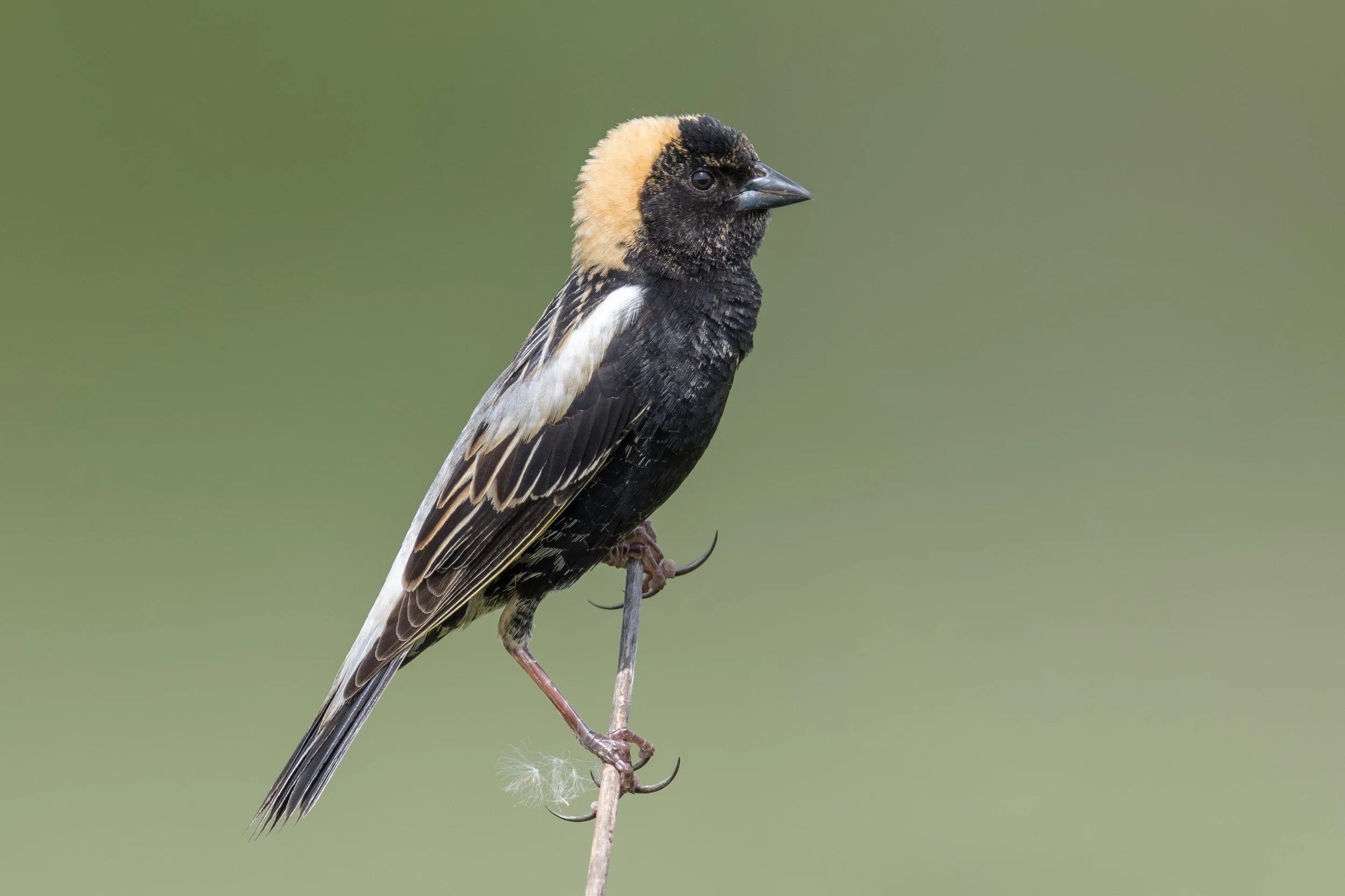
Photo: Long-tailed Duck, Barbara Saffir/Audubon Photography Awards

Greg Butcher

Birdlife International’s State of the World’s Birds 2022 (SOTWB 2022) concludes that the world’s birds are in a fragile condition: One out of 5 of the world’s 11,000 species is threatened or near threatened with extinction. 

BirdLife has been working on global bird conservation for 100 years, so members assembled in September for a big party. Of course, that celebration was tempered by the fact that the world’s birds have been declining and require major assistance to assure a positive future. So, in addition to celebrating 100 years of work, BirdLife’s partners, which include the National Audubon Society and the American Bird Conservancy, planned the next 10 years of conservation action.

BirdLife provides the analysis for birds for the Red List of Globally Threatened Species published by the International Union for the Conservation of Nature (IUCN). There are also Red Lists for mammals, reptiles, amphibians, and fish, with assessments beginning for flowering plants, corals, mollusks, insects, and mushrooms. Here is the status of some North American, Puerto Rican, and Hawaiian birds, according to BirdLife and IUCN:

Black Rail, Scott Bowers/Audubon Photography Awards

Long-tailed Duck, Barbara Saffir/Audubon Photography Awards

  • 231 bird species are Critically Endangered, including California Condor, Puerto Rican Parrot, and more than a dozen Hawaiian species.

  • 423 species are Endangered, including Gunnison Sage-Grouse, Black Rail, Whooping Crane, Black and Brown-capped Rosy-Finches, Saltmarsh Sparrow, Tricolored Blackbird, Golden-cheeked Warbler, several seabirds, and more than a half-dozen Hawaiian birds.

  • 755 species are Vulnerable, including Long-tailed Duck, Horned Grebe, Chimney Swift, Atlantic Puffin, Snowy Owl, Bicknell’s Thrush, Evening Grosbeak, Rusty Blackbird, and others not found in or near Virginia.

  • 1,002 species are Near Threatened, including Northern Bobwhite, Common Eider, Black Scoter, Eastern Whip-poor-will, Chuck-will’s-widow, King Rail, Piping Plover, Red Knot, Semipalmated Sandpiper, Loggerhead Shrike, Eastern Meadowlark, Common Grackle (!), Golden-winged, Cerulean, and Blackpoll Warblers, and others not found in or near Virginia.

Forty-seven species were classified as Data Deficient (none in the United States), and the rest of the birds are classified Least Concern.

Island birds have suffered the most extinctions, and islands host the most birds on the brink of extinction today, but bird populations are in decline throughout the world.

The pressures (threats) acting on birds are legion: industrial agriculture, unsustainable logging, invasive non-native species (especially, but not only, on islands), fisheries by-catch of seabirds, climate change (especially drought and sea-level rise), urban and suburban development, and energy production. An issue that is of greater concern globally than in the United States is harvest of almost all bird species for consumption and the capture of some birds for the pet trade.

Luckily, BirdLife has 100 years of experience in bird conservation because there is a lot that needs to be done! For the past 30 years, BirdLife has been identifying and protecting Important Bird Areas (IBAs) throughout the globe. (IBAs are also called Important Bird and Biodiversity Areas and Key Biodiversity Areas when they include other taxa in addition to birds.)

SOTWB 2022 cites 10 BirdLife activities that have saved birds over the past 10 years and up to 32 species that likely would be extinct today without human intervention. Some of the most effective actions have included eradicating non-native invasive species from more than 36 Pacific islands, negotiating by-catch mitigations with the global ocean fishing communities, establishing key sites in Asia’s Yellow Sea as UNESCO World Heritage sites, and working with ranchers to put more than 500,000 hectares under bird-friendly management in southern South America.

The report does not stop at citing successes, but identifies other key actions needed to continue conserving birds:

  1. Community management of sites

  2. Habitat protection and restoration

  3. Combatting illegal killing of birds

  4. Minimizing negative impacts of energy infrastructure

  5. Eliminating or managing non-native invasive species

  6. Minimizing fisheries by-catch

  7. Targeting recovery of globally threatened species

  8. Getting people interested and involved in bird conservation

  9. Improving laws and policies

  10. Building the capacity of bird conservation organizations

  11. Monitoring birds to evaluate the success of conservation actions

SOTWB 2022 helps us think globally; ASNV is here to help you act locally. Please join us this year as we work to protect, restore, and create bird-friendly habitat, improve laws to protect wildlife, and continue to collect and analyze information on birds that migrate through or make a home in northern Virginia.

Read More
News Jess Michetti News Jess Michetti

State of the Birds 2022

The 2022 State of the Birds report gives us concern but also provides some basis for hope for the future.

Photo: Bobolink, Adam Brandemihl/Audubon Photography Awards

By Greg Butcher

The 2022 State of the Birds report gives us concern but also provides some basis for hope for the future. I started birdwatching in 1963 and I got my first job in bird conservation in 1984. Like many of you, I celebrated the first Earth Day in 1970. So I felt a bit of personal failure three years ago when an article in Science revealed that North America has lost 3 billion birds – 25% of the total – since 1970. The 2022 State of the Birds Report released last month revisits the sad tale, provides a bit more detail, and tries to reverse my (our?) sense of despair that birds continue to decline despite our efforts to help them.

North American State of the Birds reports (SOTB) began in 2004 and have been produced by the North American Bird Conservation Initiative (NABCI) since 2009. The U.S. NABCI Committee is a coalition of state and federal government agencies, private organizations, and bird initiatives in the United States working to ensure the long-term health of North America’s native bird populations. The 2022 report summarizes population trends over the past 50 years by habitat type and by groups of related bird species. In addition, SOTB highlights successful conservation actions and recommends priorities for future work.

SOTB 2022 reiterates that we have lost 25% of North American birds in the last 50 years. The emphasis in this year’s report is on 90 species that have lost half of their population in those 50 years, of which 70 are expected to lose another 50% in the next 50 years. 

The report is not completely negative because wetland birds have increased over the same time span. Geese have increased exponentially, and most duck species are doing better now than they were 50 years ago. Why? Geese have discovered waste agricultural grain and greatly increased their overwinter survival. Ducks and other waterbirds have benefitted from relatively wet years in the Prairie Potholes of the Dakotas and Manitoba, the duck breeding capital of North America. 

The good news of SOTB 2022 is that a major reason that wetland birds have done better than other species is because we have invested heavily in wetlands conservation since the passage of the North American Wetlands Conservation Act in 1985. We haven’t achieved “no net loss” of wetlands, but we have slowed their decline, saved the best, and improved many. To reverse declines in other bird groups, we will need to invest in conservation of grasslands, forests, aridlands, and other habitats at least to the extent we have for wetlands.

Bobolink, Adam Brandemihl/Audubon Photography Awards

Eastern Meadowlark, TiTi McNeill/Audubon Photography Awards

Unfortunately, birds are declining in all other major habitats. Grassland birds are doing particularly poorly, as evidenced here in northern Virginia, where bobwhite quail have disappeared. American Kestrels have become a rare wintering bird, and Bobolinks are a rare migrant. Eastern Meadowlarks and Grasshopper Sparrows are the last breeding species in northern Virginia’s grasslands and meadows. It is easy to see why - large meadows with native plant species have been declining throughout my lifetime.

Shorebirds (sandpipers and plovers) are also doing poorly, left vulnerable by their long-distance migrations. The tundra and boreal habitats where they spend the North American summer are reeling from the effects of climate change. Aridland birds in western sagebrush and southwestern desert habitats are also suffering, primarily from drought, heat, and habitat degradation.

Sea ducks show steep declines, but I suspect that at least some of that may reflect birds that winter farther north where there are no Christmas Bird Counts to report them.

Eastern forest birds are also showing declines, as evidenced by the increasing rarity of our beloved Wood Thrush. Local favorites Kentucky and Prothonotary Warblers are also in decline.

Many efforts are being made to reverse these declines.  Over the past 35 years, joint ventures among federal agencies, state governments, and the private sector to conserve bird habitats have sprouted up across the United States, Canada, and northern Mexico. In northern Virginia, we are located within the Atlantic Coast Joint Venture. SOTB 2022 reports on many conservation successes of these joint ventures.

SOTB 2022 recommends the following steps for successful bird conservation: 1) identify causes of population declines and suggest key actions to reverse them, 2) work with local communities on solutions, 3) develop an action plan that supports birds throughout the year and wherever they migrate, 4) take action, and 5) achieve success.

Audubon Society of Northern Virginia is implementing the strategy recommended by SOTB. We call our initiative “Stretch Our Parks” to improve the impact all the northern Virginia natural parks have on bird populations by improving habitat in the parks and in the neighborhoods that surround the parks.

So, every once in a while I am tempted to despair, but SOTB 2022 and ASNV strategic planning point the way to effective actions we can take to halt bird population declines – and in many cases to reverse them. SOTB 2022 helps us think globally; ASNV is here to help you act locally. Please join us this year as we work to improve habitats both in and around the many beautiful parks in northern Virginia!

Read More
News Jess Michetti News Jess Michetti

Protecting Birds Improves the Lives of People

Bird conservation helps to slow the decline in bird populations, but it also contributes to human well-being in a variety of ways.

Photo: Maddie McGarvey/Audubon

By Greg Butcher

Bird conservation helps to slow the decline in bird populations, but it also contributes to human well-being in a variety of ways. Conservation of bird habitat contributes to the fight against climate change, reduces heat islands in cities, preserves water sources, and reduces forest fire threats. By making our parks better for birds, we also improve their value as a reservoir for clean water and air and for people to interact with and enjoy the natural world.

Birds are great indicators of conservation success because they occupy so many habitats and they are easy to count, so if the habitat indicators used in the State of the Birds Report stabilize or increase, then we have concrete evidence that things are improving for people and for other wildlife in those habitats. Here in northern Virginia, we are lucky that citizen scientists have been tracking bird populations in a variety of ways, especially over the past 30 years. ASNV conducts natural resource surveys, butterfly and dragonfly surveys, the annual Northern Virginia Breeding Bird Survey, the World Migratory Bird Count,  and the Christmas Bird Count and sponsors the Great Backyard Bird Count.

Declining bird populations reflect commercial agricultural development, over-fishing, over-abundant deer, plastic pollution, and loss of natural habitats. Conservation success will require changing these practices that negatively affect both birds and humans.

Saving, restoring, and properly managing habitat are the most important actions we can take, but reducing threats to birds is also important. This past year, World Migratory Bird Day focused on “Turning Down Lights at Night” to prevent luring night migrants into dangerous urban areas. There are several things we can do to reduce threats in our neighborhoods: reduce window reflections to keep birds from crashing into them, keep cats indoors, and reduce pesticide use in our yards.

Read More