NVBA News Blog
American Robin. Photo: Mick Thompson/Audubon Photography Awards
Welcome to the blog for Northern Virginia Bird Alliance, a wealth of resources about northern Virginia birds, wildlife, habitat conservation and restoration, native plants, wildlife-friendly gardening, advocacy and more.
Bird of the Month: The Pfeilstorch
In the 19th century, a curious phenomenon stumped European bird watchers and zoologists. Why did some species of birds disappear and then reappear every year? People back then had no way to track birds as they traveled long distances, so they had to come to their own conclusions.
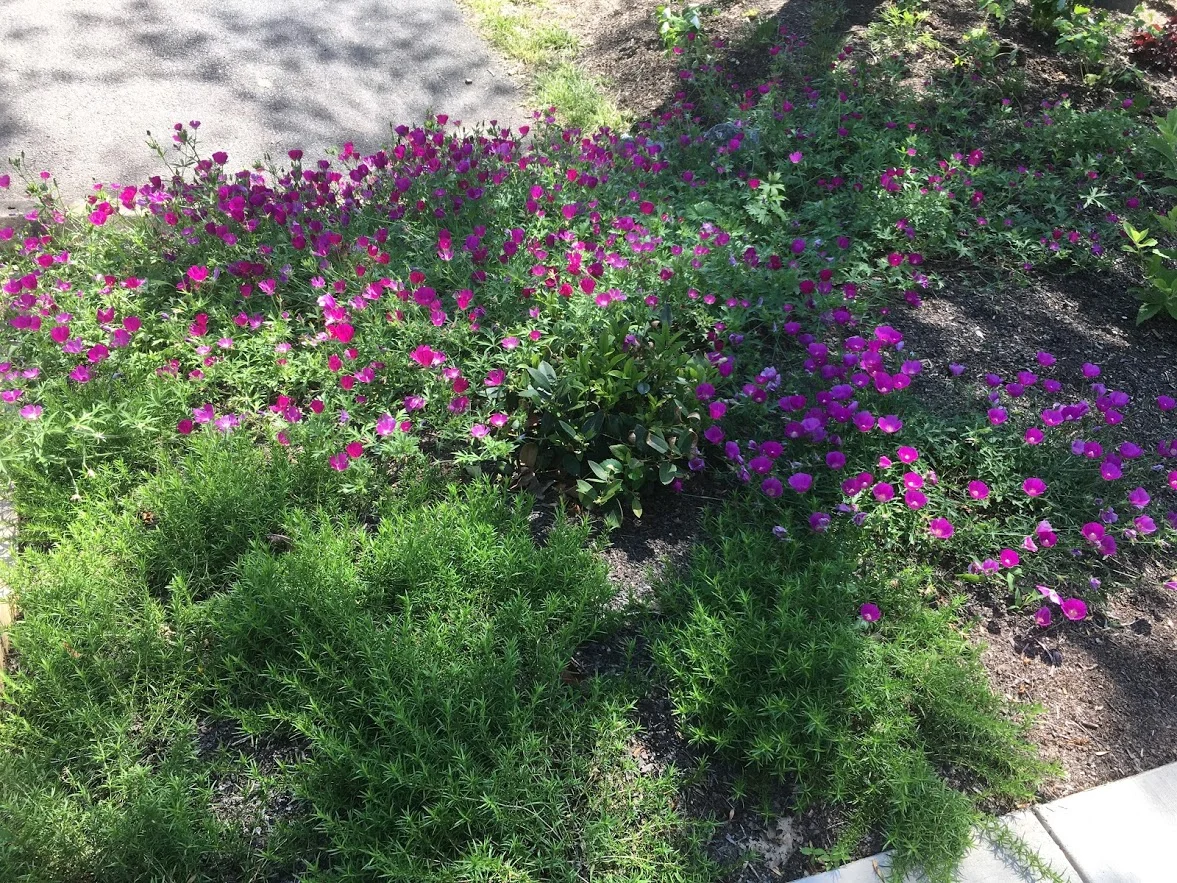
Planting Hope: Engaging Faith-based Communities in Plants for Birds
A session on “Planting Hope: Engaging Faith-based Communities in Plants for Birds,” engaged a full room at the July National Audubon Convention in Milwaukee.
Blowing Smoke for a Prize-winning Shot
This year’s annual Audubon Photography Awards contest attracted 2,253 entrants from throughout the U.S. and Canada. Kathrin (“Kathy”) Swoboda, of Vienna, VA, won the grand prize for her photo of a Red-winged Blackbird seeming to blow smoke rings.
Bird of the Month: Brown-headed Cowbird
Brown-headed Cowbirds love cows. True to their name, they can often be found alongside herds of cattle or horses, eating insects that much larger animals flush from the grass. Historically, Brown-headed Cowbirds followed bison herds across the Great Plains, but the spread of livestock farming has expanded their range across North America.
Bald Eagles Down in the Dumps?
Even if you have not visited the Prince William County landfill, you may have heard that it is a magnet for Bald Eagles, among other birds, including clouds of gulls. You can stand at a random spot and count more than 20 adult eagles at a time.
Audubon At Home Certification
The Audubon at Home program is happy to announce that the Reston Association's Central Services Facility (CSF) has achieved certification as a Wildlife Sanctuary. The site includes a native plant garden that serves as a demonstration site to educate Metro developers on how native plants can be integrated into areas near Metro stations.
Recovery of the Peregrine Falcon – A Conservation Success Story
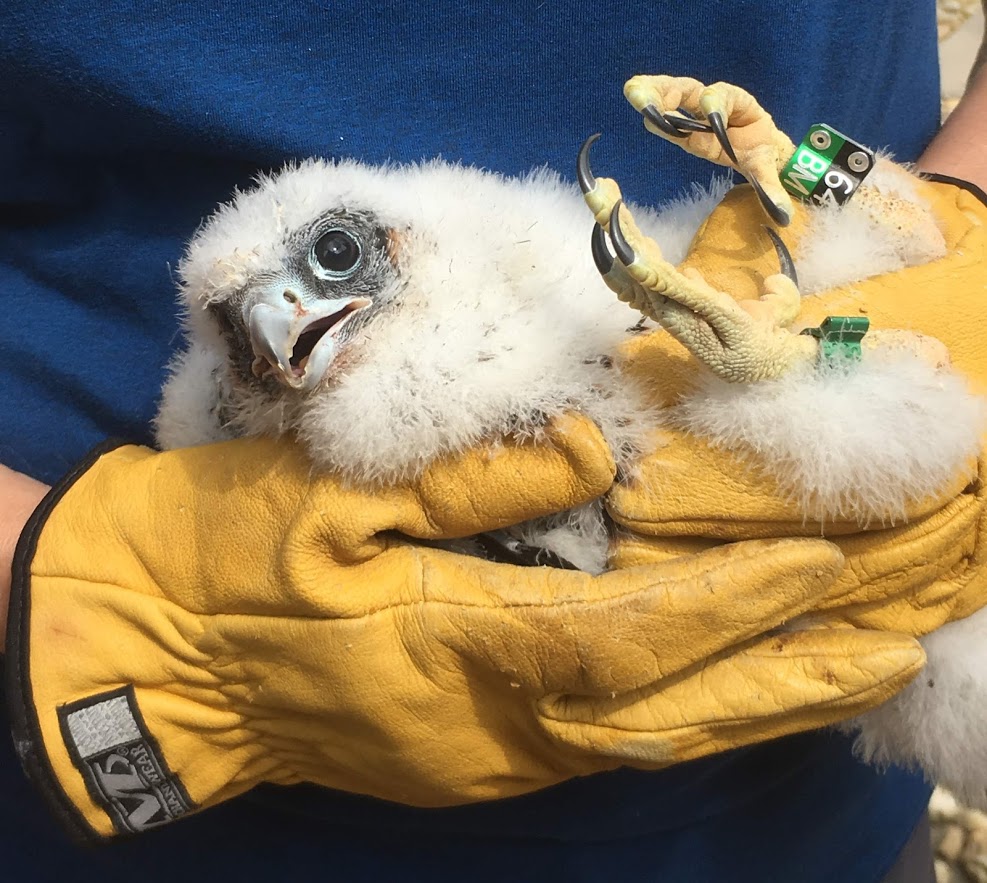
In July, 2015, two Peregrine Falcon chicks were found on Market Street in Reston Town Center (RTC). They were taken to the Raptor Conservancy of Virginia and safely released into the wild. No one realized Peregrine Falcons nested in Reston but the chicks prompted a discovery that two adult peregrines were nesting in RTC.
Bird of the Month: Northern Mockingbird
A few years ago, while I was at the dentist’s, I looked out the window and saw a welcome distraction: a Northern Mockingbird landed on a telephone pole, jumped a few feet in the air, and then gracefully fluttered back down. It repeated this behavior for several minutes.
Bird of the Month: The “Sparred” Owl
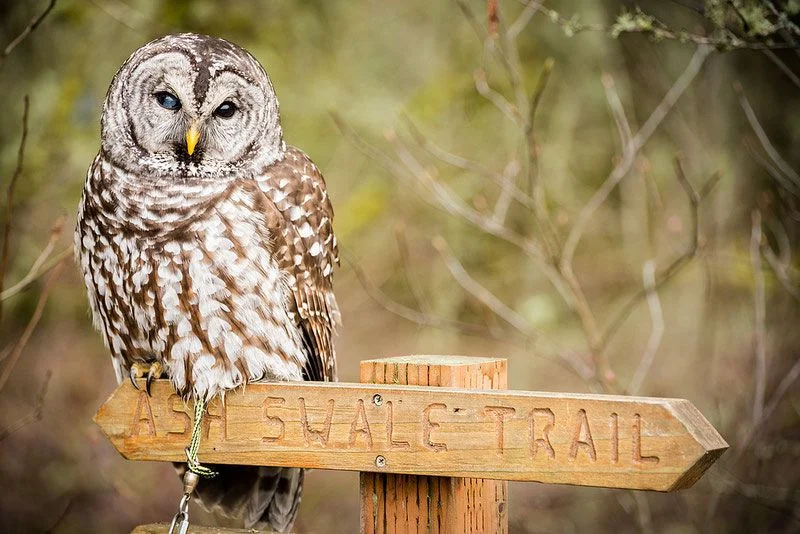
The Spotted Owl just can’t get a break. Endemic to old-growth forests in the Pacific North west, the endangered owl’s population was already declining due to deforestation, but now they have been forced to accommodate an inconsiderate guest: Barred Owls. Native to the eastern half of North America, the Barred Owl’s territory has been expanding westward since the turn of the last century.
Bird of the Month: Gynandromorphic Birds
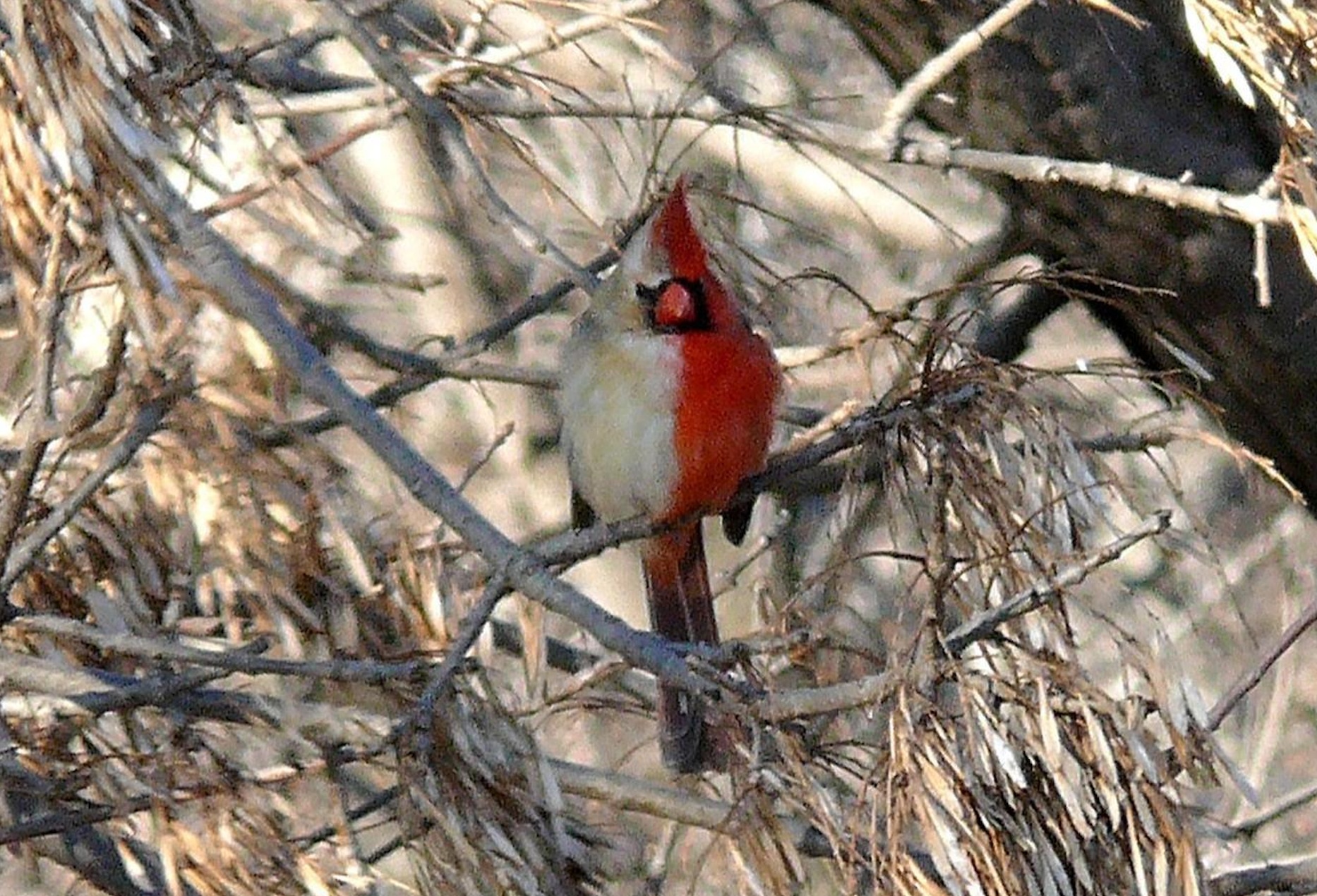
This past February, a very unusual Northern Cardinal was spotted in Erie, Pennsylvania. Its right side is brilliantly red, while its left side is a modest brown, with both sides perfectly split down the middle. The reason for the color split is remarkable; the left side is biologically female, while the right side is biologically male. Genetically, the two halves are as closely related as brother and sister.
Bird of the Month: Turkey Vulture
Turkey vultures, also known as turkey buzzards, are a common sight throughout the state of Virginia. As one of the most widespread birds in the western hemisphere, their range extends west to California and south to the tip of South America. Turkey vultures are often seen gliding on thermals, buoyed by a wingspan that can reach up to seven feet.