



Pesticides
Pesticides are usually chemicals (organic or not) that are designed to interrupt the normal lifecycle of its target species. When pesticides are sprayed on foliage or the ground they kill not only the target “pest” but
Pesticides are usually chemicals (organic or not) that are designed to interrupt the normal lifecycle of its target species. When pesticides are sprayed on foliage or the ground they kill not only the target “pest” but all other insects it contacts including the beneficial ones who perform necessary services like pollination, feeding baby birds, and controlling the targeted pest species. Killing beneficial invertebrates (dragon flies, native bees, ants and wasps, spiders, centipedes) whose role is to control other invertebrates, can cause the collapse of the predator-prey cycle and actually increase numbers of the undesirable pests which prompts application of more pesticides.

“To keep every cog and wheel is the first precaution of intelligent tinkering” cautioned Aldo Leopold, father of wildlife ecology. Unintelligent Tinkering would be hiring a Mosquito Squad contractor to come out to your property to spray a pesticide (organic or no) that kills all the insects and leaves behind an ecosystem in collapse because the food source for birds and other creatures has been removed. All living organisms in nature have a role in the order of an ecosystem. If we remove a species or whole class of species by killing it off with a general pesticide we are only guessing at what the results of it’s loss will be.
To Spray or Not to Spray?
Recently, we were confronted by the question of whether a yard where the homeowner has taken many steps to improve habitat can be certified as a Wildlife Sanctuary when the homeowner also employs a regular mosquito spraying service.
We reviewed the evidence and decided that the answer is no: broadcast spraying for mosquitoes is not consistent with creating a functioning wildlife sanctuary in one’s yard.
To qualify as a wildlife sanctuary, a residential yard should benefit wildlife species living in or visiting it at all stages of their lifecycles. Because insects are so critical to a healthy ecosystem and such a vital foundation for the food web, they should be protected along with other wildlife. Birds (as well as amphibians, reptiles, mammals, and virtually all native wildlife) depend on insects as prey. Nesting birds require an ample supply of caterpillars and other insects to support their nestlings.
A functioning wildlife sanctuary also should benefit the larger environment. Residential yards significantly affect water quality and aquatic ecosystems via streams that run through or adjacent to them, or stormwater runoff that is transported to streams by storm drains.
We conclude that the effects of mosquito spraying on insects and on the larger environment are too harmful to be approved in a Wildlife Sanctuary. Therefore, we will not certify a property as a Wildlife Sanctuary if the owner is spraying for mosquitoes.
Below we summarize our major concerns with mosquito spraying; our more detailed and fully documented discussion is in a longer paper available here.
Mosquito sprays kill pollinators and other insects essential to a functioning wildlife sanctuary.
Pyrethroids, the main chemicals that mosquito services use to kill mosquitoes in residential yards, are a class of broad-spectrum insecticides that are acutely toxic to terrestrial invertebrates, including pollinators such as bees and butterflies. Mosquito sprays kill all insects, including the caterpillars that birds rely on to feed their young throughout the breeding season. Nearly all terrestrial birds (96%), even seed eaters, feed their nestlings insects.
Pyrethroids used in mosquito sprays contaminate surface waters and kill aquatic organisms.
Spray drift can carry the chemicals directly to water, or residue can be carried to a stream through storm drains. Applying the chemicals to impervious surfaces, such as sidewalks and driveways, increases runoff into streams. If an applicator uses ultra-low volume spraying, which sprays fine or very fine droplets, the risk of drifting spray is greater, because droplets remain airborne longer.
Pyrethroids do not volatilize, are not soluble in water, and bind tightly to soil. They build up in sediments and affect benthic (sediment-dwelling) communities. There is some risk to fish, but the risks are much greater for aquatic invertebrates, because they live in the sediment where pyrethroids accumulate.
EPA reports that pyrethroid detections are widespread in surface waters across the United States, including effluent from sewage treatment plants, urban streams, and downstream of agricultural areas. Insecticide contamination is greater after storm events and near sites where the chemicals have been applied.
Following pesticide label instructions does not prevent harm to non-target species and the larger environment.
Following label instructions reduces but does not eliminate harms. When EPA approves use of a pesticide, it balances its environmental risks against its benefits. For example, pesticide use may control disease-carrying insects that pose a public health threat or control insects that threaten crops or structures, such as termites. In striking that balance, EPA attempts to impose limits on use and application that reduce the harm the chemical can cause. The limits EPA imposes appear on the product label and have the force of law.
When a pesticide is registered by the EPA for use in agriculture or horticulture, that does not mean that it is safe for non-target insects or aquatic organisms, even when applied according to label instructions. It means that there is an economic benefit to using it even though there also are known risks.
You can control mosquitoes without spraying.
The most effective, least harmful mosquito control strategy relies on habitat management and controlling the immature stages before the mosquitoes emerge as adults.
The first imperative is to minimize standing water. Common mosquito larval habitats include corrugated extension pipes coming off downspouts, rain barrels and landscape features such as ponds without fish, containers, bird baths, toys, garden and sports equipment, folds on tarps—anything that holds even a small amount of water for at least 7 days.
Larvicides
Effective mosquito management relies on killing them before they become adults. Bacillus thuringiensis israelensis (BTI) is an effective biological control, widely available at lawn and garden stores in a product called Mosquito Dunks™. The dunks are safe for birdbaths, rain barrels, ponds, ditches, tree holes, roof gutters, and anywhere water collects. One way to manage mosquitoes is to entice them to breed in a bucket filled with water, some straw, and a BTI dunk. The females are attracted to the scent of the straw and water and lay their eggs on the surface. When the larvae hatch, the BTI kills them. See how to set up a mosquito larva trap.
Lethal adult mosquito traps
Once larval habitats have been eliminated by removing or treating all sources of standing water, using a lethal trap that mimics a good oviposition site (larval habitat) such as the Gravid Aedes Trap can eliminate female mosquitoes and significantly reduce populations. GAT traps can be purchased or inexpensively constructed. Dumping all sources of water weekly helps ensure maximum draw of egg-laying female mosquitoes to the trap.
Personal protection
People can protect themselves directly by wearing long sleeves and long pants, applying insect repellent (such as DEET or picaridin or OLE) to exposed skin, and, when seated outside, deploying a fan to discourage mosquitoes.
So, while taking steps to protect our families from mosquitoes, let’s do all we can to protect all the creatures who share our environment!
Don't Bird-nap. Know when a young bird needs rescuing

Young American Robin - Photo by Pat Kavanagh via Birdshare
Good intentions can do harm. During baby bird season millions of birds are hatching and finding their place in the world. Young fledgling birds are making their first appearance outside of their nest at this time, so bird-nappings have started happening as well. Bird- napping is when a young bird who cannot fly yet is taken to a rehab center because of the fear that they’re injured when they are not. We want to emphasize that fledglings are just learning how to fly, so it is normal for them to be on the ground. The fledgling’s parents are almost always watching them from a nearby tree and feeding them. The parents will not feed their baby if a human is around, which is why many people observing a young bird may think it is abandoned.
Bird-napping separates these birds from their family. This can lead to possible imprinting, when a young bird identifies with — and depends on — humans, which prevents the bird from ever being released back into the wild. Rehabbers get very frustrated when we receive healthy fledges because we have to figure out how to return these birds to their original spot while caring for baby birds that have to be fed as often as every 20 minutes. In the past week, we received three bird-napped birds — including one that had been picked up 40 miles away.
The most common bird-napped birds are Robins, Crows and Blue Jays, so here are the things you should look out for in order to make sure the bird is healthy (and does not need to be taken to a rehab center). If you can hear the parents making alarm-calls, see droppings near the bird (an indication it’s being fed), or it appears healthy, then it should be left alone. Fledgling crows are often mistaken for adult crows because of their size. Fledgling crows have blue eyes and a pink mouth, so if a crow is not flying, look for these signs to confirm it is young and just figuring out aerodynamics. People are often worried about other animals getting to the bird on the ground. If you have cats or dogs, keep them inside or on a leash for a few days until the fledges have taken off. The parents are watching it and will chase off predators and fledges instinctively hide. The bird is much better off staying where it is. If it is clearly injured, bleeding or has flies on it, that’s when it should be taken to a rehab center.
https://www.wildliferescueleague.org/animals/does-this-animal-need-help/
Birds on the ground
A fledgling is an adolescent bird that is on the ground for a few days as it learns to feed itself, recognize predators, and builds the strength to fly. You can recognize a fledgling by a short tail on a fully feathered body. If the bird appears healthy and energetic and hops away when you approach it, leave it alone. The parents are generally flying overhead and may even attack you as you approach their baby. Keep pets out of the area for a few days to allow the bird to learn how to fly and get off the ground. Birds at this age do not do well in rehabilitation, so please allow every chance for their parents to care for them.
https://www.blueridgewildlifectr.org/faq
Baby birds should be left for at least a full day to assess whether adults are returning—if you see an adult feeding the baby, or if the baby remains alert, warm, and reactive after 24 hours, this is a success! In cases where you do not see any parent, we recommend monitoring the babies for a few days as they will certainly begin to get quiet/lethargic if the parents are not feeding. It is not uncommon for parents to monitor you and avoid feeding if they see you watching. Because of this, many people will not see parents even if they are actively feeding. If the baby starts going downhill during the first 24 hours, it can be assumed that the bird needs help.
When birds reach fledgling age, they will naturally jump out of their nest and be on the ground, unable to fly fully. As long as the bird is mostly feathered and is able to stand and hop, and has no other health issues (including being in a cat’s mouth), fledglings should be left alone on the ground—their parents will continue taking care of them, and this is an important learning stage in their life!
Captivating Containers with Native Plants

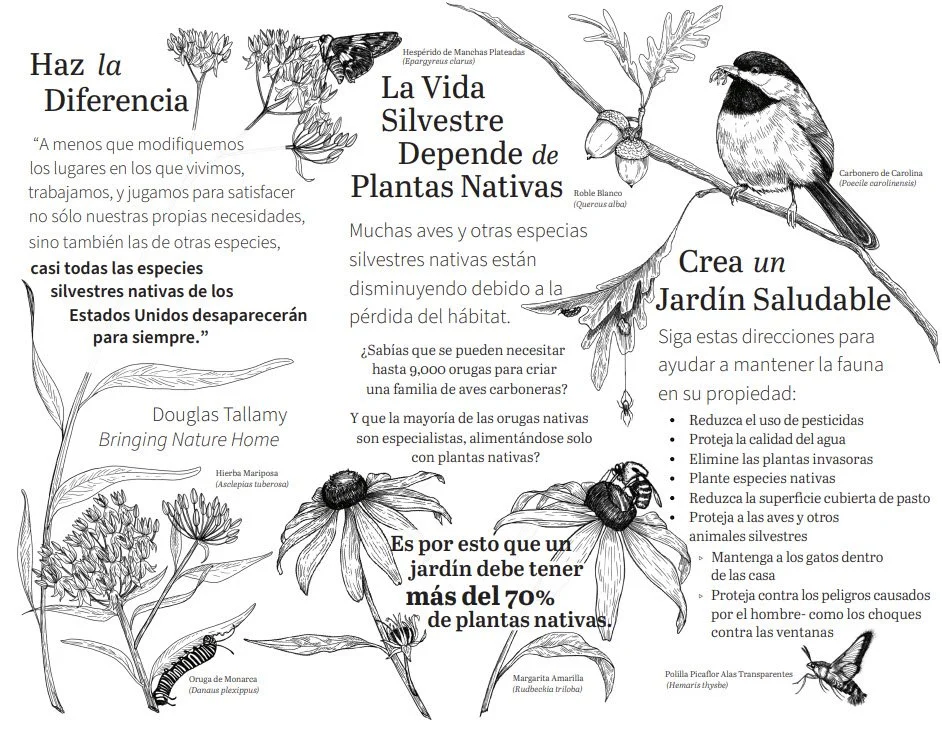
If you live in an apartment or townhouse with a balcony, patio, or very small yard, you may like to use your outdoor space to connect to the natural world around you. In order to attract and support native wildlife in these settings, a garden comprised largely of native plants in containers or small planting areas provides an attractive and simple solution. A surprising number of insects, birds and even small mammals are drawn to container and pocket gardens. The Audubon at Home program encourages you to beautify and increase the wildlife value of these small spaces. Although much of this content is directed to container gardening, patios and “pocket gardens” are merely larger extensions of the same concept, with the possible advantage of natural soils that need less additional replenishment. See pdf document.
You may also like Container Gardening
Birds, Plants and Garden Structure

Bird, Plants and Garden Structure (contributed by Leigh Pickering, ARMN) illustrates how different bird species use different layers to forage, nest, and shelter. This is a guide to creating plant layers and vertical structure that provide shelter and habitat niches for diverse wildlife species. It helps in thinking about how you can create habitat on your property that connects with other areas of habitat.
Books on Gardening for Wildlife
These are some of our favorite books for learning about and being inspired by gardening with native plants and creating habitat for wildlife.
By Douglas W. Tallamy, Timber Press
Bringing Nature Home: How Native Plants Sustain Wildlife in Our Gardens
Nature’s Best Hope: A New Approach to Conservation That Starts In Your Yard
The Nature of Oaks: The Rich Ecology of Our Most Essential Native Trees
Nature's Best Hope (Young Readers' Edition): How You Can Save the World in Your Own Yard
By Larry Weaner and Thomas Christopher, Timber Press
By Rick Darke and Douglas W. Tallamy, Timber Press
By Thomas Rainer and Claudia West, Timber Press
Please consider purchasing pre-owned books
Avoid Harm from Good Intentions
Whenever we offer manmade structures to wildlife for feeding and nesting we are risking concentrating animals and with them, the potential spread of disease or threat from opportunist predators. Here are some examples.
Whenever we offer manmade structures to wildlife for feeding and nesting we are risking concentrating animals and with them, the potential spread of disease or threat from opportunist predators. Here are some examples.
Mason Bee Boxes. We have learned that bee boxes designed to support nesting mason bees can actually endanger them. If the tubes aren’t long enough the mason bee’s predators can prey on the eggs and/or larvae before they can mature. And because mason bees tend to return to their nesting sites year after year, reused nesting boxes can concentrate parasites and diseases and predatory species can become too familiar with the box locations and increase their rate of predation at the risk of the mason bees.
Bird Feeders. They certainly add to the enjoyment of watching and learning about birds and those unbelievably acrobatic squirrels, but they do offer up a unique opportunity for raptors. Make sure to offer nearby cover and possibly wire-enclosed feeders for smaller birds.
Unmaintained Bird Feeders. Bird feeders, hummingbird feeders and bird baths, if not cleaned regularly, can endanger your valued wildlife. Be sure to follow this advice on from the National Audubon Society website.
Special Threats to Hummingbirds. Public Service Announcement on Behalf of Hummingbirds: If you have feeders, PLEASE USE ONLY PLAIN WHITE SUGAR in your mixture of 1 part sugar to 4 parts water. Change the sugar water mixture and clean the feeder every couple of days, especially during high temperatures, as the nectar will start to ferment if it sits out for days on end. Black mold in feeders can be deadly to hummers. If you can't or won't do this consistently, please do not put out a feeder at all.
Beware small bees and ants who can invade the feeder through those small holes and can scare off hummers who have to stick their tongues into those spaces. Some feeders have small silicone guards that keep the insects out and ant moats can be filled with water and hung above the feeder.
GROW YOUR OWN BIRDFEEDERS.

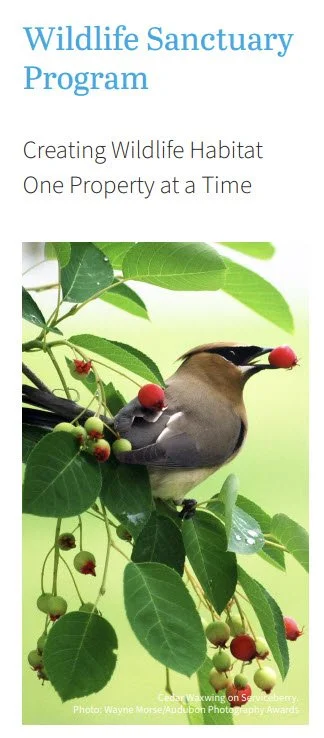
For ALL birds, plant native plants that host insect larvae, provide berries, seeds, nectar, building materials, and shelter. Plant layers to support the widest variety of wildlife.
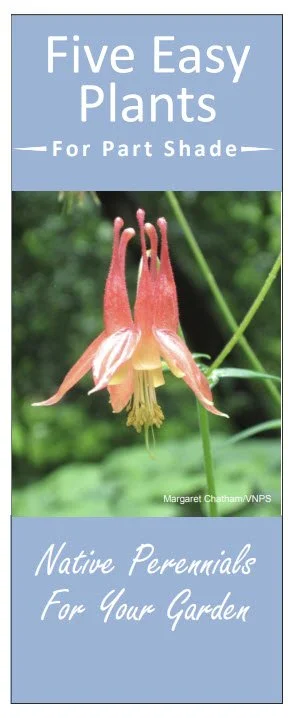
For hummingbirds, a great alternative to hummingbird feeders are flowering plants with tubular flowers such as natives Coral honeysuckle, Trumpet vine, Bee balm, and Eastern columbine.

Death Traps
Some traps are intentional, to rid your space of pests that belong outdoors and some are wholly unintentional manmade objects left where wildlife encounter and cannot escape them. With awareness
Some traps are intentional, to rid your space of pests that belong outdoors and some are wholly unintentional manmade objects left where wildlife encounter and cannot escape them. With awareness and a little effort we can significantly reduce the impacts of man-made hazards.
Glue Pest Traps are designed and sold to control crawling pests like rats and mice. They would be placed where rats and mice hunt for their prey, insects. It is not only awful way to die if you are a rodent, but the hunters of the same insects or of the rodents themselves are also caught in these glue traps. Small ring-necked snakes, larger snakes, toads, lizards, birds, and chipmunks fall victim to these traps. They suffer horrible deaths and their important roles in the ecosystem are left unfulfilled, and their young left unfed.

Plastic mesh netting. Plastic mesh netting is a danger to wildlife. If you are using small gauge netting to protect your berry or fruit tree harvest from hungry birds, the mesh should be no larger than .5” x .5” to keep small birds from becoming entangled and dying. If you are using plastic mesh fencing to protect your garden from larger animals the gauge should be 2” x 2” or larger. Better yet, use wire Snakes hunting their prey can become entangled as they crawl through or up the mesh.. As they struggle they twist it tighter making it impossible to escape without human intervention. Like ghostnets in the ocean that unintentionally trap and kill ocean life, any unused netting left in your yard, shed or garage can trap snakes busy hunting their rodent prey. Songbirds, birds of prey, and small mammals can also get entangled in plastic netting. Be sure to store unused or discarded mesh safely in a closed container or in its original wrapping.
Need Wildlife Rescue?
Smooth-sided containers. Small crawling animals can get into an empty pail or flower pot but if the sides are too slick and there is nothing in it to help them crawl out, they will perish there, or drown if the container fills with rainwater. Waterfilled containers can even trap small birds if they land in the water, get their wings wet, and can’t fly out. To avoid this sad end, store containers tipped on their sides even when in your garage or shed, or store them with a rough branch that can be used as an escape ladder by climbing animals.
Window Wells. Window wells or below-grade crawl space entries can trap non-climbing turtles, frogs, and toads that can’t grip the walls or jump to safety. They can’t get food or water and will die there. To avoid this, monitor your window wells daily or consider capping with a hardware cloth screen fitted to the opening such that it doesn’t block air flow but will keep most animals out.
Putting a tree branch or rough piece of wood in the well to hang out over the top can help climbing creatures escape without a wire mesh cover but this wouldn’t help the turtle who fell into a window well while looking for a place to lay eggs.
Litter. The following list are just some of the materials that are intentionally, or unintentionally left where wildlife can be harmed. Plastic fragments, plastic bags, six-pack rings, fishing line, hooks, fishing weights (often lead), lead shot, Christmas tree tinsel and ribbon are hazards. Food wrappers or containers discarded along roads attract foraging wildlife and puts them at greater risk of being hit by vehicles.
Swimming Pools and Man Made Water Features. Frogs love to swim and often hang out in the cool shadows of your skimmer basket. They can get in easily but can’t get out. A FrogLog holds onto the deck of the pool connected by a flexible ramp to a foam platform that floats on the service. Frogs exit the pool by the ramp.
Another device, a Critter Skimmer, provides a spiral ramp up from the skimmer basket through the skimmer cover. For other water features, make sure there are rocks, logs or other structures that frogs can climb to escape.
Open vertical pipes. Seemingly innocuous vertical pipes without caps pose a threat to cavity-nesting birds who, looking for the ideal cavity, enter the top of the pipe then are unable to exit. The Fish and Wildlife Service documents this threat here.

Owl caught in fake spiderweb
Decorations. Fake spiderweb decorations used for Halloween are lethal for birds who can easily get entangled and not be able to free themselves. If you decorate with them, leave them up a short time and check them frequently to make sure you aren’t making the holiday more gruesome than you intended.
Need Wildlife Rescue?

Poison as Pest Control
Setting out poison (called rodenticides for pests, e.g. to control rats feeding on grain or grass seed in your back shed, will probably kill the rats but will also kill other
Setting out poison called rodenticides for pests, e.g. to control rats feeding on grain or grass seed in your back shed, will probably kill the rats but will also kill other beneficial mammals like opossums, squirrels, mice, voles, or racoons who may find the poison. And further, a beautiful fox, crow, raptor, or vulture who finds the poisoned rat, mouse, or vole, may eat it, and be poisoned in turn. Prey taken home to a nest of baby owls could kill the whole family. No system is truly a closed one and unintended outcomes can devastate a healthy habitat.
The best alternative to poisons is to securely store the food source of the pest mammal, seal access points, move sheltering materials away from your building, and provide a healthy habitat where natural predators can fulfill their roles.
Need Wildlife Rescue?


Wildlife Rescue
These wildlife rescue organizations are here to help. If you encounter an animal who needs their help, check their website first for helpful guides.