
Golfing with Purple Martins and Bluebirds
by Alisa Wong, NVBA Conservation Program Lead
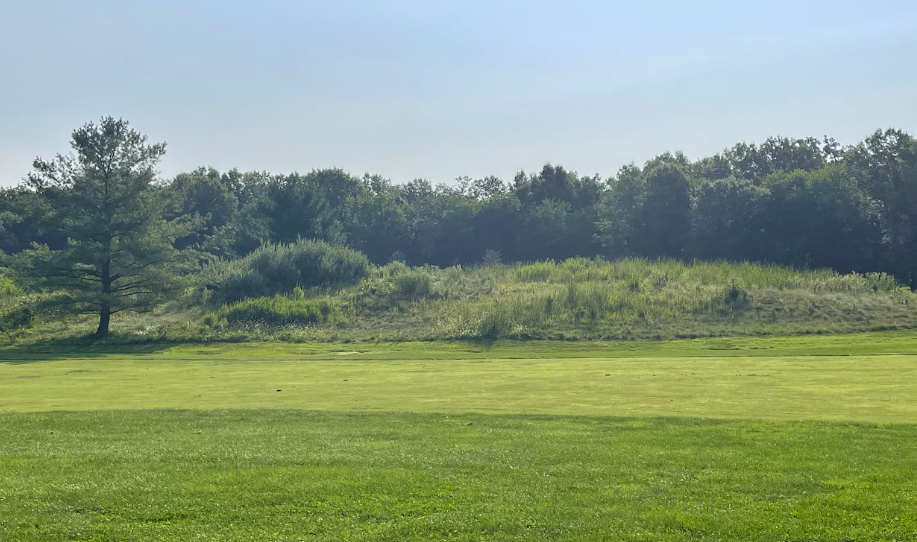
Brambleton Golf Course. Photo: Alisa Wong
I used to think of golf courses as neatly mowed landscapes with little value for wildlife. I couldn't have been more wrong.
Recently, NVBA had the opportunity to tour Brambleton Golf Course with Bryan McFerren, Golf Course Superintendent for Brambleton and Algonkian Golf Courses. Within minutes of leaving the clubhouse, we found ourselves watching a Red-tailed Hawk hunting, butterflies drifting through native meadows of milkweed, and bluebird nest boxes scattered throughout the property.
The golf course isn't simply maintained—it is sustainably managed with large areas that are intentionally left unmowed to provide habitat for wildlife. Native plants are incorporated into the landscape to support water quality and climate resilience. Dead trees that no longer pose a safety hazard are sometimes left standing to provide nesting habitat. Water quality is routinely monitored, and herbicides and pesticides are carefully managed to use the minimum amount necessary. Along the way, interpretive signs help golfers understand why these practices matter.
Bryan has been pursuing this approach since 2007 through Audubon International's Cooperative Sanctuary Program, which encourages golf courses to balance recreation with environmental stewardship.
One fact particularly surprised me. Although Brambleton Golf Course occupies approximately 225 acres, only about 60 acres are actually part of the playing surface. The remaining woodlands, ponds, stream corridors, and out-of-play areas provide opportunities for wildlife while also connecting to the larger Brambleton Regional Park.
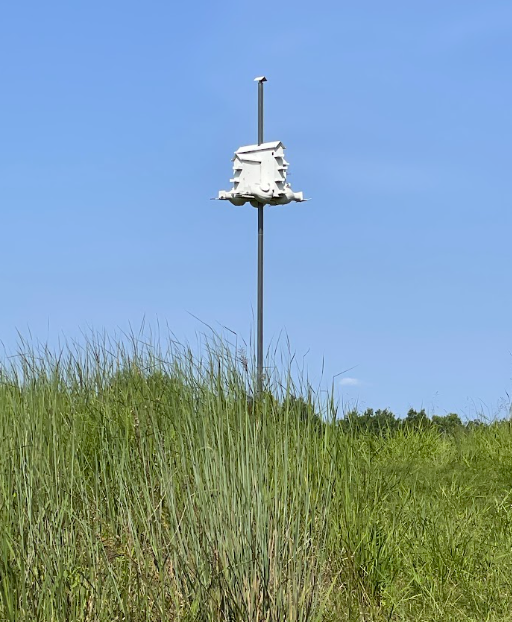
One of Brambleton’s Purple Martin houses. Photo: Alisa Wong
Perhaps my favorite discovery were the active Purple Martin houses - or, more accurately, prairie mansions which sit atop golf course holes 4 and 9. Further, the Virginia Bluebird Society established a bluebird trail here in 1998, and it has become one of the region's most productive trails. During the five-year period from 2021–2025 alone, the trail fledged 320 Eastern Bluebirds, 93 Tree Swallows, and 23 House Wrens.
As Bryan described the course's management philosophy, another thought occurred to me. Conservation isn't just benefiting wildlife—it also makes good business sense. Every acre that no longer requires routine mowing means fewer staff hours, less fuel consumed, reduced equipment wear, and lower maintenance costs. Bryan estimates that approximately 100 gallons of diesel and 125-150 hours of labor are saved annually. Those same acres are simultaneously providing habitat for birds and pollinators while helping improve water quality. In fact, Bryan shared that routine water quality monitoring shows that water leaving the golf course is often cleaner than when it entered, demonstrating how thoughtful land management can provide real ecosystem services to the surrounding community.
After our visit, we were happy to connect Bryan with the Loudoun County Master Gardeners and Tree Stewards that were able to do a site visit and help Bryan with declining oak trees and other best practices for sustainable landscaping.
Our visit to Brambleton reminded us that conservation doesn't always happen where we expect it. Sometimes it's quietly taking place on a golf course.
As the Northern Virginia Bird Alliance continues developing our Stretch Our Parks initiative, we'd love your help highlighting people in our community taking forward and innovative approaches to managing our landscapes. Thank you to Bryan!




Our visit to Brambleton reminded us that conservation doesn't always happen where we expect it. Sometimes it's quietly taking place on a golf course.