NVBA NEWS BLOG

Welcome to the blog for Northern Virginia Bird Alliance, a wealth of resources about northern Virginia birds, wildlife, habitat conservation and restoration, native plants, wildlife-friendly gardening, advocacy and more.
News Jess Michetti News Jess Michetti

Results of the 2026 Winter Waterfowl Count

The 2026 Winter Waterfowl Survey, sponsored by NVBA, was conducted on February 14 and 15. Nearly 70 participants monitored areas along the Potomac River from western Loudoun County to Quantico Marine Base in Prince William County.
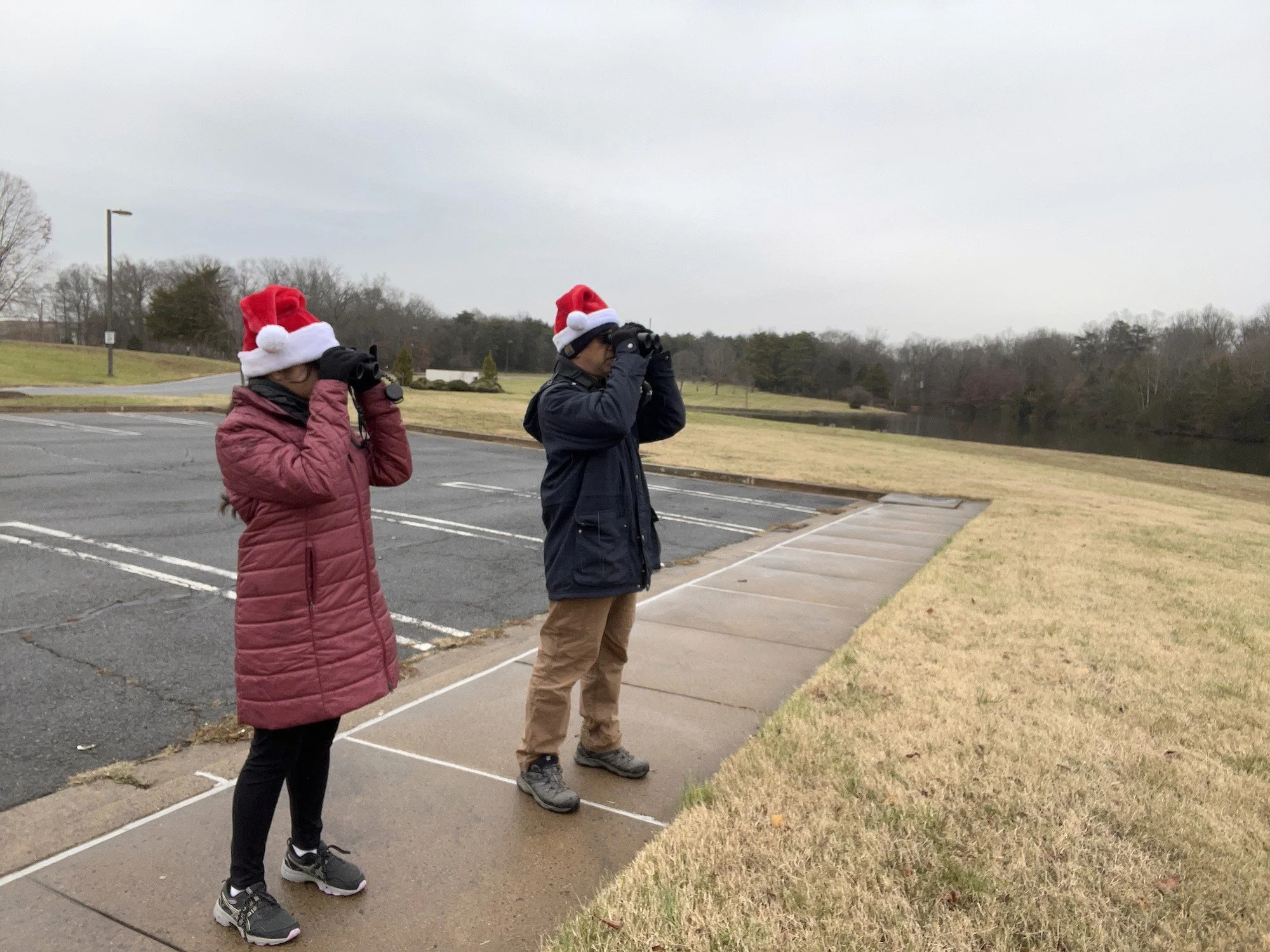
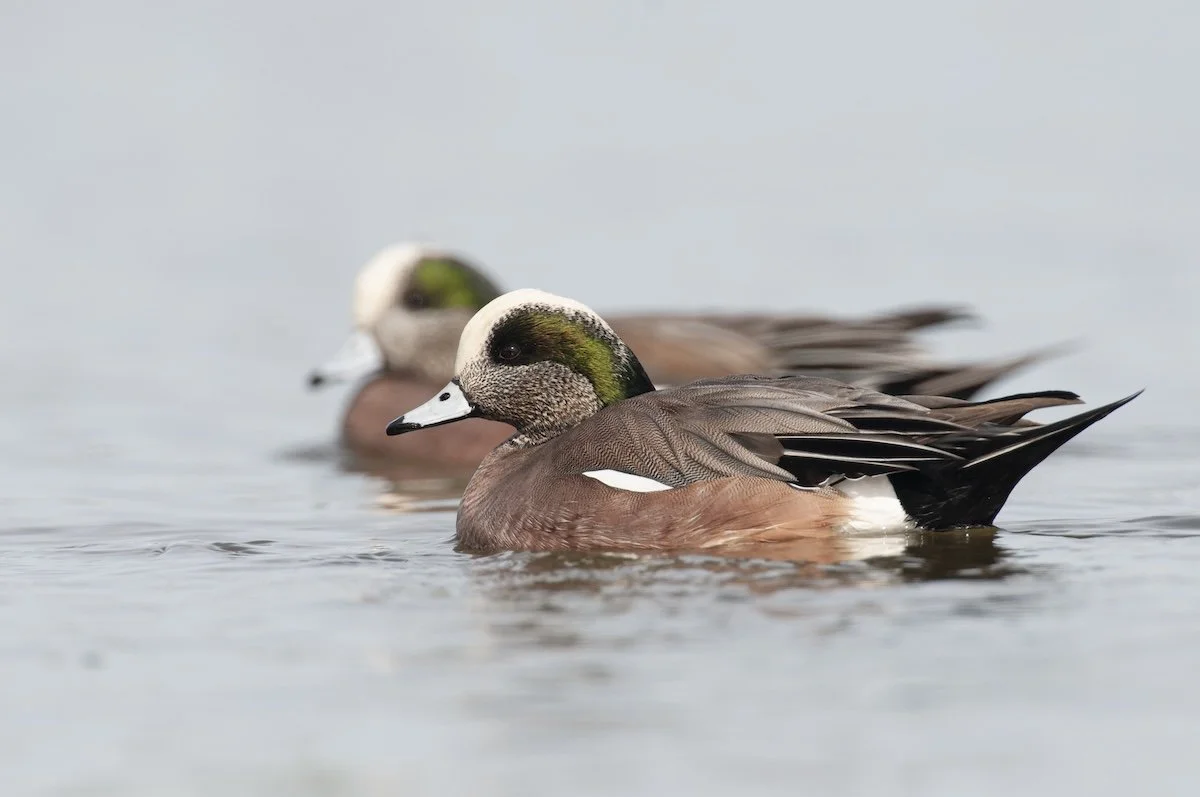
Photo: American Wigeon, Walker Golder/Audubon Photography Awards

Larry Cartwright, Compiler

The 2026 Winter Waterfowl Survey, sponsored by NVBA, was conducted on February 14 and 15. Nearly 70 participants monitored areas along the Potomac River from western Loudoun County to Quantico Marine Base in Prince William County. They also surveyed many inland water bodies for the presence of waterfowl. Here’s a link to the raw data.

Icy conditions likely impacted the number of some waterfowl species recorded during the 2026 count. With some notable exceptions, duck totals, especially dabblers, were incredibly low. Of the seven most common dabbling ducks seen in our area (Northern Shoveler, Gadwall, American Wigeon, Mallard, American Black Duck, Northern Pintail, and Green-winged Teal), five were tallied with fewer than 50 individuals apiece. Granted, the dabbling duck wintering population has been low for some time, but the numbers for these five species were at basement level. 

  • Northern Shoveler: 28 in 2025 and 30 in 2026

  • Gadwall: 616 in 2025 and 46 in 2026

  • American Wigeon: 33 in 2025 and 1 in 2026

  • Northern Pintail: 134 in 2025 and 13 in 2026

  • Green-winged Teal: 16 in 2025 and 5 in 2026 

Green-winged Teal prefer shallow water and love to forage along the shoreline, so the low numbers for 2026 might be explained by ice-covered shorelines, but conditions for the 2026 count do not explain low figures for previous years. 

American Black Duck. Photo: Glenn Upton/Audubon Photography Awards

The Mallard and American Black Duck numbers were the exceptions to the low dabbling duck figures for 2026. The wintering Mallard population remained practically unchanged, and the American Black Duck count showed a dramatic increase. The count of Mallards was 1,240 in 2025 and 1,233 in 2026, while the count of American Black Ducks increased from 716 in 2025 to 1,044 in 2026.

Mallards are the most common of the dabbling ducks and can be found almost everywhere, including small inland lakes and ponds. American Black Ducks have been most abundant at Pohick Bay, Ft. Belvoir, and the Great Marsh at Mason Neck, but I am noticing a slight change in distribution that may be independent of the ice cover in 2026. One-third of the American Black Ducks in 2025 were tallied at Chopawamsic Creek at Quantico Marine Base. In 2026, over one-fourth of American Black Ducks were at Chopawamsic Creek. 

There were dramatic declines in some diving ducks in the genus Aythya (Canvasback, Redhead, Ring-necked Duck, and Greater and Lesser Scaup) while the Common Merganser numbers doubled between 2025 and 2026. Canvasbacks declined from 6,176 in 2025 to 180 in 2026, and Redheads from 776 in 2025 to 468 in 2026. Common Mergansers increased from 755 in 2025 to 1,461 in 2026.

Redheads. Photo: William Dix/Audubon Photography Awards

It’s hard to know how much the ice cover impacted these numbers, but it seems not to have deterred Common Mergansers. Canvasbacks and Redheads generally congregate around Pohick Bay, Occoquan Bay National Wildlife Refuge, and Mason Neck Refuge and State Park. This was partially true in 2026. Half the Redheads were tallied in the northern half of Belmont Bay, but over half of the small number of Canvasbacks were found at Leesylvania State Park. Common Mergansers were well represented in the Potomac River as seen from Ft. Belvoir and in Belmont Bay (over 800 birds). 

There was little fluctuation in Ring-necked Duck and Lesser Scaup numbers between 2025 and 2026. The count for Ring-necked Ducks was 601 in 2025 and 562 in 2026, and for Lesser Scaup was 6,565 in 2025 and 7,275 in 2026. Distribution was unchanged as well. Well over half the Ring-necked Ducks were found in the Potomac River west of Great Falls or in lakes and ponds in western Fairfax and Loudoun Counties. Lesser Scaup were present in large rafts in the Potomac River at Mason Neck and in Occoquan and Belmont Bays. 

As for the small diving ducks, Buffleheads and Ruddy Ducks witnessed the most significant declines while Hooded Mergansers had no fluctuation. 

  • Bufflehead: 583 in 2025 and 282 in 2026

  • Hooded Merganser: 357 in 2025 and 351 in 2026

  • Ruddy Duck: 424 in 2025 in 184 in 2026

These smaller divers are often more at home in inland bodies of water than the Potomac River so perhaps iced-over lakes and ponds did not provide suitable conditions for them.

Tundra Swans maintained a nice presence between 2025 and 2026 with birds primarily distributed around Occoquan and Belmont Bays and the Great Marsh at Mason Neck. Volunteers also reported small flocks at Leesylvania State Park and Chopawamsic Creek. The count was 396 in 2025 and 357 in 2026.

Red-necked Grebe. Photo: Matt Felperin

The top bird of the 2026 Winter Waterfowl Count was not even a waterfowl (ducks, geese, swans), but an occasional winter waterbird not seen every year. This was a Red-necked Grebe, the star of the show seen at Pohick Bay Regional Park. 

Trends? It’s hard to identify them with the amazing fluctuations seen in some species. We can say that certain species prefer to winter in certain locations, so we have an idea of the distribution of some waterfowl, whether it’s Lesser Scaup at Occoquan and Mason Neck or Ring-necked Ducks hanging out west of Great Falls.

Thanks to everyone that participated in the 2026 count. Come back and join us in February 2027 and see what surprises that wintering waterfowl in northern Virginia present for us. 

Read More
News Jess Michetti News Jess Michetti

Save the date for the annual Migratory Bird Count at Occoquan Bay NWR

Save the date for the Migratory Bird Count on Saturday, May 9 at Occoquan Bay National Wildlife Refuge. Over this count’s history, final tallies have averaged over 100 species.

Photo: Black-throated Blue Warbler, Matt Felperin

The Migratory Bird Count is on Saturday, May 9 at Occoquan Bay National Wildlife Refuge. Over this count’s history, final tallies have averaged over 100 species.  Altogether, this site’s range of habitats from open waters, wetlands and various fields and woodlands offers an extraordinary opportunity to witness the richness of spring migration and beginnings of a new breeding season. 

Teams are assigned specific quadrants on/around the refuge in which to do an intensive count of species and numbers. Team leaders are very familiar with the refuge.  Experience of team members (adults only) may range from novice to expert.  A noontime tally is held at the parking lot shelter. Weather conditions may dictate changes of time/methodology.  A final report of results is emailed to participants and other interested parties.  

Save the date and learn how to participate here.

Read More
News Jess Michetti News Jess Michetti

Results of the 2024 Manassas-Bull Run Christmas Bird Count 

The results of the 43rd annual Manassas-Bull Run Christmas Bird Count are in! Over seventy birders counted 17,591 birds of 79 species in this 15-mile diameter circle on December 15, 2024.

Photo: CBC participants Mehika and Deapesh Misra at Upper Occoquan polishing pond

Phil Silas, Compiler

The results of the 43rd annual Manassas-Bull Run Christmas Bird Count are in! Over seventy birders counted 17,591 birds of 79 species in this 15-mile diameter circle on December 15, 2024. There were 35 parties of field observers. They were led by experts but included birders of all skill levels. The day was cool and overcast with some drizzle toward mid-day. 

Swamp Sparrow, Chuck Wood/Audubon Photography Awards

Ring-necked Duck, Mike Wood/Audubon Photography Awards

Ruby-crowned Kinglets numbered 36, and Winter Wrens numbered 26, which passed the respective high counts of 32 and 22 from all our previous counts.

The waterfowl had a few notable records as 83 Ring-necked Ducks were observed, which is 40 more than our previous high count. A single American Wigeon showed on a previous year’s count; this year’s count recorded two. Gadwall approached the record high of 50 with a count of 47.

Sparrows were a delight with Swamp Sparrows surpassing last year’s record of 40 by 1. White-throated Sparrows and Dark-eyed Juncos had strong numbers of 1,624 and 1,359, respectively. We don’t see the American Tree Sparrow and Fox Sparrow every year, so it was nice to record six and seven sightings, respectively. Northern Cardinals were just 11 off the record 877 observed just last year. Notably absent was the Common Grackle that had been super abundant on this count just two years ago.

Each of the six sectors observed at least one species unique to the count. Sector 1 had Eastern Phoebe; Sector 2 had Sharp-shinned Hawk; Sector 3 had Common Merganser, American Herring Gull, and Red-breasted Nuthatch; Sector 4 had Bufflehead; Sector 5 had Wild Turkey and Brown-headed Cowbird; and Sector 6 had Northern Shoveler, American Wigeon, Lesser Scaup, and American Tree Sparrow.

Thanks to all who participated, especially my fellow sector leaders -- Robin Duska Huff, Greg Butcher, Toby Hardwick, and Robert Mocko. Mark your calendars for the 44th count December 14, 2025. The spreadsheet with all the data by sector is linked here

Read More
News Jess Michetti News Jess Michetti

Results of the 2023 Manassas-Bull Run Christmas Bird Count 

The conditions were not auspicious for the 42nd annual Manassas-Bull Run Christmas Bird Count, but the results still broke some records!

Photo: CBC participants in the morning fog, Deapesh Misra

Phil Silas, Compiler

The conditions were not auspicious for the 42nd annual Manassas-Bull Run Christmas Bird Count, but the results still broke some records! Ninety-eight birders counted 21,767 birds of 78 species in this 15-mile diameter circle on December 17, 2023. There were 34 parties of field observers led by experts. The teams included birders of all skill levels, and one feeder-watcher. A thick fog slowed bird sightings early in the day, and skies remained overcast all day with rain becoming steady in early afternoon. 

White-throated Sparrow, Phillip Kenny

Red-headed Woodpecker, Seth Honig

The biggest surprise was that we observed 12 species in numbers that broke the record for the highest numbers set on any of the 41 previous counts. Species with new high totals, in taxonomic order, were Great Blue Heron (38), Yellow-bellied Sapsucker (91), Pileated Woodpecker (83), Northern Flicker (219), Carolina Wren (534), Gray Catbird (4), Brown Thrasher (4), Hermit Thrush (66), White-throated Sparrow (1,649), Swamp Sparrow (40), and Eastern Towhee (91). We observed no rare species, and we counted several species in just one sector. These included White-crowned Sparrow and Pine Warbler in Sector 1; American Black Duck and Common Merganser in Sector 3; Ring-necked Duck, Bufflehead, Ruddy Duck, and Eastern Phoebe in Sector 4; Double-crested Cormorant in Sector 5; and Wood Duck, Northern Harrier, American Tree Sparrow, and Eastern Meadowlark in Sector 6. Two of the record-breaking Brown Thrashers were sighted in Sector 2.

Some other notable numbers included, the 1,706 Cedar Waxwings that were just 30 short of the record set in 2007; 4,010 American Robins, which seemed to be everywhere; and 4 Barred Owls. 

Of course, a big thank you goes to all who participated, especially my fellow sector leaders Robin Duska Huff, Greg Butcher, Dixie Sommers, Toby Hardwick, and Robert Mocko. Robert led Sector 6 for the first time and did very well thanks in part to Steve Johnson’s giving us plenty of notice and smoothing the transition. A special thanks goes to Dixie Sommers for leading Sector 4 for the past seven years. She’s handing Sector 4 off to a new leader for 2024. It’s not too early to mark your calendars for the 43rd count on Sunday, December 15, 2024. 

The spreadsheet with all the data by sector is linked here.

Read More
News Jess Michetti News Jess Michetti

Christmas Bird Count 2023

The 124th Audubon Christmas Bird Count (CBC) will take place between this December 14 and January 5, 2024.

Photo: Carolina Chickadee, Jeff Drake/Great Backyard Bird Count

The 124th Audubon Christmas Bird Count (CBC) will take place between this December 14 and January 5, 2024. General information about the CBC is available on the Audubon website.

ASNV sponsors the Manassas-Bull Run CBC, which will be held for the 42nd year on Sunday, December 17. Those who participated in our count last December will to be contacted no later than Thanksgiving. Anyone who would like to participate in this count but did not participate last year should contact the compiler, Phil Silas, at epsdcva@aol.com, or 703-987-0817, as soon as possible but not later than December 8. 

Information on other local CBCs that you may be interested in is available in the November 2023 issue of The Siskin, the newsletter of the Northern Virginia Bird Club. Look for the list on page 3.

If you have any questions or concerns about participating in this fun and very useful annual event, you can email or call Phil Silas.

Read More
News Jess Michetti News Jess Michetti

Christmas Bird Count

The 124th Audubon Christmas Bird Count (CBC) will take place between this December 14 and January 5, 2024.

Photo: Winter Wren, Therese Scheller/Audubon Photography Awards

The 124th Audubon Christmas Bird Count (CBC) will take place between this December 14 and January 5, 2024. General information about the CBC is available on the Audubon website.

ASNV sponsors the Manassas-Bull Run CBC, which will be held for the 42nd year on Sunday, December 17. Those who participated in our count last December will to be contacted no later than Thanksgiving. Anyone who would like to participate in this count but did not participate last year should email the compiler, Phil Silas, or call him at 703-987-0817, as soon as possible but not later than December 8. 

Information on other local CBCs that you may be interested in is available in the November 2023 issue of The Siskin, the newsletter of the Northern Virginia Bird Club. Look for the list on page 3.

If you have any questions or concerns about participating in this fun and very useful annual event, you can email or call Phil Silas.

Read More
News Jess Michetti News Jess Michetti

Calling All Birders: It's Time to Get Ready for Birdathon 2023!

Birdathon helps ASNV continue to support outdoor education, citizen science and habitat conservation, and encourages people to plant native plants and foster native wildlife.

Photo: Birders, Laura McDonald

How does it work? Like a walk-a-thon, Birdathon participants collect pledges from friends and family via our website. Then participants record how many species they can identify during any 24-hour period between April 15 and May 21. The more species they identify, the more funds they raise! 

Last year’s winning team saw 123 species in 24 hours! Wow! Can you beat it? 

Birdathon helps ASNV continue to support outdoor education, citizen science and habitat conservation, and encourages people to plant native plants and foster native wildlife. Birdathon also helps ornithologists better understand spring migration by reporting sightings through eBird, an online database of bird observations run by the Cornell Lab of Ornithology.

All birding levels are welcome. Participants can bird alone or form teams of up to five. All team members donate and/or secure pledges. Participants solicit general donations or ask for pledges based on the number of species or the number of individual birds sighted. Sightings and donations are due no later than June 2, 2022. Report your Birdathon sightings on eBird and email your list to info@audubonva.org.

Ready to get started? Register your team here and check out our Birdathon rules . Now go out and have a great day birding! 

All participants and their supporters are invited to join us at our Audubon Afternoon in June for our Annual Meeting, where we’ll announce the winners of the “Most Species Counted,” “Most Money Raised” and “Youth Birder” competitions. Plus our new award categories for this year - "Most Species Counted by a New Team," "Widest Age Range," and "Backyard Bounty."

Read More
News Jess Michetti News Jess Michetti

Use your Birding Skills for Science

Want to bird for science? Consider participating in the Northern Virginia Bird Survey, ASNV’s long-running survey of breeding birds in our region!

Photo: Prairie Warbler, Dixie Sommers

Want to bird for science?  Consider participating in the Northern Virginia Bird Survey, ASNV’s long-running survey of breeding birds in our region!

We are busy getting ready for the 2022 survey which will take place in June. We are contacting volunteers from prior surveys and recruiting additional volunteers.  

Acadian Flycatcher, Dixie Sommers

The NVBS is a point-count survey. The survey team counts all birds heard and seen during a 5-minute period at each assigned point. Because this survey relies mostly on auditory observation, we need survey participants who can recognize our common birds by sound and can hear a range of calls, including our sometimes difficult to hear species such as Cedar Waxwings. Surveyors should also be able to identify birds by sight with the use of binoculars. If you are an experienced birder and want to participate, please contact Elizabeth Krone at citizenscience@audubonva.org by May 23, 2022.

The NVBS started in 1994 and provides information on trends for breeding birds in our area. Many of these species have declined over the last 25 years, although some have fared well and others have recovered from population crashes, such as Bald Eagles and American Crows. Continuing to document these birds helps us understand the state of the birds in Northern Virginia and inform decisions about habitat protection. 

Wood Thrush, Dixie Sommers

Read More
News Jess Michetti News Jess Michetti

ASNV’s Birdathon Fundraiser Teams Set Records

A record seven teams of birders participated in ASNV’s 2021 Birdathon, a friendly competition to see which team can raise the most funds for ASNV and see the most bird species in Northern Virginia in 24 hours.

Photo: Yellow Warbler, Sheen Watkins/Audubon Photography Awards

A record seven teams of birders participated in ASNV’s 2021 Birdathon, a friendly competition to see which team can raise the most funds for ASNV and see the most bird species in Northern Virginia in 24 hours. Competition for bird sightings was close. Three of the teams spotted more than 80 birds each, with the Board Birders, composed of members of the ASNV Board, coming out on top with 89 species. Together, the teams logged an impressive 111 bird species.  

Four members of the local birding community established a Virginia Big Day record, a competition sponsored by the U.S. Fish and Wildlife Service to spot the largest number of bird species in Virginia in 24 hours. They birded for 24 straight hours and drove 620 miles, tallying 208 bird species.  You can read more about their exploits here.

The seven Birdathon teams and the Big Day team raised more than $11,000 for ASNV, nearly double the previous Birdathon fundraising record.  Special thanks to The Chipper Birders, composed of two teenage brothers from South Arlington; The Scarlet Teenagers; and Eagles Geaux Birding from Baton Rouge Louisiana.   

Read More
News Jess Michetti News Jess Michetti

2020 Christmas Bird Count Report now available

Read about the highlights of this year’s CBC from complier Phil Silas. The full report and tally are available here.

Photo: American Pipit, Ellen Nelson/Audubon Photography Awards

Read about the highlights of this year’s CBC from complier Phil Silas. The full report and tally are available here.

Read More
News Jess Michetti News Jess Michetti

Join the Global Birding Community: Participate in The Great Backyard Bird Count

ASNV hopes everyone in our nature community will join in this citizen science project, the Great Backyard Bird Count.

Photo: Carolina Chickadee, Michele Black/GBBC

“Birds are everywhere, all the time, doing fascinating things. Join us, February 12-15, 2021, when the world comes together for the love of birds.” -GBBC

Each year in February, Cornell Lab of Ornithology, National Audubon Society and Birds Canada sponsor a worldwide birding event: The Great Backyard Bird Count. The aim of the GBBC is to get as many observations of birds from around the world to better understand how birds are doing. 

Participating is simple: Just observe birds for at least 15 minutes once during the 4-day count period and enter your data on eBird or through Merlin. Even if you are new to eBird and/or Merlin, you’ll find helpful, easy instructions on the GBBC website. 

You can also observe birds for longer periods of time during any or all of the 4 days. 

Here’s how to participate.

ASNV hopes everyone in our nature community will join in this citizen science project. Post your photos on Instagram and tag us @audubonva.

Read More
News Jess Michetti News Jess Michetti

Manassas Bull Run Christmas Bird Count Results

The 38th Annual Manassas-Bull Run Christmas Bird Count on December 15, 2019 had the highest total of participants yet at 137 and counted over 20,000 birds of 86 avian species. The conditions were favorable, so there were many more walking miles than during the saturated conditions on last year’s count.

Photo: Red-headed Woodpecker, Tom Thaller

The 38th Annual Manassas-Bull Run Christmas Bird Count on December 15, 2019 had the highest total of participants yet at 137 and counted over 20,000 birds of 86 avian species. The conditions were favorable, so there were many more walking miles than during the saturated conditions on last year’s count. There were also several birders twelve years old and under getting a chance to participate in the oldest and biggest citizen-science project in the world. About half of the counters stopped for a great lunch at Cabell’s Mill in Ellanor C. Lawrence Park. The overall species count is only 3 short of our all-time high of 89 set in 2014.

CBC Moon, Rusty Moran

CBC Moon, Rusty Moran

A 1st observation for the circle was a Wilson’s Warbler seen by the party led by Joanne & David Bauer. This bird was too quick to be photographed, but well described and documented, and approved by the regional reviewer.

Highlights also included all-time highs of Tundra Swans (28), Bufflehead (37), and a Great Egret was seen and photographed by the party led by Kristi Liercke. It was only the 2nd Great Egret observed on this count with the 1st being back in 2009. American Robin was the most abundant species with 3,673 counted.  Also, all 7 of our potential wintering woodpecker species were tallied with 26 of the 42 Red-headed Woodpeckers being recorded by a team led by Phil Kenny at Bull Run Regional Park.

There were other all-time highs for this count recorded for: Barred Owl (10); Common Raven (14); Merlin (3); Ruby-crowned Kinglet (32); and Pine Warbler (5). It was nice to see the Yellow-rumped Warbler count rebound from last year’s all-time low of just 3 to a more expected 153. Bald Eagle sightings were also back up to a little above average at 22.

Another interesting observation was of a hybrid goose photographed by Gary Myers. It was determined to be a wild bird that is a cross of Canada Goose and domestic Graylag Goose. Also tallied were 10 sparrow species which included Chipping, Savannah, Swamp, Fox, and White-crowned.  

Copies of the full results for the count are available here, or from the compiler, Phil Silas.  

We gratefully thank all the enthusiastic birders both new and returning, and especially Carolyn Williams who is stepping down as Sector 6 leader after many, many years service. We hope you all had a good time and will be back for next year’s count, which will be on Sunday, December 20, 2020.


Read More
News Jess Michetti News Jess Michetti

New Year’s Resolutions for the Birds

The November Potomac Flier article “Three Billion Birds,” shared 7 Simple Steps to help birds published by the Cornell Lab of Ornithology and Smithsonian National Zoological Park and Conservation Biology Institute. The 7th step, “Watch Birds, Share What You See” encourages birdwatching and citizen science. Data collected through simple observation can have profound results.

Photo: Eastern Bluebird, White-breasted Nuthatch, House Finches, Theodore Lawrence/Great Backyard Bird Count

By Lisa Mackem 

For the past few months the Potomac Flier has featured several articles on the immense loss of North American wild birds and how individuals can take steps to reverse this trend.  The November Potomac Flier article “Three Billion Birds,” shared 7 Simple Steps to help birds published by the Cornell Lab of Ornithology and Smithsonian National Zoological Park and Conservation Biology Institute. The 7th step, “Watch Birds, Share What You See” encourages birdwatching and citizen science. Data collected through simple observation can have profound results.

The National Audubon Society counts acting locally to save birds as one of its top wins for 2019. Audubon California protected 90% of threatened tri-colored blackbird colonies after Audubon Society members and their partners found nesting colonies in 15 different farms and four counties in the central valley. As a result, 2019 became a life-saving season for the species.

  • Locally, ASNV provides many meaningful citizen science opportunities and welcomes participation from everyone. People who have never participated in a count or survey will be matched with more experienced volunteers who can teach tricks of the trade and help build skills that will increase bird-watching knowledge and enjoyment. January events include an Audubon Afternoon about winter waterfowl followed by a waterfowl count workshop later in the month. In early February, volunteer teams will survey the Potomac River and several inland ponds, lakes and marshes for the “Rally for a Tally” waterfowl count. For those interested in birding but looking for a place to start, ASNV and other bird-friendly organizations offer bird walks in local parks where beginners are always welcome. 

If you want to explore further, try one of Cornell Lab of Ornithology’s programs like eBirdProject FeederWatchChristmas Bird CountBreeding Bird Survey, or the International Shorebird Survey to record your own bird observations. Cornell also provides a free course in using eBird.

Bird populations need to be located, documented and protected. Fortunately, numerous opportunities to do that are easily accessible so everyone can help. Take advantage of them and make resolutions for the birds in 2020!

Read More