
Results of the 2026 Winter Waterfowl Count
Photo: American Wigeon, Walker Golder/Audubon Photography Awards
Larry Cartwright, Compiler
The 2026 Winter Waterfowl Survey, sponsored by NVBA, was conducted on February 14 and 15. Nearly 70 participants monitored areas along the Potomac River from western Loudoun County to Quantico Marine Base in Prince William County. They also surveyed many inland water bodies for the presence of waterfowl. Here’s a link to the raw data.
Icy conditions likely impacted the number of some waterfowl species recorded during the 2026 count. With some notable exceptions, duck totals, especially dabblers, were incredibly low. Of the seven most common dabbling ducks seen in our area (Northern Shoveler, Gadwall, American Wigeon, Mallard, American Black Duck, Northern Pintail, and Green-winged Teal), five were tallied with fewer than 50 individuals apiece. Granted, the dabbling duck wintering population has been low for some time, but the numbers for these five species were at basement level.
Northern Shoveler: 28 in 2025 and 30 in 2026
Gadwall: 616 in 2025 and 46 in 2026
American Wigeon: 33 in 2025 and 1 in 2026
Northern Pintail: 134 in 2025 and 13 in 2026
Green-winged Teal: 16 in 2025 and 5 in 2026
Green-winged Teal prefer shallow water and love to forage along the shoreline, so the low numbers for 2026 might be explained by ice-covered shorelines, but conditions for the 2026 count do not explain low figures for previous years.
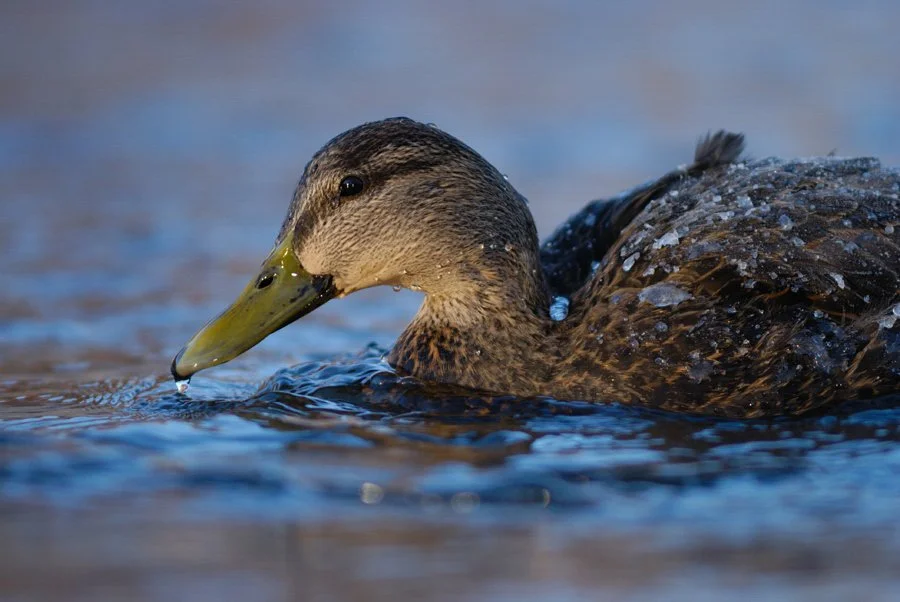
American Black Duck. Photo: Glenn Upton/Audubon Photography Awards
The Mallard and American Black Duck numbers were the exceptions to the low dabbling duck figures for 2026. The wintering Mallard population remained practically unchanged, and the American Black Duck count showed a dramatic increase. The count of Mallards was 1,240 in 2025 and 1,233 in 2026, while the count of American Black Ducks increased from 716 in 2025 to 1,044 in 2026.
Mallards are the most common of the dabbling ducks and can be found almost everywhere, including small inland lakes and ponds. American Black Ducks have been most abundant at Pohick Bay, Ft. Belvoir, and the Great Marsh at Mason Neck, but I am noticing a slight change in distribution that may be independent of the ice cover in 2026. One-third of the American Black Ducks in 2025 were tallied at Chopawamsic Creek at Quantico Marine Base. In 2026, over one-fourth of American Black Ducks were at Chopawamsic Creek.
There were dramatic declines in some diving ducks in the genus Aythya (Canvasback, Redhead, Ring-necked Duck, and Greater and Lesser Scaup) while the Common Merganser numbers doubled between 2025 and 2026. Canvasbacks declined from 6,176 in 2025 to 180 in 2026, and Redheads from 776 in 2025 to 468 in 2026. Common Mergansers increased from 755 in 2025 to 1,461 in 2026.
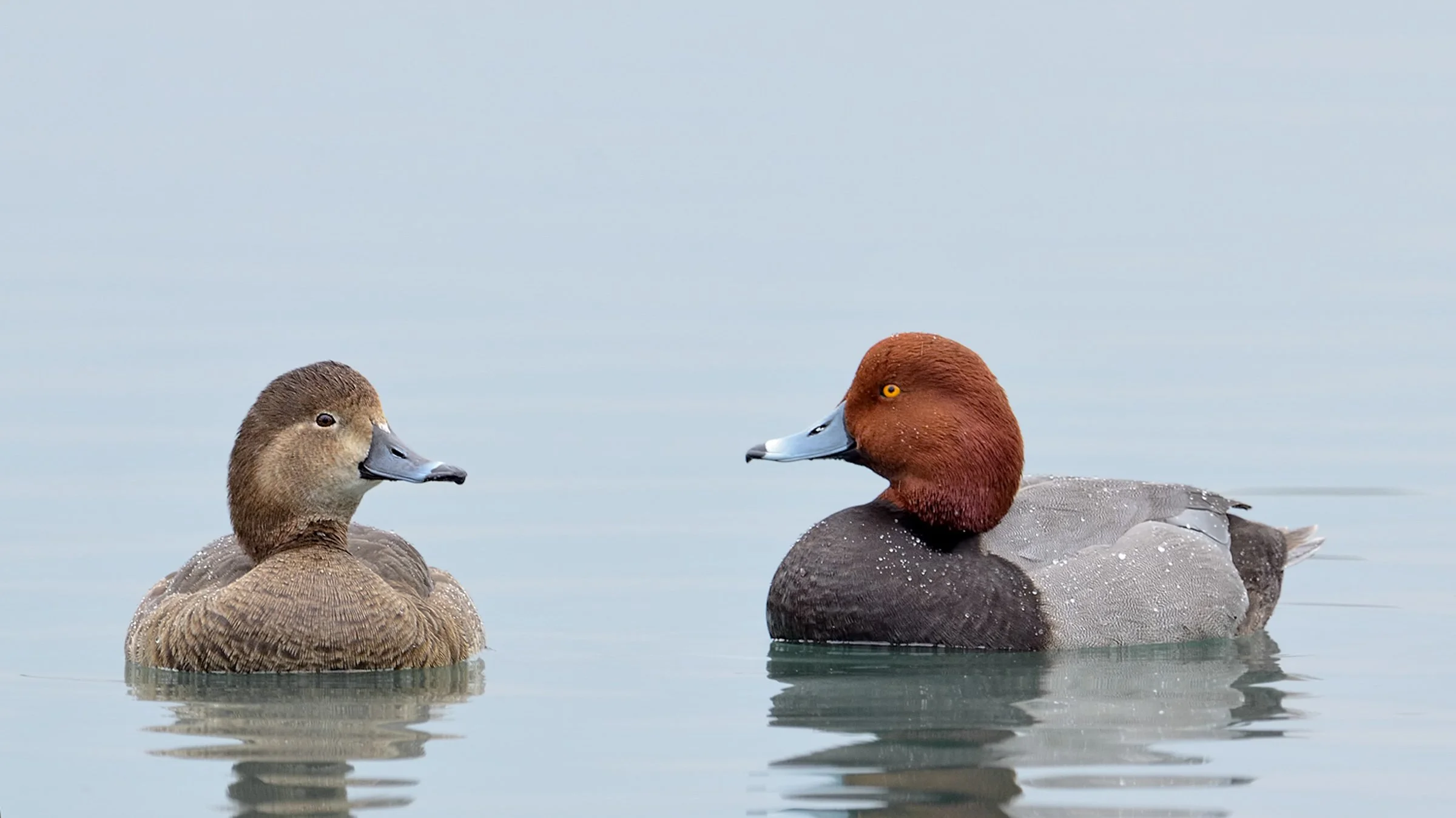
Redheads. Photo: William Dix/Audubon Photography Awards
It’s hard to know how much the ice cover impacted these numbers, but it seems not to have deterred Common Mergansers. Canvasbacks and Redheads generally congregate around Pohick Bay, Occoquan Bay National Wildlife Refuge, and Mason Neck Refuge and State Park. This was partially true in 2026. Half the Redheads were tallied in the northern half of Belmont Bay, but over half of the small number of Canvasbacks were found at Leesylvania State Park. Common Mergansers were well represented in the Potomac River as seen from Ft. Belvoir and in Belmont Bay (over 800 birds).
There was little fluctuation in Ring-necked Duck and Lesser Scaup numbers between 2025 and 2026. The count for Ring-necked Ducks was 601 in 2025 and 562 in 2026, and for Lesser Scaup was 6,565 in 2025 and 7,275 in 2026. Distribution was unchanged as well. Well over half the Ring-necked Ducks were found in the Potomac River west of Great Falls or in lakes and ponds in western Fairfax and Loudoun Counties. Lesser Scaup were present in large rafts in the Potomac River at Mason Neck and in Occoquan and Belmont Bays.
As for the small diving ducks, Buffleheads and Ruddy Ducks witnessed the most significant declines while Hooded Mergansers had no fluctuation.
Bufflehead: 583 in 2025 and 282 in 2026
Hooded Merganser: 357 in 2025 and 351 in 2026
Ruddy Duck: 424 in 2025 in 184 in 2026
These smaller divers are often more at home in inland bodies of water than the Potomac River so perhaps iced-over lakes and ponds did not provide suitable conditions for them.
Tundra Swans maintained a nice presence between 2025 and 2026 with birds primarily distributed around Occoquan and Belmont Bays and the Great Marsh at Mason Neck. Volunteers also reported small flocks at Leesylvania State Park and Chopawamsic Creek. The count was 396 in 2025 and 357 in 2026.
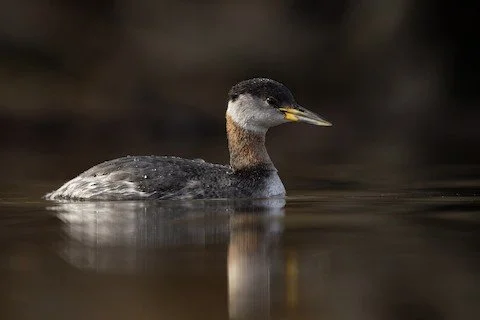
Red-necked Grebe. Photo: Matt Felperin
The top bird of the 2026 Winter Waterfowl Count was not even a waterfowl (ducks, geese, swans), but an occasional winter waterbird not seen every year. This was a Red-necked Grebe, the star of the show seen at Pohick Bay Regional Park.
Trends? It’s hard to identify them with the amazing fluctuations seen in some species. We can say that certain species prefer to winter in certain locations, so we have an idea of the distribution of some waterfowl, whether it’s Lesser Scaup at Occoquan and Mason Neck or Ring-necked Ducks hanging out west of Great Falls.
Thanks to everyone that participated in the 2026 count. Come back and join us in February 2027 and see what surprises that wintering waterfowl in northern Virginia present for us.