
Bad Feather Days: Molt in Backyard Birds
Photo: Northern Cardinal, Kent Blumberg
Kent Blumberg
Why is that Northern Cardinal bald? We all have bad hair days. Birds have bad feather weeks every late summer as they go through molt. Some, like Northern Cardinals, take the process to the extreme.
In a month or two we’ll start noticing changes in the birds around us as many of them molt. Let’s take a look at why birds replace their feathers, how the process works, and when it happens.
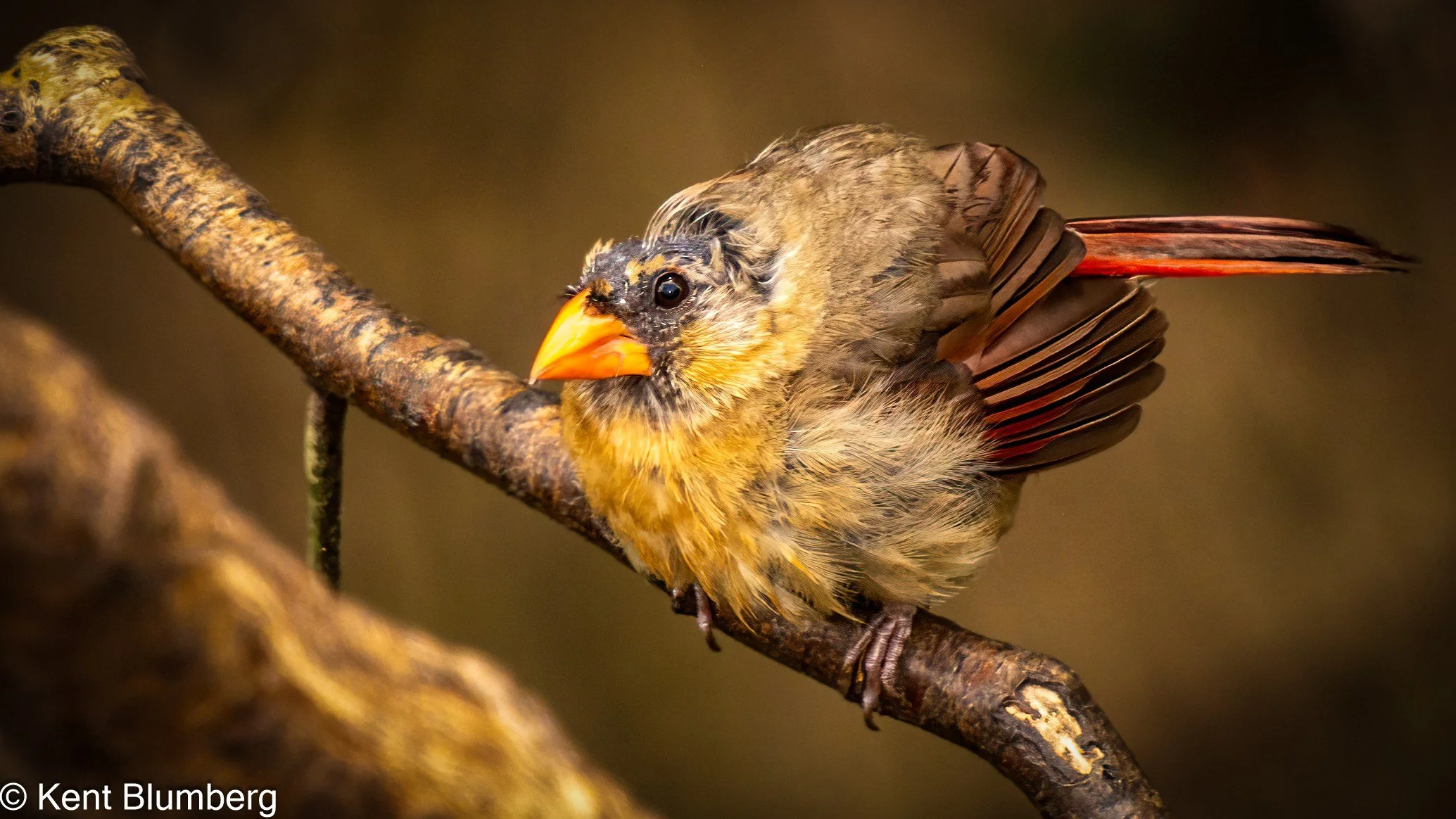
Female Northern Cardinal molting. Photo: Kent Blumberg
Feathers are made of keratin, like our hair and fingernails. Feathers serve many purposes for birds: flight, insulation, waterproofing, courtship, and camouflage. Feathers need to stay in top condition to do those jobs well. Wear or damage can hurt flight efficiency.
Unlike hair and nails, feathers grow quickly and then stop. Keratin is not live tissue and cannot be repaired, so when feathers get damaged, they must be completely replaced. That’s the main reason birds replace their feathers each year.
Another reason birds molt is to switch from their everyday plumage to brighter breeding colors. Even birds that put on fancy coats for breeding season spend most of the year in basic, less colorful plumage. Those that dress up for breeding do so only for the breeding season. Examples in northern Virginia include American Goldfinches, Wood Ducks, Indigo Buntings, and others.
In molting, new feathers growing in follicles push the old feathers out. Because growing those new feathers takes a huge amount of energy, birds carefully time their molts so as not to overlap with breeding or migration. For many birds in northern Virginia, late summer is peak molt season. There’s still a lot of food available and no need yet for migration.
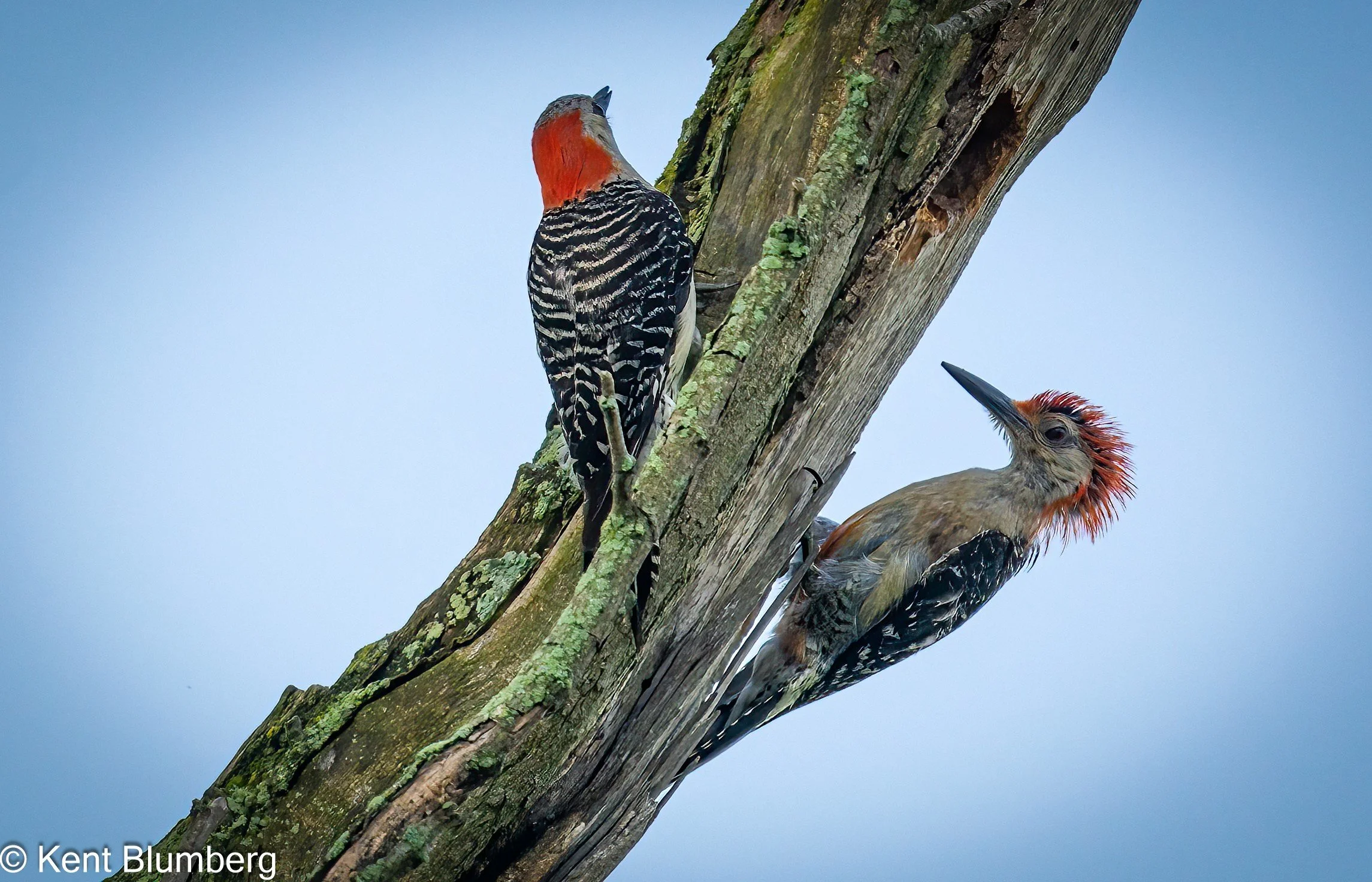
Red-bellied Woodpeckers, one molting. Photo: Kent Blumberg
Molt patterns also vary by age. Young birds often go through several molts in their first season. Others take several annual molts to reach full adult plumage. Bald Eagles, for example, take four to five years, while Ring-billed Gulls can take three years.
While most birds that have a breeding plumage go through a partial molt to don their bright colors, others, like the Northern Cardinal or the European Starling rely on feather wear to reveal their brighter colors.
In late summer, male Cardinals often look duller, their red feathers hidden beneath a tan or gray wash. Over the winter, as the edges of feathers wear, the underlying red color is exposed. Similarly, a late summer European Starling will sport buff-colored tips on belly and breast feathers. By breeding season those tips will have worn away, leaving a glossy black breast.
Most local birds adopt their breeding plumage in early spring, but male Wood Ducks get a jump on the game. They swap to dull plumage in early summer and then back to their brilliant breeding colors in early fall. They fast-track the change because their courtship begins in late fall. They need the dull colors to help them hide while they temporarily lose the ability to fly during wing molt, but then jump right back into glorious technicolor.
Back to our bald Northern Cardinal. For unknown reasons, Northern Cardinals and Blue Jays often replace all their head feathers at once. When the old feathers get pushed out, they can look bald (like the female Northern Cardinal in the accompanying photo). Fortunately, new feathers emerge quickly.
Watch for signs of molt later this summer. Birds may look ragged, patchy, or downright disheveled. Remember that this is a stressful time for birds, so do your best to give them space. If you have regular visitors to your backyard, consider taking weekly portraits of them, starting now through August, to see how they change as they go through molt.
Kent Blumberg is an MBA professor, passionate bird photographer and voracious reader.