NVBA NEWS BLOG

Welcome to the blog for Northern Virginia Bird Alliance, a wealth of resources about northern Virginia birds, wildlife, habitat conservation and restoration, native plants, wildlife-friendly gardening, advocacy and more.

News Jess Michetti News Jess Michetti

Citizen Scientists Are Down to Earth

National Geographic defines citizen science as “the practice of public participation and collaboration in scientific research to increase scientific knowledge.” Projects usually do not require specialized knowledge, and volunteers often train new ones.
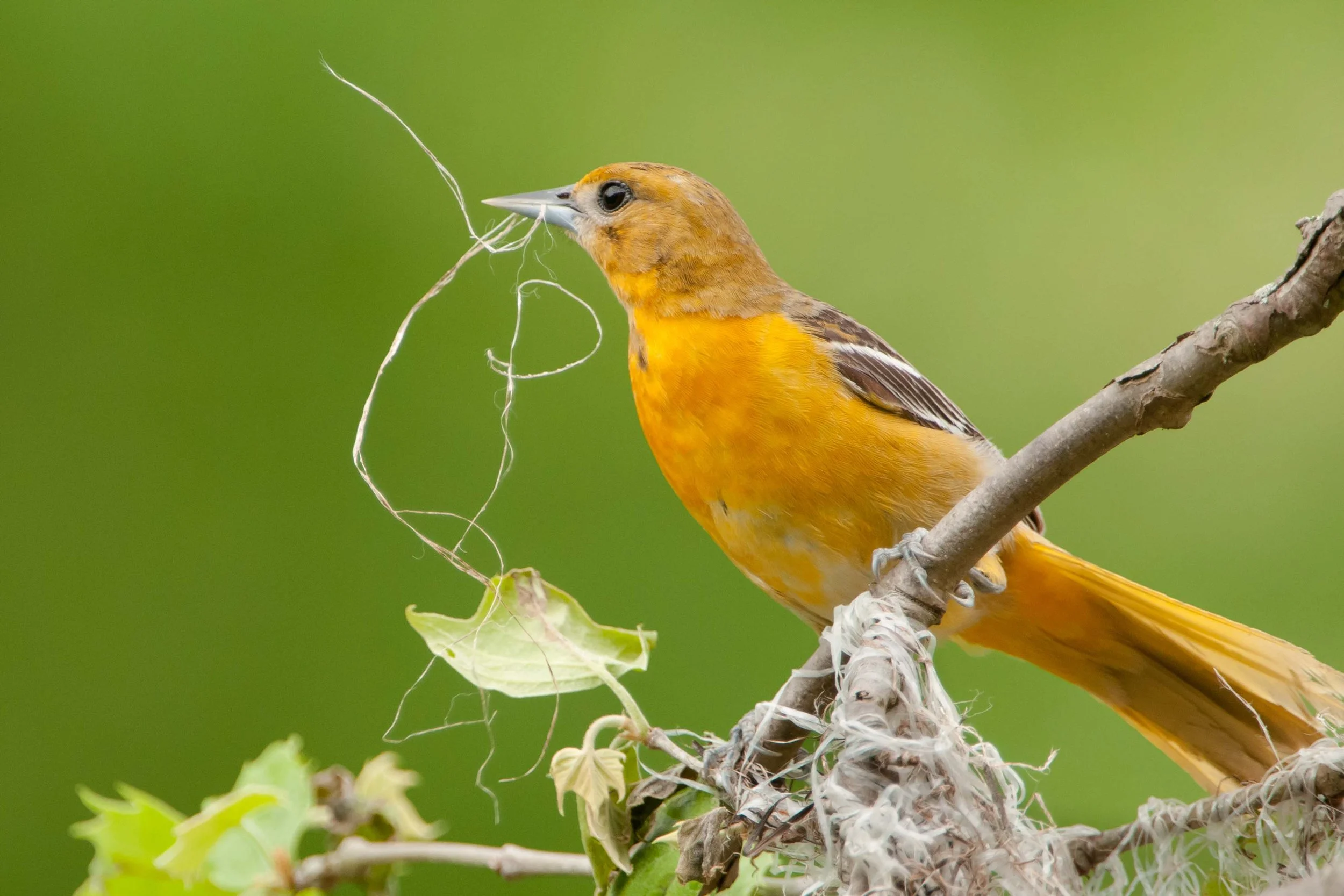
Photo: CBC participants in the morning fog, Deapesh Misra

Glenda C. Booth

This article originally appeared in the Beacon newspaper, www.thebeaconnewspapers.com. Reprinted with permission.

During her childhood in Atlantic City, New Jersey, Jill MacNeice was always in the water, dreaming of scuba diving with octopuses and legendary undersea explorer Jacques Cousteau.

Now living in Washington, D.C., she is still in the water, taking water samples from the Potomac River with a volunteer team of the Potomac Riverkeeper Network, a watchdog advocacy group that combats pollution and advocates for clean water. She’s one of thousands of Americans who spend their free time as “citizen scientists,” gathering data for research and other projects.

National Geographic defines citizen science as “the practice of public participation and collaboration in scientific research to increase scientific knowledge.” Projects usually do not require specialized knowledge, and volunteers often train new ones.

One of the oldest citizen-science projects is the National Audubon Society’s annual Christmas Bird Count, started in 1900. Thousands of Americans join volunteers in 20 other countries to compile the annual census.

CBC participants in the morning fog. Photo: Deapesh Misra

“We truly value the work of citizen scientists,” Libby Lyons, president of a local Audubon chapter called the Northern Virginia Bird Alliance, said in an email. “For decades, they have organized local volunteers to collect data, which give … valuable insights into changes in bird populations and the environment and help mitigate threats to birds and other wildlife.”

Local impact

The importance of MacNeice’s work was accentuated last winter, when a Maryland sewer line collapse sent more than 200 million gallons of raw sewage into the Potomac River, the drinking water source for five million people in the Washington region.

From April to October, MacNeice takes weekly water samples at sites along the Potomac River from Maryland’s Seneca Creek to Belle View Marina in Fairfax County, Virginia, part of a network that extends to Colonial Beach, Virginia.

She samples for e. coli bacteria and turbidity, records air and water temperatures, and notes weather conditions. Within five hours, her samples arrive at the organization’s floating laboratory at National Harbor, where analysts determine if the water is safe.

MacNeice kayaks on the Potomac yearround, but her volunteer work has introduced her to “many interesting spots I never knew about,” she said.

“This [project] is a great opportunity to participate in citizen science and work on something dear to my heart that makes a difference. When you spread it out over many people, it becomes important — and that’s kind of special.”

As a former digital information designer for Marriott and the Library of Congress, MacNeice is also calling on her professional skills and digitizing the riverkeepers’ information collection processes.

“In this work, I can combine my professional skills with childhood fantasies,” she said.

Birdman of Annandale

Identifying birds and analyzing their behavior is not hush-hush top secret like Larry Cartwright’s former career in military intelligence for the Defense Intelligence Agency, but it is just as intriguing for the Annandale resident, a longtime birdwatcher, teacher and student.

Cartwright, who studied the clandestine military machinations of the Soviet Union, Iraq and Afghanistan, retired in 2014. Now he often leaves home before sunrise, binoculars and spotting scope in hand, to scour the skies, waterways, ground and trees for birds.

Since 1993, he has led an annual breeding bird survey for the Friends of Dyke Marsh, a survey that does not just identify the birds in the Fairfax County marsh but confirms they are, in fact, breeding. Volunteers observe and record those telltale behaviors, like taking nesting materials to a nest or feeding nestlings.

Cartwright is so enthralled by birds that he organizes three additional annual surveys: the Northern Virginia Bird Alliance’s winter waterfowl survey, since 2008; the bluebird nestbox survey at Huntley Meadows Park, since 2000; and the Audubon Christmas Bird Count in Northern Virginia and Maryland, since 2004. For each of them, he recruits volunteers and prepares detailed reports.

“I’m fascinated by birds,” he explained. “In today’s world, everything online seems contrived. When I go into the woods and see nature, that is the one thing you can bet on. It’s a true aspect of life. They breed, are born, live and die. It’s a reality that we share.”

Not surprisingly, Cartwright teaches bird-related classes at Northern Virginia Community College. Birds have long intrigued people, from early sculptors to the writers of the Bible to 18th-century Japanese artists, he pointed out.

Cartwright’s curiosity about birds started in childhood when he accompanied his uncle in Pennsylvania on hunting trips.

“Sitting in a deer stand freezing my butt off, I became fascinated when a Pileated Woodpecker would fly by,” he said. He was mesmerized by the grouses’ drumming and elaborate courtship displays.

“The depressing part is that some birds are disappearing,” he lamented. “If it all disappears, the world will be a very sad place to live in. What affects them affects us.”

Cartwright cites the adverse impacts of climate change as “one of our biggest challenges,” but adds, “There’s something we can do about it. The more you do, the more you learn.”

Gung-ho for native plants

When Clifton resident Margaret Fisher read entomologist Doug Tallamy’s first book, Bringing Nature Home, “It completely changed my life,” she said. “The book was revolutionary.”

The book maintains that everyone can address the biodiversity crisis by planting native plants, which, Fisher pointed out, are “the basis of the ecosystem that feed the insects that birds eat. Without native plants, we won’t have insects, birds or anything else.”

Fisher, a rheumatologist and internal medicine physician for Kaiser Permanente, got hooked on native plants after she retired from her medical career in 2017.

While helping a local high school with their fundraiser, she decided that instead of compiling their traditional recipe book, she would write a booklet of gardening tips and explore how to garden in an environmentally beneficial way. Then she went door-to-door in her town of Clifton and signed up 110 property owners who promised not to use insecticides.

These first steps inspired her to bolster a fledgling organization, Plant NOVA Natives, a coalition designed to influence the landscaping culture of Northern Virginia. For the last 12 years, she has expanded the group to more than 100 partners, agencies, nonprofits and garden centers.

She helped write Native Plants for Northern Virginia and organized 65 volunteers to label native plants in garden centers so customers don’t have to research whether a plant is native or not.

“The centers really like it, and we’ve seen a noticeable increased inventory of native plants,” she said.

Fisher conducts conferences for landscape professionals in English in summer and Spanish in winter, encouraging them to use native plants.

She also manages Fairfax Trees Rescuers, volunteers who help the million trees at risk in Fairfax County from infestations like English ivy.

“If we don’t do this as a community-wide effort, by the end of century, we will have lost most of native trees and natural areas,” Fisher said. “We must act now when we can prevent that. The longer we wait, the more expensive it gets.”

Another priority is the pollinator pathways project, which encourages neighbors to band together and create connected corridors, avoid insecticide use, and plant native plants.

With five neighborhoods on board so far, Fisher is pleased to see momentum growing.

“We make it easy for someone to do something, and they will think of themselves as environmentalists. If we can get them to do it, they will be more committed and do more,” she said.

“If you hope people will act and assume only one percent will, one percent of 1.2 million people in Fairfax County is still a lot of people. I don’t think it’s impossible, but we need a lot of dedicated people to make it happen,” she said.

Whether it’s saving injured bats, monitoring frogs, analyzing spring buds, counting salamander eggs in vernal pools or digging for artifacts, citizen scientists are giving back — and providing some human capital and data to improve our world.

“I have a motivation to do good things in the world, to help others,” Fisher said.

“It’s fun to actually become the steward of your property and save the little insects and birds right here. Every time you do that, you are taking a step to saving our environment.”


Glenda C. Booth, a freelance writer, grew up in southwest Virginia and has lived in northern Virginia more than 30 years, where she is active in conservation efforts.

Read More
News Jess Michetti News Jess Michetti

Updating the Virginia Breeding Bird Atlas

Breeding bird atlases have a long history in the United States, where they are typically conducted at the state level. Like road atlases, at their core they are centered around maps, but the maps relate to the geographic distribution and abundance of breeding bird species—that is, where they are found on the landscape and in what numbers.

Photo: Baltimore Oriole, Mark Boyd/Audubon Photography Awards

Glenda C. Booth

Reprinted from DWR’s Virginia Wildlife, January/February 2025

Breeding bird atlases have a long history in the United States, where they are typically conducted at the state level. Like road atlases, at their core they are centered around maps, but the maps relate to the geographic distribution and abundance of breeding bird species—that is, where they are found on the landscape and in what numbers. Last fall, a website was published describing the results of the Second Virginia Breeding Bird Atlas (Atlas), a five-year survey that served as a follow-up to the First Atlas (1985-1989). This Second Atlas was a product of a partnership among the Virginia Department of Wildlife Resources (DWR), the Virginia Society of Ornithology (VSO), and the Conservation Management Institute (CMI) at Virginia Tech.

Ashley Peele, PhD, an avian ecologist now working for the Appalachian Mountains Joint Venture, served as the Atlas Coordinator, recruiting, training, and guiding volunteers to collect bird data according to Atlas guidelines. Nearly 1,500 volunteers contributed to the Atlas between 2016 and 2020, making it one of the largest citizen-science projects in the state. This effort involved groups like bird clubs, Audubon chapters, Master Naturalists, outdoor organizations, wildlife biologists, college students, and others. “Without the volunteer component, this project is one that could never have been carried out by Virginia’s natural resource professionals alone,” said Sergio Harding, a DWR nongame bird conservation biologist.

How They Did It

Red-winged Blackbirds, Ken Lassman/Audubon Photography Awards

Atlas surveys took place within Atlas blocks, using the same statewide block grid as the First Atlas. Each quadrangle within the U.S. Geological Survey’s topographic map series for Virginia was subdivided into six blocks of approximately 10 square miles in area. Volunteers recorded as many species as possible within a block, entering their observations into a customized Virginia Atlas portal of the popular online eBird application.

While the peak breeding season for many migrant birds is typically May to July, volunteers surveyed for breeding birds throughout the year. In the late winter and early spring, for example, birds like owls, hawks, and falcons begin breeding activity. Bald Eagle (Haliaeetus leucocephalus) courtship can start as early as December in Virginia. Great Blue Herons (Ardea herodias) typically start nest building in rookeries in February in the state.

Eastern Bluebirds, Mark Boyd/Audubon Photography Awards

“Breeding bird atlas surveys collect behavioral information, unlike other bird surveys that typically only identify and count numbers of species,” remarked Peele. This helps to distinguish birds that are breeding from those that are migrating through or finishing their winter stay. Volunteers reported evidence of breeding, using standardized breeding codes, based on behaviors they observed for each species within a block. Individual observations of birds were then categorized as representing possible, probable, or confirmed breeding. Examples of breeding behaviors include singing, copulation, carrying nesting material, incubating eggs, and feeding young. 

Atlas Highlights

The total number of species with breeding evidence was 205 for the Second Atlas and 203 for the First. For confirmed breeders only, the totals were 196 for each Atlas. Austin Kane, the Managing Editor of the Second Atlas, who works with Virginia Tech’s Conservation Management Institute, cautioned, “It is important to note that although the number of confirmed breeders stayed the same, their composition changed slightly between Atlases.” These changes reflect changes to Virginia’s avifauna over the past 30 years, with some breeding species having been gained and others lost:

  • Eight species were confirmed as breeding that were not detected during the First Atlas: the introduced Trumpeter Swan (Cygnus buccinator) and Eurasian Collared Dove (Streptopelia decaocto), as well as Black-necked Stilt (Himantopus mexicanus), Anhinga (Anhinga anhinga), Mississippi Kite (Ictinia mississippiensis), Merlin (Falco columbarius), Yellow-rumped Warbler (Setophaga coronata) and Painted Bunting (Passerina ciris).

  • Two species that bred during the First Atlas were not detected at all during the Second Atlas. Bewick’s Wren (Thryomanes bewickii) is believed to be extirpated across the eastern United States. Bachman’s Sparrow (Peucaea aestivalis) breeds more regularly south of Virginia and has not been documented in the state since 2003.

  • Five additional breeders during the First Atlas were reported without breeding evidence during the Second Atlas. They include Blue-winged Teal (Spatula discors), Green-winged Teal (Anas crecca), Ring-necked Pheasant (Phasianus colchicus), Upland Sandpiper (Bartramia longicauda) and Sedge Wren (Cistothorus stellaris).

  • Certain species saw their distribution diminish within the state. This includes Kentucky Warbler (Geothlypis formosa), American Barn Owl (Tyto furcata) in the Coastal Plain and Northern Bobwhite (Colinus virginianus) and Yellow-breasted Chat (Icteria virens) west of the Blue Ridge Mountains.

“The second Atlas gives us a more detailed picture of where breeding birds are distributed across Virginia and how that has changed since the mid-1980s,” said Peele, who coordinated the data collection and analysis component for the second Atlas. “These data provide a quantitative way to evaluate how bird populations have shifted over the last 40 years.”

The Atlas website features over 200 individual Species Accounts of game and nongame birds. For species with sufficient data, they provide maps of breeding distribution and of changes in distribution between Atlases, based on predictive models; breeding evidence maps based on data collected by volunteers; maps of predicted abundance; population estimates and population trends; and a summary of relevant conservation efforts. The maps are complemented by interactive maps and by a narrative providing interpretation.

The website also includes a guide to reading the Species Accounts and sections on Atlas methodology and results. The website will be expanded in early 2026 with additional results, content on analytical methodology, information on Virginia’s geography and habitats, and a section on the role of the Atlas in bird conservation.

Eastern Kingbird on nest, Dixie Sommers

Why is the Atlas Important?

As a centralized source of information, the Atlas website is an educational resource for people to learn where breeding birds in Virginia are found and in what numbers. But most importantly it is a conservation tool. As Kane noted, “[The Atlas] is a statewide effort that, when paired with the results of the First Atlas, shows where our birds occur on the landscape and how that has changed over time, helping us understand the health and status of their populations and providing an important tool for conservation. When we know where they are, we can better protect them.”

Atlas data can inform decision-making by policy makers, land planners and natural resource professionals. For example, DWR used Atlas results to fill in data gaps during its update of the list of avian Species of Greatest Conservation Need in the 2025 Virginia Wildlife Action Plan. Distribution data can help target potential new habitat projects, and abundance maps can aid in identifying areas with larger or smaller concentrations of priority bird species for conservation work. For landowners, Atlas information on the timing of breeding activities by different species can help guide land management. For example, knowing when to avoid tree work and field mowing can minimize impacts to nesting birds.

Changes in the distribution of species reflect habitat changes, climate change impacts, and many other factors. Ultimately, having a good grasp of changes in bird populations and on their underlying causes is key to being able to conserve them. As Peele noted, “Some population declines happen quietly and we learn too late.”

Glenda C. Booth, a freelance writer, grew up in southwest Virginia and has lived in northern Virginia more than 30 years, where she is active in conservation efforts.

Read More
News Jess Michetti News Jess Michetti

Report on the 2025 Occoquan Bay Area Annual Butterfly Count

Not the best of mornings for finding butterflies; sunless, oppressively humid, just the slightest of breezes, downright uncomfortable. But more than two dozen volunteers were ready for the challenge.
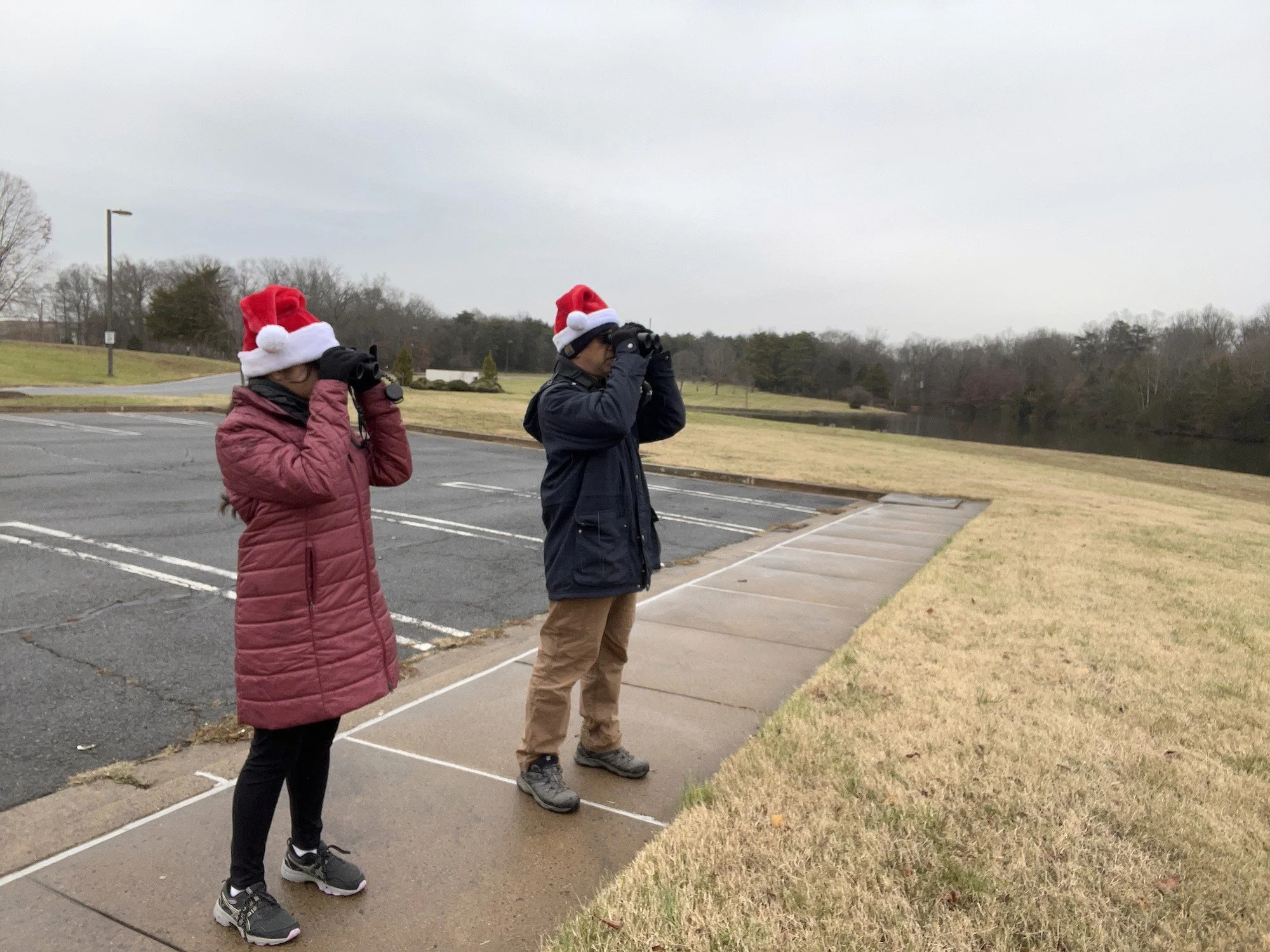
Photo: Eastern Tiger Swallowtail, Sheryl Pollock

Jim Waggener

0730, Sat., 28 Jun. 2025: Not the best of mornings for finding butterflies; sunless, oppressively humid, just the slightest of breezes, downright uncomfortable. But more than two dozen volunteers were ready for the challenge, forming small teams to cover Occoquan Bay NWR, and other promising sites nearby (Meadowood Recreation Area on Mason Neck, Occoquan Regional Park, the Metz Wetlands Preserve and Rippon Landing). Following a routine honed over decade of practice, every adult butterfly that could be identified would be recorded and, if unusual or rare, photographed. All done by sight, without capturing or harming any of the various swallowtails, sulphurs, skippers or other butterflies encountered.

This particular count was begun in 1990s to document the lepidoptera of a then U. S. Army facility slated for closure, both to draw public attention to the site’s unique nature and to generate support for its permanent protection. By the time the Occoquan Bay refuge was finally established in 1998 the count had taken on the form and routine that are followed today. Over the years, other sites with varied natural habitats were added. Certified in 2001 by the North American Butterfly Association, the Occoquan Bay-area Count presently encompasses the four sites (listed above) that are surveyed in a multi-year, citizen science project, long supported by the Northern Virginia Bird Alliance and other regional organizations.

Over the years, count results have varied considerably in numbers of species and individual butterflies. For example, 2005’s count resulted in 19 species and 114 individuals while 2013’s count resulted in 42 species and 1022 individuals. The count in 2015 resulted in 37 species and 1269 individuals, with the average over the past 24 years at 33.9 species and 593.6 individuals. Expectations for this year’s tally diminished as unfavorable conditions persisted until late morning. Less than an hour before count’s end, breaks appeared in the clouds, spurring heightened butterfly activity. While results from individual sites were not impressive, combined they were unexpectedly positive: 34 species and 828 individual butterflies.

In addition to the butterflies, this day’s count produced reports of a Mississippi Kite, confirmation of Blue Grosbeaks breeding, an uncommonly encountered Mole King Snake, other wildlife (Rough Greensnake, Box Turtle, Beaver, Cottontail, etc.) and plants (including first-of-season records of bloom).

In sum, another successful count and more records for the expanding base of data on these important natural sites. Certainly a tribute to the diversity and health of habitats across the various sites. A tribute as well to the skills and perseverance of the teams and leaders of today's count. A more difficult job than expected, perhaps, but exceptionally well done.

Learn more about butterfly counts and how you can join us!

Read More
News Jess Michetti News Jess Michetti

Results of the 2024 Manassas-Bull Run Christmas Bird Count 

The results of the 43rd annual Manassas-Bull Run Christmas Bird Count are in! Over seventy birders counted 17,591 birds of 79 species in this 15-mile diameter circle on December 15, 2024.

Photo: CBC participants Mehika and Deapesh Misra at Upper Occoquan polishing pond

Phil Silas, Compiler

The results of the 43rd annual Manassas-Bull Run Christmas Bird Count are in! Over seventy birders counted 17,591 birds of 79 species in this 15-mile diameter circle on December 15, 2024. There were 35 parties of field observers. They were led by experts but included birders of all skill levels. The day was cool and overcast with some drizzle toward mid-day. 

Swamp Sparrow, Chuck Wood/Audubon Photography Awards

Ring-necked Duck, Mike Wood/Audubon Photography Awards

Ruby-crowned Kinglets numbered 36, and Winter Wrens numbered 26, which passed the respective high counts of 32 and 22 from all our previous counts.

The waterfowl had a few notable records as 83 Ring-necked Ducks were observed, which is 40 more than our previous high count. A single American Wigeon showed on a previous year’s count; this year’s count recorded two. Gadwall approached the record high of 50 with a count of 47.

Sparrows were a delight with Swamp Sparrows surpassing last year’s record of 40 by 1. White-throated Sparrows and Dark-eyed Juncos had strong numbers of 1,624 and 1,359, respectively. We don’t see the American Tree Sparrow and Fox Sparrow every year, so it was nice to record six and seven sightings, respectively. Northern Cardinals were just 11 off the record 877 observed just last year. Notably absent was the Common Grackle that had been super abundant on this count just two years ago.

Each of the six sectors observed at least one species unique to the count. Sector 1 had Eastern Phoebe; Sector 2 had Sharp-shinned Hawk; Sector 3 had Common Merganser, American Herring Gull, and Red-breasted Nuthatch; Sector 4 had Bufflehead; Sector 5 had Wild Turkey and Brown-headed Cowbird; and Sector 6 had Northern Shoveler, American Wigeon, Lesser Scaup, and American Tree Sparrow.

Thanks to all who participated, especially my fellow sector leaders -- Robin Duska Huff, Greg Butcher, Toby Hardwick, and Robert Mocko. Mark your calendars for the 44th count December 14, 2025. The spreadsheet with all the data by sector is linked here

Read More
News Jess Michetti News Jess Michetti

Results of the 2023 Manassas-Bull Run Christmas Bird Count 

The conditions were not auspicious for the 42nd annual Manassas-Bull Run Christmas Bird Count, but the results still broke some records!

Photo: CBC participants in the morning fog, Deapesh Misra

Phil Silas, Compiler

The conditions were not auspicious for the 42nd annual Manassas-Bull Run Christmas Bird Count, but the results still broke some records! Ninety-eight birders counted 21,767 birds of 78 species in this 15-mile diameter circle on December 17, 2023. There were 34 parties of field observers led by experts. The teams included birders of all skill levels, and one feeder-watcher. A thick fog slowed bird sightings early in the day, and skies remained overcast all day with rain becoming steady in early afternoon. 

White-throated Sparrow, Phillip Kenny

Red-headed Woodpecker, Seth Honig

The biggest surprise was that we observed 12 species in numbers that broke the record for the highest numbers set on any of the 41 previous counts. Species with new high totals, in taxonomic order, were Great Blue Heron (38), Yellow-bellied Sapsucker (91), Pileated Woodpecker (83), Northern Flicker (219), Carolina Wren (534), Gray Catbird (4), Brown Thrasher (4), Hermit Thrush (66), White-throated Sparrow (1,649), Swamp Sparrow (40), and Eastern Towhee (91). We observed no rare species, and we counted several species in just one sector. These included White-crowned Sparrow and Pine Warbler in Sector 1; American Black Duck and Common Merganser in Sector 3; Ring-necked Duck, Bufflehead, Ruddy Duck, and Eastern Phoebe in Sector 4; Double-crested Cormorant in Sector 5; and Wood Duck, Northern Harrier, American Tree Sparrow, and Eastern Meadowlark in Sector 6. Two of the record-breaking Brown Thrashers were sighted in Sector 2.

Some other notable numbers included, the 1,706 Cedar Waxwings that were just 30 short of the record set in 2007; 4,010 American Robins, which seemed to be everywhere; and 4 Barred Owls. 

Of course, a big thank you goes to all who participated, especially my fellow sector leaders Robin Duska Huff, Greg Butcher, Dixie Sommers, Toby Hardwick, and Robert Mocko. Robert led Sector 6 for the first time and did very well thanks in part to Steve Johnson’s giving us plenty of notice and smoothing the transition. A special thanks goes to Dixie Sommers for leading Sector 4 for the past seven years. She’s handing Sector 4 off to a new leader for 2024. It’s not too early to mark your calendars for the 43rd count on Sunday, December 15, 2024. 

The spreadsheet with all the data by sector is linked here.

Read More
News Jess Michetti News Jess Michetti

Christmas Bird Count 2023

The 124th Audubon Christmas Bird Count (CBC) will take place between this December 14 and January 5, 2024.

Photo: Carolina Chickadee, Jeff Drake/Great Backyard Bird Count

The 124th Audubon Christmas Bird Count (CBC) will take place between this December 14 and January 5, 2024. General information about the CBC is available on the Audubon website.

ASNV sponsors the Manassas-Bull Run CBC, which will be held for the 42nd year on Sunday, December 17. Those who participated in our count last December will to be contacted no later than Thanksgiving. Anyone who would like to participate in this count but did not participate last year should contact the compiler, Phil Silas, at epsdcva@aol.com, or 703-987-0817, as soon as possible but not later than December 8. 

Information on other local CBCs that you may be interested in is available in the November 2023 issue of The Siskin, the newsletter of the Northern Virginia Bird Club. Look for the list on page 3.

If you have any questions or concerns about participating in this fun and very useful annual event, you can email or call Phil Silas.

Read More
News Jess Michetti News Jess Michetti

Christmas Bird Count

The 124th Audubon Christmas Bird Count (CBC) will take place between this December 14 and January 5, 2024.

Photo: Winter Wren, Therese Scheller/Audubon Photography Awards

The 124th Audubon Christmas Bird Count (CBC) will take place between this December 14 and January 5, 2024. General information about the CBC is available on the Audubon website.

ASNV sponsors the Manassas-Bull Run CBC, which will be held for the 42nd year on Sunday, December 17. Those who participated in our count last December will to be contacted no later than Thanksgiving. Anyone who would like to participate in this count but did not participate last year should email the compiler, Phil Silas, or call him at 703-987-0817, as soon as possible but not later than December 8. 

Information on other local CBCs that you may be interested in is available in the November 2023 issue of The Siskin, the newsletter of the Northern Virginia Bird Club. Look for the list on page 3.

If you have any questions or concerns about participating in this fun and very useful annual event, you can email or call Phil Silas.

Read More
News Jess Michetti News Jess Michetti

eBird or Birda, or Both?

Most American birdwatchers are familiar with eBird and Merlin, products developed and managed by the Cornell Lab of Ornithology and launched in 2002 and 2021, respectively. But have you heard of Birda?

Photo: James Breeden/Audubon

Deidra Bryant

Most American birdwatchers are familiar with eBird and Merlin, products developed and managed by the Cornell Lab of Ornithology and launched in 2002 and 2021, respectively. But have you heard of Birda? It was developed in 2013 by a couple as a social media website and mobile application for sharing wildlife sightings in southern Africa, transitioned into a birdwatching community in 2018, and was launched as Birda in Europe and the US in 2022. It’s worth a look, even for dedicated eBird and Merlin users.

How does Birda work? Think of Facebook and Instagram, but for birders. Once you have downloaded the application you can create a profile, which requires only your name (or an alias), your location, and a species region. Then you are ready to use Birda to record and share your sightings with a selected group of friends or more globally. If you want to take a hike or walk and spot birds and record as you go, you tap the + symbol at the bottom of your screen and select “Birding Session.” If you simply want to record a one-off sighting, select “Add Sighting.” In that way, Birda is much like eBird.

In Birda’s “Birding Session” feature, simply tap “log bird,” and it will ask you what you saw. It will keep doing that until you choose to end your session. Once you are finished with your walk, you can post your experience on the app for friends and followers to see. You also can adjust privacy settings by tapping the “Profile” icon at the bottom of the screen. Birda uses a timer and GPS, so your post will display the date and time your session took place from start to finish along with bird species seen and number of sightings. You’ll be able to tag people, post notes, add photos, and even create titles for your session.

The “Add Sighting” option will ask you where you were, what you saw, and when you saw it. If you’re not sure what you saw, you can upload a picture and the Birda community will help you with identification if you choose to allow others to see your sighting. You also can help others ID birds they aren’t sure about on the “Unidentified” section of the “Feed” page. eBird users might turn to Merlin or iNaturalist for help with identification.

In Birda you can follow people overseas and see what birds they saw and where, and leave comments. You also can follow and see what your neighbors saw in your local area. That way you can try your luck spotting that same bird near you. You can create life lists and use the mapping location feature to see what birds have been recorded lately in an area. Birda also includes links to other information sources, displaying information on the natural history of the birds if you tap on the bird’s image. A species guide also is available in the “Discover” section seen at the bottom of the screen on the app.

Even if you are a committed eBird user, it’s worth your time to download and test drive Birda. Its Facebook-like features may attract more casual birders to participation in citizen science. And, although the application was not developed by a venerable institution like Cornell, it has been endorsed as a data publisher by the National Biodiversity Network, which has allowed it to contribute to the Global Biodiversity Information Facility, an international network and data infrastructure used to provide anyone and everyone open access to all types of information about life on earth. So, like eBird, the application can help scientists understand more about birds and climate change

So, give it a try! More information about Birda and its founders is available in a 2022 article by Matt Mendenhall in Birdwatching.

Read More
News Jess Michetti News Jess Michetti

ASNV Citizen Science Needs YOU!

As an important part of our citizen science work, we’re looking to establish some baseline bird abundance data for a pair of parks, specifically for Upton Hill Park in Arlington and Four Mile Run Park in Alexandria.

Photo: Camilla Cerea/Audubon

Jerry Touval

As an important part of our citizen science work, we’re looking to establish some baseline bird abundance data for a pair of parks, specifically for Upton Hill Park in Arlington and Four Mile Run Park in Alexandria. We’d like to hold a number of bird walks in those two parks this spring, but we need walk leaders. For Upton Hill, we’d like to enlist bird walk leaders for each weekend in May, and for Four Mile Run we’re looking to have a minimum of one walk per month for April, May and June (and more than one would be better!).

If you’re interested and available to lead any of these walks, we’ve set up a Google sign-up sheet that you can access here, or send a message to Jerry Touval.

Please consider helping out with this important citizen science work!

Read More
Jess Michetti Jess Michetti

Upcoming Workshops and Classes

Join us for a class, workshop or event! Here are a few of our upcoming offerings.

Photo: White-tailed Kites, Jack Zhi/Audubon Photography Awards 2022 Grand Prize Winner

Join us for a workshop or class! Here are a few of our upcoming offerings. Check our calendar often for updates.


Make Your Own Holiday Cards, Bird Watercolor Painting with Ronna Fujisawa

Cedar Waxwing, Ronna Fujisawa

*This is a digital art class.

Birds are an excellent source of inspiration and a joy to paint. Join this live, online class to paint alongside Ronna Fujisawa, an experienced watercolor painter, art educator, and bird enthusiast.

No prior watercolor experience is necessary for enjoying this tutorial. Before the class Ronna will provide participants a photograph to work from. To prepare for the class, students will use carbon paper to copy the photographic image onto watercolor paper. During the class, she will take the students step by step through the process of creating bird-themed holiday cards. The subject birds will be Carolina Chickadee and Cedar Waxwing, two birds we often see in winter. Students can paint along with Ronna during this live class or work later at their own pace with access to the recording of the online lesson. We’ll post a list of needed supplies soon.

When: December 1, 7:00 PM - 8:30 PM
Where: Virtual
Member ticket: $20
Non-member ticket: $30


Songbird Research: Prothonotary Warblers with Shirley Devan

Prothonotary Warbler collage, Jim Easton

Cure your winter blues with a pop of yellow! Join Shirley Devan to learn all about the Prothonotary Warbler, the only Eastern warbler species that nests in cavities. Populations of this striking bird, affectionately described by some as a "flying lemon," have declined by 34 percent since 1970. The class covers the life history of the Prothonotary Warbler and the 20+-year banding and monitoring program conducted by the Coastal Virginia Wildlife Observatory (CVWO). Shirley Devan is a member of the board of directors for the CVWO, the Virginia Society of Ornithology, the Historic Rivers Chapter of Master Naturalists, and the Williamsburg Bird Club.

When: December 15, 2022, 7:00 PM to 8:00 PM
Where: Virtual
Member ticket: $15
Non-member ticket: $25


All About the Wildlife Center of Virginia with Ed Clarke

Ed Clarke

The Wildlife Center of Virginia (WCV) is the leading teaching and research hospital for wildlife and conservation medicine. It trains veterinary students and professionals from every vet school in the U.S. and Canada and from nearly 40 other countries worldwide. The Center was named Conservation Organization of the Year for the entire U.S. in 2007. It produces the Emmy-nominated, weekly series “Untamed,” that appears on PBS affiliates nationwide. Ed Clark will introduce us to WCV and its important work and update us on new initiatives underway to celebrate its 40th anniversary.

When: Thursday, January 19, 7:00 PM - 8:00 PM
Where: Virtual
Members: $15
Non-members: $25


Audubon Afternoon with Carla Dove

Carla Dove

Join us on Sunday afternoon for our semi-annual live Audubon Afternoon at the National Wildlife Federation, 11100 Wildlife Center Drive in Reston.

We’ll gather informally starting at 2:30 so you have an opportunity to reconnect with everyone. We welcome any food and drink you would like to share with everyone during the informal portion of the program. At 3 PM, we’ll have a presentation by Forensic Ornithologist Dr. Carla Dove, a scientist with the Smithsonian National Museum of Natural History.

When: Sunday, January 22, 2:30 PM - 4:30 PM
Where: National Wildlife Federation Building, 11100 Wildlife Center Drive, Reston, VA 20190
Fee: FREE; registration is requested


Winter Animal Tracking with Ranger Emily Jones

Ranger Emily Jones

Winter is a great time to practice your detective skills. While many mammals are nocturnal, they do leave behind evidence of their activities such as footprints and scat. Join this informative webinar to learn how to identify tracks and scat of our common Virginia wildlife. Ranger Emily will also lead us through some interactive tracking mysteries to help us practice our observation and naturalist skills. Do you have a photo of some mystery tracks? Email it to tina@audubonva.org and we may cover it during the presentation!

When: Tuesday, January 24, 7:00 PM - 8:00 PM
Where: Virtual
Members: $15
Non-members: $20


2022 Audubon Photography Awards and “Birds on Film” Viewing

White-tailed Kites, Jack Zhi/Audubon Photography Awards 2022 Grand Prize Winner

Join us for an evening of art appreciation. The Walker Nature Center will feature a screening of short films about birds and showcase the Video Prize winners from the 2022 Audubon Photography Awards. The Video Prize recognizes the dynamic movement and behavior of birds and the ways we view and memorialize them. After the films there will be time for attendees to view the winning photographs. This is the 13th year of the contest. Winning photos, videos and honorable mentions were selected from 2,416 entrants from all 50 states, Washington D.C. and 7 Canadian provinces and territories to appreciate the wonder of birds and the places they inhabit. Learn more about the contest here.

When: Friday, January 27, 2023, 7:00 PM to 9:00 PM
Where: Walker Nature Center, 11450 Glade Dr, Reston, VA 20191
Free but donations appreciated
Registration through the Reston Association is required.


2022 Audubon Photography Awards Exhibit

White-tailed Kites, Jack Zhi/Audubon Photography Awards 2022 Grand Prize Winner

Please join us to view the 2022 Audubon Photography Awards Traveling Exhibition at Walker Nature Center in Reston, VA. Visitors can enjoy a display of the stunning winning images (and videos) and learn more about local birdlife in Virginia. In the 13th year of the contest, winning photos, videos and honorable mentions were selected from 2,416 entrants from all 50 states, Washington D.C. and 7 Canadian provinces and territories to appreciate the wonder of birds and the places they inhabit.

When: Sunday, January 29, 2023, 1:00 PM to 3:00 PM
Where: Walker Nature Center, 11450 Glade Dr, Reston, VA 20191
Free but donations appreciated
No registration required


You can also join us for a Bird Walk, Natural Resource Survey or Butterfly and Dragonfly survey.

Online Programs

Many of our programs are offered online, and we will provide recordings of as many of these events as possible and make them available here. Check back often, as we will add videos and resources as we receive them. Please enjoy!

Read More
News Jess Michetti News Jess Michetti

Christmas Bird Count

The 123rd Audubon Christmas Bird Count (CBC) will take place between this December 14 and January 5, 2023.

Photo: Winter Wren, Therese Scheller/Audubon Photography Awards

The 123rd Audubon Christmas Bird Count (CBC) will take place between this December 14 and January 5, 2023. General information about the CBC is available on the Audubon website.

ASNV sponsors the Manassas-Bull Run CBC, which will be held for the 41st year on Sunday, December 18. Those who participated in our count last December will to be contacted no later than Thanksgiving. Anyone who would like to participate in this count but did not participate last year should contact the compiler, Phil Silas, at epsdcva@aol.com, or 703-987-0817, as soon as possible but not later than December 8. 

Information on other local CBCs that you may be interested in is available in the November 2022 issue of The Siskin, the newsletter of the Northern Virginia Bird Club. Look for the list on page 3.

If you have any questions or concerns about participating in this fun and very useful annual event, you can email or call Phil Silas.

Read More
News Jess Michetti News Jess Michetti

Use your Birding Skills for Science

Want to bird for science? Consider participating in the Northern Virginia Bird Survey, ASNV’s long-running survey of breeding birds in our region!

Photo: Prairie Warbler, Dixie Sommers

Want to bird for science?  Consider participating in the Northern Virginia Bird Survey, ASNV’s long-running survey of breeding birds in our region!

We are busy getting ready for the 2022 survey which will take place in June. We are contacting volunteers from prior surveys and recruiting additional volunteers.  

Acadian Flycatcher, Dixie Sommers

The NVBS is a point-count survey. The survey team counts all birds heard and seen during a 5-minute period at each assigned point. Because this survey relies mostly on auditory observation, we need survey participants who can recognize our common birds by sound and can hear a range of calls, including our sometimes difficult to hear species such as Cedar Waxwings. Surveyors should also be able to identify birds by sight with the use of binoculars. If you are an experienced birder and want to participate, please contact Elizabeth Krone at citizenscience@audubonva.org by May 23, 2022.

The NVBS started in 1994 and provides information on trends for breeding birds in our area. Many of these species have declined over the last 25 years, although some have fared well and others have recovered from population crashes, such as Bald Eagles and American Crows. Continuing to document these birds helps us understand the state of the birds in Northern Virginia and inform decisions about habitat protection. 

Wood Thrush, Dixie Sommers

Read More
News Jess Michetti News Jess Michetti

Wintering Waterbirds Program with Friends of Dyke Marsh

Join the friends of Dyke Marsh (FODM) on October 20th at 7:00 PM on Zoom for Greg Butcher’s presentation on wintering waterbirds. Read on for more information!

Photo: Great Blue Heron, Mary-Catherine Miguez/Audubon Photography Awards

Join the friends of Dyke Marsh (FODM) on October 20th at 7:00 PM on Zoom for Greg Butcher’s presentation on wintering waterbirds. Mr. Butcher will introduce the diversity of waterbirds that spend the winter in Northern Virginia and explain the difference between waterbirds and waterfowl. He will also review citizen science studies and conservation needs for birds and people along the Potomac River.

Greg Butcher

Greg Butcher

Greg Butcher is Vice President of ASNV and Migratory Species Coordinator for the U.S. Forest Service’s International Programs.

Click here to view the event flyer and register for this event!

Read More
News Jess Michetti News Jess Michetti

Virginia Breeding Bird Atlas Transitions to Next Stage

The second Virginia Breeding Bird Atlas, known as VABBA2, is one of the largest citizen science projects in Virginia’s history. Over the last five years, more than 1,400 volunteer birders have gathered data on breeding activity of over 200 species throughout the Commonwealth, resulting in over 6 million records.

Photo: Northern Pintails, Angela Vogel/Audubon Photography Awards

VABBA_logo_text.png

The second Virginia Breeding Bird Atlas, known as VABBA2, is one of the largest citizen science projects in Virginia’s history. Over the last five years, more than 1,400 volunteer birders, including many ASNV members, have gathered data on breeding activity of over 200 species throughout the Commonwealth, resulting in over 6 million records. 

The VABBA2 is a joint effort of the Virginia Department of Wildlife Resources (formerly Game and Inland Fisheries), Virginia Tech and the Virginia Society of Ornithology (VSO). 

In speaking of the field collection work, Dr. Ashley Peele of Virginia Tech and VABBA2 coordinator, said “We’ve ended our final year very strongly, despite constraints presented by Covid-19. This means that after five years of intense data collection, we are in an excellent position for moving forward with the next stage – data cleanup, review, and analysis for the Atlas datasets.” This stage will compile the raw data into readily useable information. 

Although its final form is still being determined, the VABBA2 will provide accessible science-based information on avian population and habitat distributions, species maps and accounts, and a range of other topics. This data will support positive environmental regulation, species conservation, rural land preservation, public lands acquisition and management, climate change actions and much more. You can learn more about the atlas project here.

As a member chapter of the Virginia Society of Ornithology, ASNV is pleased to support the next phase of VABBA2. We invite you to join us in helping launch the final stage of the Atlas project through your donation, either online or by sending a check to the VSO at P.O. Box 5994, Williamsburg, VA 23188. Thank you!

Read More
News Jess Michetti News Jess Michetti

What Happened to the Northern Virginia Bird Survey?

ASNV has held the Northern Virginia Bird Survey every June since 1994, providing a picture of the trends over 25 years on the number and species of breeding birds in our area.

Photo: Red-winged Blackbird Chicks, Dixie Sommers

ASNV has held the Northern Virginia Bird Survey every June since 1994, providing a picture of the trends over 25 years on the number and species of breeding birds in our area. 

Sadly, we could not run the 2020 survey because of the pandemic. The survey requires obtaining permits from several parks and refuges, which were closed when we would have been requesting permits. We would have been organizing teams of counters when pandemic conditions for June were unknown. 

We plan to resume the survey in 2021. If you are interested in becoming a survey counter, please contact us. We are looking for birders with some experience who can identify our common Northern Virginia birds by both sight and sound, and who have good hearing. 

ASNV thanks Carolyn Williams, who has retired from the survey, for her many years of managing, counting, recording and other work on the survey.

Read More
News Jess Michetti News Jess Michetti

Youth Education Mini-grant Winners 2020

Every year, the Youth Education Committee of ASNV sponsors a mini-grant program to support teachers, schools, and non-profit organizations in youth-oriented education about birds and the environment. The committee is proud to announce three recipients ($500 per grant) in 2020.

Photo: Birding, Tom Hissong/Great Backyard Bird Count

Every year, the Youth Education Committee of ASNV sponsors a mini-grant program to support teachers, schools, and non-profit organizations in youth-oriented education about birds and the environment.  The committee is proud to announce three recipients ($500 per grant) in 2020:

Fairview Elementary School in Fairfax Station, VA will use funds to build bluebird houses and purchase binoculars for its K-6 students.  They will couple existing indoor environmental lessons with outdoor activities along their newly built bluebird trail.  Students will engage in seasonal observations and analysis of a wide variety of avian behaviors to complement their science standards of learning.

Cub Run Elementary School in Centreville, VA will purchase wildlife cameras and bird feeding kits so that their K-1 students can track birds in their natural habitat.  They will incorporate the data and observations into curriculum on the basic needs of animals. 

H-B Woodlawn Secondary Program in Arlington, VA will launch a Meaningful Watershed Educational Experience (MWEE) around the topic of single-use plastics, from their environmental impacts to their re-use in the school’s makerspace. The mini-grant will help to fund a field trip on 2020 Potomac Watershed Clean-Up Day to trawl for and analyze micro-plastics.

Read More
News Jess Michetti News Jess Michetti

Manassas Bull Run Christmas Bird Count Results

The 38th Annual Manassas-Bull Run Christmas Bird Count on December 15, 2019 had the highest total of participants yet at 137 and counted over 20,000 birds of 86 avian species. The conditions were favorable, so there were many more walking miles than during the saturated conditions on last year’s count.

Photo: Red-headed Woodpecker, Tom Thaller

The 38th Annual Manassas-Bull Run Christmas Bird Count on December 15, 2019 had the highest total of participants yet at 137 and counted over 20,000 birds of 86 avian species. The conditions were favorable, so there were many more walking miles than during the saturated conditions on last year’s count. There were also several birders twelve years old and under getting a chance to participate in the oldest and biggest citizen-science project in the world. About half of the counters stopped for a great lunch at Cabell’s Mill in Ellanor C. Lawrence Park. The overall species count is only 3 short of our all-time high of 89 set in 2014.

CBC Moon, Rusty Moran

CBC Moon, Rusty Moran

A 1st observation for the circle was a Wilson’s Warbler seen by the party led by Joanne & David Bauer. This bird was too quick to be photographed, but well described and documented, and approved by the regional reviewer.

Highlights also included all-time highs of Tundra Swans (28), Bufflehead (37), and a Great Egret was seen and photographed by the party led by Kristi Liercke. It was only the 2nd Great Egret observed on this count with the 1st being back in 2009. American Robin was the most abundant species with 3,673 counted.  Also, all 7 of our potential wintering woodpecker species were tallied with 26 of the 42 Red-headed Woodpeckers being recorded by a team led by Phil Kenny at Bull Run Regional Park.

There were other all-time highs for this count recorded for: Barred Owl (10); Common Raven (14); Merlin (3); Ruby-crowned Kinglet (32); and Pine Warbler (5). It was nice to see the Yellow-rumped Warbler count rebound from last year’s all-time low of just 3 to a more expected 153. Bald Eagle sightings were also back up to a little above average at 22.

Another interesting observation was of a hybrid goose photographed by Gary Myers. It was determined to be a wild bird that is a cross of Canada Goose and domestic Graylag Goose. Also tallied were 10 sparrow species which included Chipping, Savannah, Swamp, Fox, and White-crowned.  

Copies of the full results for the count are available here, or from the compiler, Phil Silas.  

We gratefully thank all the enthusiastic birders both new and returning, and especially Carolyn Williams who is stepping down as Sector 6 leader after many, many years service. We hope you all had a good time and will be back for next year’s count, which will be on Sunday, December 20, 2020.


Read More
News Jess Michetti News Jess Michetti

New Year’s Resolutions for the Birds

The November Potomac Flier article “Three Billion Birds,” shared 7 Simple Steps to help birds published by the Cornell Lab of Ornithology and Smithsonian National Zoological Park and Conservation Biology Institute. The 7th step, “Watch Birds, Share What You See” encourages birdwatching and citizen science. Data collected through simple observation can have profound results.

Photo: Eastern Bluebird, White-breasted Nuthatch, House Finches, Theodore Lawrence/Great Backyard Bird Count

By Lisa Mackem 

For the past few months the Potomac Flier has featured several articles on the immense loss of North American wild birds and how individuals can take steps to reverse this trend.  The November Potomac Flier article “Three Billion Birds,” shared 7 Simple Steps to help birds published by the Cornell Lab of Ornithology and Smithsonian National Zoological Park and Conservation Biology Institute. The 7th step, “Watch Birds, Share What You See” encourages birdwatching and citizen science. Data collected through simple observation can have profound results.

The National Audubon Society counts acting locally to save birds as one of its top wins for 2019. Audubon California protected 90% of threatened tri-colored blackbird colonies after Audubon Society members and their partners found nesting colonies in 15 different farms and four counties in the central valley. As a result, 2019 became a life-saving season for the species.

  • Locally, ASNV provides many meaningful citizen science opportunities and welcomes participation from everyone. People who have never participated in a count or survey will be matched with more experienced volunteers who can teach tricks of the trade and help build skills that will increase bird-watching knowledge and enjoyment. January events include an Audubon Afternoon about winter waterfowl followed by a waterfowl count workshop later in the month. In early February, volunteer teams will survey the Potomac River and several inland ponds, lakes and marshes for the “Rally for a Tally” waterfowl count. For those interested in birding but looking for a place to start, ASNV and other bird-friendly organizations offer bird walks in local parks where beginners are always welcome. 

If you want to explore further, try one of Cornell Lab of Ornithology’s programs like eBirdProject FeederWatchChristmas Bird CountBreeding Bird Survey, or the International Shorebird Survey to record your own bird observations. Cornell also provides a free course in using eBird.

Bird populations need to be located, documented and protected. Fortunately, numerous opportunities to do that are easily accessible so everyone can help. Take advantage of them and make resolutions for the birds in 2020!

Read More
News Jess Michetti News Jess Michetti

We could use your birding skills!

Do you have a favorite spot to bird that you’d like to share with others?  Consider leading a winter or spring walk there for ASNV.

Do you have a favorite spot to bird that you’d like to share with others?  Consider leading a winter or spring walk there for ASNV.  Leaders don’t have to be perfect birders—it’s a group effort.  Prime responsibilities are setting the date and meeting place, guiding the route, and helping new birders locate the sightings. 

Call or email to discuss:

Jean Tatalias or 703-281-6099

Read More
News Jess Michetti News Jess Michetti

Citizen Science at ASNV

On September 22, ASNV awarded James (Jim) Waggener National Audubon Society’s prestigious Great Egret Award in recognition of his outstanding citizen science contribution. Jim is only the second person from ASNV to receive this award. He is a naturalist, who began the Occoquan Monitoring Program 30 years ago after retiring from foreign service.

Photo: Great Egret, Gregory Seitz, Audubon Photography Awards

By Lisa Mackem

On September 22, ASNV awarded James (Jim) Waggener National Audubon Society’s prestigious Great Egret Award in recognition of his outstanding citizen science contribution. Jim is only the second person from ASNV to receive this award. He is a naturalist, who began the Occoquan Monitoring Program 30 years ago after retiring from foreign service. His survey draws volunteers from across the region who help document the presence and abundance of birds, butterflies, dragonflies, and first bloom dates of plants in the Occoquan Bay National Wildlife Refuge, Julie Metz Memorial - Neabsco Creek Wetlands Preserve, and Meadowood Special Recreation Management Area.

Jim Waggener and ASNV President Tom Blackburn, photo by Laura McDonald

Jim Waggener and ASNV President Tom Blackburn, photo by Laura McDonald

The September 22 Audubon Afternoon focused on citizen science. Speakers, Leslie Ries and Elise Larsen, from the Georgetown University Ries Laboratory of Butterfly Informatics, summarized the history of citizen science. Leslie started with Frank Chapman, who began Christmas bird counts in 1900. In those early days, Chapman had to promote the idea of counting birds rather than shooting them. In the 1950’s, Fred Urquhart became interested in monarch migration and engaged the public to tag them. Chip Taylor took over this program in 1992. Both speakers cited Ernie Pollard, who developed a method for surveying butterflies in England in the 1970’s. His surveys accounted for fluctuating abundances throughout the season and for weather sensitivity. Pollard developed the most common survey protocol for butterflies and Pollard Walks and counts continue today.

Jim Waggener has also developed survey protocols. His Occoquan Monitoring Program was one of the first general butterfly monitoring programs, and anticipated a trend toward multi-species surveys. Leslie Ries learned about Jim’s surveys through Laura McDonald, ASNV Program Manager, and has begun to digitize the surveys’ data. 

Occoquan data has been added to eBird, Cornell Ornithology Lab’s online data base for bird observations. Leslie Ries noted promising trends in suburbs – when people planted native plants and stopped using pesticides they saw butterflies return. 

Jim Waggener credited digitization, application of INaturalist, the daily work of volunteers in the field, and resources of the Northern Virginia Audubon Society for his survey’s success. 

Occoquan Monitoring Program, the Christmas Bird Count, Birdathon, and other wildlife counts continue regularly and always need volunteers. 

Read More