NVBA NEWS BLOG
Welcome to the blog for Northern Virginia Bird Alliance, a wealth of resources about northern Virginia birds, wildlife, habitat conservation and restoration, native plants, wildlife-friendly gardening, advocacy and more.
The 2025 Virginia General Assembly Session So Far
The Virginia General Assembly adjourned sine die on February 22. It is scheduled to reconvene April 2 to address actions the governor may take on legislation sent to him.
Photo: Virginia State Capitol Building, Wikimedia user Skip Plitt via CC BY-SA 3.0
The Virginia General Assembly adjourned sine die on February 22. It is scheduled to reconvene April 2 to address actions the governor may take on legislation sent to him. The governor can sign the bill if he approves it, and the bill becomes law; he can veto it by returning the bill with his objections to the house in which the bill originated; or he can return it to the house in which the bill originated with specific recommended amendments. The legislators can override the governor’s veto and object to or adopt recommended amendments. The available options are outlined in Virginia Constitution.
There are several bills that we hope will become law:
Budget Bill Item 367, Nesting area for seabirds: The governor included $4.4 million to create a permanent nesting area for 25,000 seabirds that had moved to a temporary location due to construction on the Hampton Roads Bridge Tunnel Project. None of the House or Senate budget amendments modified this provision, so it appears likely to be included in the final budget.
HB 1941 and SB 1166, Invasive plant signage for retail sales: Both the House and Senate bills require retail establishments selling certain invasive plants to post conspicuous signs identifying the plants as invasive, educating consumers regarding invasive plant species, and encouraging consumers to ask about alternatives. The bills would require that the signs be posted as of January 1, 2027. It remains to be seen whether the Governor will veto the bills as he did last year.
HB 2630 and SB 2638, Tree canopy fund: Both bills passed without amendment in both houses. They allow local governments to set requirements for the replacement of trees that are cut down during development. They also allow local governments to establish a tree canopy fund to collect, maintain, and distribute fees collected from developers that cannot provide for full tree canopy requirements where the development project is situated. The governor may sign, amend, or veto the bills.
There are several bills we had hopes for that failed, including HB 2059, the Great American Outdoors Act, which would have funneled money to parks.
To learn more, visit the Virginia Conservation Network, and the Chesapeake Bay Foundation.
Stay tuned!
We’re Recruiting
NVBA relies heavily on its members to execute its mission, and we’re currently looking for members interested in serving on our Board of Directors.
Photo: Eastern Bluebirds, Danny Brown/Audubon Photography Awards
NVBA relies heavily on its members to execute its mission, and we’re currently looking for members interested in serving on our Board of Directors. Your interest in and commitment to the birds and what they need are the primary qualifications, but we are also hoping to recruit new board members with strengths in the following areas:
Finance and Accounting, to help with investments as well as month-to-month financial matters
Conservation, especially to help with Stretch Our Parks
Communications, including writers and editors, especially those with social media expertise
Diversity and Inclusion, to increase our reach and impact across all northern Virginia Communities
Adult Education, to help with bird- and conservation-related programming
If you are interested in getting involved, or if you have any questions, please contact Libby Lyons at president@nvbirdalliance.org.
Please join us!
Help Us Write the Potomac Flier
Are you interested in writing about conservation and northern Virginia’s birds? We could use your help.
Photo: American Crows, Marian Bodart/Audubon Photography Awards
Are you interested in writing about conservation and northern Virginia’s birds? We could use your help. We’d be happy to hear your suggestions or to suggest topics for articles.
If you would like to help, please contact our volunteer coordinator, McKenzie Ingram, or complete the volunteer form here.
Come help plant our generous wild plant donation from Earth Sangha!
Earth Sangha, a key partner in the Stretch Our Parks habitat restoration corridor, made a sizable donation of wild plants to the project and we need to get these youngsters in the ground!
Photo: Donated plants, Bill Browning
Earth Sangha is a key partner in the Stretch Our Parks habitat restoration corridor currently active between Upton Hill Regional Park and the Dominion Hills Area Recreation Association. They made a sizable donation of wild plants to the project and we need to get these youngsters in the ground! Please come help build deer exclosure cages and plant these gifts. Sign up, and get more details, via the links below.
Lockwood/Elmwood Senior Housing Complex (Wednesday, November 20, Meet at 8:50 AM)
https://www.signupgenius.com/go/8050D48AFAC23A6F85-46970234-invasive#/
Dominion Hills Area Recreation Association (Saturday, November 23, Meet at 9:00 AM)
https://www.signupgenius.com/go/9040A4BA9A92CA31-powhatan1#/
Can you help advocate for your local government to adopt new environment-friendly legislation?
Conservation advocates lost several battles in the 2024 General Assembly, but did score a couple of wins that allow local governments to adopt some environment-friendly requirements. We can use your help in lobbying your local governments to adopt these measures.
Photo: Virginia State Capitol Building, Wikimedia user Skip Plitt via CC BY-SA 3.0
Tom Blackburn
Conservation advocates lost several battles in the 2024 General Assembly, but did score a couple of wins that allow local governments to adopt some environment-friendly requirements. We can use your help in lobbying your local governments to adopt these measures.
Tree canopy funds
Governor Youngkin signed into law HB459 and SB121, identical bills that allow local governments in northern Virginia to broaden the use of dollars that developers pay to restore the tree canopy. Localities can adopt an ordinance to allow the tree canopy fund to maintain trees on public property and plant and maintain trees on private property. Before the enactment, those funds were limited to planting trees on public property. The new law also allows a locality to remove provisions that required that any funds not spent within five years be returned to the original contributor, although it maintains the five-year spending requirement. The bill also allows for expanding the canopy credit.
Herbicide application by volunteers
Governor Youngkin also signed into law HB320, which allows local governments to permit supervised volunteers to apply herbicides, a provision that can assist local programs working to push back on invasive plants. The law allows localities to authorize unpaid volunteers to use any nonrestricted herbicide to control invasive plants or noxious weeds on properties owned by the political subdivision. The unpaid volunteer would have to operate under the direct supervision of and following instruction by a certified commercial applicator. The instruction would cover
(i) the risks associated with the herbicide utilized, (ii) the proper use of equipment used to apply the herbicide, (iii) the proper use of personal protective equipment, (iv) other information to prevent an unreasonable adverse effect on the environment, and (v) any other information relevant to the specific herbicide utilized.
Localities will have to adopt ordinances to make these new provisions effective in their jurisdictions. If you are interested in advocating for your locality to adopt the new provision, please email Tom Blackburn, ASNV’s Advocacy Chair, at advocacy@audubonva.org.
Mary Frase, Star Volunteer!
Mary Frase, who comes from several generations of family gardeners, tells anyone who asks her about her volunteering, “I grew up playing in the dirt and I still like to play there.” She turned this love into an extraordinary commitment to native habitat.
Photo: Mary Frase, star volunteer, Bill Browning
Joan Haffey
Mary Frase, who comes from several generations of family gardeners, tells anyone who asks her about her volunteering, “I grew up playing in the dirt and I still like to play there.” She turned this love into an extraordinary commitment to native habitat. Walking in the National Arboretum in 2012, she discovered the native plant garden and has volunteered there since. An Arlington Master Gardener (certified in 2012) and a Fairfax Master Naturalist (2013) with over 2,500 hours of service, she tried various community education and native planting programs before gravitating to what she loves: getting her hands in the dirt.
Mary Frase, photo by Bill Browning
She has educated home owners as an Audubon at Home ambassador and worked on Plant NOVA Natives projects and in several school gardens. Volunteering now includes multiple community support efforts with her church, monitoring bluebird trails, kayak river cleanups, and regular work in two demonstration gardens and the Earth Sangha plant nursery. She rescues native plants from areas immediately threatened by habitat loss and replants them, with permission, in suitable habitat. She regularly supports invasives removal at multiple parks, including the Nature Conservancy’s Fraser Preserve in Great Falls, and plants natives with Earth Sangha and Arlington County. “It is satisfying to pull weeds and invasives and to teach others to do the same.”
For over eight years, Mary has teamed with Bill Browning, the Arlington Regional Master Naturalists’ Park Steward at Powhatan Springs Skate Park, to restore that park’s natural areas. Mary both digs in herself and helps Bill guide efforts through her deep knowledge of plants. As Powhatan Springs moved towards a maintenance level, Bill and Mary expanded to creek-side habitat connecting Powhatan Springs Skate Park and Upton Hill Regional Park, which has a similar successful restoration effort led by ARMN Park Steward Jill Barker.
Stretch Our Parks yard sign
ASNV is helping expand this long-term habitat restoration project as its first Stretch Our Parks collaboration. The project embodies ASNV’s aims to extend park ecological benefits and healthy habitats into surrounding neighborhoods while engaging communities in support of their parks. The project has already added two private properties, the Dominion Hills Area Recreation Association east of Powhatan Springs and the Lockwood/Elmwood affordable senior housing complex adjacent to Upton Hill.
Mary, no surprise, is now a mainstay in these efforts, and she was glad to share with me (and you), some lessons she has learned as a volunteer gardener and habitat restorer:
“You don’t need to have special skills or be a member of any group to join habitat restoration efforts.” If you join a volunteer session for an invasive removal or native planting session, you will get guidance. Mary learned about native plants by doing field work over the past 12 years and by researching what she didn’t know.
“If you want to choose this as a regular volunteer effort, you can opt for one project, or you can try a variety and see what appeals most to you.” Over time, Mary found that she preferred “hands on” restoration and understood that management positions did not appeal to her.
“Restoration is a long-term commitment.” Even restored properties require maintenance to avoid resurgence of invasives. For long-term success, a program, not just the project leader, can adopt the park, to ensure continuing support. We also need to use our imagination to engage the next generation in supporting our projects—young people in the 30s and 40s, at the apex of family and work responsibilities.
So, if you can volunteer a lot, or only a little, Mary and the other naturalist volunteers in northern Virginia will welcome you and help you find out what your interests are. As Mary says, “Do what you can do. Everyone can help and every little bit helps. I turned 81 this month and as long as I can do this, I will. I encourage others to do the same.”
View upcoming volunteer opportunities here.
ASNV and Partners Install a New Purple Martin Colony at Four Mile Run
As part of Stretch Our Parks, volunteers worked with the Four Mile Run Conservancy Foundation to install a Purple Martin colony at the end of February in Alexandria’s Four Mile Run Park.
Photo: Purple Martin house volunteer team, Tina Dudley
Tina Dudley
Kurt Moser and Greg Butcher working on the winch system for raising and lowering the gourds. Photo: Tina Dudley.
As part of Stretch Our Parks, volunteers worked with the Four Mile Run Conservatory Foundation to install a Purple Martin colony at the end of February in Alexandria’s Four Mile Run Park. ASNV purchased the needed equipment thanks to fundraising efforts by the Nextgen Birders for Conservation group, an initiative by ASNV to cultivate the next generation of birders and wildlife stewards.
The raised structure, depicted above with only one gourd, is now finished and has all 12 gourds installed. Blockers are in place to discourage nest stealing before the Purple Martins return to Four Mile Run in the next month or so. Photo: Tina Dudley.
Purple martins are our largest swallows - beautiful, acrobatic birds that swoop and dive, eating flying insects that hover over the water. They are secondary cavity nesters—unlike woodpeckers, they do not excavate their own nest cavities. Instead, they use existing cavities, either naturally occurring or created by other animals. Traditionally they used old woodpecker holes or natural cavities in dead trees or on cliff or rock ledges. But thousands of years ago, people began providing man-made housing for the Purple Martins in the form of dried, hollow gourds. Over time, the birds nested successfully in these man-made homes. The availability of those hollow gourd nests, paired with the decline of natural cavities resulting from development, led to a complete behavior shift in the eastern species.
Andreana Lin, Kurt Moser, Greg Butcher, Jacob Roberts and Luke High pose with the gourds after assembling Purple Martin balconies on the gourds. Photo: Tina Dudley.
Four Mile Run is a 9.4-mile-long stream that starts near Interstate 66, at Gordon Avenue in Fairfax County, and proceeds southeast through Falls Church to Arlington County. Most of the stretch is parkland and is paralleled by two paved non-motorized multi-use trails, the Washington & Old Dominion Trail and the Four Mile Run Trail. You can find the new colony on a peninsula that juts out into the stream. It’s conveniently sited across from the observation deck on the Arlington side of Four Mile Run and is at least 40 feet from the nearby trees. See the location below if you’d like to visit to check it out in person.
Map showing the location of the new Purple Martin colony at Four Mile Run
A special thank you to Kurt Moser from Four Mile Run Conservancy Foundation who finished the installation of the gourds after additional drilling was needed off-site.
We are hopeful that Purple Martins will take up occupancy in the colony this year. If so, we will be looking for volunteers to help with weekly monitoring checks to collect citizen science data on the nests, in accordance with recommendations by the Purple Martin Conservation Association. This is a great opportunity for those interested in seeing young birds up close and learning about how to be a Purple Martin landlord. If you are interested in helping, please contact Meg Oakley for more information.
Help Us Write Our Newsletter!
Do you like to write? Do you have ideas about bird and habitat conservation that would interest our readers? If so, we would love to have your help writing articles for the Potomac Flier.
Photo: Great Horned Owl, Wink Gaines/Audubon Photography Awards
Connie Ericson
Do you like to write? Do you have ideas about bird and habitat conservation that would interest our readers? If so, we would love to have your help writing articles for the Potomac Flier. We would welcome your help as an occasional or regular contributor.
If you are interested, or have questions about what contributing to our newsletter involves, please send me a note today!
President's Corner
Hope is winning out, even as I hear chainsaws and backhoes signal the demolition of yet another neighborhood house and all of its majestic oaks. I block out those sounds of destruction by recalling four hopeful ASNV sessions from the past few weeks.
Photo: Ruby-crowned Kinglet, Hannah Meddaugh/Audubon Photography Awards
Libby Lyons
Hope is winning out, even as I hear chainsaws and backhoes signal the demolition of yet another neighborhood house and all of its majestic oaks. I block out those sounds of destruction by recalling four hopeful ASNV sessions from the past few weeks.
First came a Stretch Our Parks event at Monticello Park in Alexandria. More than 35 folks showed up for a damp, Sunday morning work session, including a dozen Boy Scouts from Alexandria’s Troop 129 and their parents, scores of local residents alerted by their neighborhood’s citizens’ association, and a handful of birdwatchers who love the park for its springtime warblers. Working under the guidance of Rod Simmons from the City of Alexandria’s Department of Recreation, Parks, and Cultural Activities, we spread mulch, planted native trees and shrubs, and erected natural barriers to guide people away from sensitive areas of the park. And, in keeping with Stretch Our Park’s aim to expand bird-friendly habitat beyond the park, we removed invasive plants from a neighboring property that is under a Northern Virginia Conservation Trust easement. What most struck me about that day was the volunteers’ enthusiasm and their strong connection to that tiny LOCAL park as a special place for neighbors, runners, dog walkers, and birdwatchers alike.
The following week I attended the Advocacy Workshop that ASNV cosponsored with Loudoun Wildlife Conservancy and the Faith Alliance for Climate Solutions. Close to 50 people devoted their Saturday afternoon to learning from experts how, as constituents, to be a powerful voice for protecting wildlife and nature when their elected representatives consider policy issues affecting their cities and counties. As was the case for the event in Monticello Park, the age of the participants spanned many generations, from Ken Plum, who was first elected to the Virginia House of Delegates in 1981, to the young audience and staff members. This intergenerational transfer of wisdom bodes well for our future because mounting environmental challenges will require political action at many levels, from neighborhood to city, county, and beyond.
The next day featured our first Volunteer Appreciation Event. As the 20 or so volunteers introduced themselves, I marveled at the different ways they had contributed to so many of our activities, from advocacy, citizen science, outreach, and bird walks, to Audubon at Home and Stretch Our Parks. A singular pleasure was presenting our first Volunteer of the Year award to Bill Young, who has generously provided us with many hours of educational and entertaining bird-related programs over the years. Bill’s optimistic and proactive philosophy embodies much of ASNV’s approach: first educate people about birds and nature so that they understand them. Fondness and passion will follow and will motivate action to protect that which they love.
I next joined our training session for new bird walk leaders where we welcomed more than a dozen folks, again with ages spanning five or six decades, who want to share their passion and knowledge about birds. This session covered how to manage bird walk logistics, and, equally important, it imparted ASNV’s values. Some discussions centered on ethical birdwatching , but many more focused on how to make participants from all parts of our diverse area and across the full spectrum of birding expertise feel welcome. It was heartening to meet these new leaders and know they will multiply our impact by their thoughtful teaching.
There are many battles to fight to protect birds and their habitats in northern Virginia. The last few weeks have given me tremendous optimism that ASNV is more and more tapping into local passion for northern Virginia and its birds, catalyzing action at many levels, and welcoming new allies young and old. Please come join us in these efforts– there is much to do and we need your help!
Meet Our Volunteer of the Year: Bill Young
At ASNV’s Volunteer Appreciation and Service Event on October 22, board member Judy Gallagher presented Bill Young with the Volunteer of the Year award.
Photo: Streambed cleanup, Tina Dudley
Tina Dudley
Professor Tom Wood and Bill Young, Tina Dudley
At ASNV’s Volunteer Appreciation and Service Event on October 22, board member Judy Gallagher presented Bill Young with the Volunteer of the Year award. Board member Tom Wood then presented Bill with a beautiful handmade shirt from Hawaii, featuring native honeycreepers. Proceeds from sale of the shirts go to conserving native Hawaiian flora and fauna. Bill has an amazing collection of bird-themed shirts that he wears for each program.
You may know Bill Young from participating in one of his many educational programs, such as his recent 6-part series on the climate crisis. Bill has donated hundreds of hours of his time to teach programs for ASNV members, refusing any compensation. Since 2020 his programs have brought in over $13,500 in revenue and reached over 550 participants!
Anyone who has taken a program with Bill knows that he does his research - often for months - and develops a program that is interesting, educational, and hopeful. His array of webinars and workshops goes beyond bird identification with courses such as “Birds and Words,” Birds and Culture,” and “Birds as Symbols,” all of which remind us about the immense power birds have for us.
Bill’s most recent program, “Understanding the Climate Crisis with Bill Young,” provided an in-depth look at the science behind the issue, covering topics such as greenhouse gases, the role of fossil fuels in the crisis, alternative energy sources, proposals for removing greenhouse gases from the atmosphere, effects on wildlife and biodiversity, sectors of the economy affecting the crisis, and the politics and economics of the crisis. The final session, which you can watch here for free, was open to all and featured a discussion of what each of us can do to combat climate change. If you missed the other sessions of the program you can purchase the Climate Change program, as well as Bill’s Sparrow Identification and Identifying Warblers programs from our online store.
In addition to teaching programs for us, Bill has a successful youtube channel (with over one million views!), he wrote a book called The Fascination of Birds, and he maintains an amazing website about Monticello Park.
Before the award ceremony, more than 25 ASNV volunteers picked up trash along the Four Mile Run and Long Branch streams in Glencarlyn Park, scrambling over rocks, descending steep embankments and climbing over trees to get at difficult-to-remove scraps of plastic and styrofoam. Volunteers from all of ASNV’s major initiatives attended, and one of our Audubon at Home volunteers even decided to tackle some offending invasive plants along the streambank.
After accepting his award, Bill remarked that his motivation for volunteering comes from a desire to protect nature - believing that when people understand it better, they will be moved to protect it. We believe all our volunteers share that same hope - that by working together we can educate people in our region about the environment and motivate our communities to enjoy, protect, and conserve our natural resources.
Picking up trash in the streambed, Tina Dudley
Our volunteers’ contributions are many and volunteering serves them in many ways. Some want to stay active as they age, others are looking to build more social connections, while others are motivated to give back locally after finishing careers abroad. Some volunteers want to learn more about birds and wildlife while others want to teach. Here at ASNV we are lucky to benefit from a great diversity of volunteers who come from all walks of life. Whether you donate an hour or two, or lead a whole project - your volunteering makes a difference.
The entire board and staff of ASNV would like to thank Bill Young for generously donating his time and intellect. Bill, your programs have made our community stronger. You are an inspiration.
Thank you to all of our volunteers - your work is how we implement our mission. We couldn’t do this without YOU! If you would like to become a part of our amazing community of volunteers, sign up here.
ASNV Welcomes New Volunteers at Training Session
On Saturday, February 18, ASNV welcomed 18 new volunteers to our team during our Outreach Volunteer Training.
Photo: Volunteer training session, Tina Dudley
Tina Dudley
On Saturday, February 18, ASNV welcomed 18 new volunteers to our team during our Outreach Volunteer Training. The group included 15 adult and 3 youth volunteers. The afternoon began with refreshments and socializing before the training sessions.
Socializing before the training session, Tina Dudley
Stacey Remick-Simkins, chair of ASNV’s new community engagement committee, thanked everyone for attending and emphasized the importance of public outreach to the core of our mission, which is to engage all northern Virginia communities in enjoying, conserving, and restoring nature for the benefit of birds, other wildlife, and people. Libby Lyons, ASNV President, provided an overview of our chapter’s activities, and Greg Butcher, Vice-President, shared information about the recent State of the Birds 2022 Report.
Greg reported that although, since 1970, the number of birds in the U.S. has declined 25 percent (over 3 billion birds), progress has been made in preservation and recovery of wetland species because of focused conservation efforts. Bald eagles also made a dramatic recovery after DDT was banned -- all of which shows that progress is possible, but it requires investment, which requires public will. ASNV’s work to increase our reach out to the community is connected directly to crucial, species-saving conservation work we need to do in our region as it rapidly develops and grows more densely populated.
“We cannot protect something we do not love, we cannot love what we do not know, and we cannot know what we do not see. And touch. And hear.”
We regularly receive requests for presentations, community nature walks, and tabling for various kinds of events around the region. The newly trained volunteers will help us be better equipped to answer the requests. Our new volunteers also will also help us to attract new members and volunteers, build new partnerships, and undertake some new bird conservation projects we are planning for later this year. The more we can educate the northern Virginia community in how to enjoy and conserve natural resources, the better we can help our avian neighbors and migrating visitors.
The training session begins, Tina Dudley
The volunteer training included opportunities for participants to get hands-on practice with tabling, leading a community nature walk, and giving a presentation. Six ASNV board members participated in the training to help orient the new volunteers. Staff members Tina Dudley, Jill Spohn, and newly-hired volunteer coordinator Meg Oakley also were on hand to answer questions and support the event.
Practice session for providing information at a community event (with practice nature walk in the background), Tina Dudley
We are very fortunate to live in a region with great intellectual talent. Participants in the training had diverse backgrounds and skills. The group included individuals who speak Spanish (five of them!), Portuguese, French, and German. Some volunteers told us they were interested in using their language skills to reach out to diverse communities in northern Virginia. Many of the volunteers have a life-long passion for nature with deep environmental experience, which goes to the heart of why they are volunteering. Among them were expert birdwatchers, a public-school science teacher, an Audubon at Home Ambassador, a nature writer, and several who are or are training to be Master Naturalists. But the group also included people with a new interest in nature and a great desire to help. Two of our volunteers are just 12 years old and excited to share their passion with other young people.
Anyone who enjoys talking to people about nature is welcome to join our Outreach Team! Our next Volunteer Outreach Training will be in the fall, but we are happy to accept new volunteers on an ongoing basis. A video of the training is available, and, after completing a brief quiz, new volunteers can be assigned to support our more experienced volunteers at events. To learn more about volunteering for ASNV, visit the Volunteer with ASNV page on our website. Just fill out the intake form and a staff member will be in touch.
To request a community nature walk, a presentation at your school, home owners’ association meeting or other community event, or an ASNV representative to provide information at an event (tabling), please make your request using the form on our Community Outreach page. We offer talks on Bringing Wildlife to Our Yards, Backyard Birds, Birding for Beginners, and Bird Migration. We can develop talks on other subjects for a suggested $75 donation.
Note that ASNV will continue to host our regular bird walks led by expert birdwatchers, but we are expanding our programs to include more diverse community nature outings that tap into the environmental knowledge and enthusiasm of volunteers who might not be expert at identifying birds but can help us increase the interest of northern Virginians in the natural resources around them.
We Need Your Help to Engage Our Community!
Do you enjoy speaking to people about your passion for birds and the environment? We need your help!
Photo: Audubon Burke
Do you enjoy speaking to people about your passion for birds and the environment? We need your help! The Audubon Society of Northern Virginia is currently seeking new volunteers to help us with representing ASNV at community events, leading nature walks for a general public audience, and delivering presentations to audiences of children and/or adults.
We will be holding an outreach volunteer orientation and training session on February 18. Click here for more information!
Help Us Promote Stronger Conservation Policies in Fairfax County
We’re looking for volunteers to help ASNV contact members of the Fairfax County Board of Supervisors from time to time. Depending on the issue, we may ask you to call, email, or request a meeting with your district’s supervisor. Can you help?
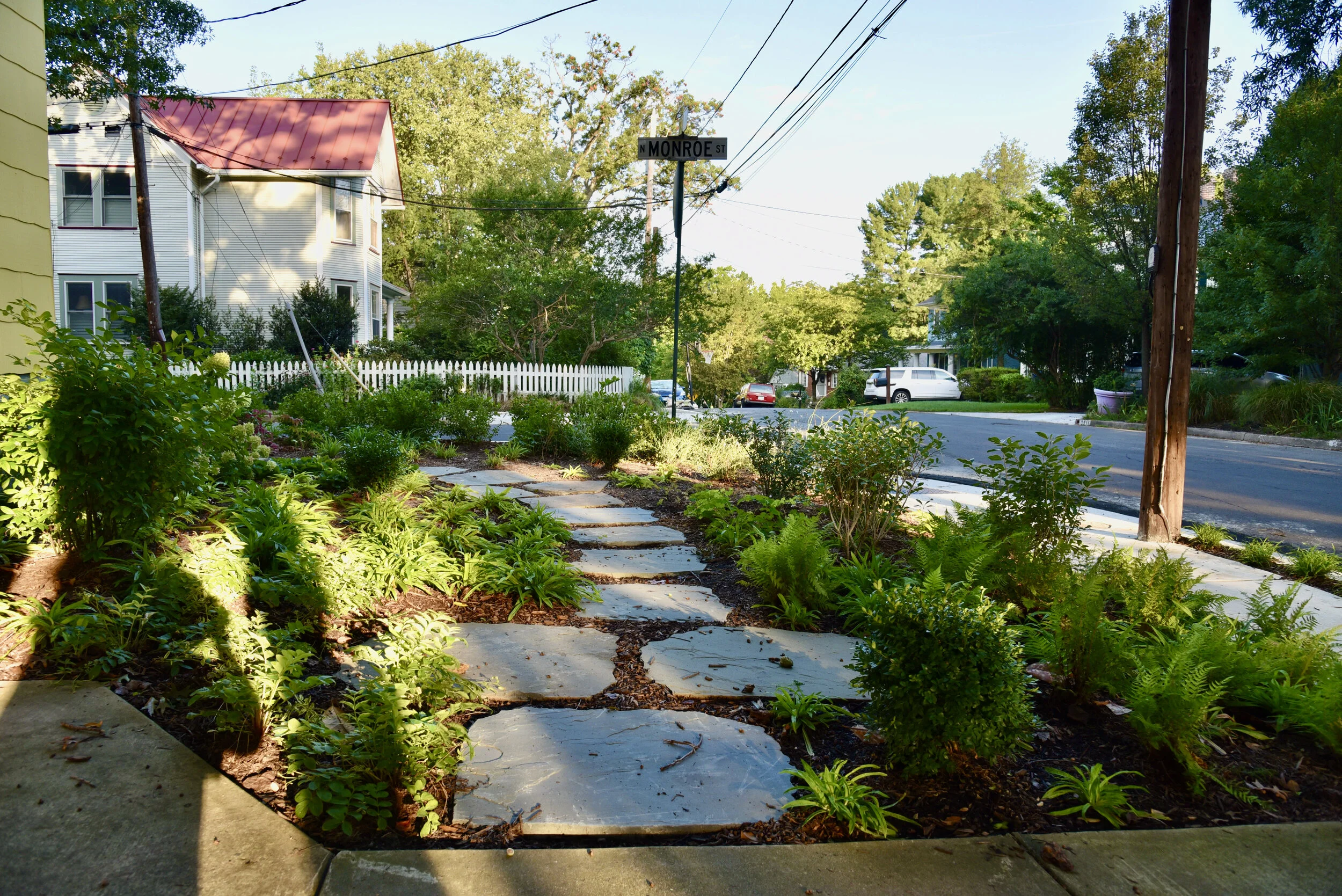
Photo: Huntley Meadows fog, Dixie Sommers
We’re looking for volunteers to help ASNV contact members of the Fairfax County Board of Supervisors from time to time. Depending on the issue, we may ask you to call, email, or request a meeting with your district’s supervisor. We will help research the issue and develop key points to make.
Local elected officials make many decisions affecting how and where we live, work, and recreate. At times, issues arise that affect individual districts, such as planned changes to parks. Some issues affect the entire county, such as the county’s budget. These decisions can have a substantial effect on the natural resources that ASNVers care about, such as wildlife, habitat, tree preservation, clean air, and water quality. Elected officials need to hear from their constituents and are often responsive to constituents’ concerns.
If you are uncertain who your supervisor is, you can find out by entering your address in the box at the top of the map here.
Please let us know today if you can help by providing your name and the name of your Fairfax County Supervisor. Contact our advocacy committee via our website here. We hope to hear from you soon.
Are you Interested in Managing a “Before and After Photography” Contest?
Audubon at Home is looking for a volunteer to manage a photo contest. The contest will solicit high-quality before and after photos of natural landscaping projects from Audubon at Home clients and ASNV members.
Photo: E. Harvey and A. Hoffman
Audubon at Home is looking for a volunteer to manage a photo contest. The contest will solicit high-quality before and after photos of natural landscaping projects from Audubon at Home clients and ASNV members. The volunteer would assist with the contest definition, manage the submitted photos, establish the review protocols and work with the AAH team to determine the winners. If you are interested in this opportunity, respond here.
See the following examples of Before and After photos. This landscape project was designed by Native Plant Landscape Design.
“Before” front yard, E. Harvey and A. Hoffman
“After” front yard, E. Harvey and A. Hoffman
We could use your birding skills!
Do you have a favorite spot to bird that you’d like to share with others? Consider leading a winter or spring walk there for ASNV.
Do you have a favorite spot to bird that you’d like to share with others? Consider leading a winter or spring walk there for ASNV. Leaders don’t have to be perfect birders—it’s a group effort. Prime responsibilities are setting the date and meeting place, guiding the route, and helping new birders locate the sightings.
Call or email to discuss:
Jean Tatalias or 703-281-6099
Wolf Trap First-Time Campers Program offers Birding
Each spring and fall Wolf Trap National Park for the Performing Arts hosts two campouts for Fairfax County 5th and 6th grade students sponsored by Friends of Wolf Trap. The campouts give young people an opportunity to develop meaningful connections to the natural world, learn outdoor skills, make new friends, and have fun.
Photo: Wolf Trap camp out, Gary Pan
Each spring and fall Wolf Trap National Park for the Performing Arts hosts two campouts for Fairfax County 5th and 6th grade students sponsored by Friends of Wolf Trap. The campouts give young people an opportunity to develop meaningful connections to the natural world, learn outdoor skills, make new friends, and have fun. Scout youth leaders organize the camping while other partners teach activities such as archery, fly casting, pollinators, gardening, birding, and more.
For the past five years, ASNV volunteers have led an introduction to birding class which teaches birding basics and how to use binoculars, followed by bird hikes. The class is based on bird data and knowledge of the park’s trails compiled during ASNV’s two-year bird survey. Between 2013 and 2015, survey teams visited the park 270 times and identified 128 species. Now, thanks to the Friends’ generous gift of 20 pairs of binoculars, campers and others can try to find those species.
Ten to twelve-year-olds have sharp eyes and acute hearing! This year’s young campers helped find Barred Owls, 4 hawk species, both vultures, warblers, Eastern Bluebirds, Tree Swallows, 3 wren species, 3 sparrow species, lots of migrants, and many year-round woodland birds including 5 woodpecker species, Carolina Chickadee, Tufted Titmouse, White-breasted Nuthatch, and Northern Cardinal.
If you are a birder and would like to help with this enriching program, watch our newsletter and website for a volunteer request in 2020.
Volunteer: Bird-safe Buildings
National Audubon has asked its members to advocate for the federal Bird-Safe Buildings Act NAS Bird Safe Windows, and ASNV wants to address the issue on a local level. If you have expertise in architecture, city planning or bird-safe building measures, the Advocacy Committee would like to hear from you.
Photo: Free Photos via Pixabay
National Audubon has asked its members to advocate for the federal Bird-Safe Buildings Act NAS Bird Safe Windows, and ASNV wants to address the issue on a local level. If you have expertise in architecture, city planning or bird-safe building measures, the Advocacy Committee would like to hear from you. If you can help, please contact Connie Ericson.
Citizen Science at ASNV
On September 22, ASNV awarded James (Jim) Waggener National Audubon Society’s prestigious Great Egret Award in recognition of his outstanding citizen science contribution. Jim is only the second person from ASNV to receive this award. He is a naturalist, who began the Occoquan Monitoring Program 30 years ago after retiring from foreign service.
Photo: Great Egret, Gregory Seitz, Audubon Photography Awards
By Lisa Mackem
On September 22, ASNV awarded James (Jim) Waggener National Audubon Society’s prestigious Great Egret Award in recognition of his outstanding citizen science contribution. Jim is only the second person from ASNV to receive this award. He is a naturalist, who began the Occoquan Monitoring Program 30 years ago after retiring from foreign service. His survey draws volunteers from across the region who help document the presence and abundance of birds, butterflies, dragonflies, and first bloom dates of plants in the Occoquan Bay National Wildlife Refuge, Julie Metz Memorial - Neabsco Creek Wetlands Preserve, and Meadowood Special Recreation Management Area.
Jim Waggener and ASNV President Tom Blackburn, photo by Laura McDonald
The September 22 Audubon Afternoon focused on citizen science. Speakers, Leslie Ries and Elise Larsen, from the Georgetown University Ries Laboratory of Butterfly Informatics, summarized the history of citizen science. Leslie started with Frank Chapman, who began Christmas bird counts in 1900. In those early days, Chapman had to promote the idea of counting birds rather than shooting them. In the 1950’s, Fred Urquhart became interested in monarch migration and engaged the public to tag them. Chip Taylor took over this program in 1992. Both speakers cited Ernie Pollard, who developed a method for surveying butterflies in England in the 1970’s. His surveys accounted for fluctuating abundances throughout the season and for weather sensitivity. Pollard developed the most common survey protocol for butterflies and Pollard Walks and counts continue today.
Jim Waggener has also developed survey protocols. His Occoquan Monitoring Program was one of the first general butterfly monitoring programs, and anticipated a trend toward multi-species surveys. Leslie Ries learned about Jim’s surveys through Laura McDonald, ASNV Program Manager, and has begun to digitize the surveys’ data.
Occoquan data has been added to eBird, Cornell Ornithology Lab’s online data base for bird observations. Leslie Ries noted promising trends in suburbs – when people planted native plants and stopped using pesticides they saw butterflies return.
Jim Waggener credited digitization, application of INaturalist, the daily work of volunteers in the field, and resources of the Northern Virginia Audubon Society for his survey’s success.
Occoquan Monitoring Program, the Christmas Bird Count, Birdathon, and other wildlife counts continue regularly and always need volunteers.