
A Closer Look: Nature All Around Us
A Series by Judy Gallagher
Grasshoppers leap out of my way as I walk through a grassy area, and that inspired this month's column.
Grasshoppers, along with crickets and katydids, are in order Orthoptera. There are a number of grasshopper families, but the ones around here are in family Acrididae, the short-horned grasshoppers, so called because they have short antennae. There are about 10,000 short-horned grasshopper species worldwide, at least 60 of which are found in Virginia.
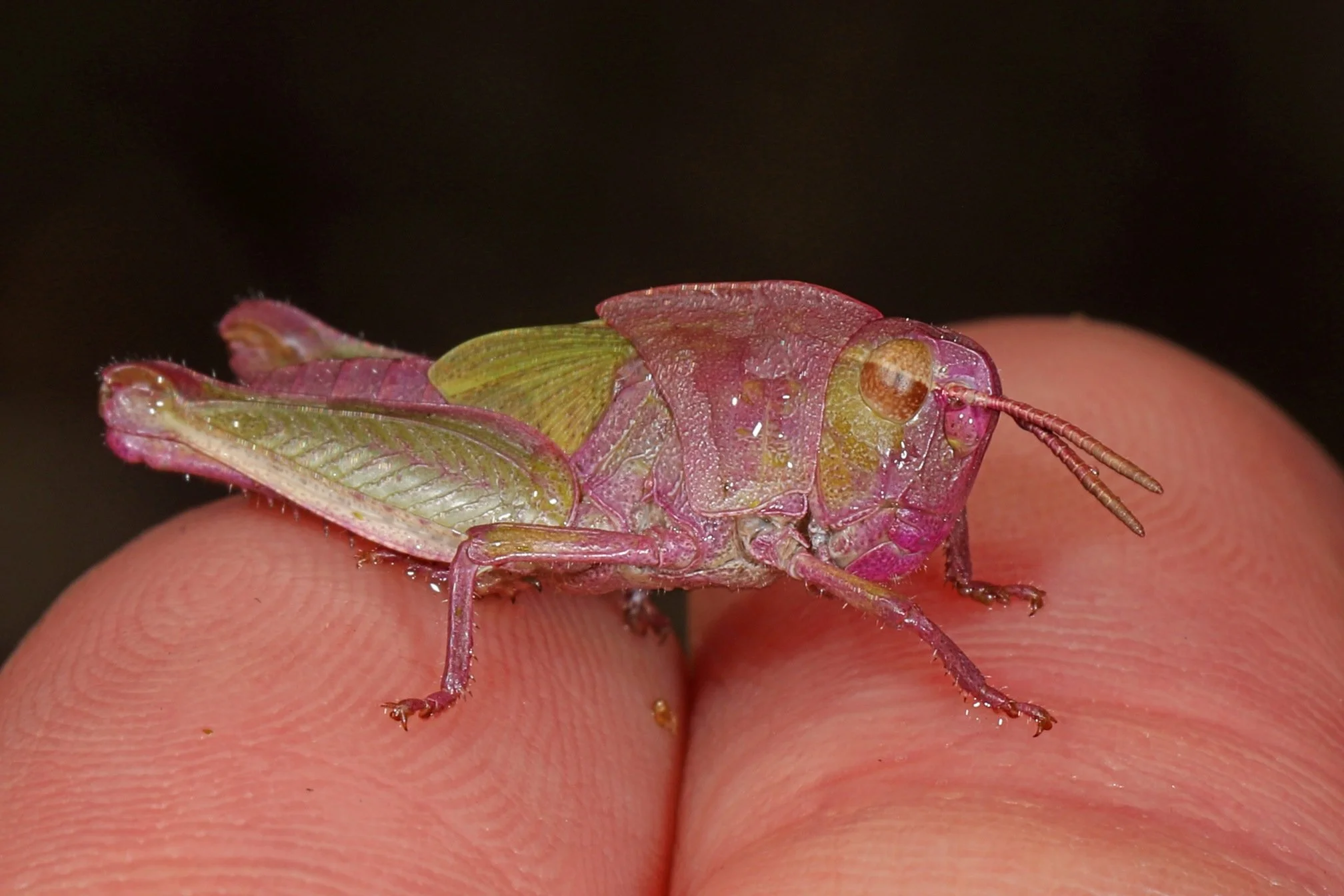
Green-striped Grasshopper nymph. Note the wing pads, which get larger each time the nymph molts its external skeleton. Pink is not a common color for these nymphs.. Photo: Judy Gallagher
Grasshoppers undergo incomplete metamorphosis. The nymphs look much the same as the adult grasshopper except they are smaller, lack wings, and aren't sexually mature. Grasshopper nymphs can be different colors, sometimes influenced by humidity and ambient temperature, or dietary intake.
Most grasshoppers eat plants, and can sometimes be agricultural pests. Some species have a swarming phase, and they are then known as locusts. This typically occurs when drought conditions are followed by rapid vegetation growth. They start to breed abundantly, and become gregarious (hanging out together) and migratory when there are enough of them. They eat most plants in their path, and will also eat each other if vegetation becomes scarce.
Grasshoppers aren't as well known for their "songs" as katydids and crickets, but some grasshoppers make noise by rubbing the inner surface of their hind legs against the edge of their fore-wings (stridulation), and other grasshoppers' wings can also make loud snapping sounds when they fly (crepitation). Both sounds are used by males to attract mates, but females can also stridulate. Grasshoppers have tympanal organs on their abdomen which allow them to hear the songs of other grasshoppers.
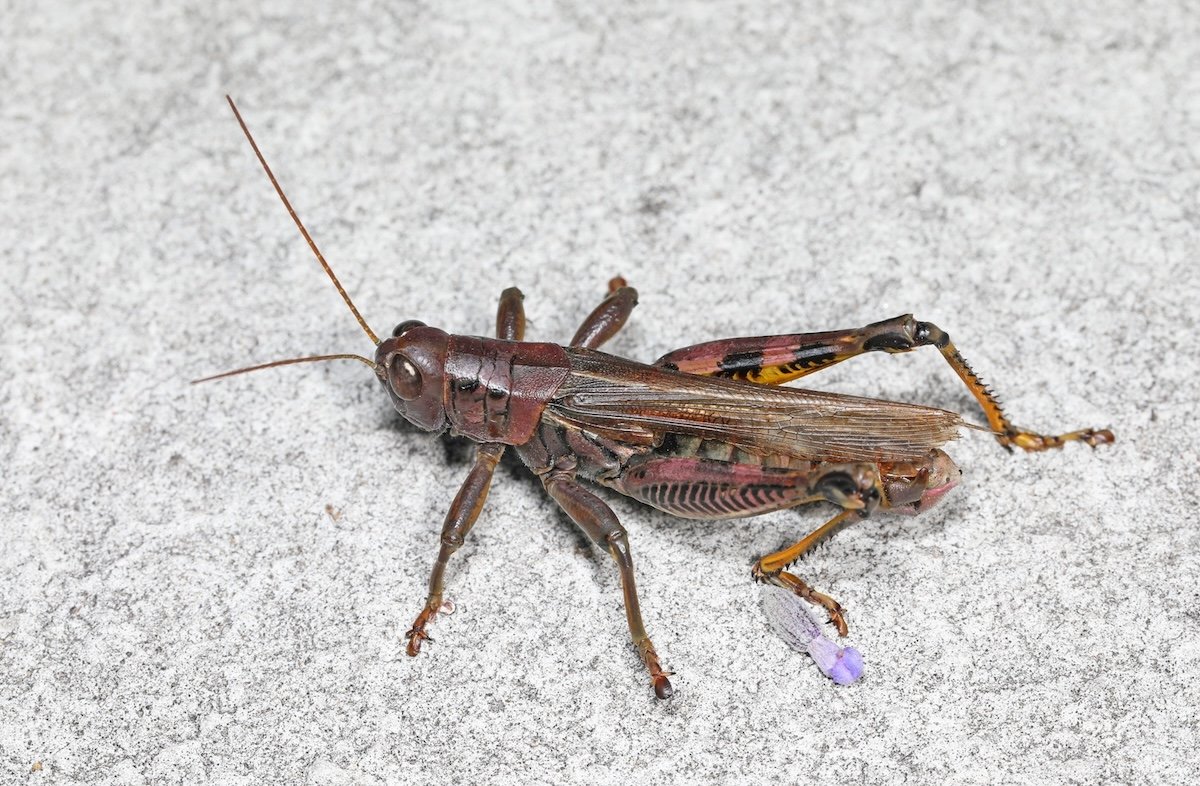
Differential Grasshopper showing its powerful spiny hind legs. Photo: Judy Gallagher
Grasshopper hind legs are long, and that helps them to leap impressive distances or launch themselves into flight. This is helpful when escaping predators, but using these muscles is energy intensive, so grasshoppers tend to walk when they’re not threatened. The hind legs also have spines, an additional defense.
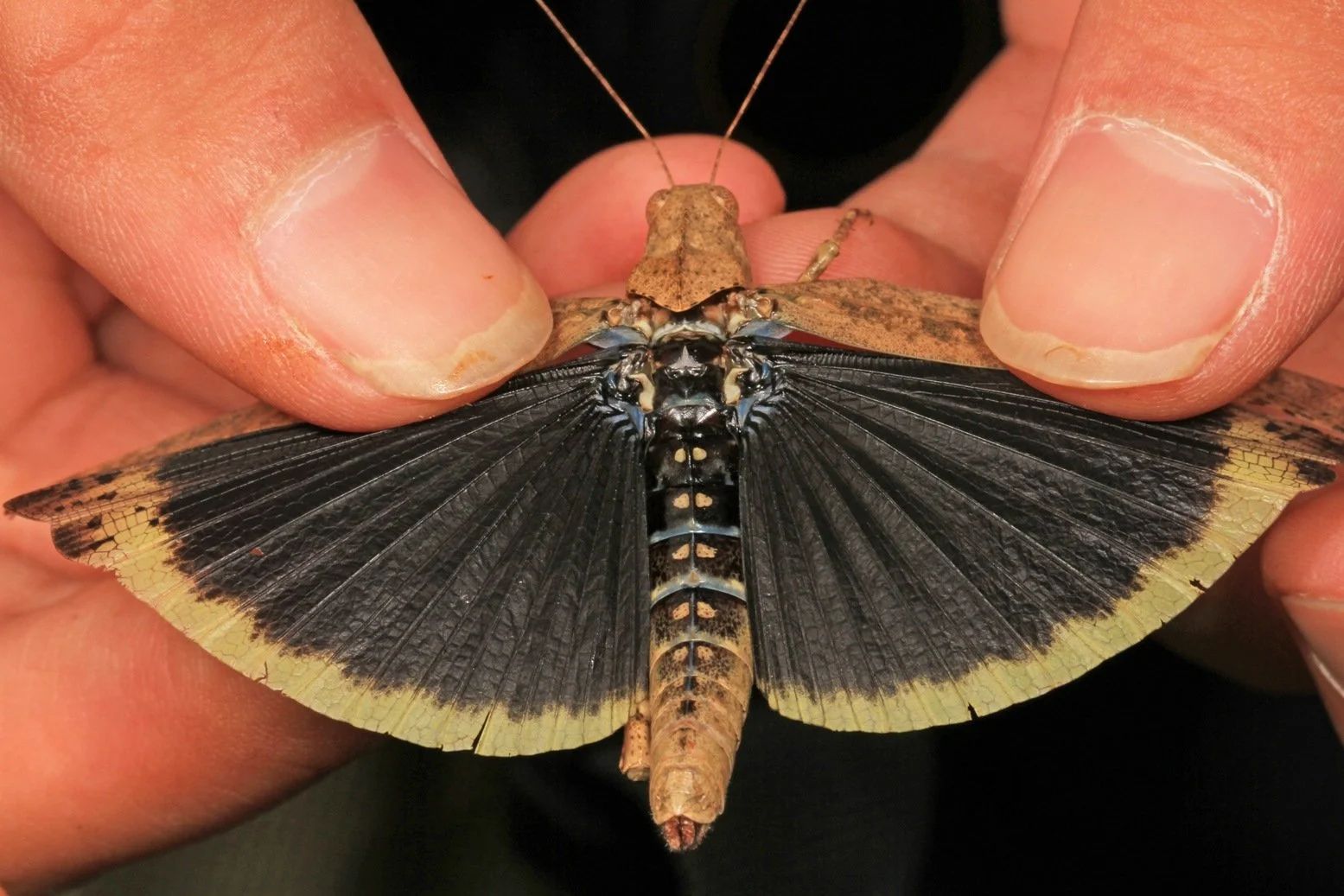
Carolina Grasshopper wings. Photo: Judy Gallagher
Most adult grasshoppers have wings, and can fly or glide short distances, 3 to 70 feet, to escape predators or move to a new location. Gliding is more energy efficient than flapping wings, and grasshoppers are one of only three groups of insects that can do that efficiently (dragonflies and butterflies are the other efficient "gliders"). Sub-adult grasshoppers can’t fly, and there are also grasshopper species where the adults have shortened wings or no wings, and they also can’t fly.
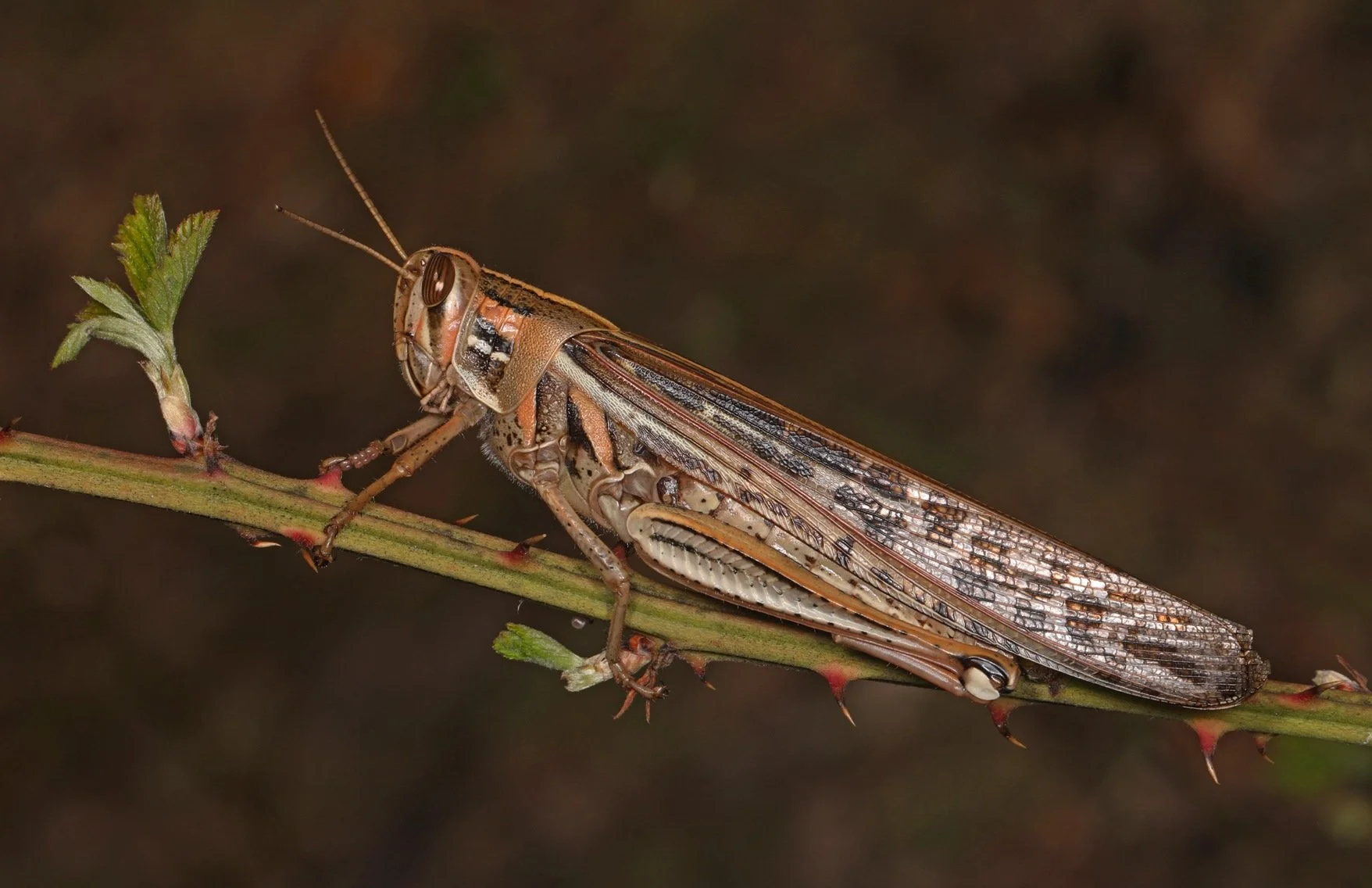
American Bird Grasshopper. Photo: Judy Gallagher
But a few grasshoppers can fly long distances. Bird Grasshoppers (genus Schistocerca) can fly 30 or more miles in a day, and African Desert Locusts, another Schistocerca species, even crossed from Africa to the Caribbean in 1988. Flying that long a distance is highly unusual.
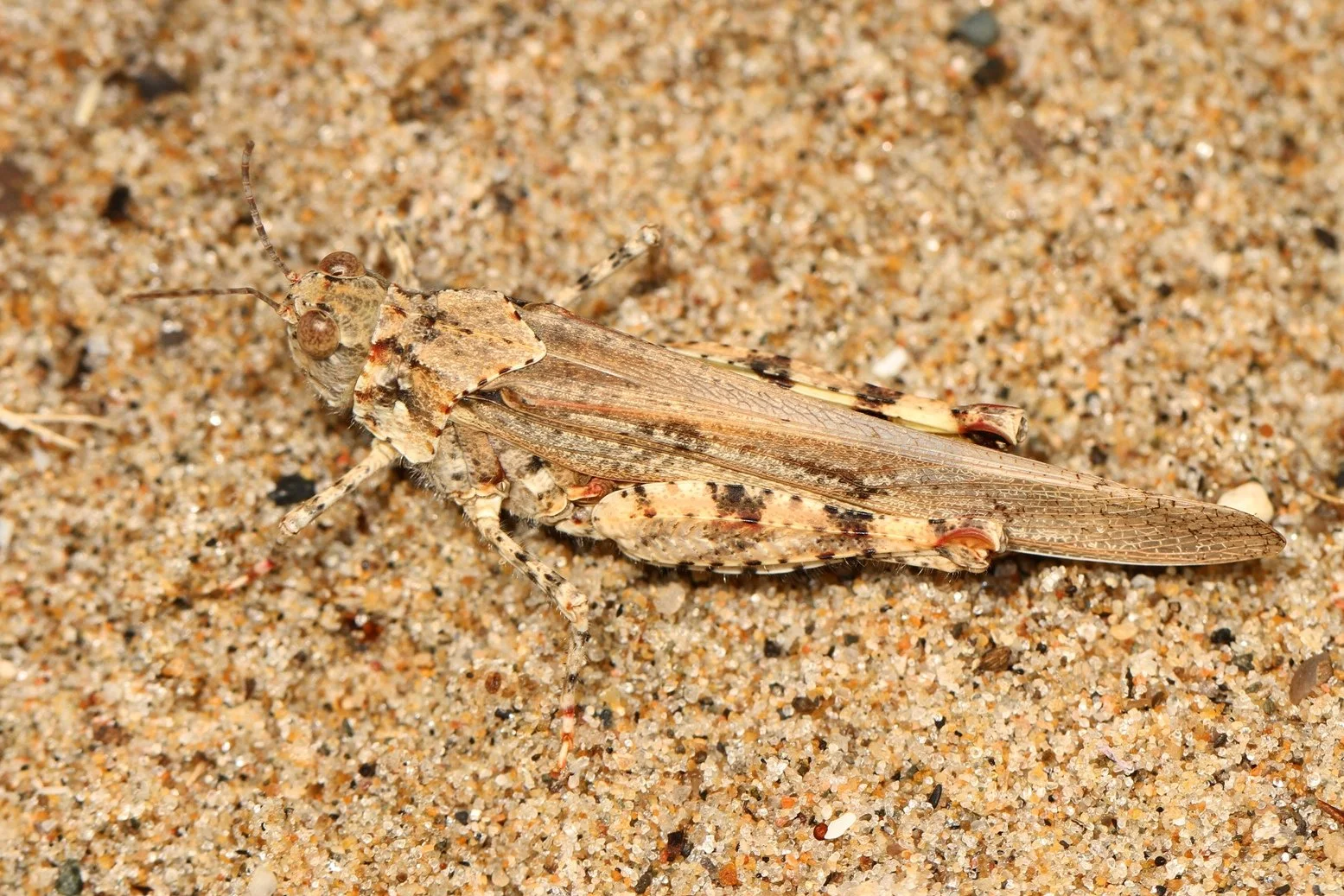
Seaside Grasshopper, blending in very well with its sandy background. Photo: Judy Gallagher
Grasshoppers are often cryptic, blending in well with their surroundings. This makes them nearly invisible to predators, unless they move. The Seaside Grasshopper, pictured above, is the color of its background, but it also has disruptive coloration that breaks up its outline, preventing predators from recognizing its distinctive grasshopper shape.
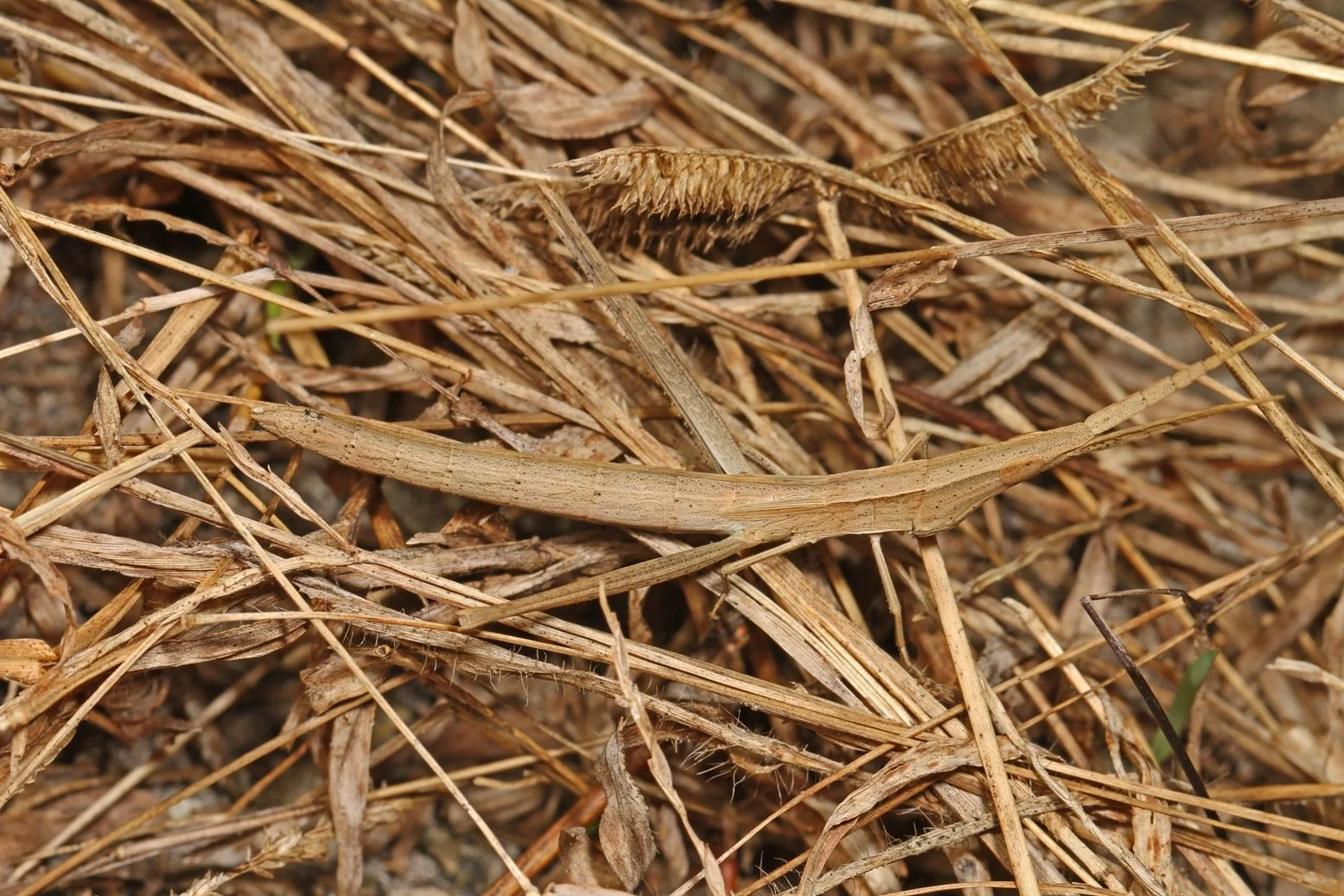
Long-horned Toothpick Grasshopper, blending in with its background. Photo: Judy Gallagher
The Long-horned Toothpick Grasshopper, above, even resembles the vegetation it rests on, in this case, pine needles. This grasshopper isn't found this far north, but you could see them as close as South Carolina.
When threatened, grasshoppers can also regurgitate a liquid euphemistically known as tobacco juice. It smells bad and tastes bad, and can be an effective defense mechanism.

Ground Beetle with the remains of an Admirable Grasshopper. I'm not sure if it predated it, or just is feasting on the remains of someone else's kill. Photo: Judy Gallagher
Despite their attempts at avoiding predation, grasshoppers are a food source for many animals. Over 200 bird species, including bluebirds, meadowlarks, sparrows, orioles and turkeys, eat grasshoppers. A Red-shouldered Hawk can eat up to 100 grasshoppers per day. Small mammals like mice eat grasshoppers, as do larger mammals like skunks and foxes. Reptiles, amphibians and other insects also eat grasshoppers.
In addition to being a food source for so many animals, grasshoppers recycle nutrients and help shape plant communities. Let's hear it for the grasshoppers!


