
A Winter Resident Returns: The Yellow-bellied Sapsucker
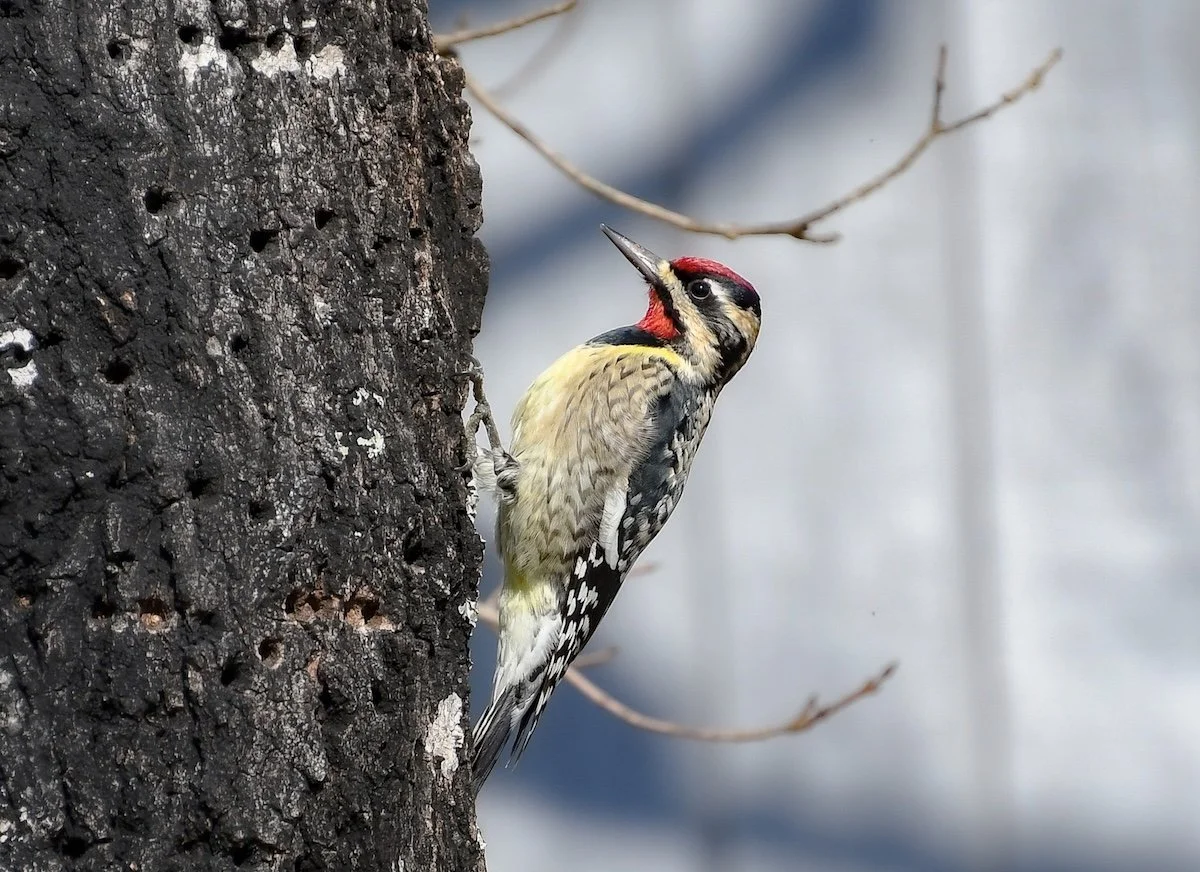
Photo: Yellow-bellied Sapsucker, Michael Fogleman/Audubon Photography Awards
Summer Delehanty
With fall come shorter days and cooler weather, a welcome respite from the sweltering Virginia heat. As autumn foliage spreads south, so do waves of birds–first, some migrating shorebirds and warblers, passing through on the way to the tropics, followed by our winter residents.
The return of the Yellow-bellied Sapsuckers (Sphyrapicus varius) in northern Virginia coincides with the re-appearance of Halloween decorations in mid-October, and, like the trick-or-treaters who arrive October 31, they seek sweets. The Yellow-bellied Sapsucker is the only East Coast woodpecker that migrates, returning from a summer in Canada, New England or the slopes of the Appalachian Mountains.
October’s thinning tree canopy provides the perfect opportunity to see sapsuckers, northern Virginia’s seventh woodpecker species. Superficially similar in appearance to a Downy or Hairy Woodpecker, Yellow-bellied Sapsuckers sport the same black-and-white attire. Their pattern is the easiest way to identify them. Adult sapsuckers have bold white facial stripes: one above the eye, the other zig-zagging from the beak to the shoulder. A vertical white patch marks the edge of the folded wing. The yellowish wash on the belly is deceptively only present on some birds, though all sapsuckers have pale underparts. Males are differentiated by their bright red throats, with both males and females wearing matching red crowns. Juveniles are a browner, muddier version of their adult counterparts, their markings less defined but still identifiable.
Though taxonomically part of the woodpecker family (Picidae), Yellow-bellied Sapsuckers, along with their western cousins, differ from other woodpeckers by drilling for sap instead of bugs. They satisfy their sweet tooth by searching for tree sap high in sugar content. Once they find a suitable tree, they peck and maintain rows of shallow wells to ensure sap flows continuously. They tend to prefer sick or injured birch, maple, or hickory trees. While sap-drilling is more of a spring pastime, when deciduous trees are sprouting new growths, evergreen trees produce sap year-round and are an off-season favorite of Yellow-bellied Sapsuckers. They also can supplement their diet by catching insects and foraging for fruit. In the winter, they’re less selective about their habitat, occupying hardwood forests from sea level to as high as 10,000 feet in elevation. Their wintering range spreads from the coastal Mid-Atlantic through the Southeast and stops at South America.
Yellow-bellied Sapsucker. Photo: Fraida Gutovich/Audubon Photography Awards
Sapsuckers were once considered pests from the damage they caused to orchards. While their drilling can make trees more vulnerable to insects or disease, these sapwells are an important food source for other animals. In some parts of Canada, Ruby-throated Hummingbirds are so reliant on sap that they time their spring migration to match that of the sapsuckers. Bats, other birds and porcupines also will visit sapwells.
Often motionless and silent, woodpeckers can be hard to spot, and the Yellow-bellied Sapsucker is no exception. Look for them flush against tree trunks, easiest to find when they’re ascending or flying from tree to tree. When birding by ear, listen for their drumming, which is distinct from that of other woodpeckers in its irregularity, or a “mewing” similar to that of a Gray Catbird. They peck in short bursts, often of three, rather than continuously. In addition to feeding, they do this to mark territory, so will sometimes pound on man-made objects—like metal signs—to sound louder. They may be easier seen than heard in the winter.
Luckily, as their population grows, they should only get easier to spot. Yellow-bellied Sapsuckers have a stable and increasing population, according to the North American Breeding Bird Survey. Although they are not typical feeder birds, you may be able to attract them to your yard by offering suet or mealworms. Like most woodpeckers, they benefit from healthy forests with plenty of trees—the best way to support them is through general habitat restoration and protection.
Yellow-bellied Sapsuckers will stick around long after the Halloween candy and Thanksgiving leftovers run out. They stay in northern Virginia until springtime, typically leaving around April and May to fly back north. While indulging in holiday sweets, be sure to think of these sugar-loving sapsuckers and get a glimpse of one before they leave!
Additional Resources:
https://www.allaboutbirds.org/guide/Yellow-bellied_Sapsucker/id
https://www.audubon.org/field-guide/bird/yellow-bellied-sapsucker
https://ebird.org/species/yebsap
https://feederwatch.org/learn/common-feeder-birds