
It’s October, Which is Spider Time!
Spiders are traditionally associated with Halloween, and that may date from the Celtic belief that if you saw a spider on Samhain, the precursor to Halloween, it was a sign that a departed loved one or a guardian spirit was watching over you.
by Judy Gallagher, NVBA Board Member
We tend to see more spiders now than at any other time of the year, partly because they are full grown and are therefore easier to see than earlier in the year. I've heard that spiders often seek warmer shelter, like a house, in cool weather. With the exception of house spiders, which, as the name suggests, live in houses year-round, this isn't likely. Local spider species were adapted to our seasonal climate long before there were so many warm dwellings. It is true that spiders can gain access to your house when you bring houseplants back indoors for the winter.
Spiders eat lots of insects, helping humans to keep nuisance insect populations under control. But they also provide benefits to birds. Spiders are tasty snacks for hungry birds. But they help some birds in another way.

A web produced by Leucauge species spider. Photo: Judy Gallagher
All spiders produce silk, which is a protein fiber. Silk can be used for prey capture and immobilization, as a drag line or guide line to help the spider to return to a specific location, to make retreats for resting or molting, to cover egg sacs, for ballooning through the air, as alarm lines or to leave chemical or pheromonal trails.
There are seven different types of silk, each produced by a specific spider gland. Spider silk can be strong, tough, stretchy, stiff, dry or coated by adhesive glue, or exhibit a combination of two or more characteristics.
Some birds use spider silk in their nests. Hummingbirds are particularly fond of spider silk. Silk can act as glue to hold the nest together, but it's also stretchy enough that the nest can expand slightly as hummingbird young grow larger. If the nest becomes damaged, new spider silk can be applied to fix it. Golden-crowned Kinglets often suspend their nests from branches using spider silk.
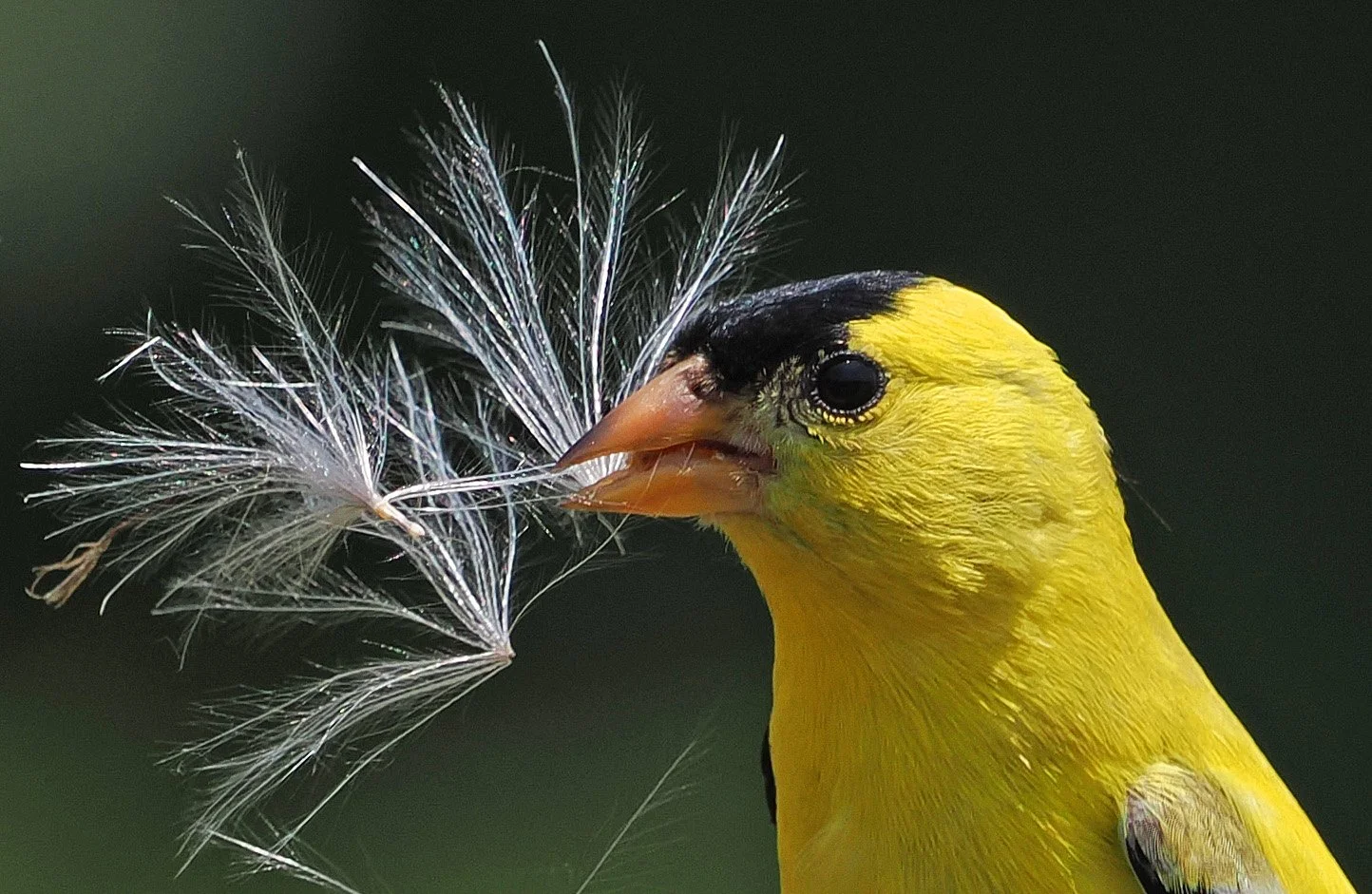
American Goldfinch with thistle down. Photo: Judy Gallagher
American Goldfinches breed later in the summer than many songbirds, with the timing coinciding with when thistle seeds are available. American Goldfinches feed thistle seed to their young, and use thistle down to line their nests. But they also use spider silk to hold their nests together.
So when I see spiders this fall, I am grateful for how they benefit both me and the birds.


October is spider time! These mysterious 8-legged creatures capture our imaginations this time of year, but they also provide great benefits to both humans and birds.