
Wildlife Sanctuary Almanac: Tree and Shrub Pruning that Won't Harm Birds
Photo: American Robins, William Harris/Audubon Photography Awards
Julie Udani
Pruning can be essential to the health of a tree or shrub.
We prune trees to remove dead or diseased branches or to prevent disease by opening up the interior of the plant to allow for airflow. A large limb stretched over a utility line or rooftop can be pruned away to remove a potential hazard. Pruning can be good for the tree and good for us, but it isn’t always good for birds. Done wrong, it can disturb nesting sites, remove protective cover and prevent plants from flowering or fruiting.
Here are a few tips for bird-friendly pruning this winter and spring:
Don’t prune during nesting season.
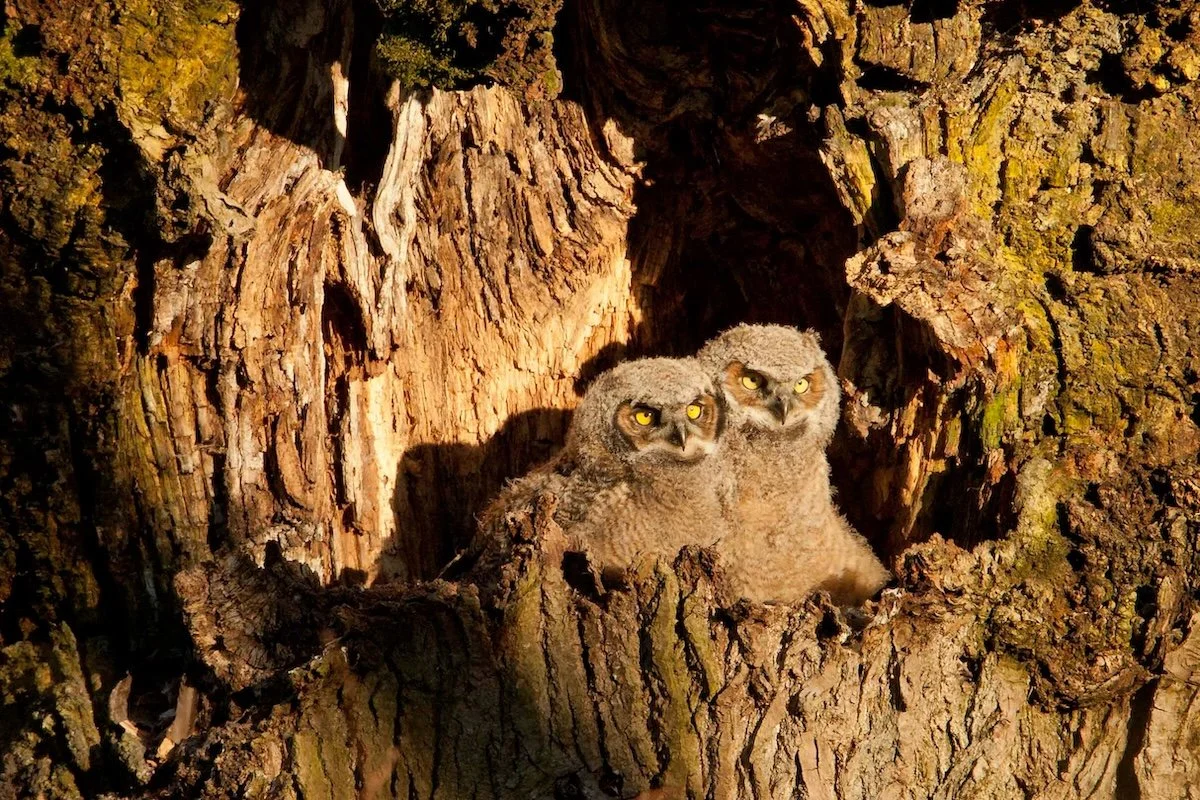
Great Horned Owls, Tracey Kidston/Audubon Photography Awards
In Northern Virginia, nesting generally begins in mid-March for our year-round species. We want to prune most of our trees in late February anyway, because we need to do it while they are dormant. One exception is spring-blooming trees and shrubs. If those are pruned too early, it might remove flower buds. Not only does that make the plant less attractive to us, but it means no nectar for pollinators and no fruit later in the season for the birds. Spring blooming shrubs and trees should be pruned immediately after flowering, but look carefully for nests before doing any work. If you find one, do not move it, and reschedule your pruning. The Master Gardeners of Northern Virginia website has good information on when and how to prune your trees if you have to delay pruning.
Don’t prune too much.
Sometimes we need to remove interior branches to allow air to flow through a shrub or tree in order to prevent fungal diseases. Just remember that birds need some of those internal branches and leaves for habitat and protection from weather and predators. As a rule, don’t remove more than necessary for the health of the plant. While some shrubs can be trimmed all the way to the ground and come right back, most trees and shrubs can’t lose more than about a quarter of their mass at one time.
Don’t be too neat.
Leave some litter on the ground and don’t remove dead trees entirely. Birds use twigs and small branches to construct their nests. Some birds are ground-dwelling and appreciate a nice brush pile. If you need to remove a dying tree, consider leaving a safe portion of the trunk standing (called a “snag”). Snags attract many different insects to break down the tissue of the tree and can be vital sources of food for birds. Chickadees have been known to nest in snags as short as four feet tall. If you can’t leave it standing, a log left to rot on the ground can be almost as beneficial.
Catch up on past Wildlife Sanctuary Almanac articles here.