
A Closer Look: Nature All Around Us, February 2026
Photo: Tree Cattle, Judy Gallagher
Judy Gallagher
February 2026
It's challenging to find insects at this time of year. Many insects overwinter as eggs or pupa, and the ones that overwinter as adults are typically in hiding, trying to keep warm underneath bark or leaf litter. But I saw several adult barklice recently on a warm January day. They had likely just emerged from a protected spot. Barklice are members of insect order Psocoptera, which also includes booklice and parasitic lice.
Booklice are wingless and are usually found inside homes, where they feed on mold, fungi, grains, insect fragments and starchy materials like glue in the binding of books. They are found in moist environments, and rarely survive when humidity is less than 50%. They are not harmful to humans.
Parasitic lice, as the name implies, are parasites that feed on blood and other secretions of warm-blooded hosts like mammals and birds.
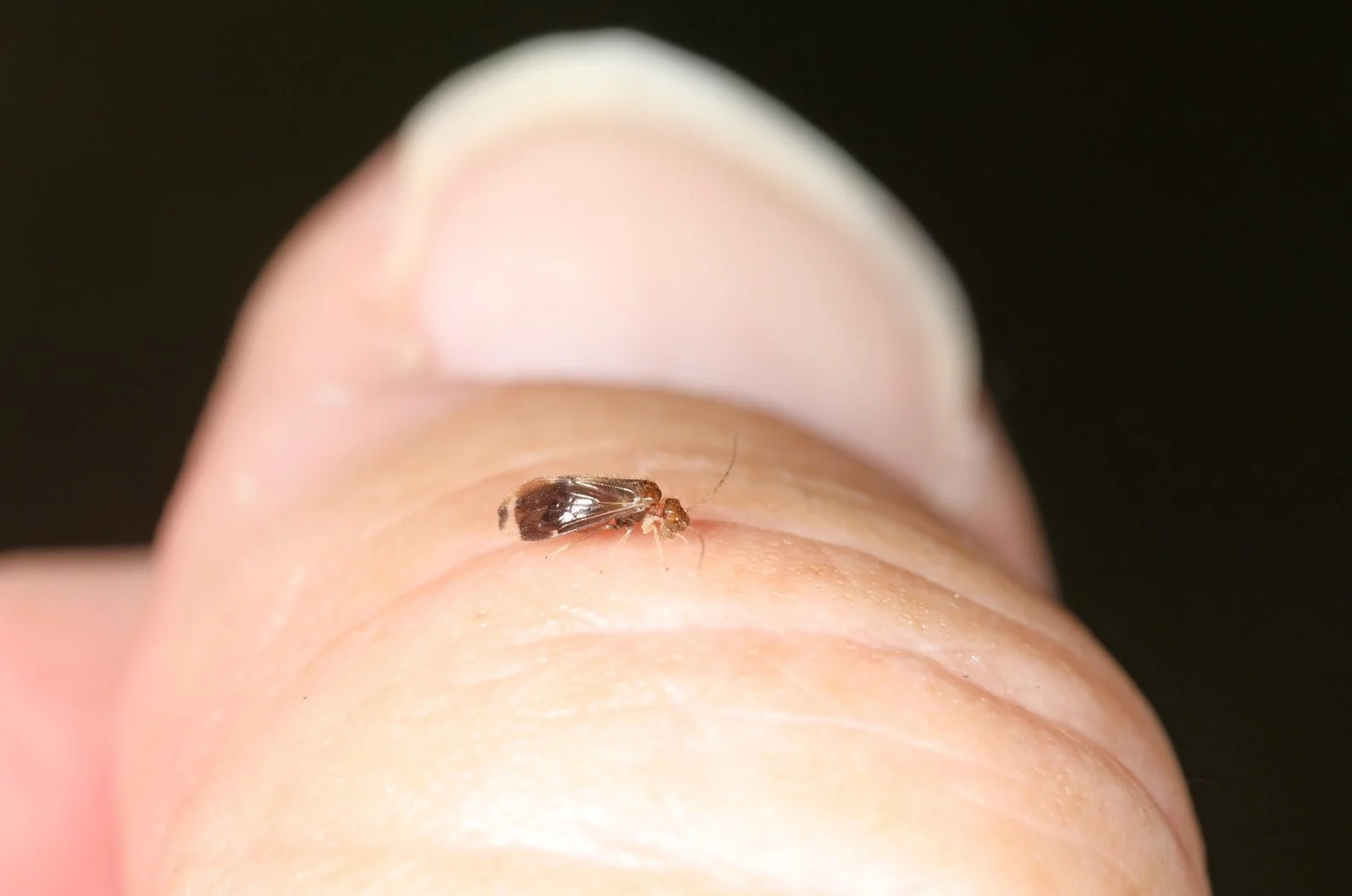
Corrupt Barklouse (Polypsocus corruptus) on my thumb, showing its small size. Photo: Judy Gallagher
But this article is about barklice. There are more than 300 species of barklice in 26 families in North America. They are detritivores, feeding on fungi, algae and lichens, contributing to the recycling of organic material. Barklice normally don't damage the plants they live on, although an Australian species' nymphs bore holes in wood instead of living in existing burrows. Barklice tend to be small and inconspicuous. They have chewing mouthparts and a sort of slender rod extending from the jaw that helps brace the barklouse while it is scraping up its food. Unlike their parasitic cousins that have legs suitable for gripping their host, barklice have legs that are adapted for jumping. Most adult barklice have wings and have two wing-coupling mechanisms, one that joins the forewing and hindwing in flight, and one that keeps the wings in place when the barklouse is resting.
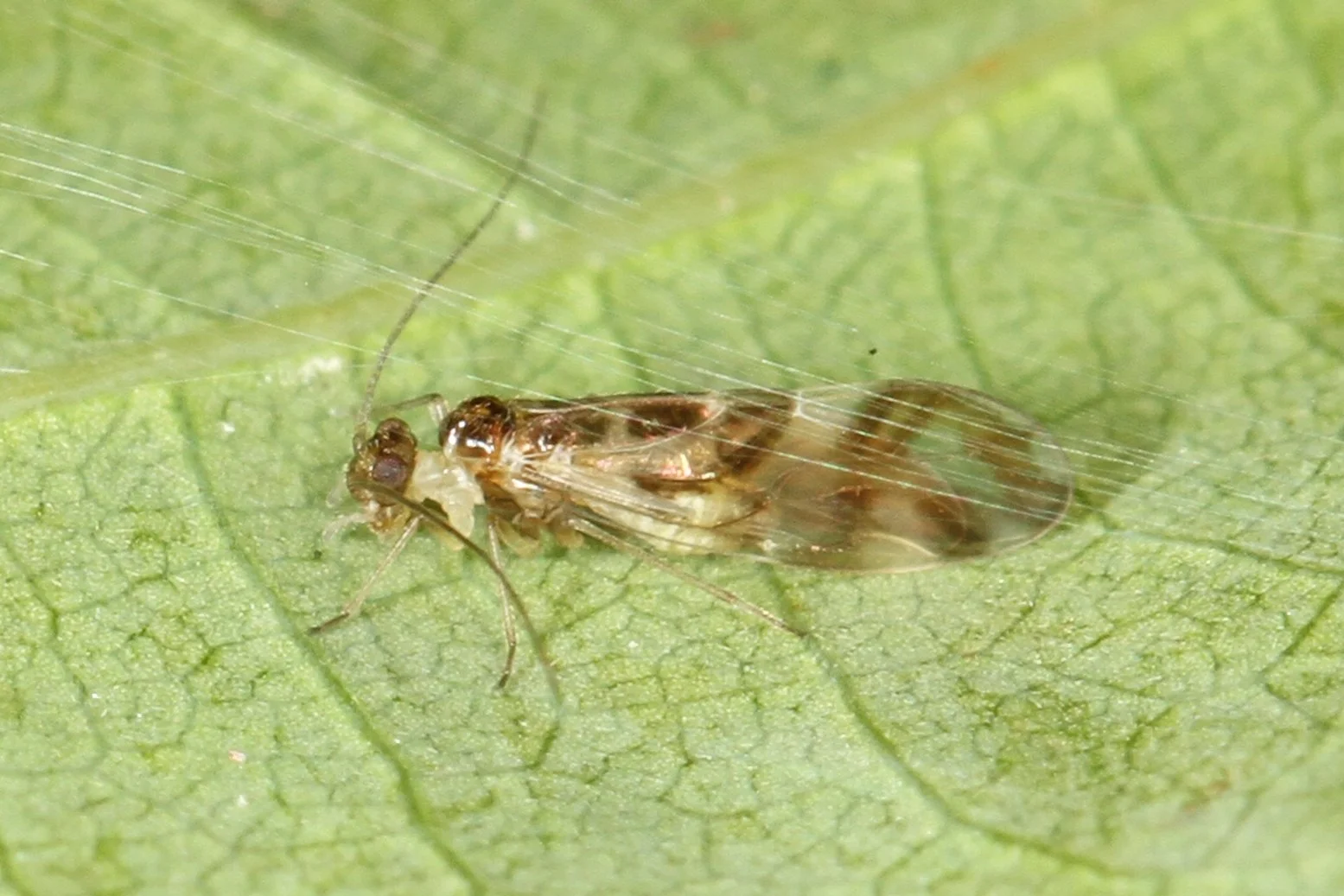
F-winged Barklouse (Graphopsocus cruciatus) with silk. Photo: Judy Gallagher
Some species produce silk from glands in their mouths, and a species that is found in the southern U.S. can swathe large trees with its silk. Some local species produce silk, but not in that volume. The web protects the barklice from predators while feeding, and does not damage the tree. Some barklice species eat the silk when the need for it is done.
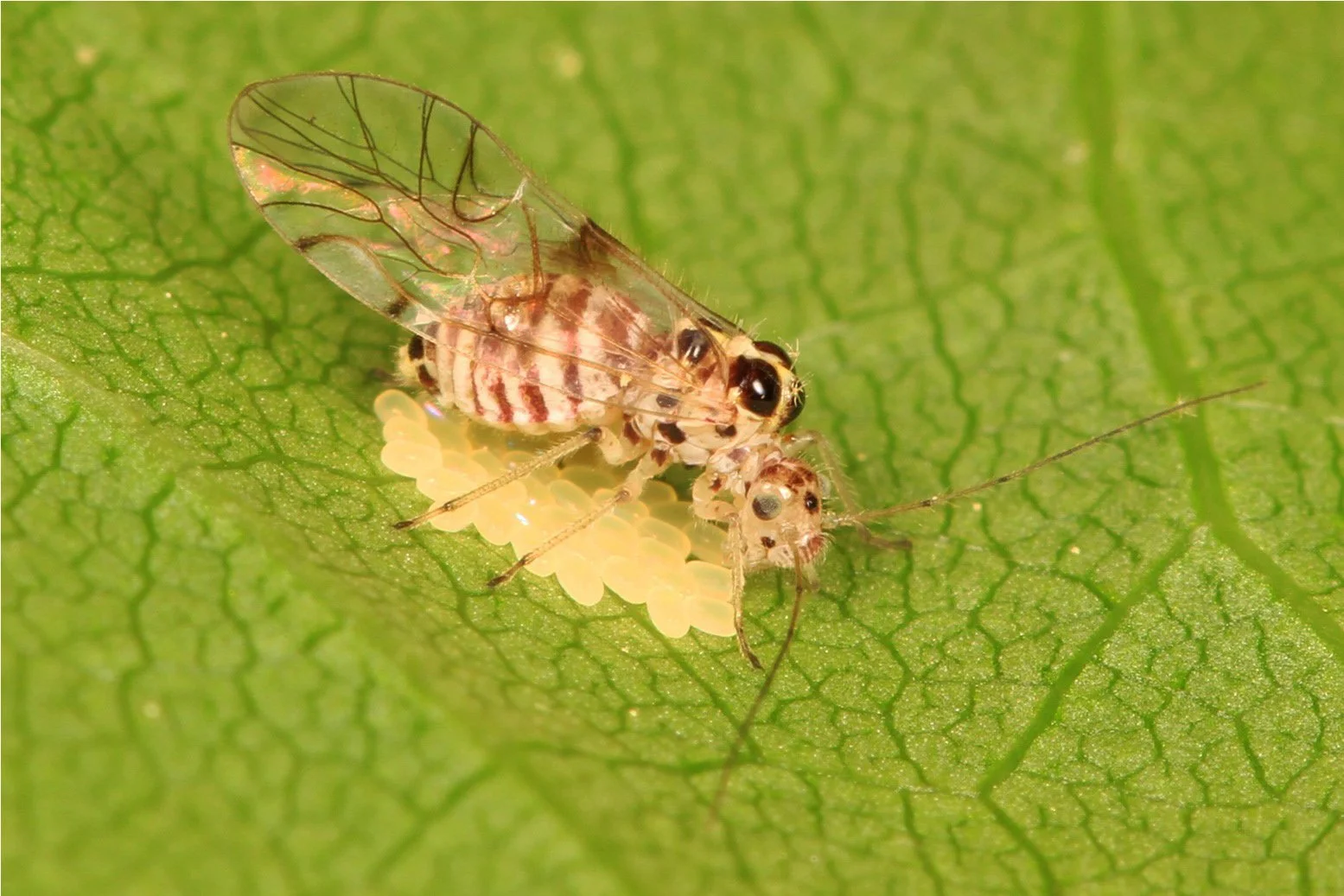
Shaggy Barklouse family - Teliapsocus conterminus female with eggs. Photo: Judy Gallagher
Most barklice lay their eggs in small crevices in bark or on foliage, but there are at least two species that have live young. Barklice aren't known to guard their eggs, but the picture above makes me wonder if some do. Eggs and other life stages can be parasitized by tiny wasps.
Some barklice species reproduce asexually (parthenogenesis), and the resulting young are genetically the same as the adult female. Most species also reproduce sexually, and male barklice sometimes do a courtship dance, making sounds with their legs to attract a female.
Barklice undergo incomplete metamorphosis. The young look much the same as the adult, except they don't have wings or reproductive structures. They usually shed their external skeletons about six times before becoming a reproductive adult.
If you look closely at the rear end of the barklouse in the above photo, you can see a yellow hairy anatomical feature called a sensorium or sense cushion. Scientists theorize that the sensorium may be used to detect wind currents, which might help the barklouse when in flight.
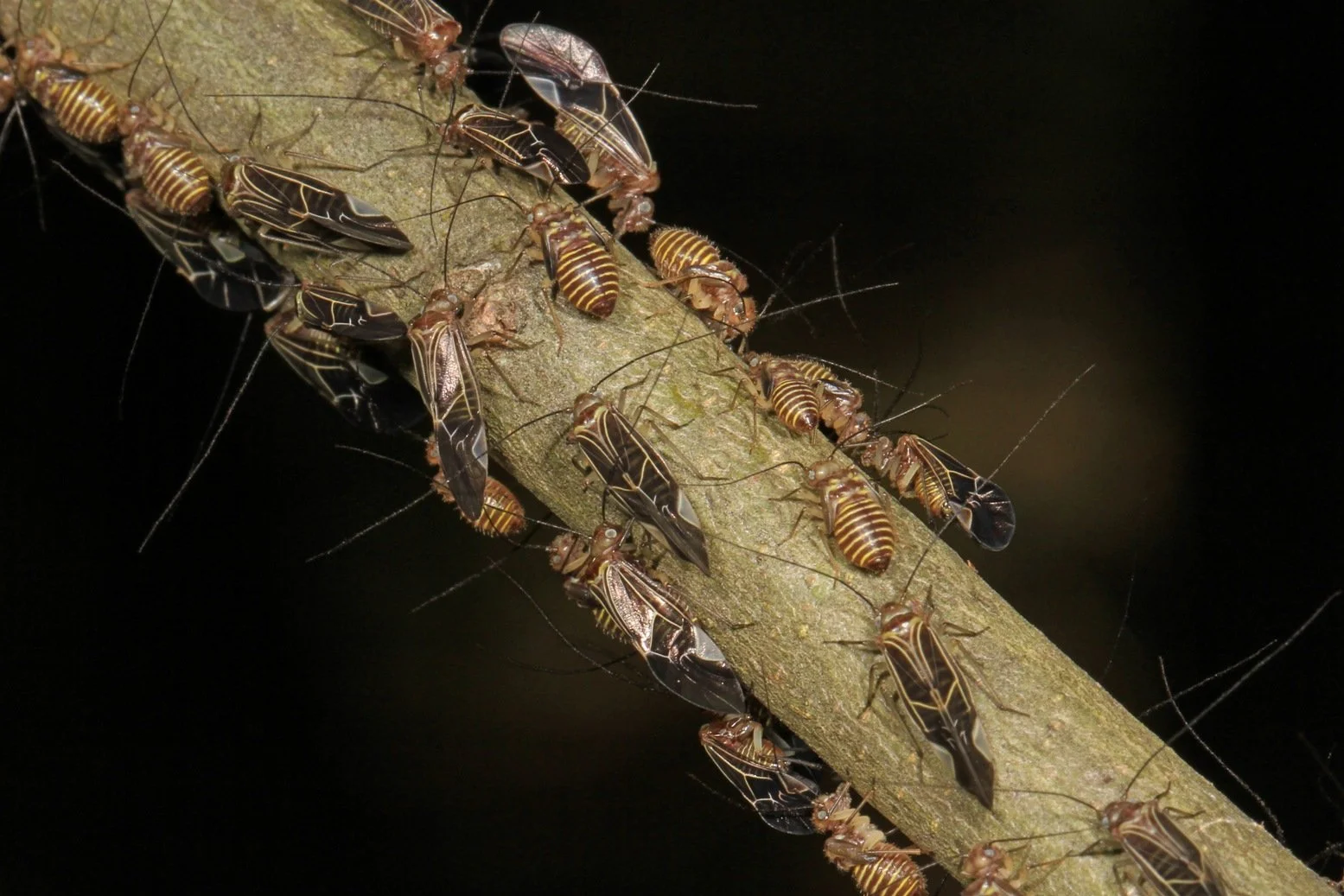
Tree Cattle. Photo: Judy Gallagher
A Common Barklice family species, Cerastipsocus venosus, forms herds on smooth-barked trees. The adults have wings, and the nymphs have distinctive yellow and black striped abdomens. They are commonly called Tree Cattle.
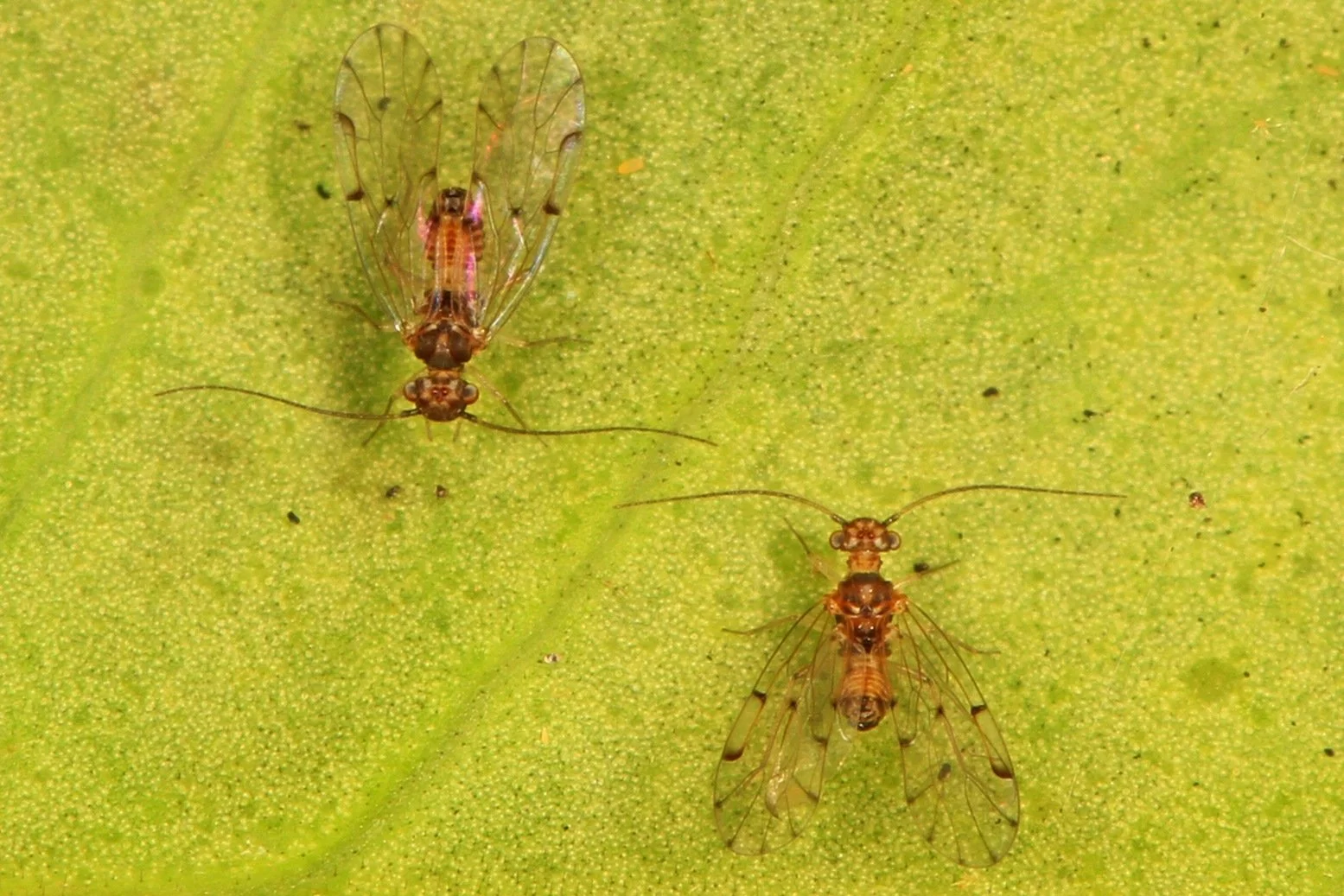
Outer Barklice family species Ectopsocus californicus. Photo: Judy Gallagher
Outer Barklice have been found in bird feathers, leading scientists to theorize that they may disperse by hitch-hiking rides on birds.
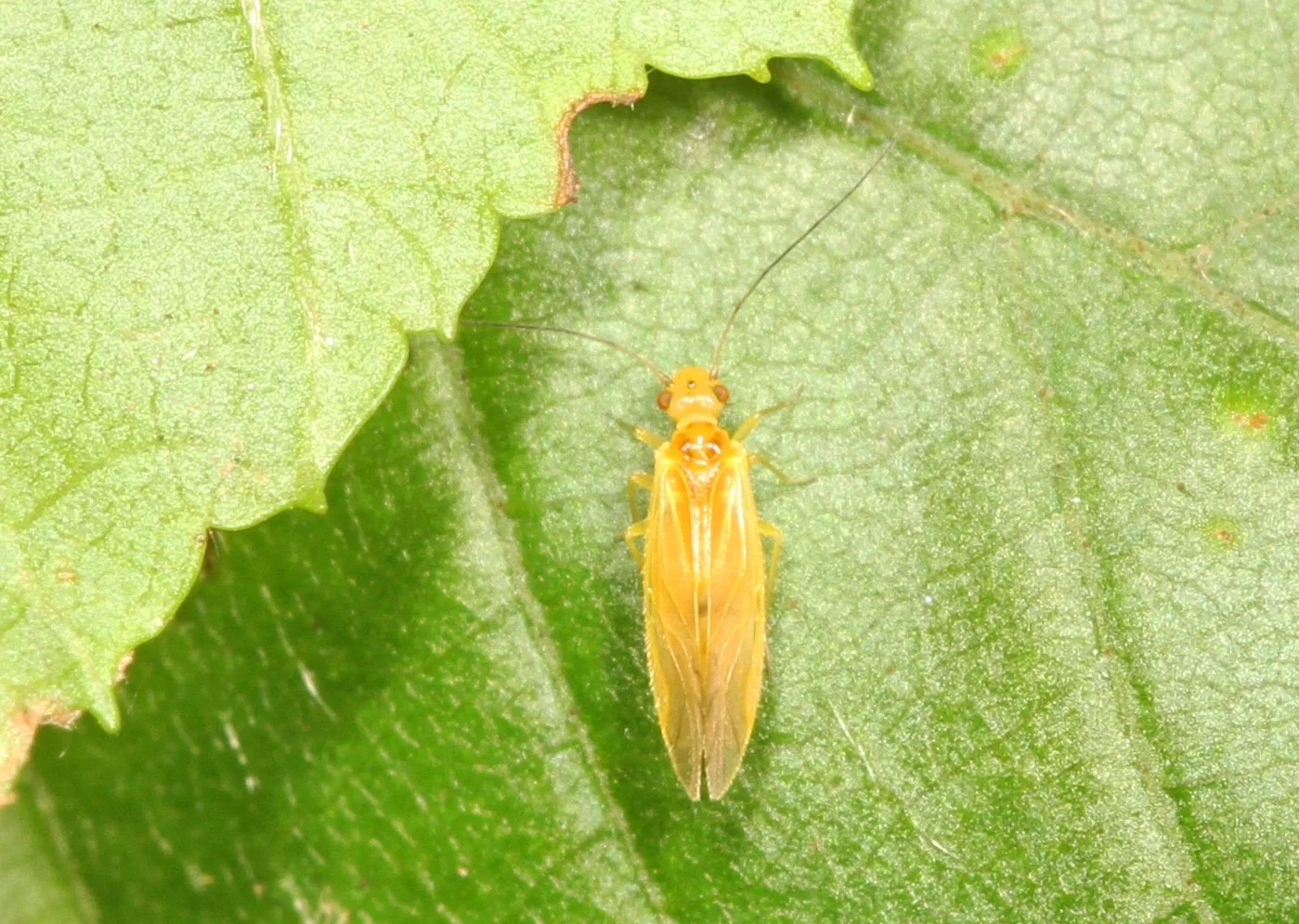
Lizard Barklouse family species Valenzuela flavidus. Photo: Judy Gallagher
There are a number of other barklouse families including Ancient Barklice, Hairy-winged Barklice, Narrow Barklice, Fateful Barklice, Loving Barklice, and the intriguingly named Lizard Barklice and False Lizard Barklice, which aren't closely related. I couldn't find information on why the family names are so unusual, but the Lizard Barklouse above does not resemble a lizard.
I hope you've learned a little about these intriguing creatures and have enjoyed my louse-y pictures. Sorry, I've never been able to resist a good pun
View more of Judy’s articles on A Closer Look: Nature All Around Us (formerly Observations from Meadowood).