
NVBA NEWS BLOG
Welcome to the blog for Northern Virginia Bird Alliance, a wealth of resources about northern Virginia birds, wildlife, habitat conservation and restoration, native plants, wildlife-friendly gardening, advocacy and more.

Hog Island Scholarship Application Deadline Extended!
Each summer Audubon Society of Northern Virginia offers a full scholarship and transportation to “Sharing Nature: An Educator’s Week” at National Audubon Society’s Hog Island Camp in Maine. We have extended the application deadline to March 1, 2020!
Photo: Atlantic Puffins, Kevin VandeVusse/Audubon Photography Awards
Each summer Audubon Society of Northern Virginia offers a full scholarship and transportation to “Sharing Nature: An Educator’s Week” at National Audubon Society’s Hog Island Camp in Maine. This year’s session is July 12-17, 2020, and will feature workshops on educational techniques, a boat trip to the restored Atlantic Puffin and Tern colony on Eastern Egg Rock, intertidal explorations, and hiking through Hog Island's unspoiled spruce-fir forest.
Applicants must be a public classroom teacher, specialist or school administrator in the ASNV chapter territory. Counties: Arlington, Fairfax, Loudoun, Prince William, and Stafford. Independent cities: Alexandria, Falls Church, Fredericksburg, Manassas, and Manassas Park.
We have extended the application deadline to March 1, 2020.
A link to the scholarship application can be found here.
If you have any questions please email: youtheducation@audubonva.org
For further information about this session at Hog Island, please visit their website by clicking here or watch this great video.
The scholarship announcement will be on March 16, 2020. Thanks for spreading the word in your school district, and we look forward to receiving applications from your schools!

Creating a Wildlife Sanctuary on Your Property: The Audubon at Home Program
Save the Date! On March 21st, Betsy Martin of The Audubon Society of Northern Virginia’s Audubon at Home Program and Linda Beaty of Plant NOVA Natives will join forces to provide a special program on how to make your yard more attractive to wildlife.
Photo: Painted Lady, Rusty Moran
Save the Date!
On March 21st, Betsy Martin of The Audubon Society of Northern Virginia’s Audubon at Home Program and Linda Beaty of Plant NOVA Natives will join forces to provide a special program on how to make your yard more attractive to wildlife. The program, which is being presented in partnership with the Friends of Mason Neck State Park, will be held at 2 PM at the Jammes House in the Mason Neck State Park.
Registration for the program will open on March 1.

Youth Education Mini-grants
The Audubon Society of Northern Virginia (ASNV) is sponsoring a mini-grant program in 2020 to help teachers, schools, and non-profit organizations educate youth about birds and the environment. ASNV anticipates awarding three mini-grants, up to $500 each.
Photo: Birding, Tom Hissong/Great Backyard Bird Count
Deadline: March 15, 2020
The Audubon Society of Northern Virginia (ASNV) is sponsoring a mini-grant program in 2020 to help teachers, schools, and non-profit organizations educate youth about birds and the environment. ASNV anticipates awarding three mini-grants, up to $500 each.
Funding may be used to support Meaningful Watershed Educational Experiences (MWEEs), professional development, field trips, speakers and admission fees, equipment, transportation, trees, plants, etc. All projects must include an educational component.
You must complete the project and submit a one-paragraph summary and photos by December 31, 2020. Your summary and photos will be used in the ASNV newsletter, blog and on the website.
Visit our Scholarships and Grants page, or download the application here.

New Year’s Resolutions for the Birds
The November Potomac Flier article “Three Billion Birds,” shared 7 Simple Steps to help birds published by the Cornell Lab of Ornithology and Smithsonian National Zoological Park and Conservation Biology Institute. The 7th step, “Watch Birds, Share What You See” encourages birdwatching and citizen science. Data collected through simple observation can have profound results.
Photo: Eastern Bluebird, White-breasted Nuthatch, House Finches, Theodore Lawrence/Great Backyard Bird Count
By Lisa Mackem
For the past few months the Potomac Flier has featured several articles on the immense loss of North American wild birds and how individuals can take steps to reverse this trend. The November Potomac Flier article “Three Billion Birds,” shared 7 Simple Steps to help birds published by the Cornell Lab of Ornithology and Smithsonian National Zoological Park and Conservation Biology Institute. The 7th step, “Watch Birds, Share What You See” encourages birdwatching and citizen science. Data collected through simple observation can have profound results.
The National Audubon Society counts acting locally to save birds as one of its top wins for 2019. Audubon California protected 90% of threatened tri-colored blackbird colonies after Audubon Society members and their partners found nesting colonies in 15 different farms and four counties in the central valley. As a result, 2019 became a life-saving season for the species.
Locally, ASNV provides many meaningful citizen science opportunities and welcomes participation from everyone. People who have never participated in a count or survey will be matched with more experienced volunteers who can teach tricks of the trade and help build skills that will increase bird-watching knowledge and enjoyment. January events include an Audubon Afternoon about winter waterfowl followed by a waterfowl count workshop later in the month. In early February, volunteer teams will survey the Potomac River and several inland ponds, lakes and marshes for the “Rally for a Tally” waterfowl count. For those interested in birding but looking for a place to start, ASNV and other bird-friendly organizations offer bird walks in local parks where beginners are always welcome.
If you want to explore further, try one of Cornell Lab of Ornithology’s programs like eBird, Project FeederWatch, Christmas Bird Count, Breeding Bird Survey, or the International Shorebird Survey to record your own bird observations. Cornell also provides a free course in using eBird.
Bird populations need to be located, documented and protected. Fortunately, numerous opportunities to do that are easily accessible so everyone can help. Take advantage of them and make resolutions for the birds in 2020!

Bringing Peregrine Falcons Back to Virginia’s Mountains
A team brings at-risk Peregrine Falcon chicks from bridge nest sites in eastern Virginia to Virginia’s mountains, once part of their historic range. They hope the birds will imprint on the park's cliffs and return as breeding adults.
Photo: Peregrine Falcon, Richard Derevan/Audubon Photography Awards
National Park Service biologist, Rolf Gubler, will give a talk on March 1, 2020 at 2:00 PM about the Peregrine Falcon restoration project at Shenandoah National Park.

Rolf Gubler, National Park Service biologist, with a Peregrine Falcon. Photo courtesty of Friends of Dyke Marsh
A team brings at-risk Peregrine Falcon chicks from bridge nest sites in eastern Virginia to Virginia’s mountains, once part of their historic range. They hope the birds will imprint on the park's cliffs and return as breeding adults. This project boosts mountain peregrine populations and aids in the survival of bridge nest peregrine chicks where fledging is often difficult due to insufficient updrafts.
Peregrine Falcons were used for hunting or falconry as early as 2000 B.C. in China and Egypt and in World War II, both the British/U.S. and the German armies had a falcon corps to intercept their opponent’s homing pigeons. Peregrines are found in rural and urban environments and on every continent except Antarctica.
This free, public meeting will be at the Mount Vernon Government Center 2511 Parkers Lane, Alexandria, near U.S. 1 and a mile from the George Washington Memorial Parkway.
The Friends of Dyke Marsh are sponsoring the program. Cosponsors are the Audubon Society of Northern Virginia and the Northern Virginia Bird Club. This is a free program and registration is not required.

National Audubon Photography Award Winners Show comes to Northern Virginia
In celebration of the natural connection between birding and photography, Audubon Society of Northern Virginia will co-host the 2019 Audubon Photography Awards Traveling Exhibition with Walker Nature Center in Reston between February 5 and February 26, 2020 and again with Huntley Meadows Park in Alexandria between March 4 and March 25, 2020.
Photo: Red-winged Blackbird, Kathrin Swoboda/Audubon Photography Awards 2019 Grand Prize Winner
Join ASNV at Walker Nature Center in February and Huntley Meadows Park in March for the best avian photography of 2019.
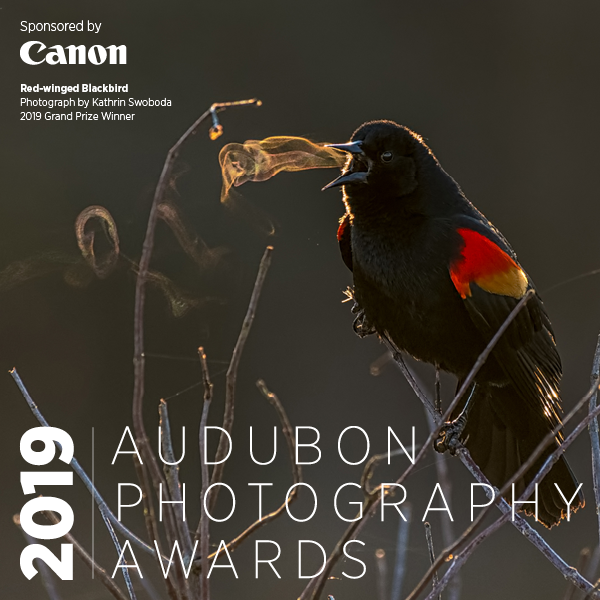
In celebration of the natural connection between birding and photography, Audubon Society of Northern Virginia will co-host the 2019 Audubon Photography Awards Traveling Exhibition with Walker Nature Center in Reston between February 5 and February 26, 2020 and again with Huntley Meadows Park in Alexandria between March 4 and March 25, 2020. Visitors of all ages will enjoy a display of the winning photos and learn more about our local birdlife in Northern Virginia.
In the 10th year of the contest, winning photos and honorable mentions were selected from 2,253 entrants from all 50 states, Washington D.C. and 10 Canadian provinces and territories. The 2019 Grand Prize Winner is a photograph of a Red-winged Blackbird taken by Kathrin Swoboda in Huntley Meadows Park.
New this year, the judges introduced the Plants for Birds Prize and the Fisher Prize. The Plants for Birds Prize was awarded to the highest scoring photograph submitted in the Plants for Birds Division, featuring birds and plants native to the area the photo was taken. The Fisher Prize was awarded to the photograph depicting the most creative approach to bird photography across all divisions: Professional, Amateur, Youth and Plants for Birds.
Walker Nature Center will host an Open House on Sunday, February 9, 2020 from 1:00 – 3:00 PM. Visitors can view the exhibition, watch birds from inside the nature house or outside on guided bird walks and take part in bird-related activities for all ages. The center will also host an environmental film on Friday, February 21, 2020 from 7:00 – 9:00 PM.
Huntley Meadows Park will host an Open House on Sunday March 8, 2020 from 1:00 – 3:00 PM with activities in the Visitor’s Center and guided bird walks in the park.

Lecture and Book Signing with Dr. Doug Tallamy
Along with the Prince William Wildflower Society, a chapter of the Virginia Native Plant Society, Audubon Society of Northern Virginia and Audubon at Home will be sponsoring an author lecture by renowned entomologist and ecologist Dr. Doug Tallamy.

Dr. Doug Tallamy, University of Delaware
Photo: Tiger Swallowtails, Sheryl Pollock
Along with the Prince William Wildflower Society, a chapter of the Virginia Native Plant Society, Audubon Society of Northern Virginia and Audubon at Home will be sponsoring an author lecture by renowned entomologist and ecologist Dr. Doug Tallamy on Sunday, February 23, 2020 from 3:00 to 5:00 PM at the Manassas Park Community Center. Dr. Tallamy, the author of Bringing Nature Home, will have his new book available for signing. Entitled Nature’s Best Hope: A New Approach to Conservation that Starts in Your Yard, it will be available from Timber Press as of February 4, 2020.
To read more about Dr. Tallamy, click here.

Cats and Birds – An Unnatural Mix
Last month, the Potomac Flier article “Three Billion Birds” summarized the alarming decline of birds in the US and Canada since 1970. Habitat loss is the biggest driver of that decline. The second biggest driver is free-roaming domestic and feral cats.
Photo: stock.xchng
By Lisa Mackem
Last month, the Potomac Flier article “Three Billion Birds” summarized the alarming decline of birds in the US and Canada since 1970.
Habitat loss is the biggest driver of that decline.
The second biggest driver is free-roaming domestic and feral cats.
Cats are not a native American species – the colonists brought the first cats to the US as pets. Free-roaming cats threaten birds and other wildlife, disrupt ecosystems, and spread diseases. The American Bird Conservancy estimates that 100 million cats live in the U.S. and that free-roaming cats kill approximately 2.4 billion birds in the U.S. annually, making cat predation the largest human-caused mortality threat to birds. Researchers estimate that a single free-roaming pet cat kills up to 34 birds annually, and a single feral cat kills 23-46 birds annually.
ASNV, American Bird Conservancy, and People for the Ethical Treatment of Animals (PETA) oppose free-roaming cats and TNR (Trap, Neuter, Release) programs for feral cats. PETA opposes TNR programs when the released cats are left to fend for themselves, because in addition to allowing cats to harm native wildlife, living outdoors harms cats. Indoor cats have a substantially longer life expectancy and better quality of life. ASNV has urged all local jurisdictions to initiate public information campaigns to encourage cat owners to keep their cats indoors. ASNV members have met with Fairfax County animal welfare representatives, members of the Fairfax County Board of Supervisors, Arlington County’s Joint Natural Resources Committee, and others to discuss this critical issue for birds and small mammals.
ASNV’s membership materials include messaging about the importance of keeping cats indoors, and the American Bird Conservancy has published ideas for exposing cats to the outdoors without allowing them unlimited roaming. A “catio,” an outdoor enclosure that allows a cat to move outside within a sheltered and secure space, is one such option. Another option is modifying an existing fence to be cat-safe, allowing a cat to roam within a private yard, possibly with visual or audio alerts and mechanical obstructions to protect birds. Some cats can be trained to walk on leashes or with harnesses or can be restrained in a backpack or stroller. Indoor-only cats need entertainment, and there are numerous options for feline indoor play.
For more detailed information about keeping pet cats and wild birds safe, including suggested products and tips to transition an outdoor cat to indoor life, see the American Bird Conservancy’s Solutions for Pet Cats.

We could use your birding skills!
Do you have a favorite spot to bird that you’d like to share with others? Consider leading a winter or spring walk there for ASNV.
Do you have a favorite spot to bird that you’d like to share with others? Consider leading a winter or spring walk there for ASNV. Leaders don’t have to be perfect birders—it’s a group effort. Prime responsibilities are setting the date and meeting place, guiding the route, and helping new birders locate the sightings.
Call or email to discuss:
Jean Tatalias or 703-281-6099

3 Billion Birds
Wild bird populations in the continental US and Canada have declined by almost 30% since 1970, representing a loss of nearly 3 billion birds. This loss astounded Cornell Lab of Ornithology conservation scientist, Ken Rosenberg. Rosenberg led an international team of scientists from seven institutions in the analysis of population trends for 529 bird species. The journal Science published the study results in September.
Photo: Songbird Decline, Chris Maynard
By Lisa Mackem
Wild bird populations in the continental US and Canada have declined by almost 30% since 1970, representing a loss of nearly 3 billion birds. This loss astounded Cornell Lab of Ornithology conservation scientist, Ken Rosenberg. Rosenberg led an international team of scientists from seven institutions in the analysis of population trends for 529 bird species. The journal Science published the study results in September.
The scale of loss is unlike anything recorded in modern natural history. It includes hundreds of bird species across the continent. The research confirming these losses represents the most robust synthesis of long-term population monitoring data ever assembled for animals, said Adam Smith, a study coauthor and biostatistician for Environment and Climate Change Canada. “It’s safe to say that in the natural world, birds are the best studied group of wildlife species,” Smith said. “The data that exist for birds are just so incredible, from 50 years of the North American Breeding Bird Survey and the Christmas Bird Counters from 100 years ago, on to the eBirders of today,” said Smith.
The study authors say that their work shows a pervasive loss in every North American biome. Forests have lost 1 billion birds and grasslands have lost 700 million, or 50% of their birds. The study authors identify habitat loss as a likely driving factor in these declines. More than 90% of the total bird losses (over 2.5 billion birds) come from 12 avian families, including common birds like sparrows, blackbirds, and finches. A Red-winged Blackbird was the subject of the winning 2019 Audubon photography contest photo. In the last 50 years, Red-winged Blackbirds lost 33% of their population – a severe and unsustainable loss.
Birds are indicator species, serving as acutely sensitive barometers of environmental health. Their mass declines signal that the earth’s biological systems are in trouble. Other studies have documented similar losses in populations of insects, amphibians, and fish. A 2019 United Nations report warned that approximately one million animal and plant species face extinction – more than ever before in human history.
Fortunately, there is also good news. North American duck and geese populations have grown by 56% since 1970, largely due to US and Canadian laws protecting wetlands and collaboration with Mexico to safeguard migrating waterfowl. Conservation management became increasingly science-driven. Private philanthropy, especially by Ducks Unlimited, generated significant financial support for wetlands acquisitions. Raptor and turkey populations also have been restored. A current bipartisan measure in the US House of Representatives – the Recovering America’s Wildlife Act – would direct $1.4 billion in federal dollars to invigorate underfunded state and tribal wildlife conservation programs. Bird populations that have suffered devastating losses have enough remaining birds to spur a recovery if conservation measures are implemented soon.
3 billion birds, co-sponsored by American Bird Conservancy, Audubon, Bird Conservancy of the Rockies, Georgetown University, The Cornell Lab of Ornithology, and Smithsonian National Zoological Park and Conservation Biology Institute published 7 Simple Steps to help birds:
1. Make windows safer
2. Keep cats indoor
3. Reduce lawn by planting native species
4. Avoid pesticides
5 Drink bird-friendly coffee
6. Reduce use of plastics
7. Participate in birdwatching citizen science.
Rosenberg warned that in 10 years, the current losses could be irreversible. The passenger pigeon was once the world’s most abundant bird, but people did not realize how quickly it was vanishing until it was too late. Meaningful action must start now.
You can participate in birdwatching citizen science by attending ASNV’s Project FeederWatch and Christmas Bird Count workshops this November – ASNV Workshops
Sources: https://www.allaboutbirds.org/vanishing-1-in-4-birds-gone/ https://www.nytimes.com/2019/09/19/opinion/crisis-birds-north-america.html https://science.sciencemag.org/content/366/6461/120

Birdathon Winners Visit Oak Spring
Winning Birdathon teams traveled out to the Oak Spring Garden Foundation in Upperville, Virginia on September 17 to view some rare books, including a John James Audubon folio, and the grounds of the estate of Rachel "Bunny" Mellon, who designed the White House Rose Garden.
Photo: Oak Spring Wall, Robin Duska
Winning Birdathon teams traveled out to the Oak Spring Garden Foundation in Upperville, Virginia on September 17 to view some rare books, including a John James Audubon folio, and the grounds of the estate of Rachel "Bunny" Mellon, who designed the White House Rose Garden. The 700 acres of Foundation grounds were certified as an Audubon at Home Wildlife Sanctuary on July 25 by AAH County Coordinator Leslie Paulson. OSGF Project Development Coordinator T.J. Sherman, who led the BIrdathon teams around the grounds, indicated that nearly all AAH Sanctuary Species have been seen on the property.
Species are selected as AAH Sanctuary Species because they breed in Northern Virginia, have a reasonable chance of being found on and/or attracted to a suburban property, are considered a beneficial and/or desirable species, and are a population in decline OR at risk of being in decline (in the Northern Virginia area) due to typical suburban land use issues (pesticides, habitat destruction, etc.).

Youth Education Mini-grants
The Audubon Society of Northern Virginia is pleased to announce the 2020 youth education mini-grant program. This program aims to help teachers, schools, and non-profit organizations educate youth about birds and the environment.
Photo: Birding backpacks, Dixie Sommers
The Audubon Society of Northern Virginia is pleased to announce the 2020 youth education mini-grant program. This program aims to help teachers, schools, and non-profit organizations educate youth about birds and the environment.
ASNV anticipates awarding three mini-grants, up to $500 each. Applications will be available in February 2020 and due March 15, 2020. Please contact youtheducation@audubonva.org with questions.

Wolf Trap First-Time Campers Program offers Birding
Each spring and fall Wolf Trap National Park for the Performing Arts hosts two campouts for Fairfax County 5th and 6th grade students sponsored by Friends of Wolf Trap. The campouts give young people an opportunity to develop meaningful connections to the natural world, learn outdoor skills, make new friends, and have fun.
Photo: Wolf Trap camp out, Gary Pan
Each spring and fall Wolf Trap National Park for the Performing Arts hosts two campouts for Fairfax County 5th and 6th grade students sponsored by Friends of Wolf Trap. The campouts give young people an opportunity to develop meaningful connections to the natural world, learn outdoor skills, make new friends, and have fun. Scout youth leaders organize the camping while other partners teach activities such as archery, fly casting, pollinators, gardening, birding, and more.
For the past five years, ASNV volunteers have led an introduction to birding class which teaches birding basics and how to use binoculars, followed by bird hikes. The class is based on bird data and knowledge of the park’s trails compiled during ASNV’s two-year bird survey. Between 2013 and 2015, survey teams visited the park 270 times and identified 128 species. Now, thanks to the Friends’ generous gift of 20 pairs of binoculars, campers and others can try to find those species.
Ten to twelve-year-olds have sharp eyes and acute hearing! This year’s young campers helped find Barred Owls, 4 hawk species, both vultures, warblers, Eastern Bluebirds, Tree Swallows, 3 wren species, 3 sparrow species, lots of migrants, and many year-round woodland birds including 5 woodpecker species, Carolina Chickadee, Tufted Titmouse, White-breasted Nuthatch, and Northern Cardinal.
If you are a birder and would like to help with this enriching program, watch our newsletter and website for a volunteer request in 2020.

Volunteer: Bird-safe Buildings
National Audubon has asked its members to advocate for the federal Bird-Safe Buildings Act NAS Bird Safe Windows, and ASNV wants to address the issue on a local level. If you have expertise in architecture, city planning or bird-safe building measures, the Advocacy Committee would like to hear from you.
Photo: Free Photos via Pixabay
National Audubon has asked its members to advocate for the federal Bird-Safe Buildings Act NAS Bird Safe Windows, and ASNV wants to address the issue on a local level. If you have expertise in architecture, city planning or bird-safe building measures, the Advocacy Committee would like to hear from you. If you can help, please contact Connie Ericson.
Twelve Things You Should Know About Owls
Owls are our nocturnal neighbors, leading secretive lives in woods and fields around us. Rarely seen during the day, they can be hard to spot at night. Here are 12 things to know about these elusive birds.
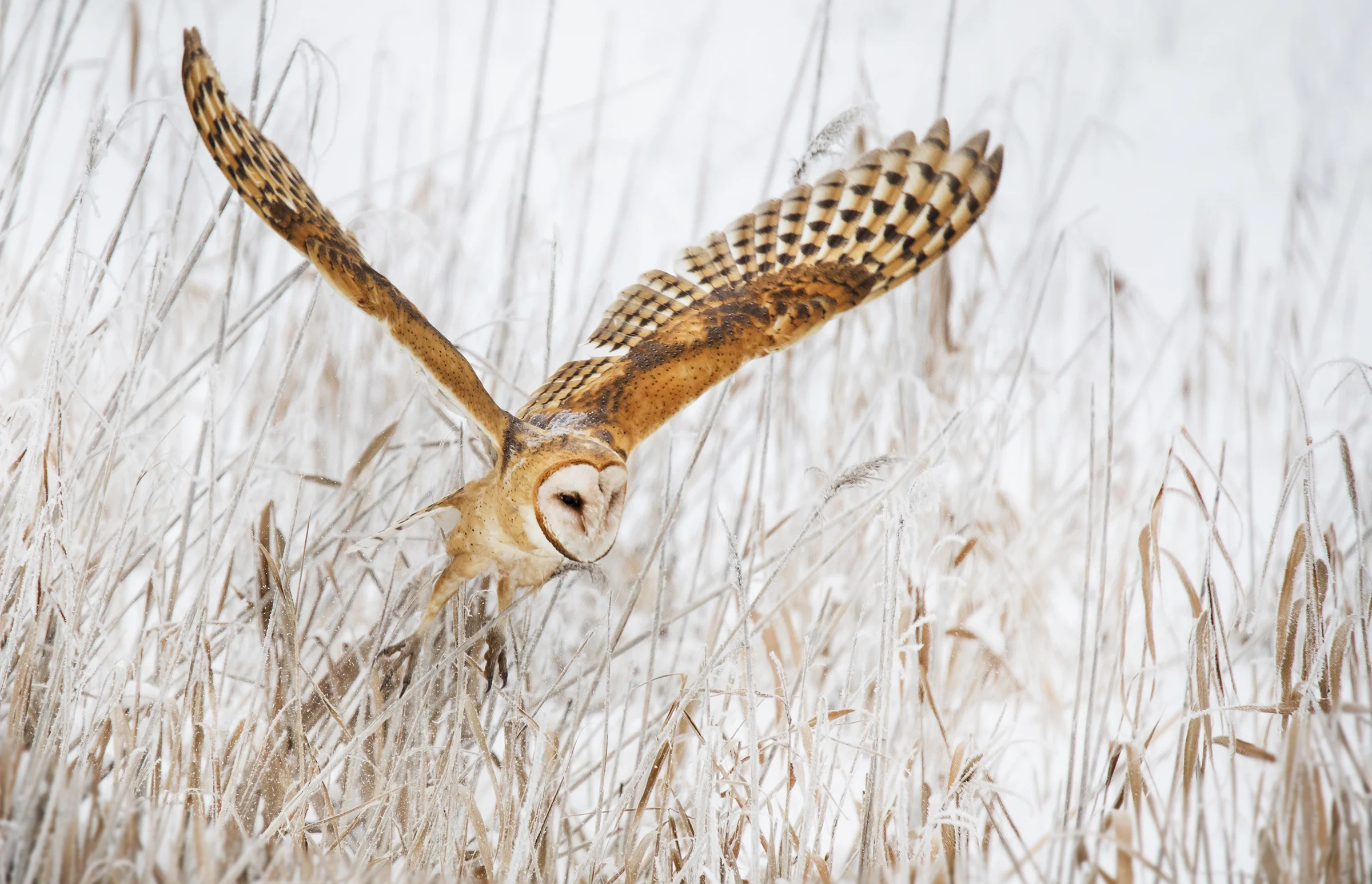
Photo: Barn Owl, Stacy Howell/Audubon Photography Awards
Roger DiSilvestro

Burrowing Owls, Ann Kramer/Audubon Photography Awards
Owls are our nocturnal neighbors, leading secretive lives in woods and fields around us. Rarely seen during the day, they can be hard to spot at night. Here are 12 things to know about these elusive birds:
The fossil record indicates that owls originated more than 60 million years ago, probably about the time dinosaurs went extinct.
The world is home to 220 to 225 living owl species, depending on which taxonomist you ask.
Most owls feed on small birds and mammals, though some are specialists at preying on fish.
A nesting pair of Barn Owls may consume some 3,000 rodents while raising their young.
Males catch food for themselves, their offspring, and their mates, which stay on nests while incubating eggs and caring for young; if food is scarce, however, the male eats first.
Most owls are active at night (nocturnal) but some are active by day (diurnal). One diurnal owl is the Burrowing Owl, often associated with prairie dog towns in the West, where they can be seen bowing politely to one another on the mounds surrounding prairie dog holes.
Night-hunting owls are the stealth bombers of the bird world, equipped with large eyes specially adapted to seeing in darkness, and with ears structured to pick up the slightest sound, giving them advantages over their less acutely equipped prey.
The feathered disks around the eyes of owls help to funnel sound to the ears, and owls can move the feathers to accentuate sounds.
The eyes of owls are placed side by side in the skull, giving the birds excellent depth perception highly useful for zeroing in on prey.
Adaptations in the neck bones allow owls to turn their heads 270 degrees, giving them a wide field of view.
Owl flight feathers have fringe-like or serrated edges that muffle the sound of flying owls, allowing them to sneak up on prey.
Owls regurgitate indigestible parts of their prey, such as bones and teeth, in pellets that biologists can use to study owl eating habits.
Bonus Fact
The world’s smallest owl is the Elf Owl, about 5 inches long and weighing 1 ounce. Two species are rivals for largest species: the Eurasian Eagle-Owl and Blakiston’s Fish Owl, both of which can measure up to 28 inches long and weigh in excess of 9 pounds; however, the great gray owl is longer, at up to 33 inches, so some birders contend that it is the largest owl species, though it is roughly half the weight of the other two.

Great Gray Owl, Ken Shults/Audubon Photography Awards

Citizen Science at ASNV
On September 22, ASNV awarded James (Jim) Waggener National Audubon Society’s prestigious Great Egret Award in recognition of his outstanding citizen science contribution. Jim is only the second person from ASNV to receive this award. He is a naturalist, who began the Occoquan Monitoring Program 30 years ago after retiring from foreign service.
Photo: Great Egret, Gregory Seitz, Audubon Photography Awards
By Lisa Mackem
On September 22, ASNV awarded James (Jim) Waggener National Audubon Society’s prestigious Great Egret Award in recognition of his outstanding citizen science contribution. Jim is only the second person from ASNV to receive this award. He is a naturalist, who began the Occoquan Monitoring Program 30 years ago after retiring from foreign service. His survey draws volunteers from across the region who help document the presence and abundance of birds, butterflies, dragonflies, and first bloom dates of plants in the Occoquan Bay National Wildlife Refuge, Julie Metz Memorial - Neabsco Creek Wetlands Preserve, and Meadowood Special Recreation Management Area.

Jim Waggener and ASNV President Tom Blackburn, photo by Laura McDonald
The September 22 Audubon Afternoon focused on citizen science. Speakers, Leslie Ries and Elise Larsen, from the Georgetown University Ries Laboratory of Butterfly Informatics, summarized the history of citizen science. Leslie started with Frank Chapman, who began Christmas bird counts in 1900. In those early days, Chapman had to promote the idea of counting birds rather than shooting them. In the 1950’s, Fred Urquhart became interested in monarch migration and engaged the public to tag them. Chip Taylor took over this program in 1992. Both speakers cited Ernie Pollard, who developed a method for surveying butterflies in England in the 1970’s. His surveys accounted for fluctuating abundances throughout the season and for weather sensitivity. Pollard developed the most common survey protocol for butterflies and Pollard Walks and counts continue today.
Jim Waggener has also developed survey protocols. His Occoquan Monitoring Program was one of the first general butterfly monitoring programs, and anticipated a trend toward multi-species surveys. Leslie Ries learned about Jim’s surveys through Laura McDonald, ASNV Program Manager, and has begun to digitize the surveys’ data.
Occoquan data has been added to eBird, Cornell Ornithology Lab’s online data base for bird observations. Leslie Ries noted promising trends in suburbs – when people planted native plants and stopped using pesticides they saw butterflies return.
Jim Waggener credited digitization, application of INaturalist, the daily work of volunteers in the field, and resources of the Northern Virginia Audubon Society for his survey’s success.
Occoquan Monitoring Program, the Christmas Bird Count, Birdathon, and other wildlife counts continue regularly and always need volunteers.

New Partnership with Green Muslims
The Audubon Society of Northern Virginia is happy to highlight a new partnership: Green Muslims is a volunteer-driven 501(C)3 headquartered in the metropolitan Washington, D.C. area that is working to connect Muslims everywhere to nature and environmental activism.
Photo: Bird walk, Dixie Sommers

The Audubon Society of Northern Virginia is happy to highlight a new partnership: Green Muslims is a volunteer-driven 501(C)3 headquartered in the metropolitan Washington, D.C. area that is working to connect Muslims everywhere to nature and environmental activism. Green Muslims hosts educational, service, and outdoor recreational events and strives to serve as a bridge connecting the Muslim community with local climate action organizations. ASNV and Green Muslims will celebrate the partnership with a November bird walk for Green Muslim's members.

Birds of the Month: Albert and Wisdom
Samuel Taylor Coleridge’s most quoted (and misquoted) poem, “The Rime of the Ancient Mariner,” tells the story of a sailor who shoots a friendly albatross, cursing himself and his crew. As punishment, he is forced to wear the bird around its neck, making the albatross a symbol of his burden and regret. Good omens in life and bad omens in death, albatrosses have become symbols of both good and bad luck. Fittingly, while some real albatrosses have been fortunate, others have had tough luck.
Photo: Wisdom the Laysan Albatross, Madalyn Riley
By Elise Brosnan
“Water, water every where,
Nor any drop to drink.”
Samuel Taylor Coleridge’s most quoted (and misquoted) poem, “The Rime of the Ancient Mariner,” tells the story of a sailor who shoots a friendly albatross, cursing himself and his crew. As punishment, he is forced to wear the bird around its neck, making the albatross a symbol of his burden and regret. Good omens in life and bad omens in death, albatrosses have become symbols of both good and bad luck. Fittingly, while some real albatrosses have been fortunate, others have had tough luck.
Albatrosses have the world’s largest wingspans, maxing out at nearly 11 feet, with the record exceeding 12 feet. They can glide for hours on their massive wings, relying on wind currents to travel where they need to go. However, albatrosses are not so good at flapping. Found in the South Atlantic, South Pacific, and North Pacific, albatrosses stay away from the tropics, and for good reason. The area of ocean around the equator is what scientists call the Intertropical Convergence Zone (ITCZ) and what sailors call the doldrums, a place where hot air rises straight upwards, and transverse breezes are few and far between.
Albatrosses are so dependent on temperate sea breezes that if they find themselves on the wrong side of the ITCZ, they may not be able to cross back. One particularly unlucky Black-browed Albatross, Albert, has been trapped in the North Atlantic Ocean since a freak storm carried him north in 1967. Originally a native of Argentina, Albert spent 40 lonely years returning to a Northern Gannet breeding colony in Scotland, looking for love, but finding only Northern Gannets. While albatrosses do not belong in the North Atlantic, strandings may not be all that uncommon. On the tiny Faroe Islands between Iceland and Norway, the word for albatross is “gannet king,” describing lost albatrosses’ habit of seeking gannets for company.

Black-browed Albatross, Evan Siegel/Audubon Photography Awards
Other albatrosses are more fortunate. With an expected lifespan of 70 years, they are some of the longest-lived birds. The record holder is Wisdom, a Laysan Albatross who was first banded in 1956. Wisdom nests on Midway Atoll in the Pacific. In 2011, an earthquake off the coast of Japan triggered a tsunami on the island that killed over 100,000 nesting birds. Fortunately, Wisdom survived, and has since thrived. Last year, at the approximate age of at least 68, she hatched another chick, bringing her total number of offspring to nearly 40.
Albatrosses are a lot like people: some are lucky, and some are seriously unlucky. If you would like to learn about how you can give all kinds of albatrosses some extra help, follow the link here: help albatrosses
Sources:
http://news.bbc.co.uk/2/hi/uk_news/scotland/highlands_and_islands/6641021.stm
https://www.npr.org/2018/12/07/674481057/wisdom-the-albatross-worlds-oldest-wild-bird-lays-another-egg
https://www.fws.gov/pacific/news/news.cfm?id=2144374743

Reflections on Hog Island Audubon Camp
Spending six days on Hog Island, Maine was one of the most meaningful, educational experiences I have ever had. From the moment we stepped off the boat from the mainland, we were immersed in a rich environment of natural wonder, forming new relationships, and inspired by the passion and knowledge of the camp staff and our fellow educators who arrived from all over the country.
Sharing Nature: An Educator’s Week
By Kirk Treakle, ASNV 2019 Hog Island Scholarship Winner
Spending six days on Hog Island, Maine was one of the most meaningful, educational experiences I have ever had. From the moment we stepped off the boat from the mainland, we were immersed in a rich environment of natural wonder, forming new relationships, and inspired by the passion and knowledge of the camp staff and our fellow educators who arrived from all over the country.

Hog Island Coastline, Kirk Treakle
The week was full of highlights, big and small. Here are few:
Being challenged by the hands-on “Mystery of the Day” where we had to figure out something about the natural world by using available resources. It was fascinating to learn that black feathers contained more melanin, causing them to be hardier, and thus found on the outer wings of many sea birds whose feathers can take a beating when they sometimes touch the surface while flying over the water.
Exploring tide pools and pond life allowing us to live the kinds of experiences we hope to share with our students and along the way, anticipating pitfalls and learning a bagful of simple tricks to involve every child and expose them to the best outdoor nature experiences available to us.
Getting to witness, first hand, the results of decades of work by Audubon’s Project Puffin, a part of the Seabird Restoration Program, which has successfully re-introduced Atlantic Puffins to Egg Island where they once lived. The island is now thriving with puffins and Common Terns, which are still studied by scientists who live in tents near the birds during breeding season.
Discovering the geologic history of another island by walking its rocky coast with a geologist. Decades ago, fishermen who stained the island rocks with tar while waterproofing their nets, added a human element to the story told thousands of years ago in boulders deposited by glaciers, and even earlier by the twisted layers of schist and cross-cutting igneous intrusions created millions of years ago.
Sitting on moss-covered rocks under the shade of tall trees, the sounds of nature flooded our senses as we took a mindfulness break during a day-long hike around Hog Island.
Being a part of a group in an atmosphere that was purposefully created to be inclusive of all types of people.
Hearing the repeated message by camp staff that we all can and are making a difference in conserving nature, one student and one action at a time, and gaining so many new tools with which to successfully make those differences.
Educator’s Week on Hog Island was a celebration of the natural world, giving us strategies, tips, and ideas to inspire a sense of wonder with the youth we have the privilege to guide along the path.
I am so grateful to the Audubon Society of Northern Virginia for sponsoring me for this transformative adventure.
Are you an educator who would like to experience Audubon Camp on Hog Island? Information on this year’s scholarship program can be found here.

Puffin Desserts on Hog Island, Kirk Treakle

Bird of the Month: The Pfeilstorch
In the 19th century, a curious phenomenon stumped European bird watchers and zoologists. Why did some species of birds disappear and then reappear every year? People back then had no way to track birds as they traveled long distances, so they had to come to their own conclusions.
Photo: White Stork, Wink Gaines/Audubon Photography Awards
By Elise Brosnan
In the 19th century, a curious phenomenon stumped European bird watchers and zoologists. Why did some species of birds disappear and then reappear every year? People back then had no way to track birds as they traveled long distances, so they had to come to their own conclusions.

The 1822 Pfeilstorch is currently housed at the University of Rostock in Rostock, Germany. Image Credit: University of Rostock
One popular theory was that birds hibernated at the bottom of a pond or stream, the same strategy used by aquatic frogs and turtles. This claim was buoyed by fisherman, who said they were catching birds in their nets. In earlier times, other scientists, such as Aristotle, believed that birds metamorphized, transforming into other bird species like caterpillars transform into butterflies. Other theories were even more bizarre. In 1703, a Harvard professor proposed that birds were flying to the moon!
In 1822, one White Stork helped put an end to this mystery. The bird landed near the German village of Klütz with a 30-inch spear through its neck. The spear was discovered to be made from African wood, meaning this stork must have traveled between the continents. Being a literal people, the Germans felt this strange, new animal needed a new name: Pfeilstorch, or arrow-stork. Amazingly, there have been 24 subsequent recorded Pfeilstorchs—birds that have successfully migrated to Europe with an African spear embedded in their flesh.
The Pfeilstorch was the first concrete evidence for migration, the annual, large-scale movement of birds between their breeding and non-breeding territories. Migration may be less fantastical than space travel or shape-shifting, but it is no less impressive. Twenty-five recorded Pfeilstrorchs traveled 2,000 miles to Africa, got impaled, and then traveled 2,000 miles back. Their 4,000mile round trip pales in comparison to the Artic Tern, which makes an almost 60,000-mile voyage between the poles. The Common Swift has a shorter migration, traveling from its breeding grounds in Scandinavia to its feeding grounds in Sub-Saharan Africa. However, because of the recent development of lightweight accelerometers commonly used in smartphones, researchers have been able to prove that the Common Swift has the longest uninterrupted flight of any bird. Common Swifts eat, drink, mate, and even sleep while airborne, and consequently, some of them never set foot on the African continent they return to each year. By the time they touch back down in Scandinavia, these birds have been airborne for an entire 10 months.
Although we have had proof of migration for nearly 200 years, in many ways it still perplexes us. We still don’t have definitive answers to what triggers migration, how birds navigate across oceans, or why birds choose to go on these long and arduous journeys at all. With all of these unknowns, one thing is for certain: technological innovations like accelerometers, as well as random happenstance like the Pfeilstorch, will continue to shed light on one of the most beguiling mysteries of the natural world.
Sources:
https://www.audubon.org/news/the-common-swift-new-record-holder-longest-uninterrupted-flight
https://mentalfloss.com/article/76208/how-stork-solved-scientific-mystery
https://www.allaboutbirds.org/the-basics-how-why-and-where-of-bird-migration/