
NVBA NEWS BLOG
Welcome to the blog for Northern Virginia Bird Alliance, a wealth of resources about northern Virginia birds, wildlife, habitat conservation and restoration, native plants, wildlife-friendly gardening, advocacy and more.

Observations from Meadowood: July
During the pandemic we’ve had to cancel our regular wildlife surveys but some long-time participants are going out individually on an ad hoc basis to continue collecting data. Judy Gallagher is one of those folks who also captures photos of what she sees, in particular the less common species.
Photo: Meadowood Recreation Area, Rusty Moran
During the pandemic we’ve had to cancel our regular wildlife surveys but some long-time participants are going out individually on an ad hoc basis to continue collecting data. Judy Gallagher is one of those folks who also captures photos of what she sees, in particular the less common species. Here are two observations from her recent survey.
Peck's Skipper is nectaring on Common Milkweed at West Meadowood in southern Fairfax County. Many butterfly caterpillars require a specific plant for food. Peck's Skipper caterpillars feed on native grasses such as Little Bluestem, but have also adapted to feed on Kentucky Bluegrass, a non-native species. They are therefore relatively abundant as they can use lawns, power-line cuts and other disturbed areas as habitat.

Peck’s Skipper, Judy Gallagher
This immature Northern Walkingstick is about 1 1/2 inches long, but will grow to be at least 3 inches long. The mature insect is brown and looks like a twig. Although they are insects, they don't have wings. They eat the leaves of deciduous trees such as Oaks, American Hazel and Black Locust.

Northern Walkingstick, Judy Gallagher

Is This Land Your Land?
Prince William Conservation Alliance held a community conversation on July 12, “Is This Land Your Land?” with keynote speaker, Dudley Edmondson, who presented information and ideas on why African Americans and other People of Color might not think so.
Photo: Rusty Moran
Prince William Conservation Alliance held a community conversation on July 12, “Is This Land Your Land?” with keynote speaker, Dudley Edmondson, who presented information and ideas on why African Americans and other People of Color might not think so.
Originally planned as an in-person event, the conversation was held as a live webinar with community organizations and citizens. The recording is here
Dudley Edmondson is the author of book, “Black & Brown Faces in America’s Wild Places,” profiling African Americans in nontraditional vocations and avocations in the outdoors.
Program Sponsors included: Prince William Conservation Alliance with the NAACP Prince William, Todos Supermarket, Northern Virginia Community College, Virginia Native Plant Society, Unity in the Community, Coalition to Protect Prince William, Prince William County Parks, Wetland Studies and the National Park Service Prince William Forest [National] Park.

Great American Outdoors Act Will Become Law
In a rare show of bipartisan support, the Great American Outdoors Act passed in both Congressional houses with a large margin. The Act has been called one of the most important environmental bills in history.
Photo: Golden-winged Warbler, Michael Stubblefield
By Lisa Mackem
In a rare show of bipartisan support, the Great American Outdoors Act passed in both Congressional houses with a large margin. Republican Senator Cory Gardner sponsored the bill, along with 59 cosponsors. Both Virginia senators supported the bill. The Act has been called one of the most important environmental bills in history.
Sarah Greenberger, senior vice president for the National Audubon Society’s conservation policy, said that the bill will help protect birds, improve parks, and create jobs in every state and will provide permanent, mandatory funding for the Land and Water Conservation Fund (LWCF) at the authorized amount of $900 million annually at no additional taxpayer cost. It will also direct up to $9.5 billion over five years to the National Parks and Public Lands Legacy funds to help address huge backlogs in maintenance needs.
Southern Environmental Law Center (SELC) Federal Legislative Director Anders Reynolds called the Great American Outdoors Act “a huge step in the right direction…but only a first step. Properly maintaining our parks and preserving public lands is vital for our environment and for the economic health of local communities that depend on outdoor tourism.”
President Trump has expressed support for this bill and is expected to sign it into law. A signing date has not yet been set.

Birding while Black: Understanding our Different Experiences
We think these resources from the National Audubon Society offer a helpful introduction not only for our ASNV board but for anyone who wants to better understand how the outdoors and specifically birding, is not equally safe and welcoming for everyone, especially for people of color.
Photo: Camilla Cerea
Resources from National Audubon
David J. Ringer, Chief Network Officer for the National Audubon Society, shared these resources with Audubon chapters around the county. We think they offer a helpful introduction not only for our ASNV board but for anyone who wants to better understand how the outdoors and specifically birding, is not equally safe and welcoming for everyone, especially for people of color.
Read, watch, and share these pieces about birding while Black:
What White Birders Can Learn From Amy Cooper About Their Own Racism by Hannah Waters
Corina Newsome and the Black Birders Movement from The New Yorker
Jason Ward’s essay on how the woods can be perilous for Black people
Journalist Brentin Mock’s interview on birding as a Black man
Buy copies of these books and have discussions with your chapter board:
Caroline Finney’s Black Faces, White Spaces: Reimagining the Relationship of African Americans to the Great Outdoors
Dr. Ibram X. Kendi’s How To Be an Antiracist
Dr. J Drew Lanham’s The Home Place: Memoirs of a Colored Man’s Love Affair with Nature

August Bird of the Month
“Tier, Tier, Tier, Tier, Tier.” Have you heard this call? It’s the call of a Red-shouldered Hawk (Buteo lineatus), but it could be a Blue Jay you’re hearing. Even if you have a discerning ear, the calls can be indistinguishable.
Photo: Red-shouldered Hawks, Linda Krueger
Bird of the Month: Who’s that Calling in the Air?
By Jessica Biggers
“Tier, Tier, Tier, Tier, Tier.” Have you heard this call? It’s the call of a Red-shouldered Hawk (Buteo lineatus), but it could be a Blue Jay you’re hearing. Even if you have a discerning ear, the calls can be indistinguishable. Although I’ve found that a Red-shouldered Hawk call tends to be longer, a bit sharper, higher pitched and louder than its copycat.
There’s definitely a healthy population of resident Red-shouldered Hawks in Northern Virginia. Reston Association (RA) volunteers tallied 38 of them in Reston alone during this spring’s 24-hour bird survey.
They are also one of the Audubon at Home program’s Sanctuary Species. Red-shouldered Hawks in our area tend to live in deciduous forests with little understory, enabling them to see better while hunting. Although, you will also find them in residential areas on the edge of forests. There was even a nesting pair who strayed farther away from the woods to make their home in a maintenance shed at the RA Central Services Facility (CSF) in Reston last spring. Most red-shouldered pairs return to the same nest from year to year, but unfortunately our CSF occupants did not come back this spring.
If you do find a nest, take a look on the ground for bird poop, which is a good sign that it’s active. Red-shouldereds have one brood per year with a clutch of between two and five babies. Five days after the brood hatches, the babies start throwing their poop over the nest. Another earlier sign that you can look for is a nest decorated with pine boughs. You can often find some pine boughs on the ground near the nest.
During the breeding season, males do an elaborate aerial mating dance. They begin calling while soaring, and then make some steep dives towards the female. They fly back up in a spiral pattern before diving back down again to mate. Most Red-shouldered Hawks pair for life and usually hunt together year round.
These hawks are pretty easy to identify compared to their fellow hawk neighbors, like the Cooper’s Hawk. Their markings are distinguishable from the others; with their reddish-peach barred underside and a sharply defined banded tail. However, you are more likely to see them in flight than hiding out in a tree.
So, the next time you hear a “Tier, Tier, Tier, Tier,” listen very closely and see if you can guess who it is – your friendly red-shouldered neighbor or one of those sneaky Blue Jay mimics. Happy birding!
Sources:
https://www.allaboutbirds.org/guide/Red-shouldered_Hawk/overview
Getting into Nature – Often the Best Therapy
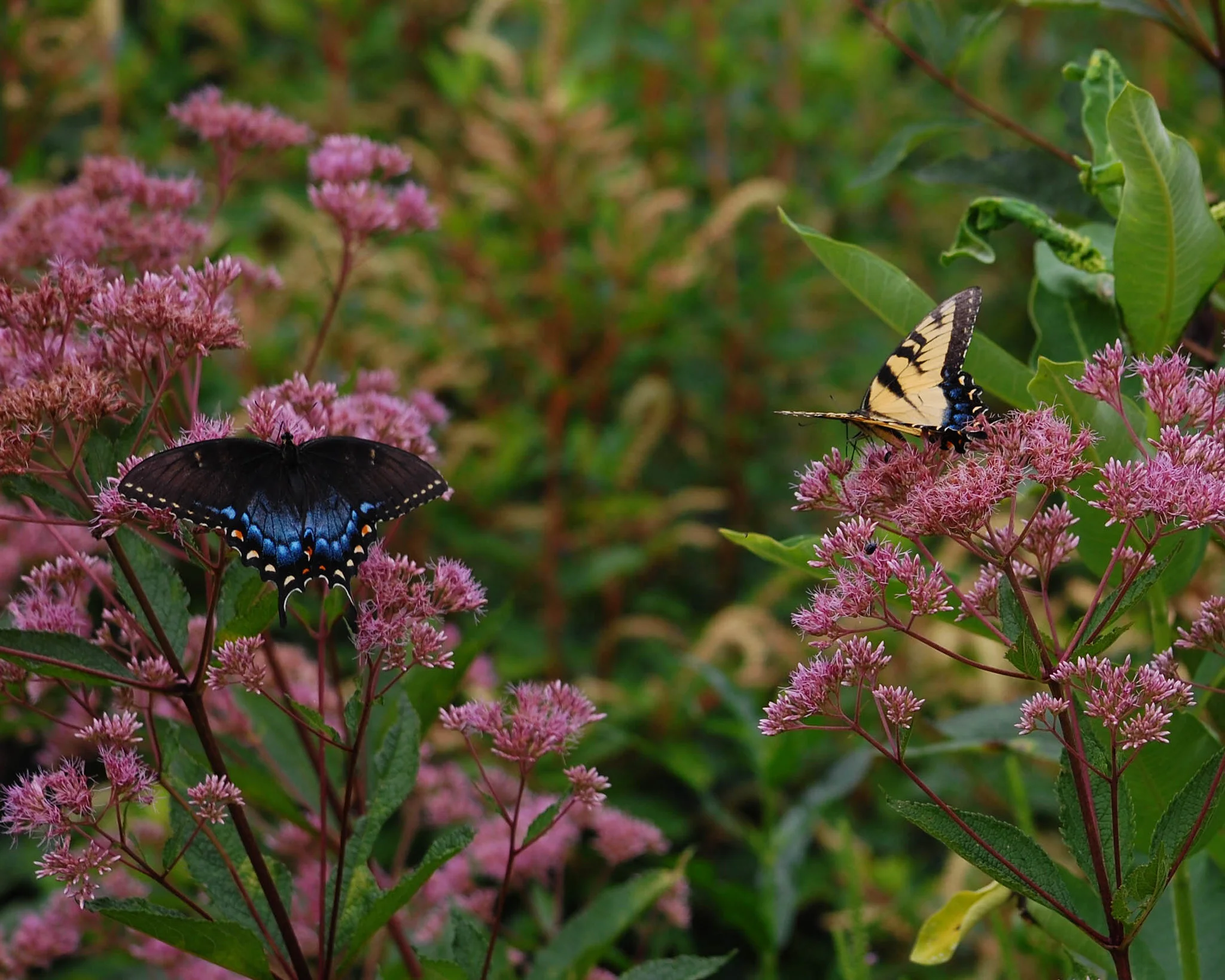
Getting back into nature is often the best therapy for challenging times. Read on for a link to Glenda Booth’s article, originally published in Zebra, on the importance of getting outside.
Photo: Swallowtails, Sheryl Pollock
Zebra- Good News from Alexandria
For our readers who need to be outdoors, and that’s most of us, here is a thoughtful article written by Glenda Booth and originally published in Zebra. It offers ideas for easy, socially-distanced nature experiences in our region.
https://thezebra.org/2020/07/10/getting-into-nature-often-the-best-therapy/

Monday Mystery
Last month we asked readers if they could identify a particularly beautiful nest that had fallen from a tree, and we’ve decided to continue our Monday Mystery contest each week on Facebook.
Photo: Gray Catbird nest, Glenda Booth
Last month we asked readers if they could identify a particularly beautiful nest that had fallen from a tree. People posted their answers on our Facebook page and Kristen Sinclair had the first correct guess – Gray Catbird. She won a snazzy ASNV hat!
We decided to continue our Monday Mystery contest each week. On Monday, July 13 we shared a particularly tricky, just emerging Pink-striped oakworm moth which Gwen Jennier correctly identified:

Oakworm Moth, Laura McDonald
On July 20 we shared an unusual plant:

Cancer Root, Laura McDonald
This coming Monday, August 3, we have a feather quiz. The first person to correctly solve a Monday Mystery wins a hat or a tote bag. Visit our FB page to offer your suggestions.

ASNV Membership Elects Board Members and Thanks Departing Board Members
On June 7, 2020 ASNV held its Annual Membership Meeting “virtually” for the first time since our founding in 1980. Members elected three new board members and a current member to three-year terms.
Photo: S. Hermann & F. Richter via Pixabay
On June 7, 2020 ASNV held its Annual Membership Meeting “virtually” for the first time since our founding in 1980. Members elected three new board members and a current member to three-year terms. We’re thrilled to have such talented and dedicated people guiding ASNV into the future.
Greg Butcher has been on the ASNV Board of Directors since 2014. Greg is the Migratory Species Coordinator for U.S. Forest Service International Programs. He is a Ph.D. ornithologist who has worked for the National Audubon Society, American Birding Association, Partners in Flight, Birders World magazine and Cornell Lab of Ornithology. Greg is a recognized public speaker and interpreter for bird conservation and ecology worldwide. He welcomes the opportunity to contribute to Audubon's environmental mission at the local level.
Judy Gallagher has been an Audubon member for more than 25 years. She loves birding, but is most passionate about documenting insects and spiders and their behavior and environment through macro photography. Judy is a Certified Master Naturalist and a charter member of the Prince William Wildflower Society. She has a Certificate in Natural History Field Studies from Audubon Naturalist Society. She joined ASNV's wonderful Natural Resources Survey when she retired five years ago and spends most of her free time roaming natural spaces in Northern Virginia looking for bugs. She also participates in several Christmas Bird Counts.
Joan Haffey couldn’t help but become a birder through osmosis and the patience of the birding community in Cape May, NJ where she has vacationed for 30 years. Beginning with NJ Audubon, she is an ongoing and active member of three Audubon chapters. Joan is an Arlington Regional Master Naturalist whose focus is citizen science. This includes participation in regular natural resource surveys and bird counts as well as stream water quality monitoring. She helps enter historical data for some of these surveys in the eBird and PollardBase databases. Until she retired, Joan worked in global health in approximately 45 countries around the globe, including long-term assignments in West Africa, Central America and the People’s Republic of China. She is fluent in Spanish and comme ci, comme ça in French.
Betsy Martin spent her career as a researcher improving methods and measurements in the decennial census and government surveys. When she retired from the U.S. Census Bureau in 2007, she enrolled in the then-new Virginia Master Naturalist program and embarked on a second career as an environmental activist and volunteer. She is an Audubon at Home Ambassador, and since 2012 has served as coordinator for the Audubon at Home program in Fairfax County. Now she is a co-director. She’s a founder and president of the Friends of Little Hunting Creek, leads cleanups, and works to preserve riparian habitat on the creek. She’s organized demonstrations urging companies and associations to take responsibility for the litter their products create, and advocates for laws to prevent litter. Betsy serves on Fairfax Supervisor Dan Storck’s Environmental Advisory Committee and is a member of the Fairfax County Chesapeake Bay Exception Review Committee.
Thank You to our Departing Board Members
Andrea Auerbach, Robin Duska and Traci McGillicuddy joined the ASNV board in July of 2017.
Andrea Auerbach served on the Youth Education Committee which administers mini-grants to schools and scholarships for teachers to attend Educator’s Week at Hog Island Audubon Camp in Maine. Andrea also volunteered to help with children’s activities at numerous public events and shared her technical and editing expertise with several other committees.
Robin Duska spent many hours as the Co-coordinator of ASNV’s Audubon at Home program. She spearheaded a management plan that focused the program on specific goals and objectives. At the 2019 National Audubon Convention Robin was invited to join a panel discussing environmental work with faith communities. The invitation grew from Audubon at Home’s success in winning and managing Burke Grants for five diverse faith communities in our region.
Traci McGillicuddy served on the Youth Education Committee administering grants and volunteering for many public events, especially those involving children. She also coordinated a successful partnership between ASNV and the Children’s Science Center to teach basic birding skills and support a summer program for children and their families to study our regional birds.

What Happened to the Northern Virginia Bird Survey?
ASNV has held the Northern Virginia Bird Survey every June since 1994, providing a picture of the trends over 25 years on the number and species of breeding birds in our area.
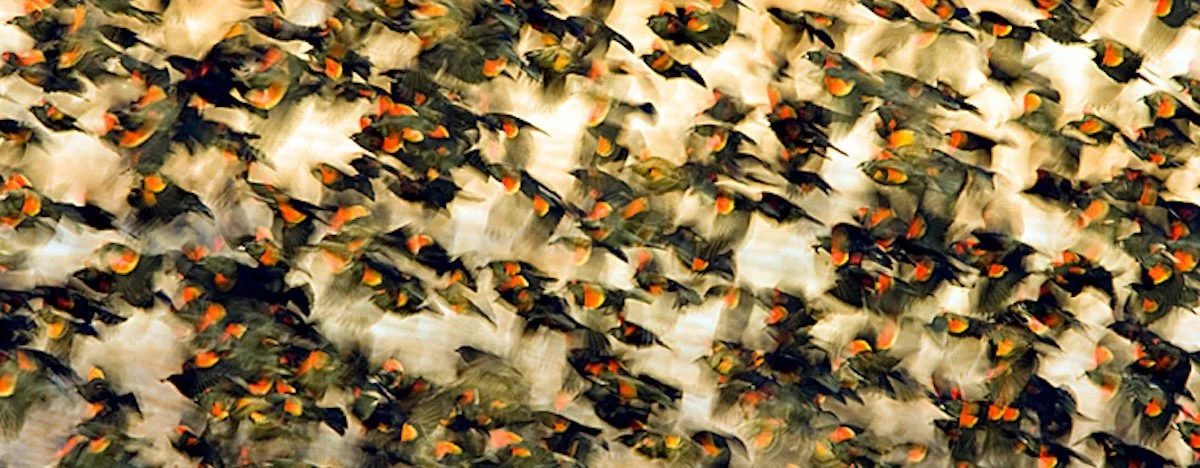
Photo: Red-winged Blackbird Chicks, Dixie Sommers
ASNV has held the Northern Virginia Bird Survey every June since 1994, providing a picture of the trends over 25 years on the number and species of breeding birds in our area.
Sadly, we could not run the 2020 survey because of the pandemic. The survey requires obtaining permits from several parks and refuges, which were closed when we would have been requesting permits. We would have been organizing teams of counters when pandemic conditions for June were unknown.
We plan to resume the survey in 2021. If you are interested in becoming a survey counter, please contact us. We are looking for birders with some experience who can identify our common Northern Virginia birds by both sight and sound, and who have good hearing.
ASNV thanks Carolyn Williams, who has retired from the survey, for her many years of managing, counting, recording and other work on the survey.

ASNV Online Programs
We’re now offering most of our classes and workshops online due to the ongoing Covid-19 pandemic.
Photo: Blackburnian Warbler, Shirley Donald/Audubon Photography Awards
We’re now offering most of our classes and workshops online due to the ongoing Covid-19 pandemic. We will provide recordings of as many of these events as possible and make them available here, both to keep our members and community engaged while staying at home and to develop an ongoing collection of educational resources. Check back often, as we will add videos and resources as we receive them.

Recognizing and Celebrating Black Birders
After the video of a white woman making racist threats against Christian Cooper, a black birder in Central Park, a group of black professionals working across science, technology, engineering and math known as BlackAFinSTEM, organized #BlackBirdersWeek from May 31 – June 5.
Photo: Red-winged Blackbirds and European Starlings, Amy Watts/Audubon Photography Awards
By Lisa Mackem
After the video of a white woman making racist threats against Christian Cooper, a black birder in Central Park, a group of black professionals working across science, technology, engineering and math known as BlackAFinSTEM, organized #BlackBirdersWeek from May 31 – June 5. The effort resulted in nearly nine hours of Instagram and Facebook Live events and received international attention with over 50,000 viewers and thousands of questions.
Corina Newsome, a field biologist and one of the 30 or more Black Birders Week organizers, wrote an article for Audubon about embracing difficult conversations and building a truly inclusive outdoors. “We have seen the discomfort of white hikers and birders when they encounter us, sometimes suspicious and fearful, other times shocked we’re even there,” said Newsome.
Online events in addition to Black Birders Week and conversations at hashtags like #BlackInNature, #BirdingWhileBlack and #BlackWomenWhoBird received an enormous and positive response, and Newsome was encouraged. “We are at the cusp of a turning point that embraces human diversity as joyfully as the diversity of feathered creatures. To get there, white people must value black lives and hear our voices and lean into uncomfortable conversations about racism and privilege that follow. The birding community must show that it is not neutral.”
Throughout the week, black birders shared their own disturbing encounters with hostile white people and with police officers while they were birding. These experiences included being followed, watched or threatened. Some black birders are hesitant to bird in certain areas, or go birding alone. Black birding panelists also took turns describing their personal happy places to bird – where they saw their favorite birds, or an impressive, colorful diversity of birds.
A frequent objection to #BlackBirdersWeek was the suggestion that birding should not be politicized and white birders don’t “see color.” Sheridan Alford, a graduate student in natural resources responded that putting the “political” label on the objection was dismissive, used because the objector simply didn’t want to see the issue. “I think putting that [political] label on it is dismissive and putting a blanket over it, because you don’t want to see it anymore. ‘Political’ is just a cop-out.” Newsome said this objector rejected her humanity, which she wanted to bring into the conversation. Drew Lanham, author, ornithologist and professor of ecology and conservation, said, “The point is not to create Black birders; it’s to realize the diversity of thoughts in nature.”
The American Bird Conservancy is acting on its following statement: “ABC not only celebrates the diversity of birds, but also the diversity of all who celebrate and conserve birds. We unequivocally condemn racism in all of its forms, including threats toward people of color who seek to enjoy nature.”
Sheridan Alford asked white people who consider themselves allies to people of color to try and make those people comfortable. “Go talk to them...start with something like ‘What’s the last cool bird you’ve seen?’ Just an icebreaker.” Christian Cooper said that birders should just help each other. “The birds don’t care. Why should we?”
Additional resources for combating racism and building inclusivity:
Why celebrating Juneteenth is more important now than ever
“For Our White Friends Desiring to Be Allies”

Non-toxic Mosquito Control
It’s summertime and mosquito control companies are once again pushing their services to kill mosquitoes in your yard. Although the companies may claim they target only mosquitoes, the products they use have a broader impact.
Photo: Eastern Bluebird, Laurie Lawler, Great Backyard Bird Count
It’s summertime and mosquito control companies are once again pushing their services to kill mosquitoes in your yard. Although the companies may claim they target only mosquitoes, the products they use have a broader impact. The products kill mosquitoes but they also kill other insects and insect larvae that birds, reptiles and amphibians rely on as essential food sources. Over the last 50 years North America has lost over 3 billion birds. Habitat loss is the primary driver of avian decline, but loss of a food source in an area is also loss of habitat. The good news, if you are plagued by mosquitoes, is that there are easy, non-toxic ways to reduce the population in your yard.
Services we contacted in Northern Virginia use sprays containing pyrethrins or their synthetic form, pyrethroids, to kill mosquitoes. The products are not selective for mosquitoes but can kill all insects and arthropods (spiders, mites, centipedes and millipedes). The material safety data sheet (MSDS) for a product one local company uses lists the pyrethroid Bifenthrin as its active ingredient. The MSDS shows that the product can be used to kill not only mosquitoes, but also ants, bees, wasps, hornets, beetles, centipedes, cicadas, crickets, flies, gnats, moths, spiders, spider mites and fruit flies, among other insects and arthropods. The MSDS specifies that the product is extremely toxic to fish and aquatic invertebrates and is highly toxic to bees exposed to direct treatment or residues on blooming crops or weeds.
Fortunately, there are non-toxic alternatives that can control mosquitoes. Removing stagnant water and other materials that can be a breeding ground for mosquitoes is not difficult and doesn’t harm other insects or arthropods.
Identify and empty out any outdoor containers that can accumulate water, including saucers under pot plants.
Store other containers that could accumulate water such as wheelbarrows, watering cans and recycle bins in a shed or garage.
Clean out bird baths and replace the water regularly. Adding an aerator also discourages mosquitoes.
Fix any leaking outdoor faucets that can cause puddles.
Clean out clogged roof gutters.
If your yard has any tree stumps with hollowed-out areas, fill them with dirt or mulch.
Eliminate flexible downspout extenders, which accumulate water in the corrugations even if they are pointed downhill. Securing window screening around the outflow can work to keep mosquitoes out; make sure to monitor for debris clogging it and replace as necessary. Consider installing a rain garden as an alternative to manage excess storm water runoff. A properly installed rain garden drains in 12 to 48 hours and the absence of standing water prevents breeding mosquitoes.
Cover any rain barrels with screening to prevent mosquitoes from entering to lay eggs.
If your yard has containers that can’t be emptied out, covered or turned over every week, such as septic tanks, pools not in use, or ornamental ponds without fish or amphibians to eat larvae, the Center for Disease Control and Prevention (CDC) suggests adding Bti, or Bacillus thuringiensis israelensis. Bti is a bacteria found in soil that produces toxins that kill mosquito larvae, blackflies and fungus gnats when they eat it. See the CDC Fact Sheet on Bti. It comes in a variety of forms, including Mosquito Dunks®. Regardless of the size of container used, you should use at least a quarter of Dunk (do NOT use the Mosquito Bits®). See how to set up a mosquito larvae trap.
Other possible sources of breeding mosquitoes may not be as obvious.
Thin out heavy ground cover (such as invasive English ivy) which can also provide a mosquito breeding ground.
Manage compost piles to discourage mosquitoes. Mosquitoes are attracted to discarded fruit and nectar-containing flowers. Stir in newly-added materials to the middle of a pile to accelerate decomposition and to avoid attracting mosquitoes and other pests. See "Compost Piles and Mosquitoes.”
Passive mosquito traps can provide additional protection and they do not use pyrethroids. Examples include the Biogents GAT, or the Autocidal Gravid Ovitrap, developed by the Center for Disease Control and Prevention and marketed as the BioCare AGO. They lure and trap egg-laying mosquitoes.

Audubon Statement on Incident in Central Park’s Ramble
National Audubon Society issued a statement about the incident in Central Park’s Ramble that occurred when Christian Cooper, who is black and a board member of New York City Audubon Society, asked a white woman to put her dog on a leash.
Photo: Wood Thrush, Will Stuart
National Audubon Society issued a statement about the incident in Central Park’s Ramble that occurred when Christian Cooper, who is black and a board member of New York City Audubon Society, asked a white woman to put her dog on a leash. Read the statement here.

Upcoming Workshops and Classes
Join us online! Read on to learn about some of the virtual classes, workshops and events we have planned.
Photo: Ruby-throated Hummingbird, David Shipper/Audubon Photography Awards
Join us online!
Celebrate Pollinator Week!
The World of Pollinators Workshop – Webinar, with Larry Cartwright
When: June 25, 7 PM
FREE, but space is limited and registration is required. WAITLIST ONLY
To be added to the waitlist, click here
There is a wide diversity of pollinators in the world. Most of us are aware of bees and hummingbirds as major pollinators, but there are many other insect and mammal species that distribute pollen from one plant to another to support fertilization. Some plants co-evolved with specific pollinator species and rely solely on them to ensure reproduction. We will discuss how this process is accomplished and what threats face many pollinator species today.
Instructor: Larry Cartwright has been a nature lover for most of his life and is fond of creatures that fly, especially birds and bats. Larry leads the Dyke Marsh Breeding Bird Survey for the National Park Service and the Winter Waterfowl Survey for the Audubon Society of Northern Virginia and compiles the Washington D.C. Christmas Bird Count sponsored by the Audubon Naturalist Society. He is also a participant in a five-year project to update the Virginia Breeding Bird Atlas. Larry has received several awards from scientific and conservation-based organizations, including the Virginia Society of Ornithology’s Jackson M. Abbott Conservation Award for 2013.
Coming Soon: Ecological Landscaping – Webinar
When: TBD
Fee: TBD
Coming Soon!
Participants will learn to apply ecological principles to creating backyard habitats and restoring ecosystems. Focus will be on looking not only at the needs of animals, but working with nature and using local ecosystems as examples for selecting species, building soils and providing natural structure.
This webinar is open to all. It is especially relevant for volunteer Audubon at Home Ambassadors, and will augment basic training for Virginia Master Naturalists and Master Gardeners and qualifies for advanced training hours. It is recommended that attendees have some familiarity with the book, "Bringing Nature Home" by Douglas Tallamy and the ASNV publication "The Nature of Change" which can be downloaded here.
Instructor: Charles Smith
ASNV Online Programs

Blackburnian Warbler, Shirley Donald/Audubon Photography Awards
We’re now offering most of our classes and workshops online due to the ongoing Covid-19 pandemic. We will provide recordings of as many of these events as possible and make them available here, both to keep our members and community engaged while staying at home and to develop an ongoing collection of educational resources. Check back often, as we will add videos and resources as we receive them.
Also Coming Soon - Virtual Field Trips!
Keep your eyes on your inbox and our website. We’ll be offering field trips from near and far! Weekday events will include visits to birding hot spots from around the world including Florida, Midway, Columbia and Ecuador just to name a few!

ASNV Leads Virginia Audubon Chapters in Support of Regulations to Protect Birds
ASNV, National Audubon Society and the other five Audubon chapters in Virginia have submitted a letter to the Virginia Department of Game and Inland Fisheries (DGIF) supporting a discussion draft of regulations to implement Migratory Bird Treaty Act (MBTA) protections for birds in Virginia.
Photo: American Oystercatcher, Robert Blanchart/Audubon Photography Awards
ASNV, National Audubon Society and the other five Audubon chapters in Virginia have submitted a letter to the Virginia Department of Game and Inland Fisheries (DGIF) supporting a discussion draft of regulations to implement Migratory Bird Treaty Act (MBTA) protections for birds in Virginia. The regulations are necessary because the Trump administration has upended decades of protection for birds by reinterpreting the MBTA to not protect birds from “incidental take,” or unintentional harm, resulting from development activity.
The DGIF’s discussion draft of the regulations would, if implemented, make Virginia the nationwide leader in offering state-wide protection to migratory birds. The regulations would create a permitting process for incidental take of birds and also require the mitigation of habitat loss associated with development.
ASNV drafted a letter supporting the proposed regulations and a markup of the proposed regulatory language with input from the National Audubon Society. ASNV also solicited the support of the Cape Henry, Northern Neck of Virginia, North Shenandoah Valley, Richmond and Virginia Beach chapters of the National Audubon Society. All five chapters and National Audubon Society joined ASNV in signing the letter, which you can read here.
The National Audubon Society is scheduling an on-line meeting with ASNV and DGIF officials to discuss how we can best support the development of the regulations.

Audubon at Home Continues to offer Wildlife Sanctuary Advice Despite Covid-19
Many Audubon education and advocacy programs have been canceled or paused due to Covid-19. Fortunately, the Audubon at Home (AAH) program continues. Applicant numbers are down, but people who are proactive, enthusiastic and committed about attracting native wildlife to their yards continue to apply.
Photo: Seeding Butterfly Weed and Black-eyed Susan, Anne Owen
By Lisa Mackem
Many Audubon education and advocacy programs have been canceled or paused due to Covid-19. Fortunately, the Audubon at Home (AAH) program continues. Applicant numbers are down, but people who are proactive, enthusiastic and committed about attracting native wildlife to their yards continue to apply. “We have quality over quantity,” says Anne Owen. Anne is a Virginia Master Naturalist, AAH Ambassador and the Program Coordinator for AAH in Loudoun County.
Anne sees the Audubon at Home program’s focus on creating, restoring and enriching wildlife habitat at the individual property level as a great example of Doug Tallamy’s call for “Conservation that Starts in Your Yard.” Anne explains, “Property qualifies as AAH Wildlife Sanctuary with at least two critical habitat features, typically, a pollinator garden (which can be planted in pots) and a water source (a birdbath, natural stream, or rain garden.) Also, the owner must record at least 10 sanctuary species over a three year period. Certified properties range from an apartment balcony to acres of woodland.”
Anne lives in Loudoun, where the AAH program is a partnership between ASNV and Loudoun Wildlife Conservancy. She became involved with the program as a client, shortly after buying her property. She has spent four years planting native plants on grassy or non-productive land and had her front yard professionally landscaped with native plants. Now, Anne enjoys numerous pollinator insects – her main passion during the summer. She has Eastern Phoebes nesting and has observed them feeding their chicks with caterpillars. She also has Eastern Bluebirds, House Finches and House Wrens nesting on her property, and has seen Downy, Hairy and Pileated Woodpeckers, Wild Turkeys and Red-shouldered Hawks. Other wildlife on her property include frogs, toads, snakes, eastern box turtles, salamanders, raccoons, skunk, possum, rabbits, foxes – even a bear from time to time. Anne continues to be struck by the tremendously rich flora and fauna in Northern Virginia.
“The key thing that sets AAH apart from other wildlife habitat programs,” says Anne, “is that in normal times, an Ambassador visits each property to meet with the client, tour the property, list suggestions to improve the quality of wildlife habitat and follow-up with a report for the client.” With in-person visits suspended, Anne has been offering clients telephone consultations. “It’s not as good as being on-site but it helps people get preliminary information and start creating their habitat.”
“Nature is in trouble and needs our help,” says Anne. “Few people can replant a forest, but you can start adding native plants on your own land to provide habitat and a food source for native insects, then birds will follow. It’s a fun, practical level of engagement.” For example, a pollinator powerhouse like Coneflower (Rudbeckia spp.) will attract native bees and butterflies and they might bring goldfinches when it goes to seed. Most people can satisfy Home Owner Association restrictions with native plants but Anne advises clients to check their HOA requirements first before substantially investing in property changes.
Click here for more information about the Audubon at Home program.
Improve your Birding Skills at Home
It’s been difficult to get out birding as much as we’d like during the shut-down. That gives us a great opportunity to brush up on our birding skills and knowledge from the comfort of our homes.
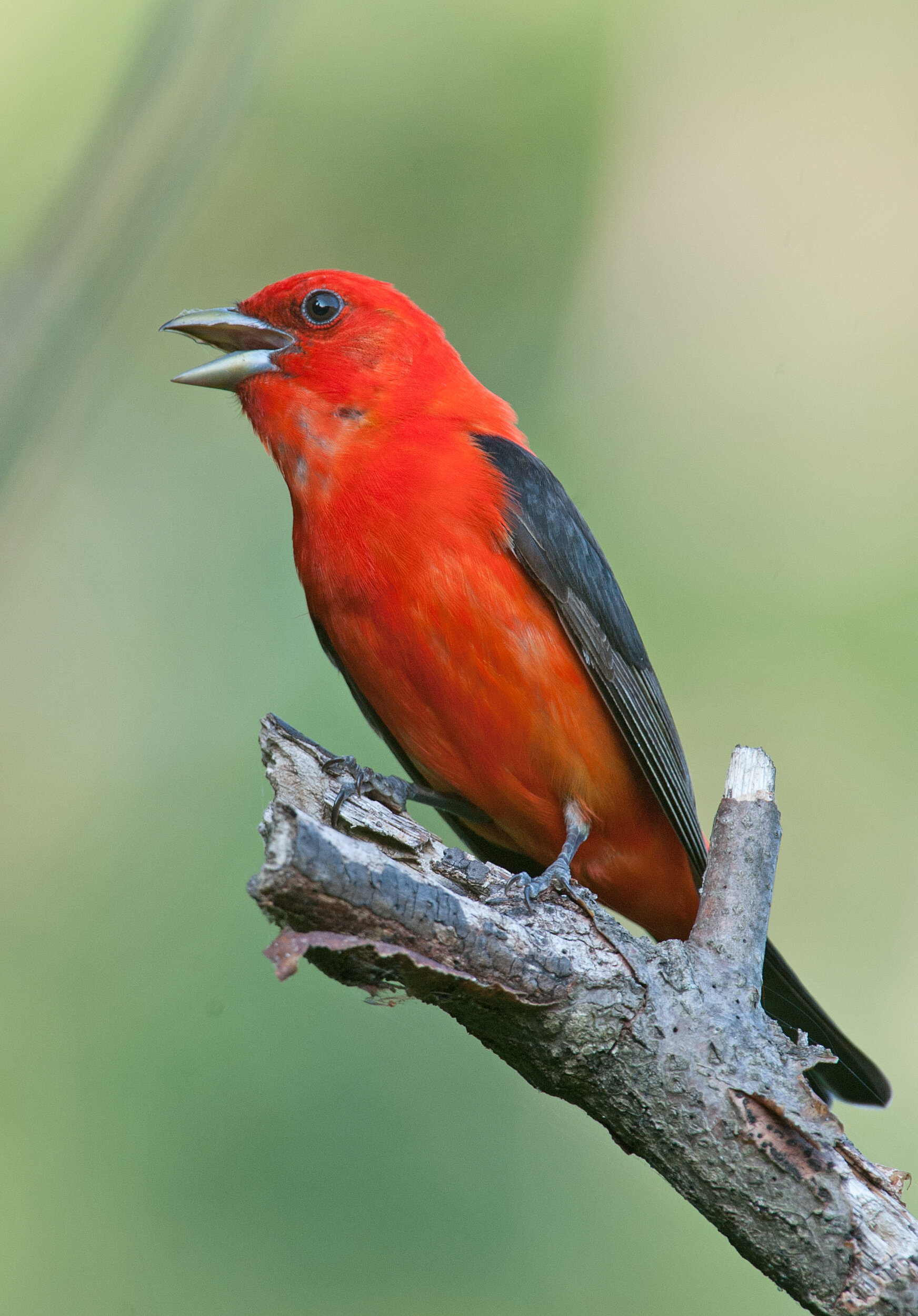
Photo: Scarlet Tanager, Randy Streufert/Audubon Photography Awards
by Tom Blackburn
It’s been difficult to get out birding as much as we’d like during the shut-down. That gives us a great opportunity to brush up on our birding skills and knowledge from the comfort of our homes.
Thayer Birding has a great software program that is free to download during the Pandemic. The download takes some time, but it’s well worth it. The program includes over 1000 North American species, more than 6500 photos and 1500 songs. Quizzes to help you learn your birds are its best feature. You can use the pre-made quizzes or easily create custom bird lists and turn them into personal quizzes. You can also choose from multiple quiz formats, including flash cards, multiple choice or fill-in-the-blanks and specify photos, songs, or both. Last night my wife and I created a custom list of birds and turned it into a quiz on bird songs. We can’t take an ASNV Birding-by-Ear workshop this spring, but maybe online programs will improve our skills.
eBird is well-known for its user-friendly capability to upload bird lists. You can also prepare for birding trips by finding out what’s been seen at Birding hotspots recently or in any month during the current year or up to the past ten years. eBird’s free Photo & Sound Quiz option is less well-known but very good. You can create quizzes for a country, a state or a specific location. You can even specify a date, and eBird will create a quiz based on bird lists uploaded for that date and location in the past ten years.
Cornell Lab of Ornithology’s Birds of the World program is normally $49 per year, but there’s a 10% discount through June 30. I normally shy away from rentals of software, but Birds of the World’s information about more than 10,000 birds, plus photos, video and audio, convinced me to sign up. And your money is going to support a world-class nonprofit operation
There are other free bird quiz sites that are fun to explore. You could try Birdingquiz.com, Birdquiz.net, Birdphotos.com or any number of other programs. However, my favorite is the Thayer Birding software I mentioned above because its quizzes can be customized so easily. Of course, you may find your own favorite. The next time you are starved for a little birding experience, try an on-line program!

Spring Warblers Now Online
If you missed Bill Young’s popular four-part series on Spring Warblers, you can now view the first two sessions on our website here.
Photo: Black-throated Blue Warbler, Lorraine Minns/Audubon Photography Awards
If you missed Bill Young’s popular four-part series on Spring Warblers, you can now view the first two sessions on our website here. Warblers are some of the most challenging birds to identify - they are often small and fast moving with distinctive but easily confused calls and songs. This 4-part webinar presented by Bill Young will help you learn warbler plumages and behaviors.

Earth Day Webinar with Audubon at Home
Looking for a reason to get out into nature? How about making your property more wildlife-friendly by adding plants native to Virginia? If you missed the Audubon at Home Earth Day webinar that discussed why native plants are important and was full of tips on how to integrate them into landscaping, click here to see the recorded version.
Photo: Monarda and Monarch Butterfly, Elaine Mills
Looking for a reason to get out into nature? How about making your property more wildlife-friendly by adding plants native to Virginia? If you missed the Audubon at Home Earth Day webinar that discussed why native plants are important and was full of tips on how to integrate them into landscaping, click here to see the recorded version. You can also find the link on our Online Programs page.

Up Close with Peregrine Falcons
Peregrine Falcons have been nesting on the Riverfront Plaza Building in Richmond since 2003. For thirteen years the same pair, “Ozzie” and “Harriet” occupied the nest. Harriet was last seen in 2016 and Ozzie’s last appearance was in 2017. Last year a new banded male showed up and was joined by an unbanded female this spring.
Photo: Peregrine Falcon, Lorelei Stierlen/Audubon Photography Awards
Peregrine Falcons have been nesting on the Riverfront Plaza Building in Richmond since 2003. For thirteen years the same pair, “Ozzie” and “Harriet” occupied the nest. Harriet was last seen in 2016 and Ozzie’s last appearance was in 2017. Last year a new banded male showed up and was joined by an unbanded female this spring. They now have 4 red eggs. For a close up view of their nest watch here. The Department of Game and Inland Fisheries operates the webcam and maintains a highly informative website about Peregrine Falcons.