
NVBA NEWS BLOG
Welcome to the blog for Northern Virginia Bird Alliance, a wealth of resources about northern Virginia birds, wildlife, habitat conservation and restoration, native plants, wildlife-friendly gardening, advocacy and more.

Where Do They Go?
Have you ever wondered where animals go in the winter, when many seem to just—disappear?
Photo: Blackpoll Warbler, Owen Deutsch/Audubon Photography Awards
Betsy Martin
Have you ever wondered where animals go in the winter, when many seem to just—disappear?
The ancients puzzled over the disappearance and reappearance of birds. Aristotle thought they transform into other species in winter (which explained why robins appeared just as redstarts disappeared in Greece). Olaus Magnus theorized in the 16th century that swallows bury themselves in clay at the bottom of rivers in wintertime. In the 17th century, Charles Morton offered the most fantastic theory of all; birds flew to the moon and back every year.
Of course, now we know that migration on earth accounts for the disappearance and reappearance of birds and many other species. But you may be surprised to learn that there’s still a lot we don’t know about where various species go.
Blackpoll Warblers (Setophaga striata) spend the summer breeding in the boreal spruce and tamarack forests of Alaska and northern Canada, then in fall migrate up to 5000 miles south to winter in the mangrove forests and rain forests of Brazil.
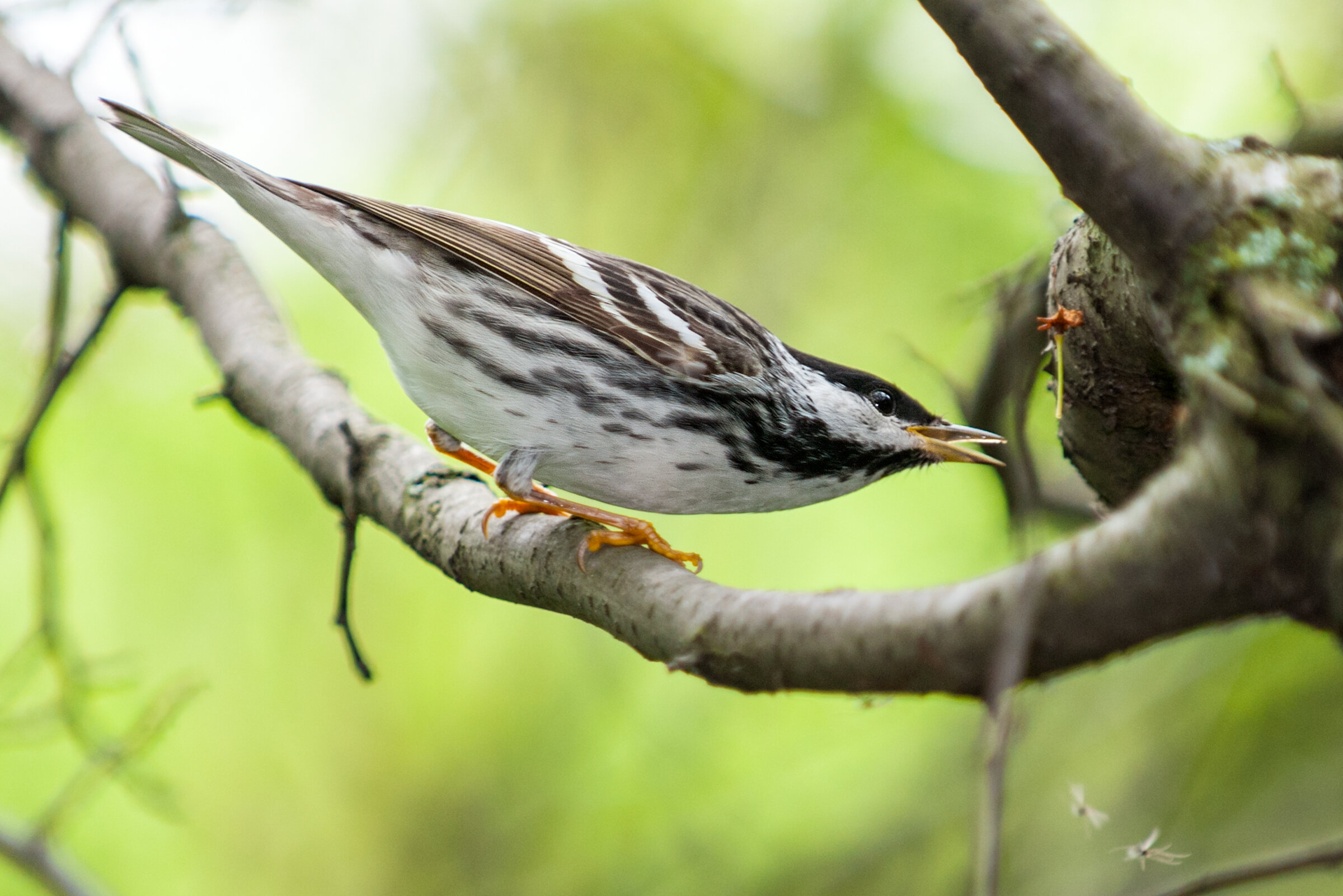
Blackpoll Warbler, Owen Deutsch/Audubon Photography Awards
In the fall migration they travel south and southeast through Canada and the northeast U.S. and collect along the coastal plain between Nova Scotia and Cape Hatteras, NC. Then, it’s believed—the experts aren’t really sure—the birds head south and southeast over the Atlantic Ocean, and fly nearly 2000 miles to Puerto Rico, the Lesser Antilles or northern South America. This potentially involves an 88-hour nonstop flight over open ocean! To accomplish this, Blackpoll Warblers nearly double their weight before setting out, and they rely on northeast trade winds to direct their flight toward South America.
(Watch Cornell Lab’s animation of Blackpoll Warbler abundance on eBird here.)
(Information from Cornell Lab of Ornithology, Birds of the World)
Butterflies and other insects have multiple over-wintering strategies, some more mysterious than others.
Many insects shelter and are nourished through the winter in micro-habitats under the soil, inside the wood of logs, in trees and even in plant galls. Inactive insects undergo a dormant state, called diapause, in which their growth, development and activities are suspended in winter, with a metabolic rate barely high enough to keep them alive.
Some insects successfully pass the winter as immature larvae, such as the Woolly Bear caterpillar, protected by heavy layers of leaf litter. Other larvae replace the water in their bodies with glycerol, a type of antifreeze. Some grubs simply burrow deeper into the soil to escape the cold.
Dragonflies, mayflies and stoneflies survive as nymphs living in ponds and streams, feeding and growing all winter to emerge as adults in early spring. A few insects lay eggs which survive the winter, such as Praying Mantids.
Some insects, such as the Mourning Cloak butterfly, overwinter as adults in tree holes, leaf litter and under logs and rocks. That’s why Mourning Cloak is usually the first butterfly to appear in Spring. Like some insect larvae, it reduces the water content of its body and builds up glycerol which acts as an antifreeze.
Many butterflies that spend the summer here cannot survive the winter, so they die. Each year, as the weather warms up, butterflies from Mexico and the southern United States fly north to repopulate Virginia such as: Common Buckeye, Cloudless Sulphur, Painted Lady, Red Admiral and others.
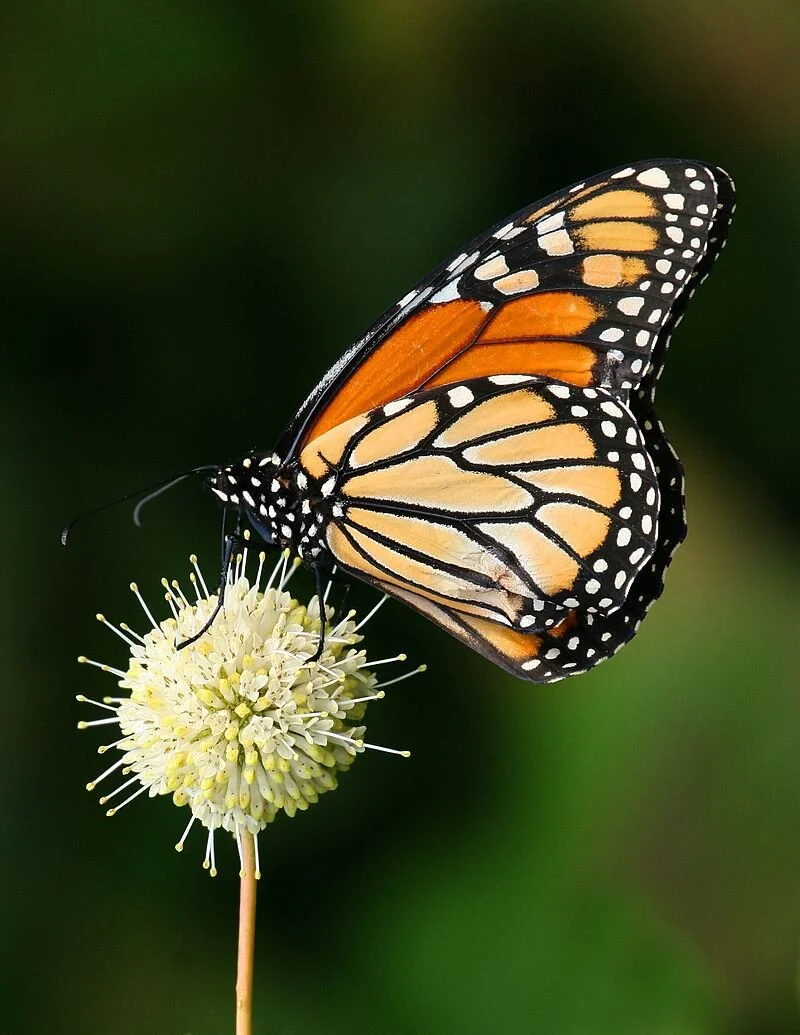
Monarch, Judy Gallagher

Cloudless Sulphur, Judy Gallagher
For some species the reverse migration, south in the fall, is more obvious. Cloudless Sulphurs, Mourning Cloaks and Monarchs can sometimes be seen moving southward in groups of thousands. Exactly where all these butterflies go is not always known. Monarchs are the best-known migratory butterflies, yet knowledge is limited even for them. Most Monarchs from west of the Rocky Mountains spend the winter along the California coast while those from central North America spend the winter in roosts in the mountains of central Mexico. But what about the Monarchs from the Atlantic seaboard? Although it seems that many of them also migrate to the same Mexican overwintering sites, others may travel to and through Florida, perhaps flying on to undiscovered sites in the Caribbean or the Yucatan Peninsula. Or, maybe northern Monarchs that enter the peninsula don't survive the winter and for them, Florida is a dead end. Some Monarchs that overwinter in Florida may be largely members of resident, non-migratory populations. At this point, we just don't know.
(Information from North American Butterfly Association, Smithsonian)
Frogs and toads commonly hibernate in winter. After an animal finds or makes a living space (hibernaculum) that protects it from winter weather and predators, its metabolism slows dramatically. It "sleeps away" the winter by utilizing its body's energy stores, then "wakes up" when spring arrives.
Aquatic frogs such as the Leopard Frog (Rana pipiens) and American Bullfrog (Rana catesbeiana) typically hibernate underwater. But they don’t dig into the mud the way aquatic turtles do—they would suffocate. Hibernating aquatic frogs must be near oxygen-rich water and spend a good part of the winter just lying on top of the mud or only partially buried. They may even slowly swim around from time to time.
Terrestrial frogs normally hibernate on land. American Toads (Bufo americanus) and other good diggers burrow deep into the soil, safely below the frost line. Some frogs, such as the Wood Frog (Rana sylvatica) and Spring Peeper (Hyla crucifer) are not adept at digging and instead seek out deep cracks and crevices in logs or rocks, or just dig down as far as they can in the leaf litter. These hibernacula (shelters) are not as well protected from frigid weather and may freeze, along with their inhabitants.

Wood Frog, VA Herpetological Society
And yet the frogs do not die. A high concentration of glucose in the frog's vital organs prevents freezing, even though ice crystals form in the body cavity, bladder and under the skin. A partially frozen frog stops breathing, its heart stops beating and it appears dead. But when the hibernaculum warms up above freezing, the frog's frozen portions thaw, its heart and lungs resume activity and it comes back to life.
(Information from Scientific American)
Various species have amazing and diverse strategies for surviving winter. You can help them.
Blackpoll Warblers don’t breed here, but they do fly over and stop during spring and fall migration. You can help sustain them in their long migration south by planting native, fall-fruiting native shrubs in your yard, such as Spicebush or Viburnum, with fatty berries that help them build up their fat reserves prior to their long oceanic voyage. Avoid using insecticides that kill insects that Blackpoll Warblers and other bird species depend on for food.
To help insects, leave the leaves—leaf litter is key to many species’ winter survival—and don’t be too tidy about cutting and cleaning up flower stems and stalks. Many insects burrow into them for winter protection.
To help the frogs and toads, be careful about digging in winter—you may be digging up somebody’s winter home.
Interested in learning more about protecting and creating habitat for wildlife in all four seasons? Check out Audubon at Home on the ASNV website. Request a visit by an Audubon at Home Ambassador who can advise on habitat improvements you can make on your property.

Join the Global Birding Community: Participate in The Great Backyard Bird Count
ASNV hopes everyone in our nature community will join in this citizen science project, the Great Backyard Bird Count.
Photo: Carolina Chickadee, Michele Black/GBBC
“Birds are everywhere, all the time, doing fascinating things. Join us, February 12-15, 2021, when the world comes together for the love of birds.” -GBBC
Each year in February, Cornell Lab of Ornithology, National Audubon Society and Birds Canada sponsor a worldwide birding event: The Great Backyard Bird Count. The aim of the GBBC is to get as many observations of birds from around the world to better understand how birds are doing.
Participating is simple: Just observe birds for at least 15 minutes once during the 4-day count period and enter your data on eBird or through Merlin. Even if you are new to eBird and/or Merlin, you’ll find helpful, easy instructions on the GBBC website.
You can also observe birds for longer periods of time during any or all of the 4 days.
Here’s how to participate.
ASNV hopes everyone in our nature community will join in this citizen science project. Post your photos on Instagram and tag us @audubonva.

Understanding the Complexities of the Female Bird Song
In the US, February is a month we associate with love and attraction. So, I thought it would be appropriate to discuss courting mechanisms in birds. In this case, bird songs.
Photo: Northern Mockingbird, Deidra Bryant
Deidra Bryant
In the US, February is a month we associate with love and attraction. So, I thought it would be appropriate to discuss courting mechanisms in birds. In this case, bird songs. When we think of songs used in courtship, most may think that the males are usually the ones with the more elaborate repertoire, while females may have none or very little to say. Recent studies suggest that this behavior may be related to keeping a low-profile and to not alert predators while nesting, while others suggest that females have simply evolved to primarily listen. However, this is not entirely accurate. Elaborate signal traits in females are often phenotypically homogenous to traits of males, causing dispute over whether they emerge similarly through sexual selection, or through broader processes such as natural selection.
Examples of female songs have generally been dismissed as rare, or the result abnormalities in avian hormones. However, studies have found that this view demonstrates a geographical bias towards Europe and temperate zones in North America, where species with male-only song are more common. In fact, female bird song is much more abundant in other regions such as South America and Australia. The Superb Fairywren (Malurus cyaneus) is a good example of this. However, even if female song is more widespread than we realize, it seems likely that production rates or acoustic structure are the key differences between most males and females. Additionally, their behavior may also indicate selection pressures and systems of evolutionary changes that are sex-specific.
One study using ancestral state reconstruction methods revealed that long ago bird song was very common in both sexes all over the globe, which suggests that the current sexual dimorphism in embellished traits resulted in selection against these female traits. This idea complements new findings on the evolution of feather dichromatism in several species (like in the Icteridae family – orioles and blackbirds). Yet many scientists are still working to figure out why females have lost song in certain species and lineages.
In order to answer that question, ornithologists are asking another question: “Does the presence of dimorphism in bird song demonstrate evolutionary losses or gains?” Researchers believe that males and females initially developed similar neural song control systems that ultimately diminish in females of species that lack female song. Consequently, from a developmental standpoint, the disappearance of female song and the neuro-anatomical adaptations related to this change could be seen as an evolutionary gain.
On the other hand, an increase in song similarities between both sexes can be viewed as a developmental loss. For example, the progression of male-like singing in females may be the result of a loss of female-specific neurodevelopmental pathways and behaviors. One can expect an evolution in song similarities to occur quickly since females already have a lot of the genetic and hormonal components for singing like their male counterparts, while increases in song dimorphism should occur more slowly since it involves obtaining new characteristics through natural or sexual selection. These are interesting things to think about when understanding why females of certain species do not sing, as well as why females in other parts of the world frequently do.
In conclusion, female singing is widespread among songbirds and was probably present during the early evolution of bird song. As a result, the ongoing research in bird communication prompts reconsideration of the inaccurate assumption that bird song is an epigamic trait (serving to attract a mate) in males driven by sexual selection. Females and males both experience competition over ecological resources and use a variety of chirps and shrills as a means of territorial defense. This behavior may select for traits that signal their competitive prowess or ownership of resources. However, since bird song originally evolved in both males and females, sexual selection may also be useful for studying the evolution and maintenance of avian song. So, the next time you and your sweetie practice identifying birds by their song, try triangulating the sound, and see which areas in your neighborhood are a hotspot for melodious females!
February Bird of the Month
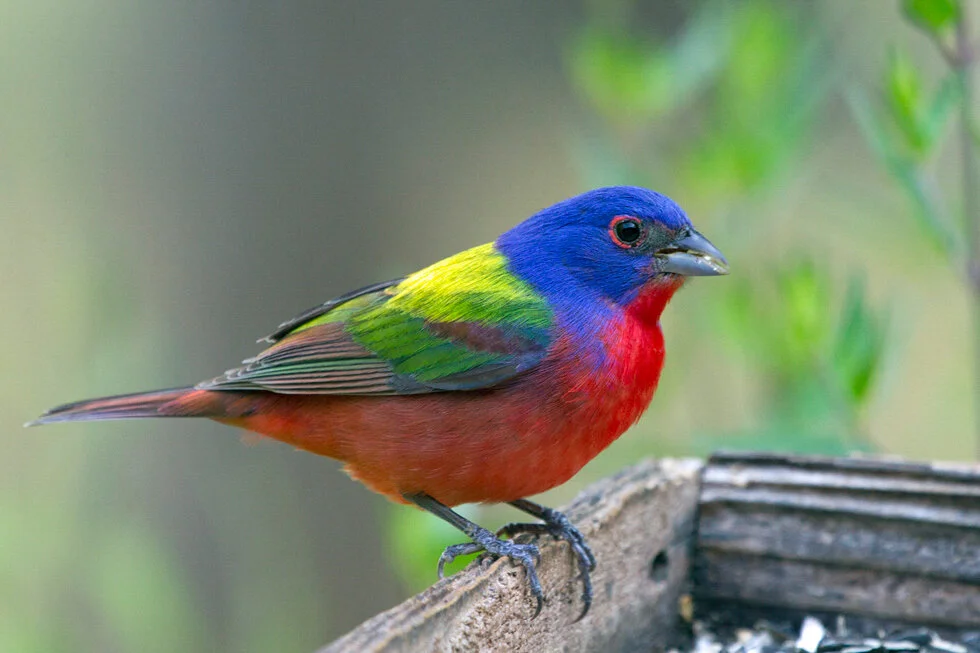
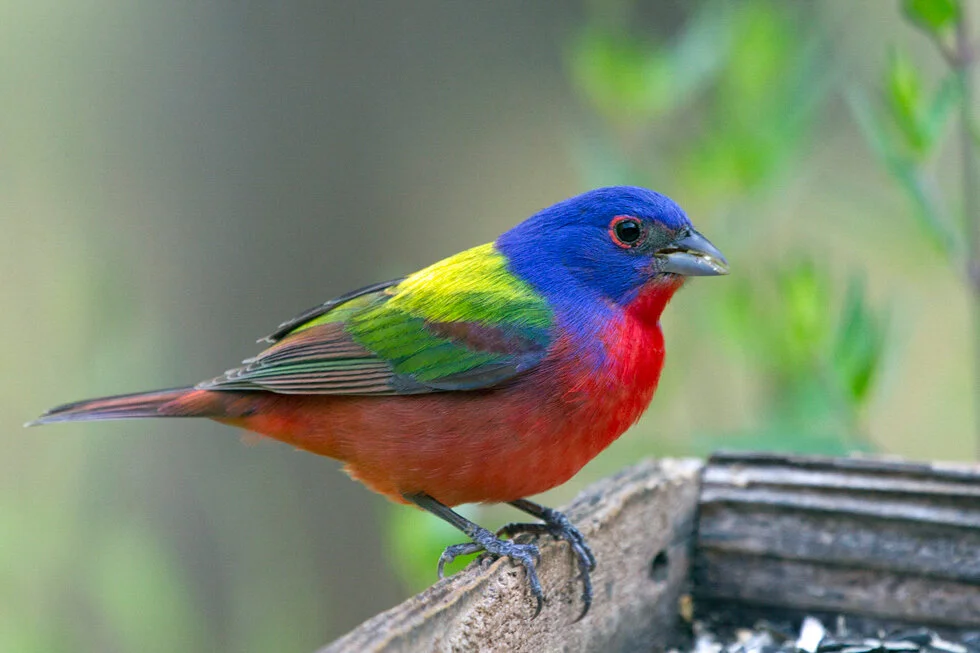
In the early weeks of January, a Painted Bunting (Passerina ciris) was spotted in the brushy grasses and rocks off the Tow Road of the C & O Canal National Historic Park, between locks 18 and 19.
Photo: Painted Bunting, Larry Smith/Audubon Photography Awards
A Kaleidoscope of Colors: Rare Painted Bunting Attracts Birders to C & O Canal National Historic Park in Maryland
Jessica Bigger
Painted Bunting, Larry Smith/Audubon Photography Awards
In the early weeks of January, a Painted Bunting (Passerina ciris) was spotted in the brushy grasses and rocks off the towpath of the C & O Canal National Historic Park, between locks 18 and 19. Birders recorded the sighting on eBird and word spread like wildfire throughout social media sites. On Saturday, January 16th more than 1000 people visited the park, and the following day over 100 people returned in hopes of catching a glimpse of our little visitor.
It’s always exciting to seek out rare birds reported by local birders. So, it’s important to follow birding guidelines to respect and ensure the safety of any bird you hope to see or photograph. Remember to stay on designated trails and not approach any birds to ensure you don’t cause them unnecessary stress.
A Painted Bunting is a rare treat in these parts, because it winters in Southern Mexico, throughout Central America, and the Caribbean, as well as the Southern tip of Florida. During their breeding season they spend their time in the coastal southeastern and south-central United States. So, to see one so far north, especially during the winter season, is remarkable.
Painted Buntings are well known for their bright multicolored plumage. The French refer to this bird as nonpareil, meaning “unrivalled”. Even its song is just as magnificent as its plumage. The Painted Bunting has a similar cadence to many warblers. They are so intriguing, that many are caught illegally in Mexico and the Caribbean to be sold as pets.
During the spring and summer months, Painted Buntings hop around in dense understory and brush on the edge of forests. Although you would assume their brilliant colors would make them easy to spot, the brushy vegetation provides them good cover. During the winter season people who live within the species’ winter range can attract Painted Buntings by putting up a bird feeder. They regularly visit feeders to supplement their diet over the winter months.
In addition to searching out bird feeders for seeds, Painted Buntings will also forage for other seeds from bristle grass, pigweed, wood sorrel, spurge, panic grass, St. John’s wort, sedge, dock, pine, rose, wheat and figs. In summer months they become more carnivorous, seeking out grasshoppers, weevils and other beetles, caterpillars, spiders, snails, wasps and flies.
Although Painted Buntings are still abundant throughout the southern United States, Mexico and Central America, scientists and bird advocates are concerned about the effects of climate change and habitat loss to the population.
Recently the National Audubon Society wrote an article about the negative effects of climate change and highlighted a recent study published in the journal Ecological Applications. National Audubon researchers were able to show how climate change has contributed to a major shift in winter and breeding ranges among a large number of bird species. “Climate change is disrupting hundreds of bird species, and thanks to community scientists all across the country, we can visualize these disruptions in real time and plan conservation efforts accordingly,” said Sarah Saunders, PhD, quantitative ecologist at Audubon and lead author of the study, the article quoted.
Twice a year, in the spring and winter, citizen scientists across the country focus on 12 indicator species to help ornithologists get a better picture on the effects of climate change on bird populations across all species. These birds include: White-breasted Nuthatch, Red-breasted Nuthatch, Brown-headed Nuthatch, Pygmy Nuthatch, Western Bluebird, Mountain Bluebird, Eastern Bluebird, Lesser Goldfinch, American Goldfinch, Eastern Towhee, Spotted Towhee and Painted Buntings.
The hope is by following the shifts in the population, scientists can use the data to come up with conservation efforts to combat the effects of climate change on a growing number of bird species at risk of extinction.
Sources:
https://www.washingtonpost.com/dc-md-va/2021/01/03/painted-bunting-great-falls-bird-watchers/
https://www.allaboutbirds.org/guide/Painted_Bunting/overview
https://www.audubon.org/field-guide/bird/painted-bunting

Monday Mystery - February 1, 2021
Monday Nature Mystery continues! Read on to learn who correctly identified our last mystery.
Photo: Michael Krahn via Unsplash
We are pleased to announce the winner of our Monday Nature Mystery, Karen Kean Nordai!
Congratulations to Karen for correctly identifying the vocalization of a Sora (Porzana carolina). These birds can be difficult to see as they typically take advantage of densely vegetated wetlands to skulk. Birders from Northern Virginia have taken advantage of a visiting Sora at Huntley Meadows Park.
Listen to the Sora here.

Photo: Sora, Roberta Blair Lakeland/GBBC
Each Monday we’ll post a new mystery and identify the previous week’s winner. They’ll receive an ASNV hat or tote bag. Here is this week’s mystery:
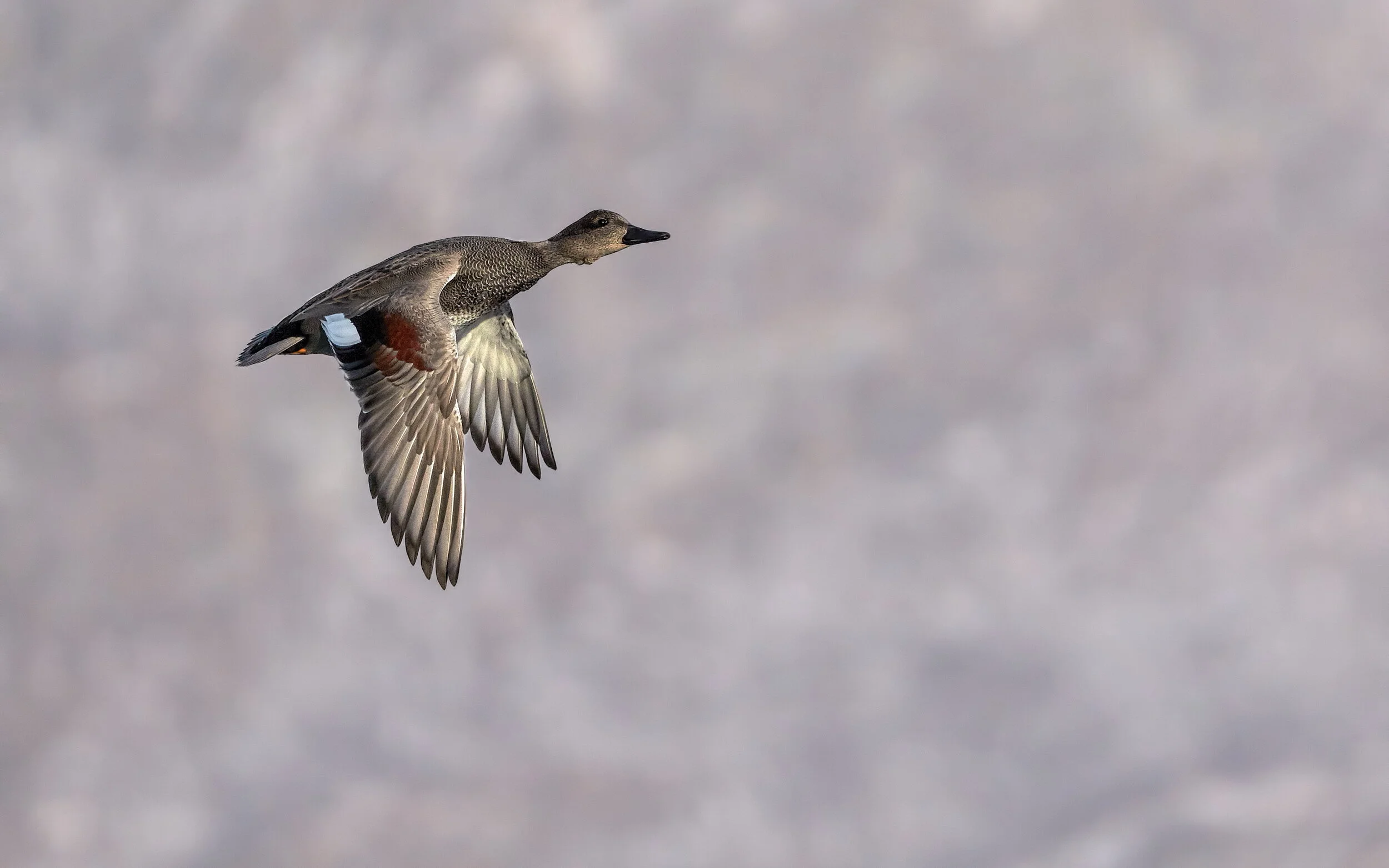
Photo: Gary Minish/Audubon Photography Awards
Do you know what duck this is? Post your guess on our Facebook page under the Monday Nature Mystery post. List both Common Name and Latin name and be mindful of capitalization.Good luck!
Please note that all entries are date and time-stamped. We review each correct answer to see who commented first. If someone 'likes' your comment, it would move it up on the list, making it look like the first post. Winners are limited to one prize every 90 days.
Arlington Birder Brothers – The Chippers
If you’ve visited any of the South Arlington parks recently you may have encountered two engaging teen birders “The Chippers,” as they are known on their website. Max and Danté are brothers, two years apart in age but entirely in sync about birds.
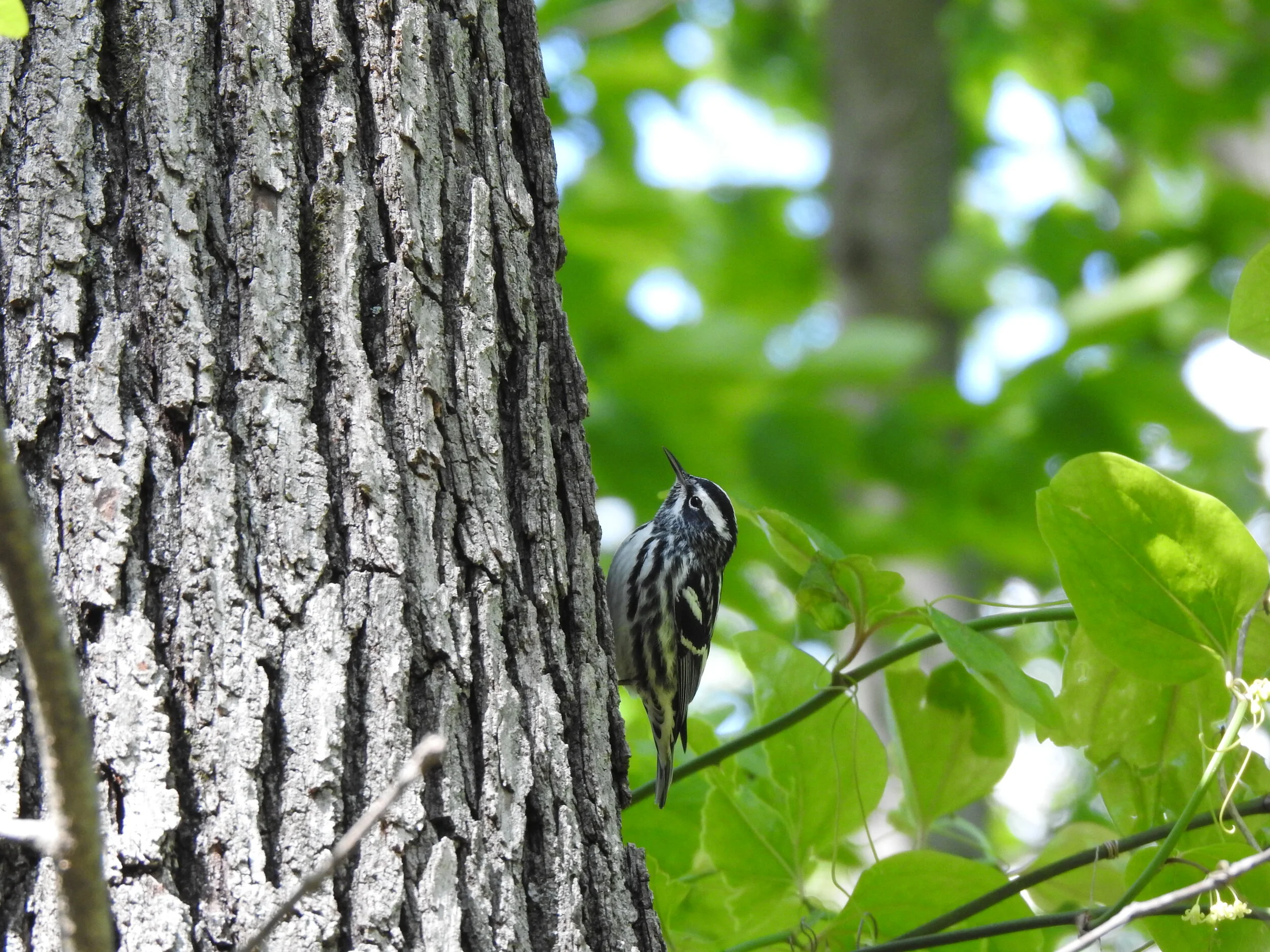
Photo: Black and White Warbler, courtesy of the Chippers
If you’ve visited any of the South Arlington parks recently you may have encountered two engaging teen birders “The Chippers,” as they are known on their website. Max and Danté are brothers, two years apart in age but entirely in sync about birds.

Field Sparrow, courtesy of the Chippers

Mourning Warbler, courtesy of the Chippers
As a Christmas present in 2018, Max and Dante’s uncle gave them a birdfeeder. As soon as they put it up in their Arlington yard the brothers were hooked. Soon they were outside, beyond their backyard, scouting the local parks for birds. Four months later in April they described finding their first warblers – a Yellow-rumped and a Black-and-white – as, “Absolutely Incredible!”

Rusty Blackbird, courtesy of the Chippers
Since then, the brothers have gone on to develop a website about birding in South Arlington Parks which includes their recent sightings with excellent photographs by Max and ingenious drawings by Dante. Far more ambitious than a checklist, “The Birding Guide to Southwest Arlington” documents birds with photographs, voice and behavior recordings, field notes and when and where to find the birds.
It’s an impressive undertaking by two young people. We wondered why they took this project on. According to Max and Danté, their parents are “into fitness” and “raised us to be outside.” It also sounds like their parents also encouraged them to use their natural curiosity while giving them the confidence and space to explore the world around them. And thanks to their own gregarious natures, they encountered other mentors.
In the early days of the pandemic the brothers began each morning with three-hour bird walks around their local parks where they made friends with people they encountered such as “The Owl Guy,” who showed them where the resident Barred Owl roosts and encouraged them “…to publish some of the stuff you do.”
In the future, the brothers want to expand their website to include all of Arlington and generate interest in habitat restoration projects at their schools and parks. Stay tuned.
“This is my life’s passion and work.” Danté
“I want to go out in the environment and make a difference.” Max

Swamp Sparrow, courtesy of the Chippers

Ruby-crowned Kinglet, courtesy of the Chippers

January Bird of the Month
In December, local birders spotted a Clapper Rail (Rallus crepitans) sleuthing in the marsh at Huntley Meadows Park. Rarely does this bird end up in Virginia, especially inland.
Photo: Clapper Rail, Shayna Marchese/Audubon Photography Awards
A Rare Sighting: Clapper Rail Spotted in Northern Virginia
By Jessica Bigger
In December, local birders spotted a Clapper Rail (Rallus crepitans) sleuthing in the marsh at Huntley Meadows Park. They recorded the sighting on eBird. Rarely does this bird end up in Virginia, especially inland. But sometimes birds get blown in by tropical storms, or just get lost and end up in the wrong place. This past summer several Clapper Rails were blown in by tropical storms. In Mississippi, over 1000 Clapper Rails ended up on the sandy beaches after Tropical Storm Cristobal blew over. In Roanoke, Virginia, a Clapper Rail was found injured by a car. How did this bird end up in Roanoke? Wildlife rescuers believe Hurricane Laura was the culprit.

Clapper Rail, Shayna Marchese/Audubon Photography Awards
According to All About Birds, Clapper Rails breed on the coasts of Connecticut, Rhode Island and Massachusetts. The birds tend to spend their winters down in Central America and the Caribbean. However, they seem to be showing up more often on the coasts of Mississippi, Alabama and even North Carolina during the summer.
These elusive birds are rarely seen, but often heard. A Clapper Rail’s distinct and raucous chock, chock, chock call, which can last for 20 to 25 notes, can help a birder zero in on its location. However, you might be able to spot one at dawn or dusk if you have a keen eye, a good ear and plenty of patience. These birds tend to hide in tall grasses in salt marshes or in vegetation in mangrove swamps. They rarely fly, and keep their tail and head up as they walk in an irregular pattern. If threatened, they may run, continuing to hold up their head and tail.
Clapper Rails eat almost anything, but they prefer crabs and crayfish. They also have salt glands that enable them to ingest salt water.
During their breeding season, mom and dad raise their chicks together. If there is a predator nearby, one of them will pretend to have a broken wing to distract and lure the predator away from the nest.
Currently, the Clapper Rail is listed as a bird of moderate concern, according to the North American Waterbird Conservation Plan. However, it is very difficult to know how many Clapper Rails there are, because they are so elusive. Populations are at risk of pollution and habitat loss due to development and storms which can destroy marshlands.
Wildlife ecologists are currently studying how marsh birds adapt to tropical storms and hurricanes along the coasts of Alabama and Mississippi. They are using the Clapper Rail as one of the species in their study. To figure out the population size in the area, scientists will play pre-recorded calls and then zero in on the birds that call back.
Clapper Rails are considered to be an indicator species for scientists to assess the health of the surrounding coastal environment. During a tropical storm, birds move up to higher areas of the marsh to ride out the storm. Within a year or two after a storm, ecologists have found that the Clapper Rail population tends to recover, which shows how resilient these birds are.
Sources:
https://www.allaboutbirds.org/guide/Clapper_Rail/id#
https://www.ncwildlife.org/Portals/0/Learning/documents/Profiles/clapperrail091411.pdf
https://www.wlox.com/2020/06/09/marsh-birds-blown-by-cristobal-out-place-beach/
https://wset.com/news/local/roanoke-wildlife-center-rescues-bird-likely-blown-in-by-hurricane-laura

Action Alert: Invasive Plants Legislation
Contact your legislators now and ask them to vote in favor of this bill, which will help guide Virginia in controlling the sale of invasive plants. Read on to find out how.
Photo: Burning Bush (Euonymous alatus)
Ask your state senators and delegates to support this bill on invasive plants!
Contact your legislators now and ask them to vote in favor of this bill, which will help guide Virginia in controlling the sale of invasive plants. This bill will mandate a study that will explore options for phasing out the propagation and sale of invasive plants in Virginia’s horticultural industry, which may include potential legislative action to be brought the following year to the 2022 General Assembly. The study group, which will include representatives from the nursery and landscaping industry, state agencies and environmental groups, will produce a report of their recommendations and findings. This is a big step forward in the fight against invasive plants!
Please call or email both of your legislators now and ask them to support the study bill. During this unusually short legislative session, things will move very fast, so do not delay. You should write the state senator and delegate from your own district, but copy all the members of the Senate and House Agriculture, Conservation and Natural Resources Committees (see below).
When you contact your legislators please use your own words. Some points you might include:

Invasive species: Chinese Slivergrass (Miscanthus sinensis)
Our local ecosystem is under serious threat from many quarters. We must stop making the situation worse.
Virginia native plants are the basis of our ecosystem. Invasive introduced plants crowd them out, bringing down trees and ruining our natural areas.
You yourself have seen commonly-sold introduced plants that have escaped into the wild (examples include English Ivy, Japanese Barberry, Japanese Pachysandra, Asian Wisteria, Burning Bush, Chinese Silvergrass, Privet, etc.)
It costs taxpayers large amounts of money to control these invasive species in their parks. State and local budgets have been able to cover only a fraction of what is needed.
It has cost you hours of labor and/or a lot of money to control these plants in your yard and/or a place you volunteer.
There are plenty of non-invasive plants that are every bit as nice that could be substituted for these invasives.
You can find your senator and delegate by using Who's My Legislator.
Senate Agriculture, Conservation and Natural Resources Committee members:
Chap Petersen (Chair), Emmett Hanger, Frank Ruff, Mark Obenshain, Richard Stuart, David Marsden, William Stanley, Lynwood Lewis, David Suetterlein, Monty Mason, Jennifer McClellan, Barbara Favola, Joseph Morrissey, Todd Pillion, Ghazala Hashmi
For their contact information, click on their last names.
Senate committee member email addresses:
district34@senate.virginia.gov;
district24@senate.virginia.gov;
district15@senate.virginia.gov;
district26@senate.virginia.gov;
district28@senate.virginia.gov;
district37@senate.virginia.gov;
district20@senate.virginia.gov;
district06@senate.virginia.gov;
district19@senate.virginia.gov;
district01@senate.virginia.gov;
district09@senate.virginia.gov;
district31@senate.virginia.gov;
district16@senate.virginia.gov;
district40@senate.virginia.gov;
district10@senate.virginia.gov
House Agriculture, Chesapeake and Natural Resources Committee members:
Ken Plum (Chair), Robert Bloxom, David Bulova, Joshua Cole, James Edmunds, Todd Gilbert, Wendy Gooditis, Nancy Guy, Dan Helmer, Sally Hudson, Mark Kean, Alfonso Lopez, Daniel Marshall, Charles Poindexter, Margaret Ransone, Shelly Simonds, Kathy Tran, Roslyn Tyler, Lee Ware, Michael Webert, Rodney WIllett, Tony Wilt. Find their contact information here.
House committee member email addresses:
DelWGooditis@house.virginia.gov;
DelDBulova@house.virginia.gov;
DelDHelmer@house.virginia.gov;
DelSHudson@house.virginia.gov;
DelSSimonds@house.virginia.gov;
DelRWillett@house.virginia.gov;
DelDMarshall@house.virginia.gov;
DelTGilbert@house.virginia.gov;
DelCPoindexter@house.virginia.gov;
DelJEdmunds@house.virginia.gov;
DelMWebert@house.virginia.gov;
DelMRansone@house.virginia.gov;
DelRBloxom@house.virginia.gov;
At the Legislative Information System (LIS) (https://lis.virginia.gov/) you can track legislation and review committee agendas prior to a meeting.
The Bill’s Language (draft):
Invasive Plant Species Study
That the Department of Conservation and Recreation (DCR), jointly with the Virginia Department of Agriculture and Consumer Services (VDACS), shall convene a work group to examine the sale of invasive plant species by any entity, including the retail, landscape, greenhouse and nursery industries, and consider measures to reduce and eliminate their use and promote the use of native plants in the commonwealth. The work group shall include representatives of DCR, VDACS, the Department of Forestry, the Virginia Department of Transportation, Virginia Department of Wildlife Resources, Virginia Native Plant Society, Blue Ridge PRISM, Audubon Society of Northern Virginia, the Virginia Nursery and Landscape Association, the Virginia Agribusiness Council and the Virginia Farm Bureau Federation. The work group shall examine measures to reduce, mitigate and/or eliminate the continued sale and use of identified invasive species, as identified in the Virginia Invasive Plant Species List by DCR. This would include, but not be limited to: (i) labeling of invasive plant species at point of sale; (ii) taxing the sale of invasive species and applying revenue to the removal of invasive species and potential restoration of sites for native habitat; (iii) expanding the noxious weed list to include invasive plant species currently being sold by the industry or other parties; (iv) support for education and outreach, including state partnership with nonprofit organizations either fully or partially dedicated to the preservation of Virginia’s natural heritage, on the reduction of the use of invasive plant species and/or promoting the use of non-invasive or native plant species as substitutes and; (v) measures to increase the use of native plants on local and state government owned properties and projects. The work group shall make recommendations on (a) changes to guidance or regulations for agencies having the authority to regulate activities associated with the work group's work, and (b) statutory changes, including but not limited to changes related to the placement of plant species on the Noxious Weed list (§ XXX et seq. of the Code of Virginia). The work group shall report its recommendations to the Director of DCR and the Commissioner of VDACS by December 1, 2021.

A Year in Photos from Wildlife Surveys
Even though COVID disrupted regular wildlife surveys this year, individual survey members still took to the field. Here’s a stunning set of photographs that represents a small sample of what they saw in 2020.
By Judy Gallagher

In normal years, Jim Waggener leads regularly scheduled general Wildlife and Butterfly/Dragonfly surveys. Because of COVID, official surveys are not being conducted. However, individual survey members have still been viewing wildlife, collecting data and taking pictures. Here is a sample of what they saw in 2020.
Click on any image for a larger view.
Pictures in this article are protected by copyright. If you'd like to use an image, please contact ASNV and we’ll connect you with the photographer for permission.
January
This Leconte's Sparrow was photographed by Ed Eder at Occoquan Bay National Wildlife Refuge on the regularly scheduled wildlife survey in January.
February
Su Kim's picture of Ring-necked Ducks at Occoquan Bay National Wildlife Refuge was taken in February, just prior to the cancellation of the rest of the year's surveys.
March
March's picture is an Eastern Fence Lizard, resplendent in breeding colors, seen at Meadowood by Gary Myers.
April
The Garter Snake was seen in intimate detail by Judy Gallagher at Meadowood in April.
May
Rusty Moran captured this Golden-backed Snipe Fly at Occoquan Bay National Wildlife Refuge in May.
June
June's picture is of Jim Waggener's favorite damselfly, the Ebony Jewelwing, taken by Michael Ready at Occoquan Regional Park.
July
Ana Arguelles provided this ethereal picture Eastern Tailed-blue butterflies on Short-toothed Mountain Mint at Meadowood's Pollinator Garden in July.
August
In August Margaret Fisher contributed a Least Skipper at Julie Metz Wetlands.
September
Ken Larson took an action shot of Blue Dashers at Meadowood in September.
October
October's picture is a fabulous dew-covered Wandering Glider at Mason Neck West, taken by Fred Siskind.
November
Gary Myers took this amazing close-up of a Carolina Wren at Veteran's Park in November.
December
We round out the year with Bob Blakney's excellent Hooded Merganser picture from Occoquan Bay National Wildlife Refuge.
Want to get involved? Learn more about Butterfly and Dragonfly Surveys and Natural Resource Surveys that normally take place throughout the year.

Methane Flaring – A Hidden Killer for Birds of Prey
Some landfill owners have installed methane gas burners to reduce the amount of methane entering the atmosphere. However, the downside to methane flaring is that the flame is colorless and fatal for birds flying in the area, especially birds of prey.
Photo: Red-tailed Hawk, Kristen Cart/Audubon Photography Awards
By Jessica Bigger
As some landfills pile up with trash, building excessive amounts of methane, carbon dioxide (CO2), and other greenhouse gases, some landfill owners have installed methane gas burners to reduce the amount of methane entering the atmosphere. However, the downside to methane flaring is that the flame is colorless and fatal for birds flying in the area, especially birds of prey.
Methane gas is one of the major greenhouse gases causing the planet to warm; more so than Carbon Dioxide. (CO2) So, by burning off methane, the gas is converted to a CO2, and other minor greenhouse gases that aren’t as harmful to the atmosphere.
Trash produces 50% methane, 50% CO2, and a small percentage of other gases that enter into the atmosphere, which is why flaring has been used to help reduce the amount of methane gas from entering the atmosphere.
Many landfills are near telephone poles and other tall structures, where hawks and falcons sit. So, when a hawk takes flight near a garbage dump, it may fly too close to the colorless flame, not feeling the heat until it’s too late. Wildlife monitors and rescuers have found numerous birds of prey singed by these flames. In most cases the burns are fatal.
Some garbage dump owners have worked with wildlife advocates to find solutions to the problem. A few have put cages around their methane burners so the birds can see the cage and avoid the methane flare stack. Unfortunately, the winds from a major storm can knock over the cage. This happened at the Kingsland Landfill in New Jersey; it took a while for the cage to be repaired. One way to solve this problem is for owners to check the burner after a storm and fix the cage immediately if it has been damaged.
Although there are some landfill owners willing to mitigate the situation, many are unlikely to install a cage. The cost of installing and maintaining the cage may be one of the reasons many landfill owners choose not to install one.
Wildlife experts have also suggested other solutions, like burying electrical lines so birds can’t perch on telephone poles near landfills, or building taller structures so birds can lift off well above the burners.
In many cases these solutions require cooperation from landowners, but also commitments from local government. As in many situations, even though the changes seem impossible, many conservationist and bird advocates will continue to reach out to landfill owners and local government officials to find a win-win solution for owners and birds of prey.
Sources:
https://www.nationalgeographic.com/animals/2020/11/methane-flares-scorching-birds-us-landfills/
https://www.onegreenplanet.org/environment/methane-gas-from-landfills-burns-and-injures-birds/
https://www.natureworldnews.com/articles/44736/20201123/methane-gas-flares-scorch-owls-hawks-waste-landfills.htm
Tom Blackburn Op Ed Published
On December 9, the Richmond Times-Dispatch published an op-ed article by ASNV President Tom Blackburn urging Virginia members of the U.S. House of Representatives to co-sponsor the Recovering America’s Wildlife Act, H.R. 3742.
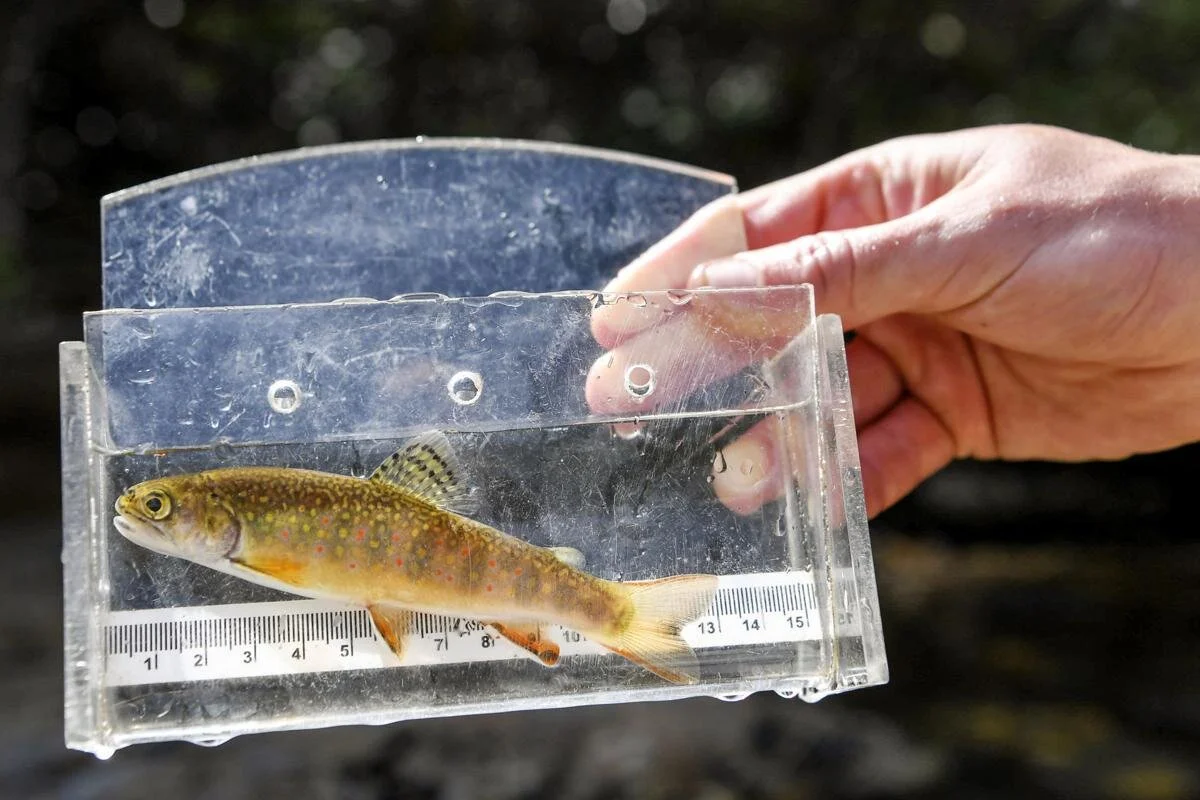
Photo: Brook Trout, Angela Wilhelm/The Asheville Citizen-Times via The Associated Press
On December 9, the Richmond Times-Dispatch published an op-ed article by ASNV President Tom Blackburn urging Virginia members of the U.S. House of Representatives to co-sponsor the Recovering America’s Wildlife Act, H.R. 3742. The bill would provide $1.4 billion a year in new funding to prevent wildlife from becoming endangered. The funds would go to every state in the nation to support on-the-ground habitat protection, scientific research and wildlife restoration. Tom’s article pointed out the importance of protecting wildlife to reduce disruptions to the nation’s ecosystems and the emotional benefits that we all derive from being able to interact with nature.
From the Richmond Times-Dispatch
Support for the Recovering America's Wildlife Act helps everyone
By Tom Blackburn
Virginia’s outdoor heritage is vitally important. Our Virginia congressional delegation joined a bipartisan majority in recently enacting legislation to shore up our nation’s threatened natural resources by fully funding the Land and Water Conservation Fund.
We urge them to take the additional step of joining U.S. Rep. Rob Wittman, R-1st, in co-sponsoring the Recovering America’s Wildlife Act (H.R. 3742). Support for this legislation is vitally important to protecting and supporting wildlife.
Whether it’s the squirrel in your backyard or a black bear in Virginia’s Blue Ridge Mountains, wildlife plays a critical role in our shared environment. Diversity in animal life helps to maintain nature’s equilibrium.
However, we should not take wildlife for granted. The Virginia Department of Wildlife Resources has identified 883 wildlife species as in decline — “of greatest conservation need” — and has designated 136 of those species as threatened or endangered. Some of Virginia’s most iconic wildlife, like the brook trout, the northern bobwhite quail and the Shenandoah salamander, are imperiled.

The brook trout, among Virginia's most iconic wildlife, has been identified by the Virginia Department of Wildlife Resources as one of 883 species "of greatest conservation need."
Photo: Angela Wilhelm/The Asheville Citizen-Times via The Associated Press
Wildlife and our natural environment provide us a place of reassurance and solace. Health professionals recognize that even a few minutes outdoors can recharge our spirits. Getting outdoors for some bird-watching, kayaking or a walk in a local park can help all of us get through tough times. In the past several months, millions of people turned to our parks and open spaces for respite from the pressures of the pandemic.
There is bipartisan support for wildlife and nature. During a year of political gridlock, our federal elected officials have accomplished some real wins for conservation in 2020.
The Great American Outdoors Act provides billions of dollars in funding for the preservation of natural places, recreational areas and wildlife habitat, along with billions to fund maintenance improvements in our national parks.
The American Conservation Enhancement Act creates new federal programs to protect wetlands, clean up the Chesapeake Bay and tackle wildlife diseases, among other measures. Both bills passed with overwhelming bipartisan support. The new laws will have a great impact on wildlife and habitat for decades ahead.
There is another great conservation bill out there that can bring us together: the Recovering America’s Wildlife Act (H.R. 3742). This bill would provide $1.4 billion a year in new funding to prevent wildlife from becoming endangered. The funds would go to every state in the nation to support on-the-ground habitat protection, scientific research and wildlife restoration. In Virginia, the funds would help the Department of Wildlife Resources take action to protect and restore some our most iconic — and imperiled — fish and wildlife.
Protecting our nation’s wildlife is important to us in several ways. The loss of 3 billion birds — 29% of the population of North American birds — in the past 50 years, as documented in Science magazine in September 2019, is evidence of the profound disruption to our country’s ecosystems. Declines and extinctions in one species can have a domino effect that leads to harm to other species, as the natural food web becomes damaged. We need to protect and restore wildlife by rehabilitating the ecosystems that support them.
Restoring wildlife also will contribute to our personal well-being. Wildlife can provide countless hours of enjoyment. Watching a brook trout leap for a fly, catching a glimpse of a red fox as it slips into the underbrush and spying a scarlet tanager high in the tree canopy can give us a sense of wonder and peace that cannot be replaced by the sterile world of the internet and television.
Saving wildlife has economic implications, too. Outdoor recreation generates $18 billion in economic activity a year in Virginia. Wildlife watching supports more than 23,000 Virginia jobs. Investing in wildlife is both an environmental and an economic investment.

Tom Blackburn, ASNV President. Photo: Brenda Blackburn
The Recovering America’s Wildlife Act has 185 co-sponsors in the House of Representatives. However, only one Virginia representative is a co-sponsor: Wittman.
We urge all Virginia members of the House of Representatives to join him in this bipartisan effort and co-sponsor the Recovering America’s Wildlife Act. By supporting this bill, they can show us that they can work together and help heal both our natural and political landscapes.

Monday Mystery - December 28th
Monday Nature Mystery continues! Read on to learn who correctly identified these birds (common AND latin names), and see our most recent mystery.
Photo: Canada Geese and Barnacle Goose, Dixie Sommers
We are pleased to announce the winner of our Monday Nature Mystery from December 21, 2020; the aptly named, Karen Brandt!
Congratulations to Karen for correctly identifying both Canada Goose (Branta canadensis) and Barnacle Goose (Branta leucopsis). The Barnacle Goose is a rare treat for our area. Smaller than the familiar Canada Goose, it nests on Arctic coasts and usually overwinters in northwestern Europe. To see more photos click here.

Photo: Dixie Sommers
Each Monday, beginning again on January 4th, 2021, we’ll post a new mystery and identify our previous winner. Watch our Facebook page or sign up for our emails for the post. Thank you for your participation in this fun and engaging contest, and we look forward to continuing it in 2021!

The 1918 Christmas Bird Count
In 2020, we are holding the Christmas Bird Count in the midst of a pandemic. What did birders do in 1918, in the midst of the Spanish flu pandemic?
Photo: Bird Lore 1918 Cover
By Dixie Sommers
In 2020, we are holding the Christmas Bird Count in the midst of a pandemic. What did birders do in 1918, in the midst of the Spanish flu pandemic?

The answer can be found in the 1918 edition of Bird-Lore, the “Official Organ of the Audubon Societies” edited by Frank Chapman. In the article “Bird-Lore’s Eighteenth Christmas Census” we find reports of two counts in Northern Virginia on December 26, each led by interesting people.
The “Mount Vernon to Dyke, VA” route was counted by Waldo McAtee and Edward A. Preble, two scientists from the Bureau of Biological Survey, a predecessor to the U.S. Fish and Wildlife Service. McAtee studied bird feeding habits, authored many scientific papers, became editor of USFWS publications and along with Aldo Leopold helped found The Wildlife Society. He was a fellow of the American Association for the Advancement of Science. Preble worked on bird and mammal studies in the Pacific northwest, where he led two expeditions to the Athabasca- Mackenzie region of Canada. After retirement from the government, he became an associate editor of Nature magazine.
The Washington, D.C. route, described as “Wellington to New Alexandria, VA; Arlington, VA to Washington D.C.” was covered by Leo and Edith Miner and Raymond W. Moore. Edith Miner was a leader in the Audubon Society of the District of Columbia, and apparently was something of a nature activist. She and Leo participated in the first meeting of the American Society of Mammologists, and she gave remarks at the 1934 annual meeting of the Virginia Society of Ornithology held in Alexandria.
In 1956, Mrs. Miner advocated to the Senate Appropriations Committee against use of $1.8 million for the parkway extension on the D.C./Maryland shore between Chain Bridge and Cabin John. Referring to herself as “a naturalist and above all a conservationist,” she argued for preserving the trees and natural areas which provided habitat for birds. “The nesting of some of our more rare birds in that area, many making it their winter residence, is striking and proof of its value as a bird sanctuary,” she argued.
So, what was the 1918 count like? First, it was cold and long. The Mt. Vernon team started at 8:30 AM in 23-degree weather with clear skies, light northwest wind and 2 inches of snow on the ground. They walked the 12-mile route, ending at 5:30 PM and reporting the day’s high temperature as 26 degrees. The New Alexandria team also had temperatures from 25 to 30 degrees, a “light but penetrating wind” and light snow on the ground. They did their 12-mile route from 10:00 AM to 4:00 PM, a shorter time for 12 miles that suggests they did not walk the entire route.
New Alexandria is a neighborhood in Fairfax County including Belle Haven and Dyke Marsh. It was served by an electric streetcar line to Washington, running along the route of today’s George Washington Memorial Parkway.
The Mt. Vernon team reported 39 species, while the New Alexandria team had 45, for a combined total of 52. Because they were near the Potomac, both teams saw lots of waterfowl, reporting 11 species and more than 7,600 individuals. The New Alexandria team must have birded right on the river, as they reported 500 Greater Scaup and 6,000 Lesser Scaup, noting “two sizes, as well as color reflections of heads.” The teams also reported a total of 800 Canvasbacks, but no Canada Geese. As to the overall numbers, the New Alexandria team said, “Ducks in three flocks, and actual number probably exceeded ten or twelve thousand.” Huge rafts of ducks remain a counting challenge!
The New Alexandria team noted “all ducks through telescope, 25 diameters.” Assuming this refers to a 25mm lens diameter, their scope was much smaller than today’s spotting scopes, which typically have 50mm to 80mm lenses. There is no mention of what types of binoculars or “field glasses” they used.
Sparrows were the second largest bird group reported, but the numbers and mix of species were different from what we would find today. Only four species were reported: White-throated (38), Tree (179), Song (14) and Junco (456). Today, a Tree Sparrow would be rare, and we would likely see many more Song and White-throated Sparrows and fewer Juncos.
Other species with large numbers reported were Common Crow (838), Golden-crowned Kinglet (163), Redhead (100), Ruddy Duck (75), Bluebird (66) and Rusty Blackbirds (60). Both teams reported Bobwhite, a total of 47 birds.
Many bird names have changed since 1918. Examples (with today’s name) include American Goldeneye (Common Goldeneye), Marsh Hawk (Northern Harrier), Sparrow Hawk (American Kestrel), Common Crow (American crow), Migrant Shrike (Loggerhead Shrike), and Myrtle Warbler (Yellow-rumped Warbler).
One important difference between 1918 and what we may find in the 2020 Christmas bird count is irruptive species. In his overview of the 1918 count, Frank Chapman noted that “…of the northern Finches so prevalent last year, the only occurrences are a few widely scattered of Redpoll and Pine Siskin” and Red Crossbill, Evening Grosbeak, Pine Grosbeak, and White-winged Crossbill in places like Maine, Vermont and Nebraska, but not Virginia. In 2020, we are already seeing Red-breasted Nuthatches, Evening Grosbeaks, and Pine Siskins in significant numbers across Northern Virginia, reflecting a food crop failure in their usual wintering grounds. We hope they will be on our Christmas Bird Count list this year!
Another big difference in the response to the pandemic is that the 1918 report does not mention the Spanish flu or if any precautions were advised. In 2020, ASNV is taking numerous precautions, following Virginia and local requirements and our own Covid-19 policy.

Lorton Ski Resort Could Threaten Habitat, Birds and More
ASNV and others have raised concerns about a possible $200 million ski resort on the Lorton landfill called “Fairfax Peak.”
Photo: Eastern Meadowlark, Melissa James/Audubon Photography Awards
ASNV and others have raised concerns about a possible $200 million ski resort on the Lorton landfill called “Fairfax Peak.” The developer, Alpine X, a Netherlands-based company, reports that among the resort’s potential components are an indoor, 450,000-square-foot snow sports facility with multiple ski slopes, “one of the world’s longest indoor ski slopes”; a luxury hotel,” wave/surf pool, ropes course, zip lines, mountain coaster and gondola. Alpine X would make real snow year-round. You can learn more here.
On November 17, 2020, the Board of Supervisors on a voice vote approved a one-year agreement with Alpine X, to allow the company to conduct engineering analyses and tests to determine the feasibility of building the proposed complex on the landfill.
ASNV submitted comments arguing that this ski resort complex will have serious, adverse environmental and social impacts to an already degraded and disturbed environment in that region. These potential adverse impacts include the following:
significant energy us
increased greenhouse gas emissions
increased air and water pollution
significant water consumption
significant solid waste generation
increased traffic congestion
loss of scarce natural habitat
increased socio-economic inequity
Valuable Habitat
While some may view a landfill as a wasteland or opportunity for development, ASNV sees the property as valuable grassland and meadows, rare habitats in a county reaching “buildout.” Observers have seen Eastern Meadowlarks, Grasshopper Sparrows and Bobolinks there, birds in serious decline with little suitable habitat left in Fairfax County. The property also offers an opportunity to enhance a wildlife corridor in the area.
ASNV questions the project’s water source, energy use and conservation practices, carbon emissions, traffic impacts, stormwater runoff and other pollution and socio-economic inequities the resort could exacerbate.
ASNV recommended that the Board of Supervisors reject the proposed interim agreement and that the county restore the Lorton landfill land to a more natural condition that would provide habitat, address biodiversity loss, serve as a carbon sink, reduce ambient air temperatures, filter pollutants, reduce stormwater runoff and save public tax dollars.
We encourage ASNVers in Fairfax County to express their concerns to their Supervisors. Find yours here. And please let us know you have called or written by sending an email with your contact information here. We anticipate a long political process for this project and will want to keep in touch.

400 Acres of Reston Association Natural Areas Certified as Wildlife Sanctuaries
Reston has over 800 acres of natural areas and other wildlife-friendly areas, including 55 miles of trails, on property owned by the Reston Association. Six of these areas, covering 400 acres, are now certified as Audubon at Home Wildlife Sanctuaries.
Photo: Canada Warbler, Dale Bonk/Audubon Photography Awards
Reston has over 800 acres of natural areas and other wildlife-friendly areas, including 55 miles of trails, on property owned by the Reston Association.

Claudia Thompson-Deahl; Photo: Sean Bahrami, Reston Association
Six of these areas, covering 400 acres, are now certified as Audubon at Home Wildlife Sanctuaries, thanks to the efforts of Reston Association Senior Environmental Resource Manager Claudia Thompson-Deahl, Chief Operating Officer Larry Butler and former Audubon at Home Co-Director Robin Duska. They include Bright Pond and Walker Nature Center and along the Glade West/Meadow trails, Glade East’s Turquoise Trail, Twin Branches Trail and Buttermilk Trail.
To obtain certification as an Audubon at Home Wildlife Sanctuary, a property owner is asked to sign the Healthy Yard Pledge, pledging to remove invasive non-native plants, reduce area covered by lawn, plant native plants, reduce pesticide and fertilizer use and conserve and protect water quality. Certification also requires providing several habitat features, such as native shrubs and trees, a water feature, or a rain garden or pollinator garden and observing at least 10 Sanctuary Species using the property.
Reston Association already manages its natural areas in line with the Healthy Yard Pledge, and Robin documented 60 different Sanctuary Species in the six sites. All of the sites are designated as “birding hotspots” in the Cornell University eBird database, and birders have observed between 91 and 134 bird species at each.
For example, Walker Nature Center’s woodland trails leading along Snakeden Stream Valley to Lake Audubon are a prime spot for seeing warblers. Twenty-eight warbler species, including the Canada Warbler recorded on the certification application, along with migratory birds and water birds have been observed there.
Especially during the pandemic, many Reston residents and others enjoy walking or biking the trails through these areas. Hopefully the new signs designating the areas as Wildlife Sanctuaries will help people appreciate how valuable these large, contiguous areas are as wildlife habitat, and encourage better stewardship by not littering or letting dogs run unleashed.
Robin used the citizen science tools eBird and the Reston Biodiversity project in iNaturalist to certify the sites based on finding species of 29 birds, 22 insects, 4 arachnids, 2 mammals, and 3 reptiles/amphibians. “All Restonians can help document diversity via these tools,” she notes, and you can too.
Are you interested in creating a Wildlife Sanctuary in your own backyard? If you live in Arlington, Alexandria, Fairfax, Loudoun, Prince William, Rappahannock or Fauquier, just click here to learn more about the program and request a free visit by an Audubon at Home Ambassador, who will advise on steps you can take to improve habitat for birds and other wildlife in your yard—and get it certified as a Wildlife Sanctuary.

Create Your Own Holiday Birdseed Wreath
Families might be spending the holidays a little bit differently this year. However, that doesn’t mean we can’t cherish loved ones and spread cheer within the home this season. There are still plenty of fun and interactive activities you can do with your family at home.
Photo: Suet Wreath, Deidra Bryant
By Deidra Bryant
Happy holidays! It's almost that time of year again, and I for one am very excited to celebrate. Christmas is my absolute favorite holiday. Growing up on Long Island, I’ve always loved the twinkling lights, the window displays, and the fun winter activities like ice skating, watching live performances in theatres and drinking hot chocolate under the Rockefeller Center Christmas tree. The decorations are my absolute favorite aspect of this magical time of year, and although I live in Virginia now, I still believe Christmastime in New York will always be one of a kind!
Families might be spending the holidays a little bit differently this year. However, that doesn’t mean we can’t cherish loved ones and spread cheer within the home this season. There are still plenty of fun and interactive activities you can do with your family at home. One activity in particular is fun for individuals of all ages – especially if they enjoy bird watching.
Wreath-making is a popular activity around this time of year. I’ve made a few in the past using wire, bows, picks and evergreen clippings. However, you can also make enticing holiday wreaths within your home featuring fresh berries and wild bird seed to attract winter birds.
You will need:
A Bundt pan
3 cups of wild bird seed
1 lb. of suet
Fresh cranberries
¾ cup of dried cranberries
¾ cup of unsalted roasted peanuts
Raffia
Large decorative ribbon
A sauce pan and mixing bowl
Freezer with space
Coconut oil (optional)
Evergreen clippings
A tree with sturdy branches
Break up the suet into tiny blocks and heat it over low heat until it’s nice and melted. This will help bind everything together, along with providing the necessary fats for birds. If you melt it over high heat the room can get smokey.
While that is going, mix the nuts, birdseed and dried cranberries in a mixing bowl. Once the suet is melted, add it to the mixing bowl and stir. Essentially, you want the suet mixture to be well incorporated so it can firm up nicely in the freezer. You can add a bit of coconut oil to the mixture if you'd like as well.
In the bundt pan, place your fresh cranberries on the bottom, then gently scoop out the contents of the mixing bowl into the bundt pan, and press down firmly. Then place more fresh cranberries on top. If you have a particular design in mind, go for it!
Once that is done, place the bundt pan in the freezer and let it sit overnight. Once it’s firm to the touch, take it out of the freezer and wait about 10 minutes before trying to remove the mixture from the pan. It should slide out pretty easily.
Now, find your evergreen clippings and tie them onto the top of your wreath using raffia. A second set of hands are very helpful here. I like to use Eastern Red Cedar, but you can use American Holly, White Pine or anything you wish!
Find a suitable place that is sheltered from rain or snow pileup and feed your large ribbon through the loop and hang it up. Make sure the location you choose isn’t in direct sun. Finally, step back and wait for colorful songbirds to nibble on your beautiful creation! Also, make sure that you hang your arrangement when the weather is below or close to freezing so that it doesn't fall apart!!
I like to set up a camera close by so that I can watch birds fly in and livestream it on my television or computer and share the experience with friends and family members elsewhere. However, you can also watch visiting birds from a distance outside. Either way, this activity is sure to create fun memories for you and your family.

December Bird of the Month
Now that it’s starting to get cold here in Virginia, Ruddy Ducks have come back to winter in our freshwater wetlands, lakes and reservoirs.
Photo: Ruddy Duck, Joseph Mahoney/Audubon Photography Awards
The Blue-billed Ruddy Duck Has Arrived in Northern Virginia
By Jessica Bigger
Towards the tail end of the Pleistocene-“Ice Age”-Woolly Mammoths, Saber- Toothed Tigers, Mastodons, and other megafauna began to die off; while many ducks, geese, and birds of prey began to flourish, including the Ruddy Duck (Oxyura jamaicensis). The oldest fossil on record is 11,000 years old. Archeologists have discovered Ruddy Duck fossils in Oregon, California, Florida, Illinois and even in Virginia.
With its striking sky-blue bill, thick neck, large white cheek patch, and signature straight tail, you would think this remarkable duck came straight out of a cartoon. The Ruddy Duck’s cartoonish appearance makes it stand out in the field.
Even though Ruddy Ducks are quite fast, they’re clumsy fliers and are forced to dive to escape predators like the Red Fox, Red-tailed Hawk and Racoon. It takes a lot of effort for these stocky birds to gain lift. They must continually paddle their feet, while flapping their wings repeatedly to get airborne. It is almost impossible for these ducks to fly from land, making them sitting ducks for predators-no pun intended.
During the breeding season, females lay one of the largest eggs in relation to body size among other duck species. Males also become quite aggressive toward each other and other birds. Yet, they also get harassed by some birds like Horned Grebes, Pied-billed Grebes and American Coots. Grebes will sometimes attack Ruddy Ducks from under water, called “submarining.” So, needless to say, what goes around comes around.
Now that it’s starting to get cold here in Virginia, Ruddy Ducks have come back to winter in our freshwater wetlands, lakes and reservoirs. Near the coast they spent their time in brackish bays, coastal marshes and tidal estuaries. During the breeding season Ruddy Ducks tend to prefer a variety of insects, but in the winter, they’re mostly vegetarians. Their winter range is quite extensive, starting on the east coast and moving to the west coast. As the weather gets warmer and spring arrives, they move north to Canada to breed.
Although the population is currently stable, Audubon scientists predict that as the earth’s temperature increases the bird’s range will shift north to Canada. Populations in Mexico and in the southern U.S. will cease to exist. The biggest threats to this bird due to climate change are fires and spring heat waves which can harm nestlings.
The federal government and organizations like Ducks Unlimited have made efforts to improve waterfowl habitat. President Franklin D. Roosevelt signed the Duck Stamp Act in 1934. Duck Hunters and many birders purchase a duck stamp each year which has contributed over $1.1 million dollars towards conservation efforts covering 6 million acres of waterfowl habitat. Jennifer Miller’s artist’s rendition of the Ruddy Duck was chosen for the 2015-2016 duck stamp.

Alexandria Film Festival
The Alexandria Film Festival, online this year, will have two films about birds.
Photo: Eastern Bluebirds, Danny Brown/Audubon Photography Awards
The Alexandria Film Festival, online this year, will have two films about birds.
"Bluebirds of Antietam" features Mark Raabe of Alexandria creating a bluebird trail.
"Bird's Eye" is about how a parrot responds to the loss of its owner.

Peregrine Falcons Choose Ashburn Quarry to Raise their Young
Peregrine Falcons appear to be making a comeback in Virginia. Glenda Booth wrote this article for the Ashburn Magazine about a first-time nest at Luck’s quarry.
Photo: Peregrine Falcon chicks
Ashburn Magazine
Peregrine Falcons appear to be making a comeback in Virginia. Glenda Booth wrote this article for the Ashburn Magazine about a first-time nest at Luck’s quarry.
A narrow ledge 75 feet above the ground in a traprock quarry may sound like an inhospitable place to have and raise babies, but if you’re a peregrine falcon, it’s perfect. Last year, for the first time, a pair of falcons chose a ledge in the Luck Stone quarry just off Belmont Ridge Road in Ashburn for their home. There, the female laid four eggs, and the pair successfully raised three males and one female.”
Read more here.

Pandemic Pollution: More Trash
Anyone who has been outside recently on trails and in developed areas has noticed the increasing amount of trash on the ground. Glenda Booth, a member of our Advocacy Committee, wrote an article about this “Pandemic Pollution” for The Connection Newspapers.
Photo: Glenda Booth
Anyone who has been outside recently on trails and in developed areas has noticed the increasing amount of trash on the ground. Glenda Booth, a member of our Advocacy Committee, wrote an article about this “Pandemic Pollution” for The Connection Newspapers.
“Plastic bottles, bags, stirrers, straws, six-pack rings, yoghurt cups, lighters and dental flossers; aluminum cans; cigarette butts; Styrofoam pieces; bottle caps; carryout food packaging; balloons; fishing line; bait cans. People find these along the Potomac River shoreline regularly.
And now, added to that is a torrent of pandemic trash: masks, rubber gloves, wipes and more takeout food debris.” Read more here.