
NVBA NEWS BLOG
Welcome to the blog for Northern Virginia Bird Alliance, a wealth of resources about northern Virginia birds, wildlife, habitat conservation and restoration, native plants, wildlife-friendly gardening, advocacy and more.

Monday Mystery - January 31
Monday Nature Mystery continues! Read on to learn who correctly identified our last mystery.
Photo: Dark-eyed Junco, Matthew Kipper/Audubon Photography Awards
We are pleased to announce the winner of our Monday Nature Mystery, James Chen!
Congratulations to James for correctly identifying the Dark-eyed Junco (Junco hyemalis). According to All About Birds, Dark-eyed Juncos are among the most abundant forest birds of North America, with one estimate of their population at 630 million individuals. They have a number of different morphs that are quite distinct – our mystery bird was an Oregon morph. A platform style bird feeder with sunflower or safflower seeds will attract this snow bird to your yard.

Last Week's mystery: Dark-eyed Junco (Junco hyemalis). Photo: Matthew Kipper/Audubon Photography Awards
Each Monday we’ll post a new mystery and identify the previous week’s winner. They’ll receive an ASNV hat or tote bag.
This week’s mystery is below. Who is this?
Be sure to post your guess on our Facebook page under the latest Monday Nature Mystery post. Good Luck!
Please note that all entries are date and time-stamped. We review each correct answer to see who commented first. If someone 'likes' your comment, it would move it up on the list, making it look like the first post. Winners are limited to one prize every 90 days.

Monday Nature Mystery: Who is this? Photo: Mick Thompson

Free the Trees!
Are you upset at the sight of trees being swallowed up by invasive vines? Here is an opportunity to do something about it.
Photo: Porcelain Berry vines engulfing trees, Margaret Fisher
Are you upset at the sight of trees being swallowed up by invasive vines? Here is an opportunity to do something about it.
Recently, Jesse Buff, the Volunteer Program Coordinator for the Chesapeake Climate Action Network, personally walked around Takoma Park and counted every tree that had a bad enough infestation from invasive vines to be at risk of dying within the next five to seven years. In that two square mile town, he counted nearly five thousand such trees. If you extrapolate that to Northern Virginia, we could have over three million trees at risk! A short drive anywhere in our region confirms that this would not be an unrealistic guess.
Porcelain Berry vines engulfing trees, Margaret Fisher
Local park authorities do what they can on their properties but have limited resources. For most of the rest of the trees, there is no plan to save them. Plant NOVA Natives/Plant NOVA Trees, of which ASNV is a founding member, took a look at that situation and came up with an initial step toward fixing it. Everyone in Northern Virginia is invited to become a Tree Rescuer, which involves walking around our communities and public spaces and doing a count, then dropping off a brochure or otherwise communicating with the owners about the problem and how to save the trees.
Very little plant knowledge is needed to participate in this educational program, because in most cases it is quite obvious when a tree is in trouble. Before actually cutting a vine, though, it is important to make sure it is in fact an invasive plant and not one of our several native vines, which evolved with our native trees and rarely threaten their health. Their berries are an important food source for birds. The Plant NOVA Trees website has information about how to make the distinction, and a series of short instructional webinars is underway to provide more details. Recordings of the first webinars, which include an introduction to the Tree Rescuers program, are available on the Plant NOVA Natives YouTube channel.
Of course, counting the trees at risk is one thing, freeing them up is quite another. All our park authorities need volunteers to help cut the vines. Community associations need residents to help them create a master plan for their trees, which may involve a combination of volunteer and professional invasives removal. Communities may also have the option of developing an agreement with utility companies or VDOT to take over vegetation management in those easements. Where action is needed by local governments and state agencies, elected officials will need input from their constituents to justify the expenditures.
Clearly, waiting around for someone else to rescue our community’s trees is not working. If you can help, even if only in your own neighborhood, read the details and sign up on the Plant NOVA Trees website. You may find that once you start surveying, you won’t want to stop!

Party Time on the Disc Golf Course
We don’t usually associate the native plant movement or a tree campaign with sports, but players at the Giles Run Disc Golf Course see it as a natural connection.
Photo: Kemper Pogue and Tommy Donelson, Margaret Fisher
(Reprinted from Plant NOVA Natives)
We don’t usually associate the native plant movement or a tree campaign with sports, but players at the Giles Run Disc Golf Course see it as a natural connection. Their course, about a third the size of a regular golf course, was created in 2008-2009 by the Fairfax County Park Authority on land that was formerly mowed grass around the Lorton Prison. Unfortunately, disturbed land with a lot of edge habitat is an invitation to invasive non-natives plants to move in, and move in they did with a vengeance after the prison closed in 2000. The Oriental Bittersweet vine has been particularly problematic, turning the areas next to the fairways into a tangled mess and swallowing up the native trees and shrubs as well as the players’ discs.
Most people would probably just expect someone else to fix the problem, but disc golfers turn out to be a different sort. Organizers Tommy Donelson and Kemper Pogue started recruiting players to participate in invasive removal parties, complete with music from a portable speaker. Forty or fifty club members have joined in this fun and free way to build upper body strength, clearing out large swathes of invasives. They have also recruited other volunteers to help, starting the sessions with half an hour of education before tackling the job. Altogether, they have been putting in a hundred hours in nine sessions every month, year-round.

Photo: Kemper Pogue and Tommy Donelson, Margaret Fisher
Oriental Bittersweet is a particularly troublesome plant when taken out of its native habitat in East Asia and imported elsewhere, as it was for its pretty red and yellow berries which are used for decorations. It twines around trees, strangling them and bringing them down. It curls itself into impenetrable thickets. When cut down, it simply regrows stems that can reach high up into trees to latch onto the branches and keep going up from there. Eliminating it requires either pulling it up by its roots, some of which can be several inches thick, or using herbicides.
It did not take long for the disc golfers to understand that the invasives issue on their course is just one example of a much greater threat to our ecosystem in Fairfax County and the world in general. They are planning to eventually replant with native plants and have been spreading the word about how important it is for residents to take out invasive ornamentals from their own yards and use more natives to support the struggling ecosystem. Information about garden-friendly native plants can be found on the Plant NOVA Natives website. Meanwhile, they would be happy to invite others to their work parties. They can be contacted at GilesRunVolunteer@gmail.com. There are plenty of opportunities in other parks as well to help with invasive removal. Cold weather (within reason) is no obstacle, since this is warm work.

Volunteers at Upton Hill Regional Park Honored
An urban park with a mini-golf course, a waterpark, and a ropes course might not be the first place you’d visit for birdwatching and nature exploration but if you passed it by, you’d be missing a rare habitat.
This article is a corrected version of one that originally appeared in the November 2021 Potomac Flyer.
An urban park with mini-golf, a waterpark, and ropes course might not be the first place you’d visit for birdwatching but if you passed it by you’d miss a rare habitat.
Upton Hill, a Northern Virginia Regional Park in Arlington, is a gem for nature lovers. The park’s 26 acres encompass a high ridge with hills of mixed woodlands, small meadows, a stream, and wetlands. It’s a miniature ecosystem in the middle of a much larger one – a densely developed neighborhood filled with people of varied races, ethnicities, and ages.
Connecting these two ecosystems is Upton Hill’s challenge and relies on a dedicated cadre of volunteers to achieve this goal. With guidance from Park Manager, Evan McGurrin and Arlington Master Naturalist Park Steward, Jill Barker plus lots of encouragement from the park crew leader, Stewart Miller, park volunteers have made real progress removing masses of invasive plants choking out the native species. They have also welcomed the broader community to explore undeveloped sections of the park through bird and nature walks led by experienced trip leaders.
On October 15, 2021 Northern Virginia Regional Park Authority honored leaders of the Upton Hill Black and Latin/Hispanic Birder and Naturalist Series at the one-year anniversary of this successful program. The series is a partnership between NOVA Parks, Arlington Chapter of the NAACP, Audubon Society of Northern Virginia, and Arlington Master Naturalists. Honorees included Jill Barker, Gabrielle Cantor, Joan Haffey, Melody Starya Mobley, Musa Murawih, and Yolanda Villacampa.
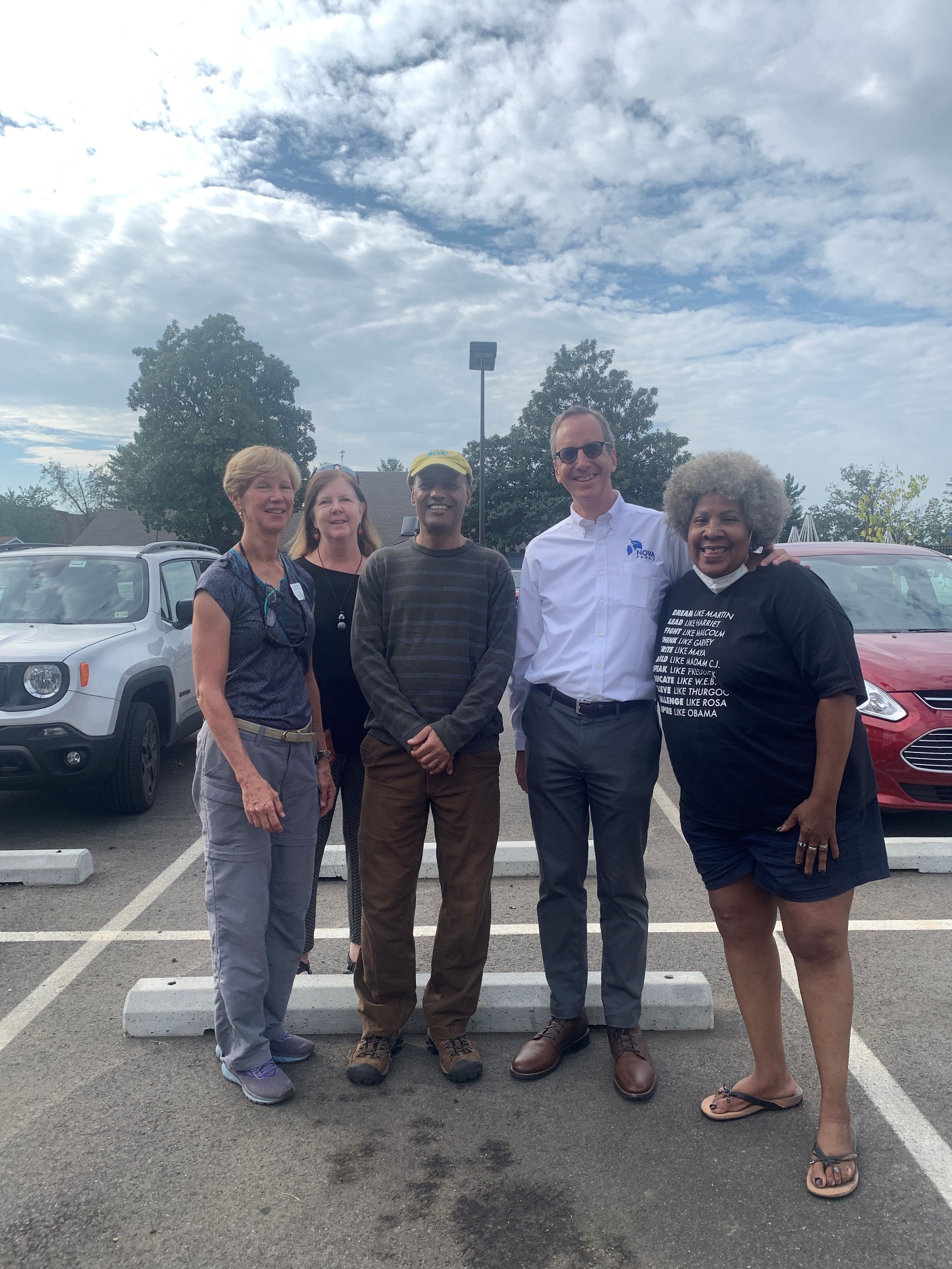
Upton Hill Honorees: Jill Barker, Joan Haffey, Musa Murawih, (Paul A. Gilbert - NOVA Parks Exec. Director,) Melody Starya Mobley. Not pictured – Gabrielle Cantor and Yolanda Villacampa
Two of the honorees, Joan Haffey and Musa Murawih, are ASNV board members. Musa began his volunteer work as a co-leader of the Black and Latin/Hispanic Bird and Nature walks with Melody Starya Mobley and Yolanda Villacampa. At the same time, he joined Joan Haffey, Jill Barker, and many volunteers as they removed invasives. Joan feels that the success of the invasive species pulls put the park ahead of its multi-year plan for habitat restoration and surely influenced NOVA Park’s commitment to significantly fund the next phase of addressing invasives. In spring 2021, ASNV awarded the park a Conservation Grant to continue their habitat restoration work.
Musa also worked with the team to build two pollinator gardens with native wildflower seedlings from his home garden. He’s been tending them and planning to see them through their first few seasons.
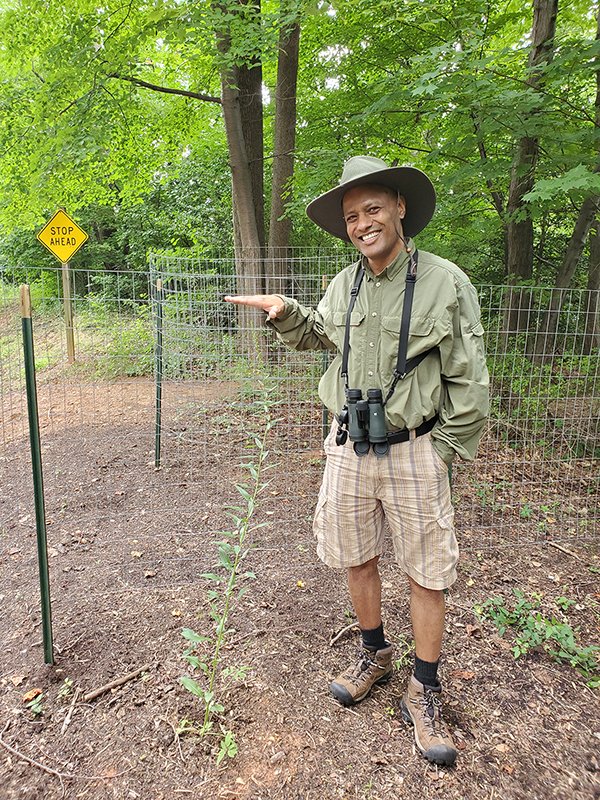
Musa Murawih with Native Plant Garden
Joan engaged one of ASNV’s Birdability volunteers to complete a Birdability assessment of the park which is now on the Birdability map. She also assists the bird and nature walk leaders by helping participants use ASNV’s loaner binoculars and guides.
Joan developed a relationship with the Elmwood/Lockwood senior housing complex adjacent to the park that serves primarily Asian-American seniors. With the assistance of a Vietnamese interpreter, she led an enthusiastic walk for residents before shutting down the walk series when the Delta variant of Covid emerged. Upton Hill plans to resume these walks in the future.
Musa and Joan stress that partnerships, especially those with new communities, need care and feeding. “We need to listen and build on areas where our goals and aspirations align while keeping in mind the constraints on our partners and the communities we all serve.” Together with partners, they hope to make Upton Hill Park proof that urban parks can be transformed into natural, native, and biodiverse habitats welcoming to all communities.

Bipartisan Bird Walks for Hill Staffers
Could birding help bridge the partisan divide in Congress?
Photo: Capitol Hill, from Winter 2022 Living Bird Magazine
Could birding help bridge the partisan divide in Congress?
A December 21, 2021 article in The Cornell Lab’s newsletter, “All About Birds,” describes the efforts of Tykee James, government affairs coordinator for National Audubon Society, who leads a monthly bird walk for Hill staffers. Read the story here.

Observations from Meadowood: January 2022
Judy Gallagher continues to survey Meadowood Recreation Area. Here are some findings from her most recent survey.
Photo: Red Flat Bark Beetle, Judy Gallagher
Judy Gallagher is an ASNV board member and a regular surveyor of local wildlife who also captures photos of what she sees, in particular the less common species. Here are some observations from her most recent survey.
It is challenging to find insects and spiders at this time of year. Yet some must still be around or we wouldn't have any next year. So how do insects and spiders, which are cold-blooded, survive the winter?

Monarch Butterfly, Judy Gallagher
One of the more obvious strategies is migrating to a warmer location. Prior to and during migration, Monarch Butterflies like this one seen at the Meadowood Pollinator Garden in August, almost double their body weight so that they have enough fat reserves to make the trip and survive the winter. The individuals who return here in the spring are descendants of those who flew south in the fall.

Eastern Boxelder Bug, Judy Gallagher
Some insects like the Eastern Boxelder Bug find a nice warm place like my house to spend the winter. Many of you have likely encountered them or Lady Beetles, Camel Crickets, or Stink Bugs inside your home.

Tan Jumping Spider, Judy Gallagher
But more insects and spiders spend the winter buried under leaf litter, under bark or anywhere that provides some protection from winter temperatures. Some overwinter as adults, while others overwinter in the pupal stage, as eggs, or as larvae. This Tan Jumping Spider has woven a silk "sleeping bag" under tree bark that will help insulate it for the winter.

Red Flat Bark Beetle, Judy Gallagher
It is important that insects or spiders keep their tissues from freezing as the ice crystallization would cause damage. The Red Flat Bark Beetle, which overwinters as an adult or larva, has evolved interesting strategies to allow it to survive winter temperatures. The beetle dehydrates, purges its gut of anything that could potentially freeze, and produces anti-freeze proteins and other chemicals that keep its tissues from freezing. It also enters diapause, in effect hibernating during the cold weather. Scientists are intrigued by this beetle's anti-freeze chemicals and are investigating using them as a non-toxic de-icing solution for aircraft or an ingredient that would prevent the re-crystallization of ice cream.

Common Checkered-Skipper Butterfly, Judy Gallagher
I decided to take a walk at Meadowood on December 15 to see if I could find any evidence of overwintering insects or spiders. While on my walk, I found this pristine Common Checkered-Skipper butterfly. I am sure it won't survive the winter, but I loved seeing a butterfly in December. Nature never ceases to surprise and delight me.
View all of Judy’s Observations from Meadowood articles here.

Monday Mystery - December 27
Monday Nature Mystery continues! Read on to learn who correctly identified our last mystery.
Photo: Donnie Rosie via Unsplash
We are pleased to announce the winner of our Monday Nature Mystery, Elise Milstein!
Congratulations to Elise for correctly identifying the call note of the Brown Creeper (Certhia americana). You can listen to the audio mystery here. According to our good friends at All About Birds, “Brown Creepers are a tiny bird with an affinity for big trees!” Unlike White-breasted Nuthatches who work their way down tree trunks, Brown Creepers work their way up foraging for insects along the way. During intense cold snaps or inclement weather they may eat suet or sunflower seeds.

Last Week's mystery: Call of the Brown Creeper (Certhia americana). Click here to listen. Photo: Donnie Rosie via Unsplash
Each Monday we’ll post a new mystery and identify the previous week’s winner. They’ll receive an ASNV hat or tote bag.
Here is this week’s mystery. Who made these holes in an American Holly?
Be sure to post your guess on our Facebook page when you see the post on Monday. Good Luck!
Please note that all entries are date and time-stamped. We review each correct answer to see who commented first. If someone 'likes' your comment, it would move it up on the list, making it look like the first post. Winners are limited to one prize every 90 days.
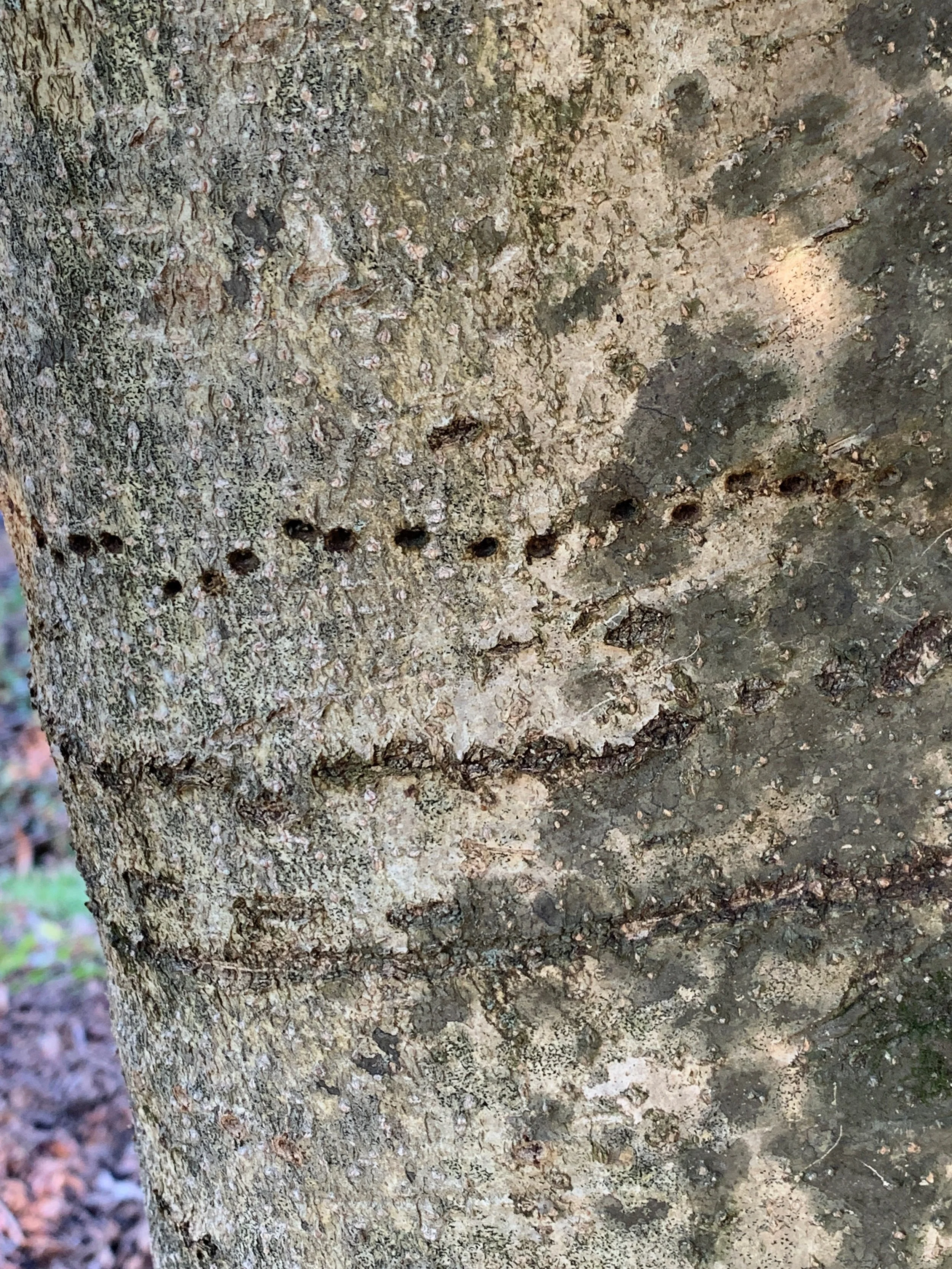
Photo: Laura McDonald

January 2022 Bird of the Month
Unlike most bird populations that are declining due to loss of habitat and climate change, waxwings seem to be doing quite well.
Photo: Cedar Waxwing, Jonathan Nikkila
How Did the Cedar Waxwing Get its Name?
Jessica Bigger
A flock of Cedar Waxwings, Bombycilla cedrorum, arrived in my backyard recently. The first thing I heard was their high-pitched “see-see-see” call. It was the middle of December and although Cedar Waxwings stay in Virginia year-round, I usually don’t see a flock stop over to forage this late in the year. But I still have berries on my trees and it’s been unusually warm.

Cedar Waxwing, Jonathan Nikkila
Waxwings are very social and tend to travel in large flocks, similar to starlings in size. When they arrive in your neighborhood it’s usually their calls that give them away but they also bob around bushes and trees in search of a variety of different berries.
Cedar Waxwings are frugivores (fruit eating), but in the summer they will also supplement their diet with insects like mayflies, dragonflies, and stoneflies. They eat a variety of berries, including serviceberry, strawberry, mulberry, dogwood, raspberries, blueberries, mistletoe, madrone, juniper, mountain ash, honeysuckle, crabapple, and hawthorns. They are fun to watch when foraging. They will land on a tree, grab a berry, tip their head back, and swallow the berry whole in one big gulp.
Cedar Waxwings build their nests on the fork of a tree branch anywhere from 3 – 50 feet high. To save time, they will occasionally steal nesting material from other birds. They are one of the few bird species who are not significantly affected by parasitization. However, Brown-headed Cowbirds will lay their eggs in Cedar Waxwing nests but most of the cowbird babies do not survive. Waxwing chicks are fed a fruit-rich diet, which is too much for the cowbird chicks to handle.
Unlike most bird populations that are declining due to loss of habitat and climate change, waxwings seem to be doing quite well. Their population numbers have been increasing, likely due to old fields transitioning into shrublands and forests that provide a variety of fruit-bearing trees and bushes.
While the Cedar Waxwing itself is quite unique, by far the most interesting thing about it is its name. If you look closely at some waxwings you will see bright red at the tips of their secondary feathers. Those red tips are not feathers, but actually a waxy secretion. In most cases they are a bright red, but occasionally they can be yellow.
So, what is the purpose of these waxy wing tips? David Mehlmen, Director of The Nature Conservancy’s Migratory Bird Program, believes the waxy tips help attract mates. As a bird ages, the number of waxy secretions that appear on the wingtips seems to increase.
I always look forward to when the waxwings stop over at my neighborhood. The minute I hear that high-pitched whistle, I run for my binoculars. I’m glad we have so many fruit-bearing trees for these birds to feed on. They are always a joy to have around.
Sources:
https://www.allaboutbirds.org/guide/Cedar_Waxwing/overview
https://blog.nature.org/science/2017/02/27/waxwings-really-have-wax-wings/

Bird Walks
Winter is a great time to enjoy birding! Check out our bird walks page to join an upcoming walk.
Photo: Camilla Cerea
Winter has arrived! Join us for a bird walk now that the leaves are down. Check this page for upcoming walks.
2021 Hog Island Scholarship Recipient
2021 Hog Island Scholarship recipient Gretchen Linton reflects on her time at Educator’s Week.
Photo: Hog Island, Gretchen Linton
Gretchen Linton
“It’s no exaggeration to say I think of Hog Island just about every day. It was such an invigorating, restorative, beautiful, and delicious place!”
I was thrilled to be awarded a scholarship for Educator’s Week 2021. I drove up from Alexandria, stopping along the way in Connecticut and the Portland area.
Hog Island sunrise, Gretchen Linton
The sun rose a little earlier than in the Mid-Atlantic region and I was up at about 5 am to make sure I met the ferry at Bremen!
About 30 other teachers, media specialists, and informal educators from all over the East Coast and Central states gathered, looking a bit stressed from various modes of travel during Covid.
We were immediately put at ease under the pines, swapping stories of our past year, and watching the sun set over the harbor, getting to know each other and our leaders who came from Washington State, Georgia, and New England.

Hog Island mushroom, Gretchen Linton
The accommodations were dorm-like, clean, and cozy. Meals were OUTSTANDING! I don’t think I’ve ever eaten so well in my life. Fresh, local, innovative, scrumptious, and every meal had gluten-free and vegan options.
We gathered for our daily meals and workshops outdoors and had evening sessions in the Fish House each night.
Highlight sessions included: tidepool exploring, bioluminescence, hikes to the pitcher plants, and the Bingham Cottage, as well as an excursion to Egg Rock, presentations about Project Puffin, JEDI (Justice, Equity, Diversion and Inclusion) as well as time to wander, make art, and share our experiences and hopes for the coming year.
Now that I’m back in the classroom, navigating this Covid world with my 7th graders, my time on Hog Island feels a lot like a beautiful dream but I hope to return as a Friends of Hog Island Volunteer next summer.

New book on The Birds of Northern Virginia for Beginning Birders and Educators
ASNV is pleased to announce that a new digital picture book on local birds, tailored to beginners, is now available free of charge on the ASNV website.

ASNV is pleased to announce that a new digital picture book on local birds, tailored to beginners, is now available free of charge on the ASNV website. It is written by an experienced Connecticut birder and educator, Florence McBride, who responded to a request from a Northern Virginia teacher for bird-study materials to use during the pandemic. The book covers many common birds of our area and arranges them by color, except for the birds of prey and the water birds. It also identifies whether each species is a permanent resident or migratory – here in spring-summer-fall or fall-winter-spring. The book gives each bird’s length and shows separate pictures of male and female, or adult and immature, if they look different. Other information may include notes about identifying the birds’ songs and calls, and feeding or nesting behavior. Useful links to the ASNV Northern Virginia bird list and Cornell Lab’s “All About Birds” Bird Guide, and Merlin app can be found in the introduction.
The book is copyrighted and may be shared free of charge digitally or as (self-printed) hard copy for non-commercial personal and educational use. It is also readable on a smartphone. For more specific information on use of the book and the pictures within it, please see the introduction and the picture credits (near the end of the book.) Notes on the author, including her recent photographic preservation of the Birds of Connecticut exhibition in Yale’s Peabody Museum of Natural History, can be found at the end of the book.
A link to the book in downloadable PDF format may be found on the ASNV website here. We hope Florence McBride’s book is an inspiration for all educators and beginning birders in Northern Virginia!

Happy Frostmas!
What’s “Frostmas?” Every year farmers celebrate the end of the growing season when the first frost occurs. Flowers and crops at this time of year turn to mush due to frost damage.
Photo: Northern Mockingbird and hoophouse, Deidra Bryant
Deidra Bryant
What’s “Frostmas?” Every year farmers celebrate the end of the growing season when the first frost occurs. Flowers and crops at this time of year turn to mush due to frost damage. So, Frostmas can be a fun celebration with farmers and their families to commemorate a good year of hard work and a successful harvest. It can also be a quiet reminder to plan and prepare for next year. Depending on what’s being grown, farmers may start to winterize their crops by assembling plastic tunnels or preparing cool crops in a greenhouse or hoophouse.

Northern Mockingbird and hoophouse, Deidra Bryant
This year we experienced the first frost around early November 3rd. However, throughout the month, we reached temperatures of at least 60 degrees several times AFTER the first freeze. You’ve probably noticed some extra fat non-migratory songbirds around. In Waterford there are some noticeably larger Northern Mockingbirds hanging about the area. Which makes sense since they will usually feast on berries and other fruits and veggies in the fall and winter, and the Waterford/Lovettsville area is home to many local farms. However, I’ve also noticed with the warmer temperatures occurring, they’ve been gorging themselves on insects, worms, and other arthropods persisting in the soil and in the air. You can actually see bees, butterflies, and flies still buzzing around, along with huge earthworms and large grasshoppers eagerly moving above ground in late November. Unfortunately, these mild days and nights are almost certainly caused by human-influenced climate change. Scientists predict that autumns and winters will be much shorter decades from now. Specifically, fall would essentially start in mid-October and spring starting in late January. This is troubling because these seasonal changes could also cause flowers to bloom out of sync with avian and insect pollinators and alter the structure of other ecological systems each spring. We would also see insect populations migrating to higher latitudes resulting in increases in mosquito borne illnesses among humans and increases in insectivorous bird populations up north.
Although it makes me concerned to experience temperatures close to 75 degrees in Northern Virginia a week from Thanksgiving, I’m happy that many overwintering omnivorous bird diets will be supplemented this year. Which is evidenced by our feathered friends joining in on the festivities by singing and feasting till sunset.

The Importance of Wetlands
Wetland ecosystems protect and improve water quality, offer habitats, provide flood protection and erosion control, maintain surface water flow during dry periods, and present opportunities for recreation and aesthetic appreciation.
Photo: Mason Neck Park wetlands, Stephen Tzikas
Stephen Tzikas
My first exposure to wetlands was when I was a child in the 1960s. I frequently saw the inlet of the Raritan River filled with thousands of cattails while sitting in the backseat as my parents drove over the Victory Bridge connecting Perth Amboy and South Amboy, NJ. Much of those wetlands and floodplain around the river contained clay deposits that fueled a large terracotta industry in the 19th and 20th centuries. Some of the most interesting geological finds of these clay areas included gem grade amber with prehistoric insect inclusions.
Later in life, as an engineer, I had some peripheral experiences with wetlands in engineering reviews of Federal construction. That took me to unique environments and terrains such as extreme cold regions, hot deserts, dams, and wetlands. But wetlands also caught my interest because of environmental concerns, which made up a significant portion of my early career. Wetlands are protected and regulated. Many are found here in Fairfax County and local trails will bring you to them and the unique birds found within their boundaries. But before we note wetland birds, something should be said about the history behind protecting wetlands.
Wetland ecosystems protect and improve water quality, offer habitats, provide flood protection and erosion control, maintain surface water flow during dry periods, and present opportunities for recreation and aesthetic appreciation. By the way, those cattails I used to see so frequently are an iconic wetland plant found worldwide in a variety of aquatic ecosystems such as marshes, ponds, lakes, and riparian areas.
Wetlands were considered an obstacle to development. They were often drained for farm land and construction. In the early 20th century, largely due to declining populations of ducks and geese, and the political pressure exerted by hunters, the federal government started protecting habitats for birds. The 1977 Clean Water Act was a big step forward for wetland protection. It protected waterways that resulted in protecting the wetlands that fed into them. Also in 1977, executive orders ended federal assistance for the draining and filling of wetlands. A federal policy of “no net loss” of wetlands became the norm.

Munsell soil test kit, Stephen Tzikas
Rutgers University has a regularly recurring one-day continuing education course at their wetlands location: the Environmental Education Center at Lord Sterling Park in Basking Ridge. The Introduction to Wetland Identification course teaches the use of Munsell soil test kits for wetlands. Although an online version of the course exists, the in-person version is better for the practical experience it delivers. Wetland soils are often grey (reduced) or dark brown to black. Use of the Munsell color system assures consistent classification. The course also makes use of dichotomous keys to identify wetland plants.
The eBird website posts bird sightings at wetlands throughout Fairfax County. Recently, as part of the Fall 2021 Fairfax Master Naturalist class, our field trip to Huntley Meadows wetlands in Alexandria recorded birds along a trail that was just under 2 miles. Birds spotted included: Canada Geese, Mallards, yellowlegs, herons, vultures, eagles, Belted Kingfishers, Northern Flickers, European Starlings, Red-winged Blackbirds, Northern Rough-winged Swallows, Ruby-crowned Kinglets and several types of hawks, woodpeckers, and sparrows. More common birds included Blue Jays, Carolina Chickadees, American Robins, Eastern Bluebirds, Carolina Wrens, crows, Tufted Titmice, and Northern Cardinals. In fact, Fairfax County Parks have documented more than 200 bird species in Huntley Meadows Park.

Huntley Meadows Wetlands, Stephen Tzikas
On another Master Naturalist field trip, we explored a different wetland at Elizabeth Hartwell Mason Neck National Wildlife Refuge. While we didn’t keep count of birds on this trip, it is known to have many types of birds throughout the year including Tundra Swans, Black Ducks, Northern Pintails, Mallards, and many others. High tide is the best time to go because the birds are closer to the shore and will be feeding more actively.
Mason Neck Wetlands, Stephen Tzakis

Why you should Report your Tree and Shrub Plantings
Every tree counts! And counting every tree also helps show whether Northern Virginia is meeting its environmental goals.
Photo: Allison Farrand
From plantnovatrees.org
Every tree counts! And counting every tree also helps show whether Northern Virginia is meeting its environmental goals. The Virginia Department of Forestry is counting planted trees to see if Virginia is meeting its stormwater goals to protect the bay, and the Department of Environmental Quality is asking Northern Virginia to plant 600,000 trees by 2025.
Since most available land in Northern Virginia is private property, we won’t meet the goal without planting thousands of new trees in our own neighborhoods. Help Plant NoVA Trees track our progress and build momentum by reporting your tree planting here. They are forwarding these reports to be added to the Virginia Department of Forestry's My Trees Count map, which is updated a couple times a year.
December 2021 Bird of the Month
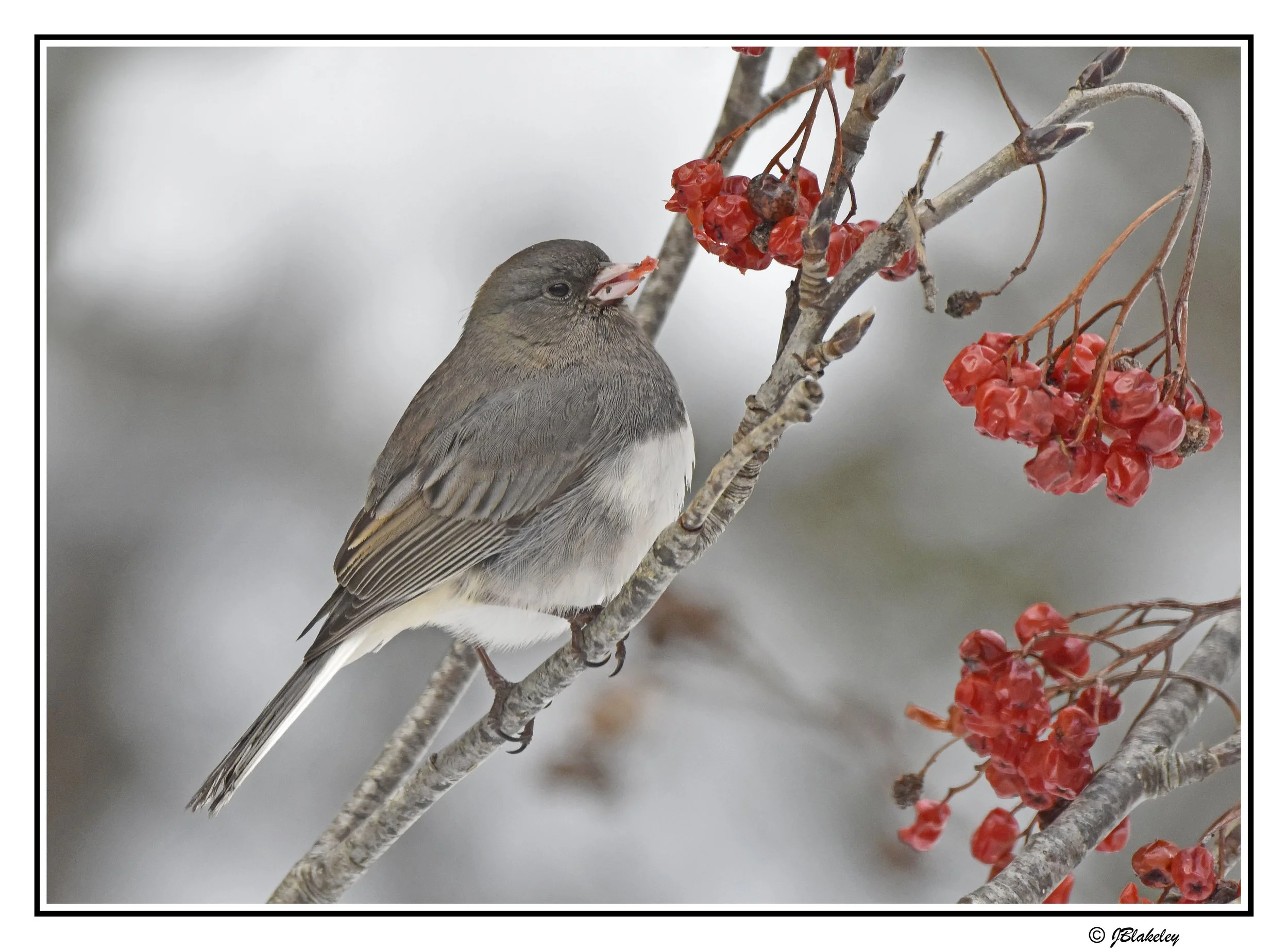
The Dark-eyed Junco is one of the most widespread species throughout North America, yet the variation in plumage and behavior between regional species is significant.
Photo: Dark-eyed Junco, Judith Blakeley
Dark-eyed Juncos Vary Depending on Where They Live
Jessica Bigger
The Dark-eyed Junco is one of the most widespread species throughout North America, yet the variation in plumage and behavior between regional species is significant. According to a research paper by Ellen D. Ketterson, presented at the American Society of Naturalists, June 2015 in São Paulo, Brazil, Ketterson identified 8-11 subspecies. Seven of those subspecies display genetic variations. Six of these subspecies are different due to their environment. Some species have a larger range, like the Slate-colored Junco (right in our backyard), who ranges from Alaska all the way to the northeast; while others have a smaller, more localized range, like the White-winged Junco and Gray-headed Junco.
Although genetically, Juncos are quite similar, environmentally each subspecies expresses different plumage and behavior depending on where they live. For example, a recent study, cited in Ketterson’s research paper, “revealed that the plumage differences in two subspecies are literally skin deep, more a function of gene expression than differences in gene sequence.”
Dark-eyed Junco, Judith Blakeley
Dark-eyed Juncos are known as the “snowbird”, because most spend their breeding season up in the mountains and then come down to urban areas in the winter. However, back in the 1980’s birders started noticing flocks foraging on campus at UCLA and other urban areas year-round. Male juncos who are notorious for being aggressive to other male and female juncos- especially during breeding season-became quite docile and were less afraid of humans. The males in this particular subspecies started to sing in a higher octave and some females were building nests up in trees rather than traditionally on the ground.
Pamela Yeh, Associate Professor of Ecology and Evolutionary Biology at UCLA, who studies juncos on campus wrote an article in All About Birds. She believes the species has been evolving at a rapid pace. They seem to be able to adapt to different environments, which might explain the difference in plumage color and behavior across the species. Even though each subspecies shows differences in plumage, these minor changes happened within the last few thousand years, according to Dr. Borja Mila, from Madrid’s National Museum of Sciences in an interview by the Junco Project. So, in evolutionary terms, these changes happened fairly recently and in a very short amount of time.
Our Slate-colored Juncos have finally returned to our backyards this winter. Knowing that each subspecies behaves differently, take some extra time to see what our feathered friends do differently from other Dark-eyed Juncos across the country.
Sources:
https://www.allaboutbirds.org/guide/Dark-eyed_Junco/overview
https://juncoproject.org/view-download/chapter3/index.html
https://www.journals.uchicago.edu/doi/full/10.1086/709699
https://onlinelibrary.wiley.com/doi/abs/10.1111/mec.14878
Monday Mystery - November 29
Monday Nature Mystery continues! Read on to learn who correctly identified our last mystery.
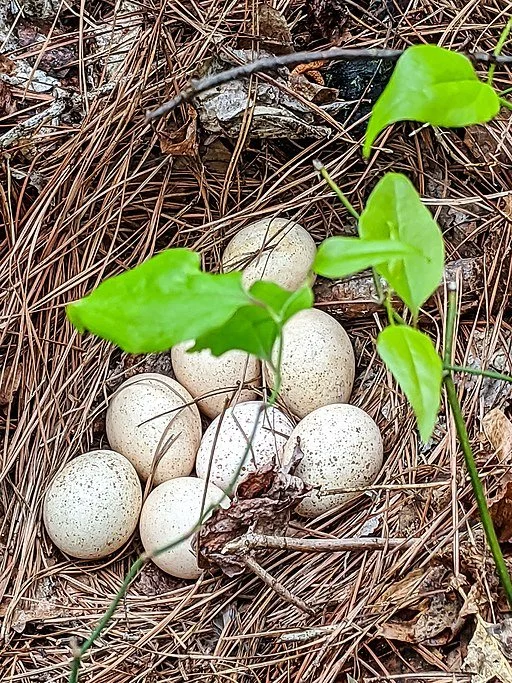
Photo: Drew Heath, CC BY-SA 4.0, via Wikimedia Commons
We are pleased to announce the winner of our Monday Nature Mystery, Geraldine Shannon!
Congratulations to Geraldine for correctly identifying the nest and eggs of the Wild Turkey (Meleagris gallopavo). Did you know that if Benjamin Franklin had his way, the Wild Turkey would be our national emblem and not the Bald Eagle? There are actually five subspecies of turkey in North America: Eastern, Osceola, Merriam, Gould’s, and Rio Grande.
Here is an interesting article from National Audubon Society by Anne Readel about the Wild Turkeys in her suburban neighborhood.

Last Week's mystery: Nest and eggs of the Wild Turkey (Meleagris gallopavo). Photo: Drew Heath, CC BY-SA 4.0, via Wikimedia Commons
Each Monday we’ll post a new mystery and identify the previous week’s winner. They’ll receive an ASNV hat or tote bag.
Here is this week’s mystery. Do you know who this is?
Be sure to post your guess on our Facebook page. Good Luck!
Please note that all entries are date and time-stamped. We review each correct answer to see who commented first. If someone 'likes' your comment, it would move it up on the list, making it look like the first post. Winners are limited to one prize every 90 days.

Photo: Mary Shelton

Annual Manassas-Bull Run Christmas Bird Count (CBC)
Audubon Society of Northern Virginia’s Manassas-Bull Run Christmas Bird Count will be held on Sunday, December 19, 2021 with a preliminary online workshop on December 16. This count will be ASNV’s 40th year participating in a 122-year-old annual tradition of citizen science.
Photo: Carolina Chickadee, Jeff Drake/Great Backyard Bird Count
Lisa Mackem
Audubon Society of Northern Virginia’s Manassas-Bull Run Christmas Bird Count will be held on Sunday, December 19, 2021 with a preliminary online workshop on December 16. Both the workshop and count are free but because of Covid the number of new participants in the count will be restricted (see following note). This count will be ASNV’s 40th year participating in a 122-year-old annual tradition of citizen science.
In 1900, American ornithologist and pioneering field guide writer Frank Chapman, along with 26 other conservationists, started the Christmas Bird Count (CBC) on Christmas Day, 1900. They wanted to promote conservation by counting birds instead of hunting them. Some counts have run annually since then, and over 20 countries in the Western Hemisphere now have CBCs.
Because of Covid restrictions last year, ASNV limited participants to family groups, and did not solicit additional volunteers. Those 93 participants tallied over 22,500 birds from 87 species – just two short of the 2014 record of 89 species. Notable highlights included sightings of American Pipit flocks for a new high count of 620. Matt Bender found and photographed a late Blue-headed Vireo, which was only the second one seen on the count since the first in 2002. Tim Resch photographed a Cackling Goose with Canada Geese. This also was only the second sighting, after the first one in 2013. Carolina Wrens and White-throated Sparrows were counted at all-time highs. Merlins tied their all-time high, Common Ravens were close to their high count, and Eastern Bluebirds had their highest count since 2015. Canada Geese, Yellow-bellied Sapsuckers, Northern Cardinals, and Song Sparrows were all close to all-time high counts but for several species, observers spotted just one bird.
CBC participant data have become one of only two large pools of information (the other is the Breeding Bird Survey in June) informing ornithologists and conservation biologists on how American birds are faring. Hundreds of analyses, peer-reviewed publications, and government reports use this data, which reveals information about changed migration habits attributed to climate warming. Management plans can be tailored to local conditions using CBC data as a guideline.
Continue this important tradition! Sign up for the workshop here and contact our compiler if you want to come out for the count.
Due to Covid, only a limited number of new volunteers will be added to the 40th annual Manassas-Bull Run CBC. If you are interested, contact the compiler, Phil Silas, no later than December 8. The count will cover the area around Centreville, including Manassas National Battlefield Park, Bull Run Regional Park, undeveloped areas along Bull Run Post Office Road, and many other locations. For more information, especially if there are accessibility concerns please contact Phil or call 703-987-0817.
Project Feederwatch Workshop is now Online!
This informative workshop with Dixie Sommers and Greg Butcher covers a bit of Project FeederWatch history, its purpose, tips for identifying birds, and the protocols to be followed while counting. Watch the recording!
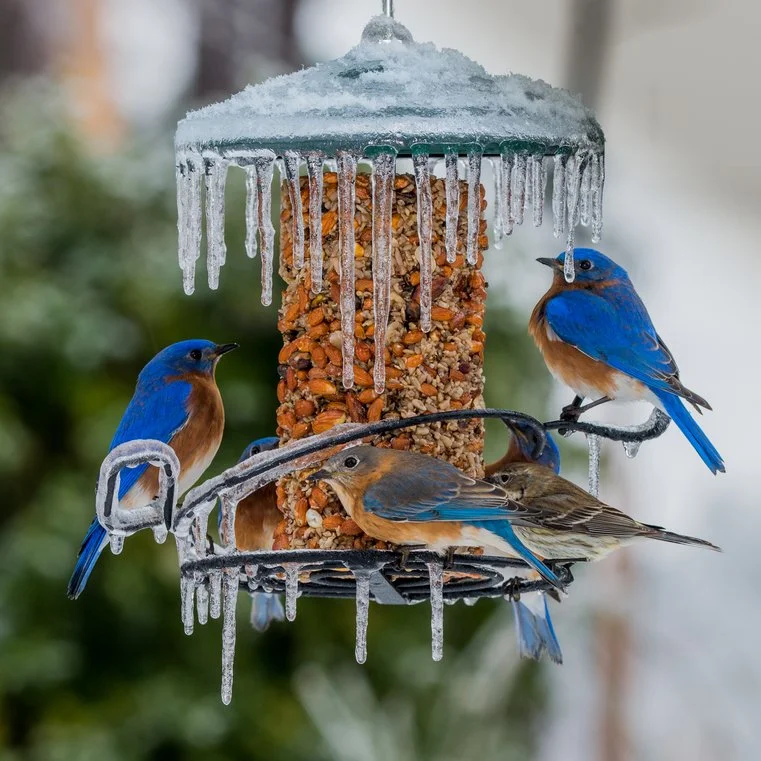
Photo: Eastern Bluebirds, Herbert Fechter/Audubon Photography Awards
This informative workshop with Dixie Sommers and Greg Butcher covers a bit of Project FeederWatch history, its purpose, tips for identifying birds, and the protocols to be followed while counting. Visit our Online Programs page for the link to the recording!
Project FeederWatch is the easiest citizen science you will ever do! From the comfort of your home, you simply count the winter birds that visit your feeders and report your data to Cornell Lab of Ornithology. This workshop is an introduction to Project Feederwatch and provides guidance on how you can participate.
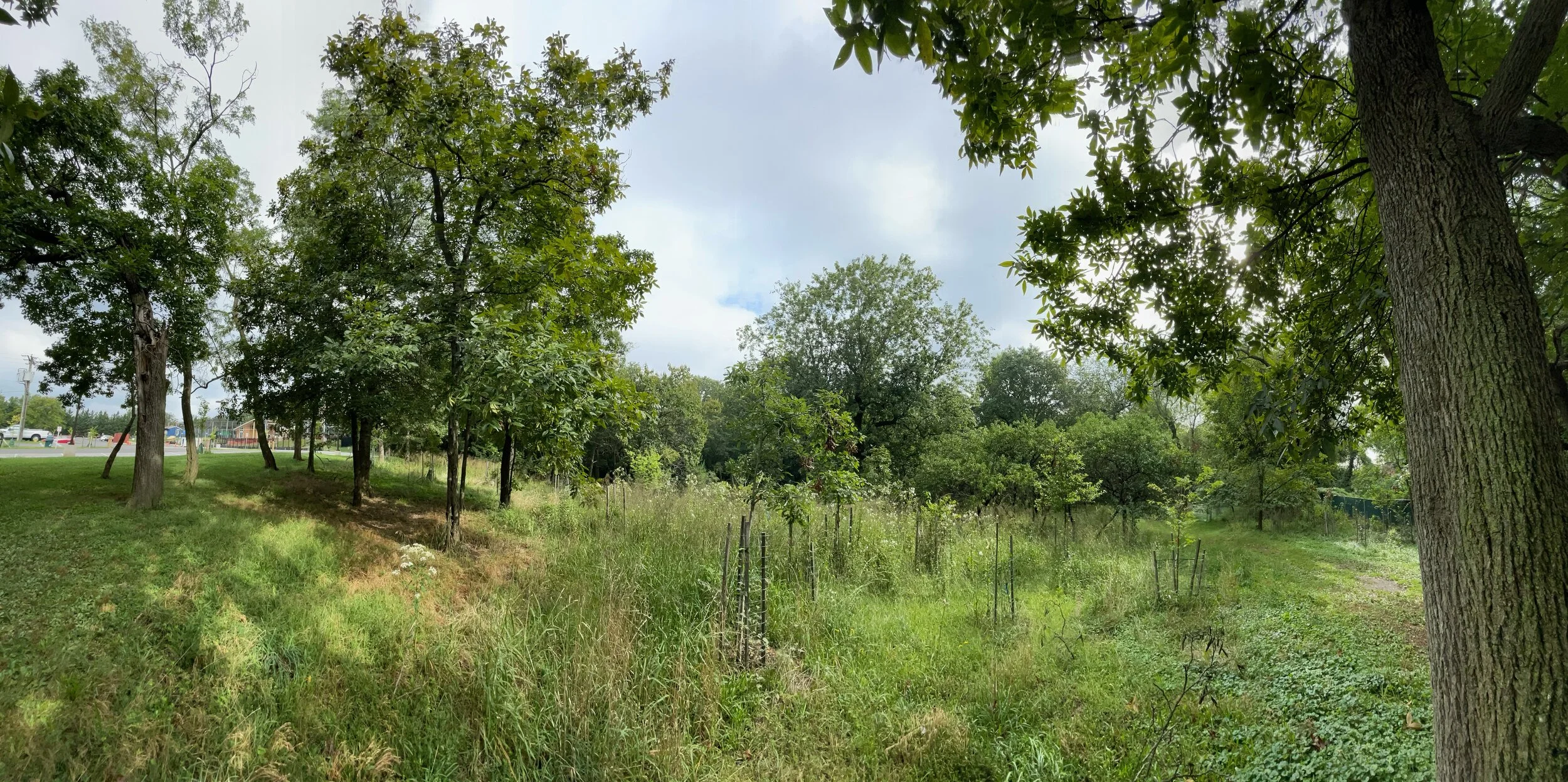
Black and Latin/Hispanic Bird and Nature Walks Resume at Upton Hill Park
Northern Virginia Regional Parks and Arlington NAACP have resumed their popular nature walk series.
Photo: Upton Hill Restoration Area, Musa Murawih
NOVA Regional Parks and Arlington NAACP
Northern Virginia Regional Parks and Arlington NAACP are resuming their popular nature walk series in September. Audubon Society of Northern Virginia (ASNV) and Arlington Regional Master Naturalists are collaborating with the park to support the walks scheduled for:
Saturday, October 30, Noon
Saturday, November 6, 8:00 – 10:00 AM
See the program flier with registration information in English and Spanish here.
For information visit the park website or call the park: 703-534-3437.

Monday Mystery - November 1
Monday Nature Mystery continues! Read on to learn who correctly identified our last mystery.
Photo: Neven Krcmarek via Unsplash
Wow, another close call! We are pleased to announce the winner of our Monday Nature Mystery, Amy Stich!
Congratulations to Amy for correctly identifying (by a mere three minutes) the Northern Black Widow Spider (Latrodectus variolus). It is closely related to the Southern Black Widow and Western Black Widow spiders. They can be found as far north as Canada, south to Florida and as far west as east Texas! Contrary to popular belief they are not aggressive – quite the opposite! Their bites are painful and poisonous, so be mindful if you spot one in an old tree stump or crawlspace.
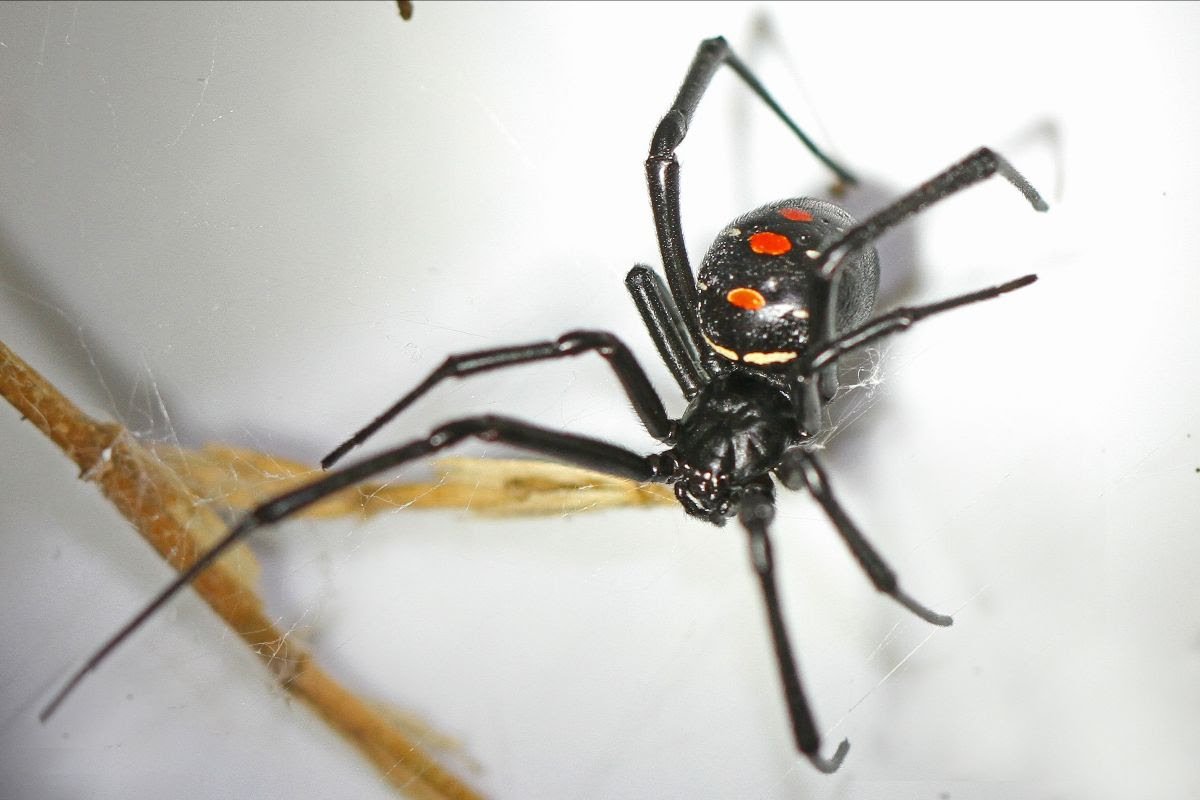
Last Week's mystery: Northern Black Widow Spider (Latrodectus variolus). Photo: Judy Gallagher
Each Monday we’ll post a new mystery and identify the previous week’s winner. They’ll receive an ASNV hat or tote bag.
Click here for this week’s mystery. Do you know what this is?
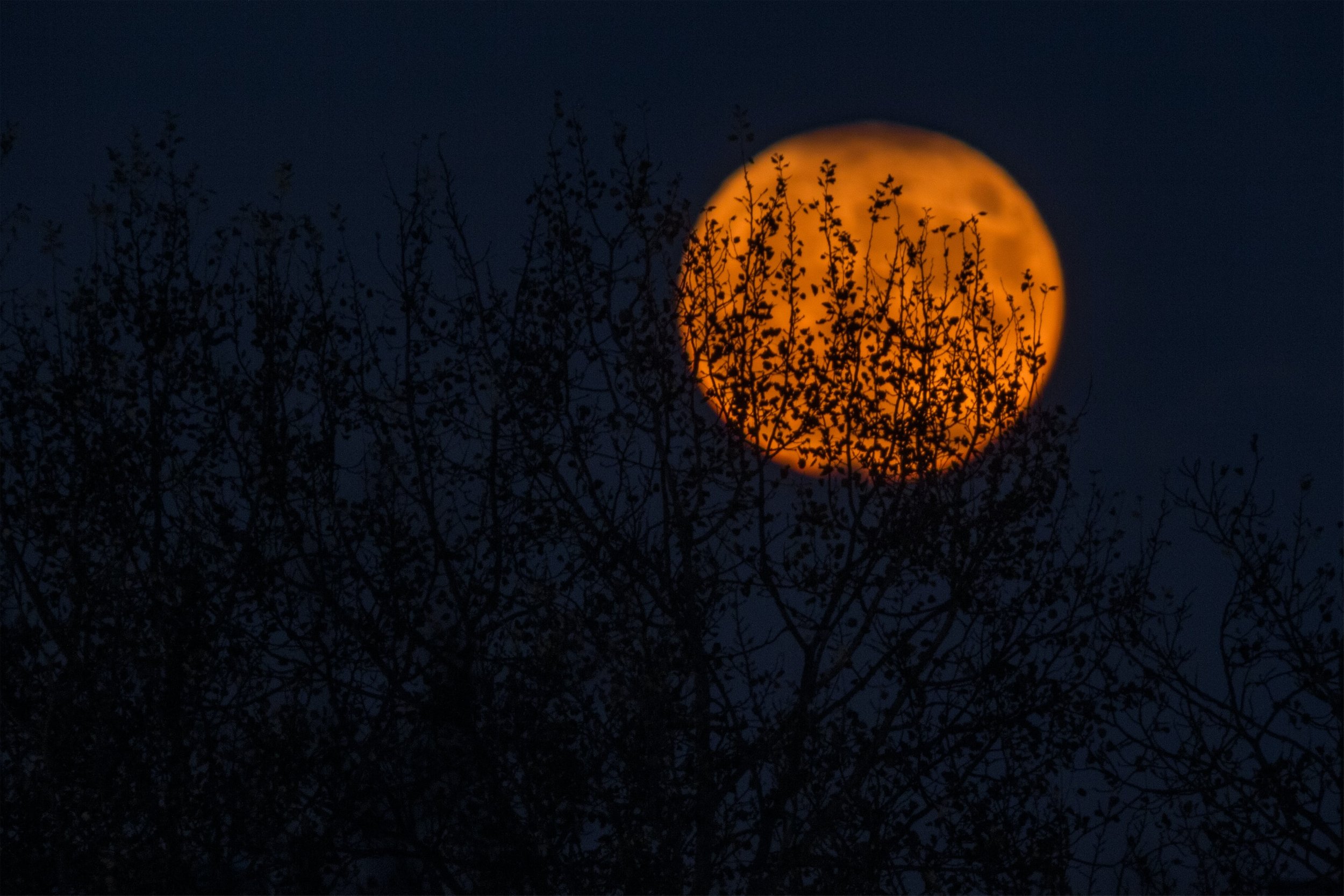
Photo: Neven Krcmarek
Be sure to post your guess on our Facebook page. Good Luck!
Please note that all entries are date and time-stamped. We review each correct answer to see who commented first. If someone 'likes' your comment, it would move it up on the list, making it look like the first post. Winners are limited to one prize every 90 days.