
NVBA NEWS BLOG
Welcome to the blog for Northern Virginia Bird Alliance, a wealth of resources about northern Virginia birds, wildlife, habitat conservation and restoration, native plants, wildlife-friendly gardening, advocacy and more.

Bald Eagles are Thriving but Face Challenges
In an article published in the March 10, 2022 Mount Vernon Gazette Newspapers, Glenda Booth reported on a presentation about the state of Bald Eagles in our region.
Photo: Bald Eagle, Deborah Smith/Audubon Photography Awards
In an article published in the March 10, 2022 Mount Vernon Gazette Newspapers, Glenda Booth reported on a presentation about the state of Bald Eagles in our region.
Bald Eagle, Deborah Smith/Audubon Photography Awards
“Virginia’s tidal rivers are just loaded with bald eagles,” Jeff Cooper told 210 people attending the March 2 meeting of the Friends of Dyke Marsh. These large raptors with an 80-inch wingspan regularly breed, nest, forage and migrate on and near rivers like the Potomac. People see bald eagles frequently at Dyke Marsh, Mason Neck and Fort Belvoir. Cooper is wildlife biologist with the Virginia Department of Wildlife Resources and has worked with birds for over 30 years and co-authored 17 papers. (Read the entire article here.)

Millions of Trees at Risk in Northern Virginia? Introducing Tree Rescuers!
Northern Virginia’s oldest and best-loved trees are in danger, and the threat is in plain sight – and yet there are few who can see it.
Photo: Invasive vines enveloping trees, Margaret Fisher
Plant NOVA Trees
Northern Virginia’s oldest and best-loved trees are in danger, and the threat is in plain sight – and yet there are few who can see it.
But help is on the way! Tree Rescuers – a new community education and outreach program – is shining a light on non-native invasive vines, which pose a mortal threat to millions of mature trees in Northern Virginia.

Mature tree enveloped in invasive vines, Margaret Fisher
More than 130 people from neighborhoods across Northern Virginia have already volunteered with Tree Rescuers, a new campaign sponsored by Plant NOVA Trees and aimed at preserving our area’s mature trees.
“We were amazed at how many people were ready to do something like this for the trees but didn’t know how to get started,” said Margaret Fisher, one of the coordinators of Plant NOVA Trees. “This is a great time to start, since the leaves are down and the vines can be seen more easily.”
As many as three million trees in Northern Virginia may be at risk, said Fisher.
Many people are unaware that invasive vines like English Ivy can eventually make a tree hazardous (and expensive to remove). Tree Rescuer’s volunteers learn how to identify problematic vines, then walk their neighborhoods spotting trees that need help.
The Tree Rescuers don’t remove any vines themselves, but they warn landowners by dropping off a brochure explaining the problem and ways to fix it.
Data gathered by Tree Rescuers will also help improve knowledge of the actual number of trees at risk, since the collected data is being aggregated and mapped. A map of neighborhoods surveyed can be viewed here.
Tree Rescuers is part of Plant NOVA Trees, a five-year campaign by local governments and nonprofit organizations to increase tree cover in Northern Virginia. Native trees are a key part of the solution to many community problems, from extreme weather and air and water quality to the health of birds, wildlife, and the Chesapeake Bay.
For more details about Tree Rescuers, or to volunteer, click here.

Calling all Birders: It’s time to get ready for Birdathon 2022!
Last year’s winning team saw 89 species in 24 hours! Wow! Can you beat it? Find out how to register your team here.
Photo: Camilla Cerea
How does it work? Like a walk-a-thon, Birdathon participants collect pledges from friends and family via our website. Then participants record how many species they can identify during any 24-hour period between April 16 and May 22. The more species they identify, the more funds they raise!
Last year’s winning team saw 89 species in 24 hours! Wow! Can you beat it?
Birdathon helps ASNV continue to support outdoor education, citizen science and habitat conservation, and encourages people to plant native plants and foster native wildlife. Birdathon also helps ornithologists better understand spring migration by reporting sightings through eBird, an online database of bird observations run by the Cornell Lab of Ornithology.
All birding levels are welcome. Participants can bird alone or form teams of up to five. All team members donate and/or secure pledges. Participants solicit general donations or ask for pledges based on the number of species or the number of individual birds sighted. Sightings and donations are due no later than June 3, 2022. Report your Birdathon sightings on eBird and email your list to info@audubonva.org.
Ready to get started? Register your team here and check out our Birdathon rules . Now go out and have a great day birding!
All participants and their supporters are invited to join us at our Audubon Afternoon in June for our Annual Meeting, where we’ll announce the winners of the “Most Species Counted,” “Most Money Raised” and “Youth Birder” competitions.
Monday Mystery - March 28
Monday Nature Mystery continues! Read on to learn who correctly identified our last mystery.
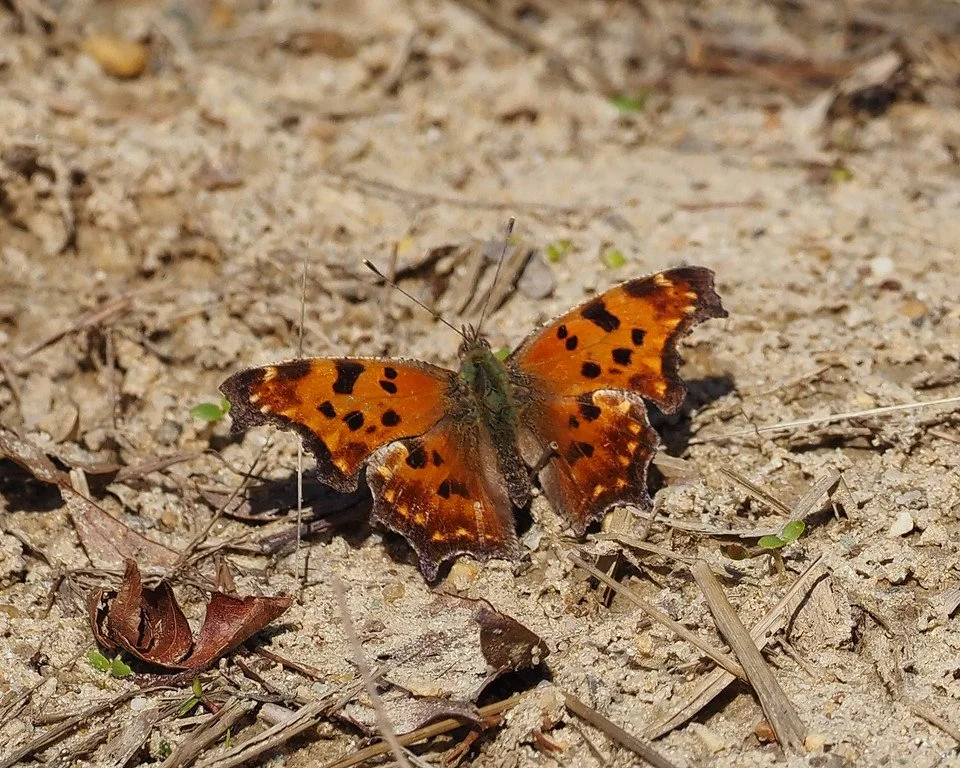
Photo: Eastern Comma Butterfly, Bob Blakney
We are pleased to announce the winner of this week’s Monday Nature Mystery, Fred Siskind!
Congratulations to Fred for correctly identifying the Eastern Comma butterfly, Polygonia comma. According to Butterflies and Moths of North America, these butterflies eat rotting fruit and tree sap and lay eggs on elm and nettle trees. Their wingspan is 1 3/4 - 2 1/2 inches.
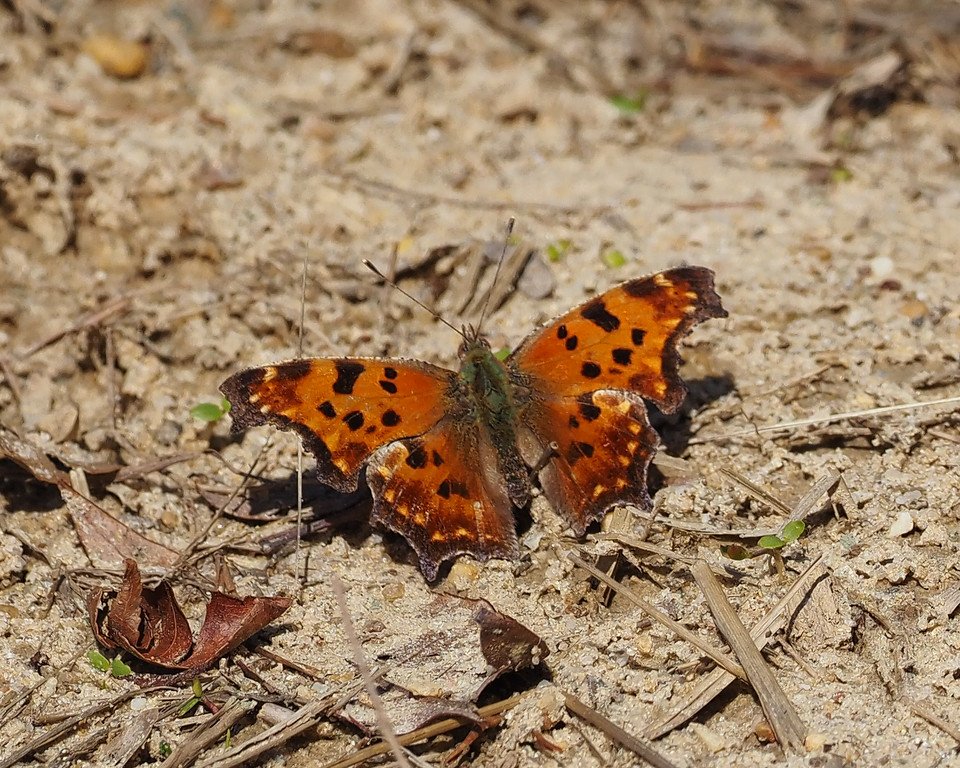
Last Week's mystery: Eastern Comma butterfly, Polygonia comma. Photo: Bob Blakney
Each Monday we’ll post a new mystery and identify the previous week’s winner. They’ll receive an ASNV hat or tote bag.
Here is this week’s mystery:
This bird species is an early migrator…who is it? Be sure to post your guess on our Facebook page under the latest Monday Nature Mystery post. Good Luck!
Please note that all entries are date and time-stamped. We review each correct answer to see who commented first. If someone 'likes' your comment, it would move it up on the list, making it look like the first post. Winners are limited to one prize every 90 days.

Monday Nature Mystery: Who is this? Photo: Dixie Sommers

Monday Mystery - February 28
Monday Nature Mystery continues! Read on to learn who correctly identified our last mystery.
Photo: Red-winged Blackbird, Robert MacNevin
We are pleased to announce the winner of this week’s Monday Nature Mystery, Lorraine Stewart!
Congratulations to Lorraine Stewart for correctly identifying the female Red-winged Blackbird (Agelaius phoeniceus). According to All About Birds, Red-winged Blackbirds are a social species - they roost in flocks all year long. Winter flocks can be congregations of several million birds, including other blackbird species and starlings.

Last Week's mystery: Female Red-winged Blackbird (Agelaius phoeniceus) Photo: Robert MacNevin
Each Monday we’ll post a new mystery and identify the previous week’s winner. They’ll receive an ASNV hat or tote bag.
We’ve chosen this week’s mystery in recognition of Invasive Plants Awareness Week. This species has triangular shaped leaves, and later in the season will have blue berries. Do you know what this is?
Be sure to post your guess on our Facebook page under the latest Monday Nature Mystery post. Good Luck!
Please note that all entries are date and time-stamped. We review each correct answer to see who commented first. If someone 'likes' your comment, it would move it up on the list, making it look like the first post. Winners are limited to one prize every 90 days.
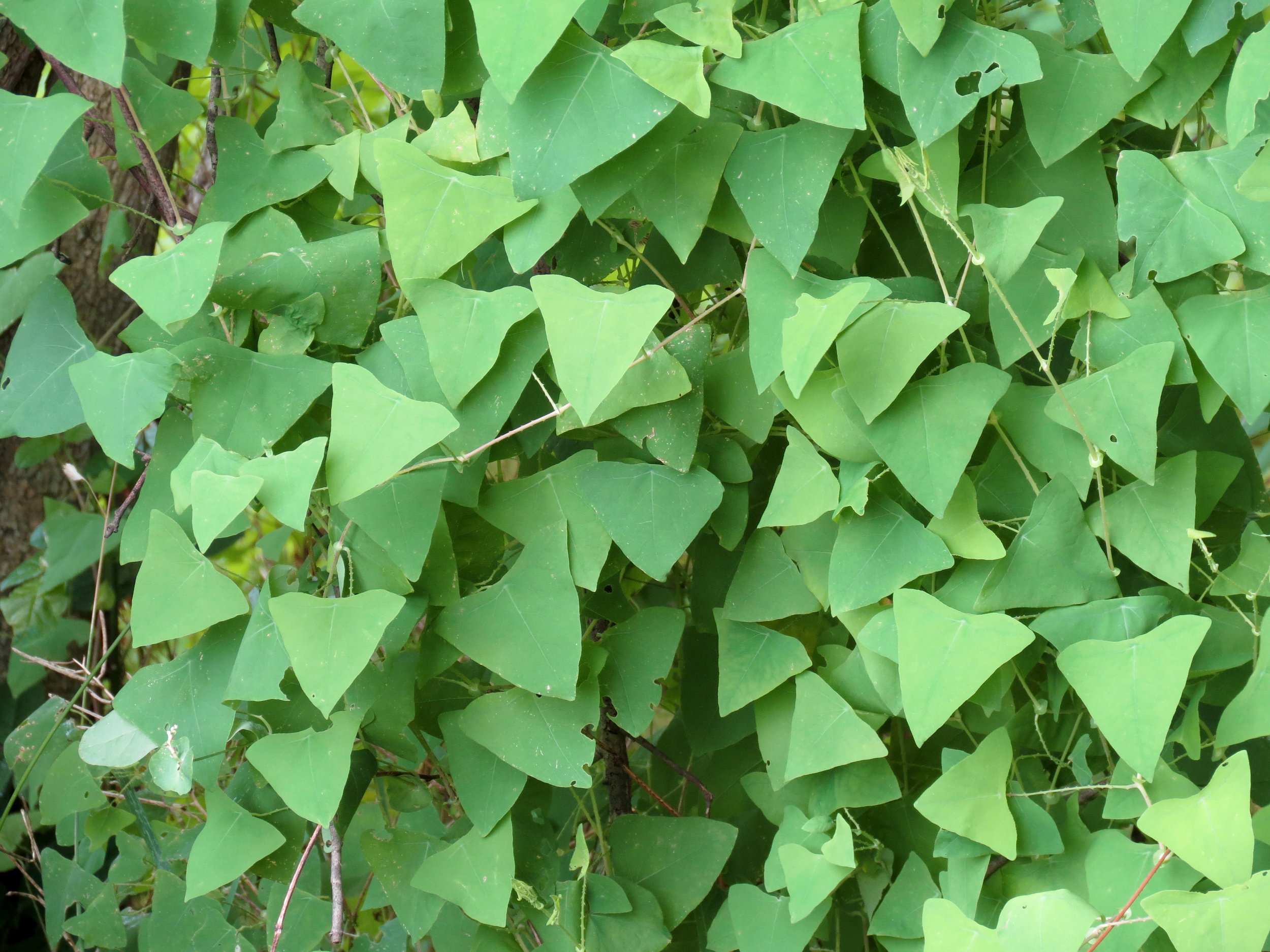
Monday Nature Mystery: What is this? Photo: Vilseskogen via Flickr, CC BY-NC-SA 2.0

Avian Influenza in Ducks in and near Virginia
Several dead ducks have been found in and around Virginia to have avian influenza (AI). These birds include a Green-winged Teal in Virginia Beach, a Lesser Scaup in Kent County Maryland, and 17 ducks of several species in North Carolina.
Photo: Mallard, Northern Pintail, American Widgeon, Steve Lefkovits
Several dead ducks have been found in and around Virginia to have avian influenza (AI). These birds include a Green-winged Teal in Virginia Beach, a Lesser Scaup in Kent County Maryland, and 17 ducks of several species in North Carolina.
The recent detections of a Eurasian strain of AI in these wild birds serve as an early warning system for people in the U.S. to look for groups of dead or sick waterfowl and to protect poultry and pet birds from AI.
If you encounter sick or dead birds in Virginia, please submit an event report here. If you must remove dead birds, wear gloves and a mask, and place birds in a sealable plastic bag to dispose with household trash. (Note: This AI has not been shown to be harmful to humans.)
If you want to track recent reports, you can visit here.
The version of avian influenza we are experiencing is often called Highly Pathogenic Avian Influenza (HPAI) or H5N1, referring to just one of many types of AI. H5 is a highly transmissible form among birds.
AI has the potential to infect humans, but there are few cases among humans so far, and none were serious that we know of. People in close proximity to poultry (mostly chickens and ducks) are most at risk, but we discourage handling of any dead birds without the use of gloves and a mask.
ASNV’s Conservation Grants Blossom
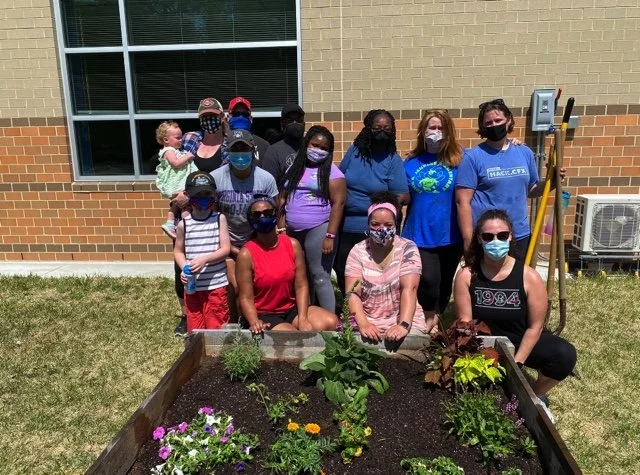
Last year, 11 applicants received ASNV Conservation Grant funds. They are already reaping benefits.
Photo: J. Jenkins Elementary Garden, Amanda Ross
Lisa Mackem
Last year, 11 applicants received ASNV Conservation Grant funds. They are already reaping benefits. In August, parent and student volunteers prepared the Ambleside School (located in McLean) pollinator garden site for planting. James Chen, grant applicant and Ambleside’s Board of Trustee member, said that in one weekend, parent and student volunteers filled ten yard-debris bags with dandelions, clover, and crabgrass. The following weekend, they removed sod and transplanted ornamental grasses. Janet Davis, owner of Hill House Farm and Nursery, selected native plants for their pollinator garden. During the week of September 11, Ambleside students, teachers, and parent volunteers began planting, and added stepping-stones to the center of the garden, providing the students improved access to the plants and pollinators.
At John Jenkins Elementary School in Woodbridge, grant applicant and PTO Board Member, Amanda Ross headed last year’s garden project, which resulted in a community garden. Principal Xanthe McFadden has begun planning for an outdoor classroom there.

J. Jenkins Elementary School Garden, Amanda Ross
Other grant-funded plans are underway. At Barcroft Elementary in Arlington, PTA president and grant applicant, Carrie Lombardi started the school’s Nature Club. Carrie is collaborating with an employee at the Alexandria plant nursery, Nature by Design, to create a sensory garden, minus taste. Wildflowers with seeds that rattle when they bloom will provide sound. Carrie will order her wildflower seeds in March and has already ordered a shed, magnifying glasses, and other supplies.
Peter Jones, ESL teacher and grant applicant at William Ramsay Elementary in Alexandria, was inspired by Doug Tallamy’s books, “Bringing Nature Home” and “Nature’s Best Hope.” He especially admired Tallamy’s pictures of caterpillars. “Caterpillars are so cute. I never realized caterpillars could be cute,” he said. “Insects are plant-specific, and birds eat caterpillars… [the grant] was an opportunity to build a pollinator garden to support insects which in turn support birds,” said Peter. Peter drew in so much wildlife from planting one packet of wildflower seeds at Ramsay that he wanted to expand his work. Ramsay’s principal allowed him to develop approximately 350 square feet of land, so Peter consulted botanist and native plant authority Matt Bright, owner of Springfield’s Earth Sangha Wild Plant Nursery. Bright provided specific plant recommendations. In November, local master gardeners and students volunteered with planting.
Students love the gardens! At Ambleside, students in 5th – 8th grade nature study classes spent 3 days in September planting 132 native plants. Pollinators immediately began visiting. At John Jenkins, students use the community garden for hands-on learning. Barcroft Elementary recently added a teacher who focuses on the outdoors, and that teacher started an environmental club. “The students are excited about cleaning out the beds and planting,” said Carrie. “We really wanted to get the kids outside more. [Barcroft] is a Title 1 school and a lot of kids live in apartment buildings. Some kids don’t even know what an acorn is. By revamping the garden space, maybe teachers will go out and read on nice days and do science projects there if they are studying plants.” Carrie planted an herb garden at Barcroft before applying for the ASNV grant, and sees students run over to smell and touch the herbs during recess. She hopes that the addition of flowers and pollinators will make the garden more inviting and increase the students’ awareness of and desire to learn from nature. Peter has similar goals for Ramsay. “We have a lot of little kids who haven’t really seen a lot of the creatures up close…it’s when they’ve seen things outside that they’re super excited. Kids get more of an appreciation for the importance of nature. It’s what nourishes us and keeps us alive.”

Greg Butcher’s Tricks for a Successful Birdathon
Get ready for Birdathon: Here are the 4 main tricks to seeing the maximum number of species in a 24-hour period!
Photo: Yellow-throated Warbler, Lorraine Minns/Audubon Photography Awards
Greg Butcher
Here are the 4 main tricks to seeing the maximum number of species in a 24-hour period:
Trick #1 is to get up before dawn and bird all day long (and into the night for owls).
Trick #2 is to visit a wide variety of habitat types.
Trick #3 is to find the best birders with good eyes, good ears and good knowledge of the local birds (especially their songs).
Trick #4, especially in the Washington DC region, is to go at the peak of migration.
More and more information exists to help determine the peak of migration in any given place. There is a ton of information on eBird, the website maintained by Cornell Lab of Ornithology that records all birds encountered by eBirders every day at every birding spot in the world. The data are summarized in a variety of easy-to-understand formats, but I haven’t yet figured out the easiest way to study peak migration for species diversity using eBird.
However, in Northern Virginia, we have a golden gem of a resource that highlights anything you might want to know about spring migration of landbirds – it’s a website called MPNature. MPNature has a limitation that you might think minimizes its usefulness – it is focused on the birds (and plants) of one of the smallest and most suburban parks in Northern Virginia – Monticello Park.
Monticello Park has three advantages that make it a wonderful barometer of the state of landbird migration in Northern Virginia and Washington DC:
It is an amazing magnet for birds, with 124 species.
Its spring birds have been meticulously documented since 2005 by Tom Albright and a host of other birders.
And, of course, it has an amazing website, beautifully and purposefully created by Bill Young, Ashley Bradford, and their friends.
Under the “Daily Checklist” tab is a list for each day of April and May of all the birds that have been seen on that date between 2005 and 2018 divided into 4 groups: resident birds, migrants that averaged more than 2 individuals on that date, migrants that averaged between 1 and 2 individuals, and migrants that have been seen in the park on that date, but not every year.
If you are interested in a particular migratory species, there is another section of the website with photos and the earliest, latest and best dates to find that species in the park. The park is a woodland with a stream running through it, so you can’t learn much about waterbirds or grassland birds, but it does have information about 35 species of warblers!
But I had a single goal in mind – I wanted to know THE best date for spring migration in our area, so I reduced all of Tom Albright’s species-specific information to numbers, and here’s what I found out:
The website’s report of expected species begins on April 1, and for the first 24 days in April, you can expect 4 common migrant species that average more than 2 individuals per day. In addition, you have the chance to see about 11 other less predictable migrants on any of those 24 days.
Everything starts to pick up on April 25. All of a sudden, there are 7 common migrants and 14 additional possible species.
The good news is that peak migration lasts for 15 days: May 1 through 15. On any one of those days, you can expect 17-21 common migrants with a possible total of 33-37 migratory species, plus up to 23 of the park’s resident species.
The next week – May 16-22 – isn’t too bad, with 16 common migrants expected on the 16th, dropping to 11 on the 22nd and a possible total of 26-32 migratory species each day.
After May 23, migration drops off sharply, with only 7 or 8 migratory species expected on May 30 or 31.
A few caveats: every day is different! The above numbers are averaged over 14 years, creating great uniformity, but migration depends on the weather. On a beautiful clear night with strong southerly winds, all the migrants might pass us by. Better conditions (for seeing a lot of migrants) are rainy nights with northerly winds that keep migrants from flying too far too fast. But the only way to find out if tomorrow is a great day to see migrants is to get outside and look for yourself.
If you want to see the most landbird migrants in Northern Virginia on a single outing, I suggest you plan to bird between May 1 and May 15, so if you participate in ASNV’s Birdathon, this would be the best time to choose your 24-hour count day. If you just want to see as many spring migrants as possible, you should go out on as many of these days as you can, because some species are early migrants and others are later – and I still have never seen all the expected species on a single day. (Maybe this year!)
Good luck and happy birding!

Common Ravens and their Mythic Duty Across the Pond
This winter I visited England for a month. The most memorable avian species in my opinion – and most symbolic to the country and its culture – was the Common Raven (Corvus corax).
Photo: Common Raven, Deidra Bryant
Deidra Bryant
This winter I visited England for a month. Within this cold, damp country there were many prodigious buildings constructed before the 10th century, and there was so much history within each old city. I happened to stay in the quiet town of Kimbolton where the countryside was home to a variety of foraging and hunting birds. Darting kites, stealthy Barn Owls, and what seemed like a lot of pheasants occupied most of my time when I was relaxing at the house, especially after a good rain. However, the most memorable avian species in my opinion – and most symbolic to the country and its culture – was the Common Raven (Corvus corax). Did you know that until the 16th century, this native species lived close to people because their scavenging habits helped keep the streets clean? Unfortunately, wild ravens were viewed as a threat to livestock in later years and during the 19th century they were systematically hunted all over Great Britain.

Common Raven, Deidra Bryant
There are so many fun and exciting tales regarding these birds in British lore and I encourage you to read them at your leisure. However, there is also a lot of history regarding their presence, care, and interactions with guests at the Tower of London. Legend has it that the ravens living there are to protect the Crown and the Tower and if they were ever to leave, the Crown and all of Great Britain would fall. The resident ravens (Erin, Georgie, Gripp, Harris, Jubilee, Poppy, and Rocky) are all roommates and share a stainless-steel mesh aviary located on the enormous lawn where they play and perch when they aren't walking the grounds. Inside their enclosure, each raven has their own sleeping box with a sealable opening in the back so that they can come and go as they please during the day and be locked safe inside every night. Additionally, they have a “Ravenmaster” dressed in full ceremonial garb who is tasked with their care. As for their diet, it’s a very meaty one consisting of mice, chicks, rats, and assorted raw meats which can become quite costly each year. Fortunately, the Historic Royal Palaces charity which looks after the Tower of London secures an annual budget for the ravens’ care along with support from members, donors, volunteers, and visitors. With shelter, grooming, and food taken care of, these ravens are able to focus on fulfilling their duty as fortress guardians as they have for centuries.
Common Ravens are becoming more prominent in Northern Virginia and some reside here year-round, but they are easily mistaken for crows. Good ways to identify whether a corvid is a crow or a raven are to look for the long fancy throat feathers, the wedge-shaped tail, and the larger and slightly curved beak with nasal feathers of the raven. Another good way to tell the difference between crows and ravens is to listen to their calls: the raven makes deep croaking calls while American Crows make higher pitched calls. Ravens are also much bigger than crows in both size and weight. In fact, when the Tower ravens approached me, they were both friendly/respectful but intimidating.
Ravens are quirky and very intelligent. It’s a shame that people think they are a bad omen in America. They have so much personality and are fun to observe! If you ever catch a raven at a park or on the side of the road, keep your distance and see for yourself.
A Year of Birding “Centuries”
As 2021 began, I was feeling listless – in a general sense and in the bird-list sense. So, I challenged myself to see 100 bird species each month, a “century” challenge, because I wanted to get out of the house and be more active, see more birding friends, and become more purposeful in my birding.
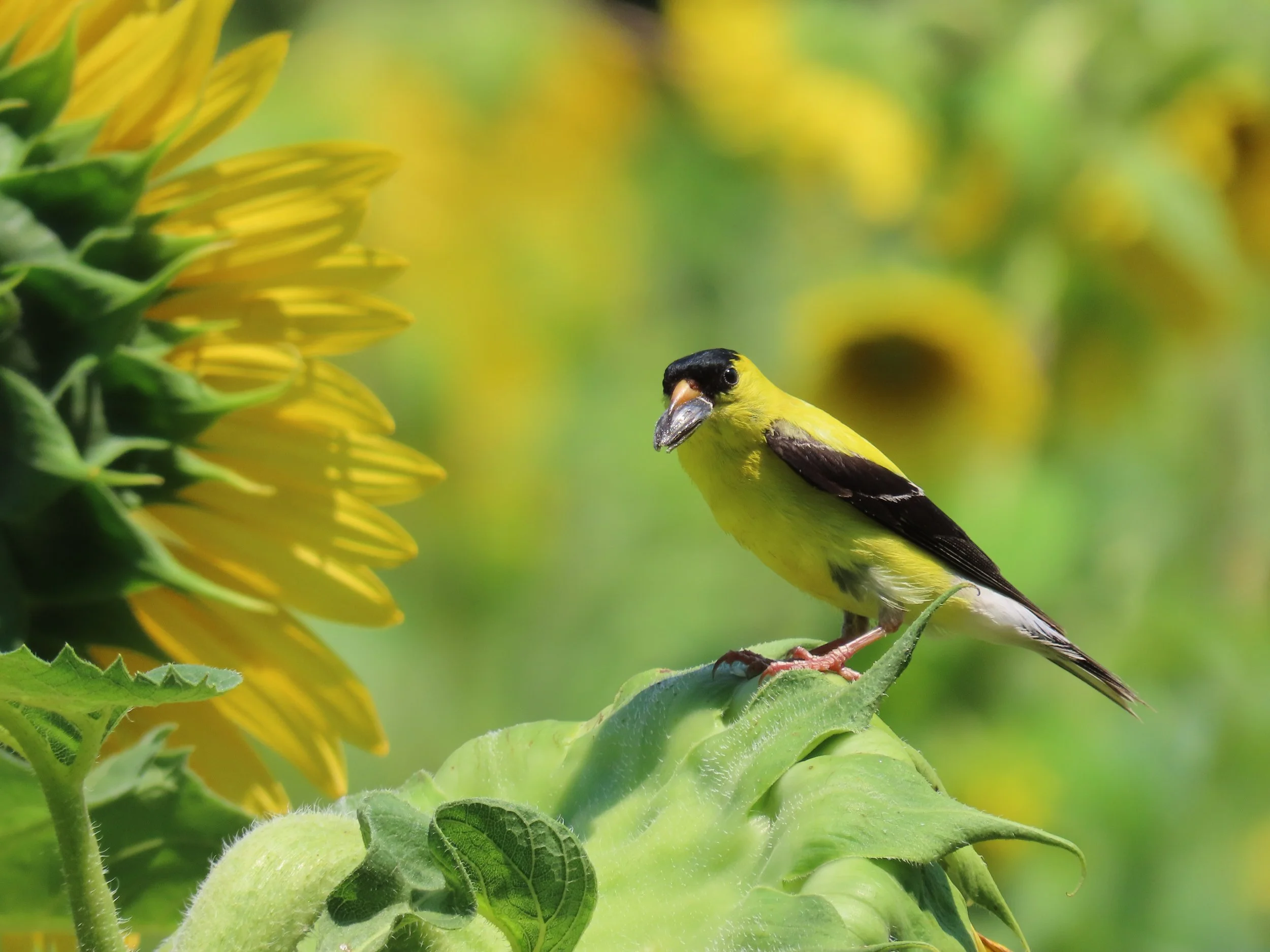
Photo: American Goldfinch on sunflowers, Sycamore Landing, MD, Libby Lyons
Libby Lyons
As 2021 began, I was feeling listless – in a general sense and in the bird-list sense. So, I challenged myself to see 100 bird species each month, a “century” challenge, because I wanted to get out of the house and be more active, see more birding friends, and become more purposeful in my birding.
I can now report success!! From my first bird, the Painted Bunting on the C&O Canal (MD), to my last, an Audubon’s Oriole (TX), I saw 400 species in 2021– and at least 100 per month!! But I was rewarded with so much more than just a count of birds – here’s what I learned:
For me it’s as much about the people as the birds! I loved meeting and befriending so many folks with the same love of birds and nature. I went with them on trips far and near including the ASNV Birdathon and many Northern Virginia Bird Club trips. And I found I still get immense joy in sharing my passion – even with total strangers, e.g., showing my Painted Bunting photo to passersby wondering what all the fuss was about, and pointing out a perfectly camouflaged Wilson’s Snipe at Huntley Meadows and being called a “snipe whisperer.”

Piping Plover chick, Moonstone Beach, Trustom Pond NWR, Rhode Island, Libby Lyons
Birdwatch wherever you go! The pandemic kept me stateside, so I redoubled my efforts to bird more while visiting family. In a Rhode Island wildlife area on a balmy, buggy evening in May I was transfixed by the plaintive call of an Eastern Whip-poor-will, and then just down the road, by the dueling calls of two Chuck-will’s-widows. On my next trip, I delighted in a handful of little brown and white fluffballs, juvenile Piping Plovers, at Moonstone Beach (RI). When we retreated with our grown children to the cool of the West Virginia mountains in early August, I twice trekked off to Cranberry Glades bog, where I was rewarded with 9 species of warblers and 4 species of vireos so easily seen on their breeding grounds! In Olympic National Park in late August, it was a treat to join my brother as he led a boat tour of Lake Quinault and to revel in our shared love of natural history. From Washington I drove through smoky Oregon to stay with family friends and compiled a bird list for their yard among the Northern California redwoods, then headed to Point Reyes Bird Observatory, a birdwatcher’s mecca, which I had not visited in four decades. It is easy to forget how large and variable our country’s habitat is – there was almost no overlap between the West Coast birds I saw and those I had seen back East!
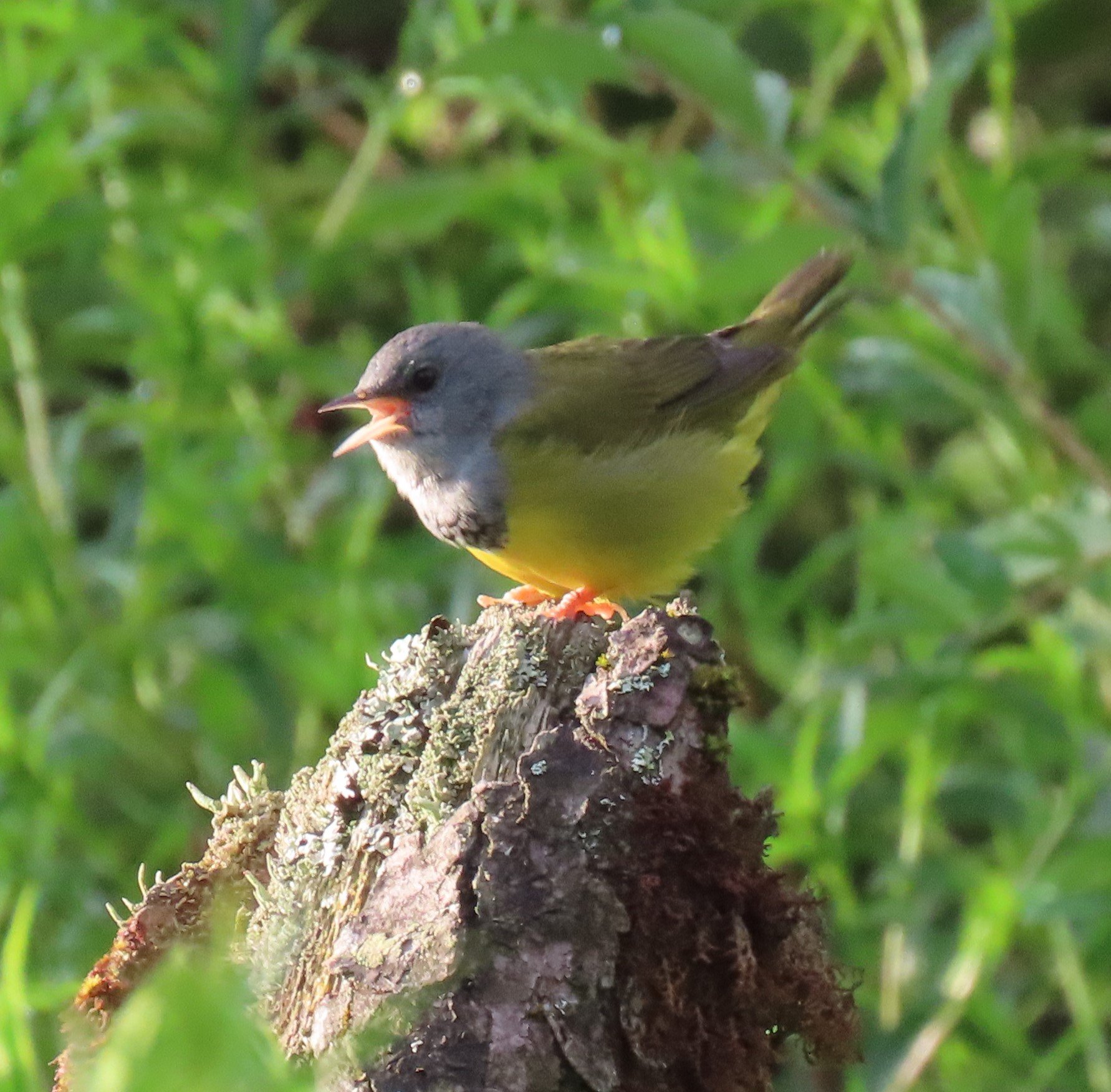
Mourning Warbler, Cranberry Glades Botanical Area, WV, Libby Lyons
Birdwatch all year! Another pleasant surprise was summer birding. I do not handle Virginia’s heat and humidity well, so had birded infrequently from mid-June to late August. I had rarely seen or heard fledglings, with their stubby tails, often murky plumage, and muddled songs! The summer foliage was also a pleasure – swaths of sunflowers in full bloom, replete with American Goldfinches and Indigo Buntings at Sycamore Landing (MD). And the wetlands at Huntley Meadows was transformed by the huge white flowers of the native hibiscus called Swamp Rose-mallow.

Photo: American Goldfinch on sunflowers, Sycamore Landing, MD, Libby Lyons
Even new birders can surprise you! Near November‘s end, I was still far short of my target. I was in a migration void – the passerines had flown south and the waterfowl had yet to arrive. I headed to the coast with my adult son, who is not a birder. He is a serious fisherman – observant, patient, and nature-loving – perfect skills for birdwatching. He not only spied a Black Skimmer (“That bird can’t keep its head up!”) at India River Inlet (DE), but he also spotted a sandbar harboring American Oystercatchers and Brants. As we chatted about why we loved our respective hobbies – he framed birdwatching in a way novel to me, perhaps due to his years studying economics. One reason birders are so friendly, he noted, is that sharing information about a target species doesn’t deplete the resource the way it might for fishing. Not only that, sharing makes you feel good, it helps the other person, and it increases the chances that they might share information back.

LeConte’s Sparrow, Sully Woodlands Park, VA, Libby Lyons
Be opportunistic and persistent! I took advantage of “lost” birds last year. There seemed so many – was it because so many of us were out birding, or just because the birds were roving farther afield? Certainly, the Green-tailed Towhee in Sky Meadows State Park (VA) and the Kirtland’s Warbler in Baltimore (MD) were far from their usual stomping grounds (West Coast and Michigan, respectively). And I was persistent – it took two attempts each to see that Green-tailed Towhee and the skulking, well-camouflaged LeConte’s Sparrow at Sully Woodlands, and three trips to see my nemesis bird, another skulker, the Connecticut Warbler, in Rock Creek Park (DC). Alas, it is valuable to temper persistence with common sense; it was a lot easier to spot a Ross’s Goose (white, slightly smaller than a Snow Goose) among a few Canada Geese at Mount Trashmore Park (VA) than among 4,000 white Snow Geese on a Delmarva field!
What next? I am not sure whether I will continue with the challenge in 2022. I hope to travel farther afield when COVID allows. But as the climate crisis looms, I am also trying to birdwatch with a smaller environmental footprint. I think this will mean more carpooling, not making long trips just to get the last few birds for the month, and exploring new places to birdwatch close to home. I don’t think I will ever tire of the Sandhill Cranes at Algonkian, the warblers at Monticello Park, the woodcock at Huntley Meadows, nor the rafts of winter waterfowl off Mason’s Neck. Join me!

Easy Plant Combinations for your Yard
Are you ready to brighten up your yard but not spend hours researching plant choices? You may be a candidate for a native plant “package” that includes plants that thrive in similar landscape conditions.
Photo: Native garden, Sheryl Pollock
Plant NOVA Natives
Are you ready to brighten up your yard but not spend hours researching plant choices? You may be a candidate for a native plant “package” that includes plants that thrive in similar landscape conditions. Grouping them together will quickly beautify your property while benefitting the local ecosystem.

Native plant “package” example from Plant Nova Trees
Trees, shrubs, and groundcovers are the backbone of any landscape and are in fact all that most people want to bother with. You can find combinations for nine common situations on the Plant NOVA Trees website. If, for example, the ground in your yard gets soggy at times, you might choose a Wet Areas package and include a Sweetgum tree for shade, American Hornbeam in the understory, and a couple Smooth Hydrangea shrubs. If you underplant them with Golden Ragwort, you will have an evergreen groundcover that has the added bonus of bright yellow flowers for two months in the spring. If you don’t have room for a canopy tree, choose the Small Space Combo instead and pair the Common Witch Hazel shrub with its November blooms with the shorter spring-flowering Virginia Sweetspire.
When practical, there is a great deal to be said for planting each member of a grouping at more or less the same time, minimizing root disturbance by installing the specimens when small. Whether planting all at once or in stages, though, the healthiest landscape is one that is densely planted with native species, healing the soil and providing food and shelter from the ground to the canopy for our local birds, fireflies, butterflies, and other residents. Professional gardeners of course need to be adept at exactly matching plants to the microclimates within a landscape, but the rest of us can do quite well just using the obvious sun, soil, and water conditions as our guide.
Those with a flower garden in their yard can speed up its evolution into a native paradise by choosing combinations that will result in blooms over the course of the season. In sunny areas, if you are guided by the spring, summer, and fall packages on the Plant NOVA Natives website, the result will be a stunning combination of well-behaved plants that will attract butterflies throughout the growing season. Suggestions for shady or wet areas are included, as are ornamental grasses. You can also find locations of garden centers that stock native plants.

No Car – No Problem!
You might think that none of the best birdwatching spots are accessible if you don’t have access to a car. Not so in Northern Virginia! Check out our new online list of birding hotspots accessible by public transit.
Photo: Fairfax Connector bus
Northern Virginia Public Transportation Can Deliver you to E-Bird Hotspots!
You might think that none of the best birdwatching spots are accessible if you don’t have access to a car. Not so in Northern Virginia! To reduce any transportation barriers to birdwatching, or for those who just want to lower your environmental footprint, ASNV went looking for e-Bird hotspots that you can reach by bus and/or Metro Rail. We found more than a dozen such spots! Be sure to check the transportation system’s website before you go – and beware that some of the buses are commuter buses so only run on weekdays and/or at certain times of the day. You Find a chart of public transport routes near eBird hotspots on our website here.

March 2022 Bird of the Month
In downtown Richmond Peregrine Falcons have been nesting since 2003. Over the years the Virginia Department of Wildlife Resources and their partners have monitored them and beginning on March 1 you’ll be able to watch them too!
Photo: Peregrine Falcon, Lorelei Stierlen/Audubon Photography Awards
In downtown Richmond Peregrine Falcons have been nesting since 2003. Over the years the Virginia Department of Wildlife Resources and their partners have monitored them and beginning on March 1 you’ll be able to watch them too via the Richmond Falcon Cam. If you want to keep up with their progress, subscribe to get the latest updates from the nest.
Last year’s falcon pair successfully fledged 4 chicks from their nest box on top of the Riverfront Plaza building. To learn more about this remarkable species scroll through the DWR Falcon Cam webpage to links for more information on the Richmond falcons as well as Peregrine Falcons in Virginia, and the extensive conservation efforts to restore them after their U.S. populations were devastated from 1950 to 1970 by DDT poisoning.
Although not common in Northern Virginia, there have been other successful Peregrine Falcon nest sites. In 2019 ASNV published a story about the falcons who have successfully nested in Reston Town Center since 2015.

Peregrine Falcon, Steven Sachs/Audubon Photography Awards

2021 Manassas-Bull Run Christmas Bird Count
The 40th Annual Manassas-Bull Run Christmas Bird Count on December 21, 2021 was conducted for the 2nd year following special Covid-19 protocols.
Photo: Tufted Titmouse, Stephanie Dean
Phil Silas, Manassas-Bull Run Compiler
The 40th Annual Manassas-Bull Run Christmas Bird Count on December 21, 2021 was conducted for the 2nd year following special Covid-19 protocols. The participant count was 101 field observers plus 3 feeder watchers as a limited number of new volunteers joined the count. We managed to safely count nearly 34,000 birds which is 11,500 more than last year, thanks in great part to over 10,000 Common Grackles. These grackles were observed on just a few routes, but those who saw them won’t soon forget the spectacle of birds massing together in loud, tight flocks at ground level and up to the treetops swirling like tornadoes. The overall species count was 78 which is the average for the life of this count. We again had to forego our traditional lunch in Ellanor C. Lawrence Park due to the pandemic. The birding conditions were favorable in that it stopped drizzling by about 7:40 AM and remained in the low 40s with light winds under an overcast sky.

Common Grackles, Sujata Roy

Merlin, Tim Boyer/Audubon Photography Awards
Species that were observed in only one of our six sectors included the American Pipit, Merlin, Gadwall, American Woodcock, Brown Thrasher, Brown-headed Cowbird, Savannah Sparrow, White-crowned Sparrow, and Eastern Meadowlark. Several species were observed in only two sectors, including Red-breasted Nuthatch, Great Horned Owl, American Kestrel, Double-crested Cormorant, Herring Gull, Killdeer, American Black Duck, Bufflehead, Chipping Sparrow, and Gray Catbird.
Other highlights included all-time highs of White-throated Sparrow at 1,477, and Hermit Thrush where 45 were observed; easily surpassing the 30 recorded in 1998. The Brown Creeper count of 34 passes the previous record of 31 observed in 1996. Yellow-bellied Sapsuckers at 55 tied the count of 2017. Eastern Bluebirds had their highest count of 508 since our all-time high of 510 in 2014. American Kestrels reached double-digits of 10 for the first time this century.

Eastern Bluebird, Stephanie Dean
There were three count week observations which don’t register in the official species number but are notable. These were Tundra Swan, Pine Warbler, and Green-winged Teal. The teal was the rare Eurasian sub-species and seen on the Middlesex Drive Pond southwest of Dulles Airport in Loudoun County.
Full results for the count can be found here.
Thanks to all for safely participating in this event, and we look forward to a more traditional event with a few more birders on Sunday, December 18, 2022!
Here are some photos taken by participants in this year’s count. Click any image for a larger version.




2022 Scholarship Application to Hog Island Educator’s Week Now Open
Each year Audubon Society of Northern Virginia offers a full scholarship to Sharing Nature: An Educator’s Week at Hog Island Audubon Camp in coastal Maine.
Photo: Hog Island, Phoebe Riegle
Each year Audubon Society of Northern Virginia offers a full scholarship to Sharing Nature: An Educator’s Week at Hog Island Audubon Camp in coastal Maine. Hog Island Audubon Camp has offered environmental education programs for adults, teens, families, and conservation leaders since 1936. While there, educators learn interdisciplinary hands-on methods and approaches to environmental education while immersed in the natural world.
Applicants must be public classroom teachers, specialists, or school administrators in the ASNV chapter territory (Counties: Arlington, Fairfax, Fauquier, Loudoun, Prince William, Rappahannock and Stafford. Independent cities: Alexandria, Fairfax, Falls Church, Fredericksburg, Leesburg, Manassas and Manassas Park.)
Sharing Nature: An Educator’s Week will be held July 17-22, 2022!
To apply, please complete the online application and submit two letters of recommendation no later than February 28, 2022. Please see the application for additional details, including post-camp requirements.

Celebrating the Work of American Scientist, George Washington Carver
While he is famous for his research in food science, in particular his bulletin for 105 recipes using peanuts, George Washington Carver’s true legacy is much greater.
Photo: Library of Congress
Tina Dudley, in honor of Black History Month
George Washington Carver served as head of the Agriculture Department at Tuskegee Institute (now Tuskegee University), where he taught agriculture and botany. His work in soil rejuvenation and crop rotation were hugely impactful. While he is famous for his research in food science, in particular his bulletin for 105 recipes using peanuts, his true legacy is much greater.

George Washington Carver, seated front center, with fellow faculty of Tuskegee Institute in 1902, photograph taken by Frances Benjamin Johnston. Source: Library of Congress.
Carver was one of the first scientists to look at systems through the lens of biomimicry; he observed that nature produces no waste – what is consumed is returned to the earth in another usable form. He saw the interconnectedness of nature and taught about the importance of protecting the earth and its inhabitants.
He felt connected to nature throughout his life, and had a deep appreciation for birds and other wildlife. “The singing birds, the buzzing bees, the opening flower, and the budding trees all have their marvelous creation story to tell each searcher for truth . . . from the frail little mushroom, which seems to spring up in a night and perish ere the morning sun sinks to rest in the western horizon, to the giant redwoods of the Pacific slope that have stood the storms for centuries.”
Mark D. Hersey, in “My Work is That of Conservation: An Environmental Biography of George Washington Carver,” describes how Carver’s work in agricultural science helped to undermine the pillars of Jim Crow. At that time, Southern landowners leased land to Black farmers for a fee or a cut of the crops, and one bad season could result in ruinous debt. Carver shared free information with farmers about how to make a sustainable life out of the land, through crop rotation and composting. That was the reason for the peanuts – which thanks to their symbiotic relationship with bacteria can produce their own nitrogen and thrive in depleted soils. Peanuts could also be grown in the same fields as cotton due to different growing seasons.
Carver demonstrated the connection between the health of the land and the health of the people living on that land – setting an important foundation for environmental justice. His rise from slavery to academic acclaim has inspired millions. He is celebrated with a National Monument in Missouri and numerous books and documentaries about his life. Check out this free-to-watch documentary about his life to learn more.
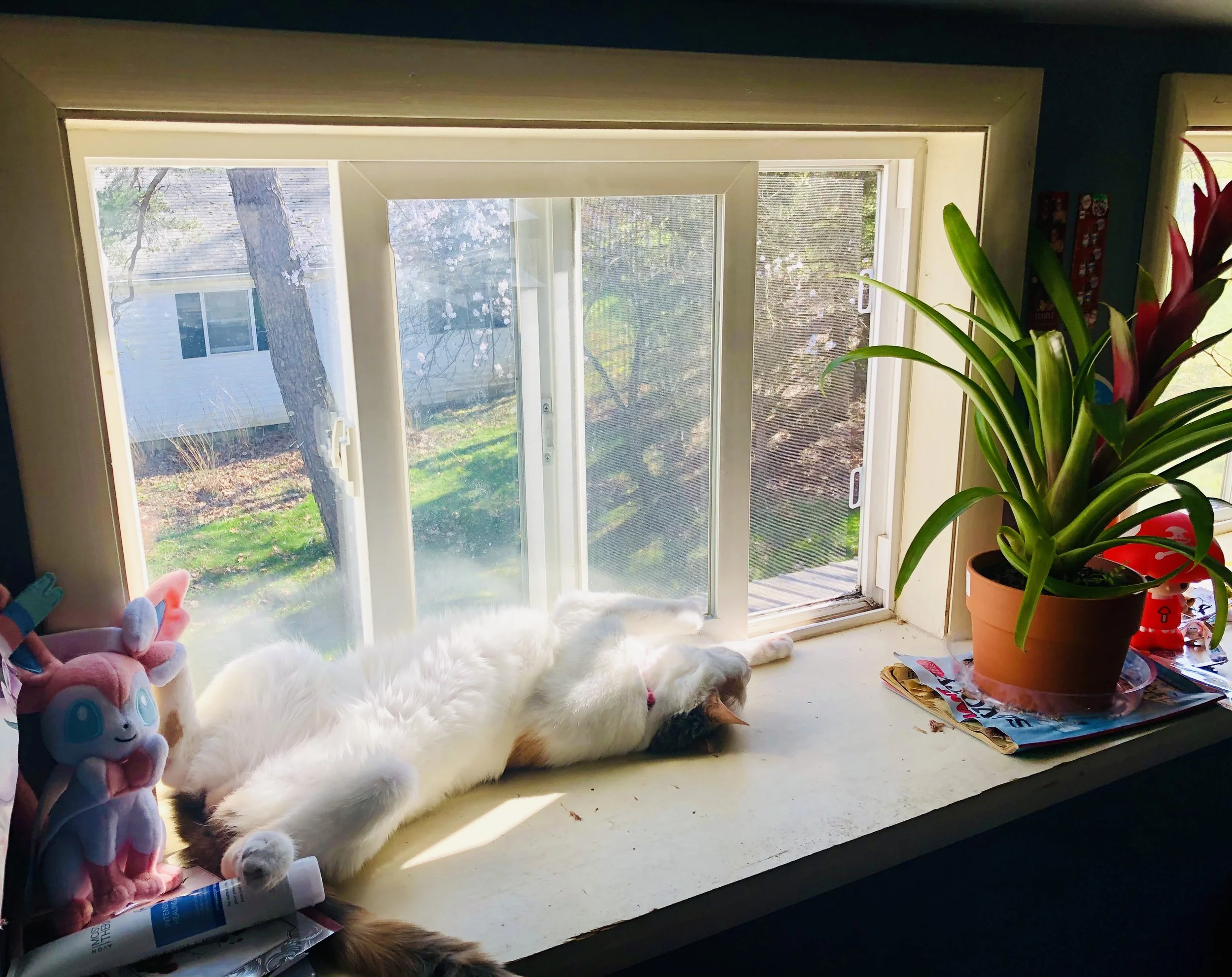
Creative DIY Projects for Indoor Cats
If you or someone you know received a cat or kitten for the holidays or even earlier during the pandemic, and are trying to incorporate the outdoors into your little one’s life, I suggest purchasing or even building a screened outdoor area (catio) so that your pet can still get fresh air without threatening native wildlife.
Photo: Deidra Bryant
Help Reduce Domestic Cat Predation and Feline Anxiety
Deidra Bryant
If you were to ask me if I was a “dog person” or a “cat person” I would hands down say I’m the latter. I have a diluted calico of my own and my significant other has two cats – a Tuxedo and a Chartreaux. Several of my friends and coworkers are cat owners and most of them keep their cats indoors, but I know a few people in my hometown who have cats that roam around the neighborhood. I am partial to having my cats kept safe indoors, but there are too many individuals who feel that cats should be free to explore their territory, even when their owners are not at home.
Too many native birds fall victim to predation from outdoor domestic cats. In fact, in the US alone, tens of millions of outdoor cats kill over 2 billion birds annually. The mere presence of cats in an area with bird activity has been shown to decrease nesting success and the overall health of nestlings. This is due to adult birds being hesitant or completely absent from their own nests for prolonged periods of time, affecting how often they feed their young offspring. Additionally, even after the threat is removed, studies have shown that community dynamics become altered resulting in smaller local populations, smaller clutch sizes, and reduced nest building activity in the cats’ former territory .
If you or someone you know received a cat or kitten for the holidays or even earlier during the pandemic, and are trying to incorporate the outdoors into your little one’s life, I suggest purchasing or even building a screened outdoor area (catio) so that your pet can still get fresh air without threatening native wildlife.
I built a catio last year using PVC pipes, 2x4s, sisal rope, fake grass, and screen door mesh. My cat Nanako absolutely loved it! She was able to see squirrels and birds from a unique vantage point on our front porch and our young and old neighbors would come and say “hi” to her. Please note: I used to live in a partially secluded community which was up a mountain and didn’t require permits to attach a catio to a house. On my days off I would frequently read outside or do yard work. Nanako would sit, nap, or play in her catio while I was out front with a snack and a good book, or tending to my garden. If you plan on spending a significant time away from the house and do not feel comfortable putting your pet on display or if your HOA won’t allow you to build such a structure that faces the street, I recommend building one in your backyard but check your HOA requirements first.

Nanako, safely inside! Deidra Bryant
To entertain your cat indoors, you might incorporate unique shelving that allows your cat to lounge many feet off the ground. Did you know that cats absolutely LOVE being able to observe areas from high up? Not only does it provide enrichment by engaging their climbing muscles, but it makes them feel safe knowing they have an advantage for spotting danger from up above. I personally love the idea of floating shelves and wall perches, but please make sure your cat is able to climb safely.
Lastly, if catios and floating cat perches aren't for you, or you aren’t able to install them in your home, you can simply set up a quiet section of a room that has access to a window. You can spray pleasant scents and place treats there so that your cat will associate your departure for the day as a good thing and assuage any anxiety that may come from you not being at home.
Keeping our feline family members occupied while we slowly return to the office is very important, and bird/squirrel watching – I like to call it “cat TV” – is the perfect thing to keep them engaged. Most importantly, it’s safe for your pet and the native wildlife near your home.

Landscaping with Nature
In the winter, as you drive across the American Legion Bridge or across many of our creeks, you may be startled to see large numbers of trees with bright white trunks and branches.
Photo: American Sycamore trees, Margaret Fisher

American Sycamore trees, “Ghosts of the Woods,” Margaret Fisher
In the winter, as you drive across the American Legion Bridge or across many of our creeks, you may be startled to see large numbers of trees with bright white trunks and branches. You may worry that climate change has struck and left them bleached. Worry no more: those are American Sycamore trees, sometimes known as the Ghosts of the Woods, whose bark normally peels as the trees get taller, leaving a white and brown pattern that shows best once the leaves have fallen. These congregations of sycamores help us notice that our seventy or so locally native tree species are not randomly distributed throughout the woods but rather are living in natural plant communities. As our region ramps up the Plant NOVA Trees campaign, understanding natural communities can help us design our landscaped environments to better support our local ecosystem.
Sycamores and other trees that live in wet soil can survive there because their roots can tolerate low oxygen conditions. They don't necessarily need a lot of water and can thrive in the low oxygen conditions of many of our dry, compacted lawns. Unlike non-natives, these native trees will provide food for vast numbers of caterpillars and thus for the birds and other critters that eat insects. The contributions of native trees to the food web, combined with the increasing numbers of beautiful species available for sale, are why they are the default choice in all but the harshest of our built environments. Planting any native tree is a very good way to contribute to our region’s effort to expand the tree canopy.
Having said that, though, is it possible for us to do even better by taking plant communities into account? Again, trees are not randomly distributed in the woods, and neither are the birds and other critters that depend on combinations of specific plants. It is not within our power to fully restore the ecosystems which we have destroyed, but we might at least nudge them in the right direction by grouping plant species that would naturally live together on the terrain we have occupied.
If your yard has wet or compacted soil, an American Sycamore could be a great choice. But what if you live on a dry hillside and your soil is not compacted? In that case, you might prefer to choose trees and accompanying understory plants that are more representative of a hillside natural community. For example, Mockernut Hickory, Flowering Dogwood and Maple-leafed Viburnum underplanted with Virginia Creeper and Blue-Stemmed Goldenrod would give you the start of an Acidic Oak-Hickory Forest, a very common plant community around here.

Woodland plant community, Arlington Public Library
Dozens of plant communities have been identified in Northern Virginia, but only a few of them are very common. How can you tell which is most appropriate for your property? This is no easy task, even for experts, not only because it is highly technical but because humans have altered the landscape in many places beyond recognition. However, you might be able to make a reasonable guess based on the elevation of your yard in relation to the nearest creek. You can then look at a plant list for the relevant community and decide which ones you might like to add to your property, given its current light, soil and moisture conditions. Just as in nature, as your trees grow and shade out the understory, sun loving plants will give way to shade tolerant ones, providing future residents with a haven from the heat, far more useful than a sun-scorched lawn in this warming world.
Details about the plant community concept (and about how you can find someone to help you implement it) can be found on the Plant NOVA Natives website. Even if you have no planting plans, if you have a passing familiarity with our native trees and other plants, reading about our natural communities can add to your pleasure as you walk through our woods and notice the patterns.

Observations from Meadowood: February 2022
Judy Gallagher continues to survey Meadowood Recreation Area. Here are some findings from her most recent survey.
Photo: Mourning Cloak, Judy Gallagher
Judy Gallagher is an ASNV board member and a regular surveyor of local wildlife who also captures photos of what she sees, in particular the less common species. Here are some observations from her most recent survey.
By this time of year, I am desperate to see signs of spring, especially butterflies. Like all insects, butterflies are cold-blooded, and most adult butterflies feed on nectar or pollen which is not easily available at this time of year. Fortunately, we don't have to wait until spring to see Eastern Commas, Question Marks, and Mourning Cloaks.
All three butterflies overwinter as adults, sheltering in tree cavities, under bark or shingles, or anywhere that keeps them protected from wintery temperatures and precipitation. They survive the winter by producing chemicals called glycerols in their blood. Glycerols act like anti-freeze, enabling the butterflies to be more freeze tolerant. On sunny fairly warm winter days, they emerge from their shelter to feed on tree sap from twigs, branches, and bark damaged by winter weather. They can also feed on sap from trees recently felled by beavers. They shiver prior to emerging from their shelters, which can raise their body temperature by up to 15 degrees.

Question Mark with open wings, Judy Gallagher

Question Mark with closed wings, Judy Gallagher
The Question Mark stands out against bark, but when its wings are folded it looks like a dead leaf, blending in well against its background. With its wings like this, you can see the white punctuation mark that gives this species its name.

Eastern Comma with wings open, Judy Gallagher

Eastern Comma with wings closed, Judy Gallagher
Whether or not a species is camouflaged depends on its background. Although this Eastern Comma would not blend in with bark, it is cryptic against an autumn leaf background.
This species also looks like a dead leaf when its wings are closed. Once again, you can see the punctuation mark that gives it its name.

Mourning Cloak with wings closed, Judy Gallagher

Mourning Cloak with wings open, Judy Gallagher
The Mourning Cloak is brightly colored up close but looks dull at a distance.
It too looks like a dead leaf with its wings closed, a good strategy on a tree trunk but not effective on the shirt of one of our ASNV survey participants. The butterfly's body is exceptionally hairy which helps insulate it from the cold. When you're out this month on a warm sunny winter's day, look for these butterflies in a sun-dappled opening in the woods.
View all of Judy’s Observations from Meadowood articles here.
February 2022 Bird of the Month
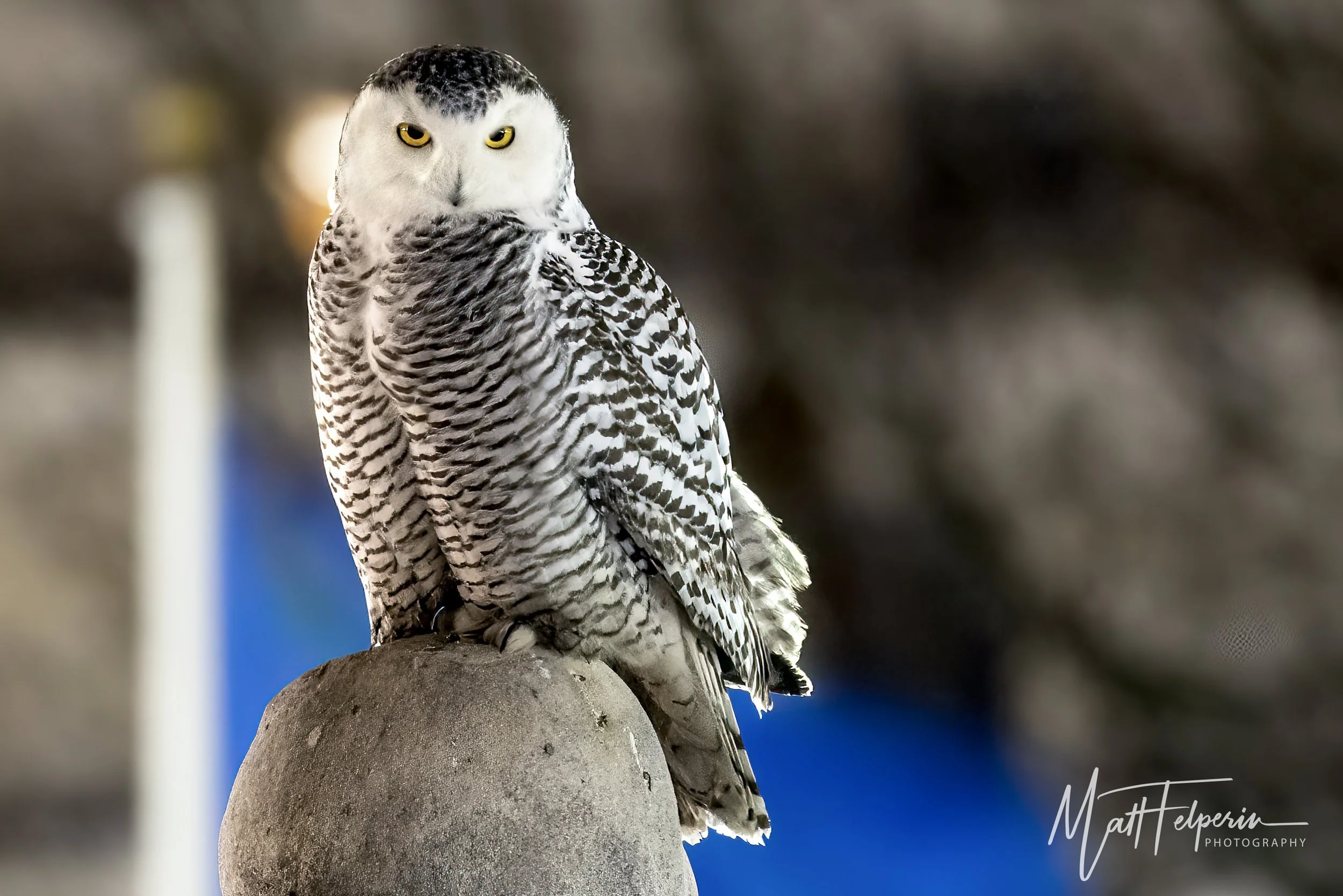
Jessica Bigger, who writes our Bird of the Month feature, is away, so we’re bringing you a recent story from the Washington Post about an infrequent visitor from the Arctic – a Snowy Owl.
Photo: Snowy Owl, Matt Felperin
Jessica Bigger, who writes our Bird of the Month feature, is away, so we’re bringing you a recent story from the Washington Post about an infrequent visitor from the Arctic – a Snowy Owl.
NOVA Parks Roving Naturalist Matt Felperin was interviewed for the article which also featured several of his photographs including this one of the young female owl at Union Station.
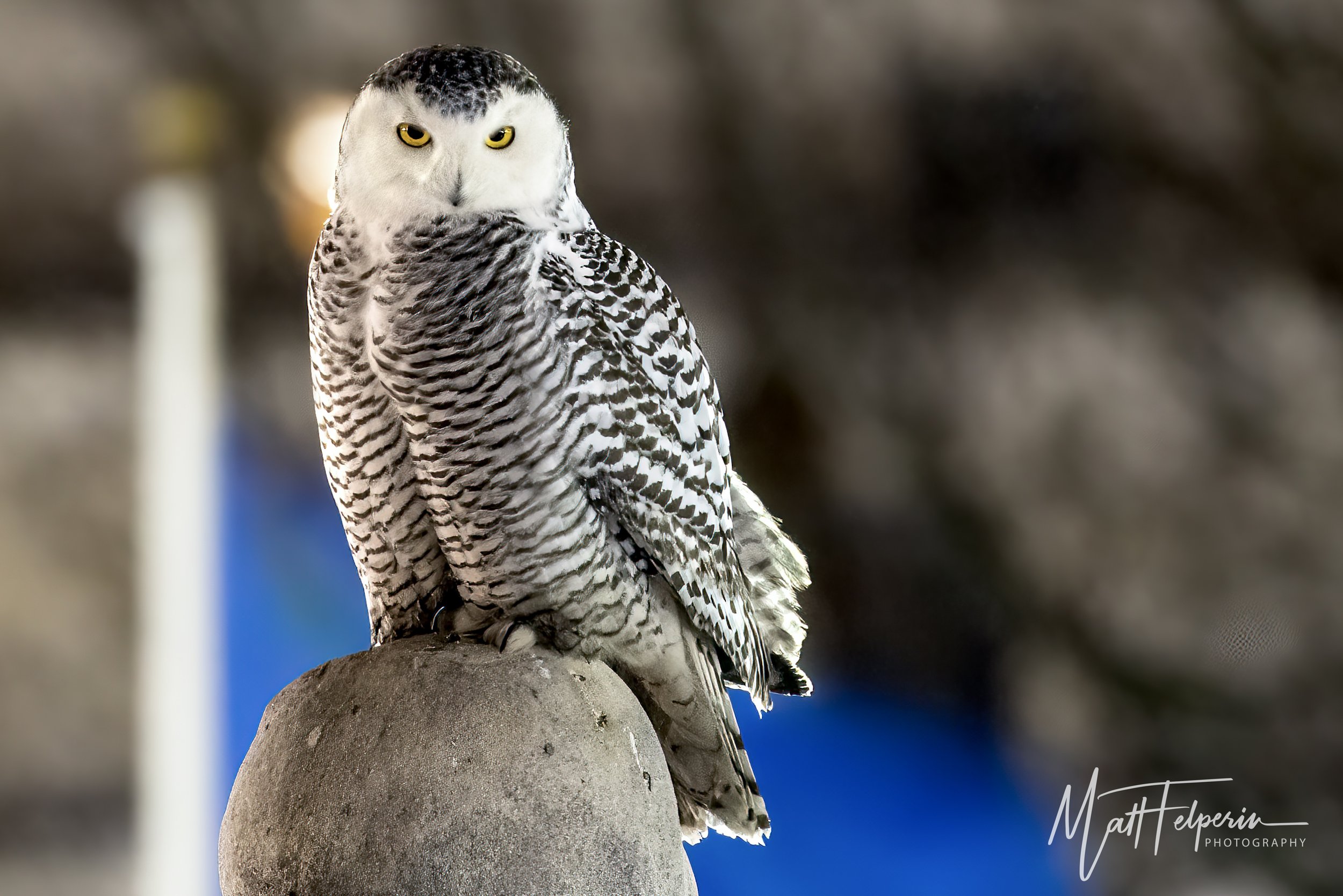
Snowy Owl, Matt Felperin