
A Closer Look: Nature All Around Us
by Judy Gallagher, NVBA Board Member
The World of Carrion Beetles
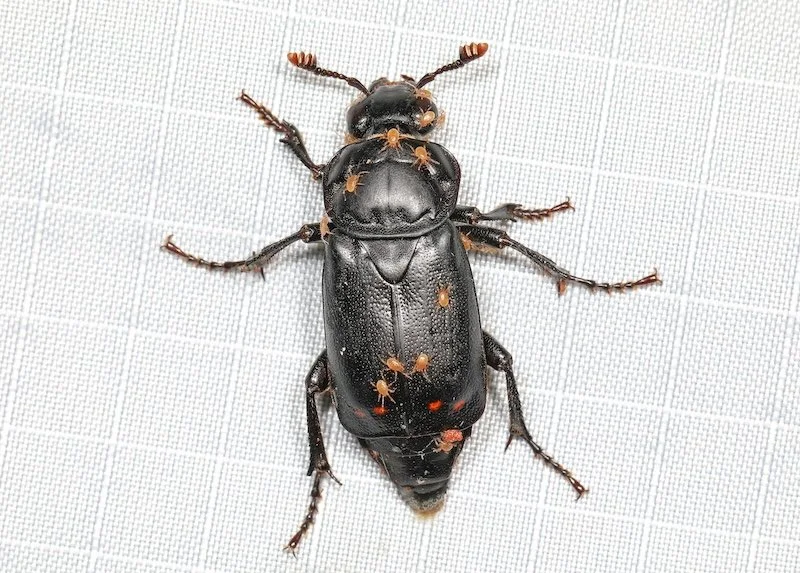
Pustulated Carrion Beetle (Nicrophorus pustulatus), covered with phoretic mites. Photo: Judy Gallagher
I recently took a picture of an insect new to me, intriguingly named the Pustulated Carrion Beetle. It is the inspiration for this month's column.
Carrion Beetles and Burying Beetles were in their own family, Silphidae, until 2024, but molecular and morphological analysis now places them in subfamily Silphinae of Rove Beetles. There are fewer than 200 species of Carrion and Burying Beetles worldwide, and most of them live in temperate climates. Scientists postulate that ants, flies and other carrion feeders outcompete them in the tropics. All Carrion and Burying Beetles have wings, but some have lost the ability to fly. Ones capable of flight usually feed on vertebrate carcasses, and those that can't fly mostly dine on soil invertebrates.
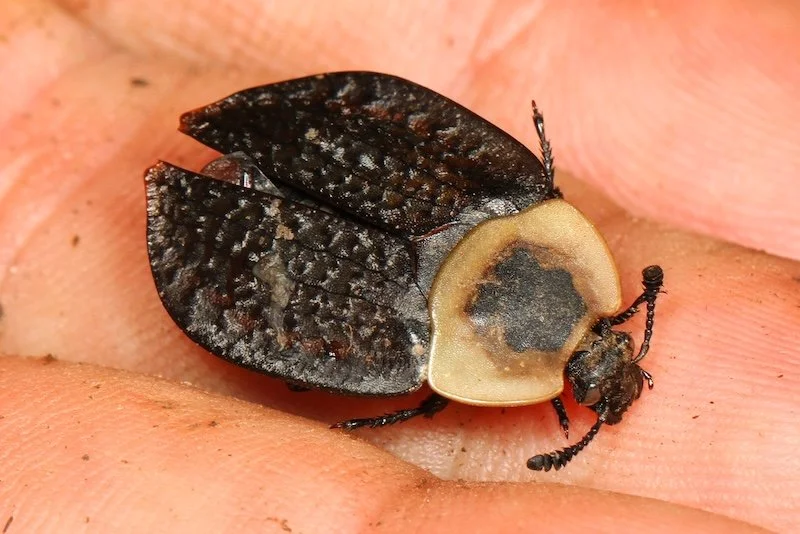
American Carrion Beetle (Necrophila americana) showing its chemoreceptor-laden antennae. Photo: Judy Gallagher
When an animal dies, chemicals are released. Carrion and Burying Beetles have chemoreceptors on their antennae that are able to detect these chemicals, and they can locate carcasses from a fairly long distance. They also have organs on their palps (near their mouths) that can detect odors at a short distance.
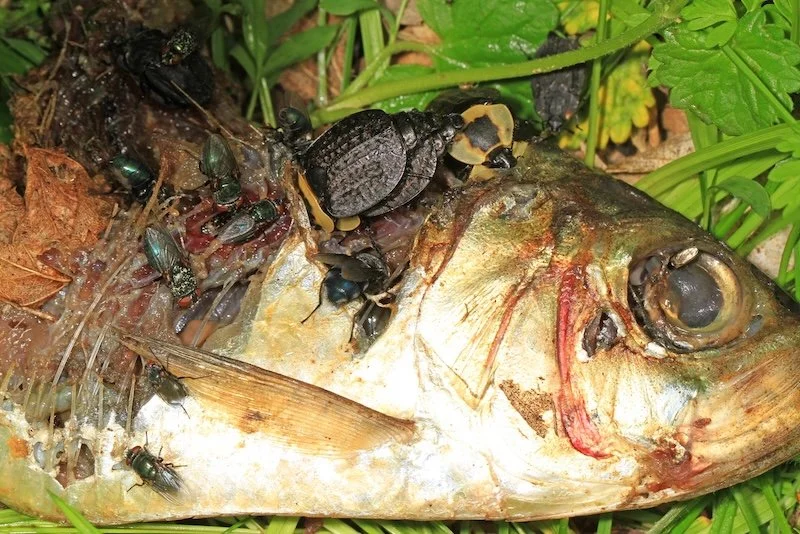
American Carrion Beetle (Necrophila americana), Ridged Carrion Beetles (Oiceptoma inaequale) and flies on a fish carcass. Photo: Judy Gallagher
There are two tribes of Carrion and Burying Beetles, Silphini and Nicrophorini. Silphini species are carrion beetles that usually lay eggs on large dead animals. They don't normally care for their young.
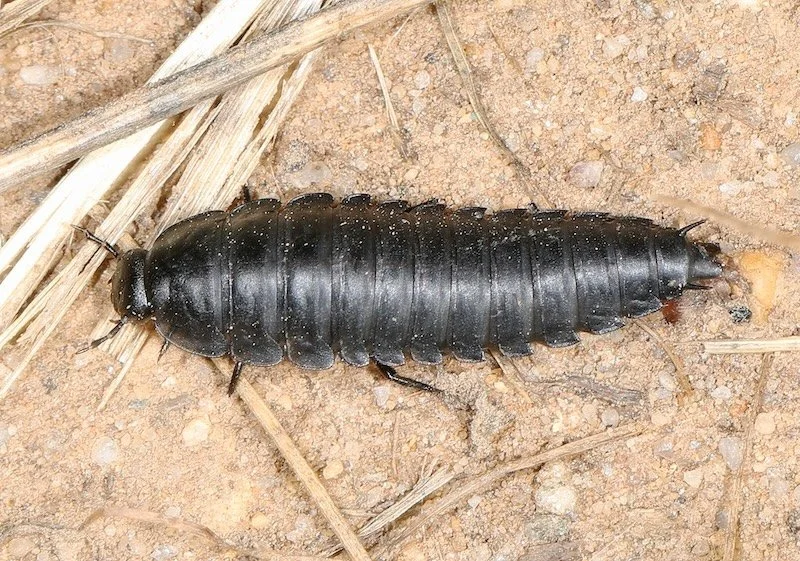
American Carrion Beetle larva (Necrophila americana). Photo: Judy Gallagher
Silphini larvae eat the decaying carrion, and the adults mostly eat maggots from flies that have laid eggs on the carrion. Some species can defend themselves by spraying noxious chemicals from their rectal glands.
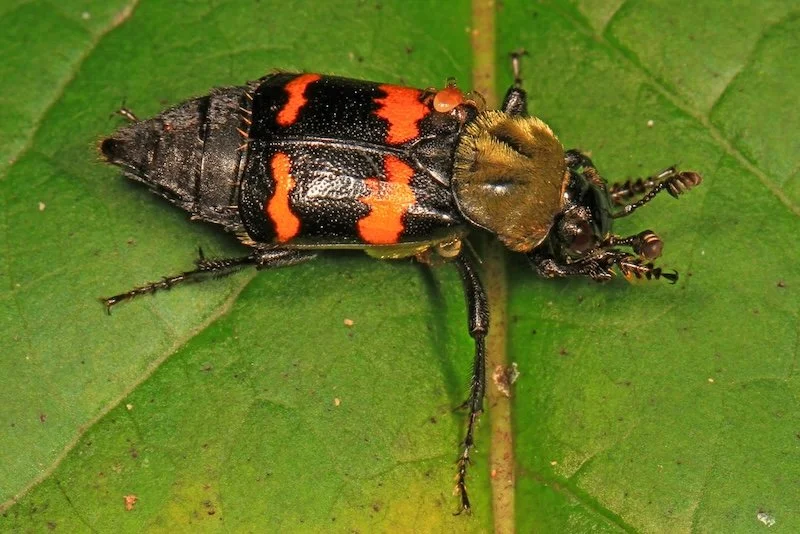
Tomentose Burying Beetle (Nicrophorus tomentosus). Photo: Judy Gallagher
Nicrophorini, or burying beetles, typically breed on small animal carrion. When they find a carcass, they bury it by unearthing the soil beneath it. This keeps other insects like flies from eating and laying eggs on the carcass. The beetles work singly or coordinate with other individuals to bury the carcass and defend it from competitors or parasites. They remove the external covering of the carrion, for instance fur, and then cover the remains with oral and anal secretions that keep microbes from growing. The female lays eggs, and the parents defend the larvae and the carrion ball. Parents sometimes feed the larvae by ingesting carrion material and regurgitating it for the larvae. Parents may also ensure that there is enough food for the larvae by selectively eating some of the larvae if there are too many for the available food supply. In the absence of carrion, some burying beetle species are also known to dine on decaying vegetables such as beets, squash and turnips, and can be minor agricultural pests.
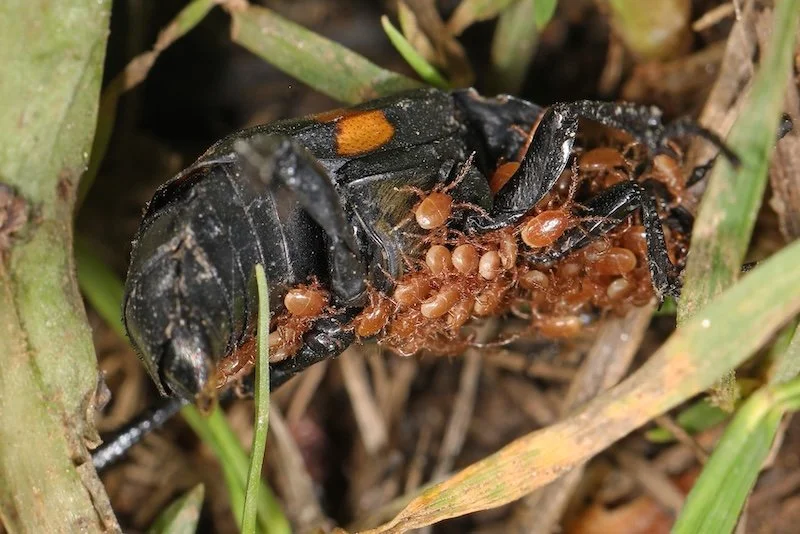
Sexton Beetle (Nicrophorus defodiens) with phoretic mites. Photo: Judy Gallagher
Burying beetles have a mutualistic association with phoretic mites. Phoretic mites are non-parasitic, meaning that they don't harm the beetle. They hitch a ride on the beetle to get to carrion, where they feed on fly eggs and immature larvae. This helps the beetle by reducing competition for the decaying carcass.
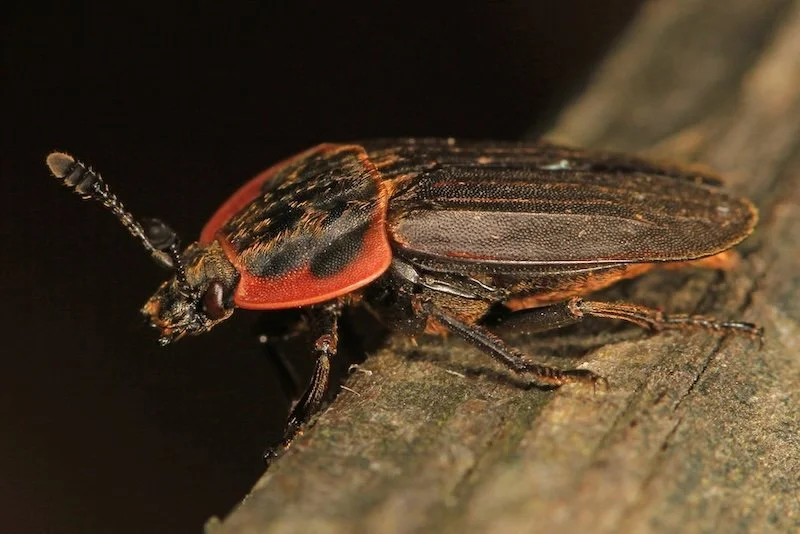
Margined Carrion Beetle (Oiceoptoma novaboracense). Photo: Judy Gallagher
You might be wondering why we should care about burying and carrion beetles with their off-putting lifestyle. The stage of beetle larval development can help determine the time of someone's death, thereby assisting forensic investigations. But more importantly, carrion and burying beetles help the environment by eating carcasses and breaking them down. As Wikipedia so succinctly puts it, this "prevents accumulation of deceased organisms," and they help suppress fly populations. Let's hear it for these charming creatures!
View more of Judy’s articles on A Closer Look: Nature All Around Us (formerly Observations from Meadowood).