
Butterflies Need Our Help
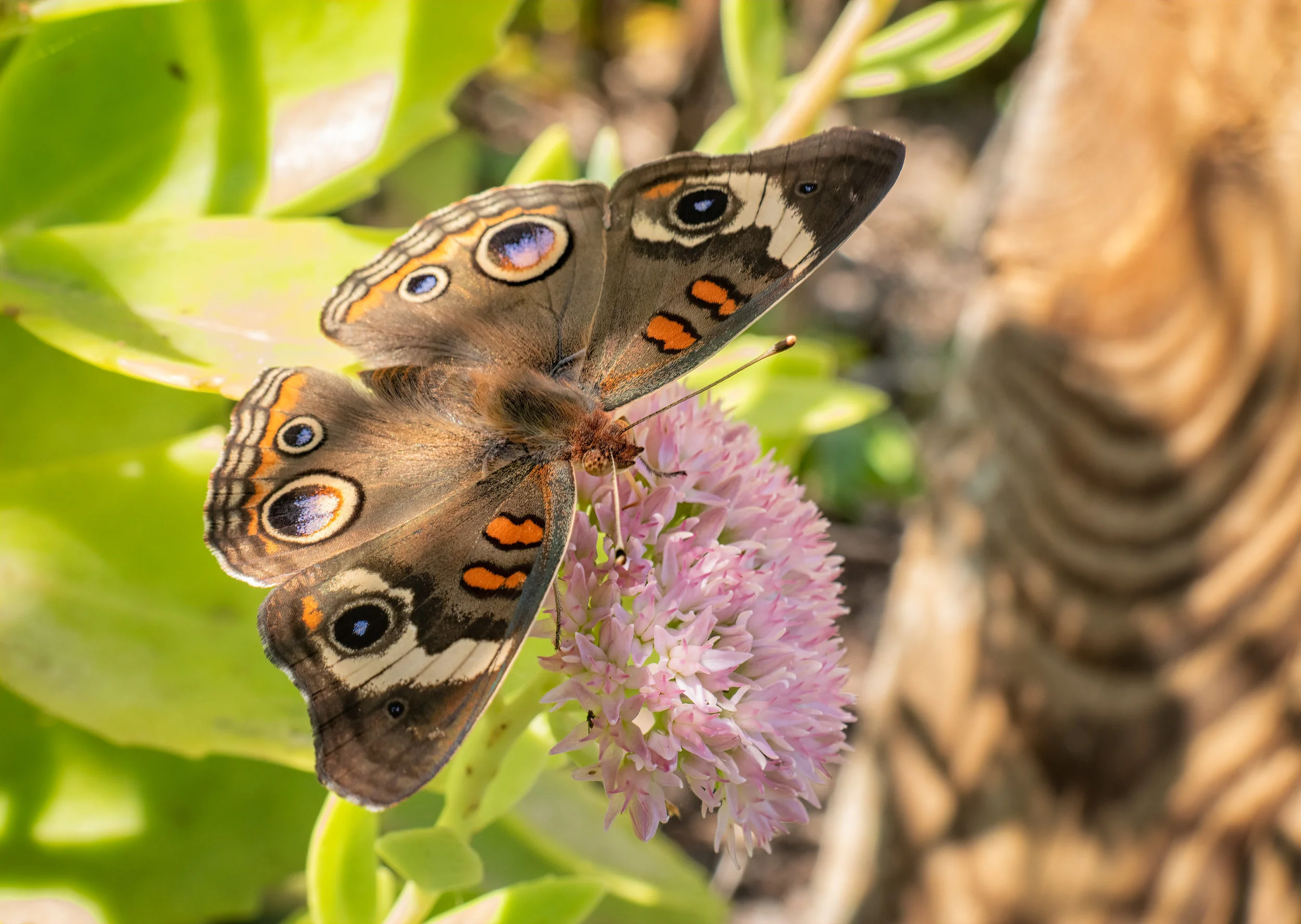
Common Buckeye. Photo: Rusty Moran
Eileen Ellsworth
Butterflies are with us once again, moving softly and quietly across the landscape. They’ve been called flying flowers, floating poems, nature’s confetti, and many other appreciative metaphors. But words fall short every time. To see a butterfly is to be reminded at the heart level why we never give up on nature and love it so deeply.
As we know, habitat loss, pesticides, and climate change are driving steep declines in their population. The North American Butterfly Association reported a 22% overall decline in butterfly abundance across the contiguous United States between 2000 and 2020, a stark reminder of the urgency we need to bring to the situation.
Even in the face of such terrible loss, much can be done to improve their chances. Many butterflies still manage to lay their eggs and pass on their DNA to the next generation. This is happening even now in our own backyards, but only if they contain the required larval host plants.
Host plants produce leaves, flowers, or other biomass that butterfly larvae can eat. Most people don’t realize just how limited and species-specific the options are. Females must find and then lay their eggs upon a particular host plant, and there’s no room for error. The caterpillars hatch and immediately start eating the host plant for days or even weeks until it’s time to go into chrysalis. Their food supply and nutritional requirements are quite exact, something only a host plant can provide.
Remarkably, host plants don’t seem to mind all that munching. They may look a little worse for the wear, but next spring they re-emerge in full, ready for another brood of voracious butterfly larvae to descend. They’re clearly built for the taking.
We simply need more larval host plants in the ground to stabilize butterfly populations and reduce their decline, especially for the more uncommon species in Northern Virginia. To that end, below is a list containing the names of many local butterflies and their known host plants. The list is a modified version of one created by Loudoun Wildlife Conservancy (abundance varies between locations). This information allows you to target the less common species on the list for your host plant consideration.
Notice that many butterflies require tree species as larval host plants.
Abundant:
Spicebush Swallowtail: Spicebush, Sassafras
Eastern Tiger Swallowtail: Black Cherry
Clouded Sulpher: Wild Blue Indigo
Orange Sulpher: Partridge Pea
Pearl Crescent: Aromatic Aster, New England Aster, Frost Aster
Relatively Common:
Zebra Swallowtail: Pawpaw
Gray Hairstreak: Swamp Rose Mallow
Variegated Fritillary: Purple Passionflower, Violets
Great Spangled Fritillary: Violets
Question Mark: Elms, Hackberry
Eastern Comma: Elms
American and Painted Lady: Field Pussytoes, Joe-Pye Weed
Common Buckeye: Carolina Wild Petunia
Hackberry Emperor: Hackberry
Mourning Cloak: Black WIllow
Red-spotted Purple: Black Cherry, Serviceberry
Monarch: Milkweeds (although this is much less often seen in the past few years)
Uncommon:
Cloudless Sulphur: Northern Wild Senna, Partridge Pea
Sleepy Orange: Wild Sensitive Plant, Partridge Pea
Henry’s Elfin: Redbud, American Holly
Eastern Pine Elfin: Virginia and White Pines
White “M” Hairstreak: Oaks
Coral Hairstreak: Black Cherry, American Plum
Black Swallowtail: Golden Alexander
Meadow Fritillary: Violets
Viceroy: Black Willow
For a complete list of all Mid-Atlantic butterflies and their host plants, including the Skippers which this table entirely omits, pick up a copy of “Butterflies of the Mid-Atlantic” by Robert Blakney and Judy Gallagher from the Northern Virginia Bird Alliance website, then download a copy of Loudoun Wildlife Conservancy’s “Butterflies of Loudoun County,” for the corresponding abundance codes.
Also, browse the butterfly page of the Plant NOVA Natives website for more ideas, resources, and general information about native plant support of butterfly populations.