
Osprey Populations are Plummeting in the Chesapeake Bay
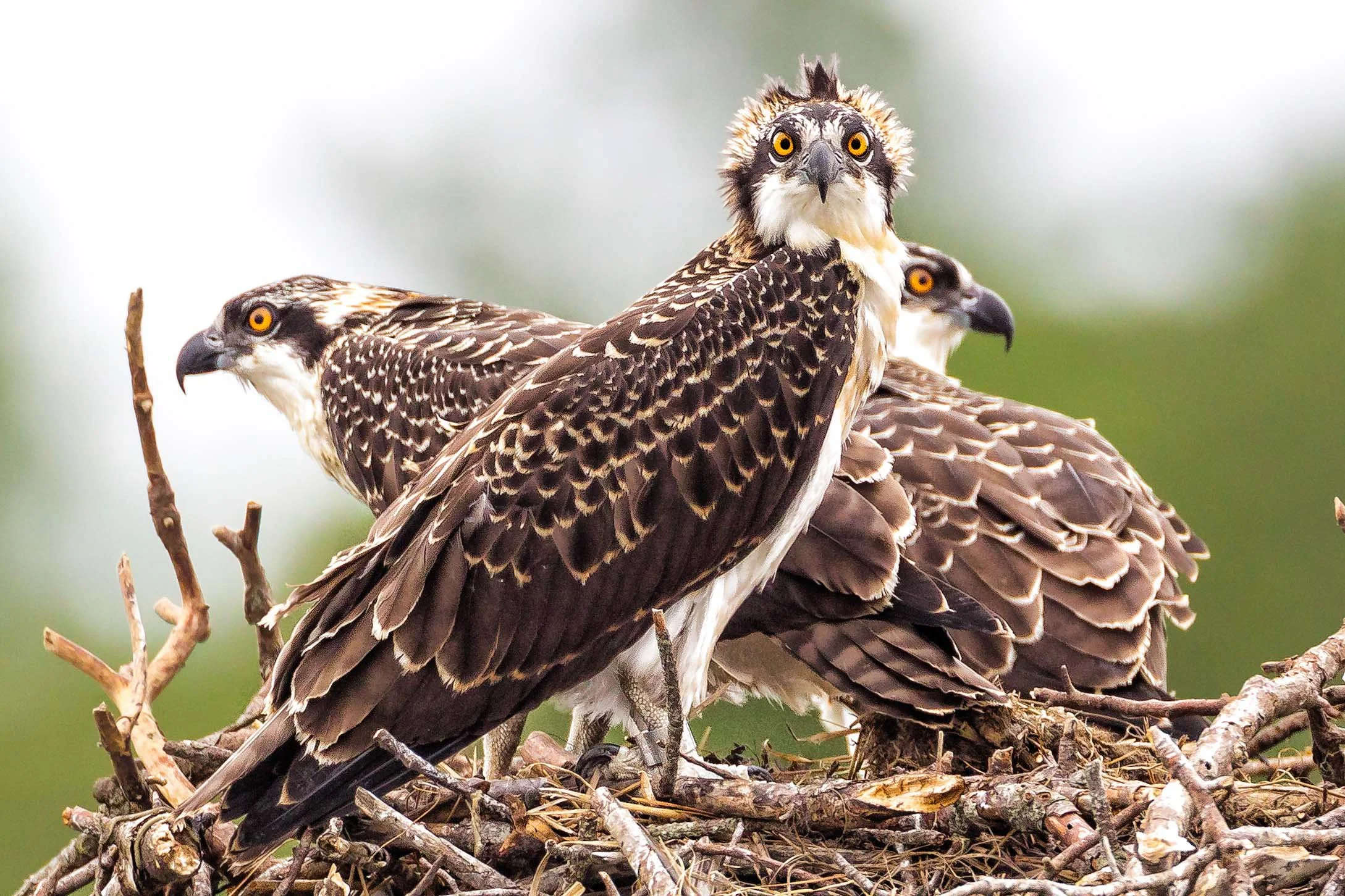
Osprey. Photo: Kurt Wecker/Audubon Photography Awards
Tom Blackburn
The population of Osprey in the saltier portions of the Chesapeake Bay is declining dramatically due to the overfishing of menhaden on which the Osprey rely as a principal food source.
Osprey reproduction in the lower Chesapeake is the lowest it has ever been.
Widespread use of DDT in the 1940s through the early 1970s resulted in an 80% reduction in the Osprey population in the Chesapeake Bay due to poor reproductive success. Banning DDT resulted in increased reproduction and an increase in the Osprey population from 1,450 breeding pairs in the 1970s to 10,000 pairs in 2024. The Chesapeake Bay is home to the largest breeding population of Osprey in the world.
However, a recent studyby the Center for Conservation Biology at the College of William and Mary has concluded that Osprey in the Chesapeake are experiencing an unprecedented failure to produce enough young birds to sustain their population. The reproductive rate (fledged birds per nest) of Osprey in 2024 is below the reproductive rate during the 1960s, the years of highest DDT use.
Osprey in the lower Chesapeake are critically short of food.
The Center for Conservation Biology study evaluated and ruled out several factors that could be causing the Osprey’s poor reproductive success, including predation of nests by other animals, disease, and weather. The study concluded that the poor reproduction outcome is the result of inadequate food supply. Twenty seven percent of mated females in the higher salinity areas of the Chesapeake failed to lay eggs in 2024, another sign of food stress. The nests that produced eggs experienced, in the dry language of the study, “brood reduction,” or the failure of the nestlings to survive long enough to fledge. In short, the young birds were starving to death because the adults could not bring them enough food.
Bryan Watts, the Director of the Center for Conservation Biology and principal author of the study, recently told VPM News that in Mobjack Bay, a sub-tributary of the Chesapeake, 80% of nesting attempts failed, and they are observing Osprey nestlings starving to death in real time.
Menhaden are the principal food source for osprey in the lower Chesapeake.
Menhaden, also known as bunker or fatback, are small, oily fish that swim in tight schools. They are a critical part of the food web because they have a very high energy density and are an important food source for many predatory birds and fish (striped bass, drum, and others). In the lower Chesapeake, menhaden historically comprised more than two-thirds of Ospreys’ diet, but the delivery of menhaden to Osprey nests has now declined by 80% in some areas. The shift away from menhaden has resulted in a substantial decline in the energy content of the Osprey’s diet. It appears likely that this change is caused by a decline in the menhaden population.
Menhaden are a critical part of the food web.
Menhaden, being small and packed with nutrition, are eaten by a wide variety of fish, and are the core of the marine food web. Deletion of menhaden stocks has a cascading effect on the marine ecosystem. Small commercial fishermen who catch menhaden and use them for bait fish are reporting that their catches are declining. They also report that the fish that eat menhaden and that they depend on for their livelihood, including striped bass (rockfish), blues, weakfish (sea trout), drum, cobia, and others, also are in decline.
Reduction fishing of menhaden is centered in Virginia.
Menhaden are caught commercially in two ways: reduction fishing, in which the fish are ground into fish meal and fish oil; and bait fishing. Omega Protein, and their exclusive fishing boats from Ocean Harvesters, Inc., located in Reedville VA, is the only menhaden reduction operation remaining on the Atlantic coast. They use spotter planes, 2,000-foot nets, and large motherships to catch menhaden and provide them to Omega Protein, a Canadian-owned company that processes the menhaden into aquaculture feed, pet food, and oils. Currently, the menhaden reduction fishing quotas are 125,000 metric tons in the Atlantic and 51,000 metric tons in the Chesapeake Bay. This enormous tonnage of fish represents hundreds of millions of menhaden that can no longer serve their primary function -- to support productive coastal ecosystems.
The Atlantic States Marine Fisheries Commission is considering lowering the cap on menhaden reduction fishing in the Chesapeake Bay.
In August, the ASMFC’s Menhaden Management Board voted 16-2 to offer for public comment a document proposing several options for protecting menhaden in the Bay, including lowering the cap by up to 50 percent and spreading reduction fishing more evenly across the fishing season. Members of the Board and expert witnesses raised concerns that overfishing of menhaden in the Chesapeake Bay, where the juvenile fish live, is reducing menhaden populations all along the Atlantic coast. Virginia and the Potomac River Fisheries Commission were the only two jurisdictions opposed to the proposal. Virginia’s new Legislative Representative on the Commission, Delegate Adele McClure, who represents the Second District of the House of Delegates (Arlington), publicly expressed her opposition to opening the proposal to public comment.
You can file comments urging the ASMFC to lower the cap on reduction fishing of menhaden.
The ASMFC is accepting comments on the proposal to lower the cap on menhaden reduction fishing through October 9. You can join the comments being submitted by the Chesapeake Bay Foundation, which is the lead organization urging a reduction in the cap, here.
Or you can file your own comments here. If you file your own comments, please adopt the Chesapeake Bay Foundation’s proposed limits, which you can see here.