
Spring in Virginia: Some Birders’ Thoughts
Photo: Blue-winged Teal, Joyce Palm/Audubon Photography Awards
Summer Delehanty
On a particularly overcast and chilly day in March, it’s hard to believe the next few months bring warmth, greenery, and a slew of migratory birds. Yet spring marks the beginning of another migration season in Virginia, with hundreds of thousands of birds making their way back from a tropical winter to their summer breeding grounds in North America. After snow flurries and a couple of cold snaps this past month, here are a couple things local birders are looking forward to in April.
Passing Migrants
Warblers, vibrant and active little birds that pass through every spring, are often a fan favorite, especially when they congregate in colorful mixed-species flocks. Many species, no bigger than the palm of your hand, pass through northern Virginia in droves, often making pit stops on the way to their breeding grounds in Canada and the northern United States. While some species stick around for the summer, many can only be found here for a few weeks of the year.
The Blue Ridge Mountains are a popular spot to look for warblers, but these birds can also be found in many local parks and even backyards, exhausted from their long-distance journey and seeking a place to rest and regain strength. One northern Virginia birder I spoke with is particularly excited for them to return to his yard. “We live in northern Virginia in otherwise boring suburbs, so the first time we saw a Palm Warbler in our backyard was a treat,” he said. Now, his backyard reliably attracts several species in the spring, including his lifer Cape May Warbler. “I just had to know what to listen for, which drove me to look more closely and spot them. There's so much variety!” He added.
Another birdwatcher, Christian McGuirk, described his favorite local warbler spot, Monticello Park in Alexandria. “It’s a small, nondescript park in Alexandria that is jam-packed with warblers and other migrants April [through] May. They come down from the high canopy to bathe in the stream that runs through the park. I don’t know what it is about that park they love so much, but I’m glad it’s there!” He added, “I’m looking forward to introducing some of my young cousins to birdwatching there and taking lots of photographs, hopefully with some lifers in the mix.”
Spring is also a great time for passing shorebirds. Another local birdwatcher said, “In a couple of weeks, the Blue-winged Teals will be making pit stops around here, ushering in shorebird season!” Like warblers, these birds are returning to their summer breeding grounds, using Virginia as a stop along the way. Birders may spot some of the earliest migrants, like Greater Yellowlegs, when they pass through in late April, followed soon after by the rest of their shorebird friends.
Returning Summer Residents
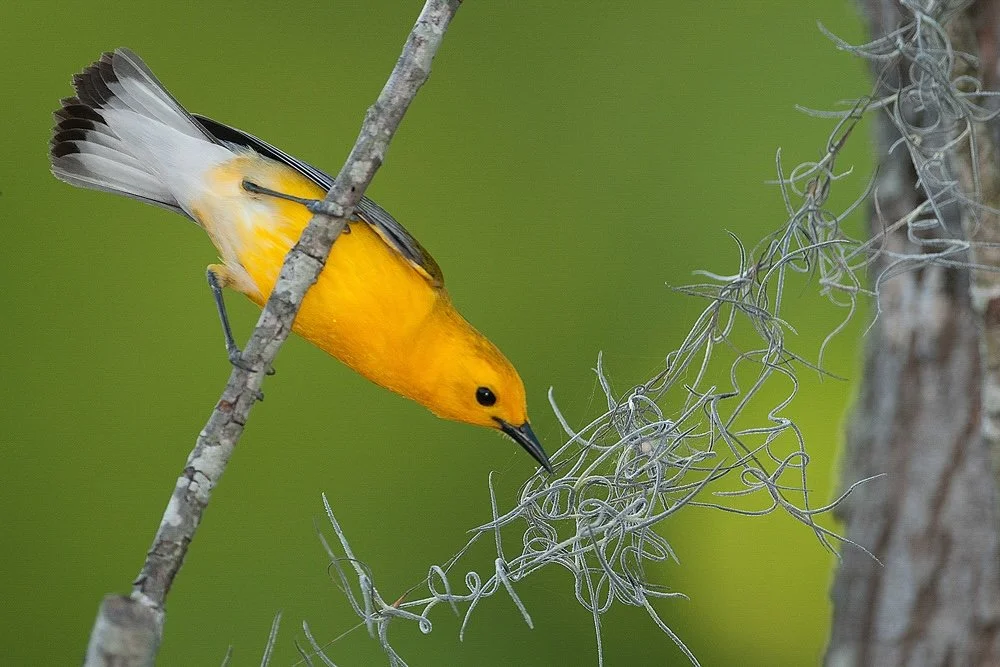
Prothonotary Warbler. Photo: Donald Wuori/Audubon Photography Awards
In addition to birds just passing through, keep an eye out for returning breeding residents, or birds that spend their springs and summers in northern Virginia. While these birds also migrate, Virginia is far enough north for them to stay, rather than continuing to New England or Canada. Some notable returners include Baltimore Orioles, Scarlet Tanagers, and Prothonotary Warblers, sporting fiery shades of red, orange, and yellow.
As the trees regain their foliage, many of the birds are easier heard than seen. Spring is when many birds start singing again, whether to establish territory or attract a mate, so prepare for an explosion of new voices this April. One birder commented on the joy of hearing familiar songbirds again: “It is the sounds I am most anticipating—Great-crested Flycatchers, Indigo Buntings, orioles, and pewees calling.” The birds’ musical songs can be heard in parks all across northern Virginia beginning in late April and early May, after a long hiatus through the winter months. “It is like old friends coming back from a long break,” he added.
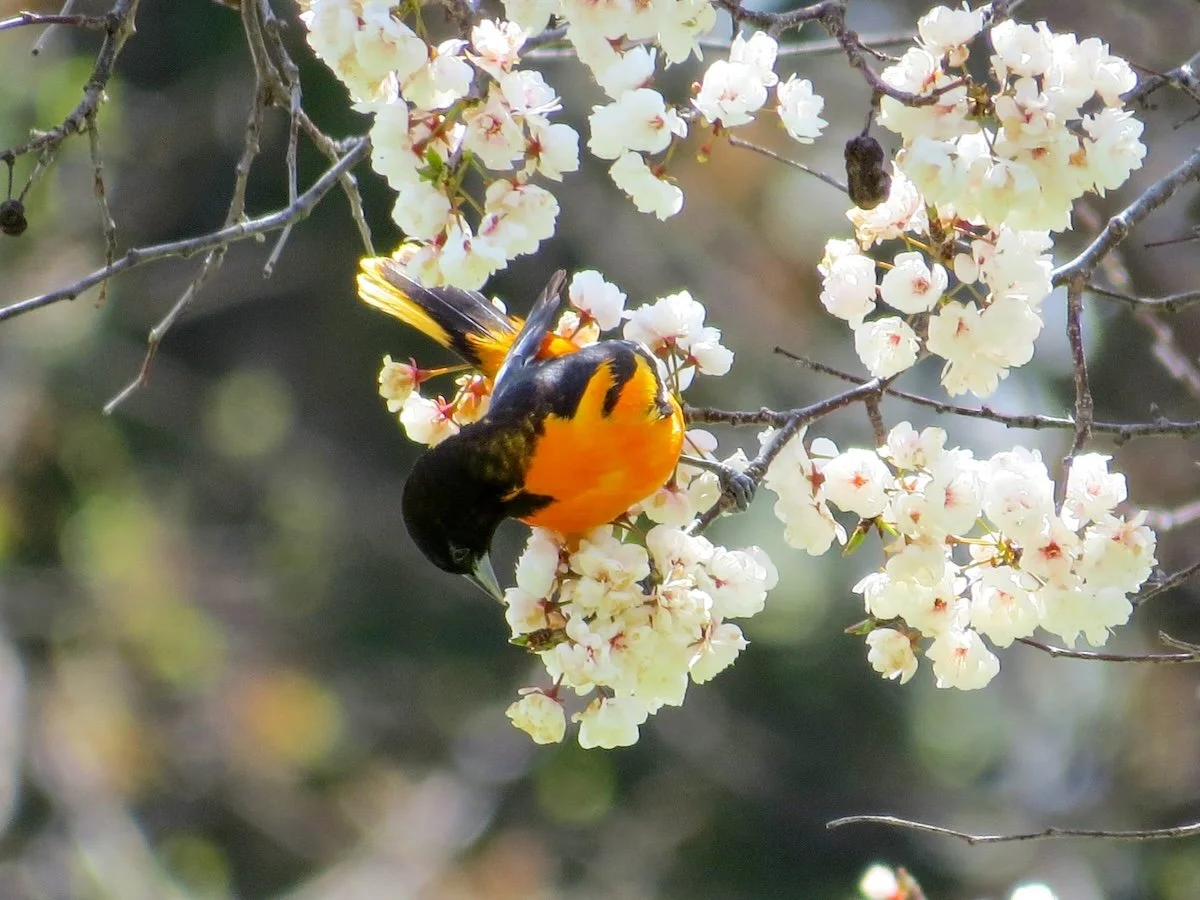
Baltimore Oriole. Photo: Adrian Azar/Audubon Photography Awards
Birding with Friends
Finally, on the subject of friends, warmer weather often means more people will be spending time outdoors. Birding in the winter requires lots of layers, lots of patience, and a special kind of dedication. Spring brings more comfortable conditions and a wider variety of birds to find, drawing many birdwatchers back into the field. Rachel Barham, a classically-trained singer working in DC and an accomplished birder by ear, is most excited to see familiar faces again. “I can’t believe I’m hearing my introvert self say this, but I am really looking forward to connecting with our amazing birding community in person!” Barham said. “I don’t see everybody as much in the winter, and birding together is so joyful, even on slow days.”
In the midst of pollen attacks and crushing cherry blossom crowds, it’s easy to overlook the smaller signs of spring. Whether chasing lifers, spending time with other birdwatchers, or simply enjoying the influx of returning singers birds, birders can’t wait to get outside and embrace the new season.
Summer Delehanty is a product designer with a passion for birdwatching.