
Wildlife Sanctuary Almanac: Native Dogwoods are Better for Birds
Photo: Native Dogwood, http://www.ForestWander.com, CC BY-SA 3.0 US, via Wikimedia Commons
Julie Udani
The state flower of Virginia, the dogwood bloom, is one of the most welcome signs of spring in our area. Our native tree (long known as Cornus florida and recently reclassified as Benthamidia florida to make my life more difficult) is a small understory tree with charming white or pink blooms in the spring and beautiful red fall color to the leaves. There are both native and non-native dogwoods available in the nursery trade, as well as hybrid crosses. It is important to know that all dogwoods are not created equal when it comes to their value to wildlife.
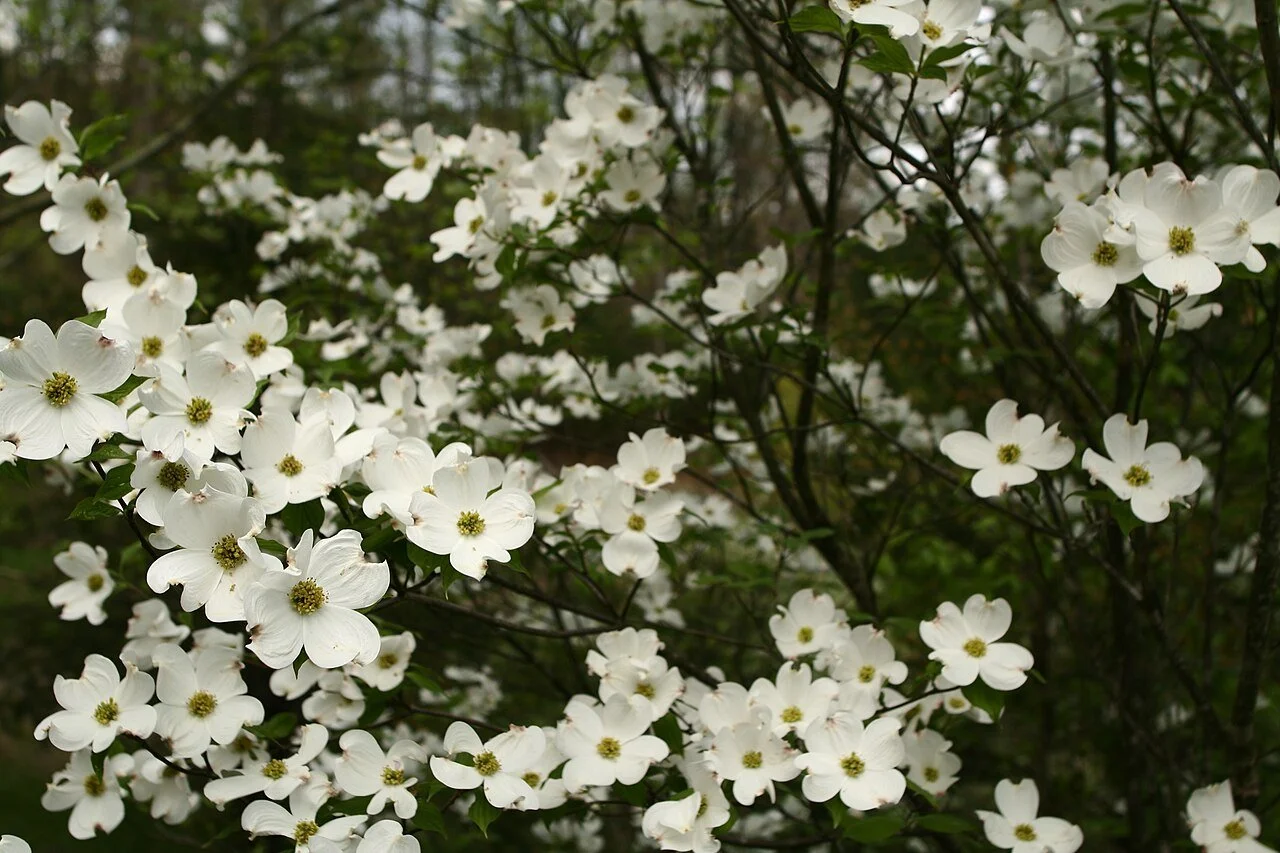
Native Dogwood. Photo: http://www.ForestWander.com, CC BY-SA 3.0 US, via Wikimedia Commons
Importantly for the birds, the native dogwood flowers several weeks earlier in the spring than the Chinese or kousa dogwood, and its berries ripen earlier in the autumn, just in time for the fall migration. In fact, the native dogwood may use its flashy fall color as a signal to tell birds passing overhead that here is a source of berries high in the lipids they need for energy on their long flights. The fruit of the kousa dogwood can be eaten by birds, but often goes to feed the chipmunks instead. In addition, according to Doug Tallamy, Benthamidia florida supports 117 different insect herbivore species - vital food for the birds in the spring and summer. Benthamidia kousa supports none.
Of course, there are good reasons why people started planting the non-native species in the first place. Our native dogwoods can be very susceptible to diseases, most famously anthracnose, a fungal disease which causes unattractive brown spotting on the leaves and bracts. The kousa dogwoods are not so susceptible and their pointed petal-like bracts and attractive fruit are very ornamental, even if the berries do not ripen at the right time for migrating flocks. Another very commonly planted dogwood in our area is the Rutgers hybrid (Benthamidia x rutgersensis) which is a cross between the native B. florida and the Chinese B. kousa. It displays many of the ornamental characteristics of both parents and is not highly susceptible to disease. However, most of the Rutgers hybrids are sterile and do not produce fruit.
Although the leaves are often similar, you can tell a native dogwood from a non-native or a hybrid by the roundness of its other features - fat round flower buds, smooth round berries growing in clusters, and rounder ends to the larger petals (actually bracts, but they sure look like petals.) The bracts start to appear before the tree has finished leafing out in the spring. Also, the native tree’s bark is scaly, like alligator hide, not smooth or splotchy.
If you want to plant a dogwood, your best bet is to find one of the native Benthamidia florida cultivars that has been bred for disease resistance, such as the “Appalachian” or “Cherokee” series (like ‘Appalachian Spring’ or ‘Cherokee Brave’). Give it dappled sun, and water it during any droughts. A properly sited native dogwood tree will support insects and provide berries for the birds, helping them in a way the non-native and hybrid dogwoods just can’t. However pretty they may be.
Catch up on past Wildlife Sanctuary Almanac articles here.