
A Closer Look: Nature All Around Us, June 2026
Photo: Curculio species, Judy Gallagher
Judy Gallagher
June 2026
Weevils have a bad reputation. As a child, I heard about the Boll Weevil, which decimated cotton crops in the 1800s. And every other reference to weevils contained the term "pest." But I've become fascinated with weevils as I see more of them through my macro lens. They are most unusual-looking creatures, and they aren't all pests.
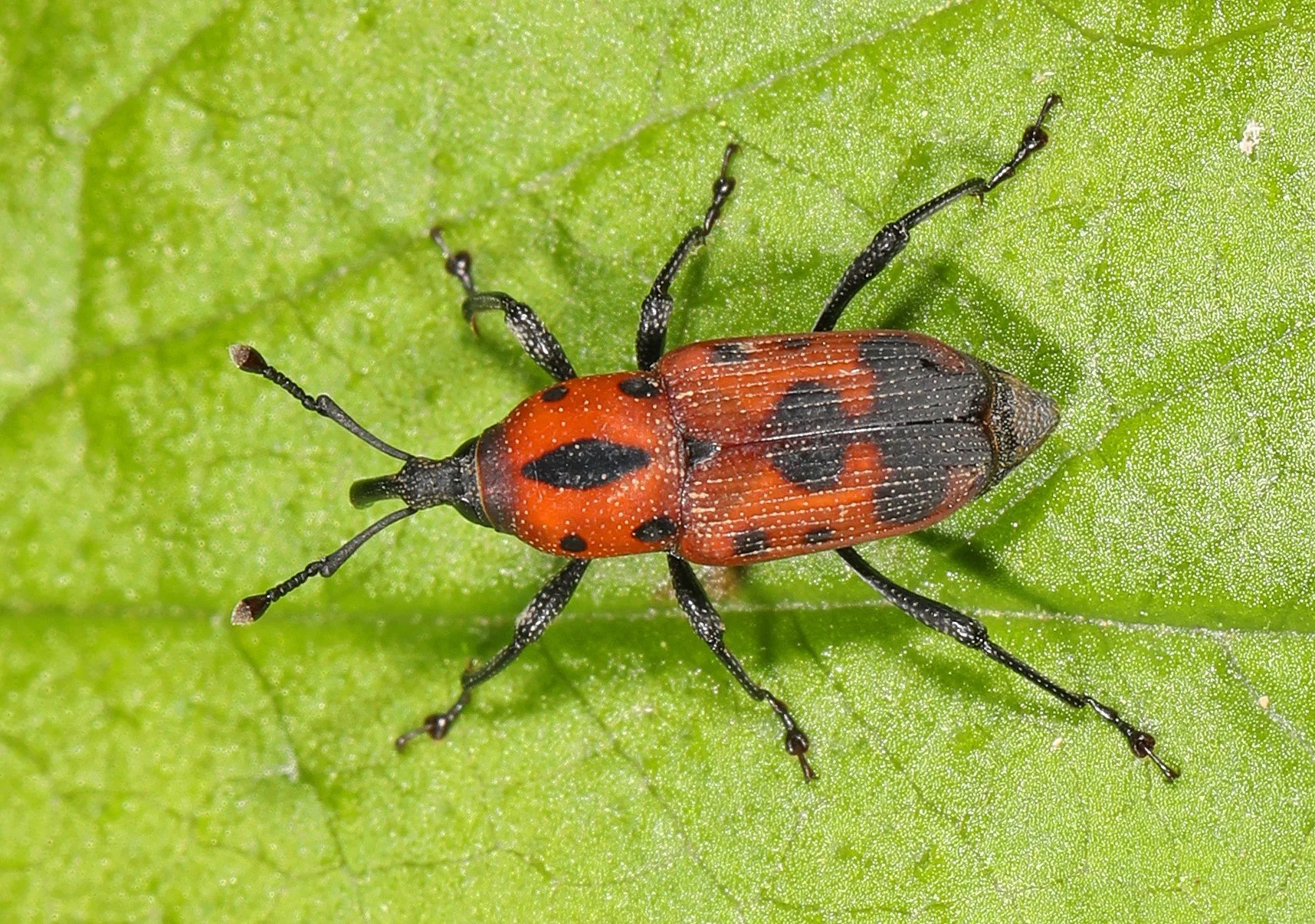
Cocklebur Weevil. Photo: Judy Gallagher
Weevils are Beetles, mostly in the family Curculionidae, which, with over 80,000 species, may be the most species-rich animal family. Members of this family are known as True Weevils. They have a long snout (rostrum) and elbowed antennae that are bent sharply. Weevil mouthparts are at the end of the rostrum, and consist of a pair of mandibles that they use to chew on plants. Adult weevils have specialized claws that help them to hold onto plants, and some also have sticky substances on their feet that help them adhere to plant surfaces. Many are cryptically colored to blend in with their environment. Some weevils roll up and play dead when threatened, while others ingest plant toxins that make them unpalatable to potential predators.
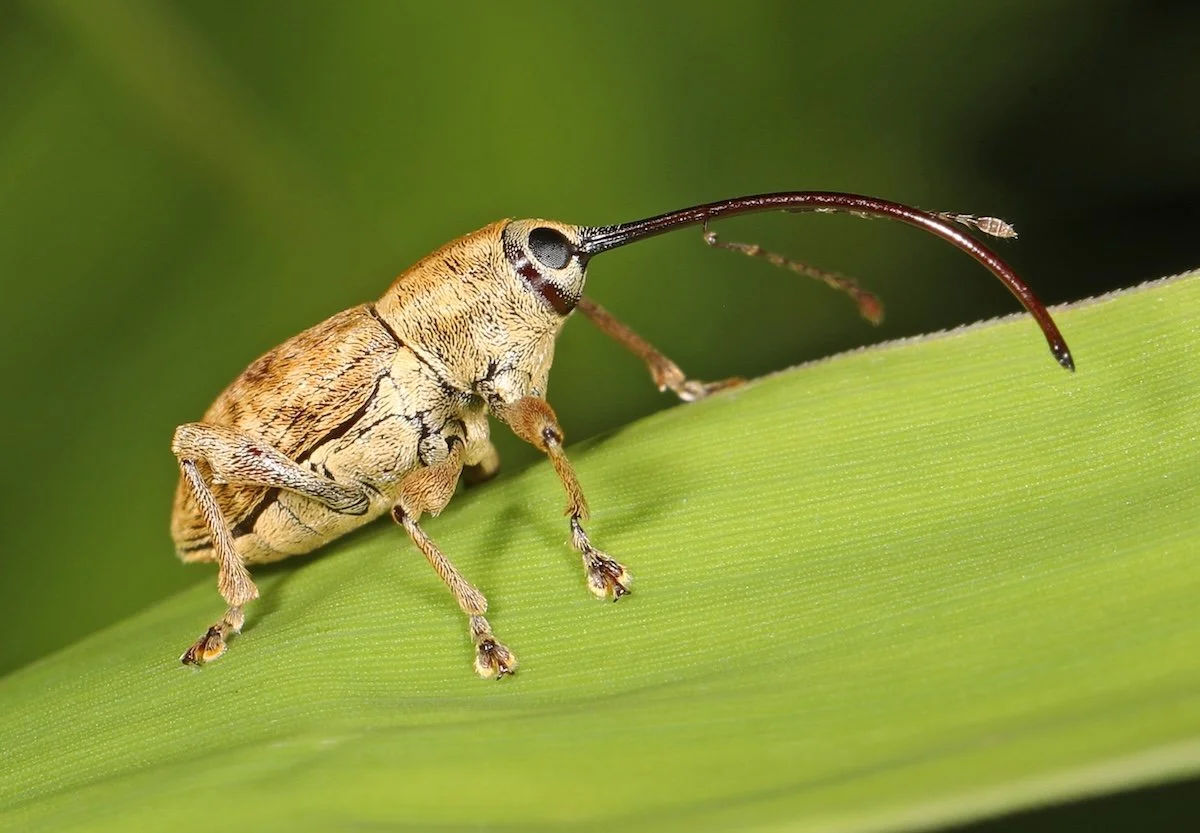
Curculio species, with a rostrum that is longer than its body. Photo: Judy Gallagher
Some weevils, such as weevils that live on nuts, have a rostrum that is longer than the body.
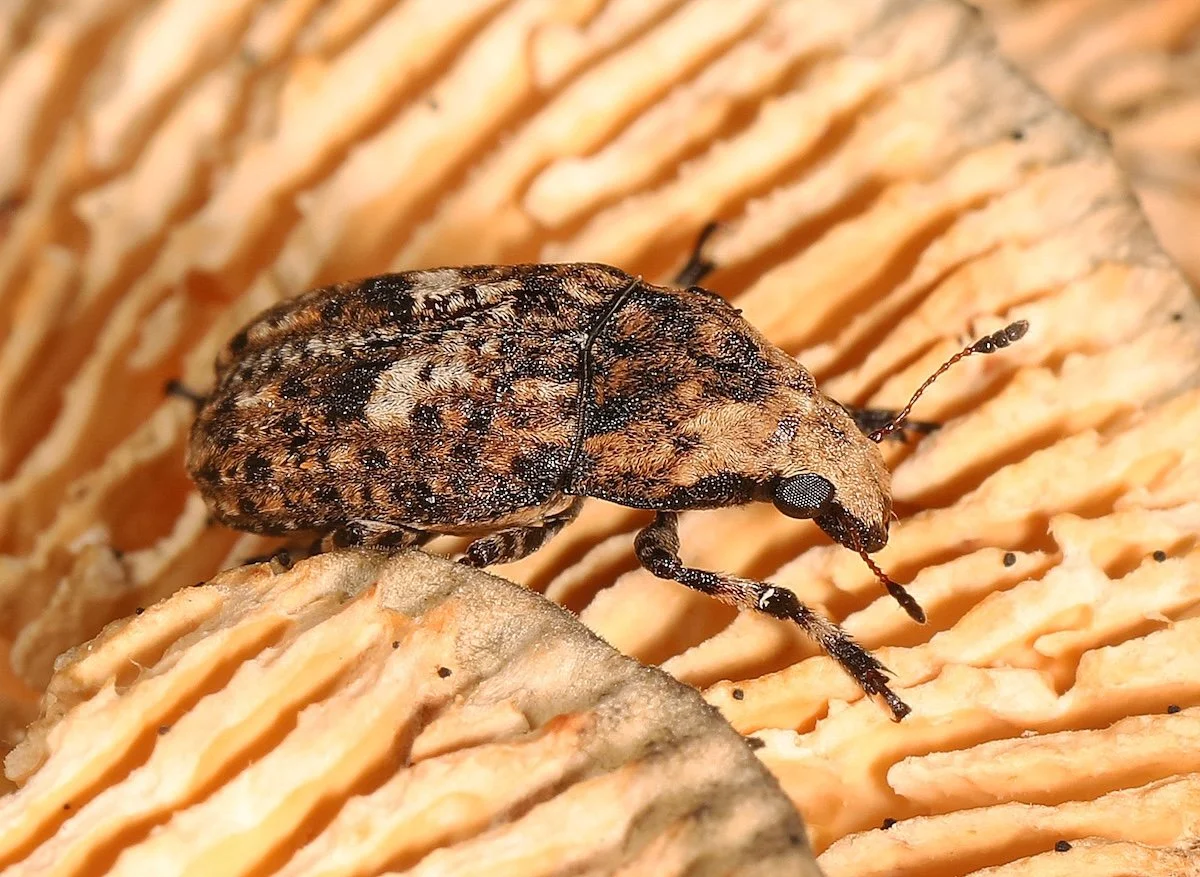
Marbled Fungus Weevil. Note the straight antennae. Photo: Judy Gallagher
In addition to True Weevils, there are several other weevil families, collectively known as Primitive Weevils: Fungus Weevils (Anthribidae); Leaf-rolling Weevils (Attelabidae); Primitive Weevils (Belidae); Straight-snouted Weevils (Brentidae); Caridae; and Pine Flower Weevils (Nemonychidae). The total number of species in these other families is about 6,400. One visual difference from True Weevils is that their antennae are straight, rather than elbowed.
There is also a subfamily of the Leaf Beetle family named Bean Weevils, but they lack the elongated snout of True or Primitive Weevils.

Little Leaf Notcher - two males approach a female. Photo: Judy Gallagher
Like all beetles, weevils undergo complete metamorphosis, having egg, larva, pupa and adult stages. Most weevil species reproduce sexually, but a number of weevil species are asexual, where all individuals are female. Despite not having the genetic variation that occurs with sexual reproduction, they can adapt to digest toxins in different plants and pass that down epigenetically to their offspring. Epigenetic changes don't alter the underlying DNA, but act like chemical switches that turn genes on or off.
There is even one Australian weevil species that is eusocial, with non-reproductive females helping to excavate and defend the colony. Unlike other eusocial helping insects like ants and termites, who are short-lived, helper weevils can live for up to 10 years, almost as long as the queen weevil.
Weevil adults and larvae eat plants. Some species eat foliage, while others eat flower buds, seeds, and roots. Typically, more damage is done by the larvae than the adults, and weevils that feed on roots can cause the entire plant to be unhealthy. I mentioned the Boll Weevil earlier, but there are other weevils that are a problem for agriculture. Grain Weevils damage stored grain. Rice Weevils damage stored rice, wheat and corn. White Pine Weevils damage young pine trees. And there are many others. In addition to the problems caused by weevils chewing on plants, the damage also can allow pathogens like fungi and bacteria to enter the plant, which causes other challenges to the plant.
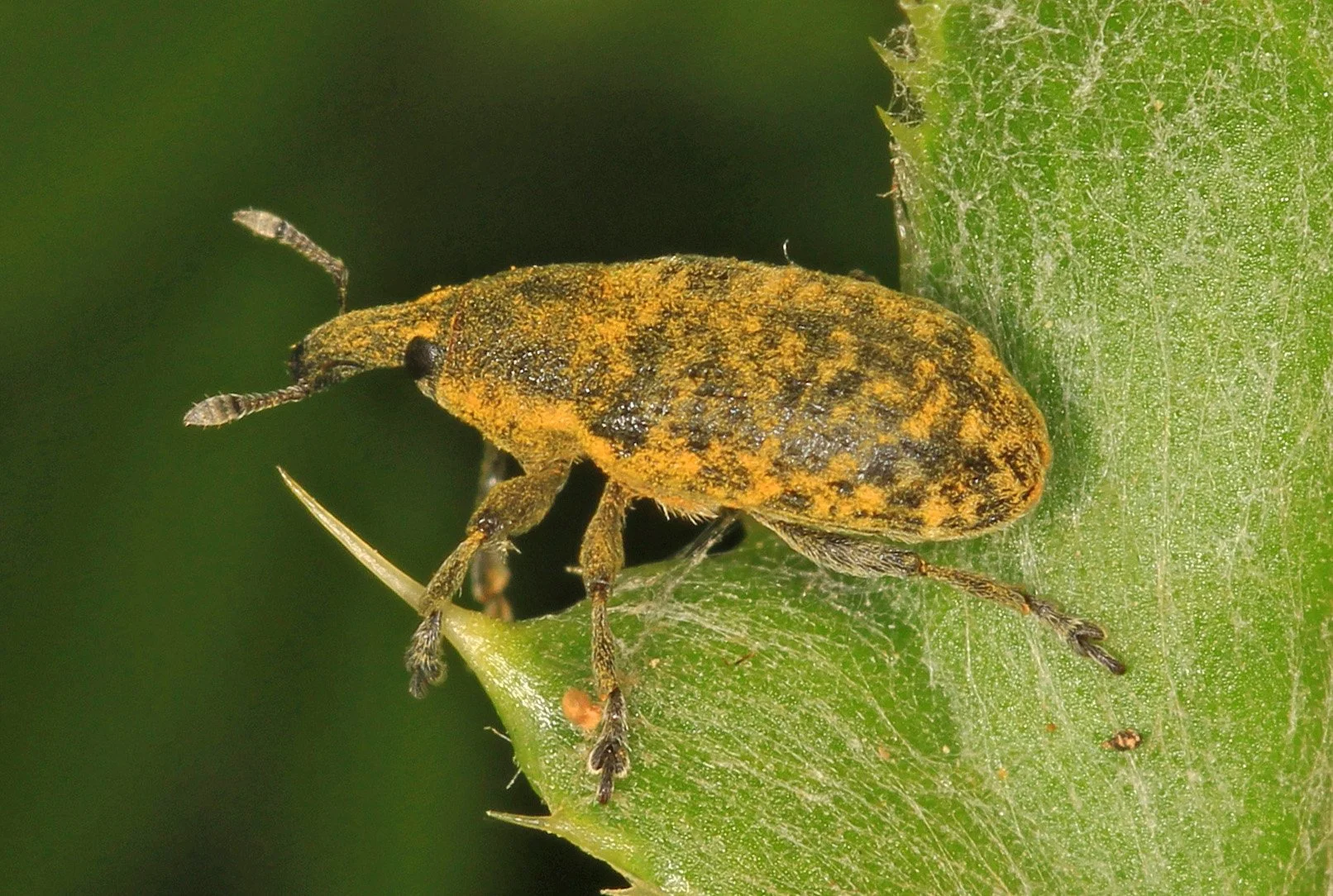
Canada Thistle Bud Weevil. Photo: Judy Gallagher
But some weevils are useful. Mile-a-minute Weed, a fast-growing invasive plant, is now somewhat under control because of the deliberate introduction of a tiny Chinese weevil, just 1/10th of an inch long, that eats Mile-a-minute Weed. The Canada Thistle Bud Weevil helps control invasive thistle populations, although it also sometimes also eats native thistles.
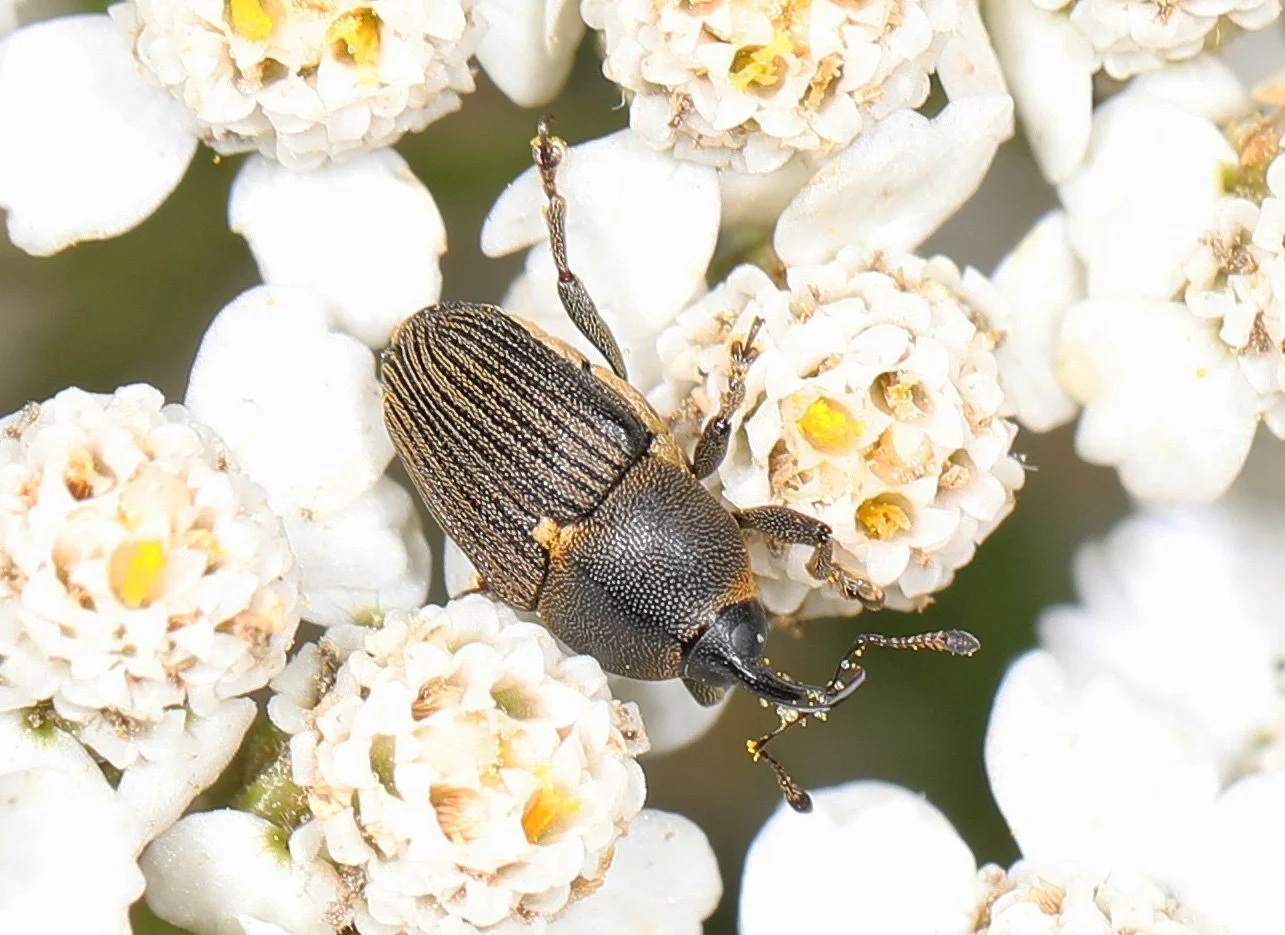
Flower Weevil with pollen. Photo: Judy Gallagher
Some weevils eat rotting vegetation, helping to decompose it. And Flower Weevils can be good pollinators. Scientists have identified at least 250 plant species where weevils are important pollinators. Flower Weevils eat pollen and inadvertently carry pollen from flower to flower. Most of the weevils are plant-specific, and are pollinating the plant in which they are living and reproducing. This is called brood-site pollination.
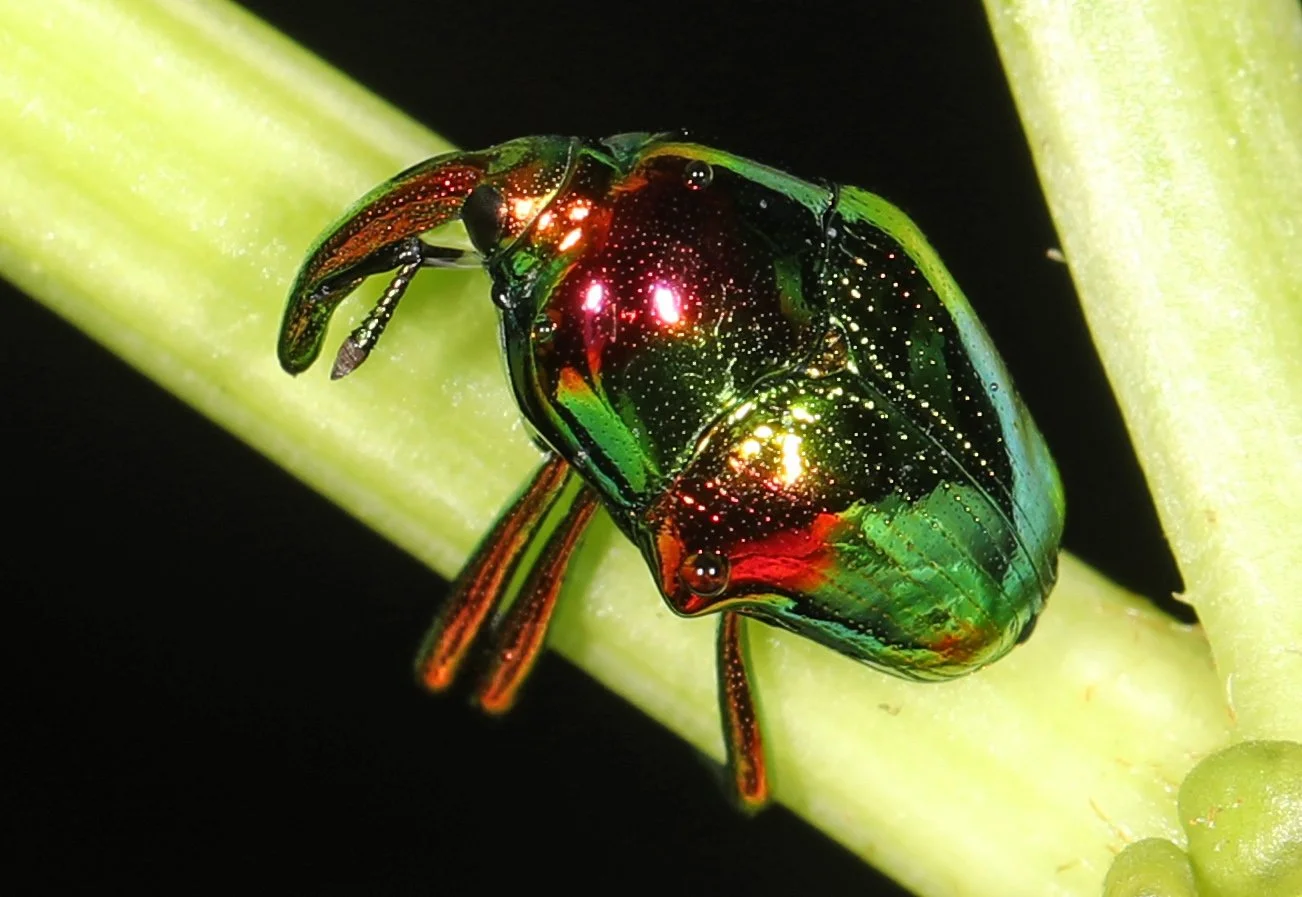
Jewel Weevil, found in south Florida. Photo: Judy Gallagher
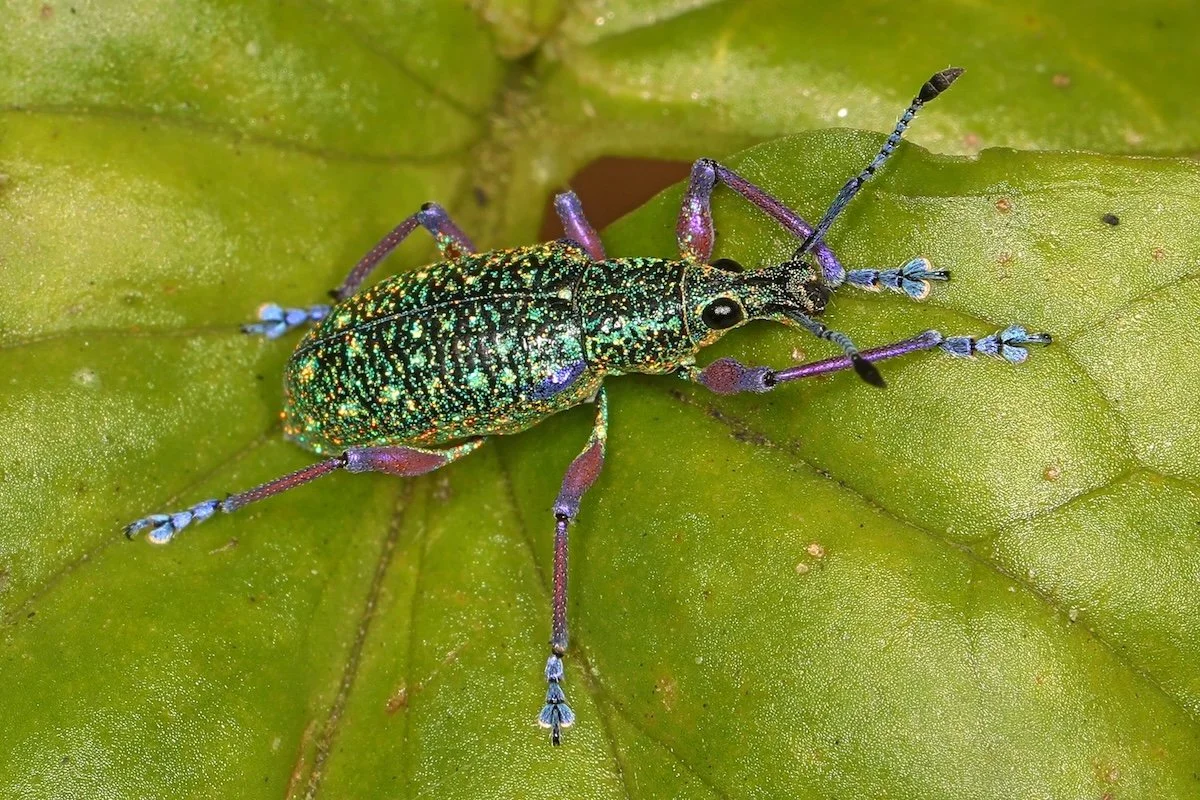
Exophthalmus species, found in Colombia. Photo: Judy Gallagher
I'm going to finish with two particularly attractive weevils. One is found in south Florida, and the other in South America, so you won't see them here. But I encourage you to get out and see our local weevils, less brightly colored, but still fascinating.
View more of Judy’s articles on A Closer Look: Nature All Around Us (formerly Observations from Meadowood).