
NVBA NEWS BLOG
Welcome to the blog for Northern Virginia Bird Alliance, a wealth of resources about northern Virginia birds, wildlife, habitat conservation and restoration, native plants, wildlife-friendly gardening, advocacy and more.

Fatally Flawed Insecticides – Neonicotinoids
Neonics are systemic (absorbed by the plant) and are often applied to seeds before the seeds are sown so the growing plant takes up the pesticide. Neonics are used for both farming and landscaping, exposing all pollinators to their damaging effects.
Photo: Vane Monte via Pixabay
Lisa Mackem
Last year, for the 10th consecutive year, Virginia, Maryland and Pennsylvania all received an EPA emergency exemption to use the neonicotinoid-based insecticide, Dinotefuran, on peaches, apples and nectarines for Stink Bug control. ASNV lobbied to restrict “neonic” use. In February, the Virginia legislature prohibited spraying neonics within sight of a managed beehive, subject to a civil penalty of $100. This law was not a victory for conservation.
Neonic insecticides are now the most widely used class of insecticides worldwide, according to the Xerces Society for Invertebrate Conservation. Neonics are systemic (absorbed by the plant) and are often applied to seeds before the seeds are sown so the growing plant takes up the pesticide. Neonics are used for both farming and landscaping, exposing all pollinators to their damaging effects.
Neonics were initially introduced as less harmful than other insecticides but research later revealed their devastating impacts on pollinators, beneficial insects and aquatic invertebrates. The Xerces Society works to reduce their use and helps California farmers create habitat to support native pollinators and protect them from neonics. They have urged California’s Department of Pesticide Regulation to ensure protections for native pollinators, aquatic invertebrates and the state’s diverse ecosystems.
In 2018, the European Union permanently banned neonics, but industries in the U.S. dug in. Lobbying documents and emails show a decade-long sophisticated effort to obstruct efforts to restrict neonic use, with sobering results. In Mead, Nebraska the company AltEn, which was supposed to be helpful to the environment, built an ethanol plant that turns corn into biofuel. AltEn’s production process uses seeds coated with fungicides and insecticides, including neonics. Residents began to notice a rotting smell and reported eye and throat irritation and nosebleeds. Colonies of bees began dying, birds and butterflies appeared disoriented, and dogs grew ill and staggered around with dilated pupils. AltEn officials have advertised the company as a “recycling” location, where agricultural companies can leave excess supplies of pesticide-treated seeds. AltEn used these seeds in its ethanol, but the waste product contained too many pesticides to feed to animals so they distributed some of these grains to farm fields as “soil conditioner” and accumulated the rest on its plant’s grounds. Researchers say that this waste is dangerously polluting water and soil, and also threatening human and animal health. State officials ordered testing and found neonics in AltEn waste many times above what is considered safe. Nebraska filed a lawsuit against AltEn on March 1 for multiple environmental violations.
Equally alarming, the concentration of neonics in products sold for residential use on ornamental plants is as much as 30 times the allowance permitted in the agricultural sector. The American Bird Conservancy (ABC) collaborated on a Friends of the Earth (FOE) study and found that more than half of the seedlings purchased from retailers contain neonics. Heavy pressure from consumers and a consortium of conservation organizations has led retailers such as Lowe's, Home Depot, Walmart, Costco, True Value and BJ's Wholesale Club to label plants treated with neonics. The ultimate hope is to remove these chemicals from their plant production altogether. The U.S. Fish and Wildlife Service issued a national policy decision phasing out the use of neonics on federal wildlife refuge lands nationwide by January 2016, but in 2018, under the Trump administration, that decision was rolled back. ABC also worked to ban neonics on state refuge lands, and some local US jurisdictions have taken action to limit neonics.
Regardless of legislation, everyone can and should take the following positive steps:
Buy organic fruits and vegetables when available and affordable.
Choose plantings that are labeled organic or neonic-free. Ask your local nursery to stop selling neonic pesticides and treated plants.
Avoid treating your garden with neonic products. The Center for Food Safety published a list to help guide your choices.
Never use pet collars that contain neonics, which are dangerous to children.
Speak out about neonics to the EPA and Congress.
Sources:
Xerces Society for Invertebrate Conservation – “Understanding Neonicotinoids”
Xerces Urges California to Step Up for Pollinators
The Guardian – ‘There’s a red flag here’: How an Ethanol Plant is Dangerously Polluting a US Village
American Bird Conservancy – “Neonics and Birds”
The Intercept – “The Pesticide Industry’s Playbook for Poisoning the Earth”

Thinking about Spring with Audubon at Home’s Guidance
As we finally begin to emerge from this dark and isolated winter, many of us are thinking about getting outdoors into the garden.
Photo: Eastern Bluebird and Eastern Redbud Tree, Glenda Simmons/Audubon Photography Awards
As we finally begin to emerge from this dark and isolated winter, many of us are thinking about getting outdoors into the garden.
Would you like to garden to attract birds and butterflies and create habitat for wildlife in your yard? Are you keen to make your yard more friendly to the environment, and spend less time mowing?
Then check out ASNV’s Audubon at Home program.
In this program, properties are eligible for certification as Wildlife Sanctuaries if the owners take steps towards managing their land in an environmentally responsible way, such as replacing lawn with native plants and trees, and reducing pesticide and fertilizer use. To be certified, they must document that their yard is being used by at least 10 out of a list of 34 Audubon at Home Sanctuary species. The list includes birds such as Baltimore Orioles and Carolina Chickadees, beneficial insects such as Monarch butterflies, as well as box turtles and other reptiles, frogs, salamanders and mammals. The Sanctuary Species are all beneficial species that can be helped by homeowners creating native habitat for them. The motto is, “let the animals decide.” If the critters show up and use your yard, then they’ve decided it’s a Wildlife Sanctuary. Information about the program can be found here.
One nice feature of the program is that you can request a free consultation and site visit by an Audubon at Home Ambassador – a well-trained volunteer who visits your home to walk the property, discuss your goals and concerns, and give you on-the-ground guidance and recommendations for creating your own wildlife sanctuary. To arrange an appointment, make a request here.
Native plants play a key role in the Audubon at Home program because they are critical links in food webs. Native insects are adapted to feed on native plants, and those insects then provide food for birds and other animals. Once a well-functioning habitat is established, insect predators tend to balance out insect pests.
Documenting the species using your yard would be a great summer project for kids—they are all relatively easy to identify. When 10 sanctuary species are documented on your property, then your yard can be certified as a Wildlife Sanctuary and you can receive an attractive sign to put in your yard. Of course, the sign is secondary to the pleasure of seeing birds, butterflies and other wildlife that will show up in your yard!

Where to Find Native Plants
The Plant NOVA Natives website maintains a list of native-only plant sellers and updates its list of seasonal native plant sales in our 4-county region.
Photo: Silky Dogwood (Cornus amomum), Sheryl Pollock
The Plant NOVA Natives website maintains a list of native-only plant sellers and updates its list of seasonal native plant sales in our 4-county region. A growing number of local garden centers are adding natives to their inventory and we encourage you to ask about them to help get the message to plant suppliers that native plants are in increasing demand. If you are having trouble finding native plants please contact Audubon at Home, your Audubon At Home Ambassador or one of the AAH Regional Coordinators for more information. (Contact information can be found here.) Be sure the plants you buy haven’t been treated with neonicotinoids that are harmful to our native bees and caterpillars.

A Fondness for a Scrappy Bird
The Common Grackle (Quiscalus quiscula) is an opportunistic omnivore. Much like your common Rock Pigeon, they are known to take advantage of leftover food that humans leave behind, in addition to bugs, berries and seeds that are present nearby.
Photo: Common Grackles
Deidra Bryant
Earlier this week I took a few days off and traveled to Southern Tennessee. As most families do when they travel long distances, we stopped at a rest stop off the side of the highway to stretch our legs and enjoy the warmth and sunlight after the persistent rain and heavy traffic. Upon opening the passenger door, I heard what sounded like creaky swing sets. I looked up at the sky and saw a flock of grackles darting across the parking lot from tree to tree! It seemed like the spring migrants reached their breeding grounds because courtship, foraging and nest construction were taking place. To be honest I got excited when I saw them since I don't see them at all where I live, and I really enjoy the sound they make.
The Common Grackle (Quiscalus quiscula) is an opportunistic omnivore. Much like your common Rock Pigeon, they are known to take advantage of leftover food that humans leave behind, in addition to bugs, berries and seeds that are present nearby. They will even wade in water to catch small fish, and have been observed picking leeches off Northern Map Turtles while they are basking. Their ability to thrive in woodland areas, meadows, marshes, forest edges, and near human establishments makes them quite gritty in my opinion. Additionally, the glistening iridescent feathers on male grackles as they puff themselves in the light, and the contrast in color with their bright eyes and their dark feathers makes them mesmerizing.

Common Grackles
Although they are fun to watch, it's unfortunate that they're considered agricultural pests among farmers since flocks will ravage crops, and can be heavy nest predators. It's even more distressing to know that people find them to be so annoying that they'll acquire permits to kill them. For example, in southern states like Texas, oral toxicants (DRC-1339) are used by USDA-AHIS certified applicators that cause renal failure in grackles. Lawn-treatment chemicals used in suburban and urban areas are also responsible for deaths due to bioaccumulation of chemicals through insects that ingest affected plant matter. Fortunately, there are other methods used to manage populations including habitat modification to disperse roosts, propane cannons and pyrotechnics in citrus groves and sunflower fields to scare them off, and spraying non-toxic chemical repellents (methyl anthranilate) on plant material and in the air that cause temporary discomfort by stimulating the trigeminal nerves in their beaks, eyes and throat.
Although Common Grackles are boisterous and sometimes overwhelming, can we at least show some concern for them? Surely, we wouldn't want to cause a collapse in bird populations because our interests conflict with theirs. Yes, they are invasive, but there are ways to prevent them from invading your property. One way is to shorten or remove feeder perches so that only smaller birds will be able to feed from them. You can also install bird spikes on your roof, or hang them off ledges since they tend to roost in large numbers. There are also ornamental reflective "scare rods" on Amazon that use several different angles of reflection points to keep them at bay or confuse them. A few other tips would be to clean your yard on a regular basis, place chicken wire or mesh around your fruits and veggies in your gardens, secure your trash and pick up any pet food/treats that might be lying around. Overall, reducing access to food and removing places where they can perch eliminates their incentive to visit.
Human-wildlife conflicts are inevitable, but there are many humane practices that allow both parties to coexist peacefully, and scientists are actively researching more cost-effective ways to keep it that way. So, if you happen to find a grackle perusing through a garbage can, understand that we built on their home and appreciate their determination to survive amidst a rapidly changing environment.

Learn About Warblers Online
Watch ASNV’s pre-recorded four-part program about warblers on our Online Programs page.
Photo: Prairie Warbler, Jesse Gordon/Audubon Photography Awards
The spring migration of warblers through Northern Virginia is just beginning. Would you like to learn more about how to identify them through their plumage, songs and behavior? You can watch ASNV’s pre-recorded four-part program about warblers here. The instructor is Bill Young, the co-creator of MPNature, a website about the birds and plants of Monticello Park, Arlington – a magnet for warblers each spring.

April Bird of the Month
When you start hearing Eastern Phoebes (Sayornis phoebe) singing, it’s a sure sign that spring is finally here in Northern Virginia.
Photo: Eastern Phoebe, Andrea Hedblom/Audubon Photography Awards
Who’s That Bird Singing its Own Name?
Jessica Bigger
When you start hearing Eastern Phoebes (Sayornis phoebe) singing, it’s a sure sign that spring is finally here in Northern Virginia. These little brown and yellowish-white passerines are one of the few birds that sing their own name. So, if you hear that raspy two-part song “fee-bee,” start searching for this little tail-wagger perching on low tree branches.

Eastern Phoebe, Andrea Hedblom/Audubon Photography Awards
The Eastern Phoebe’s tail-wag is its signature calling card. Eastern Phoebes will perch on a low branch, bobbing their tail up and down. When it’s time to catch their prey, they move at lightning speed, snatch up their meal, and then fly right back to the same perch.
Like all flycatchers, Eastern Phoebe’s have a small thin bill perfectly designed to catch insects. They spend their time in open woods, yards, parks, and forest edges and nest under eaves of houses, barns, under bridges and also in caves. They tend to come back to the same nest year after year. However, sometimes a barn swallow will take up residence. As they are a solitary species, females will usually chase the male away after she has laid her clutch.
Yet, there is another flycatcher many birders will get confused with the Eastern Phoebe; that songbird is the Eastern Wood-Peewee. Not only are their names similar, but so is their song. So how do you tell them apart? In most cases you will hear a peewee, but rarely see it. They hang out in leafy forests. Phoebes on the other hand, will nest close to people, under the eaves of houses, barns and under bridges. The Eastern Phoebe has a raspier song and ends on a lower note, while the Eastern Wood-Peewee (Contopus virens) has a cleaner song which ends on higher note.
The Eastern Phoebe was the first bird species John James Audubon banded on his property in Mill Grove, Pennsylvania in 1803. He originally referred to the bird as the Eastern Peewee Flycatcher.
While Audubon and his then future wife, Lucy Bakewell were observing a couple of Eastern Phoebe’s nesting in a nearby cave, he declared his love to her. You could say that Audubon can thank the Eastern Phoebe for bringing him and Bakewell together.
After observing the physical change in the Phoebe’s eggs Audubon speculated about the egg’s structure and he wrote, “I believe, reader, that eggs soon lose this peculiar transparency after being laid―that to me the sight was more pleasant than if I had met with a diamond of the same size. The knowledge that in an enclosure so frail, life already existed, and that ere many weeks would elapse, a weak, delicate, and helpless creature, but perfect in all its parts, would burst the shell, and immediately call for the most tender care and attention of its anxious parents, filled my mind with as much wonder as when, looking toward the heavens, I searched, alas in vain, for the true import of all that I saw,” as described on the New York Historical Society website.
Sources:
https://audubon.nyhistory.org/eastern-phoebe-sayornis-phoebe-bird-banding/
https://www.audubon.org/news/is-phoebe-or-pewee-calling
https://www.allaboutbirds.org/guide/Eastern_Phoebe/id
Monday Mystery - March 29, 2021
Monday Nature Mystery continues! Read on to learn who correctly identified our last mystery.
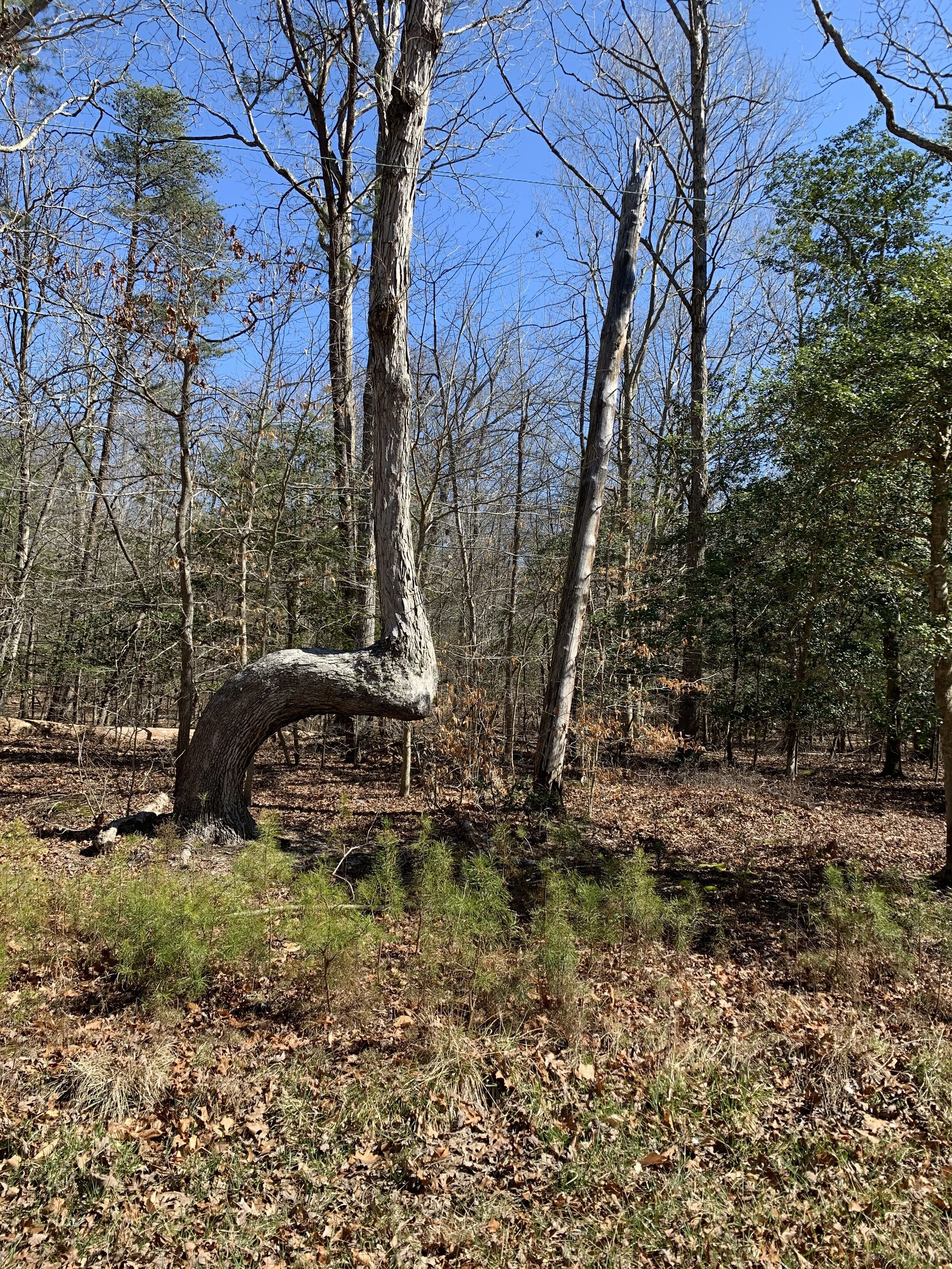
Photo: Marker Tree, Laura McDonald
We are pleased to announce the winner of our Monday Nature Mystery, Kelly Russell-Presley!
Kelly correctly identified the ‘trail’ or ‘marker’ tree in our photo. Before GPS, Native Americans would bend trees (usually elms, maples or oaks) to create a directional sign. This was accomplished when trees were young and pliable. Different tribes used different methods as well. Marker trees could also be used to indicate ‘no trespassing.’ Some of the oldest known trail trees are 400 years old!

Last week’s mystery: Marker Tree, Laura McDonald
Each Monday we’ll post a new mystery and identify the previous week’s winner. They’ll receive an ASNV hat or tote bag.
Click here to listen to this week’s audio mystery!
Do you know who sings this song? Post your guess on our Facebook page under the Monday Nature Mystery post. List both Common Name and Latin name and be mindful of capitalization. Good luck!
Please note that all entries are date and time-stamped. We review each correct answer to see who commented first. If someone 'likes' your comment, it would move it up on the list, making it look like the first post. Winners are limited to one prize every 90 days.
Hosting Cavity Nesting Birds in your Yard
Encouraging cavity nesting birds in suburban yards requires knowledge of birds and insects and how to support them. Larry Cartwright shared his knowledge with AAH Ambassadors in February.
Annual Audubon At Home Ambassador’s Brunch features Larry Cartwright

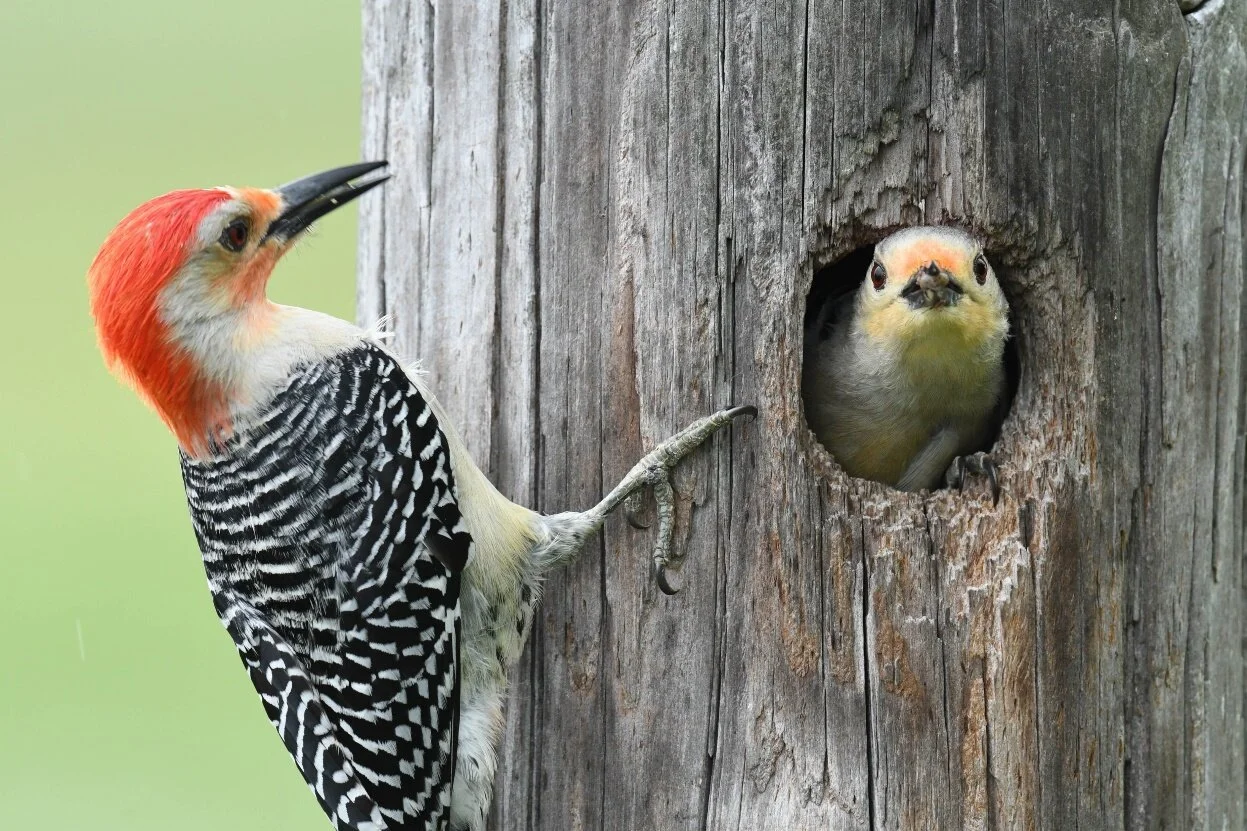
Red-bellied Woodpeckers, Larry Cartwright
Encouraging cavity nesting birds in suburban yards requires knowledge of birds and insects and how to support them. Audubon at Home Ambassadors invited Larry Cartwright to share his expertise on February 20th at their Annual Brunch. AAH Ambassadors are a trained group of volunteers who make personal visits within our region to anyone who asks for advice about how to make their property more wildlife friendly.
Although Larry Cartwright was formally trained in Russian history, he has been a nature lover most of his life, with a special fondness for birds and bats. In addition, he is the compiler for the DC Christmas Bird Count, ASNV’s Winter Waterfowl Count, the Dyke Marsh Breeding Bird Survey and the Huntley Meadows Eastern Bluebird Nest Box Program. At home, he uses his own suburban yard as a case study in how to transform property to attract nesting birds and other wildlife. Among the lessons he’s learned:
Avoid manicured monocultures in open spaces by planting a diversity of native plants that attract insects which in turn will attract birds. Reducing the use of pesticides is essential to encouraging a heathy balance of plants, insects and birds.

Native Plantings, Larry Cartwright
Don’t be Overly Tidy and instead, leave the leaves and dead plants for winter foraging, shelter and spring nesting materials. Adding a water source and a brush pile will attract even more birds. Sometimes neighbors or HOAs complain about naturalized landscapes they perceive as unkept. Larry’s solution is to plant colorful flowers, like Zinnias facing the street and talk with his neighbors about the purpose of his yard – to improve habitat. Loss of habitat is the most serious threat facing birds today.

Couded Sulpher with Zinnia, Larry Cartwright
Snags are essential to a healthy habitat. A snag is a dead tree or dead parts of an upright living tree. They are used by cavity nesting birds and many other animals such as Raccoons, Flying Squirrels and Big Brown Bats. Snags also attract insects, mosses and fungi when they decompose. Taller snags are especially useful to raptors such as Red-tailed Hawks as look-outs for prey and to attract potential mates.
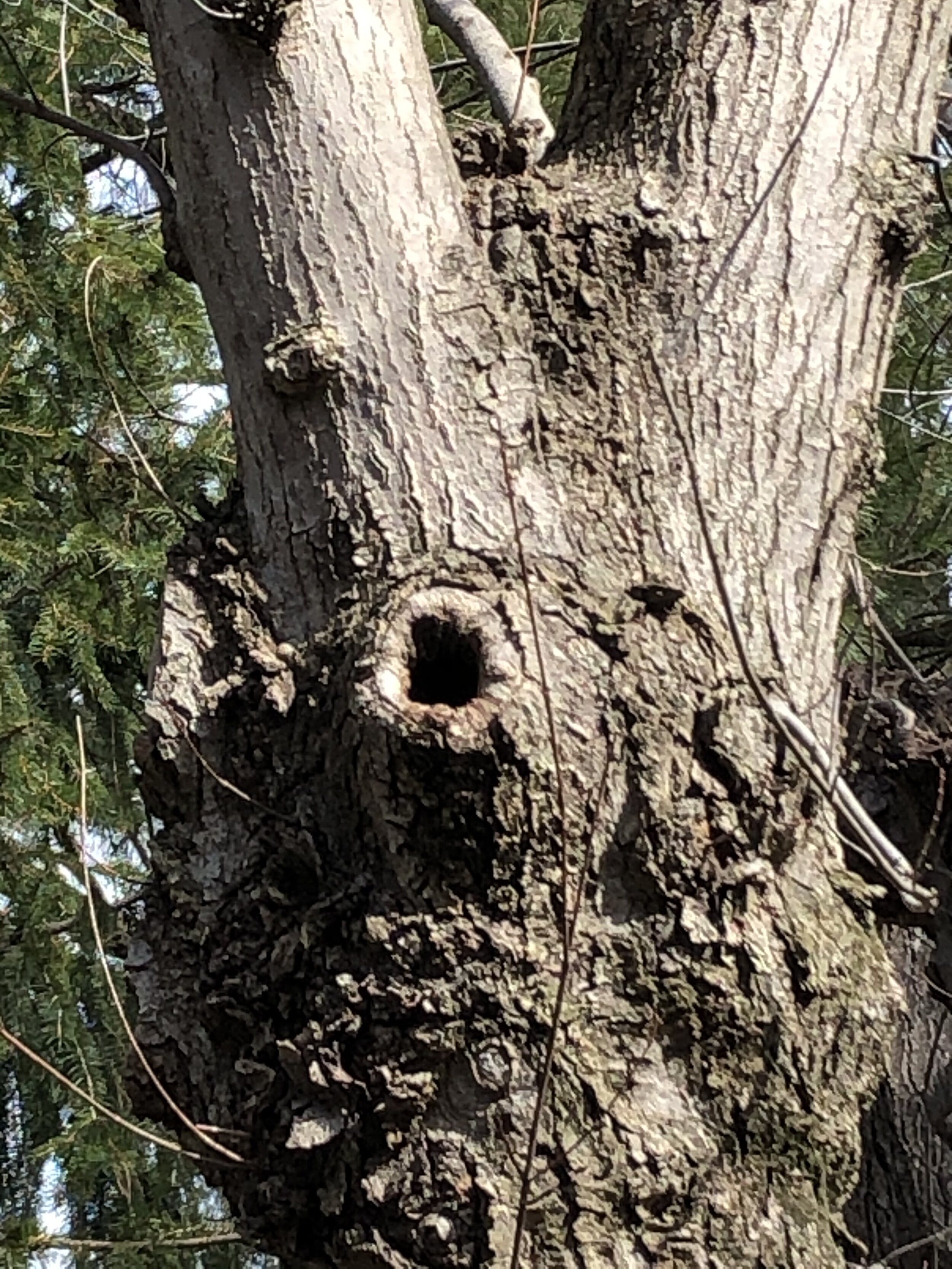
Cavities, Larry Cartwright
Learn how to maintain snags by only removing them if they threaten homes or harbor a disease or infestation that could spread. If they do fall to the ground in a wooded area they will return nutrients to the soil which aids the growth of new plants. Even if you must remove a dead tree, you can leave the stump for ground foraging cavity nesters like Pileated Woodpeckers and Northern Flickers. Larry recommends having at least 3 snags per acre.
Understand the two groups of cavity nesting birds. In the U.S. and Canada there are over 85 avian species that use cavities for food, shelter and nesting and 25 of them can be found in Northern Virginia.
Primary cavity nesters, including all woodpeckers, excavate their own cavities. Some smaller birds such as Carolina Chickadees and White-breasted Nuthatches can enlarge existing holes if the wood is rotten enough.

Pileated Woodpeckers, Larry Cartwright
Secondary cavity nesters do not excavate their own cavities but rely on broken off limbs or those created by other birds. Larry’s backyard favorites are the Great Crested Flycatchers who use dried plant material and snakeskins in their nests. The snakeskins are probably used to deter predators. Barred Owls have found homes in his neighborhood too, but not Eastern Screech-Owls even though they are also secondary cavity nesters. Wood Ducks and Hooded Mergansers use cavities but they need to live near water. Another cavity nester that prefers water is the Prothonotary Warbler. They nest along the Potomac, larger tributaries and inland marshes. Other species you might attract if you have enough open space are Eastern Bluebirds and Tree Swallows.

Great Crested Flycatcher, Gary Rasmussen/Audubon Photography Awards
Using nest boxes to attract birds requires the right habitat. Most residential areas do not offer enough foraging areas for birds that need open spaces and often there is severe competition from introduced species like House Sparrows. Larry’s yard does not have enough open space for blue birds and swallows but he does host nesting House Wrens and Mason Bees.
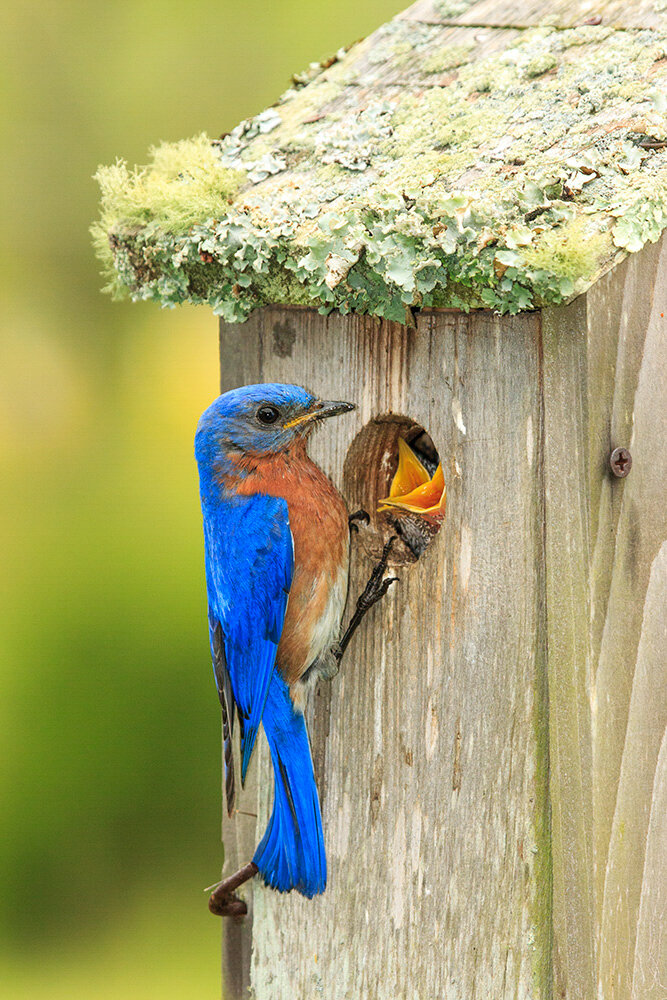
Eastern Bluebird, Hazel Erikson/Audubon Photography Awards
Be aware of what your habitat will support and the challenges for you and the birds. Northern Virginia is a rich home for numerous cavity nesting birds but it is also overrun with non-native plants like Porcelain Berry and English Ivy that degrade habitat. Learning about these invasive plants and removing them is an ongoing effort in Larry’s yard.
After habitat loss, the 2nd most serious threat to birds is free-roaming cats which kill about 2.4 billion birds per year in the U.S. Discussing your concerns with neighbors is a good beginning.
The effect of deer browsing on tree seedlings has degraded our woodlands. If seedlings do not grow then there will be no replacement oaks and other large trees to support cavity nesters in the future.
Read more about Larry’s talk and the value of dead wood in this article by Glenda Booth.
Do you want to make your yard more wildlife friendly and attract to cavity-nesting birds? Visit our Audubon at Home page and request a consultation with an Ambassador.

Apply for a Conservation Grant!
Audubon Society of Northern Virginia is offering Conservation Grants of up to $4,000.
Photo: Maggie Starbard
Audubon Society of Northern Virginia is offering Conservation Grants of up to $4,000. We are primarily interested in habitat improvement projects that combine the following features:
Native plants that attract birds and/or pollinators
An educational component – aimed at students, adults, or the general public
A demonstration project that can be emulated by others
A long-term commitment to maintain the project for multiple years
In northern Virginia
Special consideration will be given to projects near the Potomac River or its tributaries and projects on public lands or with high public access.
Email Greg Butcher if you have questions about putting together a project. Successful applicants will be asked to sign a contract agreeing to specific obligations.
Deadline is April 30, 2021 but feel free to start now! Use our online form to apply.

Audubon at Home Invites Grant Applications
We are very pleased to announce that ASNV’s Audubon at Home Program, in partnership with the Plant NOVA Natives campaign, has been awarded a grant of $15,000 to demonstrate the concept that native plantsan fit nicely into a conventional suburban aesthetic.
Photo: Native Plantings, Margaret Fisher
We are very pleased to announce that ASNV’s Audubon at Home Program, in partnership with the Plant NOVA Natives campaign, has been awarded a grant of $15,000 from the Environmental Education and Stewardship Grants Program of the Dominion Energy Charitable Foundation to demonstrate the concept that native plants, so critical to wildlife habitat, can fit nicely into a conventional suburban aesthetic, including formal or semi-formal settings.
The Audubon at Home program invites homeowners’ and civic associations to apply for funds to beautify their neighborhood entrances using low maintenance native plants. Six one-to-one matching grants of $2,350 apiece will be given to cover costs of a landscape designer to create a design and recommend native plants, prepare the site including removing any invasive plants present such as English Ivy, Periwinkle, and others, purchase and install the plants. The terms of the grant will require matching funds or sweat equity from the applicant. Funds will be granted contingent on the community association conducting educational outreach on the value of native plants to their residents. Completed installations will receive a high-quality sign that says, “Native plants support birds and other wildlife.” Community associations are expected to commit to maintaining the plantings for 5 years.
Applications are due May 31, 2021. Click here for more information and to apply.
Do you live in a community that would benefit from these funds? You are welcome to pass this information along. Questions? Contact Audubon at Home.

Youth Education Mini-grants
Are you an educator with a great idea for a bird-related conservation project with your students? The Audubon Society of Northern Virginia (ASNV) is sponsoring a mini-grant program in 2021 to help teachers, schools and non-profit organizations educate youth about birds and the environment.
Photo: Elisha Mitchell
Are you an educator with a great idea for a bird-related conservation project with your students? The Audubon Society of Northern Virginia (ASNV) is sponsoring a mini-grant program in 2021 to help teachers, schools and non-profit organizations educate youth about birds and the environment. Applicants must serve youth in Arlington, Fairfax, Fauquier, Loudoun, Prince William, Rappahannock, or Stafford counties or Alexandria, Falls Church, Fredericksburg, Manassas and Manassas Park cities.ASNV anticipates awarding three mini-grants, up to $1000 each. Applications are due on April 2, 2021. The application is here.
Funding may be used to support Meaningful Watershed Educational Experiences (MWEEs), professional development, field trips, speakers and admission fees, equipment, transportation, trees, plants, etc. All projects must include an educational component.
You must complete the project and submit a one-paragraph summary and photos by December 31, 2021. Your summary and photos will be used in the ASNV newsletter, blog and on the website.

Calling All Educators! 2021 Educator Scholarship Application Now Open
Looking for new ways to inspire your students to engage with nature? The Audubon Society of Northern Virginia offers a full scholarship and transportation to “Sharing Nature: An Educator’s Week” at National Audubon Society’s Hog Island Camp in Maine.
Photo: Atlantic Puffins, Walker Golder
Looking for new ways to inspire your students to engage with nature? The Audubon Society of Northern Virginia offers a full scholarship and transportation to “Sharing Nature: An Educator’s Week” at National Audubon Society’s Hog Island Camp in Maine. While there, you will learn interdisciplinary hands-on methods and approaches to environmental education while immersed in the natural world. This year’s session is currently scheduled for July 11-16, 2021. Hog Island will be instituting safety-related procedural changes in response to the coronavirus pandemic, including all-outdoor activities and single-occupancy sleeping arrangements.
Applicants must be classroom teachers, specialists, or school administrators working in one of the following counties: Arlington, Fairfax, Fauquier, Loudoun, Prince William, Rappahannock and Stafford. Applicants from Alexandria, Falls Church, Fredericksburg, Manassas, and Manassas Park cities are also eligible.
To apply, please complete the online application and submit two letters of recommendation no later than April 2, 2021. Please see the application for additional details, including post-camp requirements.
If you have questions, please contact youtheducation@audubonva.org.

Harriet Tubman, Naturalist
Harriet Tubman’s deep knowledge of the natural world enhanced her ability to guide people and knowing owl calls played an essential part.
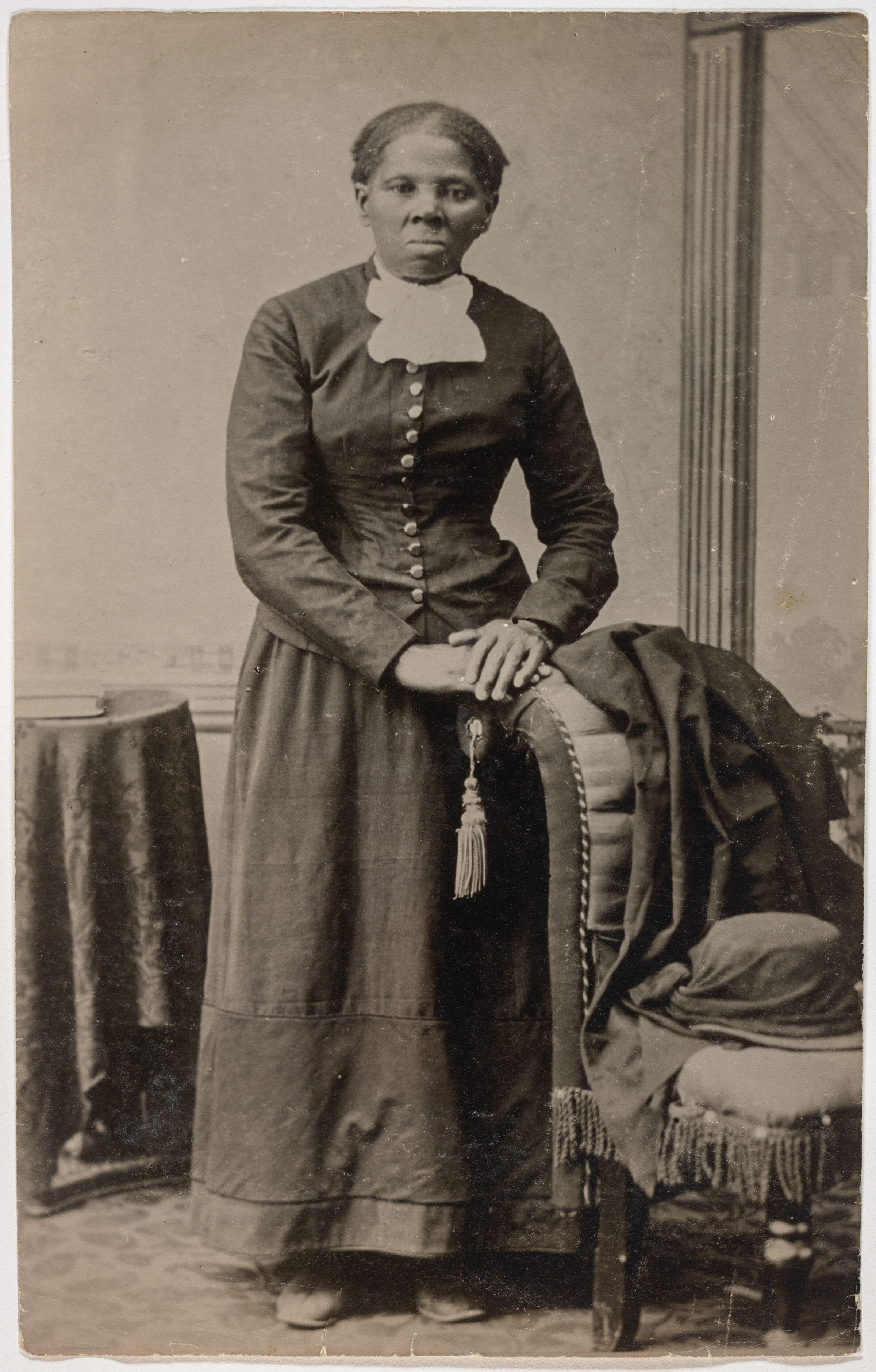
Harriet Tubman circa 1870, Harvey Lindsley, Library of Congress
We revere Harriet Tubman for her many accomplishments but particularly her courage in leading enslaved people to freedom. What we might not think about is how Tubman’s deep knowledge of the natural world enhanced her ability to guide people and knowing owl calls played an essential part.
National Audubon recently published an online article, “Harriet Tubman, an Unsung Naturalist, used Owl Calls as a Signal on the Underground Railroad,” written by Allison Keyes. Read it here
If you want to visit the wonderful Harriet Tubman Underground Railroad State Park in Dorchester, Maryland, it is now open but reservations are required.

March Bird of the Month
A huge swath of Pine Siskins (Spinus pinus) has overtaken states across the U.S. this past fall through winter in search of food. This is by far the biggest irruption year ever recorded.
Photo: Pine Siskins, Judith Roan/Audubon Photography Awards
Pine Siskins Irruption in Northern Virginia
Jessica Bigger
A huge swath of Pine Siskins (Spinus pinus) has overtaken states across the U.S. this past fall through winter in search of food. This is by far the biggest irruption year ever recorded. Pine Siskins are abundant in Canada, less so in the U.S. Yet, sometimes a large population will move farther south in search of food when there are food shortages. This year, there have been fewer conifer seeds available in the boreal forest forcing Pine Siskins to fly south for food. Due to this irruption year, birders in Maryland and DC have enjoyed seeing huge flocks of Pine Siskins fluttering and chattering about.
Pine Siskins are small birds, similar in size to goldfinches, but have brown streaks with a dab of yellow on their wings. They also have a raspier song and call. They do tend to hang out in flocks while foraging for seeds. You will likely hear a flock before seeing them as they are constantly chatting, while foraging.
They prefer open conifer forests searching for pine cone seeds, but you will also find them fluttering about in deciduous forests, thickets and meadows. You’ll usually see them on the tips of conifer branches, occasionally hanging upside-down like chickadees rather than foraging on the ground. They are also big feeder birds in the winter preferring smaller seeds, like thistle and oil sunflower seeds. There has been a recent breakout of Salmonellosis in the local area, likely caused by contaminated bird feeders. So, local experts have advised people to pull down their feeders and disinfect them before rehanging them.
In the winter, flocks of Pine Siskins tend to be aggressive when competing for food. Some fearless ones will even hang out closer to larger birds at feeders eating the remaining seeds left behind.
These little guys are also more tolerant of extreme cold weather than other birds. They can survive in temperatures as low as minus 70 degrees Celsius. How do they do this? By increasing their metabolism to stay warm.
At this time the population is quite stable, but like most birds, Pine Siskin populations are still at risk due to habitat loss and salmonellosis outbreaks from contaminated feeders. Since they are attracted to minerals and salt, often found on roads, they are more likely to be hit by a car than other passerine species. Some experts have hypothesized that replanting conifer forests would make up for lost habitat. Climate change is also a concern. Like most birds, scientists predict as the Earth’s temperature increases, the population will shift farther north in Canada.
Sources:
https://www.allaboutbirds.org/guide/Pine_Siskin/overview
https://www.audubon.org/field-guide/bird/pine-siskin
https://www.audubon.org/news/-pine-siskin-finch-irruption-fall-2020
https://ebird.org/atlasmddc/news/november-2020-bird-of-the-month-pine-siskin
Time to Scrub Your Feeders
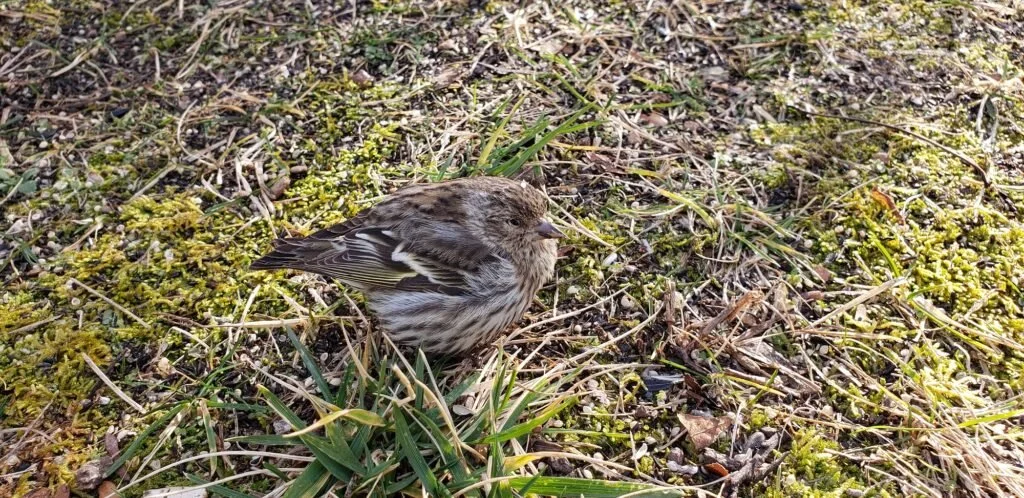
Recently, there have been several local reports of birders finding sick and dead Pine Siskins. The likely culprit is a bacterium called Salmonellosis, which is fatal to many feeder birds.
Photo: Pine Siskin, William Kurtz
Jessica Bigger
Recently, there have been several local reports of birders finding sick and dead Pine Siskins. The likely culprit is a bacterium called Salmonellosis, which is fatal to many feeder birds. Pine Siskins, American Goldfinches, and Common Redpolls appear to be exceptionally vulnerable to the disease. Salmonellosis is usually spread through feces which can contaminate bird feeders and bird baths. So, it is important to make sure you clean your bird feeders and bird baths very well and often.
“Sick birds may appear thin or fat and fluffed up and may have swollen eyelids. They are often lethargic and easy to approach. Some infected birds may show no outward symptoms but are carriers of the disease and can spread the infection to other birds,” as stated on feederwatch.org.
If you spot a bird you believe is sick, make sure to clean your bird feeders and the surrounding area to prevent the spread of the disease, and call your local wildlife rehabilitation center. If there are several sick birds around, remove your feeders for at least a week and clean them thoroughly.
Prevention is key to reducing the spread. You should clean your bird feeders every two weeks. Scrub your feeders thoroughly to remove any debris, and then wash them with soap and boiling water or soak your feeders in a bleach solution (1 part bleach to 9-10 parts water) for at least 10 minutes. Then rinse thoroughly.
For additional information, visit feederwatch.org.
Monday Mystery - March 1, 2021
Monday Nature Mystery continues! Read on to learn who correctly identified our last mystery.
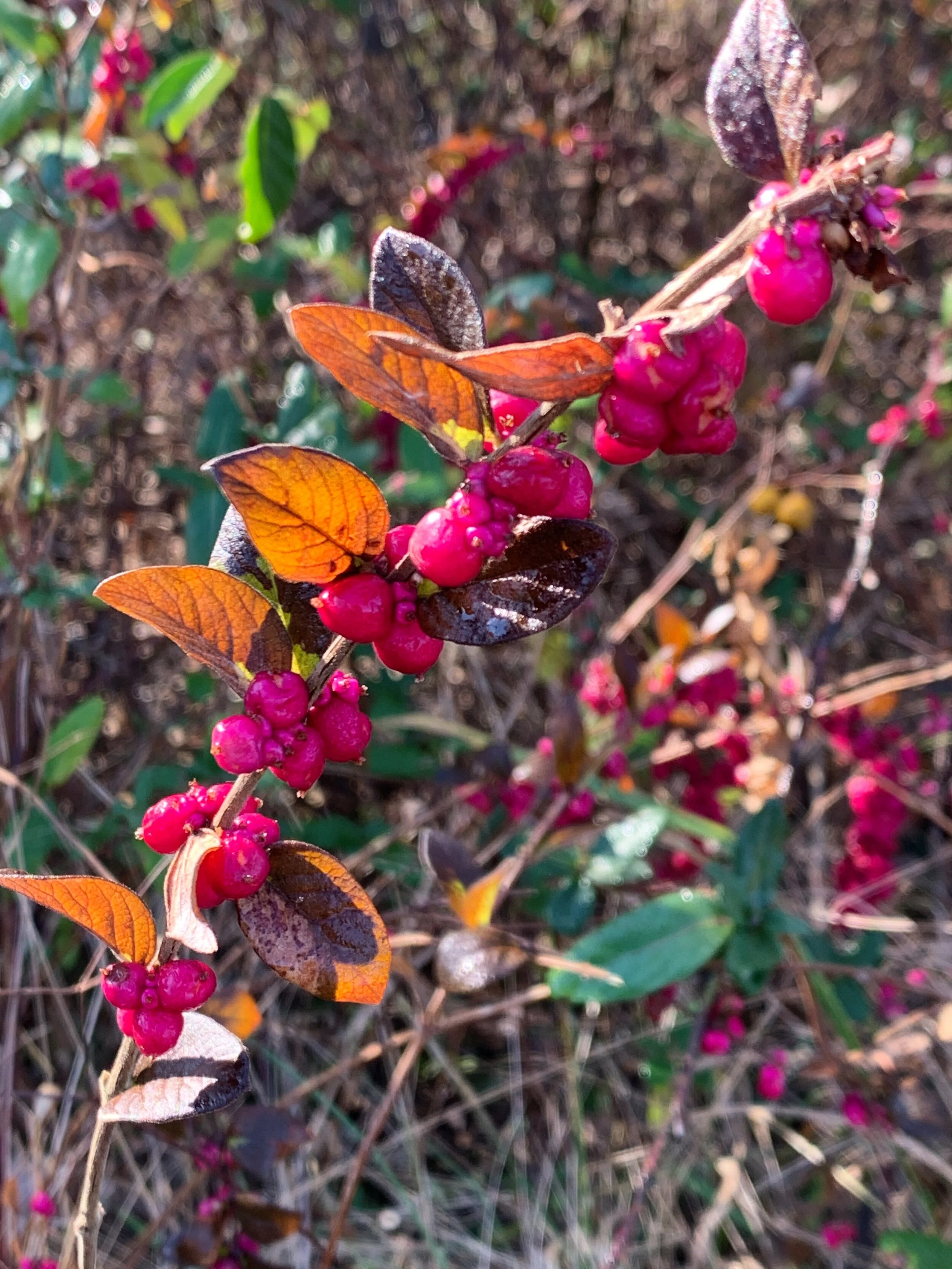
Photo: Coralberry, Laura McDonald
We are pleased to announce the winner of our Monday Nature Mystery, Maggie Olson Stack!
Congratulations to Maggie for correctly identifying Coralberry (Symphoricarpos orbiculatus). Common names also include Indian Currant and Buckbrush. This underutilized native deciduous shrub is perfect for shade or part-shade woodland gardens. The brightly colored berries attract birds and small mammals. To learn more about Coralberry click here.

Last week’s mystery: Coralberry (Symphoricarpos orbiculatus), Laura McDonald
Each Monday we’ll post a new mystery and identify the previous week’s winner. They’ll receive an ASNV hat or tote bag. Here is this week’s mystery:

Photo: Judy Gallagher

Photo: Laura McDonald
Do you know what the first photo is? Second photo is provided for context. Post your guess on our Facebook page under the Monday Nature Mystery post. List both Common Name and Latin name and be mindful of capitalization for the first photo ONLY. Good luck!
Please note that all entries are date and time-stamped. We review each correct answer to see who commented first. If someone 'likes' your comment, it would move it up on the list, making it look like the first post. Winners are limited to one prize every 90 days.
2020 Christmas Bird Count Summary
The 39th Annual Manassas-Bull Run Christmas Bird Count on December 20, 2020 was conducted following special Covid-19 protocols.
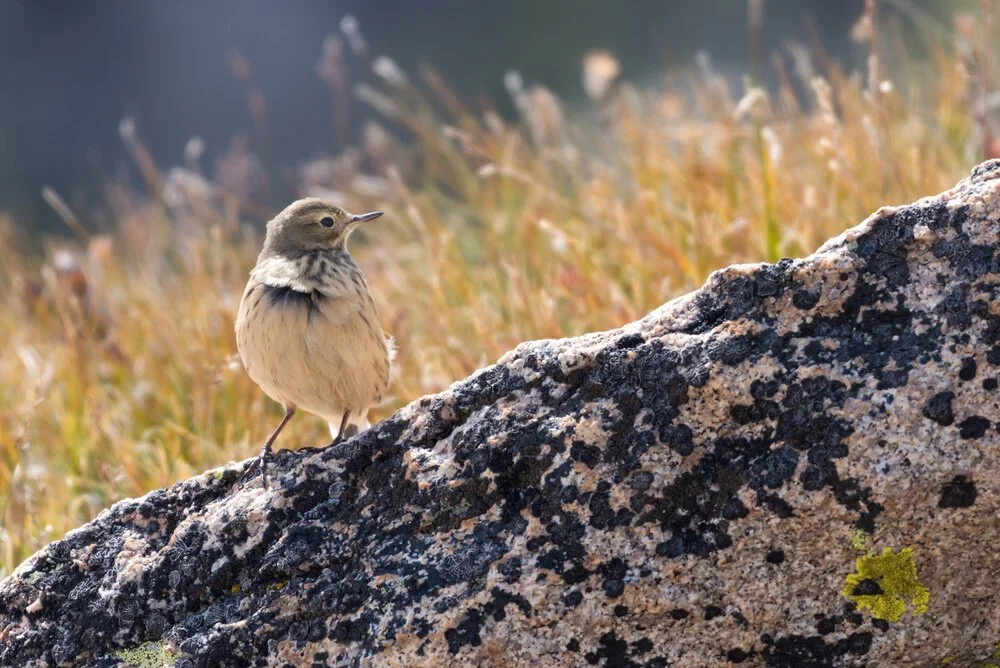
Photo: American Pipit, Ellen Nelson/Audubon Photography Awards
Written by Phil Silas
The 39th Annual Manassas-Bull Run Christmas Bird Count on December 20, 2020 was conducted following special Covid-19 protocols. The participant count was 93 as carpools were limited to family groups and no new volunteers were solicited. We managed to have a safe count that tallied over 22,500 birds of 87 species. We had to forego our traditional lunch in Ellanor C. Lawrence Park due to the pandemic. The birding conditions were favorable and the overall species count was only 2 short of our all-time high of 89 set in 2014.

American Pipit, Ellen Nelson/Audubon Photography Awards
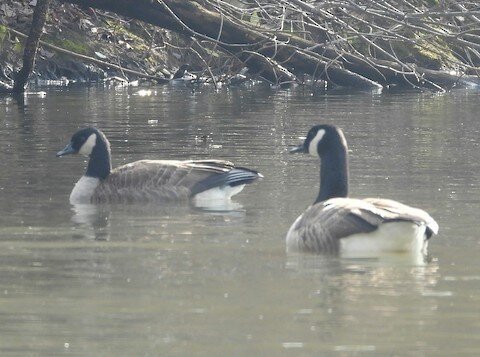
Cackling Goose and Canada Goose, Tim Resch
The American Pipit has only been seen on 20% of our counts, and never more than 16 birds, that is until this count. We observed pipet flocks on multiple routes for a new high count of 620 birds! A late Blue-headed Vireo was found and photographed by Matt Bender. It is only the 2nd one seen on the count and the 1st was back in 2002. A Cackling Goose was seen and photographed with Canada Geese by Tim Resch. It is also only the 2nd observation, and the other one was in 2013.

Blue-headed Vireo, Matt Bender
Other highlights included all-time highs of Carolina Wrens at 466, and White-throated Sparrows at 1,472. Merlins tied the all-time high of 3 previous years with 3. Common Ravens at 11 is just 3 off last year’s all-time high and the trend since 2015 is that they are indeed getting more common. Eastern Bluebirds had their highest count (387) since 2015. Canada Geese (4,563), Yellow-bellied Sapsuckers (50), Northern Cardinals (499) and Song Sparrows (491) all were very close to all-time highs.
There were several species where just 1 bird was observed including: American Woodcock, Great Horned Owl, Eastern Phoebe, Brown Thrasher, American Tree Sparrow, Rusty Blackbird and Pine Warbler. Due to food scarcity further north, there is an irruption of several species moving further south this winter. These include the following that are only observed on about half of our counts, and this year we observed: Red-breasted Nuthatches (21); Pine Siskins (12); and Purple Finches (9).
Another interesting observation was a leucistic American Robin by Dixie Sommers. Her photo shows how variable this loss of pigment can be; sometimes birds will have white splotchy feathering but this bird showed an overall lighter tone. Other notable points about the count were the absence of the Common Grackle, and the observation of a Horned Lark during Count Week.
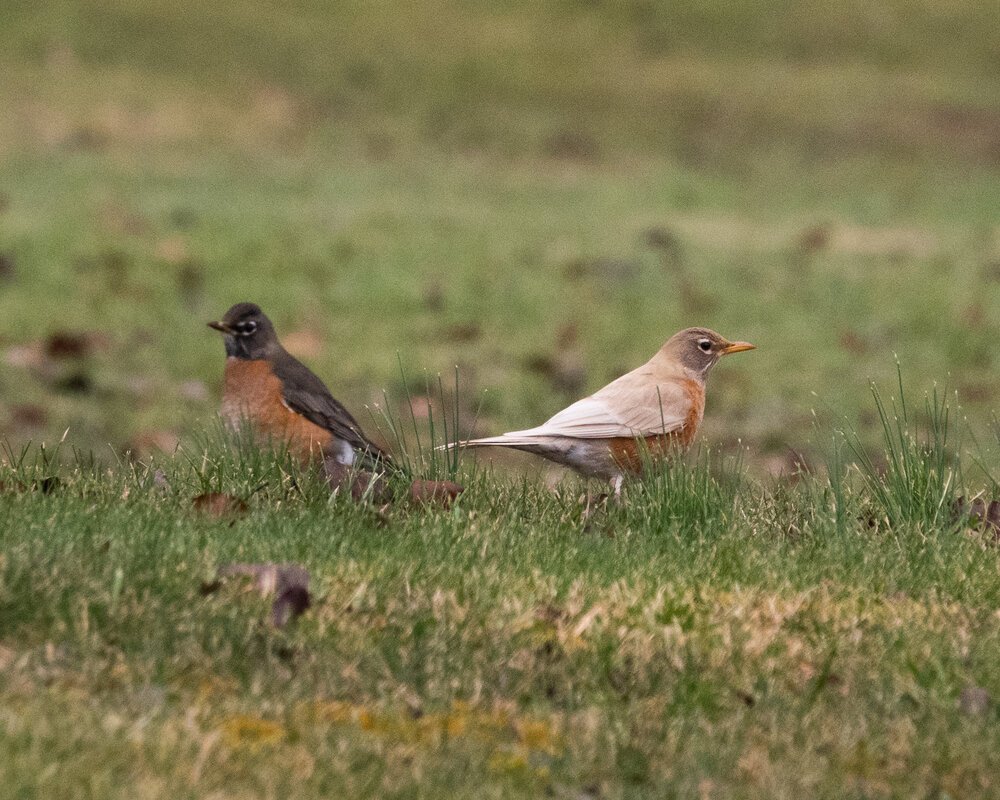
American Robin and Leucistic Robin, Dixie Sommers
The full results for the 2020 CBC are available here. Thanks to all who supported this event in these unusual circumstances. We look forward to a safe and more traditional event December 19, 2021!

2020 Christmas Bird Count Report now available
Read about the highlights of this year’s CBC from complier Phil Silas. The full report and tally are available here.
Photo: American Pipit, Ellen Nelson/Audubon Photography Awards
Read about the highlights of this year’s CBC from complier Phil Silas. The full report and tally are available here.

“The Pollinator Victory Garden” with author, Kim Eierman
ASNV/Audubon at Home is partnering with the Prince William Wildflower Society to co-sponsor a presentation with Kim Eierman, author of The Pollinator Victory Garden.
Co-sponsored Event with Prince William Wildflower Society
When: February 21, Sunday, 2:00 - 3:30 PM
Where: VIRTUAL
Registration: Here
ASNV/Audubon at Home is partnering with the Prince William Wildflower Society to co-sponsor a presentation with Kim Eierman, author of The Pollinator Victory Garden.

From PWWS: In keeping with our string of annual author events in the month of February, Kim Eierman, author of The Pollinator Victory Garden, will be our guest speaker on Sunday, February 21 at 2 pm through Zoom. As Kim says, “You don’t have to be an entomologist to realize that pollinators are in trouble, and you don’t have to be a professional landscaper or horticulturist to do something about it.”
Kim asserts that the passion and urgency that inspired WWI and WWII Victory Gardens are needed today to meet another threat to our food supply and our environment—the steep decline of pollinators. The Pollinator Victory Garden offers practical solutions for winning the war against the demise of these essential animals.

A Hummingbird in Winter
In Virginia, hummingbird migration season peaked months ago, as Ruby-throated and Rufous Hummingbirds made their way to Mexico or Central America. One Rufous Hummingbird defied the regular migration pattern and is spending the winter in Green Spring Gardens.
Photo: Rufous Hummingbird, Dixie Sommers
Lisa Mackem
In Virginia, hummingbird migration season peaked months ago, as Ruby-throated and Rufous Hummingbirds made their way to Mexico or Central America. One Rufous Hummingbird defied the regular migration pattern and is spending the winter in Green Spring Gardens. Birds that are present at unusual times are called “vagrants,” and show a change in their migration patterns.
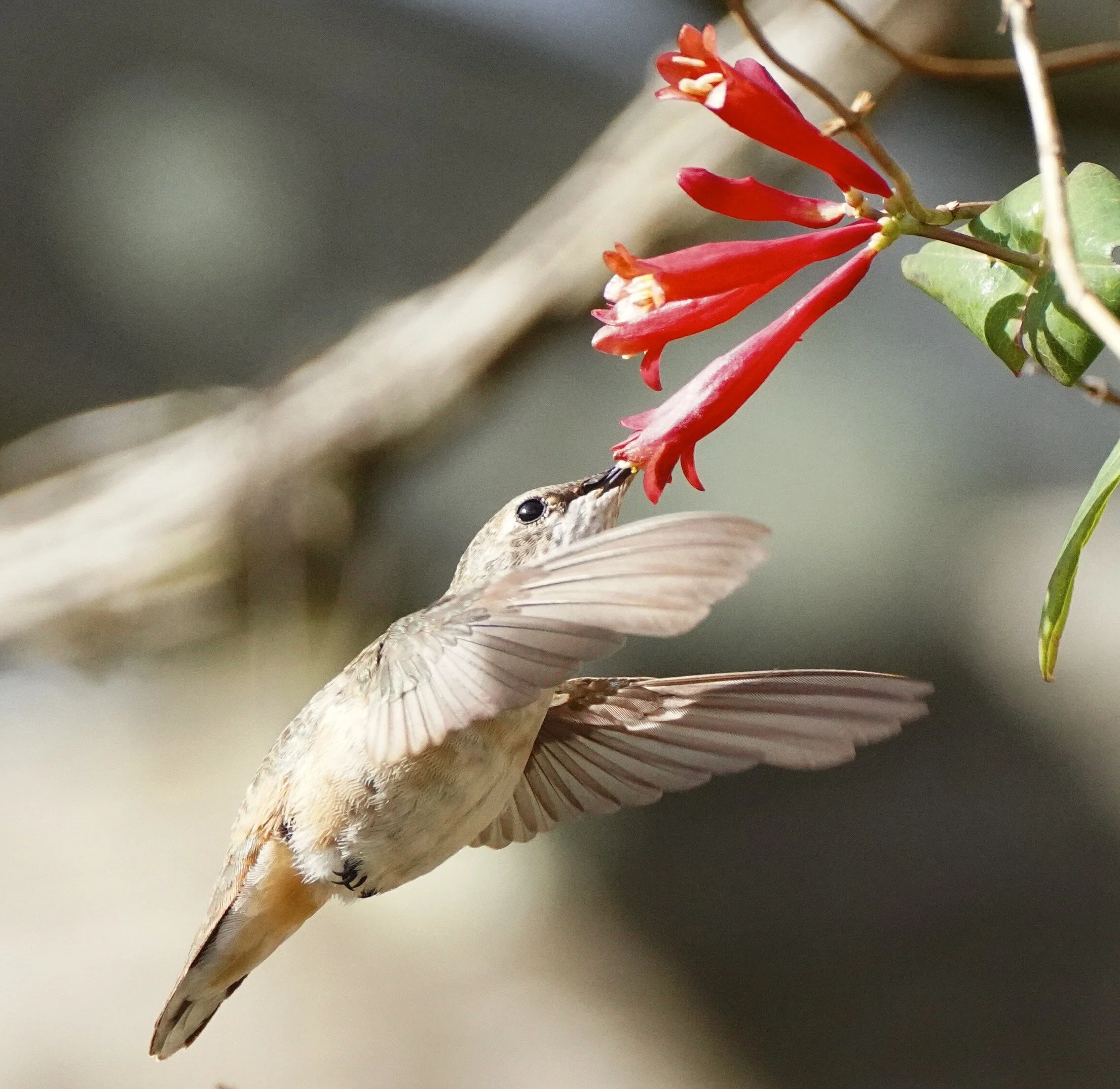
Rufous Hummingbird, Charlene K. Johnson
Larry Cartwright has made many notable contributions to citizen science, including managing the winter waterfowl count for the Audubon Society of Northern Virginia since 2008 and compiling the District of Columbia’s Christmas bird count since 2004. He has noticed that Rufous Hummingbirds, although not native to this area, are becoming more frequent visitors and that their numbers have steadily increased on the Virginia state checklist for birds. He worked with Bruce Peterjohn, who recently banded the vagrant hummingbird, and explained her presence with the concept of mirror image migration. Rufous Hummingbirds usually migrate by flying east of the Rockies before veering west to Mexico. Some of them do the opposite, flying west of the Rockies and then turning east — the exact mirror image of their normal migration route. These vagrants ultimately end up along the East or Gulf Coasts.

Hummingbird feeder at Green Spring Gardens, Larry Cartwright and Bruce Peterjohn
“This has been a big year for vagrants,” Larry notes, adding that birds from wooded areas have appeared in the Great Plains and continued eastward. Fires and heat on the West Coast, which might drive birds east to find food, could also explain vagrancy. Local vagrants include a Couch’s Kingbird – the first ever seen in Virginia. Vagrant sightings are likely to continue. Larry suggests, “Once the migration pattern changes, it will probably repeat itself. It is encoded by now.”

Banding, Larry Cartwright and Bruce Peterjohn
Banding birds will continue to yield valuable information. “We couldn’t have the concept of mirror image migration without having some idea of where the birds went,” says Larry, explaining that banding will show a difference in a migration pattern for the rest of the bird’s life. The bander will also learn a bird’s gender, weight, species and approximate age. The Rufous Hummingbird vagrant is an adult female, weighs 4.3 grams and maintains no body fat. She is molting, which means she is healthy. If she returns next year, the band will show she survived the year.
Green Spring Gardens observers report that their winter guest behaves and feeds normally and has not shown signs of stress. She eats from flowering plants and from feeders that the Green Springs staff provided, and has no notable predators because she is simply too small for most predator birds and mammals. She will enter a kind of torpor at night, lowering her body temperature and metabolism to withstand the cold, and eat when she wakes up. Larry predicts that she will remain at Green Spring Gardens for the winter.