
Photo: Small Milkweed Bug adult and nymphs with Common Milkweed seeds, Judy Gallagher
Judy Gallagher
May 2026
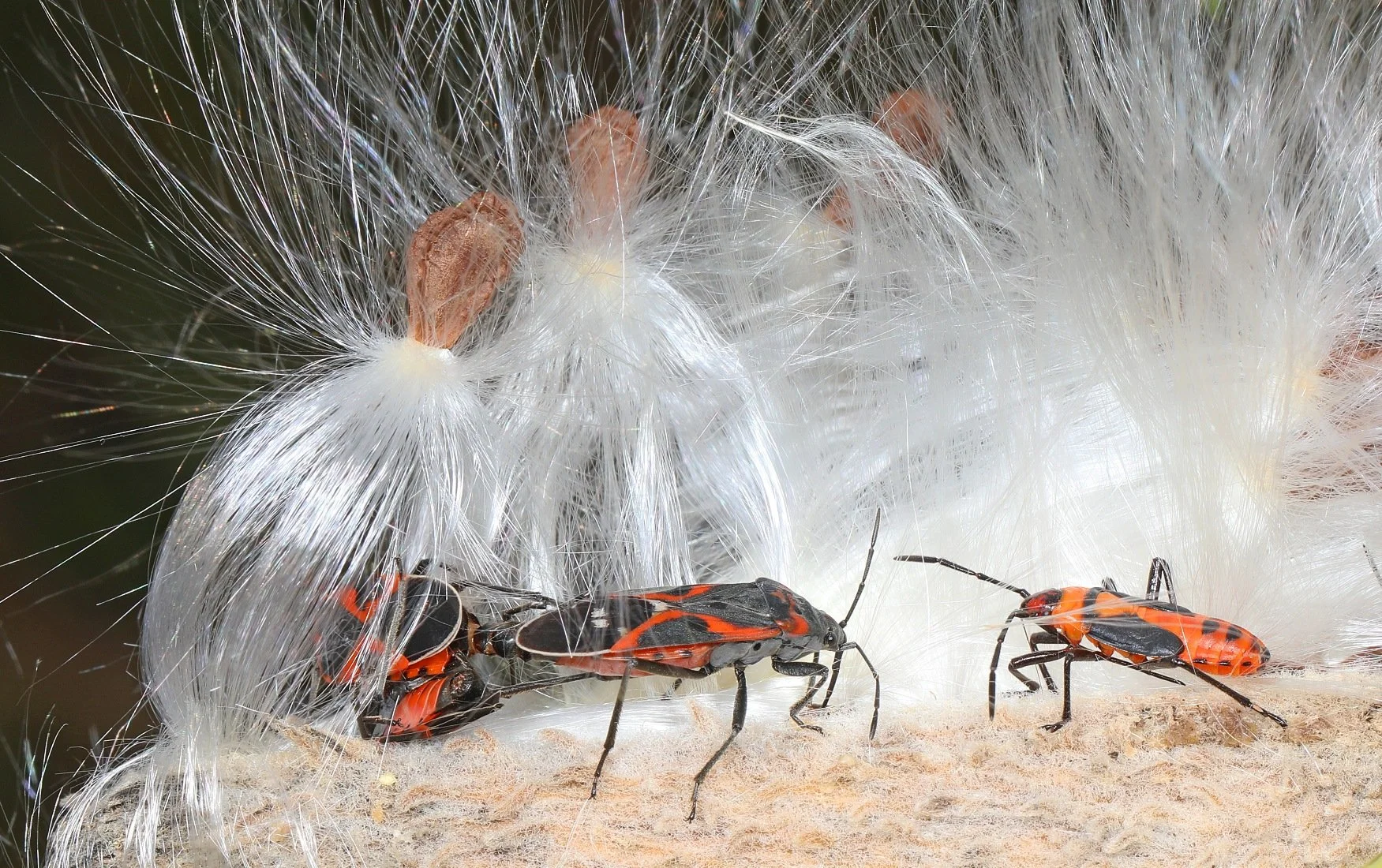
Small Milkweed Bug adult and nymphs with Common Milkweed seeds. Photo: Judy Gallagher
Milkweed will be blooming soon, and with it come Milkweed Bugs. Milkweed Bugs are true bugs, part of the Lygaeidae or Seed Bug family. As the name implies, most species in this family eat seeds, but some can also eat other plant parts. Like all other true bugs, they have piercing-sucking mouthparts, well adapted for piercing hard seeds.
Some seed bugs have a limited number of plant host species, while others are able to eat seeds from a broad range of plants. Availability of suitable plants tends to limit seed bug populations. Most seed bugs are found in open grassy areas, where there is a mixture of flowering plants. There are about 80 species of seed bugs in North America.
Like other true bugs, seed bugs undergo incomplete metamorphosis, with eggs hatching into nymphs that look like the adults, but without wings and reproductive organs. Some seed bug nymphs are gregarious, meaning that they cluster together. Entomologists speculate that, with a group, it takes less saliva per individual to soften the seeds for digestion. After the nymph undergoes its final molt, the winged adult emerges. All adult seed bugs have an X on their backs, produced by the way the wings fold.
Some seed bug species females lay multiple sets of eggs during their lifetime. Those laid later in the year mature faster than ones from earlier in the year, presumably to allow the nymphs to mature quickly before cold temperatures limit them.

Large Milkweed Bug adults and nymph on Common Milkweed Seed Pod. Photo: Judy Gallagher
Small and Large Milkweed Bugs are bright red with black markings. Both feed on milkweed seeds, inserting their long proboscises into seeds, injecting enzymes to liquefy the seeds' contents, and then sucking out the juice. The seeds contain toxins called Cardenolides. Small and Large Milkweed Bugs have evolved to be able to process the toxins, and they sequester the chemicals, making the Milkweed Bugs unpalatable to birds and other vertebrates. They advertise their distastefulness with their bright colors.

Small Milkweed Bug eating another Small Milkweed Bug. Photo: Judy Gallagher
Small Milkweed Bugs aren't as picky about their food as some other Milkweed-dependent insects. When Milkweed is scarce, they can also feed on Honey Bees, Monarch caterpillars and pupae, Large Milkweed Bugs, Dogbane Beetles, and each other.
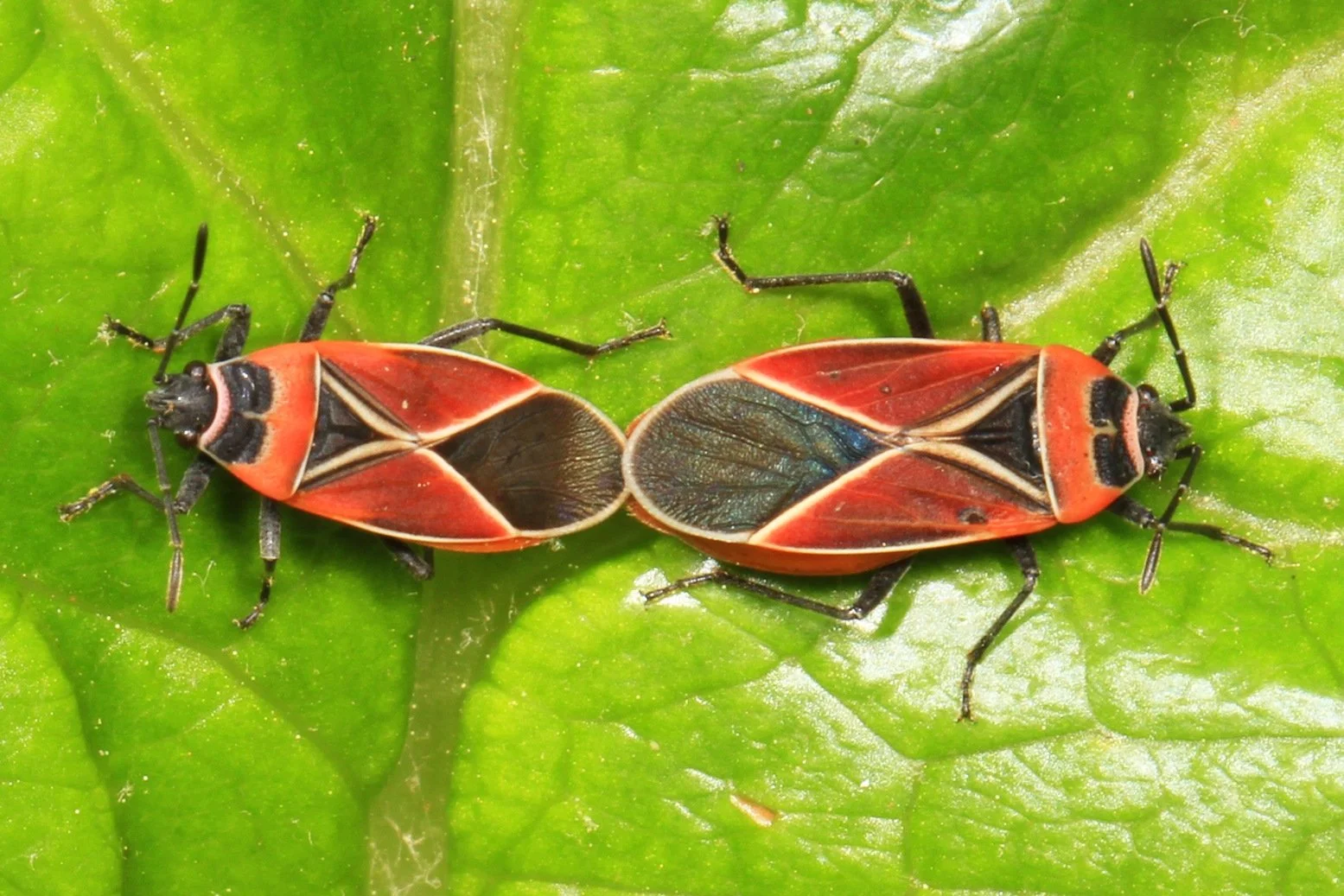
White-crossed Seed Bugs mating. Photo: Judy Gallagher
White-crossed Seed Bugs feed on Ragwort seeds, and are chemically protected by alkaloids in Ragwort. They migrate to find new Ragwort sources, and females will also migrate to find a mate. But if a female has enough food and a mate, hormones trigger her flight muscles to shut down, instead using her resources to produce eggs. Males retain the ability to fly throughout their adult life.

False Milkweed Bug adult and nymphs feeding on aster species seeds. Photo: Judy Gallagher
But not all brightly colored seed bugs are toxic. The False Milkweed Bug looks very similar to the Small Milkweed Bug. However, it has a very different diet: it prefers to eat the seeds of members of the Aster Family. Its mimicry of the toxic Large and Small Milkweed Bugs discourages predators from attacking it.
The above-mentioned seed bugs are colorful, but many seed bugs are small and brown. The drab ones most likely aren't protected by toxins and depend on camouflage for protection from predation. Some seed bugs emit foul odors to deter predators.
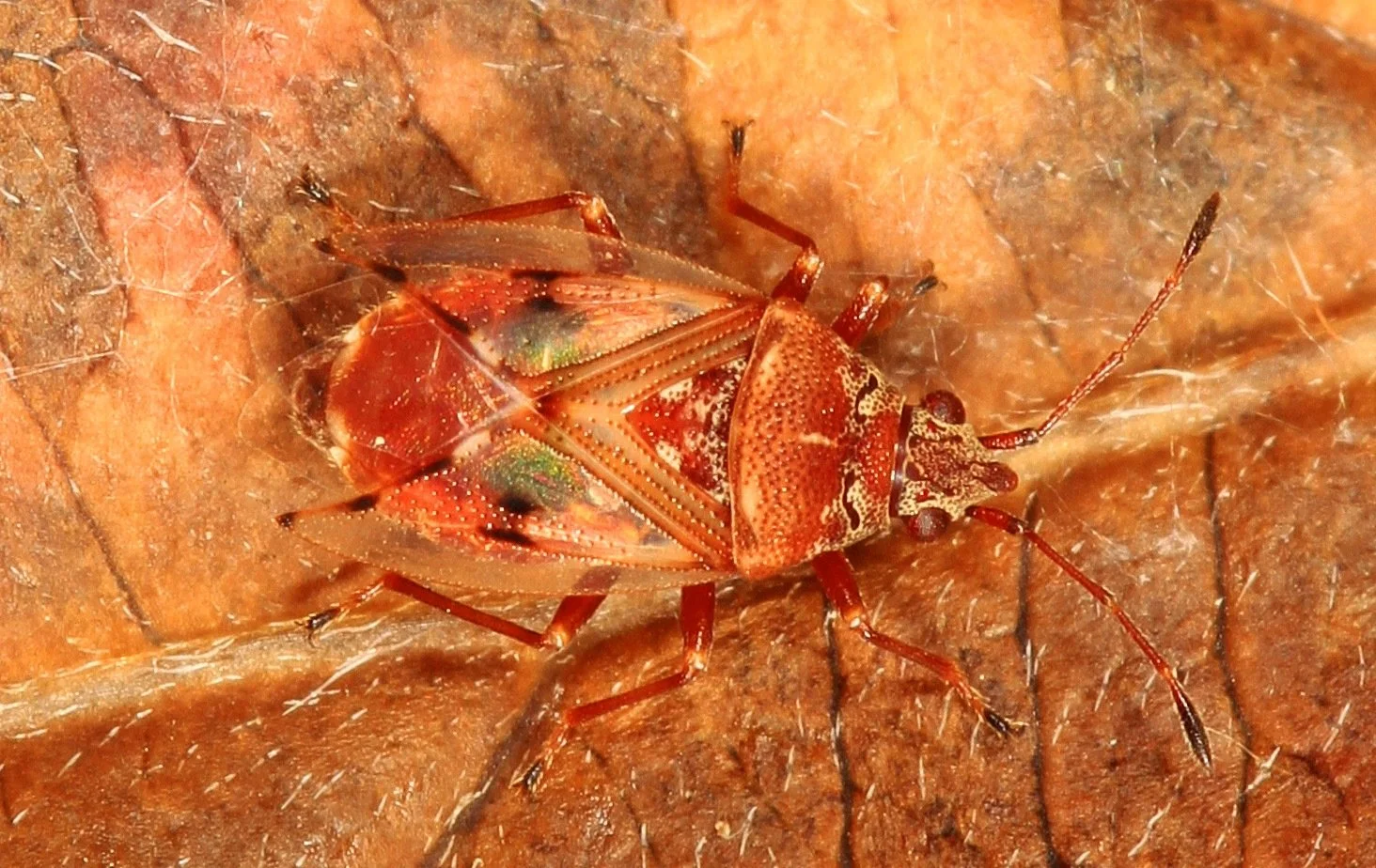
Birch Catkin Bug, blending in well. Photo: Judy Gallagher
Birch Catkin Bugs are rust colored, and can blend in well with a background of fallen leaves. They overwinter as adults and breed in the early spring. They emit mating calls by striking a rigid part of the wing against a scraper on the thorax.
Most seed bugs aren't numerous enough to pose a major threat to plant populations. Some are controlled by birds and reptiles but one of seed bugs' major biological controls is parasites like bacteria, or Tachinid Flies, who lay eggs on the seed bugs.
I hope you'll have a chance to see some seed bugs this summer!
View more of Judy’s articles on A Closer Look: Nature All Around Us (formerly Observations from Meadowood).