
Invasive Plant Legislation Moves Forward in the Virginia Legislature
Photo: Invasive vines, Valerie Morgan
Tom Blackburn
Anyone who walks in local parks or drives the highways can see invasive plants overwhelming trees, shrubs and meadows. Invasive plants are estimated to cost the state $1 billion per year. I am pleased to report that the Virginia legislature appears to be intent on taking steps to slow the environmental and economic harm that invasive plants are causing. State legislators introduced seven bills relating to invasive plants in the 2026 legislative session, and all of them are proceeding through the legislative process.
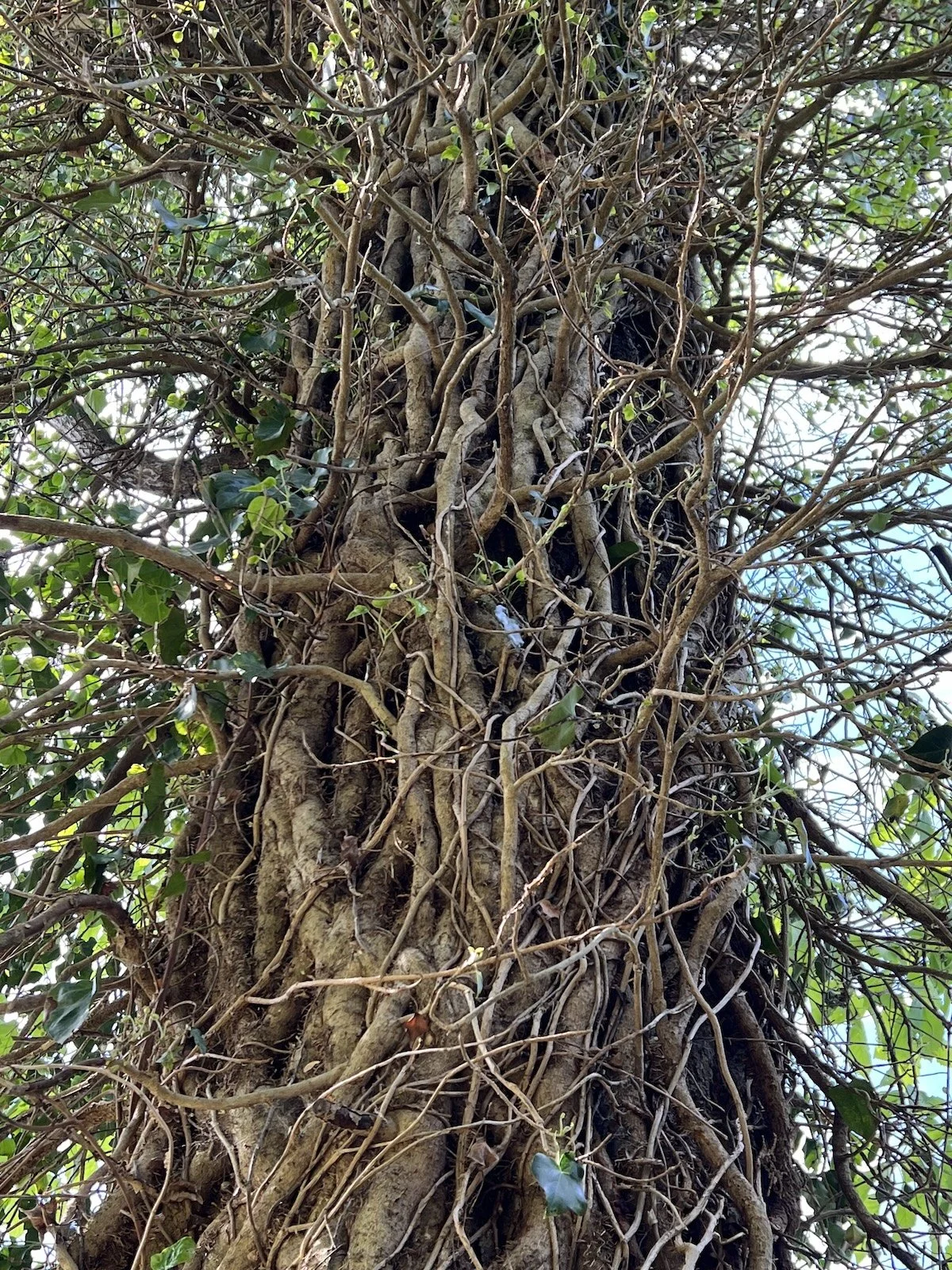
Invasive vines smothering a tree. Photo: Valerie Morgan
Local government control of invasive plants: House Bill 388 and Senate Bill 89 are essentially identical bills that would permit local governments that have established service districts to use tax revenues to control the spread of plants on the state’s list of invasive plants. The House and Senate each has passed its bill by unanimous vote, meaning that it is virtually certain that the bills will be consolidated and sent to the Governor for signature. Congratulations to the Fairfax Invasive Removal Alliance, which first championed this bill and convinced other environmental organizations to support it.
Ban on selling state-designated noxious weeds: Current law allows retailers to sell plants included on the state list of noxious weeds, even though they are the most destructive of the invasive plants, if they are commercially viable. As introduced, House Bill 109 would have banned the sale of noxious weeds outright. However, the House passed the bill by a vote of 96 to 2 with an amendment that phases in the ban over two years for grasses, forbs, and vines; four years for shrubs; and seven years for trees. The Senate Agriculture, Chesapeake and Natural Resources Committee reported the bill to the Senate, where it is awaiting final action.
Ban on invasive plants along state highways: House Bill 88 would prohibit the Commonwealth Transportation Board and Commissioner of Highways from planting any plant on the state list of invasive plants along any state right-of-way. As introduced, the bill would have required the state to establish a plan for the removal of all invasive plants from the right-of-way, but that provision was removed from the bill before the House passed it by a unanimous vote. Two Senate committees have reported the bill unanimously, and it is now pending before the full Senate.
Civil fines for failing to notify landowners before planting invasive plants: House Bill 710 and Senate Bill 383 are essentially identical bills that establish civil penalties for tradespeople who propose or install plants listed on the state’s invasive plant list without first notifying the property owner in writing. The House bill passed with only two dissenting votes and the Senate bill passed unanimously. It is virtually certain that a consolidated bill will be sent to the Governor for signature.
Volunteers’ using herbicides on state property: In the last session of the General Assembly, the legislature passed and the Governor signed legislation permitting volunteers under supervision of a certified applicator to use herbicides on property owned by local governments. Senate Bill 163 would expand that law by making it applicable to state-owned property. The bill passed the Senate by unanimous vote and the House Agriculture, Conservation and Natural Resources Committee has voted unanimously to send the bill to the full House for a vote.
Next steps: House Bills 88 and 109 must be passed by the Senate and Senate Bill 163 must be passed by the House before they can be sent to the Governor for signature.
A big thank you to the 28 members of NVBA’s Advocacy Committee and other NVBA members who have agreed to write to their delegates and senators to support environmental legislation. We will continue to write to our legislators about these three bills and other bills that preserve and enhance our environment.
This story was updated on Wednesday afternoon, February 25. For further developments on the bills, go to the Virginia Legislative Information System and type the bill number into the search box identifying the chamber (HB or SB) and the bill number.