
Letter to Our Members
Photo: Northern Saw-whet Owl, Carolina Sanabria
Carolina Sanabria
My Owl Encounter
The Smithsonian Environmental Research Center in Edgewater, MD, hosts a Project Owlnet bird banding station as part of a project studying Northern Saw-whet Owl migration. I was allowed to participate as a volunteer last year, which gave me a truly memorable experience, seeing the Northern Saw-whet Owl for the first time. The owls migrate from mid-October through late November.
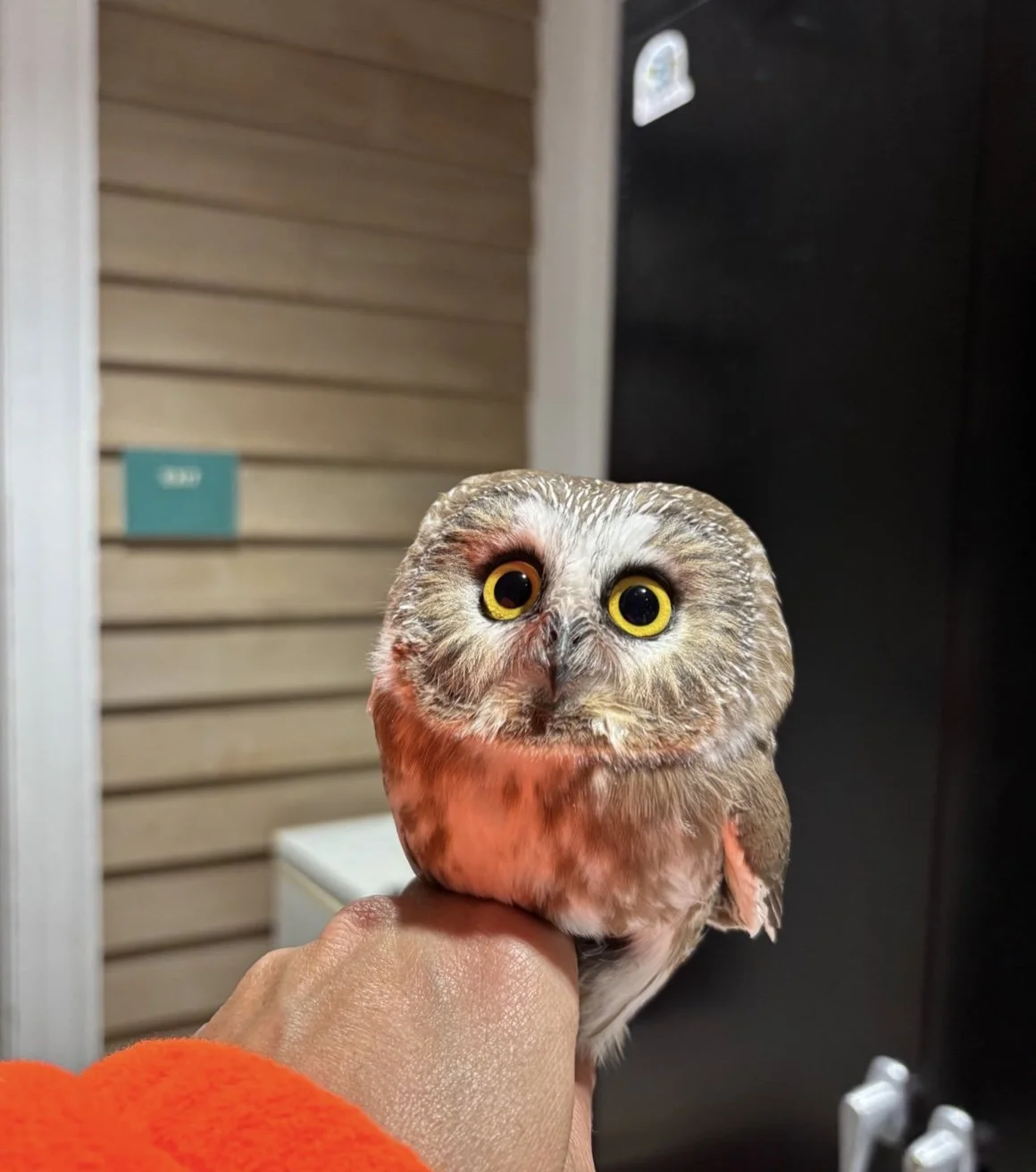
Northern Saw-whet Owl. Photo: Carolina Sanabria
This was my first experience with bird banding, although I had read about it and understand its importance to conservation. See Tove Danovich’s June 24, 2025 essay on bird banding in the Washington Post. The banders open up mist nets and set up an audio lure at sunset. They take them down at midnight unless an owl is present. We checked the mist nets hourly, and explored the outdoors while we waited, listening to animal calls and observing insects. We also completed an owl puzzle and shared snacks. Most nights we didn't catch any owls, but it was still time well spent in good company.
It wasn't until our last check of the nets that I finally saw two Northern Saw-whet Owls. Immediately, my tiredness from staying up went away! The banders carefully removed the owls from the net and took them back to the center to collect data, such as the bird’s weight, size and age. One of the tools the banders use is an ultraviolet blacklight. When shined on the underside of the owl’s wings, the visible fluorescent pigments help to determine its age. Fortunately, the two young owls were in healthy condition. Near the end of the process, I was able to hold the smallest owl and feel how light it was. Just seeing its striking yellow eyes and feeling its soft plumage was almost unreal. We finished that successful night watching the owls take flight once they were released.
I was able to participate in the project through the sponsorship of one of my ecologist role models. As many have done for me, I aim to connect people with opportunities to learn about the environment. This is essential, particularly given how easy it is to feel disconnected from nature in a fast-paced society that is increasingly focused on technology. There are plenty of joys to be found in nature and sharing it with others is special.
Volunteering has allowed me to explore new places, connect with others and expand my learning, whether it’s removing invasive plants, identifying stream critters or setting up camera traps to monitor wildlife. I enjoy staying active and going outdoors to observe the nature around me. Contributing to the health of the environment that we all share is how I want to continue spending my time.
Carolina Sanabria is a long-time NVBA volunteer who began serving on the board in 2025.