
The Latest on Avian Influenza
Photo: Green-winged Teal, Gary Zahm/Audubon Photography Awards
Brad Scriber
Spring migration is about to bring millions of birds north along the Atlantic Flyway, a welcome sight for Virginia bird-lovers emerging from a season of persistent cold and stubborn snowbanks. With these birds, concern is also returning about a bird flu outbreak that has been active in the U.S. since early 2022. Overall, the public health risk from the virus is low, but for certain animals and people who are likely to encounter infected birds, precautions remain important.
Bird flu, also known as avian influenza, is a broad term for illnesses caused by a family of viruses with varying impacts on different bird species. Wild aquatic birds are reservoirs for these pathogens, which means they often carry the germs but don’t get sick. Sometimes mutations and other changes in the virus populations circulating among these birds can create new strains that do cause severe symptoms or death for these host birds. Whether or not a strain makes an aquatic bird sick, the virus can be passed on and infect poultry flocks or wild land-based birds, which may have stronger reactions. Viruses are spread through direct contact or indirectly through saliva, mucus, or feces.
If you See a Sick or Dead Bird
Experts say not to handle sick or dead birds. If you must remove a carcass, wear protective gear (rubber gloves, a mask, and eye protection) and bury the dead bird or double bag it and place it in a secure, trash can to prevent scavengers from accessing it. Call the Virginia Wildlife Conflict Hotline at 855-571-9003 or email wildlifehealth@dwr.virginia.gov if you see:
Five or more dead vultures, waterfowl, shorebirds, or seabirds in the same area within five days
Sick or dead eagles, hawks, owls, or turkeys, excluding carcasses found on the road
Ten or more dead wild birds of any other species in the same area within five days
Suspected cases in backyard poultry flocks should be reported to the Virginia State Veterinarian’s Office at (804) 692-0601 or at vastatevet@vdacs.virginia.gov. You can also call the USDA toll-free at (866) 536-7593 to report suspected cases in wild or domestic birds.
Atlantic Flyway Wild Bird Infections
USDA tracking of wild bird infections shows that in the early weeks of 2026, a number of Canada Geese, Bald Eagles, crows, and Red-tailed Hawks have been found with bird flu in Fairfax County, Loudoun County, and Alexandria. Last fall, birds killed by hunters across Virginia tested positive across many species including Green-winged Teal, Ring-necked Ducks, Greater Scaup, Gadwalls, and Mallards.
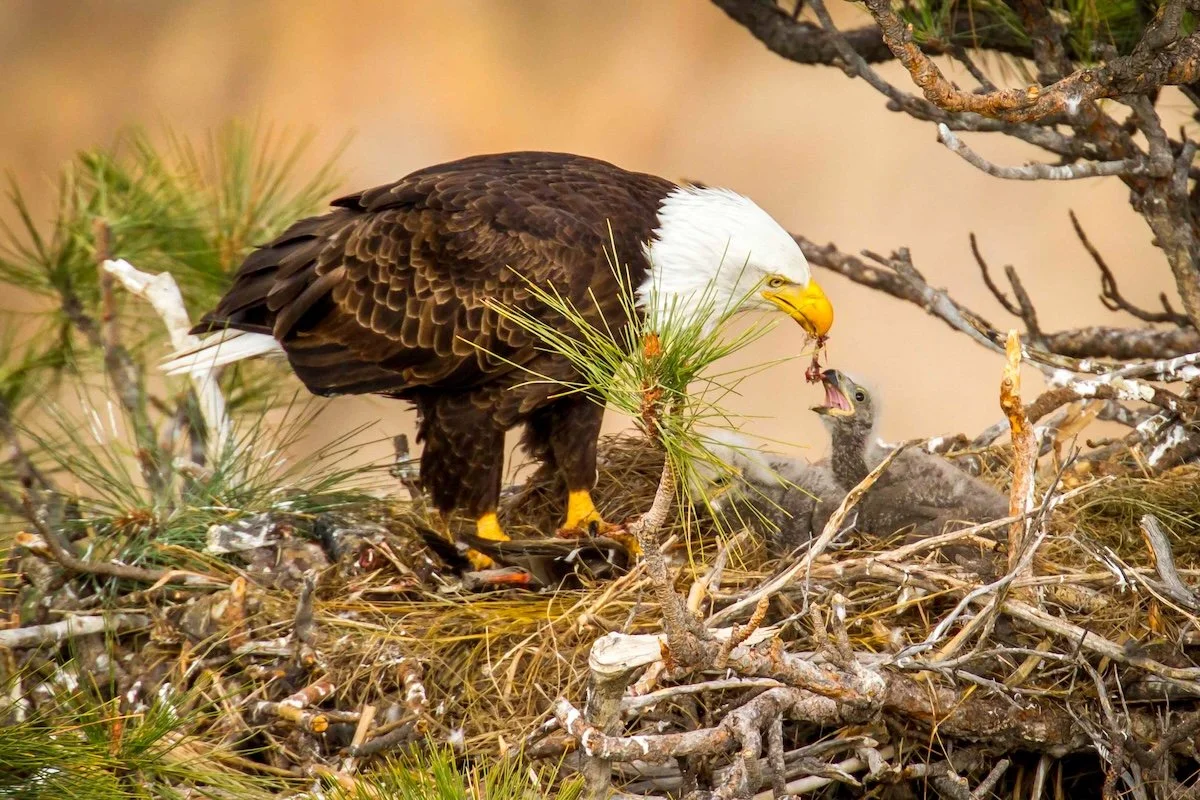
Bald Eagles. Photo: David Rein/Audubon Photography Awards
Predators and scavenger birds likely ingest the virus while feeding on infected waterfowl. Raptor infections are raising concern about the impact on population dynamics. Infected waterfowl deaths overlap with peak Bald Eagle nesting season from North Carolina to Florida and may be hindering breeding success and the recruitment of maturing birds into Bald Eagle mating populations. Some infected eagles have been observed dropping from their nests or have been found dead directly below active nesting sites.
High Risk to Farm and Backyard Poultry
Scientists tracking bird flu use the terms highly pathogenic avian influenza (HPAI) or low pathogenic avian influenza (LPAI) based on how aggressively a virus infects and kills chickens during lab testing. The virus of concern at the moment, known as H5N1, is an HPAI virus with significant risk to backyard and commercial poultry. According to an archived CDC article, the current H5N1 virus is descended from a virus that caused serious concern thirty years ago. A version of the H5N1 virus was found in domestic waterfowl in China in 1996 and caused an outbreak in poultry the following year, which eventually led to human deaths. After a lull, when cases were rarely detected, outbreaks returned in various parts of the world, eventually reaching North America.
Turkeys at a commercial facility in Indiana tested positive for the current strain in February 2022, one month after the first such infection was detected in wild birds in the United States. This broke a bird flu clean streak for the country, which had detected no infections in commercial poultry since 2020, and none in wild birds since 2016. Almost 200 million poultry have been affected since that 2022 detection, touching every state and Puerto Rico. A total of 1,137 backyard flocks and 943 commercial flocks have seen cases.
Hardest hit for the overall outbreak has been Iowa, where more than 30 million birds have been affected, but in the past month, Pennsylvania has seen the highest numbers nationwide. More than 7 million Keystone State birds have been affected in the past month, most of which were commercial egg layers in Lancaster County. The outbreak is a major reason that egg prices have soared in recent years.
Birdfeeders Are Okay, Unless You Raise Chickens
Unless you have backyard poultry, experts say there is no need to remove birdfeeders, although keeping them clean and hygienic is good practice.
The risk of a songbird passing the virus to another songbird is small. They are less likely to carry the virus than water birds and less likely to become infected if exposed. However, because chickens and other poultry are extremely susceptible to infection and contagion from this strain of flu, even a rare instance of a sick bird visiting a feeder where poultry are present could put the resident backyard flock in danger.
Spread to Other Animals
The USDA tracks cases of HPAI infections in mammals of all species. It has occurred in lions, tigers, and bears, among others. Mice and rats, minks and lynx, seals and dolphins, and other animals have been found to carry the virus. Cattle are of particular concern, and the USDA has found more than 1,000 infections across 19 states, mostly in the west, but also as close as North Carolina and Ohio.
In our area, three foxes in Loudoun County tested positive in 2025, as did a black bear found in North Carolina in 2022. In Pennsylvania, foxes have also tested positive for the virus, and in March of 2025, a domestic cat was found to be infected.
Cats, like raptors, can be exposed to the virus by eating infected birds. They can also catch it from eating raw milk, meat, or poultry, or exposure to infected farm animals or humans. Early symptoms include fever and lethargy, progressing to difficulty breathing, lack of coordination, and seizures. Up to 70 percent of infected cats die from the illness.
Spread to Humans Mostly Among Food Industry Workers
The CDC is actively tracking the bird flu, and has found 71 cases of the disease in humans, with two fatalities. Almost all of these cases have been among dairy and poultry industry workers, with the highest concentrations along the west coast. Veterinarians also risk coming into contact with infected animals and should take precautions.
The overall current public health risk is low, and there have been no cases of person-to-person spread.
Brad Scriber is an Arlington-based writer, researcher, and bird buff.