
Wildlife Sanctuary Almanac: Plant a Butterfly Nursery in the Shade
Photo: Canadian Serviceberry, USFWS/Southeast, Public domain, via Wikimedia Commons
Julie Udani
Once there was a client who hired a landscape designer to create a pollinator garden for her. It looked beautiful and she was very happy to see butterflies flitting around throughout the summer and fall. The next spring, though, she called the designer very upset. “Caterpillars have infested all my flowers,” she said, “I had to have them sprayed.” True story.
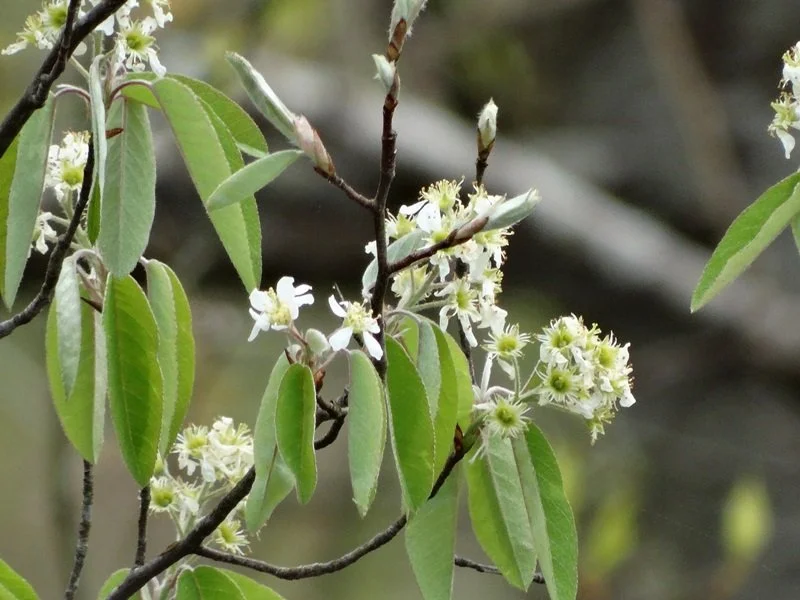
Canadian Serviceberry, a host plant for Summer Azure butterfly larvae. Photo: USFWS/Southeast, Public domain, via Wikimedia Commons
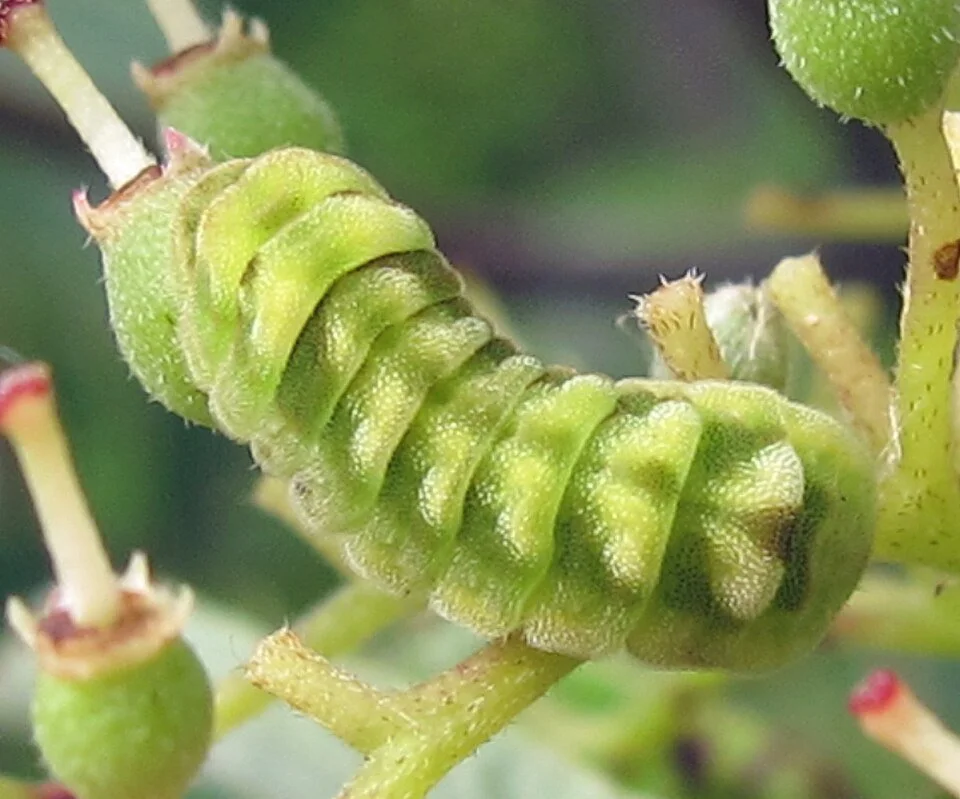
Summer Azure butterfly caterpillar. Photo: Jacy Lucier, CC BY-SA 4.0, via Wikimedia Commons
Everybody loves butterflies, but caterpillars can be less charismatic. However, without caterpillars, we don’t have butterflies. Caterpillars are important to birds, too. Baby birds don’t eat seeds and berries. Overwhelmingly, bird parents rely on caterpillars to feed their young. According to Doug Tallamy, a brood of nestling chickadees needs between 6,000 and 9,000 caterpillars to reach adulthood.
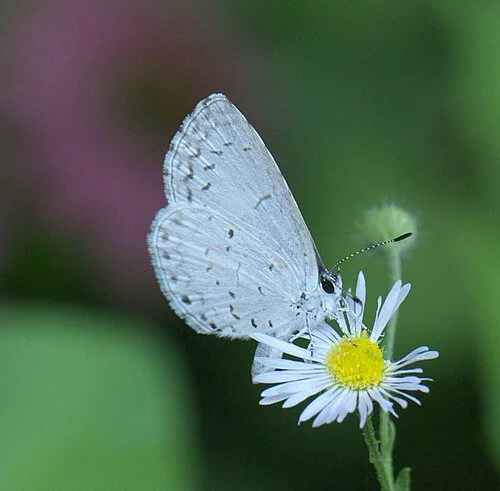
Summer Azure butterfly. Photo: xpda, CC BY-SA 4.0, via Wikimedia Commons
This is good news for those of us with shady yards who want to support pollinators. Instead of focusing on typical pollinator gardens, full of nectar-bearing flowers that need full sun, we can plant a butterfly nursery. Most butterflies can only lay their eggs on a small group of plants. Monarchs famously prefer milkweed, but other species of Lepidoptera prefer other species of plants. And many of these can grow in the shade.
Just a few examples include dogwood and serviceberry trees that host, respectively, the Summer Azure and Viceroy butterflies. Shrubs that are larval hosts include the spicebush (Spicebush Swallowtail), the mountain laurel (Brown Elfin), and the black chokeberry (Coral Hairstreak). And shade perennials can bloom in all seasons to make a gorgeous butterfly nursery garden. Spring bloomers include violets (Aphrodite Fritillary, Great Spangled Fritillary, Meadow Fritillary) and golden alexander (Black Swallowtail). Summer perennials include white turtlehead (Baltimore Checkerspot) and black cohosh (Appalachian Azure). Fall features white woods aster (Silvery Checkerspot) and blue woods aster (Pearl Crescent). Even most of the sedges are larval hosts.
Don’t leave the butterfly gardens to your neighbors. Welcome them into your shady yard - and the caterpillars, too!
Catch up on past Wildlife Sanctuary Almanac articles here.