
A Closer Look: Nature All Around Us, April 2026
Photo: Palm Warbler with Katydid, Judy Gallagher
Judy Gallagher
April 2026
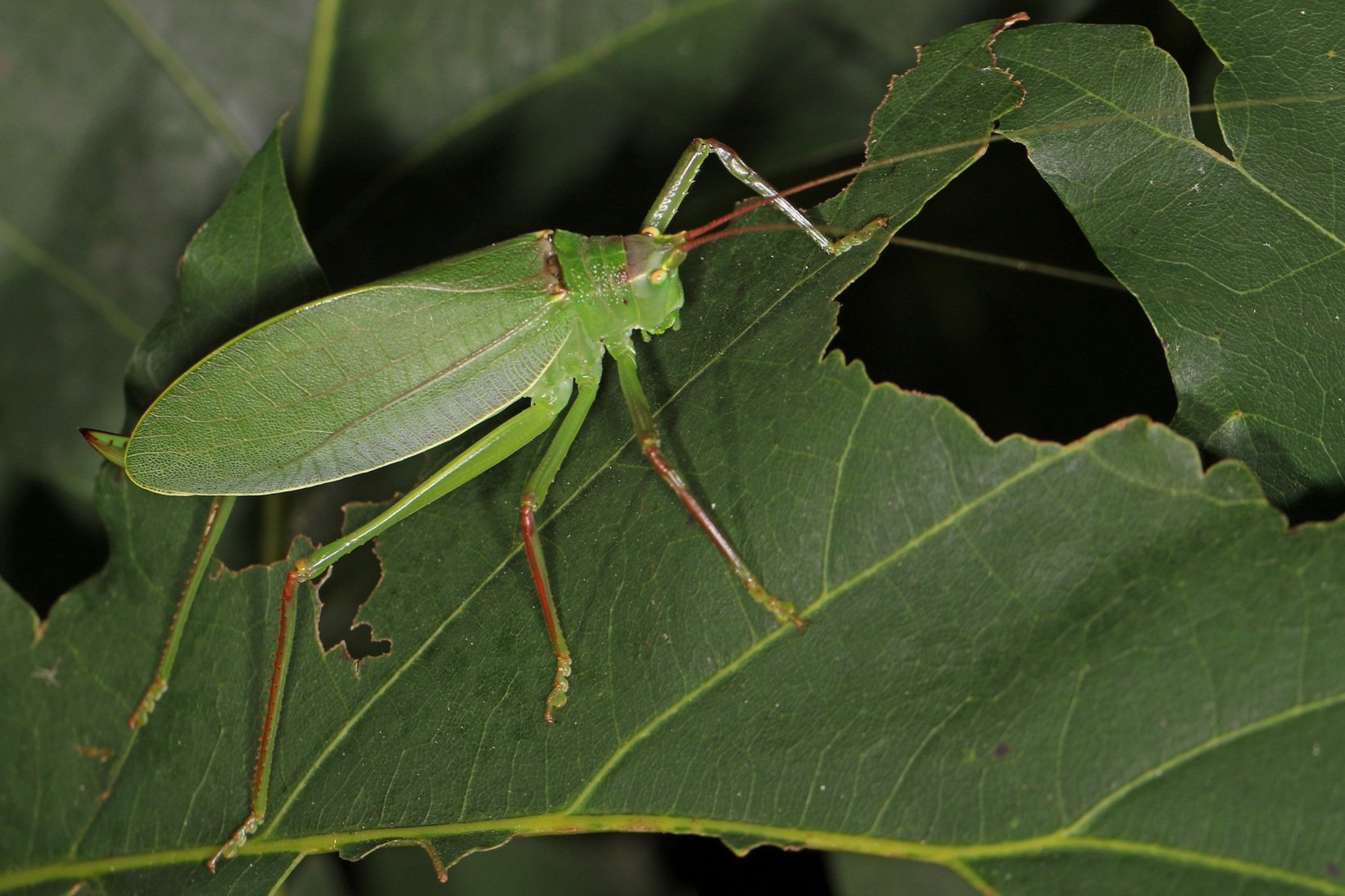
Common True Katydid, looking like a leaf. Photo: Judy Gallagher
I hear katydids more often than I see them. One reason for this is that many species are nocturnal, but many species are so well camouflaged that one doesn't always see them even when they are very close.
Katydids are named for the call of the Common True Katydid, whose males call "Ka-ty-did" when searching for a mate. But each species has its own song, and the songs are used for reproductive, territorial, aggressive, or defensive reasons. The males are usually the singers, but some females also produce sounds. The songs are produced by friction on special structures on the front wings. A few species pound on twigs, which produces vibrations that can be detected by other katydids.
Katydids are in the order Orthoptera, which also contains grasshoppers and crickets. Katydids hold their wings vertically over their body, have hearing organs on their legs, and have very long thin antennae that are often as long as their body. The antennae contain sensory receptors that facilitate them finding their way after dark.
There are around 6,400 species found worldwide, most of which are in the tropics, and approximately 270 species in the United States.
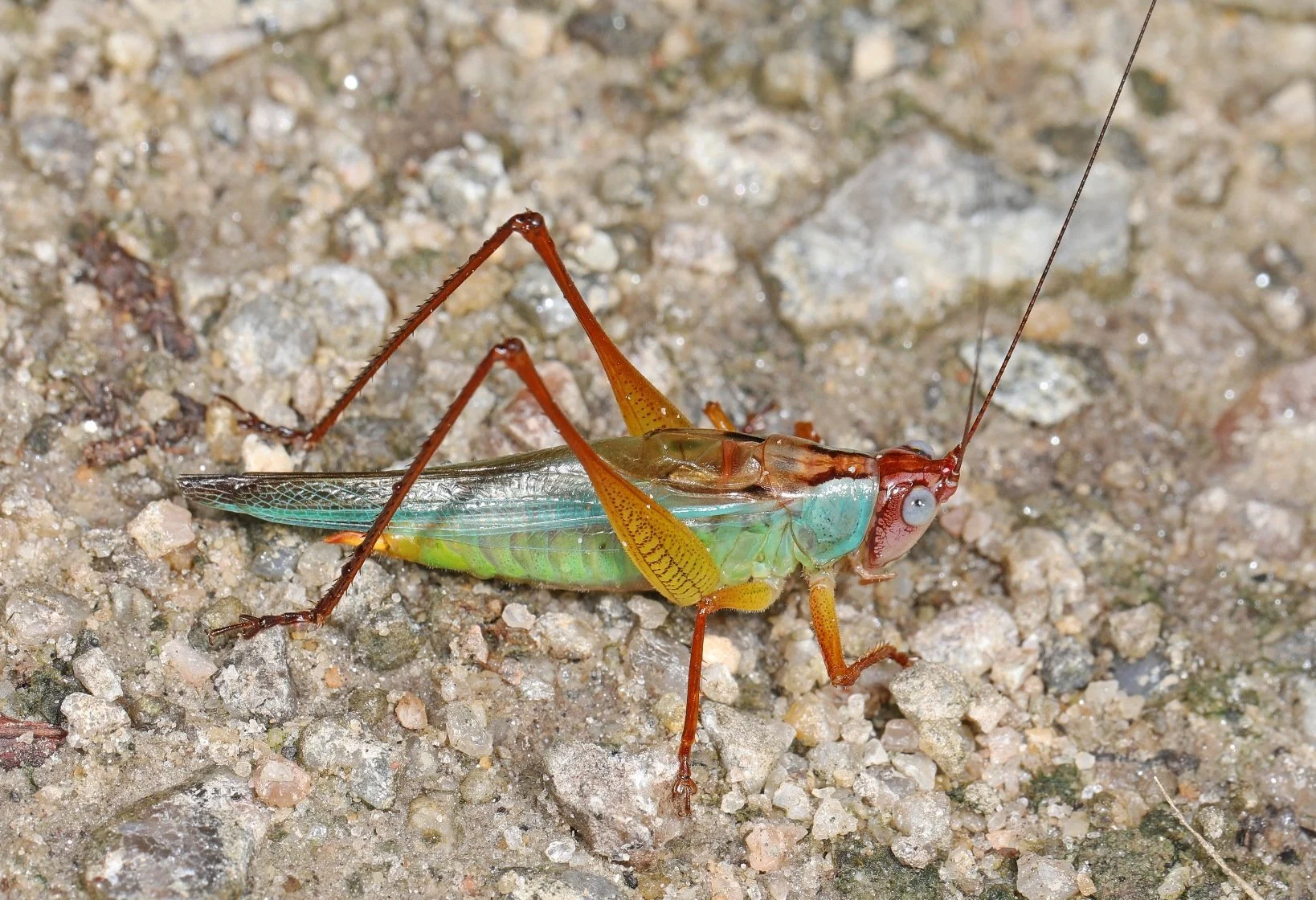
Handsome Meadow Katydid. Photo: Judy Gallagher
As I mentioned previously, most katydids are well camouflaged, but the Handsome Meadow Katydid is resplendent in a rainbow of colors. It shows up well against a gravel background, but it blends in surprisingly well in vegetation. Its genus is Orchelimum, from the Greek "meadow dancer," which aptly describes the way it moves around wet meadows.
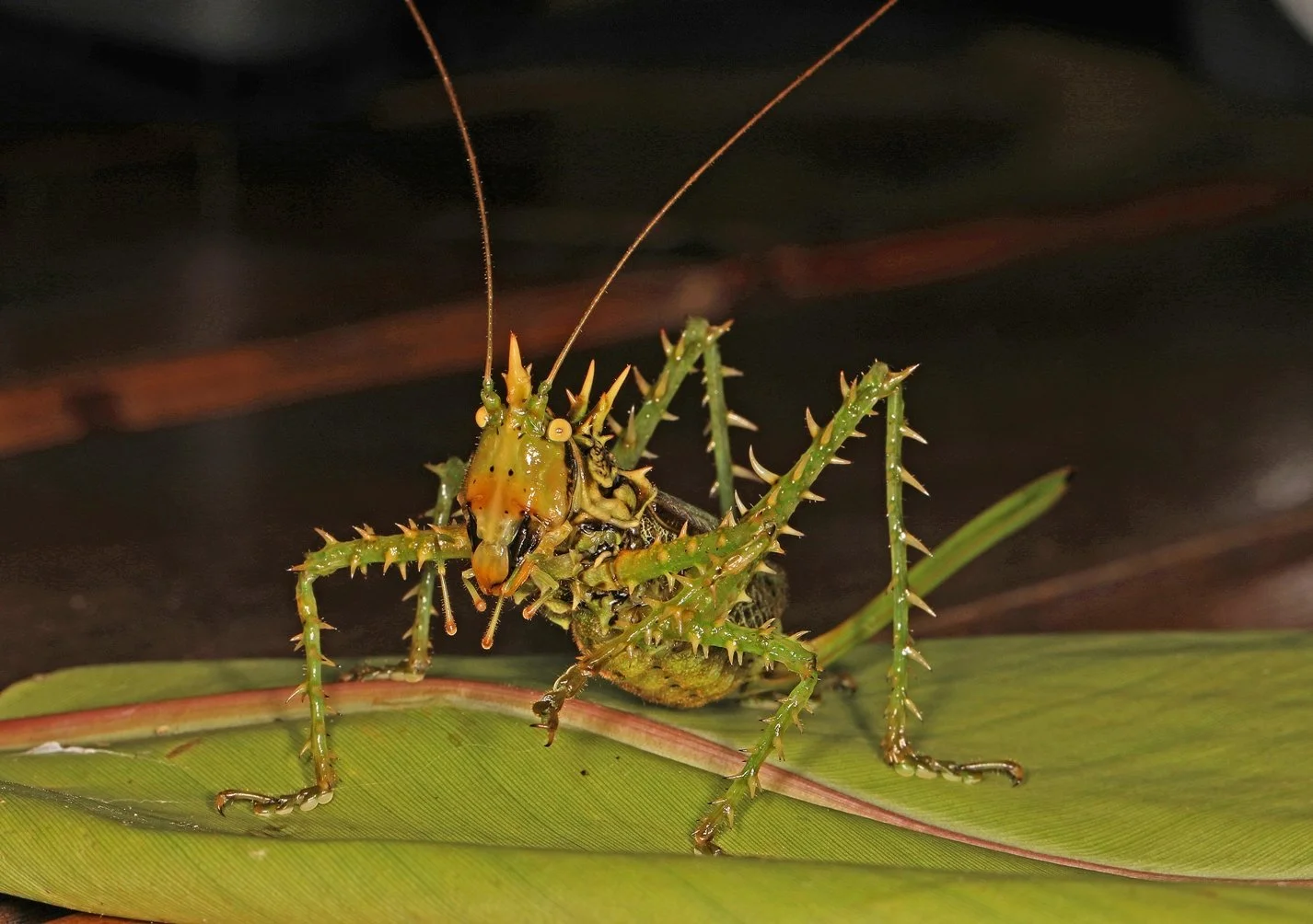
Spiny-devil Katydid, protected by sharp spines. Photo: Judy Gallagher
The spiny-devil katydids, found in Central and South America, easily blend into their environment, but they also have spines on their bodies, making it difficult for a predator to catch and eat them. When threatened, they can produce loud hissing sounds by rubbing their wings together, and they have strong mouthparts that can deliver a painful bite.
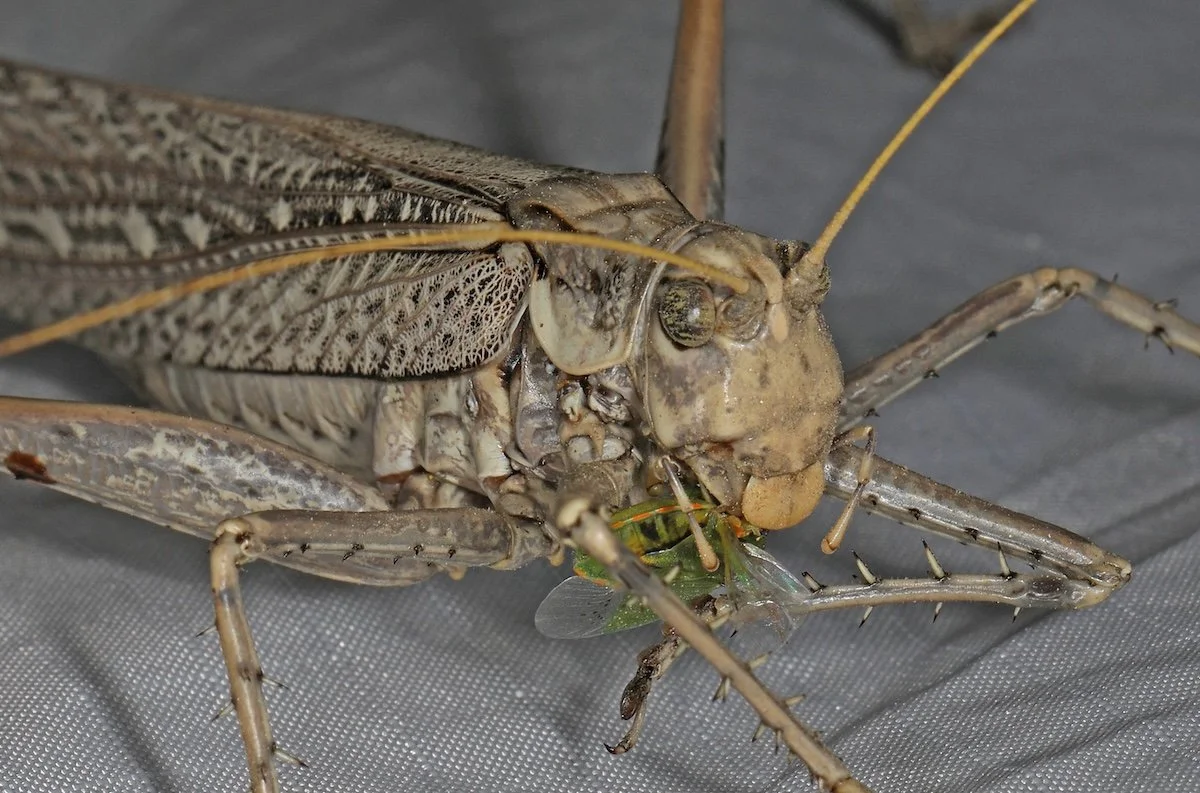
Sooty Long-winged Katydid with insect prey. Photo: Judy Gallagher
Some katydid species are omnivorous, eating whatever they can, and a few species are ferocious predators, but most katydids eat plants. Their populations are typically low enough that they don't cause extensive damage to plants, so they aren't usually categorized as plant pests.
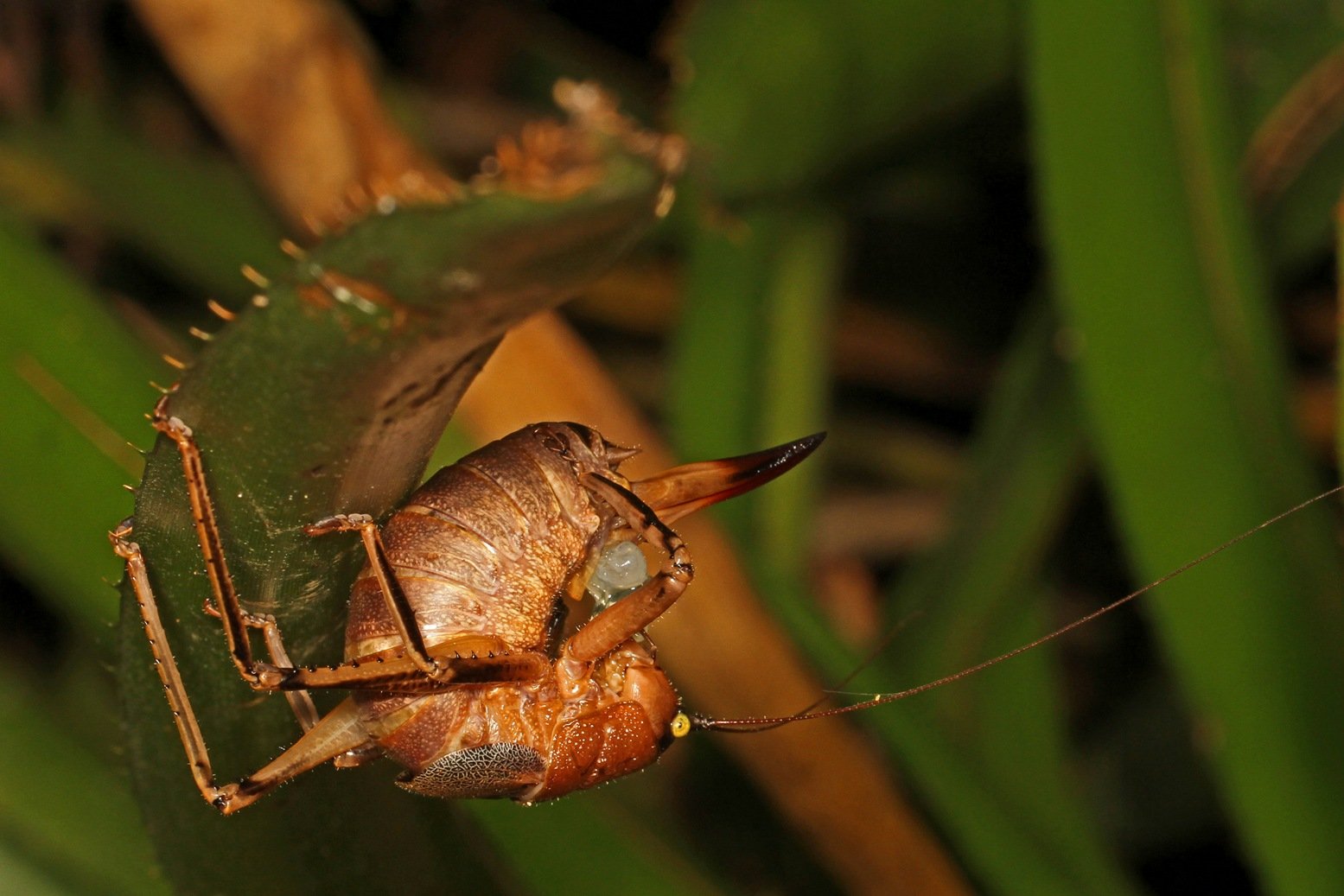
Female Shieldback Katydid with long ovipositor and nuptial gift (the jelly-like blob). Photo: Judy Gallagher
Female katydids tend to be larger than males, and they have a long ovipositor at the end of their abdomen suitable for laying eggs in plant stems or in the ground. When katydids mate, the males will sometimes provide a "nuptial gift," a sperm packet with additional protein that will help the female develop her eggs. Females prefer males that give such a gift, but it costs the male up to 40 percent of its body weight to provide it. Still, that could be worth it if it allows the male to have a greater chance of having offspring.
In our area, most katydids overwinter as eggs, which hatch in the spring. Katydids undergo incomplete metamorphosis, so the nymphs look pretty similar to the adults except they don't have wings. Nymphs typically molt five times before becoming a winged adult.
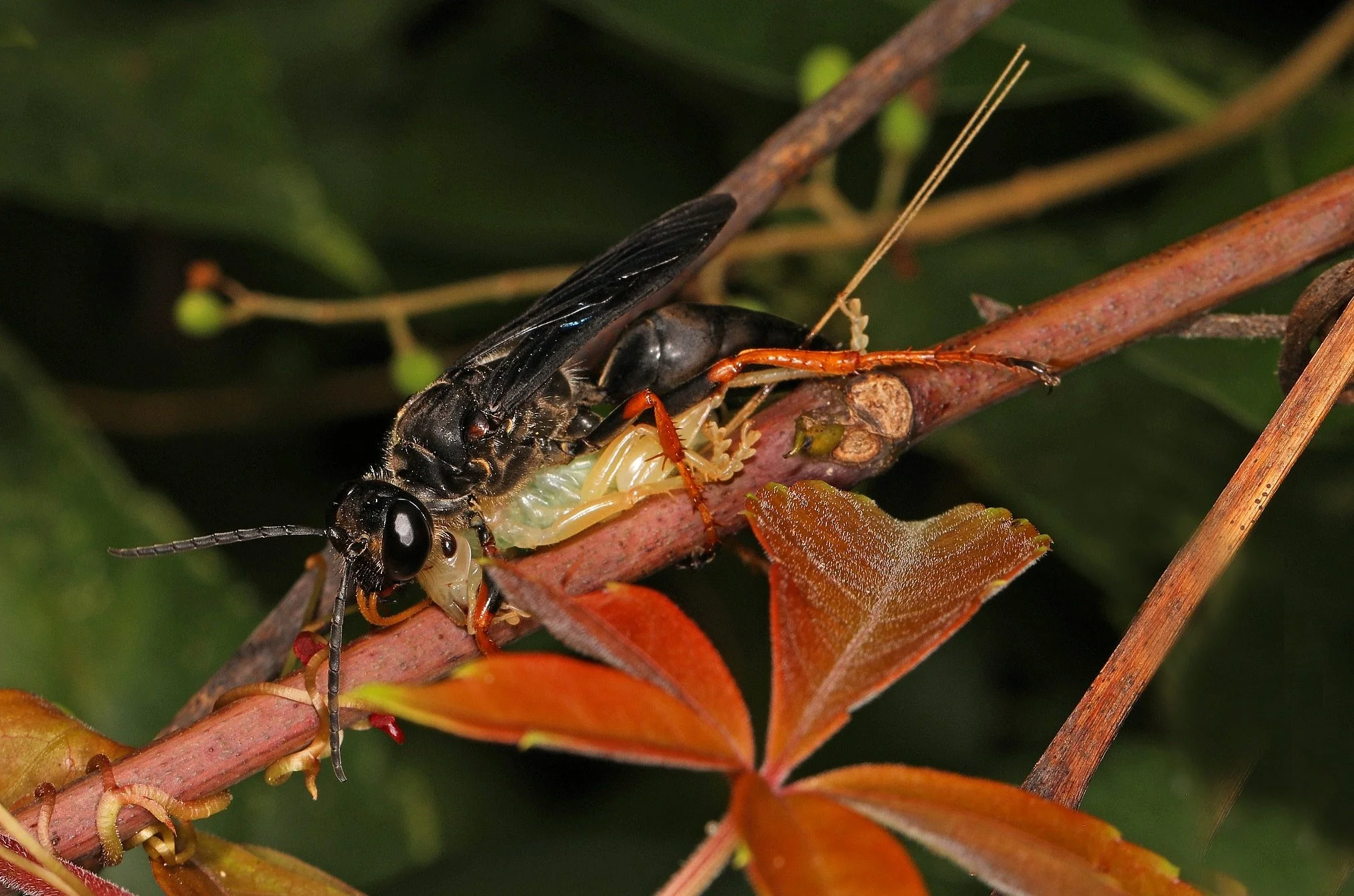
Katydid Wasp with prey (a cricket). Photo: Judy Gallagher
Katydids have a number of predators, including other insects. A thread-waisted wasp called the Katydid Wasp specializes in capturing katydids and crickets, paralyzing them and taking them to underground burrows to feed their young.
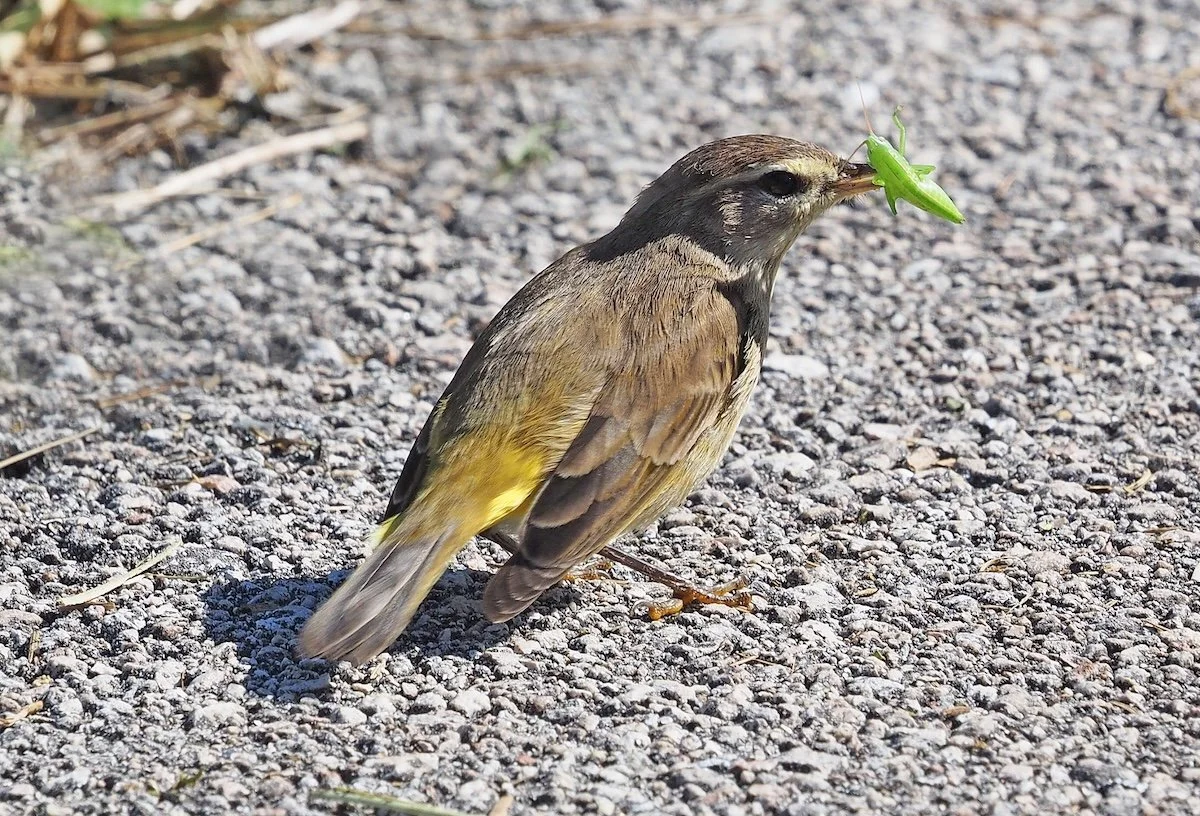
Palm Warbler with Katydid . Photo: Judy Gallagher
Bats prey on katydids, locating them by hearing their calls. Katydids also are a great food source for birds, including owls, bluebirds, kestrels and this Palm Warbler.
I'm looking forward to hearing and seeing Katydids soon. I hope you also see and hear them.
View more of Judy’s articles on A Closer Look: Nature All Around Us (formerly Observations from Meadowood).