
A Closer Look: Nature All Around Us, December 2025
Photo: Cynipid Wasp gall on Pin Oak, Judy Gallagher
Judy Gallagher
December 2025
Live insects are challenging to find at this time of year. But signs of them remain in the form of galls, a swelling growth of plant tissue. Galls can also be caused by viruses, fungi, bacteria and mites, but I'm only going to talk about ones that are created by insects.
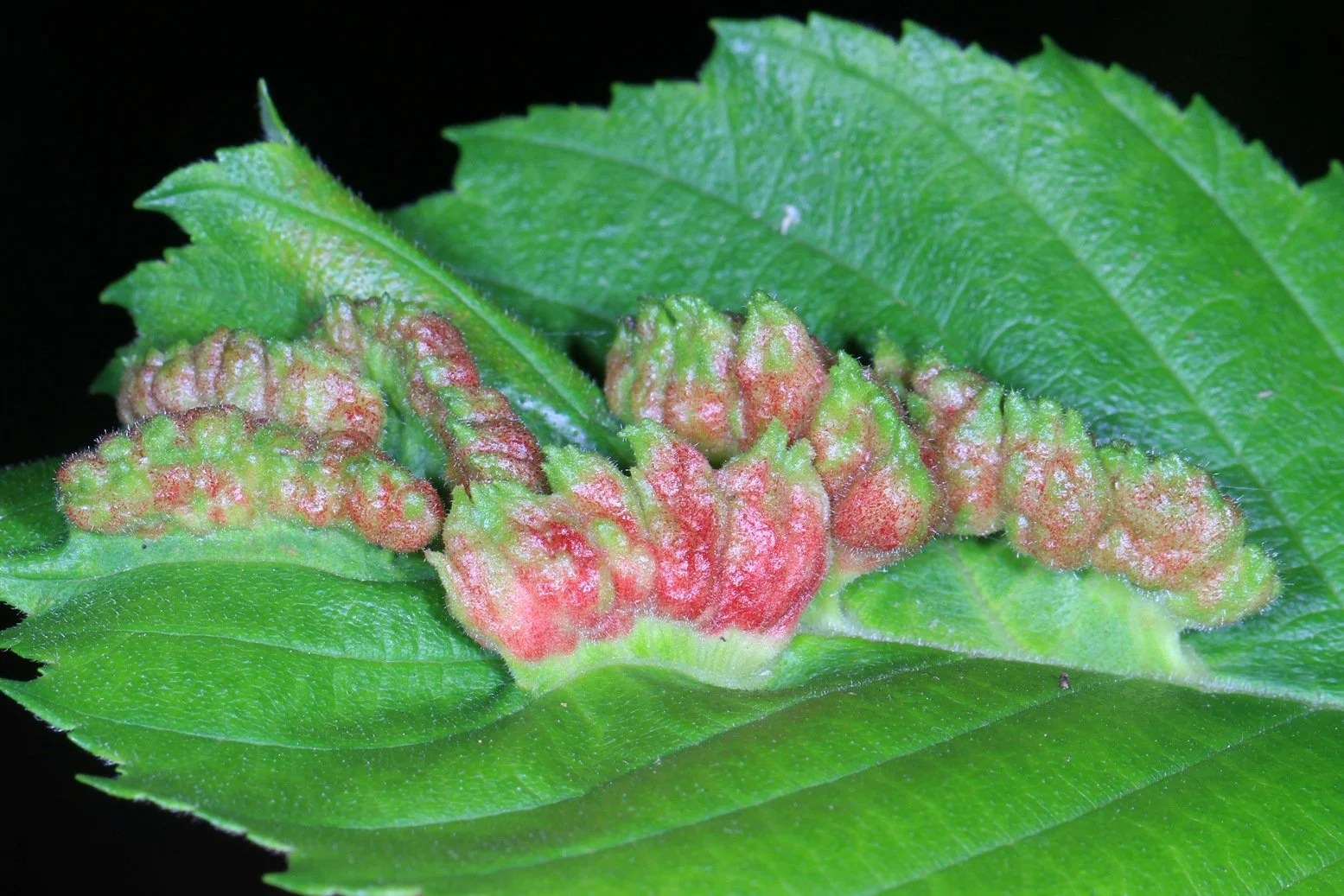
Elm Cockscomb Aphid Gall. Photo: Judy Gallagher
Insects that produce galls include gall wasps, gall midges, gall flies, leaf-miner flies, aphids, scale insects, psyllids, thrips, gall moths and weevils.
Galls are basically plant tissue that grows abnormally as a result of chemicals in salivary secretions of insects, which cause increased production of plant growth hormones. The abnormal growth envelops the larva and provides a microhabitat until it is ready for adult life. The gall continues to grow as the larva grows inside it. Galls are usually formed during the growing season when plant cell division occurs quickly. At this time of year, I see old galls on fallen leaves.
Gall-making insects have very specific plant preferences and even tissue preferences because their salivary chemicals must be able to stimulate that plant's genetic machinery, and each species' gall is unique. Galls can occur on leaves, stems and twigs, or on flowers or flower buds. Although they can be unsightly, insect galls rarely affect the general health of the plant.

Wool Sower Gall. Photo: Judy Gallagher
Some galls contain multiple larvae. The female Wool Sower Gall Wasp lays multiple eggs in one location, usually on a White Oak, although she can also use Chestnut Oak, Swamp Chestnut Oak and Swamp White Oak. The adult female releases fluids that start the gall-making process. When the eggs hatch, the larvae secrete chemicals that continue the process, and the resulting gall has many chambers, each containing one wasp larva. This wasp makes two types of galls. Wasps that emerge from the Wool Sower Gall make inconspicuous stem galls, and the wasps that emerge from the inconspicuous stem galls make Wool Sower Galls.

Cynipid Wasp (Zopheroteras guttatum) gall on Pin Oak. Photo: Judy Gallagher
This tiny and exquisite gall is formed by larva of another wasp, Zopheroteras guttatum, on Pin Oak.
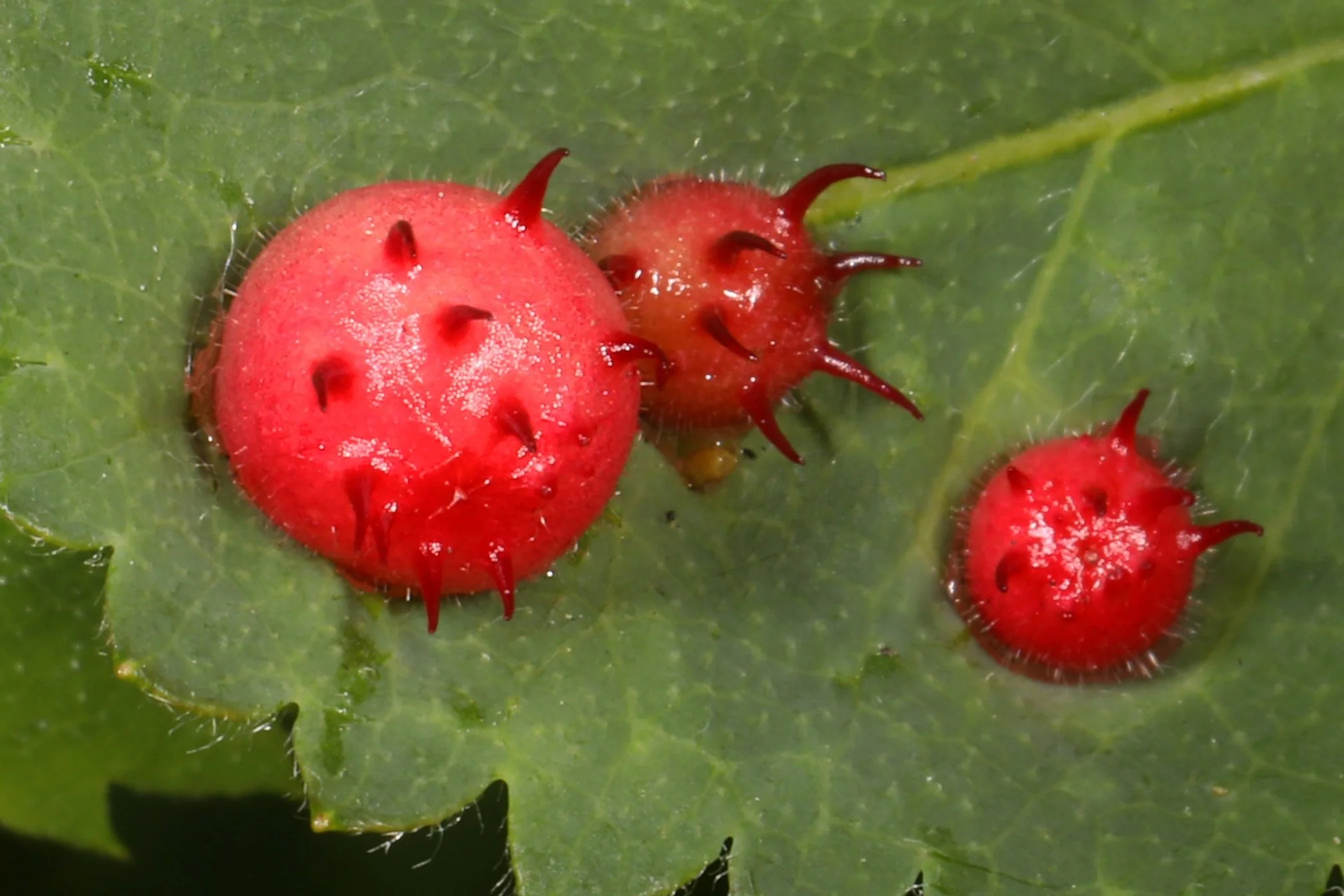
Spiny Leaf Gall Wasp gall. Photo: Judy Gallagher
Galls are a sort of nursery and provide some protection to the larva. But there are lots of predators who would like to eat tasty larvae, and the larvae can’t move around much due to the constraints of their gall. And there also are insects who eat plant tissue, and the larvae could be accidental victims if the plant tissue containing the gall is eaten. So the Spiny Leaf Gall Wasp has manipulated the genes of its host plant, a wild rose species, to produce a spiny gall that deters predators. To me, this is pretty incredible – a wasp larva secretes substances that force the plant to grow a nursery for it and protect it from predation!
Other gall wasps create galls with concentrations of toxic tannins near the surface to repel predators, or force the gall to secrete sweet plant juices (phloem) to attract ants, bees or yellowjackets who defend their space from other insects.
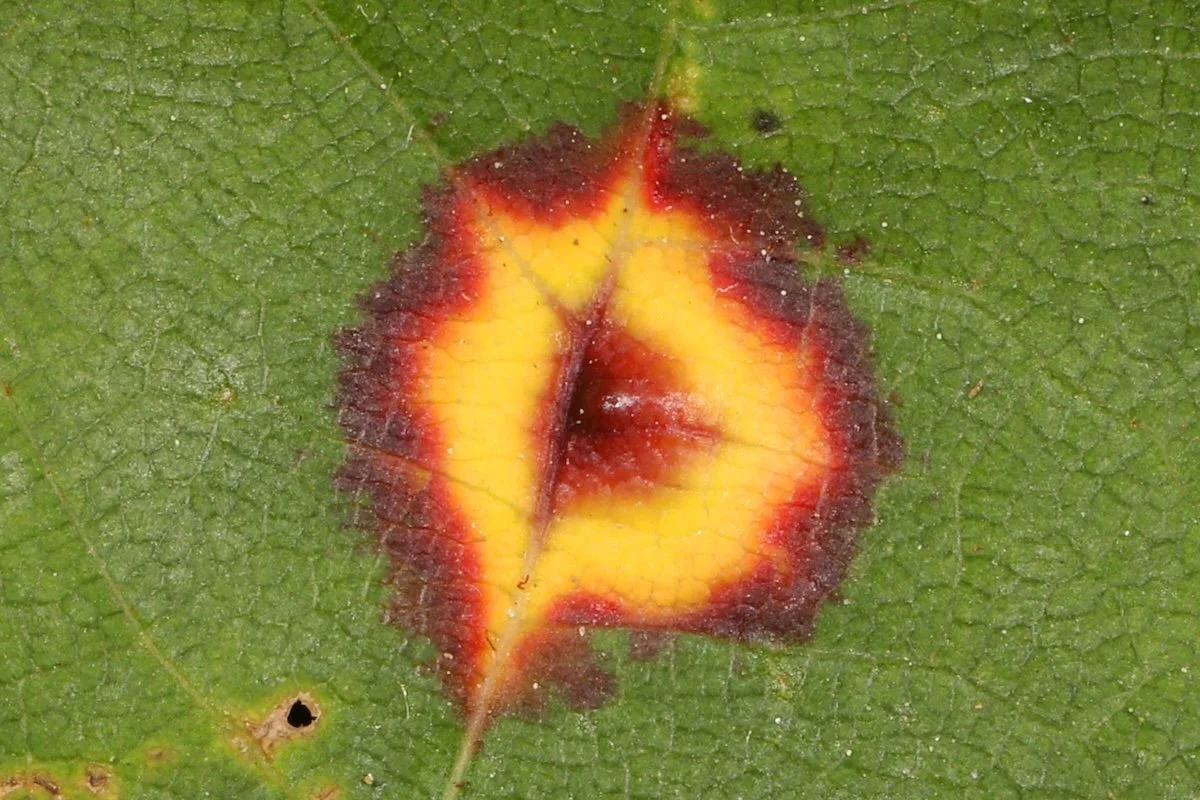
Ocellate Maple Gall Midge gall. Photo: Judy Gallagher
Here's a gall made by the Ocellate Maple Gall Midge, a small fly that, as the name suggests, produces galls on Maples. It also causes the leaf to develop rings of yellow and red, with Maple pigments normally only seen in the fall. Most gall-making insects leave the gall as an adult, but this midge leaves the gall as a larva and pupates in the leaf litter, where it remains until it emerges as an adult fly the following spring.
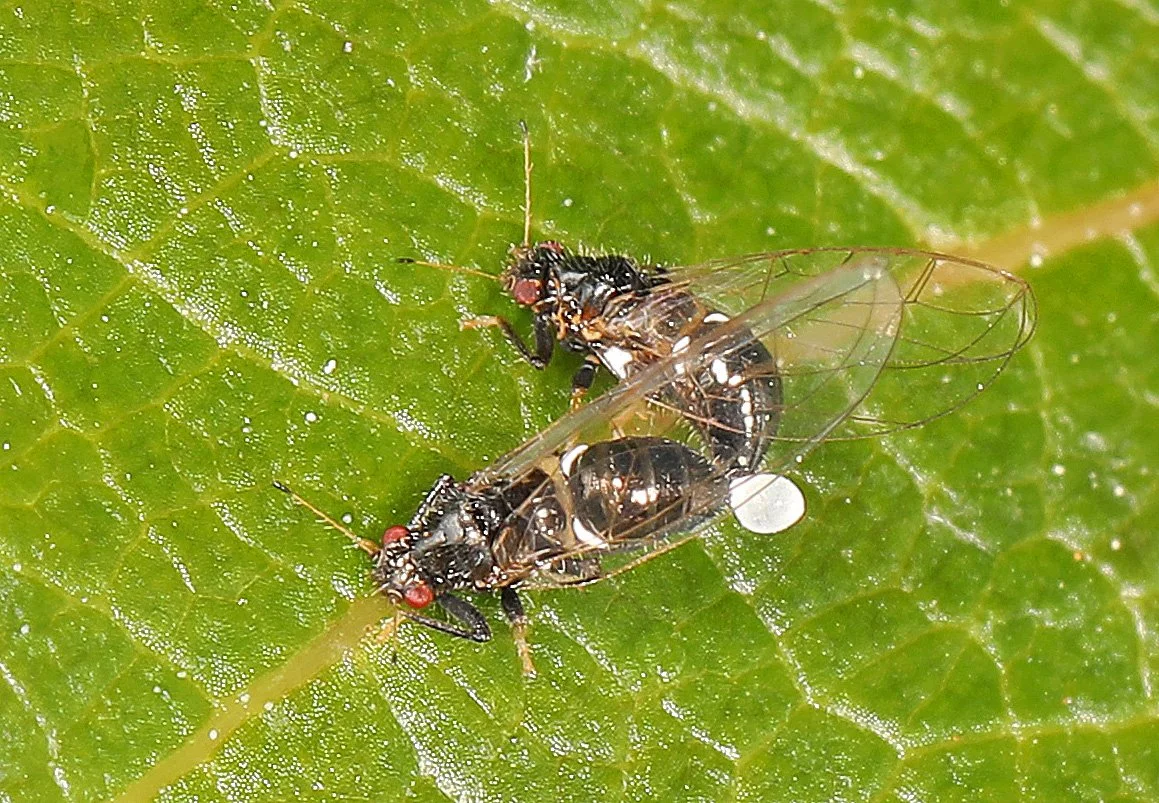
Persimmon Psyllids mating. Photo: Judy Gallagher
Although I often see galls, I rarely see the adult insects of gall-making species. Most are quite small and not easily noticed, but I was fortunate enough to see these Persimmon Psyllids mating and, I think, laying eggs. Persimmon Psyllids are True Bugs, about 1/8 inch long, and the larval spit secretions cause Persimmon leaves to become stunted, twisted, and curled. The larvae live in pockets within the twisted structure.

Soldier Beetle coming out of a Phylloxera gall. Photo: Judy Gallagher
I mentioned before that there are insects that like to eat the inhabitants of galls. I observed this Soldier Beetle going in and out of galls. I asked experts what was going on and they speculated that the Soldier Beetle was eating the Phylloxera larvae inside the gall. Insects are fascinating!
View more of Judy’s articles on A Closer Look: Nature All Around Us (formerly Observations from Meadowood).