
A Closer Look: Nature All Around Us, January 2026
Photo: Lovebugs, Judy Gallagher
Judy Gallagher
January 2026
My late husband Jimmy and I used to travel to north Florida in late May each year. We had to carry an ice scraper and windshield washer fluid so we could periodically pull over and scrape insects called Lovebugs off the windshield. Lovebugs, so called because they are typically found in copula, were so numerous that we couldn't wait until we stopped at a gas station to clean the windshield. Lovebugs have even been known to make cars overheat when radiators become clogged with them.
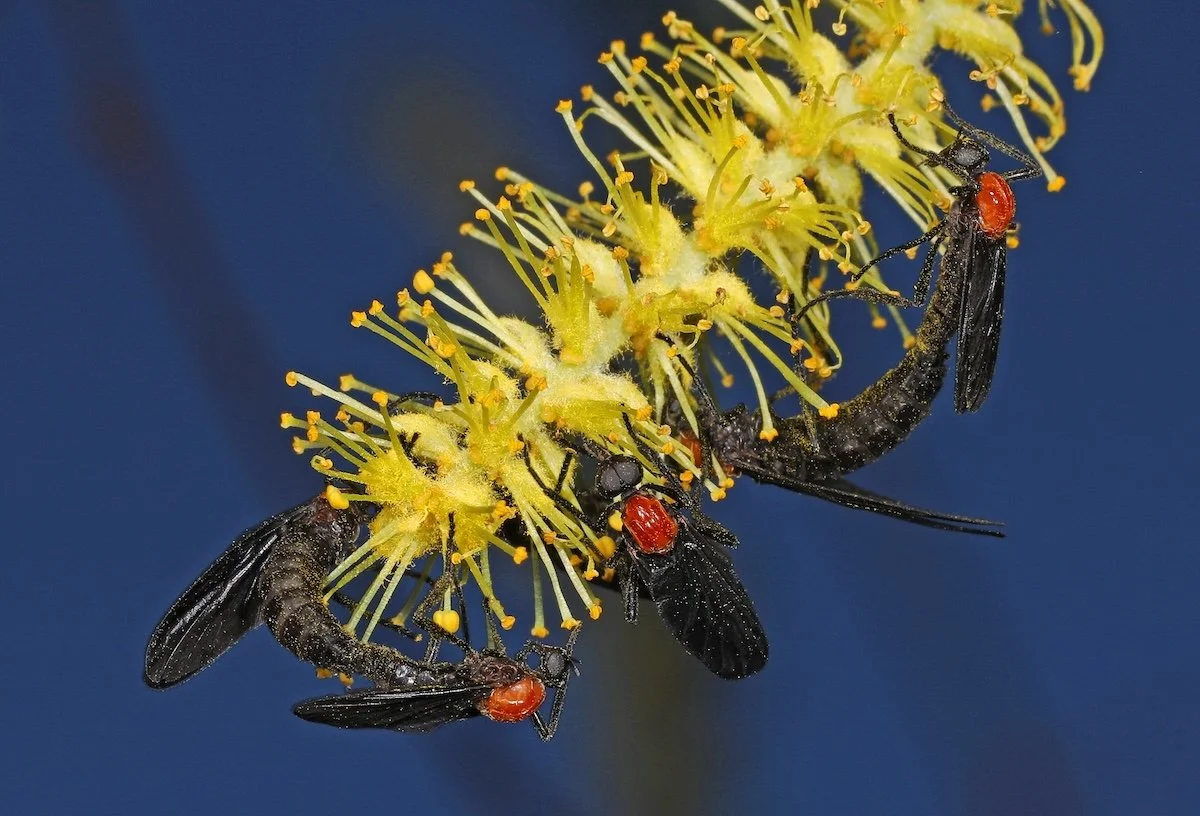
Lovebugs. Photo: Judy Gallagher
Despite the name, Lovebugs are flies, not bugs, and they are a species in the March Fly family. Lovebug adults only live for a few days, and they are in tandem for the majority of their short adult lives. They are attracted to chemicals found in automobile exhaust, which explains why they are so numerous around roads. Lovebugs are not originally native to Florida, but they spread quickly due to lack of natural control mechanisms. They are now less common in Florida than they once were because natural controls, mostly fungi, have expanded to help with the overpopulation.
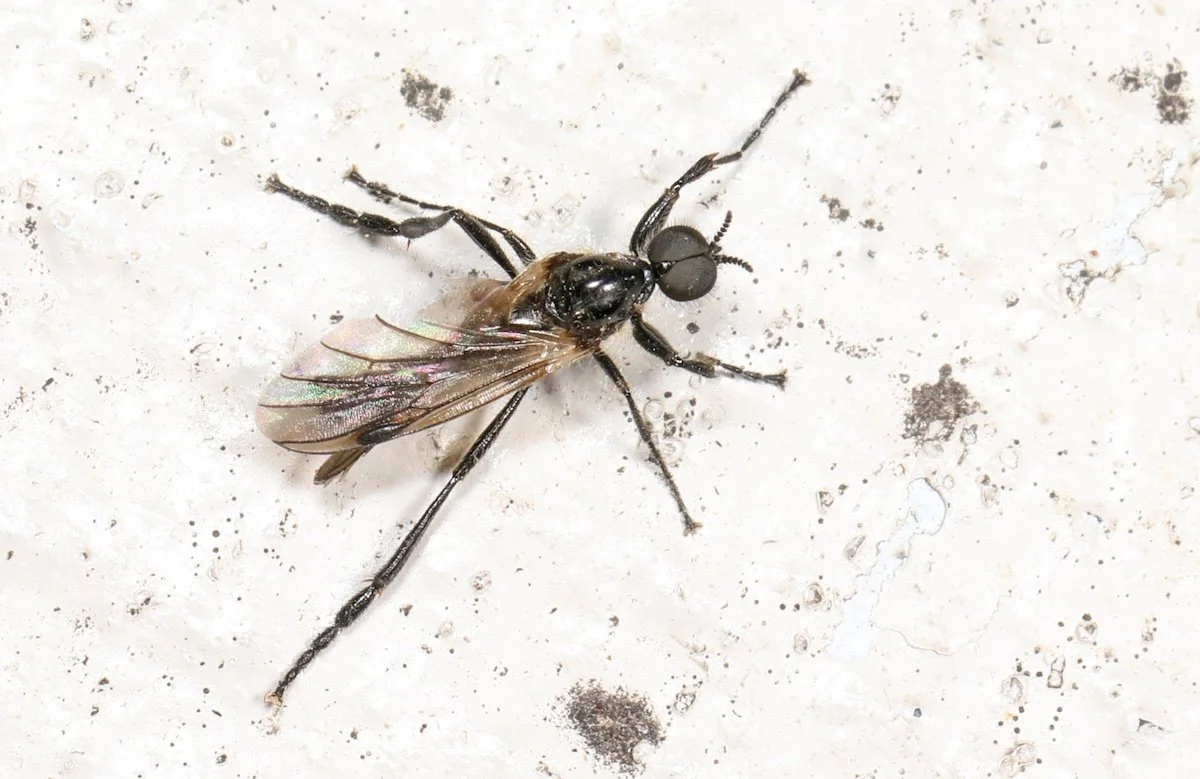
Dark Autumn Bibio (male). Photo: Judy Gallagher
We don't have Lovebugs here in northern Virginia, but we have other species in the March Fly family (Bibionidae). Like Lovebugs, March Flies are medium-sized, with slender black, brown or rusty bodies, thick legs and relatively small eyes. The rear legs are long and hang loosely when in flight, so it's pretty easy to recognize them while flying.
Common names like March Fly can be confusing. In Australia, members of fly family Tabanidae are called March Flies. We call them Horse Flies, and they aren't closely related to our March Flies.
Our species are mostly seen in late autumn or early spring, and the fly family is named because a lot of them make an appearance in early March. It's easy for them to find a mate because they emerge en masse and they complete their life cycle before many predators come out. But I did see one, the Dark Autumn Bibio, near the end of November, which was the inspiration for this month's column. Male Dark Autumn Bibios are known to swarm, but, unlike Lovebugs, they aren't attracted to automobile exhaust and don't mess up cars.
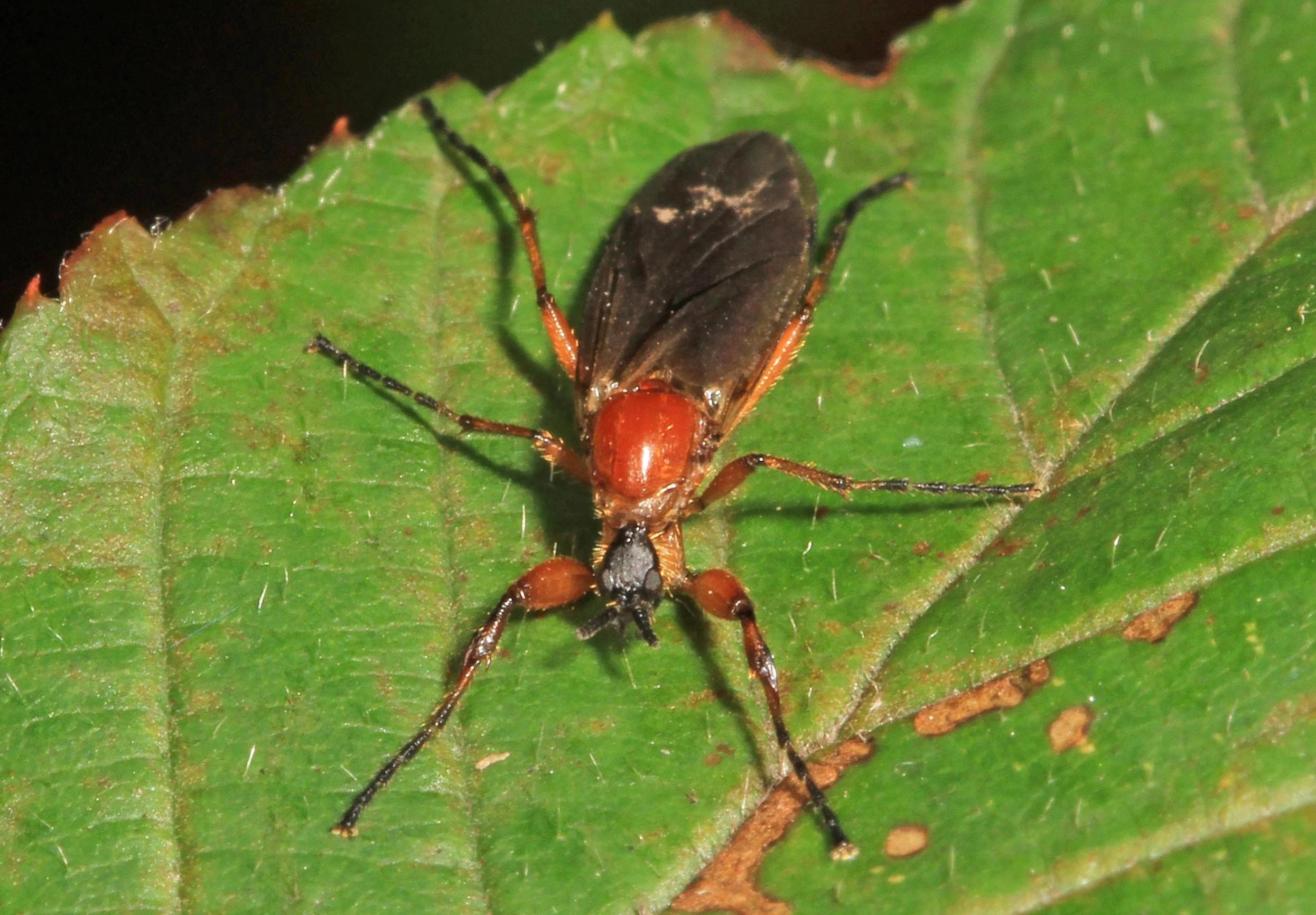
Dark Autumn Bibio (female). Photo: Judy Gallagher
Dark Autumn Bibios are sexually dimorphic. The male and female are easy to distinguish because the male is dark (as suggested by the common name), but the female has a red thorax and red on its legs.
Not all March Flies have sexually dimorphic coloring, but all March Flies have eyes that are easily distinguished by sex. Female eyes are smaller than male eyes and are separated from each other as seen above.
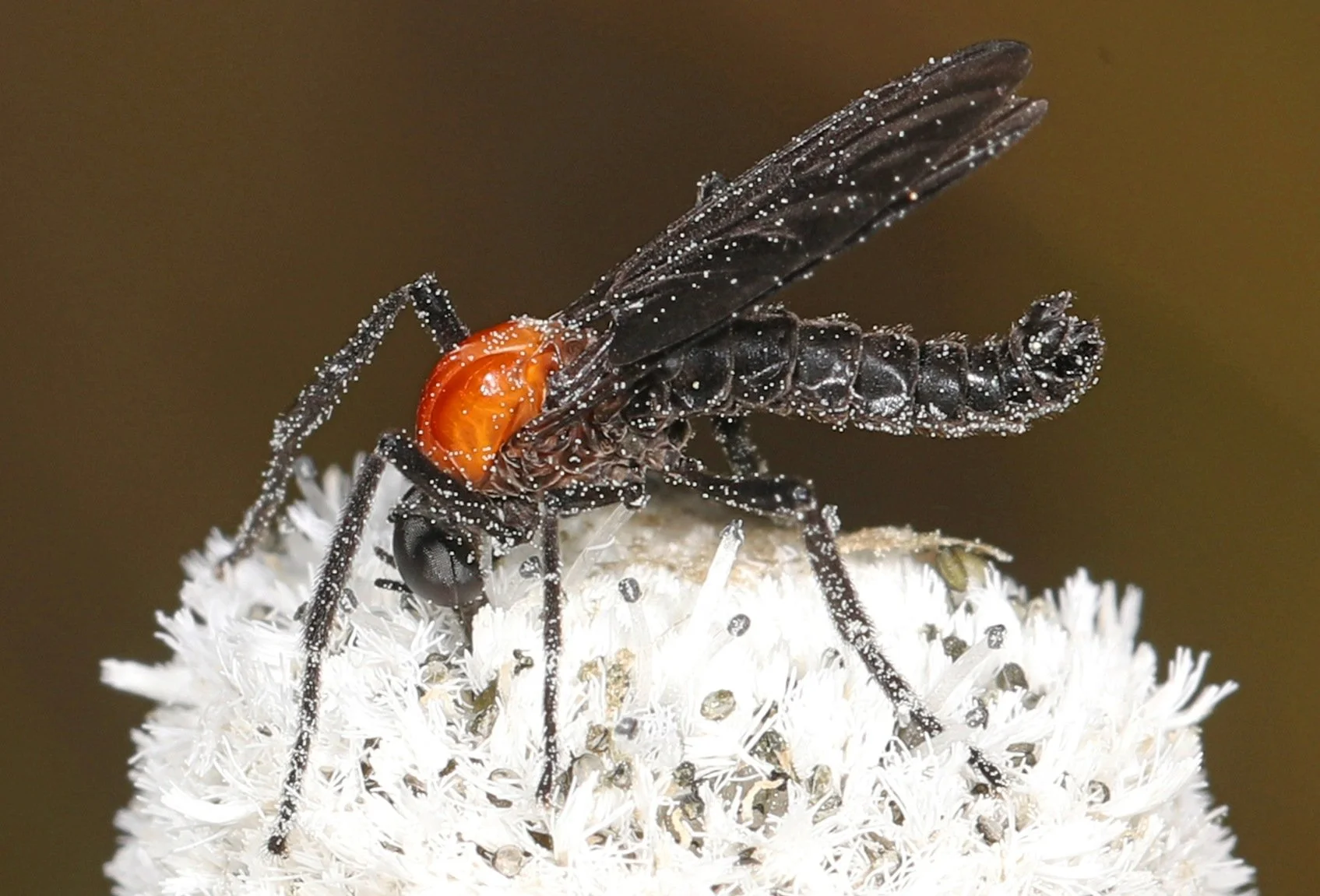
Lovebug male. Note the dividing line near the bottom of the compound eye. Photo: Judy Gallagher
The male's eyes are large and touch each other, and each male eye is divided into upper and lower parts that have different visual properties. The larger divided male eyes may help them to see other males above and below them in a mating swarm.
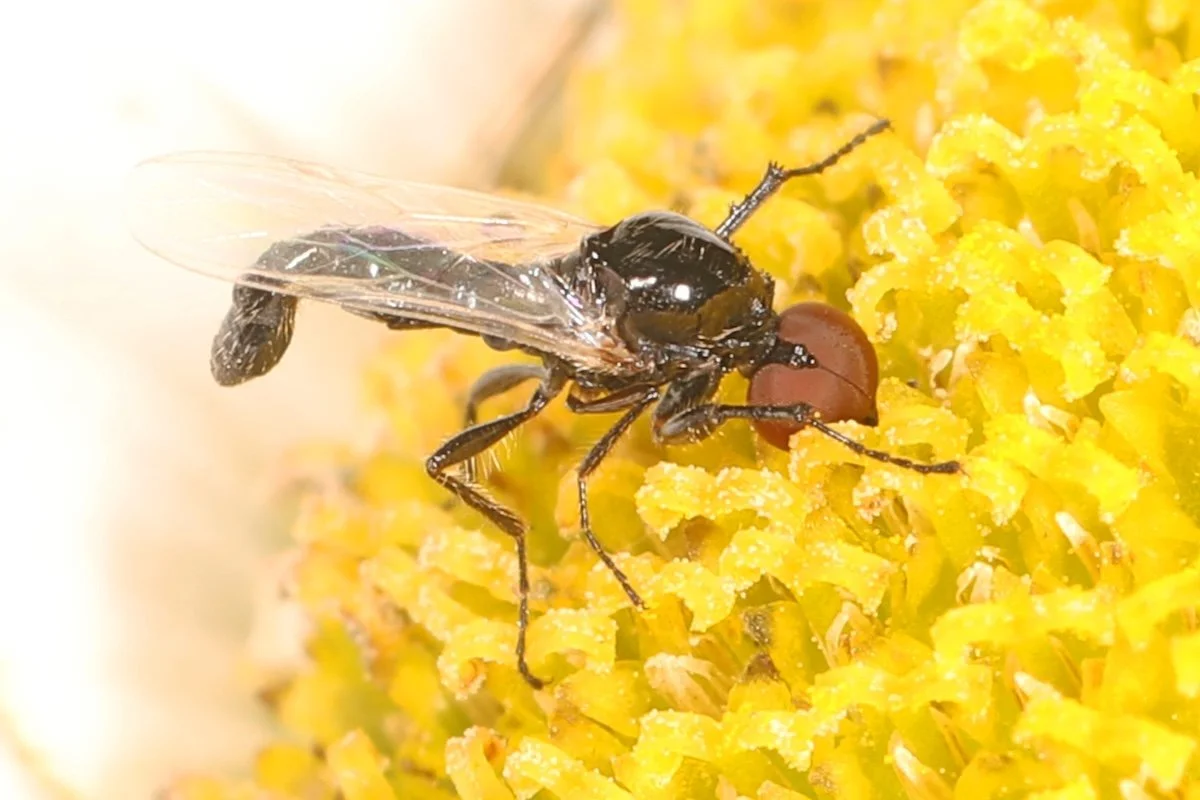
Dilophus species feeding on nectar. Photo: Judy Gallagher
March Fly larvae are usually found in grassy areas. They feed on plant material, sometimes scavenging dead vegetation like decaying wood, and are often found in compost. Like Lovebugs, other March Fly adults don't live very long, and many adults don't eat. But those that do usually rely on nectar. The adults can be good pollinators, and some are the primary pollinators of various orchid species. Larvae help form and accumulate humus in soil. According to an old (1904) publication by the British Museum of Natural History, chickens love to eat March Fly larvae.
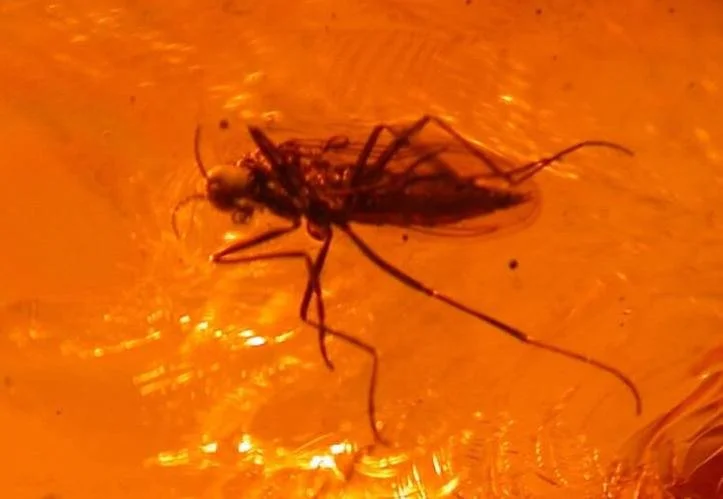
My holiday present to myself, a March Fly preserved in amber. Photo: Judy Gallagher
There are only about 700 March Fly species worldwide, but they are the most common flies in the fossil record. It's less than a week before Christmas as I write this column, and I decided to see if there were any affordable March Fly fossils available. I am happy to report that I will soon be the proud owner of a March Fly preserved in amber. Happy New Year to all of you, and to me!
View more of Judy’s articles on A Closer Look: Nature All Around Us (formerly Observations from Meadowood).